
It’s undeniable that Toy Story changed the game – a quantum leap both in 3D animation, and the sophisticated storytelling and humour that came alongside it. To me, that only makes it more impressive that – against all the odds – Toy Story 2 surpasses it in every way. The possible benefits of a sequel (go bigger! Bolder! Darker!) can also be a trap, but Woody and Buzz’s second adventure makes it look effortless; it’s a perfect expansion of everything people loved about Toy Story, while throwing in several iconic elements of its own.
It’s notable that Toy Story 2 often references The Empire Strikes Back, the ultimate bigger-bolder-darker sequel – both parodying its biggest twist in the Buzz-vs-Zurg storyline, while capturing exactly what made it surpass the original Star Wars. Like Empire before it, Toy Story 2 challenges our heroes deeply, splitting the toys apart as they figure out their future; it introduces new characters who you simply can’t imagine not being a part of the Toy Story mythos; and it expands the world significantly, taking these inherently domestic characters far beyond Andy’s neighbourhood.
As a kid, Toy Story 2 was the one I went back to most on VHS – I loved the original, but the second film felt massive. That genius opening sequence set inside the Buzz Lightyear video game (expanding the series’ idea of what it means to play) was a tantalising tease of the sci-fi spectacles awaiting me in years to come; the runaway-plane finale felt heart-in-mouth exciting; the aisles of Al’s Toy Barn were packed with gags (the Barbie sequence seeds what Greta Gerwig’s outstanding film would be) but also showed how big the world of toys was out there. And, of course, it had Jessie, and Bullseye and the Woody’s Roundup gang.
Toy Story 2 is a prism through which to refract Woody’s past, present, and divergent possible futures.
You can’t imagine Toy Story these days without Woody’s old TV pals; their introduction in Toy Story 2 is a brilliant move. We’d already seen Woody as the Sheriff of Andy’s toys, a staunch believer in the family of playthings curated by their beloved kid owner. What’s the only thing that could believably shake that notion? A different family that Woody never knew he had – another gang of which he’s also the figurehead. Jessie and Bullseye open up to Woody a side of himself, an entire history, that he’d never connected with. And they need him; the film so convincingly depicts a world in which the ever-dependable Woody might leave Andy behind for something else. He’s more than just a cherished toy; he’s a pop cultural icon, a vintage collectible, the rootin’-est tootin’-est cowboy in the Wild Wild West. Toy Story 2 is a prism through which to refract Woody’s past, present, and divergent possible futures.
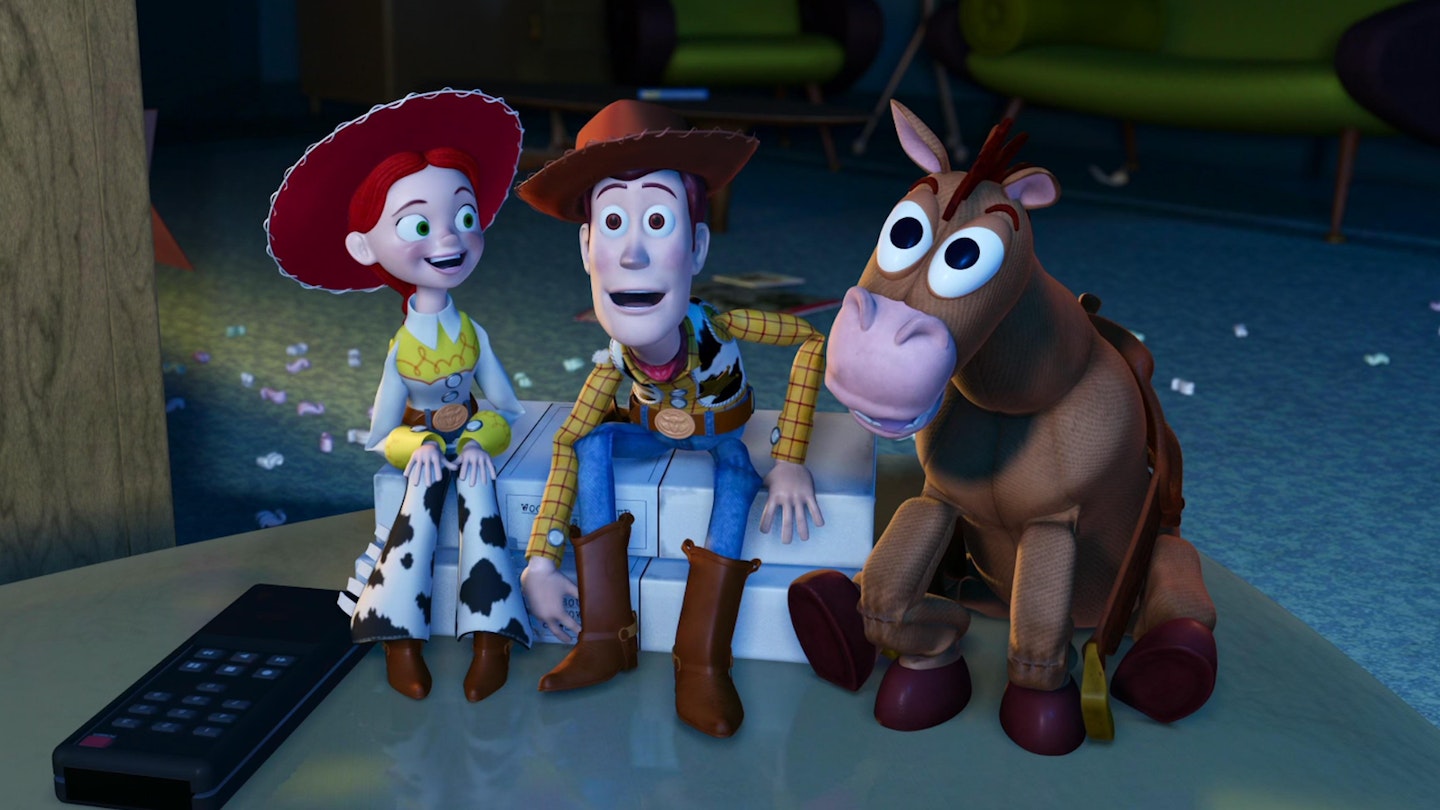
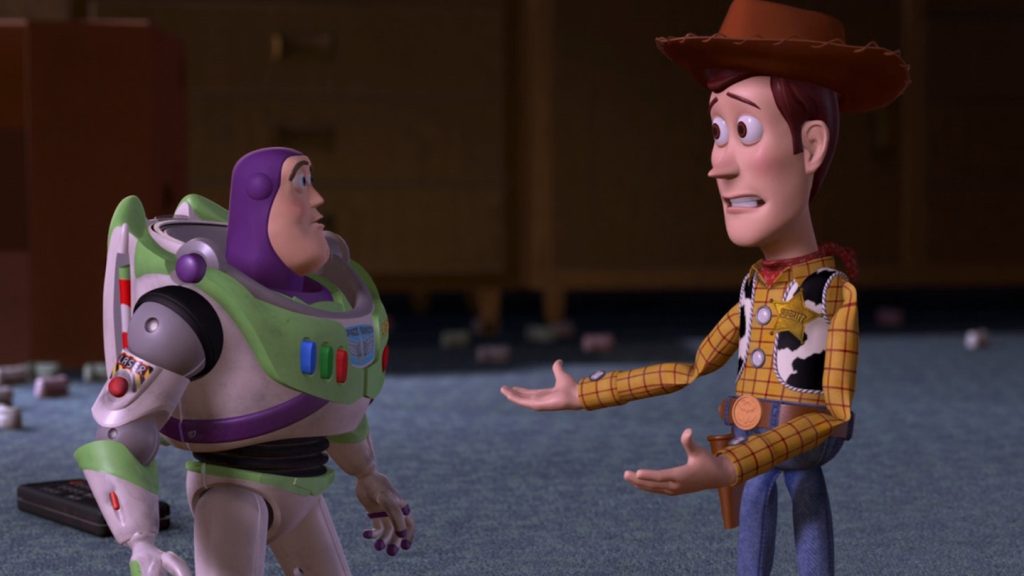
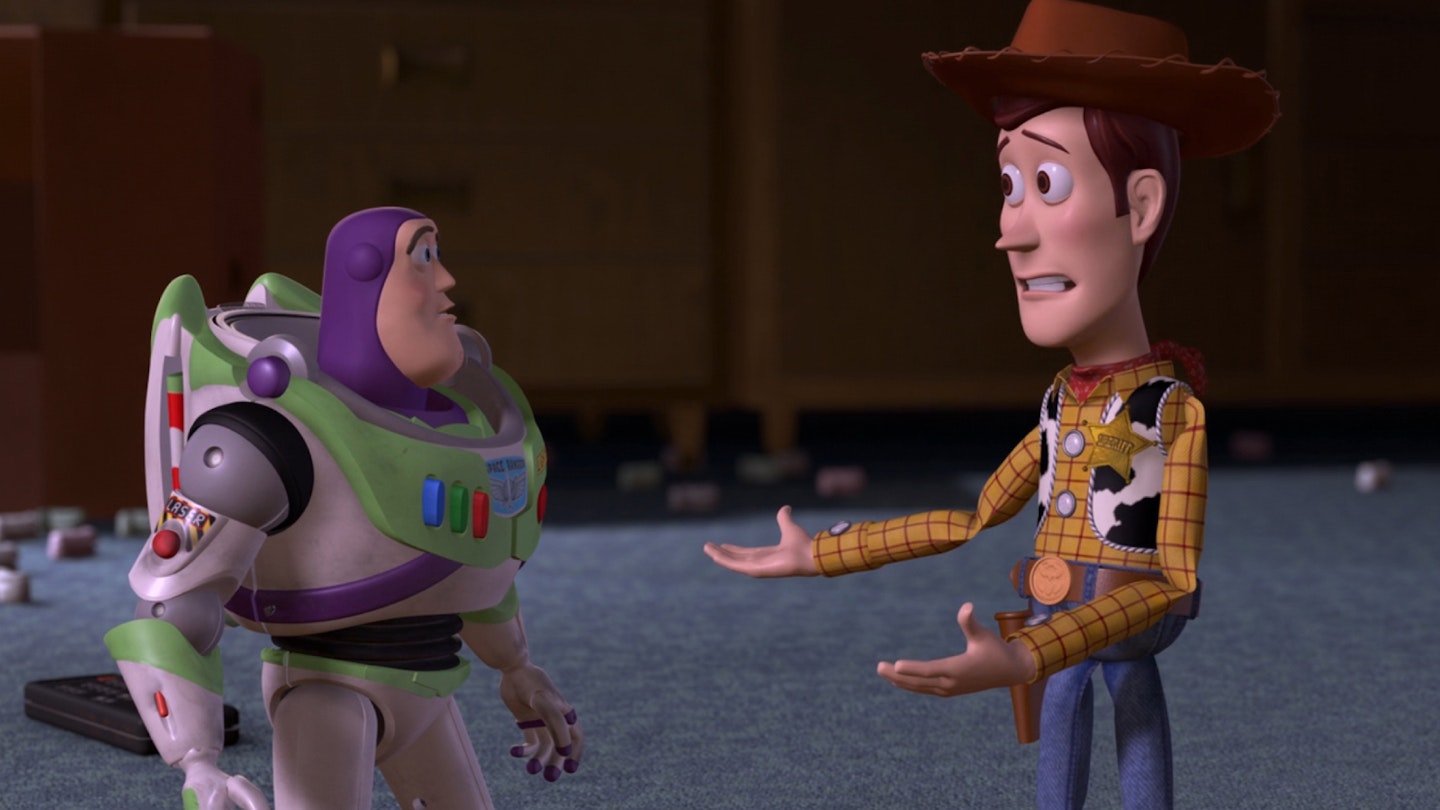
Toy Story 2 doesn’t just get under the (plastic) skin of our favourite characters – it gives us the peak version of them. The original Toy Story is spikier than you remember; hinging on that central tension between Woody’s insecurities and Buzz sci-fi delusions. But Toy Story 2 has the Woody-Buzz dynamic that we really love and remember: two best pals who’d do anything for each other. It’s a smart switcheroo on the first film to have Buzz risk it all this time, trying to bring Woody home. His ragtag bunch – Rex, and Slinky, and Hamm, and Mr. Potato Head – venturing across town, causing traffic pile-ups and toy shop destruction en route, is the film’s funniest thread.
This was the stuff I loved most as a kid. As an adult, the emotional flip-side impresses me most. The notion of obsolescence has always been key to Toy Story, and Toy Story 2 goes much deeper on those fears. Woody is physically ripped in the opening act, reflecting a similar psychological tearing – missing out on Cowboy Camp with Andy marks the first time he’s truly been left behind, and it won’t be the last. Eventually, Andy will no longer need him. The film really cracks open Toy Story’s biggest philosophical debate: what is the purpose of a toy who’s no longer played with?
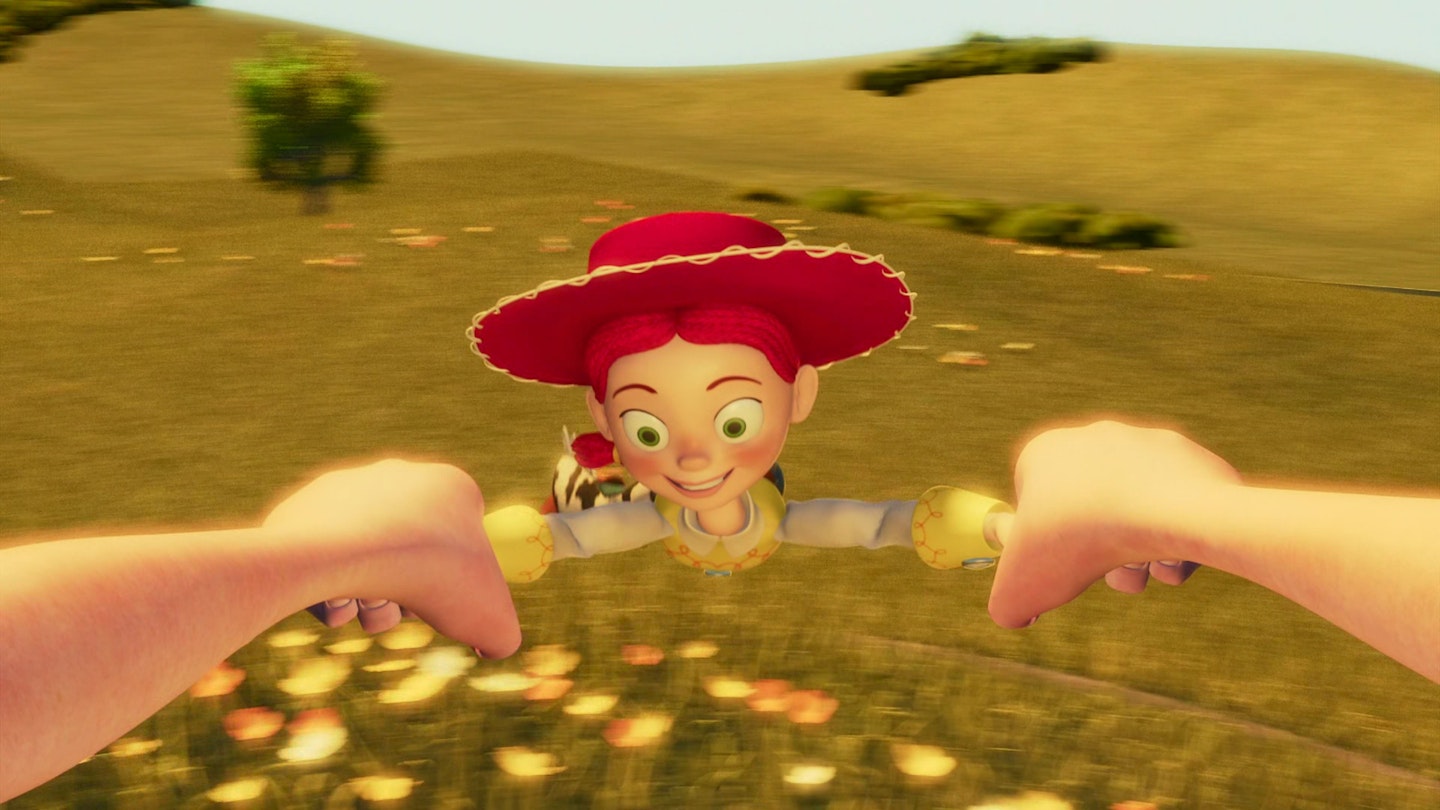
It is heartbreakingly – truly, devastatingly – explored in Jessie’s backstory. Her Andy was ‘Emily’, a girl who loved ponies and cowgirls. And therefore, Jessie. Until she preferred lipstick and sleepovers, and all the things kids should grow into, leaving Jessie forgotten beneath the bed. It is crushing. But there’s no villain in this scenario. It would be weirder if Emily did play with Jessie in her teens. Toy Story 2 doesn’t attempt to solve this – it provides space for that sadness, for the natural end of things, and lets our heroes wrestle with what’s next. The sequence – alongside the eerily mesmeric Woody repair scene – is the film’s crowning glory, desperately bittersweet, soundtracked beautifully by Sarah McLachlan’s heart-stomping ballad ‘When She Loved Me’.
It’s the tightest and funniest of the bunch, with the best versions of these characters.
This gaping emotional wound is core to the motivations of the film’s ostensible villains – Al, the Chicken Man of Al’s Toy Barn, an adult toy collector, and Woody’s Roundup prospector Stinky Pete. (As a grown-up with many toys in his office, I hate the thought that I may be Al now. I hope that my Godzilla and Star Wars figures are all friends when I leave the room, and promise that none of them are sealed in their boxes.) Al obliviously denies the toys the thing that gives them purpose – actually being played with – while Stinky Pete never got past the fact that he remained unopened. The old prospector makes a compelling argument: Woody will inevitably be forgotten someday, so why not embrace being a museum exhibit?
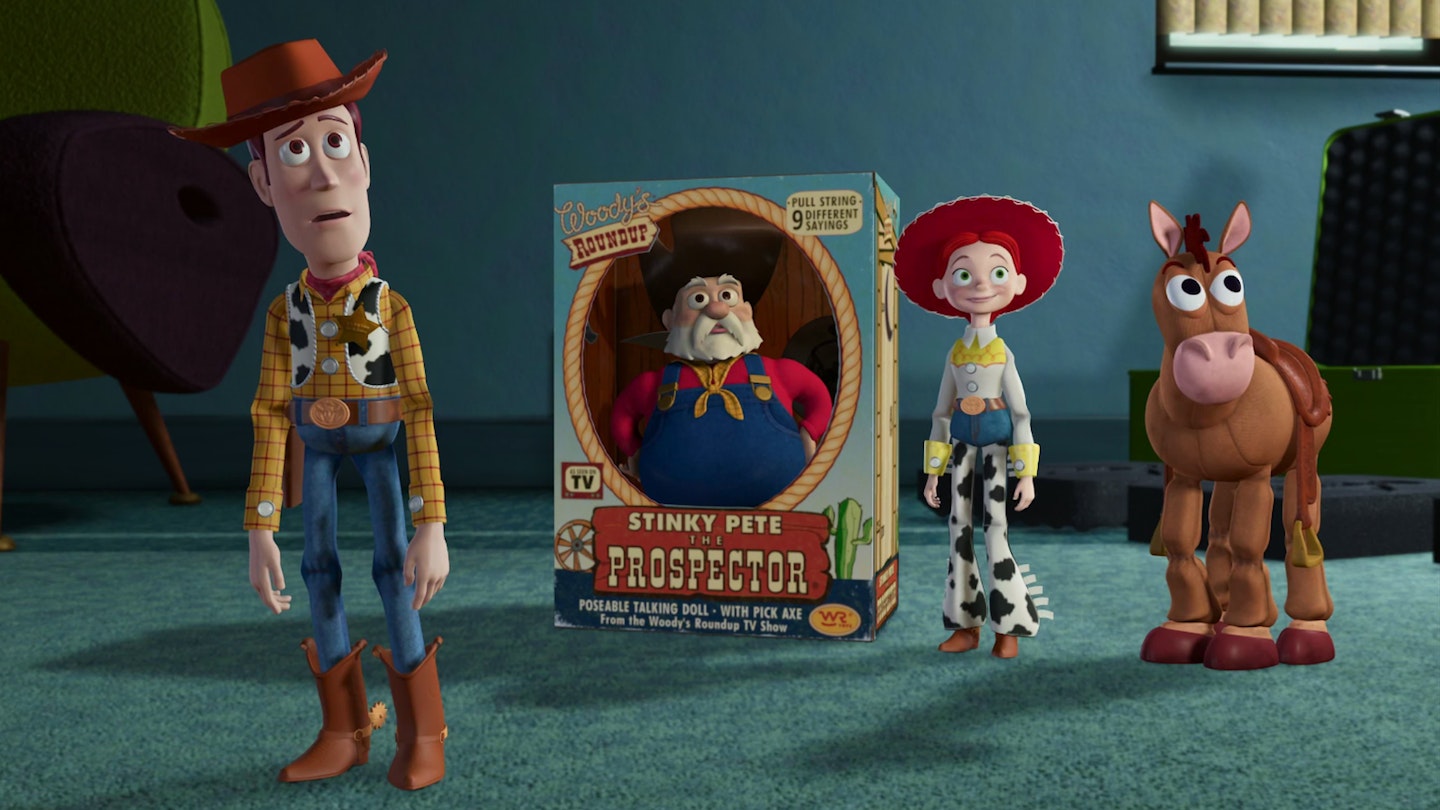
Of course, with the arrival of Buzz and co, Woody eventually makes the right choice – he’ll return to Andy, and take the other Roundup guys with him for a few more years of play. They’ll figure out the rest later. It’s an outcome that justifies the entire rest of the Toy Story saga, to the new fifth film and beyond – these toys, and these films, are there to be played with by multiple generations. They shouldn’t be boxed forever, preserved in amber as idols to be worshipped.
While I appreciate Toy Story 3’s heavyweight ending, and love every film in the series, Toy Story 2 will always be my go-to. It’s not just the comfort of a childhood favourite – it’s the tightest and funniest of the bunch, with the best versions of these characters, all topped off with a ‘blooper’ reel for the ages. Ride like the wind!
Toy Story 2 is streaming on Disney+
Read why the original Toy Story is the best in the series here