
He’s given us witches, Vikings, vampires and – perhaps his biggest monster of all – Willem Dafoe’s maniacal lighthouse keeper. His films are steeped in folklore, committed to undying (or undead) detail in the name of convincingly nightmarish experiences – so of all people, we can trust Robert Eggers to do right by lycanthropes.
In Werwulf, set at the start of the 14th century, Aaron Taylor-Johnson stars as a nameless farmer who, well… let’s just say that things might get a little hairy. As his wife (Lily-Rose Depp) pleads in the teaser: “Keep my husband safe from his cursedness.” Do we detect a story about uncontrollable urges? Is this a severe case of anger management? “I think you’re onto something!”, laughs Eggers. Here, he gives us a breakdown of that teaser’s key moments.
EMPIRE: You kick things off with a full moon. What did you learn about that sort of iconography and mythology?
ROBERT EGGERS: For the werewolf nerds out there, it’s commonly stated that the full moon’s connection to werewolves began in cinema. But I found a very, very old English text – older than the period of the film – that does say that werewolves are affected by the cycle of the moon. And there is also some stuff in some Icelandic literature. So… I went for it.
Aaron’s performance is truly harrowing. I’m super proud of what he did.
In terms of werewolf cinema, how did you go about making the film convincing and grounding it, making it not goofy? There are many potential pitfalls.
For me, going back to the old folklore is a way in, because you’re going to find different stuff – the tropes aren’t the same tropes that are so tired that they’ve become clichés. So that in and of itself gives it some freshness. I’ve also struggled with the creature, because it’s difficult in monster movies to make the monster convincing. I think that’s another pitfall of werewolf movies – they either look like guys in suits, or they look like CG. Are you willing to go along with that, knowing that they look seriously fake, or not? One of the best horror movies – and monster movies – of all time, is the first Alien, where it’s about the monster being a mystery and in the shadows.
Let’s get on to Aaron. What made you think he’d be right for this?
Aaron has a dance background and is incredibly physical and athletic, and I knew that he could do the kind of body work that he does in this film, in collaboration with [movement artist] Marie-Gabrielle Rotie, who worked with Lily on Nosferatu. I can’t think of another actor of his caliber who could really do it, with the pathos and pain that this character needed to have, and also a kind of traditional masculinity, while still feeling internally fragile. It’s a balance of a lot of things. His performance is truly harrowing. I’m super proud of what Aaron did. It’s quite extraordinary.
We see his character as a kid too – clearly there’s a formative experience going on there.
Yeah. We spend a good amount of the film with him as a young man. In the research, some of the historical cases of werewolves were men on trial for doing super-horrific things that they were accused of that were so taboo, and so hard for people to wrap their minds around… like, they had to be werewolves, they couldn’t be human. But some of these guys, it was clear to me – either explicitly, or reading through the lines – experienced some pretty severe childhood trauma. I’m not like trying to say, like, trauma or alcoholism or whatever equals a werewolf. But that is something I’m definitely exploring in this movie.
There’s some hellish religious iconography in the teaser. How does that play into what you’re exploring, and is that one of the reasons you set it in this time period?
It’s set around 1300, and if you were living in England in 1300, every single part of every of everyday life was through a Catholic lens. That was just how it was. So if we’re setting it in that period, that becomes a baseline for every character and every way of thinking. The reason why it’s set then is because there was a knight and hunter who was bidden by the king to kill all the wolves in England, to protect the wool industry, basically. And this ex-knight/hunter was so successful that, by Henry VIII’s reign, there were no wolves left in England. So this is the last time that there was any werewolf lore in British history, because once there are no wolves, there are no werewolves for people to be frightened of. I wanted it to be English, so it needed to be this early. But most of the English stuff that is written down from this period was more for the intelligentsia. I needed to turn to the continent to enrich the folklore.
We did a post-process that makes everyone’s skin tones look extra wrecked.
What can you say about who Willem Defoe is playing? You keep coming back to him, but every time he plays someone completely different – he’s not doing the same shtick.
Yeah, but he always plays someone in my movies who loves what they do (laughs). He’s an antagonist [here], and he might be inspired by that guy I was just talking about.
Clearly this is a very different role for Lily after Nosferatu. She did some very physically challenging work in that film – what did you ask of her this time?
There were things about [Nosferatu’s] Ellen that were particularly challenging in a way that this character wasn’t, but also this character is so far from Lily, physically and in her general way of holding herself. So to be this mediaeval farmer’s wife, this mother who is super grounded, was a challenge which she embraced and was super into. It’s a really remarkable performance, and she’s the heart of the movie, she really is.
What were you and [cinematographer] Jarin Blaschke going for in terms of the palette of the film?
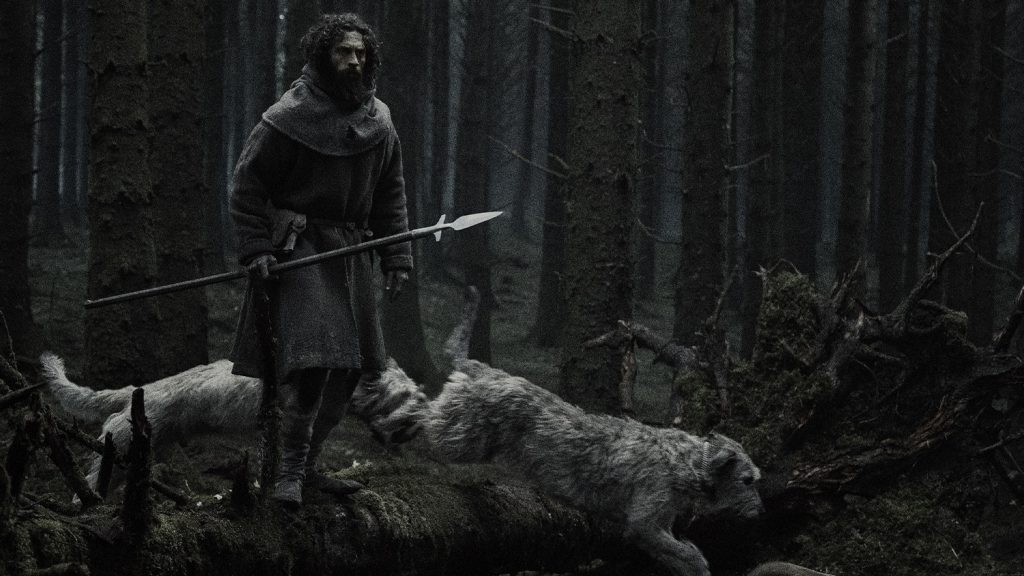
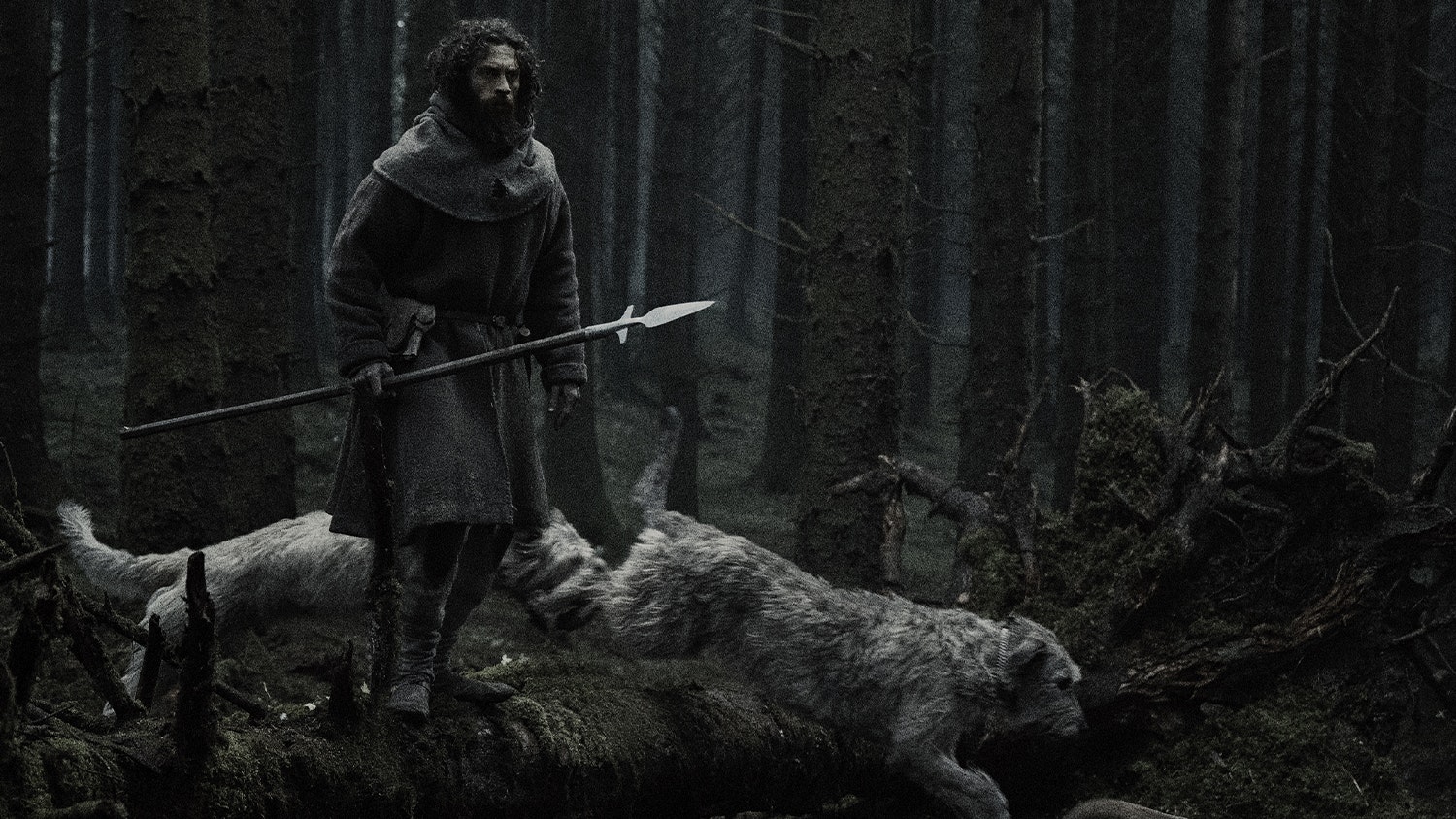
It has a unique look. The night photography is fairly similar to what we’ve been doing in moonlight [in other films], but… this was shot on colour film, and it’s very desaturated. We also did an orthochromatic post-process that makes everyone’s skin tones look extra wrecked. And we found a way to give it the grain structure of black-and-white film. So it’s a very textured and dirty look, but also detailed. Which should make the gruesome, grisly, miserable, horrible, no-good, very-bad mediaeval world even nastier and smellier than it ever could be.
If you’re not smelling all the shit, then you’re not experiencing this movie properly.
There are some exquisitely unique looking people in the trailer. Leads aside, is there something specific you were looking for in the casting that would particularly work for this time period?
Yeah, very extreme looks. Casting this movie was incredibly fun and rewarding, and at times really difficult. It was definitely the most challenging movie to cast so far. He was a little later, but it needs to feel like Bruegel.
The final shot has Aaron bone-crunching, foaming at the mouth. That’s as much as you give us, werewolf-wise, as it were. For now.
Yeah, this is a slow-burn horror that’s about the tension and the anticipation and the mystery and the darkness, and… we don’t want to give it away. But… this film is immersive, and needs to be experienced full-immersion, on the big screen. If you’re not smelling all the shit and mud in the street, then you’re not experiencing this movie properly.
I hope they put that on the poster. I don’t think they will.
Werwulf comes to UK cinemas from January 1, 2027