

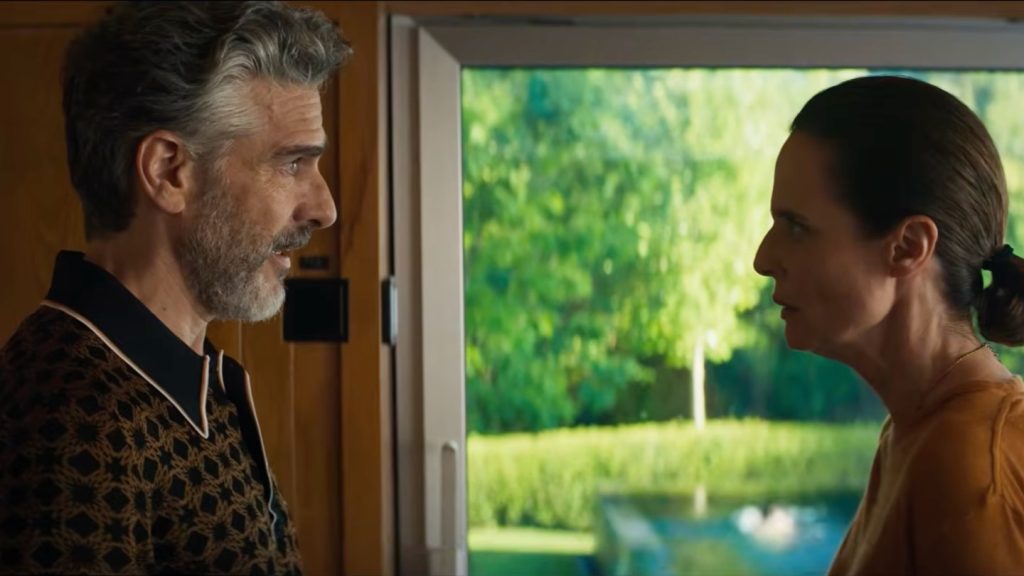
Raúl (Leonardo Sbaraglia) is a modern-day filmmaker struggling to finish his latest screenplay as he deals with the departure of his assistant Mónica (Aitana Sánchez-Gijón). Meanwhile, in Raúl’s 2004-set script, filmmaker Elsa (Bárbara Lennie) suffers migraines and tries to navigate complicated relationships.
Pedro Almodóvar has explored his own profession before, in Antonio Banderas’ suffering filmmaker of Pain And Glory, for example. But there’s a sense of intense self-examination and even self-flagellation in his new film, as he looks at the tendency of artists to cannibalise the lives of those around them — to the detriment, perhaps, of their personal relationships.
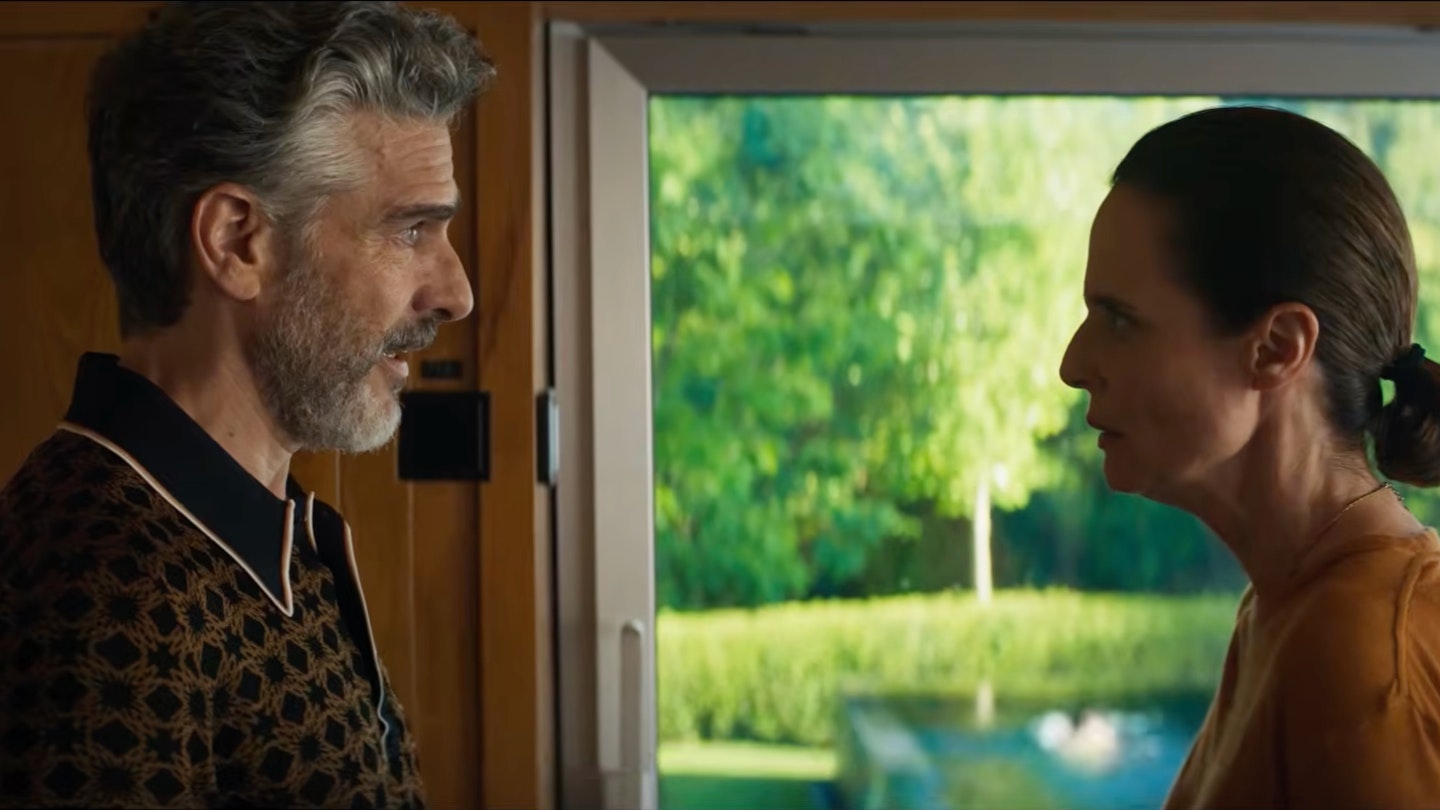
Not that that’s immediately clear. We open in 2004 with a typical Almodóvarian heroine. Bárbara Lennie’s Elsa is a sometime filmmaker and commercials director who is afflicted with incapacitating migraines over the Christmas holidays. Her supportive boyfriend Bonifacio (Patrick Criado) is a firefighter/stripper who tries to nurse her through her affliction, as she recovers enough to reach out to friends like Patricia (Victoria Luengo), in crisis over her cheating husband, and Natalia (Milena Smit), a mother grieving for her son.
We have beautiful people in enviable apartments, having interesting conversations to no real end.
Quickly, however, we learn that Elsa is the creation of Raúl (Leonardo Sbaraglia), a filmmaker crafting his new script. He has his own problems: his assistant Mónica (Aitana Sánchez-Gijón) has to leave for personal reasons, so now he relies on his boyfriend Santi (Quim Gutiérrez). Shifts in Raúl’s life are reflected in Elsa’s story; he shapes her narrative, the god that determines her fate and that of everyone around her, so that the thrust of Elsa’s story shifts abruptly when he learns something new about one of his own loved ones.
Almodóvar films have frequently been metafictions and stories within stories, and it is in the interplay between reality and artifice that Almodóvar here explores the moral failings of… well, maybe himself, but certainly people like him. Raúl toys with his characters and cruelly exploits his friends in pursuit of a compelling story. The problem is that, like Almodóvar himself here, he hasn’t found a satisfying ending. Instead we have beautiful people in enviable apartments, having interesting conversations to no real end. It is no hardship to spend time with these characters, because Almodóvar’s faculty with dialogue remains undimmed. But this needed a stronger finish than simply pointing out an artist’s compromises along the way – even if the open-endedness does succeed in further blurring the lines between life and art.
It’s a meandering and unfocused affair, touching on issues the director has explored before. But if you’re going to simply hang out with people, they might as well be Almodóvar characters.