
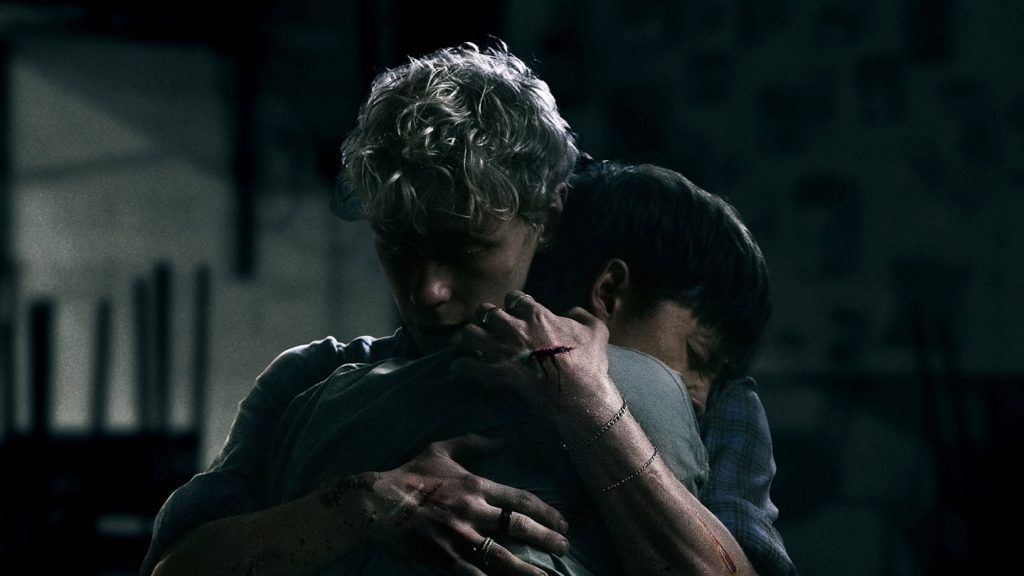
When new-in-town teenager Naim (Joe Bird) starts a relationship with his classmate, Ryan (Stacy Clausen), his mother (Mia Wasikowska) and her local church employ a deliverance healer (Nicholas Hope) to “cure” their urges. But the cure soon turns out to be a curse.
With its enigmatic Biblical title, and acknowledged debt to It Follows, Australian writer-director Adrian Chiarella’s debut horror may sound derivative. Yet the fears bubbling beneath the surface are so vivid, it easily transcends its inspirations.
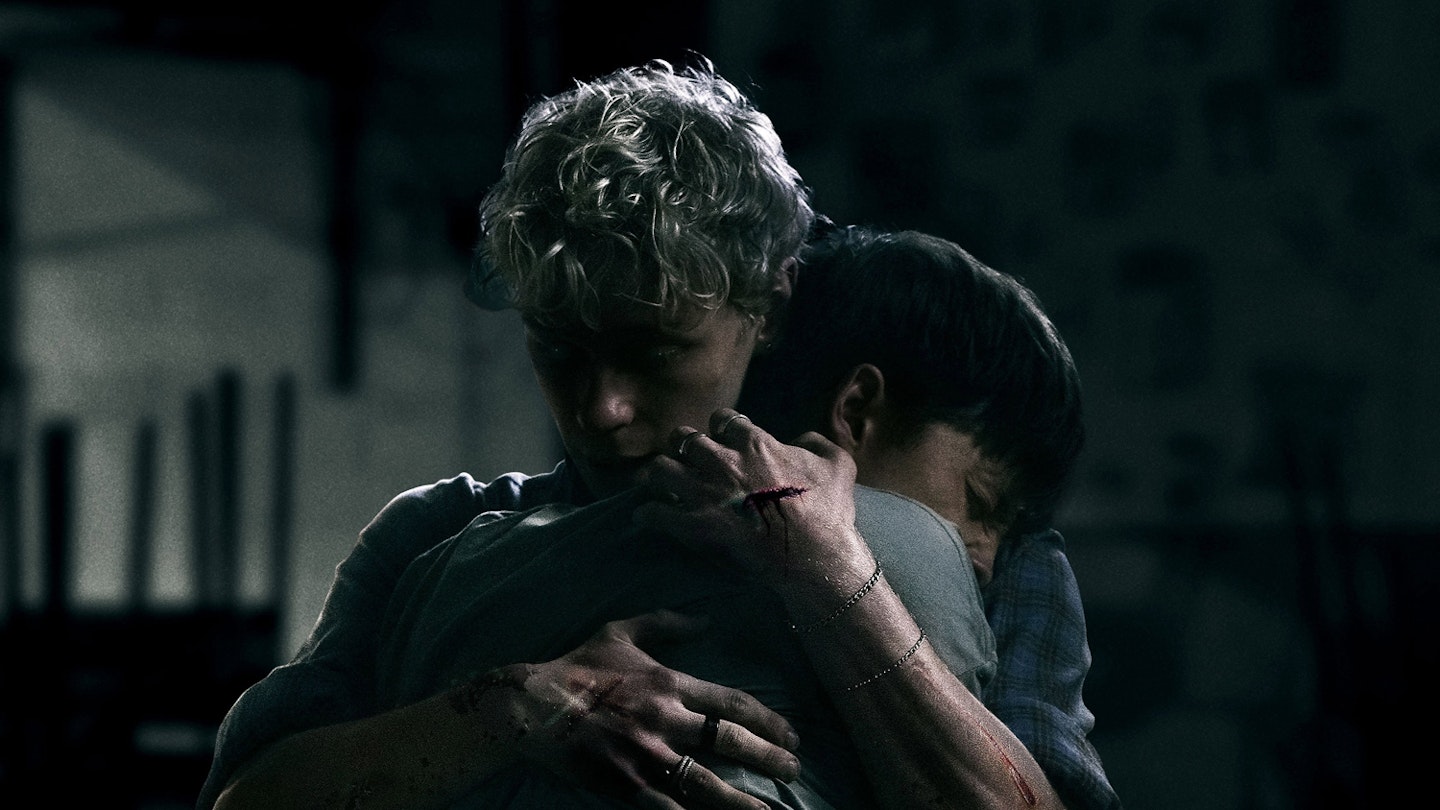
Naim (Joe Bird), love interest Ryan (Stacy Clausen) and Hunter (Jeremy Blewitt), who Ryan also messes around with, are ordinary kids trying to understand their sexualities. But because of the god-fearing backwater they live in, they are forbidden from being themselves. Chiarella grew up in Sydney, but he has a feel for the textures and strictures of rural town life: the empty arcades and derelict factories; the sense that there is nothing to do but have sex, fight or leave.
A fright flick that has something to say.
Leviticus refers to the Bible chapter that forbids homosexuality, or so conservative Christians believe, and the ritual Naim, Ryan and Hunter are forced to undergo is horrifying — almost as bad as Bird’s gruesome fate in Talk To Me. Instead of finding themselves saved, however, they are instead stalked by demons who take the form of their loved ones, attacking them at school, at work, anywhere they are alone. The debt to It Follows here is so strong it may as well be a sequel. But it’s one David Robert Mitchell could be proud of.
With the help of a gorgeous score and luminous cinematography, Chiarella captures the flare of first love, alongside some memorable scares. A sequence in which Naim, home alone, has to defend himself against an interloper escalates from fight-or-flight panic to shocking violence in a moment.
At times the subtext — that, for LGBTQ+ people, openly loving someone can be the greatest danger — is stretched almost to breaking point. But Chiarella never allows us to forget that the fight is real, and as scary as anything the movies could make up. What emerges is precious indeed: a fright flick that has something to say, and lots of ugly/beautiful ways to say it.
Chiarella’s heartfelt horror is a tender coming-of-age drama spiked with terrifying home truths.