
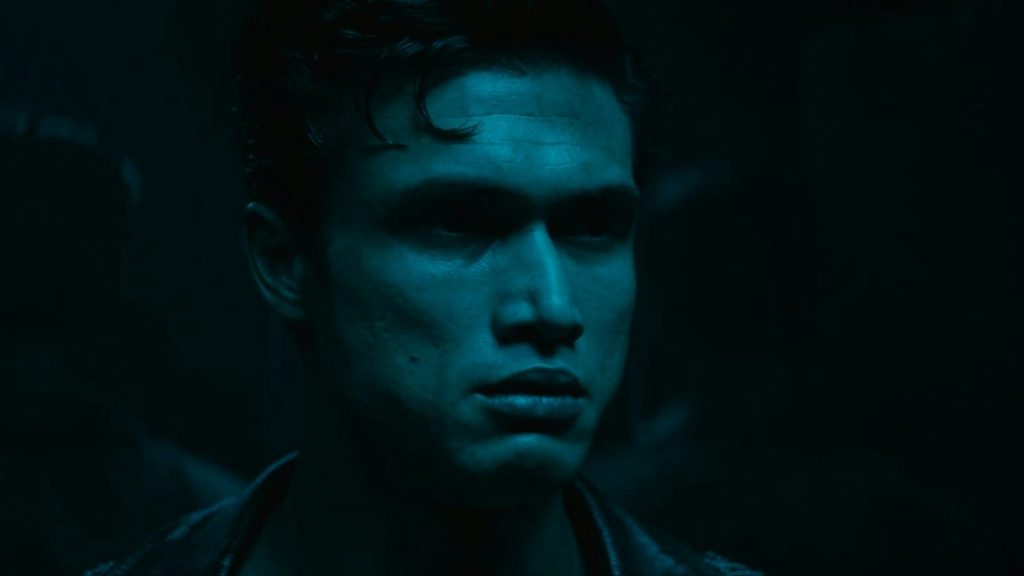
In a mist-shrouded futuristic city, an actor (Sophie Thatcher) and American soldier (Charles Melton) take on a supernatural killer with diamond-encrusted gloves who is murdering women.
“People will say I’ve become unrelatable,” worries one character in Her Private Hell. This doesn’t feel like an anxiety that Danish filmmaker Nicholas Winding Refn has ever struggled with. He wasn’t especially relatable when making gritty crime dramas like Pusher and Bronson. His breakthrough film, the Ryan Gosling thriller Drive, deployed taciturn masculinity and ultraviolence alongside cool detachment. His work since then has become increasingly strange, held at a remove from the audience: from The Neon Demon’s eye-swallowing fashion horrors to the pig-squealing sex scenes of Copenhagen Cowboy.
Her Private Hell — or to give it its full myopic title, Her Private Hell By NWR, taking auteur theory to exciting new levels of annoying — goes the furthest yet in the unrelatable stakes. Ostensibly, it’s another surreal, metaphysical, psychosexual fairy tale, the neon demons multiplied, an exercise less in style-over-substance than style-instead-of-substance. But more than any of his previous films, it feels like his lifelong quest for making challenging, aesthete-led art, unencumbered by convention or coherence, has finally run out of road.
As in Drive and The Neon Demon, Refn casts a doleful-looking young ingénue and subjects them to horrific violence and trauma. Here it is Gen-Z scream queen Sophie Thatcher; her character is a film star called Elle (a nod to Refn alum Elle Fanning?). We open in an eerie, misty-pink cityscape, the garish colours of Refn’s beloved giallo horrors immediately present. In the lobby of a vast hotel skyscraper, Elle meets a fan named Hunter (Kristine Froseth), and invites her to the well-appointed penthouse of her (wicked?) stepmother, Dominique (Havana Rose Liu).
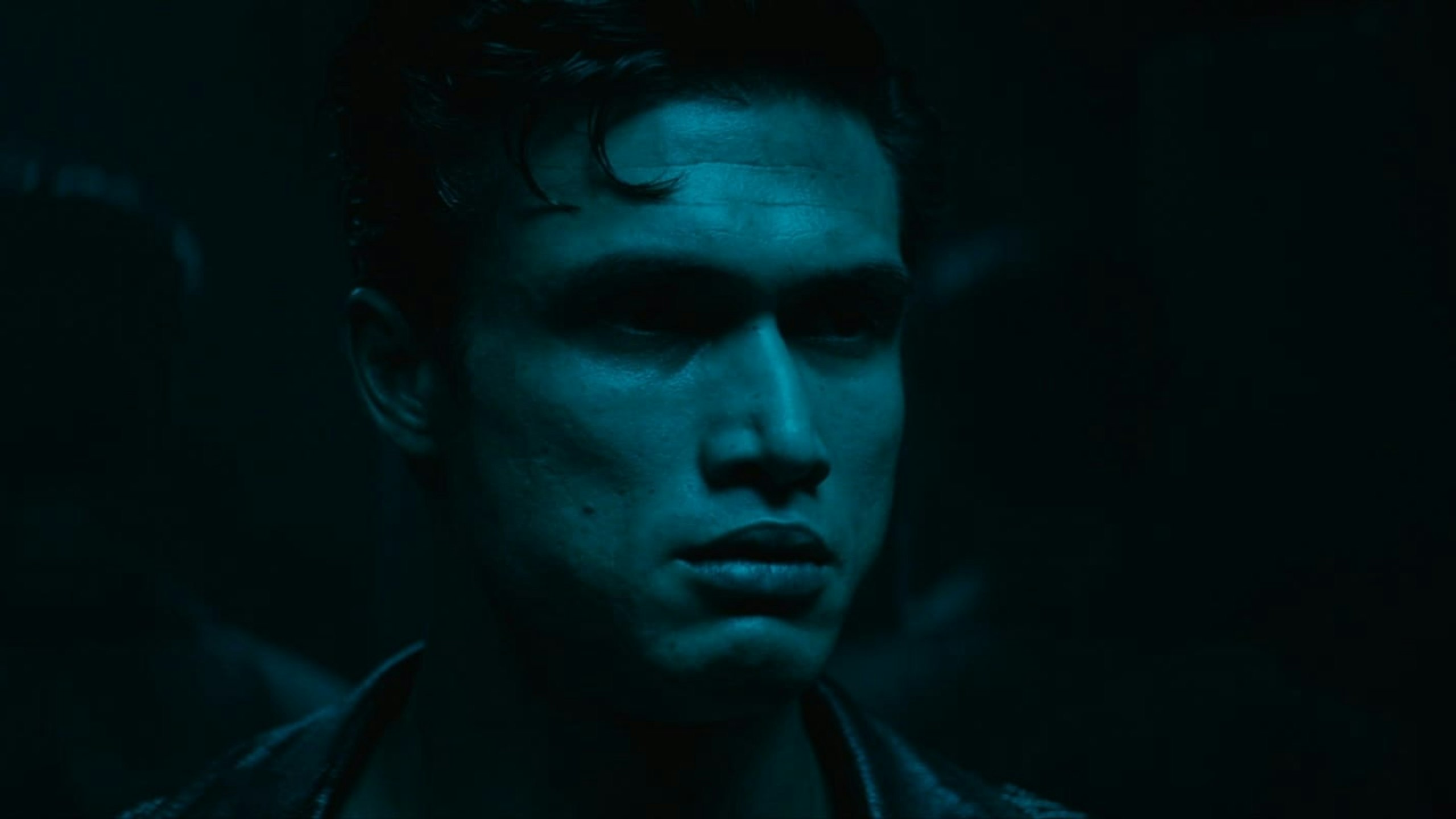
There is talk of evil mist, and whispers of an otherworldly, serial-killing boogeyman called the Leatherman, whose face, we’re told, “is an infinite abyss”. Also in the mix, somehow, is Charles Melton’s Private K, an American GI: a strong, silent type out to exact vengeance for wrongs committed against women, yet who still finds time, in-between bloody beatings, to comb his impeccable hair.
It would be inaccurate to label this film as hell. Hell would be much less boring.
It’s not that there isn’t a plot or characters here: there very much is, with a woozy love triangle of sorts, a gruesome revenge thread, and clear nods to the dark Hans Christian Andersen fable The Darning Needle. There are hints at a meta-narrative, too, a film about filmmaking: Elle stars in a hyper-stylised adaptation of a cheesy sci-fi comic book called Candy Floss, which plays as a kind of wanky fashionista Flash Gordon. “Making a movie is like going to war,” notes one character, suggesting this is Refn working through some stuff. But whether directly or indirectly, details are either fuzzy or ruinously incoherent. Mystery and ambiguity in filmmaking is always welcome, but the choices here feel just sloppy, patience-testing and childishly provocative. Often they simply don’t deliver; Dougray Scott’s Johnny Thunders is spoken of in whispered terms, yet disappears almost immediately.
Far more often — far too often — the female characters just seem like objects upon which to hang beautiful clothes and make-up, lining up to pose in straight-down-the-lens vignettes: as if props for a glamour magazine shoot, rather than living, breathing humans for a narrative. The male gaze is everywhere here, even if dressed in the veneer of female queerness. Refn’s camera smacks of Asian fetishism, too, a criticism he has fielded before in Only God Forgives.
What is it really about? The cycle of abuse? The Fall Of Man in boogeyman form? Something to do with mist? It’s never clear. Perhaps it makes sense to Refn. Across a two-hour runtime that feels like four, the film teeters precariously between the poles of captivating and insufferable, and too often lumbers into the wrong side.
Undoubtedly, Refn is a master stylist, and surrounds himself with master craftspeople. The production design by Gitte Malling is ambitious and imposing, a rare example of modern-day miniature work. The sound by Kristian Eidnes Andersen dials up the squeak of the leather and the crunch of the necks. The sweeping score from Pino Donaggio lends everything an operatic quality. The lurid palette of Magnus Nordenhof Jønck’s cinematography is jaw-dropping. Yet the finished product is just endlessly frustrating. The experience is akin to watching extremely beautiful paint dry. It would be obvious but not accurate to label this film as hell. Hell would be much less boring.
Glossy nonsense. It’s dripping in style, and tries very hard to find the enigmatic cool to match, but Her Private Hell is just a very pretty load of old bollocks.