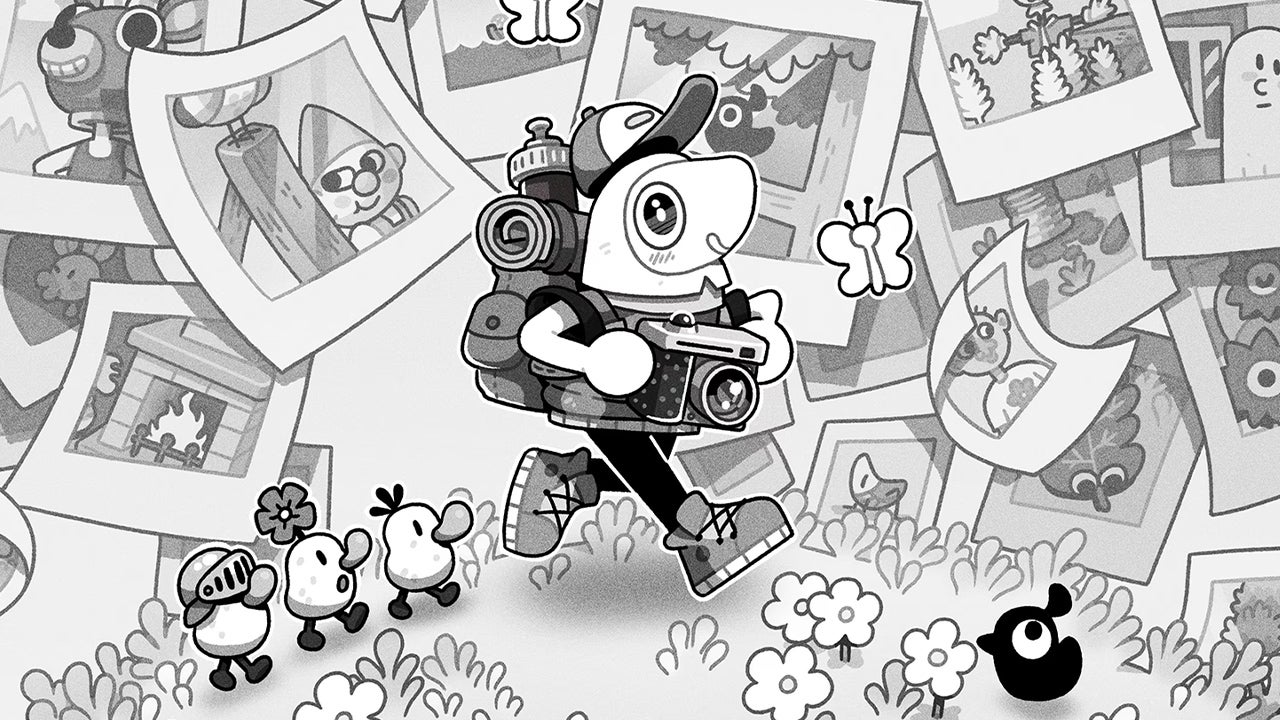

When a troll blocking a bridge wants a photo of three goats, you get him a photo of three goats. Not only must you find goats to photograph, but you must perfectly position these goats – on three different ledges – to get all three in the photograph. TOEM 2 is full of these sorts of environmental puzzles that cleverly use a photo mode mechanic through the lens of your own in-game camera to define its gameplay. It is a hidden object game insomuch as you’re searching for hidden objects, but it’s no June’s Journey, where you’re searching through static images to pick out items. TOEM 2’s world, like the original, is dynamic, surprising, and an absolute delight.
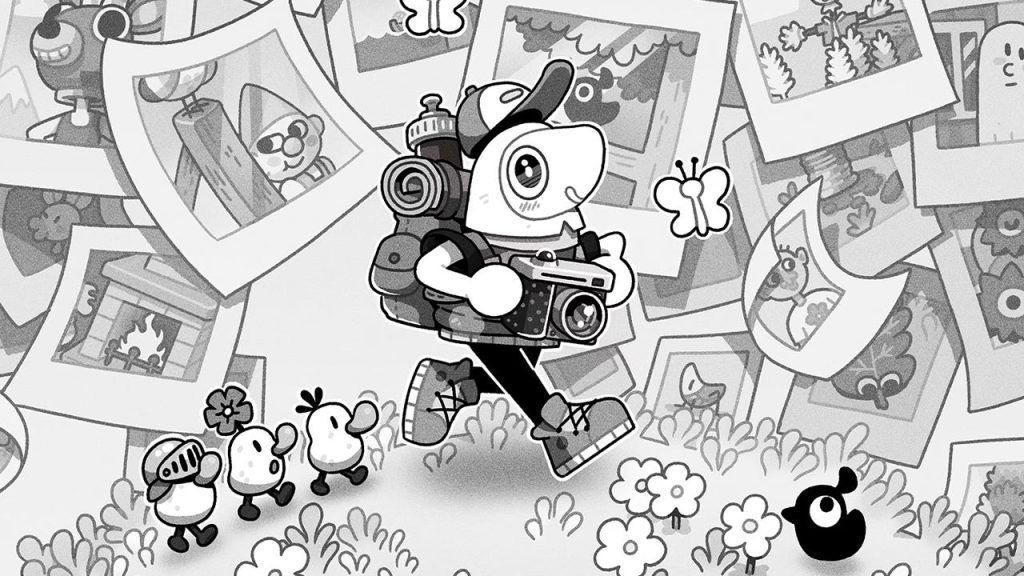
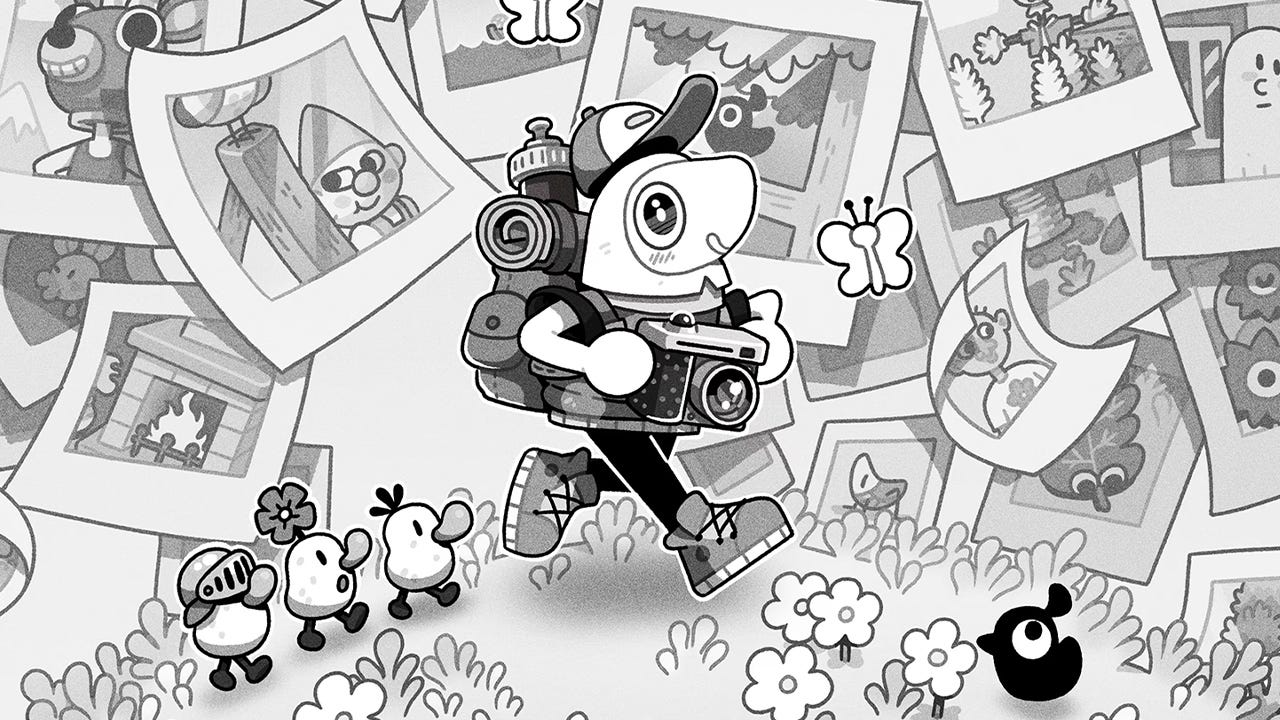
As the title would suggest, TOEM 2 is the follow-up to TOEM: A Photo Adventure from developer Something We Made, which was released in 2021. TOEM 2 is exceptionally similar to TOEM; the foundation remains exactly the same. You control a young lad who heads out from their quaint home to see an awe-inspiring seasonal event called the toem. Playing as that little guy, you travel from your home through three distinct towns in monochrome isometry. Bus tickets are necessary to keep moving from town to town, and those are earned through helping townsfolk. And to help these townsfolk is to take photos.
You’ll take photos of all sorts of things: Hidden garden gnomes, stinky cheese, and cute little critters. Each town in TOEM 2 is a series of connected, isometric dioramas rendered in a soft, 3D style and only in shades of black and white. The townsfolk retain the flatter, more hand-drawn aesthetic from the first game, letting them stand out among the environment. Creatures skitter about, clouds linger in the sky. Along the way, an invisible man on one forest block of the town may need a potion to become visible again (he’s only visible through the camera lens). A potion maker resides several blocks away; once you stumble upon him, he’ll ask for toadstools, send you out once again. Only then you’ll be able to make your way back to the invisible man and hand over the potion. Most of TOEM 2’s objectives typically play out like this and work as a way to encourage further exploration of the world. A lot of the time, you’ll find something surprising, or silly – a cat hiding in a flower pot, perhaps – and snap a photo. It’s so curious that it probably means something, but you’ve just not figured that out yet.
Beyond taking photos, each of these towns has a little gimmick tied to the camera. In the quaint farmland town Cropten, vines are spreading, blocking entrances and pathways. One of the first townspeople you’ll meet will attach a pair of scissors to your camera. That first townsperson, in Cropten, is a little worm who’s very concerned about the vines. Instead of point-and-shoot, it’s also now point-and-snip. Vines pop up every now and then, the little worm would panic, and I’d gladly take care of it for them. The two other towns, Taletorp and Deltburg, have their own respective tools and enjoyable little, ongoing storyline around using them. And you can’t miss the charming townsfolk you’re introduced to immediately at the start of each level; they serve to tutorialize your new tools, and become a friend to wander about with.
TOEM 2 is about four or five hours long, so its simple premise never feels like a chore. Each of the worlds are so individually delightful that I didn’t want to rush through any one location. It’s one of the very rare games in which I was eager to seek out everything there was to discover. There are many more puzzles to solve than there are bus tickets required to progress, and once you’ve collected those bus tickets, the only incentive for continuing is the sheer joy of seeking what happens. There is a scarecrow, for instance, that wants to see the world and you can snap him in-and-out of different locations: at much too high heights, near a cozy fireplace, or back with some pesky birds. It’s the three hidden gnomes that I’ve got in the back of my mind throughout it, checking nooks and crannies to see if I can spot them. Joy, throughout TOEM 2, is hopping off objects and onto rooftops, navigating curving platforms to reach the farthest peaks just to gain a new perspective on the world.
Oddly, TOEM 2’s biggest limitation is that the original TOEM is fantastic. Using a camera to engage with the world through a neat photo mode in its particular way felt exceptionally novel; TOEM 2’s camera upgrades and tools don’t necessarily elevate it beyond that level of uniqueness. TOEM’s art is hand-drawn, in a way that feels more intimate and raw; While TOEM 2‘s characters retain that style, the world and its items are computer-modeled. It’s still lovely and well-crafted, but it doesn’t feel like an improvement or expansion on the first game.
Most prominently, though, TOEM’s puzzles were a bit more engaging. TOEM 2 is very gentle, and effortlessly guides you through its photographic treasure hunt. It was breezy to play, and although that’s not necessarily a bad thing, the touch of friction in the first game encouraged a deeper degree of curiosity. For instance, TOEM 2 has a quality-of-life sort of update to its camera – being able to lock the camera onto an object makes it much easier to capture photos of fast-moving objects, like a paper plane gliding in the air. It’s a seemingly insignificant change that removes that stroke of friction that I wish TOEM 2 had. It wasn’t exactly difficult to take photos without the focus lock, but it meant putting in some work for your perfect picture.
When answering the question of ‘What does this all lead to?,’ the end of TOEM 2 may seem disappointing. The toem phenomenon that the game is centered around isn’t all too different from that of the first game. But TOEM 2 isn’t disappointing on the whole, because it was never at all about reaching the end. Forgive me, but it really is what you’ve seen and discovered along the way.