

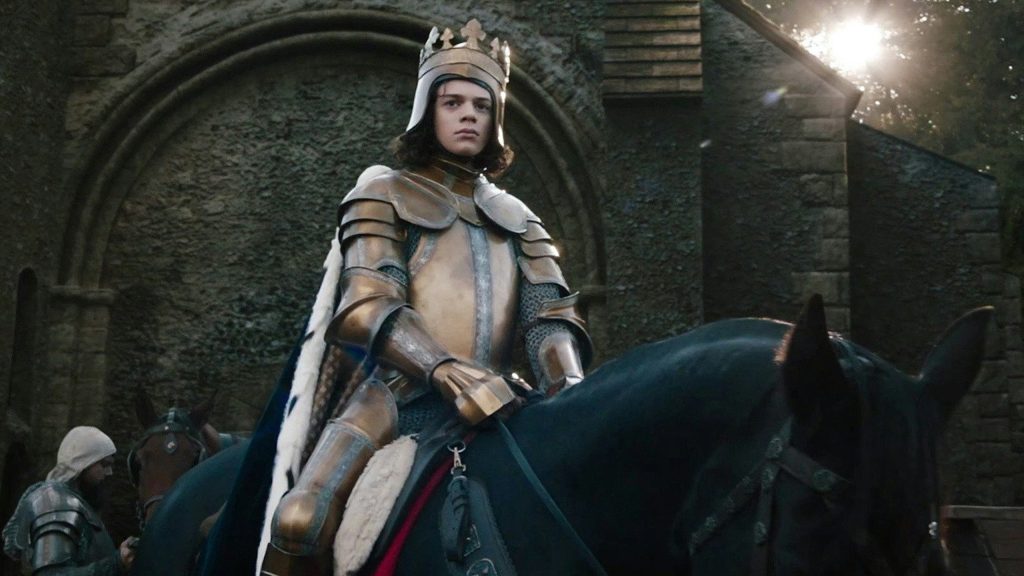
In 1381, an anonymous but formidable farmer (Andrew Garfield) leads a raging rebellion against the tyranny of King Richard II (Woody Norman).
Having previously tackled the likes of United 93 and Captain Phillips, Paul Greengrass here brings his intense cinema vérité to a detailed historical drama, in which Andrew Garfield plays a sickle-wielding symbol of the proletariat. The erstwhile Spider-Man delivers a fearsome performance as an oppressed man in mourning who shoulders great responsibility. Going only by the name of ‘Ploughman’, an echo of the 14th-century poem Piers Plowman, he leads the Peasants’ Revolt which — if some recent, disputed film marketing is to be believed — birthed the Robin Hood legend. Regardless of this claim’s veracity, The Uprising belongs to a roughly similar time period that birthed enduring English folklore about stealing from the rich to feed the poor — a concern which resonates today.
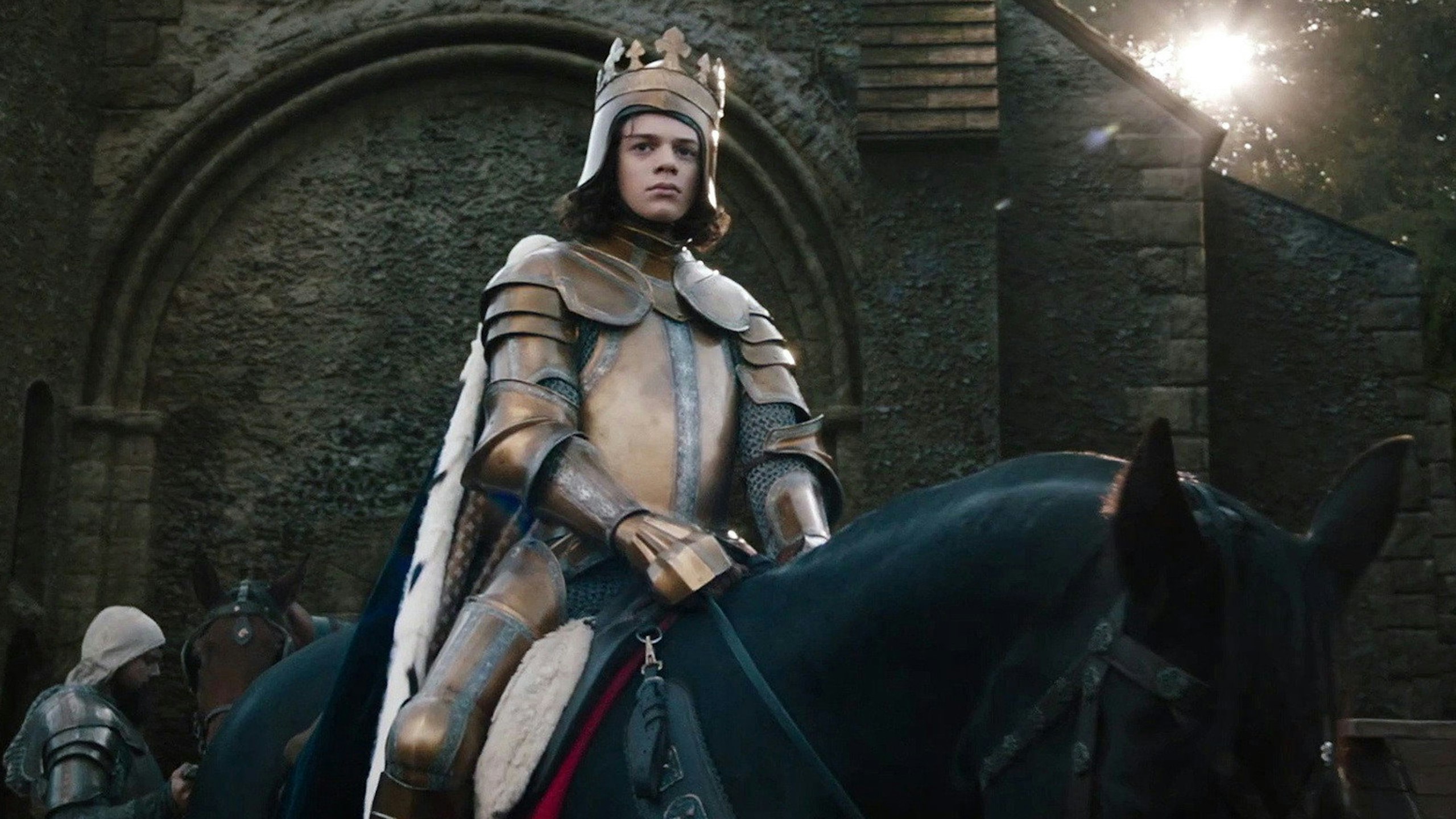
The year is 1381. To preserve his economy in the wake of the Black Plague, the boy-king Richard II (Woody Norman) levies ruthless taxes on his peasantry, upon the advice of his cunning council — played by a murderers’ row of English character actors. The domino effect is swift, as word of Ploughman defying a sinister royal guard spreads far and wide to spur historical leaders like conscientious rebel Wat Tyler (Cosmo Jarvis) and fiery preacher John Ball (Jamie Bell) into organising a march on London. The desperate Ploughman, meanwhile, must reckon with his evolving moral code: many of the other agitators desire their pound of flesh, with this righteous fury best embodied by Thomasin McKenzie’s Alyce, a rebel who harbours a painful past that binds the two characters together.
A blood-boiling historical drama that spirals quickly and with abandon.
The Uprising accelerates through controlled chaos, the kind typical of Greengrass’ work. And yet the contrast between his naturalistic lens and the period backdrop adds an intriguing layer, making what can sometimes be a stilted, formal genre feel entirely of-the-now, with a volatility that often turns into vengeful bloodshed. The story is told through the actions of a mob of thousands, whose grievances keep them oscillating between violent reprisals and specific political demands — all as they maintain a religious deference towards their king. To their considerable credit, Greengrass and editor William Goldenberg find a precise balance between the momentous masses and their individual figureheads.
In the role of Richard II, Norman crafts a haunted figurehead whose dreams of torment drive his decision-making, and lack thereof, when his unscrupulous aides conspire from the shadows. In tandem with the presence of Richard’s principled mother, the Fair Maid of Kent (Katherine Waterston), the young actor draws sympathy as the juvenile ruler, even from viewers who might not revere him like the peasants do — which smartly informs the movie’s rug-pulls.
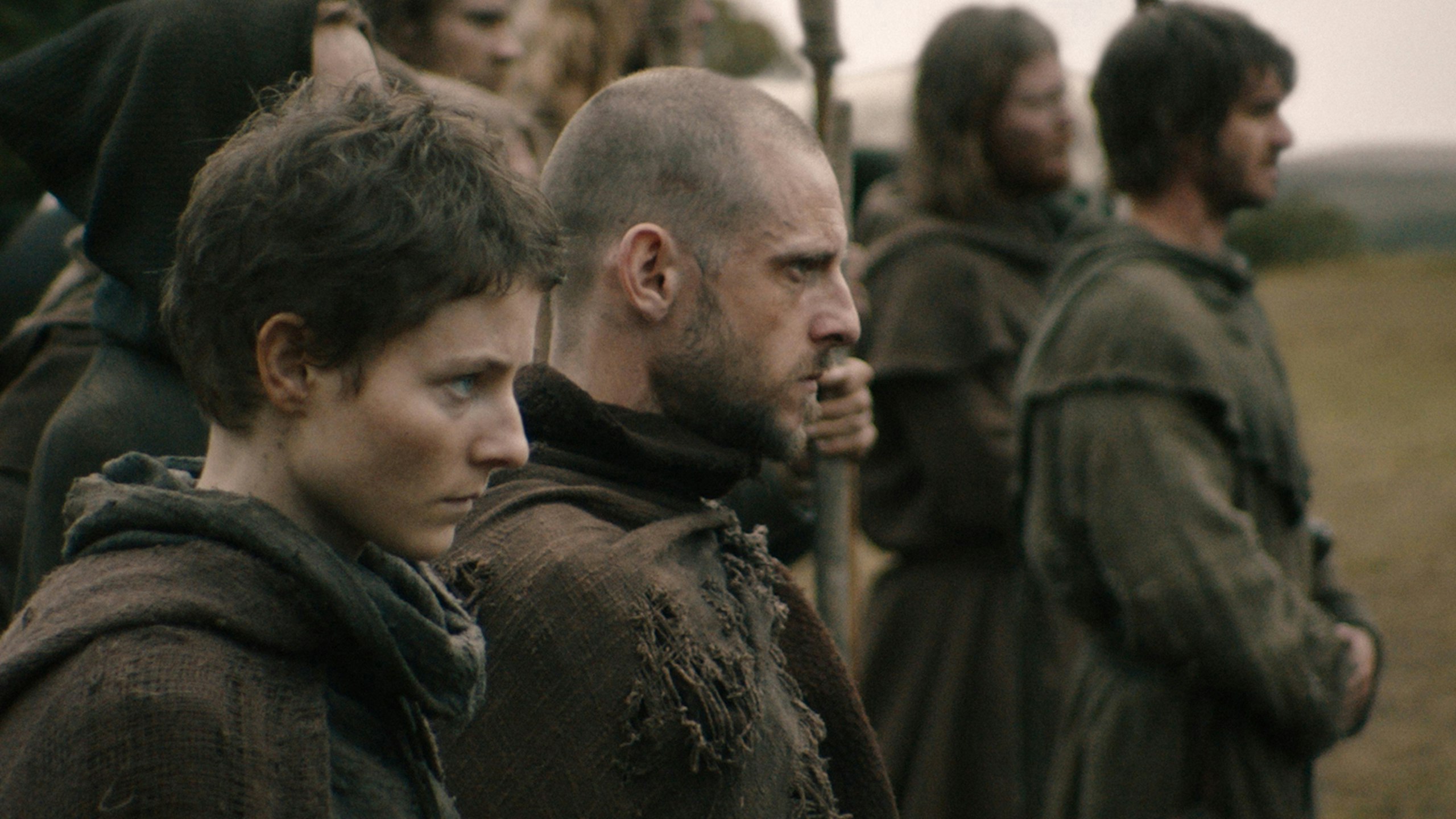
As Greengrass sows these seeds of doubt, a handful of characters become his emotional anchors. He tracks the advancing mutiny, as well as the fomenting royal response, through detailed reaction shots amid the growing anarchy. One such bit player is Sky Yang’s nameless royal scribe, who is dutybound not to speak (except to relay the king’s words), but whose silent emotions create a riveting throughline. But it’s Garfield who remains the film’s most magnetic fixture. Ploughman’s wrath remains rooted in a palpable agony, the kind he’s lived with for years, until it becomes a part of his every word and movement. This simmering undercurrent forces him to wrestle with his true motives, and reckon with that of every rebel he meets.
The eruptive set-pieces eventually give way to riveting negotiations, as the movie roots its modern class concerns within an archaic religious consciousness. At first, this may feel alien to modern viewers, but it imbues the characters with sudden ethical quandaries, which turn action beats into spiritual dilemmas. Notions of justice and revenge become uncomfortably entwined, and the drama reaches alternating crescendos of catharsis and unquenchable anguish, the film’s quiet, reflective valleys punctuating its cacophonous peaks.
In an era of ‘eat the rich’ satires, The Uprising provides a straightforward, unflinching glimpse at what this devourment might look like. It achieves this by way of a blood-boiling historical drama that spirals quickly and with abandon, en route to a surprising conclusion that finds catharsis in the darkness.
Paul Greengrass’ signature hand-held intensity combines with a period setting. As the eye of the swirling storm, Andrew Garfield has seldom been better.