
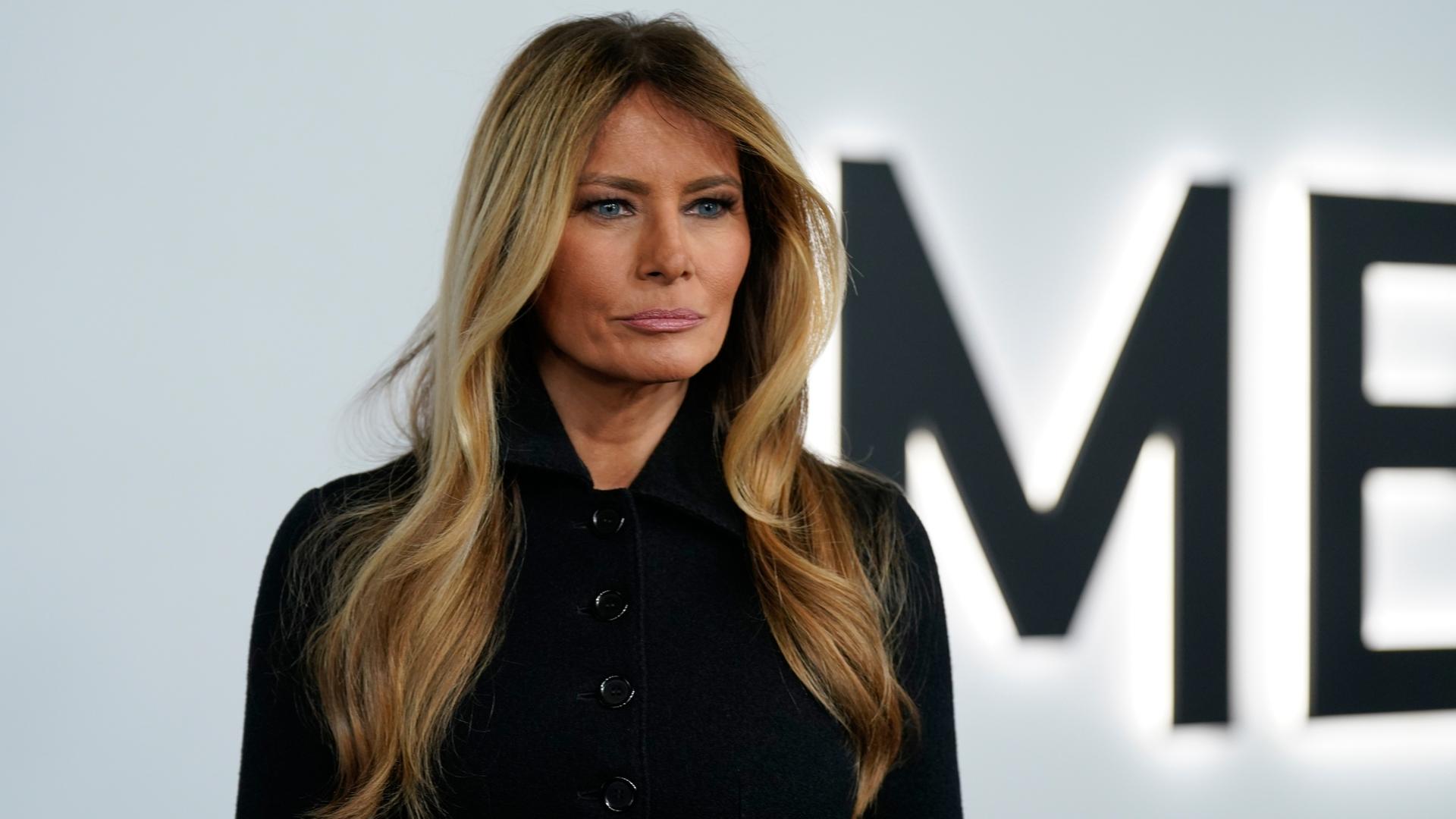
An account of the 20 days leading up to the inauguration of the 47th President of the United States, Donald Trump, as told from the perspective of his wife, First Lady Melania Trump.
In 1935, Adolf Hitler commissioned director Leni Riefenstahl to make Triumph Of The Will, a highly nationalistic and likely heavily staged account of the Nazi Party’s 1934 Nuremberg rallies. It was a key moment in the history of propaganda films, a coldly fascistic conceptualisation of Germany as the Nazis hoped to recast it, produced with full participation and collaboration of an authoritarian regime. Melania, on the other hand — a new documentary about Melania Trump, wife of President Donald Trump — is more like Triumph of the Shill. It is political propaganda at its most transparent — cynical, pointless, and very, very boring.
The film is directed by Brett Ratner, whose work on films such as Rush Hour 3 and Tower Heist did little to hint at his apparent interest in documentary cinema. But after a lengthy absence from directing following accusations of sexual misconduct in 2017 (he has denied the allegations and no charges have been brought against him) Ratner gallantly steps up here to deliver a fawning account of Melania Trump in the 20 days leading up to the 2025 inauguration of President Trump’s second term.
Like her dresses, the whole film has the feel of being made precisely to the specifications of its subject, and as such feels entirely at a remove from any objective reality.
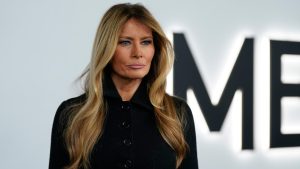
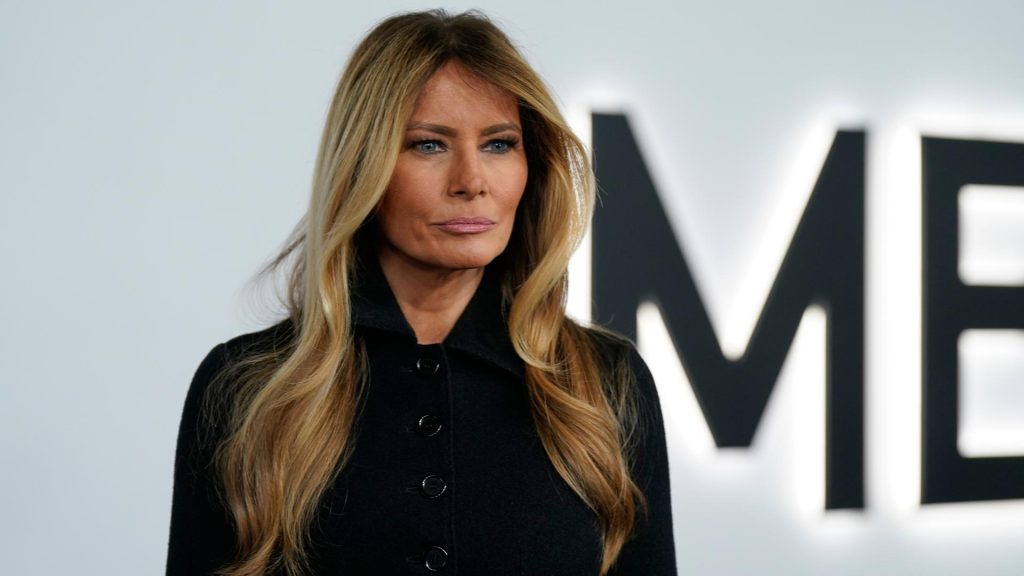
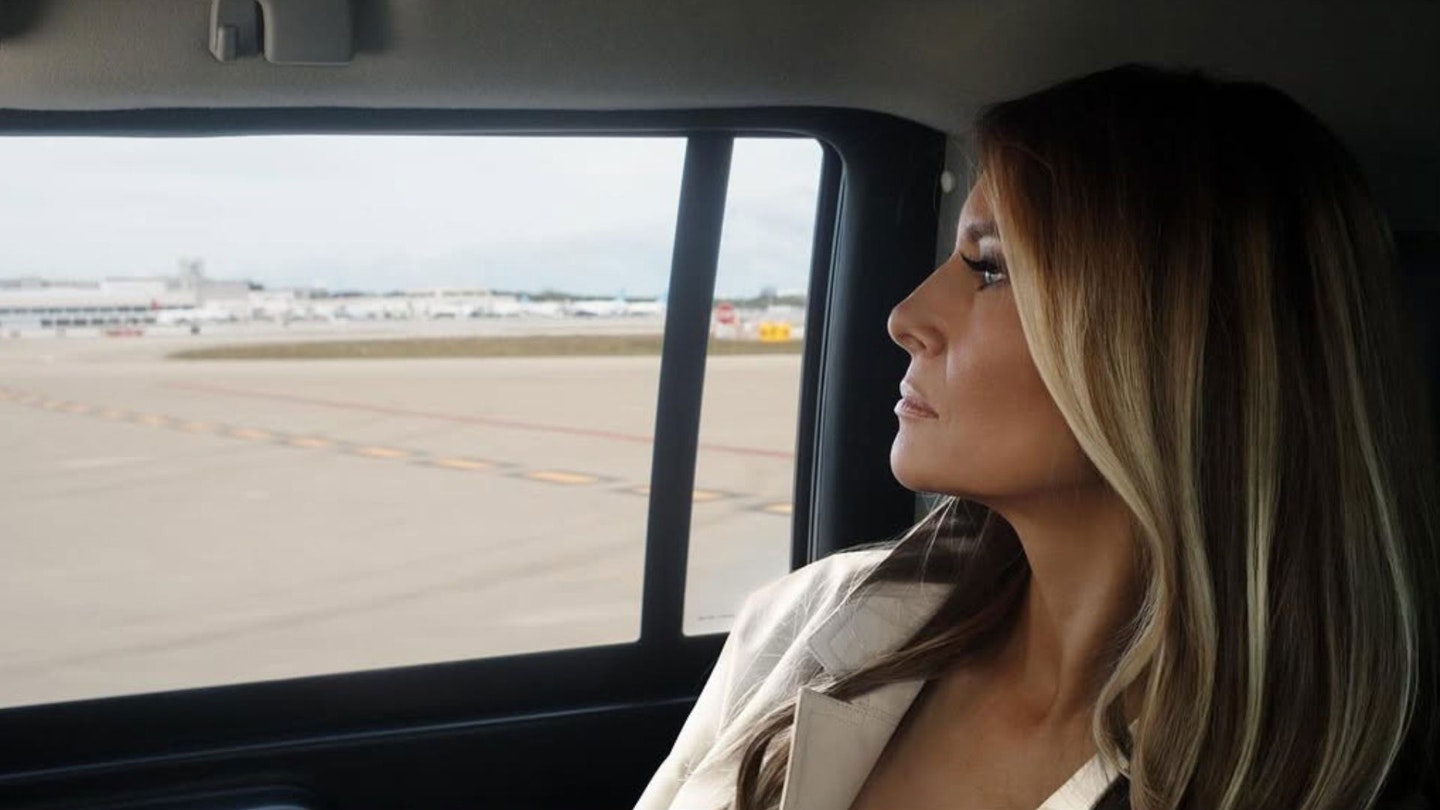
It is immediately clear, from the moment we watch Melania’s high heels step out of the Mar-A-Lago resort in Florida into a waiting Secret Service car, that what we are watching is a kind of scripted reality TV — The Only Way Is White House, if you will. The First Lady-in-waiting moves from clearly-staged-encounter to clearly-staged-encounter: appointments with her fashion designer, her interior designer, her events planner. She oversees these meetings with the kind of vapid, hot-aired superlatives so beloved of her husband: “This is beautiful,” she says of a golden egg. “This is amazing!” she coos over her inauguration outfit, bedecked in trademark Mussolini-black. “I honour the importance of the White House,” she says, neglecting to mention any of the eventual plans to demolish an entire wing of it.
Narrated and presumably written by Melania herself, the voiceover has the insight and wisdom of a school book report. Like her dresses, the whole film has the feel of being made precisely to the specifications of its subject, and as such feels entirely at a remove from any objective reality. Melania — who is credited as a producer — was reportedly heavily involved in every step of production, apparently offering notes on everything from colour correction to music selection (which includes the Rolling Stones, Tears For Fears, Michael Jackson, and most bafflingly, a portion of Jonny Greenwood’s score from Paul Thomas Anderon’s Phantom Thread.)
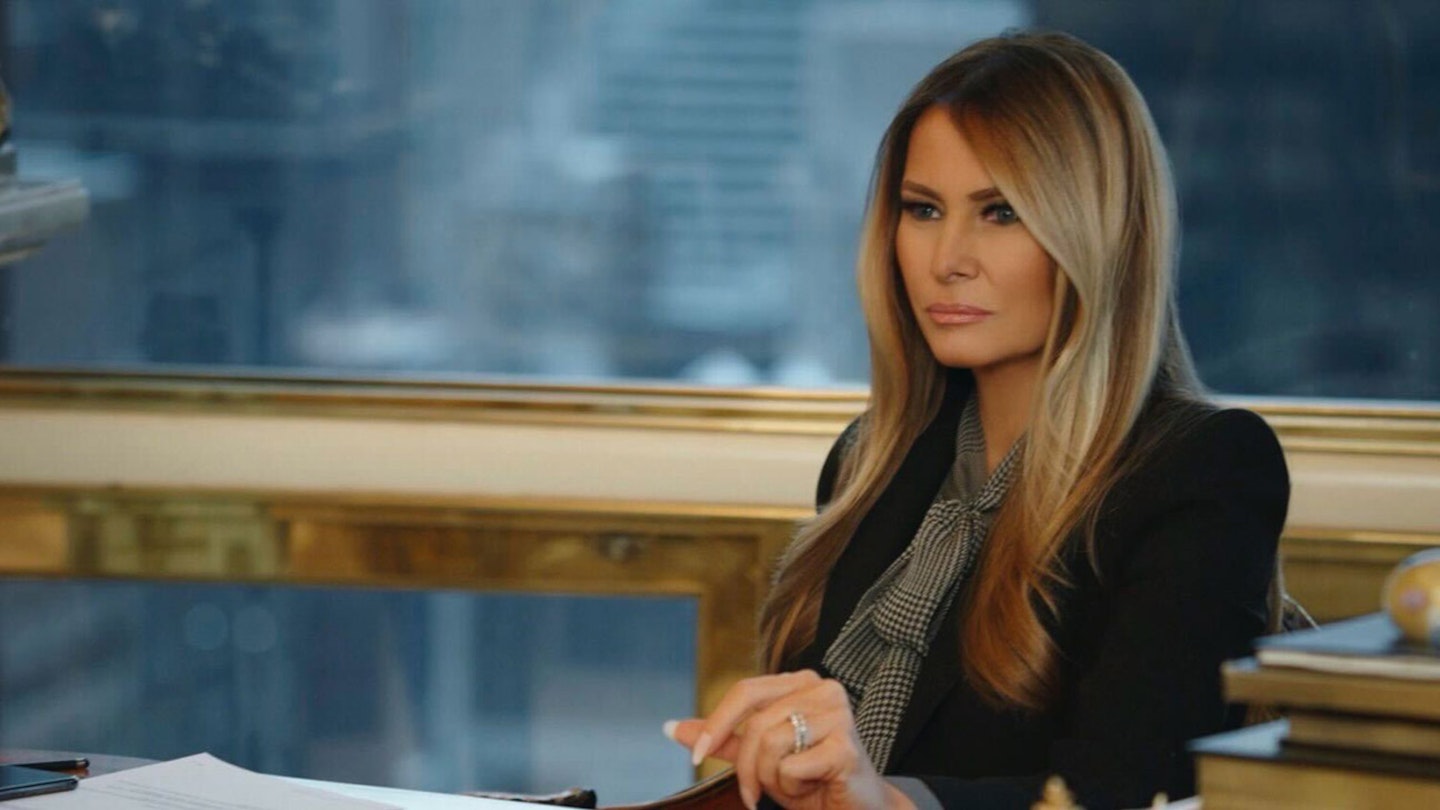
The President himself is only occasionally spotted, but it’s very instructive to witness the total lack of warmth between the unhappy couple. At one point, we hear a phone call in which she stiffly and politely answers the phone with the words, “Hello, Mr President,” before emotionlessly listening to him brag about his electoral college numbers (“Great, well done!”, is the best she can muster). In another slightly startling moment of a mask slipping, Trump offers this gem to the camera: “Nobody like her!” he marvels. “She’s very difficult… but nobody like her.”
You will leave this film arguably knowing less about Melania than when you come in.
Such insights are rare. For the most part, it’s all rather meaningless. There is no drama to speak of, no tension, no narrative arc. Melania’s life story is undeniably fascinating: a former model and beauty queen, born in Soviet-era Yugoslavia, an immigrant who improbably clawed her way to the top, making the White House her home — twice. Within her life, you can surely find the story of America in microcosm: Give me your tired, your poor, your huddled masses, yearning to start a luxury jewellery line! As a public figure who rarely gives interviews, she is a mystery, a cipher hiding behind designer sunglasses, surely waiting for her story to be told.
But this film is uninterested in backstory, in delving even remotely under the surface. We briefly learn that Melania’s mother was a fashion designer — a tantalising detail, a hint of a motivating force. It’s never explored. Instead, Melania is left to opine about how much she misses her late mother while attending, erm, Jimmy Carter’s funeral. Ratner’s most probing question from behind the camera, meanwhile, is “Who is your favourite recording artist?” You will leave this film arguably knowing less about Melania than when you come in.
The latter half of the film offers a blow-by-blow account of inauguration day itself, and while there are some jabs at the opposition — Kamala Harris impatiently checks her watch in one shot — this is where the film truly steps up its tedium. From beneath her severe angular hat, eyes obscured like a fashionista Judge Dredd, Melania glides between functions, luncheons, balls and dinners, largely expressionless, eternally inscrutable. Her greatest contribution to the big day is in instructing her husband to add the word “unifier” to his inauguration speech, for the line “We will restore fair, equal, and impartial justice… We will be peacemakers and unifiers.” Do try not to choke on your popcorn.
While it could have delivered a genuinely fascinating look at an enigmatic public figure, Ratner’s documentary instead just sits there, wallowing in a puddle of its own pointlessness, and expects you to clap for it. Melania Trump once wore a jacket emblazoned with the words, “I really don’t care — do you?” Maybe now, after watching this, we understand what she meant.
An obsequious, ring-kissing portrait of the current US administration, dressed in gauche, glossy reality-TV clothing. And yet somehow still better than Rush Hour 3.