
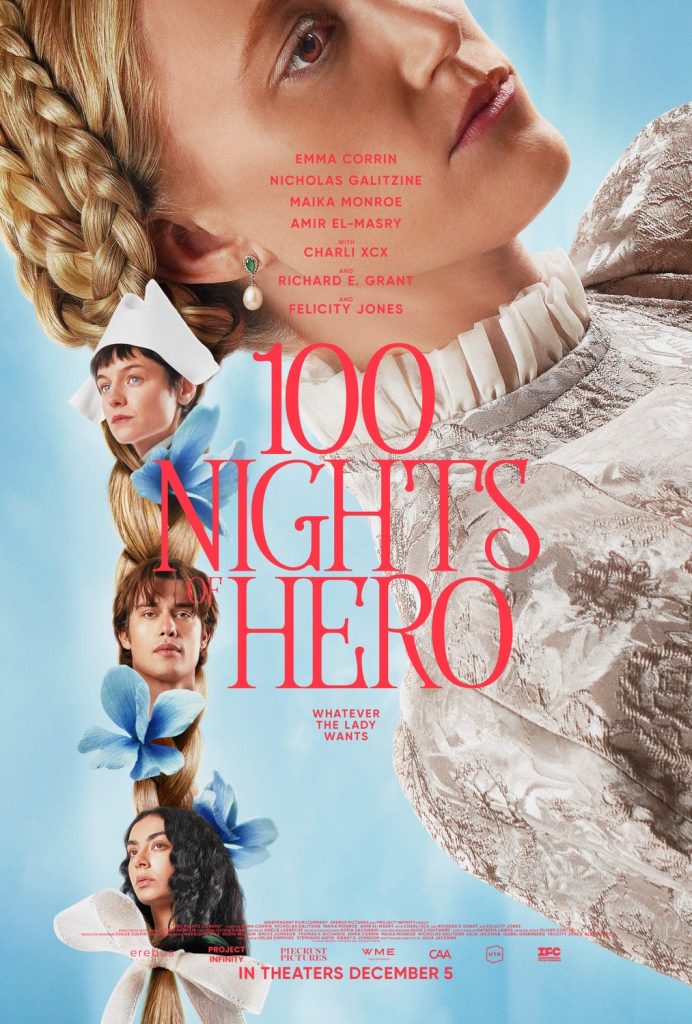
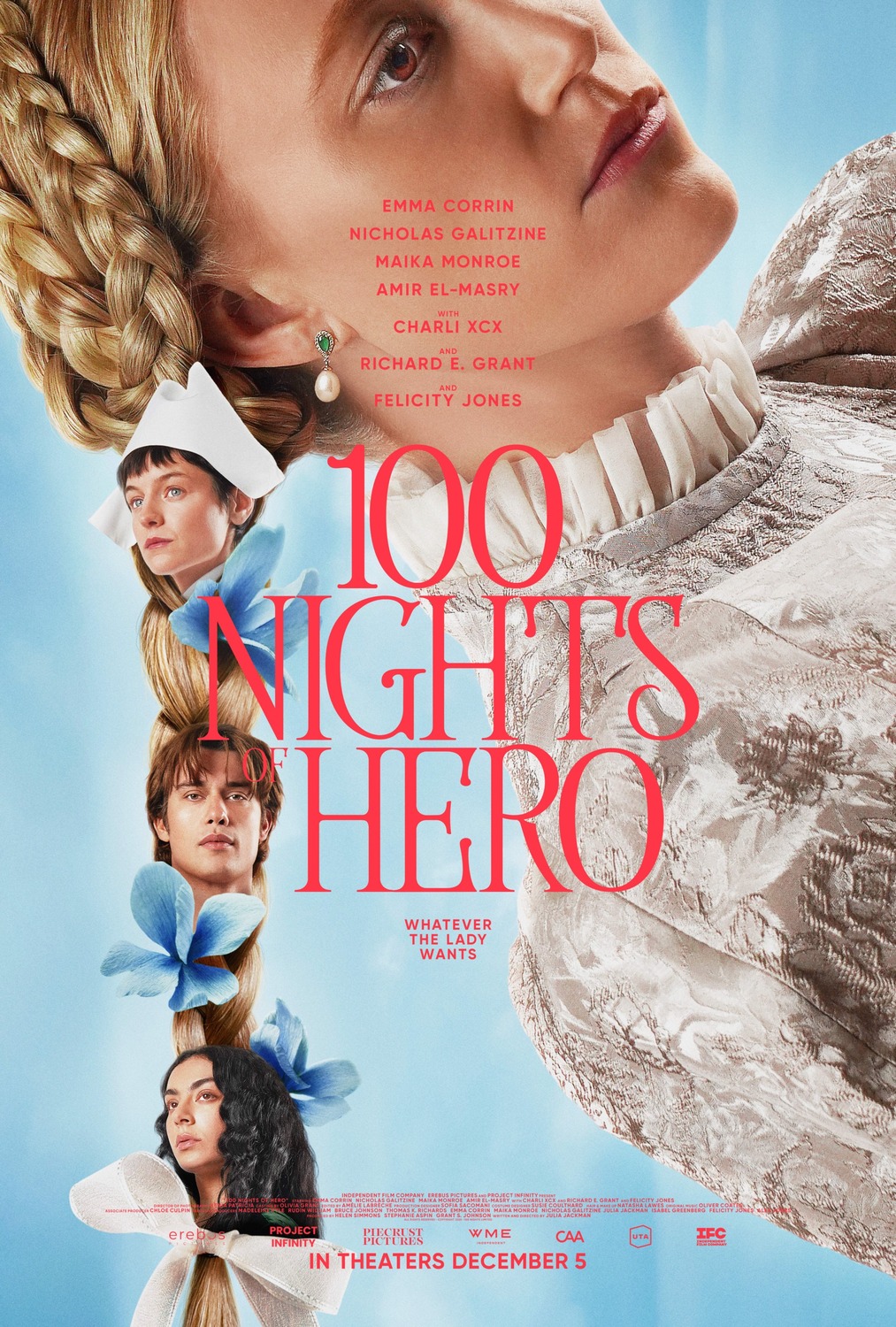
A callous husband (Amir El-Masry) leaves his wife (Maika Monroe) with his caddish friend (Nicholas Galitzine) as a potentially lethal test of fidelity. Loyal maid Hero (Emma Corrin) must thwart his plans.
This second film from Julia Jackman is a fairy tale set in a nightmare world, a feminist parable that meanders between funny and furious. The setting is, if you can imagine, a world dominated by misogyny, where women are denied basic rights and authority over their own bodies. In that harsh reality, a few brave women fight back in the only way they can: by telling stories. Based on a striking graphic novel by Isabel Greenberg, this at times feels more style than substance — but the offbeat style is undeniable.
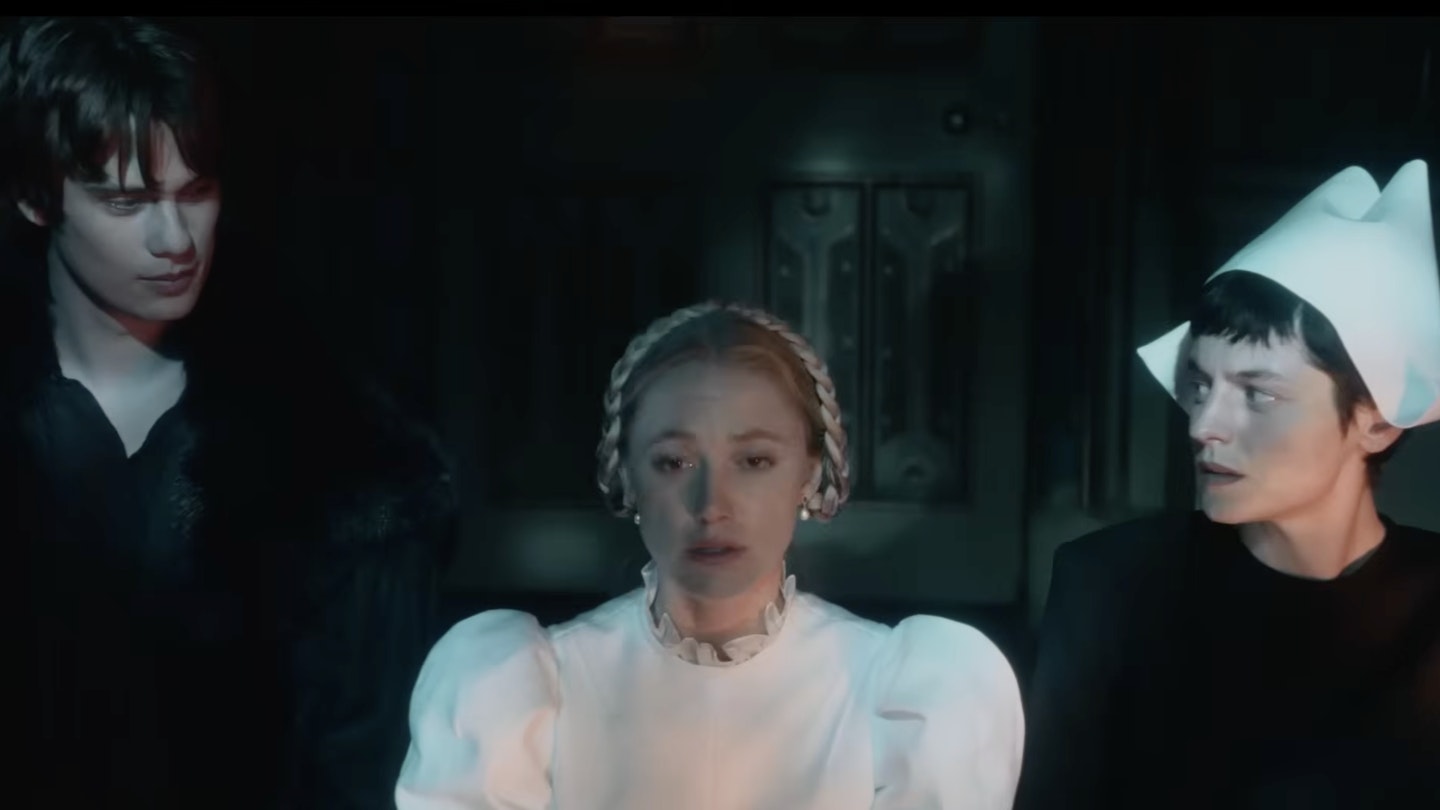
Stories wrap around one another like ivy. There’s a creation myth, where the idealistic God who builds the world, Kiddo (Safia Oakley-Green), is overruled by her violent father Birdman (Richard E. Grant). He introduces religion, corruption and inequality. Then there’s the central plot, wherein a loyal maid, Emma Corrin’s Hero, channels Scheherazade and uses stories to bamboozle Manfred (Nicholas Galitzine), a predatory suitor, in his pursuit of her chaste mistress Cherry (Maika Monroe). Not only does Manfred threaten Cherry’s marriage but — if she’s found to be unfaithful to her absent husband Jerome (Amir El-Masry) — also her life. Hero’s weapon is yet another story, about Rosa (Charli xcx) and her sisters and their own attempts to escape fate. And there’s a fourth layer of myth-making by the final act, around the very events that we’ve been watching.
The feminist message comes through loud and clear, albeit not saying anything terribly new; the queer romance is sweet but not all-encompassing.
Corrin’s elfin Hero and her Mona Lisa smile keep the viewer guessing almost as much as Manfred, until she reveals her role in tying at least two levels of myth together. Monroe also nails the tougher job of balancing between two desires in almost every scene: she has to seem genuinely tempted by the brooding Manfred for the peril to be real, but also be cognisant of Hero’s many attributes. Jackman balances them well, and makes original use of Tudor-ish locations and inventively offbeat costuming to give this a look all its own.
The feminist message comes through loud and clear, albeit not saying anything terribly new; the queer romance is sweet but not all-encompassing. Wes Anderson-style introductions to the core cast reinforce the sense of artful whimsy, but the very structure of the film holds the audience at arm’s length. While the twists and turns are cleverly in keeping with the film’s interest in mythology and oral lore and how legends are passed around, especially by those without a written language, they make it hard to engage with the characters as people. There’s no question that it’s a likeable effort and may build a cult fandom, but if it hit harder emotionally, it might have been louder in its message.
It’s beautifully designed and pleasantly quirky, with fun performances from the cast, yet the arch narrative style and structure can make the whole feel thin and unsatisfying.