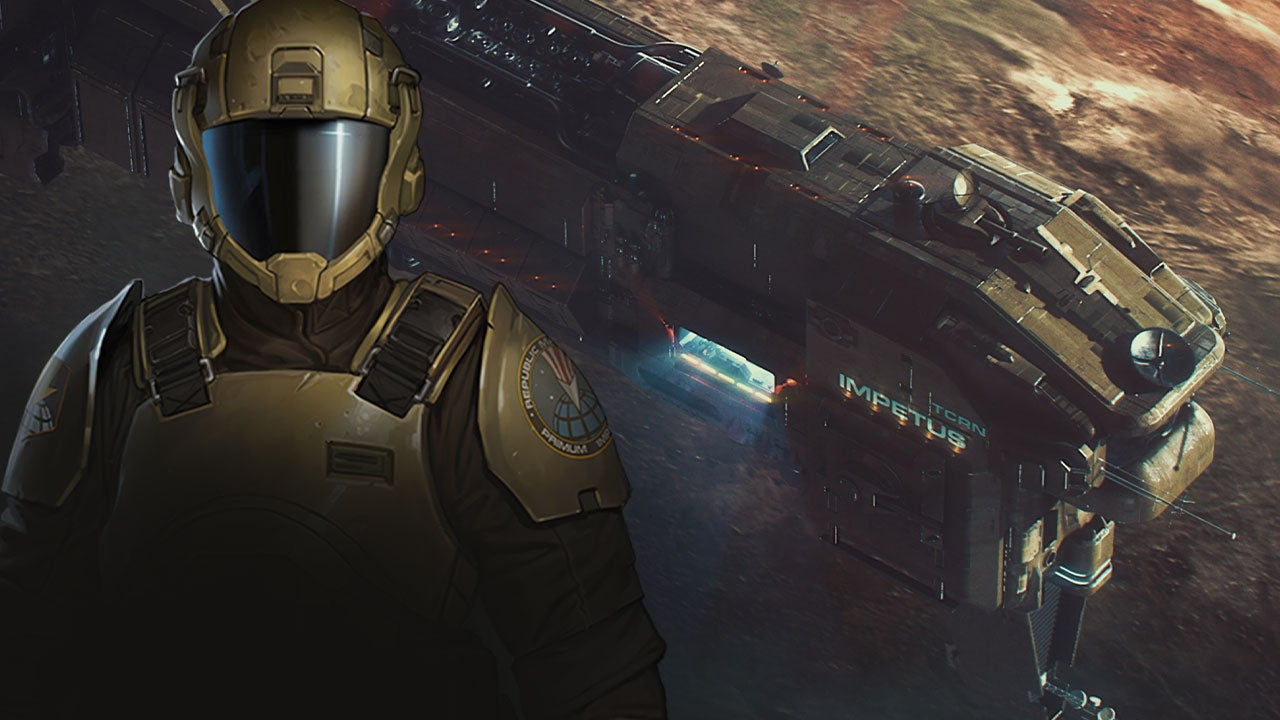


Within the first three missions of Menace, I am talking to my squads of snappy space marines as if they are action figures on my bedroom floor. “Fan out and move up. Good shooting! That was clean, girl.” My roommates are probably used to me talking to myself when I’m playing video games at this point, but it speaks to how engrossed I got in this turn-based interplanetary war that I was already developing that kind of relationship with it. There’s a lot still missing from the Early Access release. But the tactical, bug-blasting fun is already dialed in.
Probably the biggest way in which it’s obvious that this is an Early Access game is the overall lack of context. I know that I’m a Major on a military ship that suffered some kind of FTL drive accident that destroyed many systems and most of the crew, leaving me as the senior commanding officer. I know that we’ve wound up in an area of space called the Wayback that is home to a handful of interesting, competing human factions and also a species of giant alien bugs. It’s not all that difficult to get a grasp of the basics.
But I’m not actually sure why we’re here, what the original mission was, what kind of faction we’re representing, or what the Wayback even is. Why is it called that? How long have these other humans been here? There are references to some kind of in-game lore encyclopedia, but it doesn’t seem to have been implemented yet. At the end of the day, none of this really gets in the way of my ability to shoot at things. But it does make the early game feel a bit aimless, and I find the setting interesting enough that I’d like to know more.
It’s not like Menace completely doesn’t care about story, either. There is clearly something brewing here, as unfinished as it is, with tension between the Wayback factions and the marines playing out in voice-acted cutscenes every few operations. It’s just unclear where it’s going or what I’m ultimately building up to other than harder missions, better gear, and upgrading my ship. In about 35 hours, I didn’t run into anything that seemed especially like the main plot. There is a steady escalation of stakes and difficulty, though, which at least does a good job of helping me feel like I’m not just spinning my wheels.
Hit the Ground Running
As a squad-based tactics game, man, I really like Menace. The pacing and action economy are so cleverly crafted to encourage you to play in more active and interesting ways. You can’t just set everyone on ov erwatch and creep forward, for example, which is a rut I tend to fall into in similar games. There aren’t a lot of passive or reactive abilities, so victory comes from making proactive choices. Moving up the field requires thinking about who still has turns left to spend, and how you can make sure your advance elements have adequate support if they run into trouble.
Suppression is a huge deal, at least when fighting other humans, and this adds a feeling of authenticity to every firefight. In actual warfare, they say hundreds of rounds get fired for every one that hits a target, and that’s exactly how Menace works. It’s often far more important to keep every enemy in line-of-sight pinned down than it is to inflict casualti es. That gives your second wave safety and freedom of movement to either charge in or flank and win the fight, and this creates a constantly engaging tactical loop. Your own squads who get suppressed will have their action points and accuracy penalized, but will also hunker down or hit the deck intelligently depending on the amount of heat they’re under, further making them feel like real soldiers.
This blends nicely with the fact that every squad is led by a named character you can recruit, level up, and customize. They all have distinct personalities and backstories along with a unique ability that defines them. There’s sort of an over-the-top Jagged Alliance vibe, though a bit less goofy. Jacques, a private security contractor I hired from the Wayback, can regain action points when he’s under heavy fire, so he thrives at the tip of the spear. Marta begins every mission with a major debuff that turns into a strong buff the more turns that pass, making her a clutch asset for closing out a long mission.
And unlike in, say, XCOM, these flagship characters only die if their entire squad is wiped out and you can’t get anyone over to them to render medical aid, so it doesn’t feel like playing a little bit risky will rob you of your beloved blorbos. On the othe=r hand, accompanying each of them (excluding vehicle drivers, which are their own thing) are up to eight renameable squadmates with no dialogue or special abilities. And these guys are… kind of expendable.
Manpower is a limited resource you have to manage on the strategic level, so you can’t just go throwing background extras into the meat grinder all the time. But especially as you get more advanced medical facilities online that can rehabilitate casualties, the grunts kind of become a wager you can afford to risk by making aggressive plays. And this is such a clever way of getting me to command more actively and break out of my usual, turtle playstyle.
Alien Menace
Encountering the alien bugs changes things up quite a bit. They’re much harder to suppress, though heavy losses can force them to flee. And especially later on, some of them are so heavily-armored that your standard assault rifles are all but useless. They don’t really take cover, and a lot of them only have melee attacks. But simply holding your ground and grinding them down at range isn’t always an option. Having to switch up my gear and my thinking depending on what I was fighting, in addition to the wide variety of mission types, made me come up with new tactics constantly.
Squad customization is also deep and satisfying. There is no standard currency in the Wayback, so all gear is either a mission reward or purchased using the barter system on the black market. But even once you do build up enough scrap bombs and alien guts to trade for the best stuff available, there’s a supply budget on each mission that takes into account every piece of equipment and keeps you from simply buying your way to victory. I think this could use some tuning, since it currently feels like the missions are getting harder a bit faster than my supply budget is increasing. It’s almost there. Maybe just a nudge is all it needs.
It seems like a lot of thought has gone into the various veterancy upgrades squads can earn from promotions, as well. They’re pretty well-balanced, feeling powerful enough to be meaningful but not so game-changing as to trivialize combat on their own, like increasing evasion based on how many tiles you moved. Each has a clear role in mind, and almost none feel like they wouldn’t be at least situationally useful. It’s an area of progression where I can really tell developer Overhype Studios has a strong footing in what works and what doesn’t about this genre.
The strategic layer is not quite as well-developed yet. There are a few different things you can buy with the components gained from completing each multi-mission operation. You have ship upgrades like the med bay and the recruiting office for managing manpower, along with armaments that can be deployed from orbit a limited number of times per mission. Then you have loyalty tracks with each of the three major Wayback factions that can unlock their unique buildings, which can do things like give you an extra chance at post-mission loot or allow you to call in supplies in the middle of a mission.
They can be neat, but still feel a bit limited in both scope and depth. It’s a good first iteration, but this is for sure somewhere I’d like to see more love given to over the course of Early Access. There are also only three planets so far, which can start to feel a little samey after a while. More are in the works. Technical bugs have been relatively sparse, though my main file is afflicted by a fairly annoying one right now where my manpower counter seems to be permanently broken.