

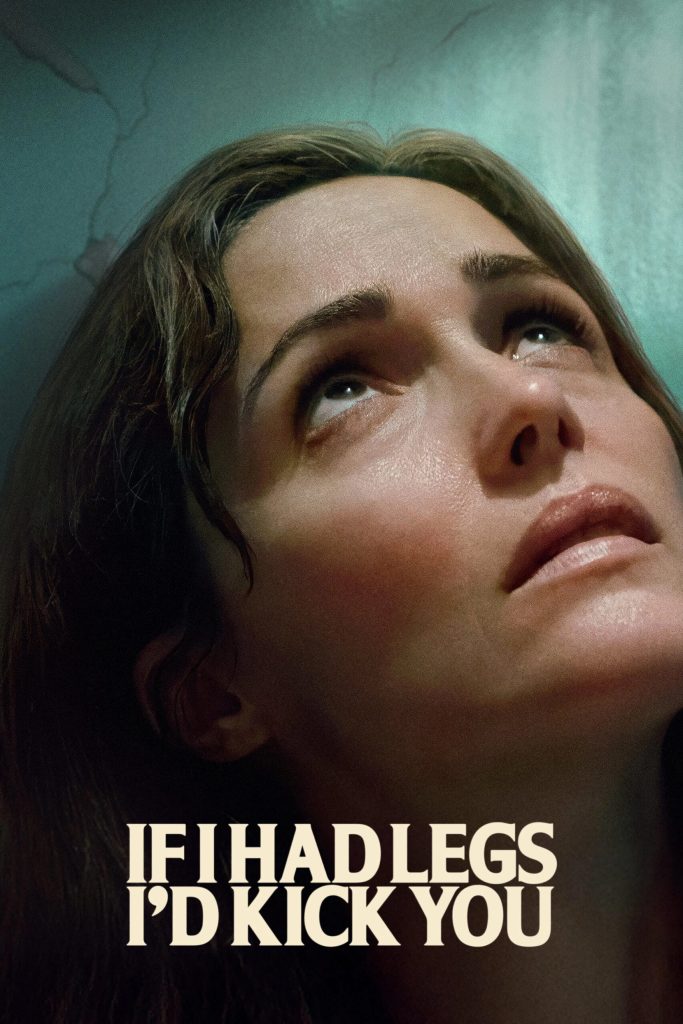
After their apartment ceiling caves in, a therapist (Rose Byrne) and her chronically ill daughter are forced to move to a motel.
Writer-and-director Mary Bronstein’s cold-sweat-inducing follow-up to 2008 mumblecore classic Yeast is about as pulse-raising as a high-speed car chase, and as claustrophobic as an escape room. Despite that adrenaline hit, this mother-daughter drama is profoundly thought-provoking too. Working with deceptively few ingredients, Bronstein creates a dizzying cinematic hall of mirrors, a nightmarish vision that relentlessly pursues its own brilliant, demented dream logic to bizarre ends.
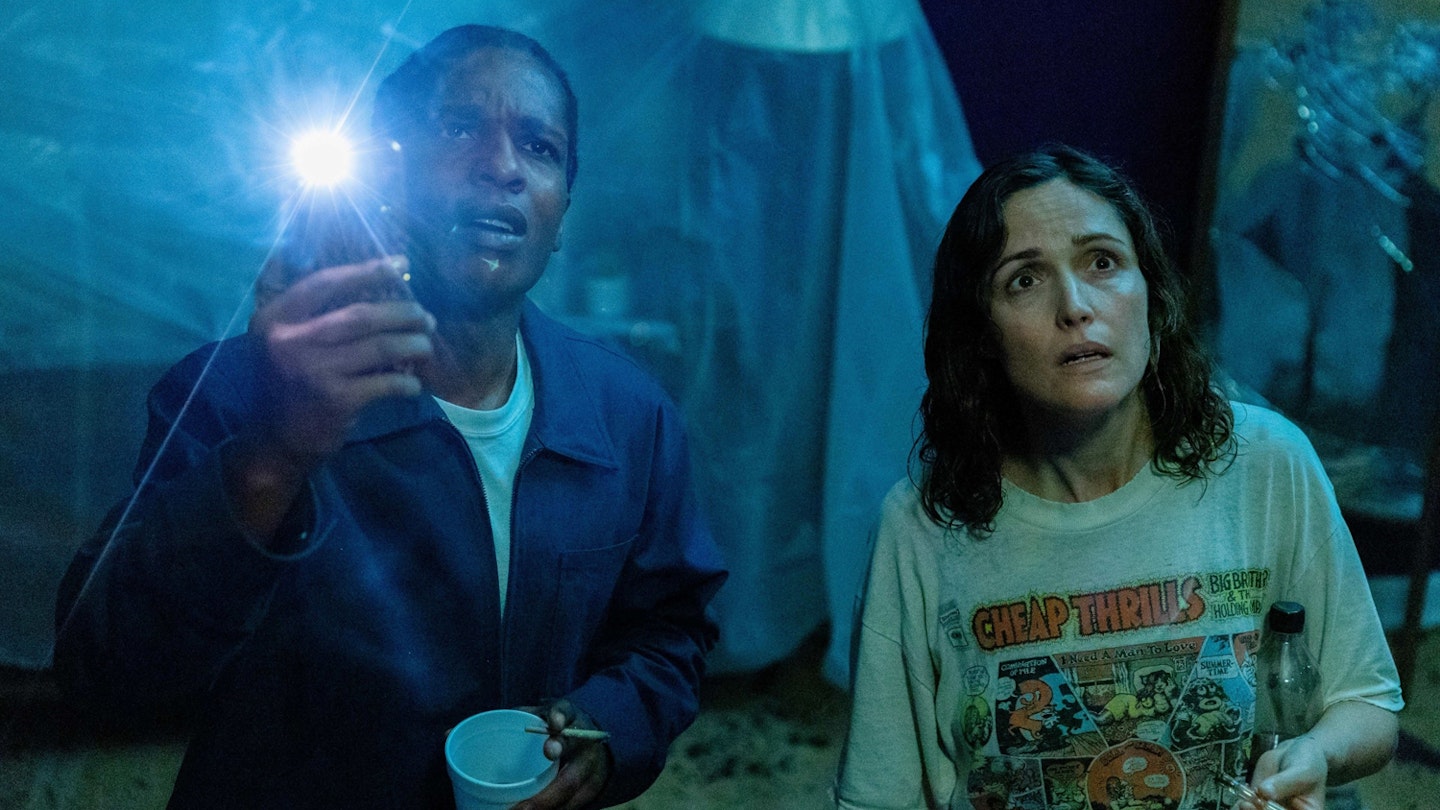
The spiral out of control begins in the very first scene, when Linda (a career-topping performance from Rose Byrne), a therapist, is in a session with another therapist. Employed to help others, Linda, at her wit’s end, can barely help herself. With her husband away on business for two months, she must single-handedly look after her daughter, who has a feeding disorder and needs round-the-clock care. And, to top it all off, the ceiling in their Montauk apartment collapses, leaving a gaping, unsubtly metaphorical hole.
Rose Byrne fearlessly holds the fort.
This festering, asbestos-filled cavity is one of a number of thematic nesting dolls. There are similarities between Linda and her therapist and colleague (a delightfully steely Conan O’Brien): despite Linda’s frustration at his evasiveness, she is just as much of a brick wall in her own sessions. Then there is her client Caroline (Danielle Macdonald), who is drowning in anxiety over her new-born baby.
Womb-like holes and umbilical cord-esque medical tubes abound. (Yes, this film is about motherhood.) But Bronstein’s occasional on-the-noseness is easily forgiven. This mirroring helps to compound the cabin-fever and create a sensation of rooting around in Linda’s burnt-out subconscious. Plus, this carefully crafted echo-chamber underlines the film’s powerful central message: that everyone is unsalvageably caught up in their own shit.
A chance at genuine human connection arrives in the form of motel superintendent James (an excellent A$AP Rocky), though cinematographer Christopher Messina’s queasy close-ups suggest Linda may struggle to escape her self-absorption. Delaney Quinn is compelling as her daughter, even as, in a bold decision by Bronstein, she is mostly off-screen during her scenes. The director herself cameos as the scarily blank-faced Dr Spring. But it is Byrne who fearlessly holds the fort. Anchoring a story that’s somewhere between the propulsive downward spirals of the Safdies (Josh Safdie is a producer here) and the surrealism of Enter The Void, she keeps things grimly funny and surely relatable to parents the world over.
Though not one for subtlety, Bronstein’s pressure-cooking, panic-mongering sophomore feature is perversely enjoyable — as long as you can take the stress.