
“One of the things I’d say about my career is that I’ve never really inhabited just a single character type for very long.”
This is James McAvoy’s typically unsparing assessment of his ranging 30-year filmography. And, well, when you actually run an eye over the vivid, varied roles that litter his door-stopper IMDb page — a flute-playing, mystical faun in The Chronicles Of Narnia: The Lion, The Witch And The Wardrobe; a nihilistic, ravenously self-destructive cop in Filth; a morally entangled government physician in The Last King Of Scotland; the young Professor Charles Xavier across four X-Men films — then it is hard to argue against the idea that he is someone with an apparent allergy to fixed archetypes.
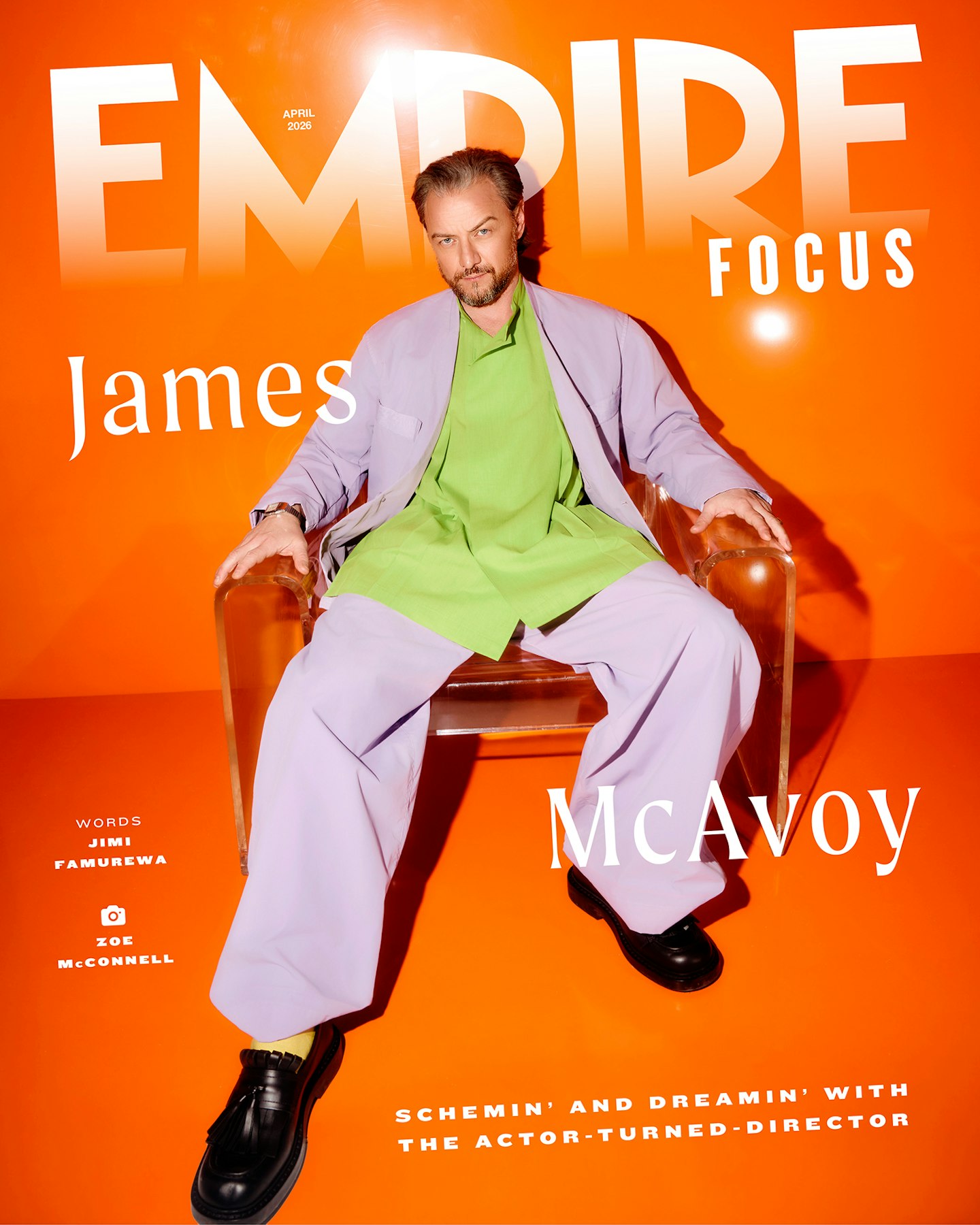
Doomed period heroes (Atonement). Talking garden gnomes (Gnomeo And Juliet). Murderous, misogynistic bruisers (Speak No Evil). McAvoy’s signature has been an ability to shape-shift and glinting, character-actor unpredictability. M. Night Shyamalan’s Split, meanwhile, was a virtuosic, fizzing firework of a performance, as the distinct personalities of a dissociative-identity-disorder sufferer. “What I’ve always been into, and when I’ve enjoyed my career the most, is when I’m doing two or three things at once,” he says, sweeping a hand back through his thick, salt-and-peppered locks as we talk over coffee before his Empire shoot. “You’re making them laugh and you’re making them cry; you’re making them like you, but you’re also making them hate you. That’s conflict and that’s drama. Not just on screen [but] in the audience itself.”
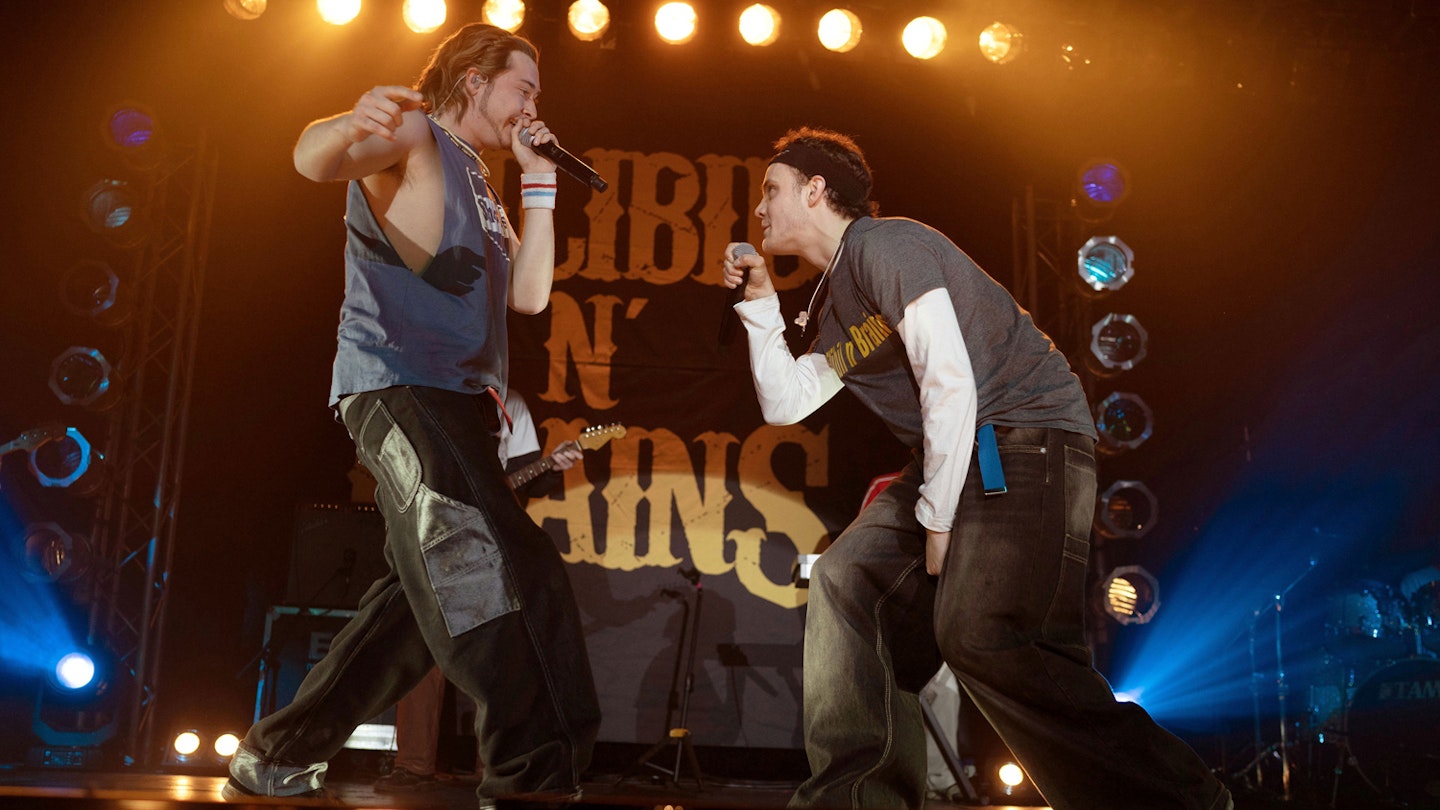
With this in mind, it’s perhaps not a surprise that McAvoy’s directorial debut toggles between heart and absurdist hilarity, to tell a tale that, in its own way, examines split personalities and the intricacies of performance. Based on an outlandish true story, California Schemin’ follows early-2000s Dundee-based rap duo Silibil N’ Brains (played by Samuel Bottomley and Séamus McLean Ross), who, after being mocked for their Scottish accents, eventually win fame, critical acclaim and a lucrative recording contract. How? By committing to the long con of pretending that they’re actually from a Los Angeles suburb. Rendered with wit, warmth and gleeful, trucker-hatted period specificity, it’s an unexpected if effective first entry to life behind the camera for McAvoy (though, notably, he also co-stars as a strutting, scene-stealingly profane record-company boss). It’s a surprising new role, then. But also, it transpires, one that McAvoy has been waiting the best part of three decades to take on.
EMPIRE: Your directorial debut comes quite a long way into your career as an established actor. How have you found the shift in responsibility and focus?
JAMES McAVOY: It’s nuts, actually. I’ve been working on the film for almost four years now and [been] in production on it since August 2024. And I’m still working on it [up until release]. I said to my wife the other day, “Do you think there’ll be a day when I’m not working on this thing?” She was like, “No, but you’re enjoying it still.” What I’ve found in becoming a director, even though I’m not directing anything right now, is that my unpaid workload has doubled. Now I’m reading scripts as an actor and reading scripts as a director; I’m developing things for other people. It’s great. It’s very creative. But I’m also like, “When’s the bit where I get to sit in my pants at 3pm and watch a film again?”
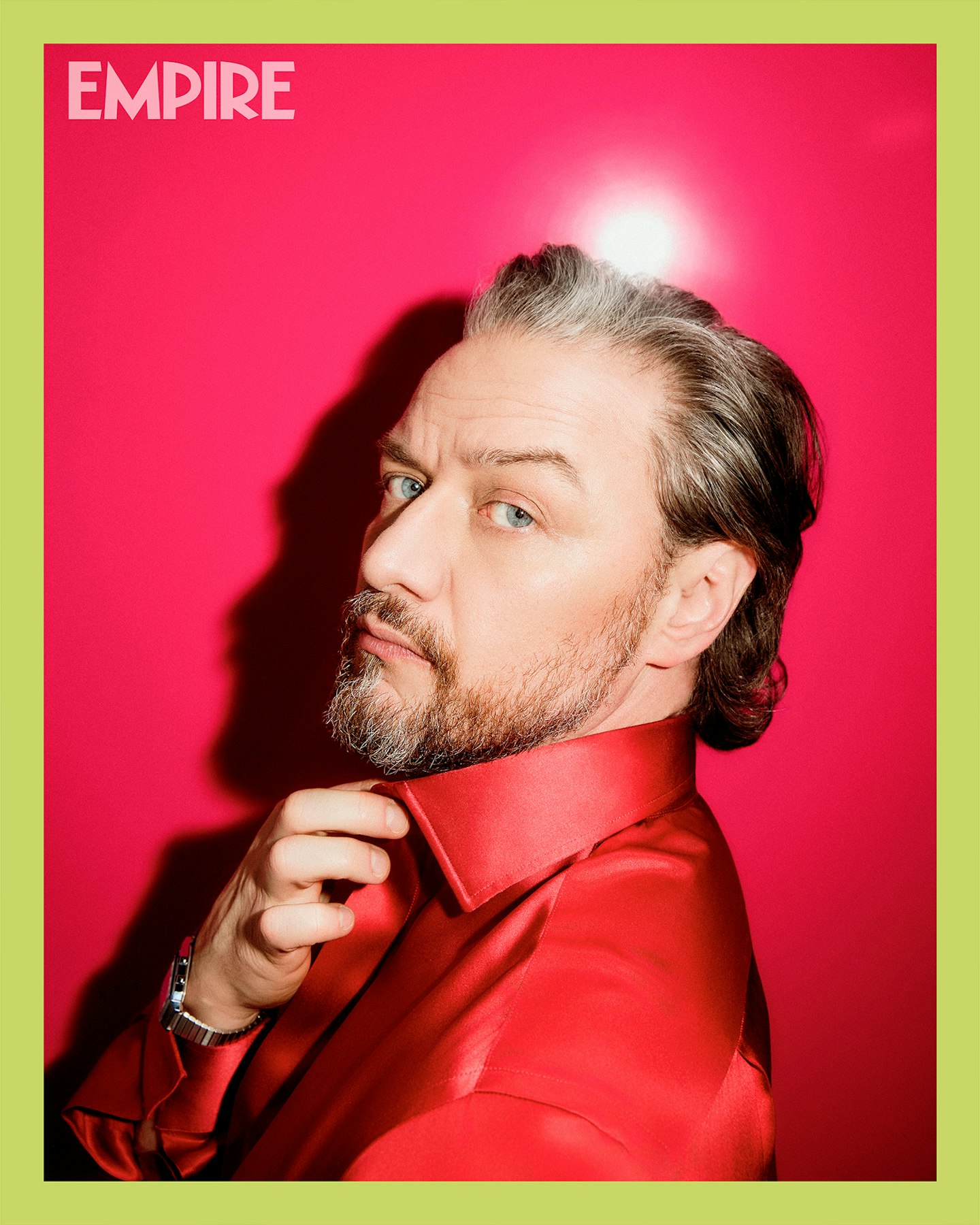
©Empire / Zoe McConnell
You started acting as a teenager, but what came first: the urge to perform or the urge to direct?
They came at the same moment. I’d never done any kind of performance whatsoever [apart from] playing bass guitar at school concerts. But when I was 15 going on 16, the director David Hayman came and talked to us about Macbeth, because we were reading it in English. At the end of it, I went up to him and I said, “Thank you very much for coming. If you’re making another movie, can I come and make the tea for work experience?” And then, six months later, he was making a film called The Near Room, about child prostitution and pornography in Glasgow, and he phoned up the school [to see if I wanted to come and meet him]. So I went in, thinking I was just going to go and be his tea boy for a week. And he said, “Here’s the script, read it and come back tomorrow.” I was like, “Am I playing a part in this?” And he said, “No, you’re gonna audition for a part in this.” I’d never done any kind of drama class, youth theatre or anything. But I came in the next day, he gave me the part in the room and Andy Serkis [who plays Bunny in the film] walked over, dreads down to here, and went, “You’re from Glasgow?” And I was like, “Yeah, Drumchapel.” And he said, “Like a proper council estate?” I was like, “Aye,” and he went, “Right, come on, sit there.” And I basically started teaching him how to do a proper Glaswegian accent. That was my first experience as an employed actor.
I wanted to tell a story about people from a background like mine, that I recognised and understood.
So, did that give you an early sense of the different aspects of a production — dialect coaching, directing — beyond just acting?
I don’t know. But the thing that made me think that I wanted to direct at 16 is because I was on that set, having had zero experience of acting drama, or any kind of performance art, really, and I remember being consciously aware of creative decisions being made around me and thinking, “I wouldn’t do that, I’d do this…” I held onto that all the way through my career. By the time I was in my early twenties — and David [Hayman] wasn’t one of these — I realised I’d been working with people who were struggling. It’s easy to spot the mistakes that [directors] make, but it’s not so easy to identify what it is that makes somebody amazing. And then I started to work with some people who were incredible, and that gave me pause. It probably delayed me being a director for quite a while, because I started to work with people like Joe Wright, who directed Atonement, and I’m sitting there going, like, “I know you’re being incredible. I know what you’re doing is lightyears beyond anything I’ve experienced before, but I can’t see how the equation works.” And that made me sort of put the brakes on a wee bit. Because I was like, “It probably isn’t a good idea to think I’m good just because I’m working with people who aren’t as good as I expect them to be.”
So what was it about California Schemin’ that appealed, given this was a long-held ambition?
I wanted to tell a story about people from a background like mine, that I recognised and understood. People with limited opportunities, near horizons and a kind of in-built humility. But I also wanted to [make] a film that was entertaining, still had emotional impact and still confronted the obstacles and the realities that people from that kind of low-income background face. At the same time [trying] to not be a film that is complaining about it or moaning about it, or wallowing in it. So it was a weird thing, but [the script] came in and I thought it did a few things for me and did those things brilliantly. Also, it’s a film [in which] you have two people who have to confront this thing that Scottish people do quite a lot, which is the reaction we get — from people who are not from Scotland — when the noise that comes out of our mouth lands in the other person’s ears. I’m totally aware that, as a white, Northern European male, that discrimination isn’t necessarily the worst discrimination in the world. But it is something that people in Scotland face. Like, my accent is so fucking mellow now. I do not sound how I sounded when I lived on a council estate in Glasgow. And I still get people that go like, “I’m so sorry. I’m so sorry. Would you slow down?”
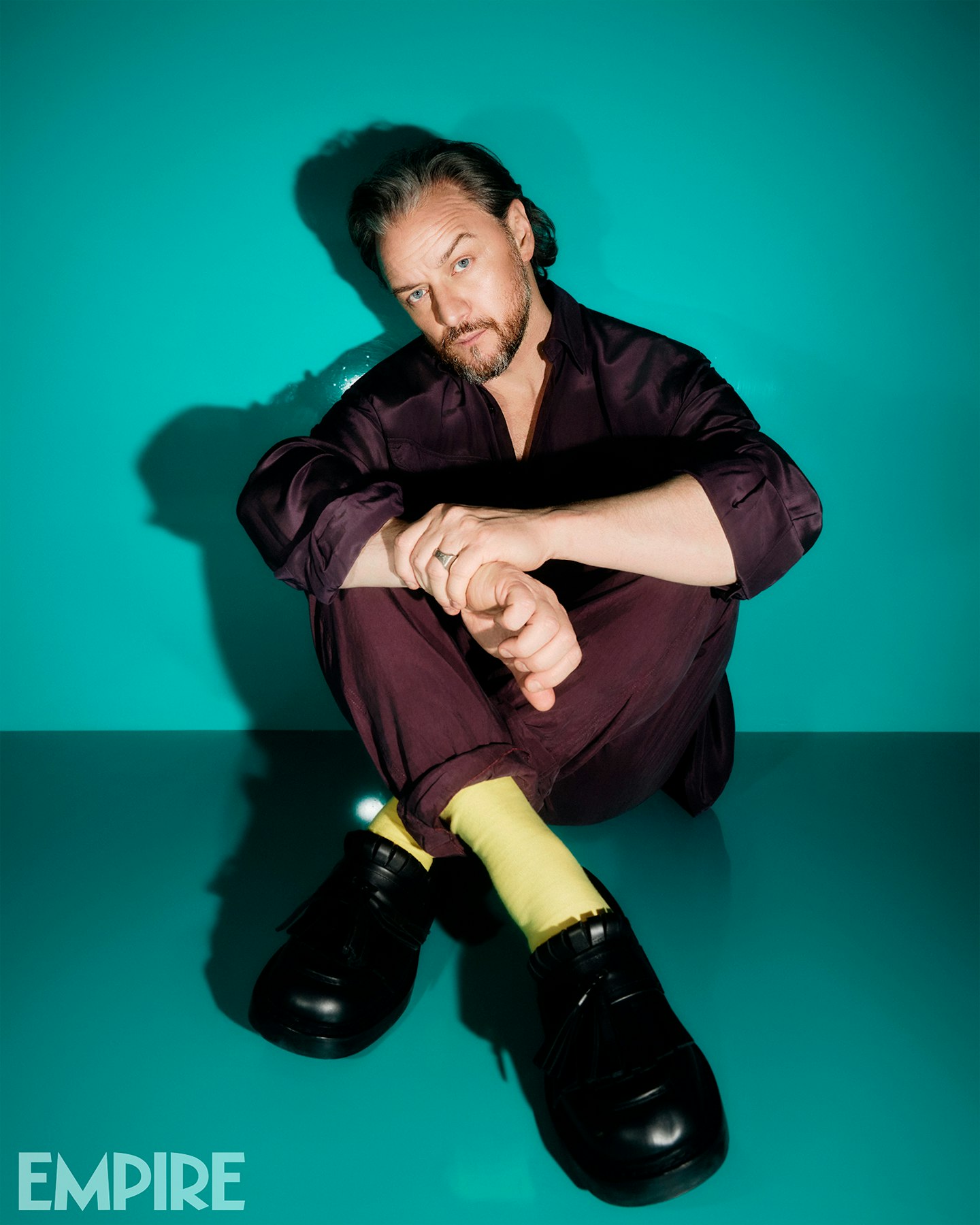
©Empire / Zoe McConnell
Have you experienced it hampering you in auditions or on sets, like the characters in California Schemin’****?
I have walked into rooms where my accent is almost the biggest thing in there, and I’ve had directors tell me to tone it down. Many times. I remember doing one particular job where I was playing fucking Macbeth in my own accent on TV [2005 BBC anthology series Shakespeare Retold]. We were in rehearsals and the director went, “James, there may be times where I just go…” (mimes turning down a dial). I honestly didn’t know what he meant. And he just looked at me, as if I was being stupid or being obtuse. Then he was like, “Scottish.” I was like, “What the fuck, I’m playing Macbeth in Macbeth, ‘The Scottish Play’. And I’m actually from Scotland.” If the biggest thing in the room is the clothes somebody wears, or the colour of their skin, or the sound of their voice, it speaks to a lack of openness. And so when I read [the California Schemin’] script, I thought, “Well, this is an amazing example of that.” And then the other reason I was attracted to it is because it’s not just a musical biopic — it’s a film about two actors who try to Method act, even though they’ve never done it before. I don’t know what fucking Method- acting really is, but the process of trying to become the character is, I think we all know, a massively unhealthy thing.
You’ve definitely had experience of intense preparation in pursuit of a more realistic performance. Working in a real hospital ahead of playing a doctor in The Last King Of Scotland springs to mind…
That was mental. I remember my character had to give an injection, test somebody for a broken thumb and squeeze a fart out of someone. And I was like, “Do I really need to be in the children’s A&E of Mulago Hospital in downtown Kampala for fucking seven days?” By the end of my time there, they had me triaging patients. And I was like, “This is so unethical.” I was also 22, so [would] just do whatever the fuck they told me. I was thinking, “Is this because you think I’m a Method actor?” I had it on Inside I’m Dancing as well (McAvoy played livewire paraplegic Rory O’Shea). They were like, “Obviously, you won’t be wanting to come out of the wheelchair.” I think the feeling was like, “Well, that’s what Daniel [Day-Lewis] did [in My Left Foot].” And I was very much, “What the fuck are you talking about?”
I’ve been on too many jobs where the script isn’t good enough.
You make a memorable recurring appearance in California Schemin’****. How did you find doing double duty as both actor and director?
Horrible. Christ, it was fucking disgusting. Olivia Wilde describes it rather brilliantly in that, when you’re an actor, you just kind of go to set in a bubble of comfort. Everybody’s like, “Protect the moment between action and cut and just make everything easy for the actors.” I’m not saying everything is easy for the actor. It can be hard work. But everything is helping you do what you need to do between action and cut. There’s a lot of focus and attention and pressure on you. Nonetheless, it’s [a role] that I think I’ve internalised, I can deal with it, and it’s fine. Action and cut. That’s my fucking time. [On this], I was on my way into my action-and-cut moment, and I’m getting somebody telling me about the porta-potties for tomorrow. I’m getting updates on actor availability for scenes that we haven’t even done. I’m getting all these updates and all these things. I’m getting 1,000 questions asked of me, which I’m good at, but then I think, “I’ve got to do an acting job.” And then I watch my performance and go, “Has anybody got any notes for me, because I think that was fucking brilliant!” (Laughs)
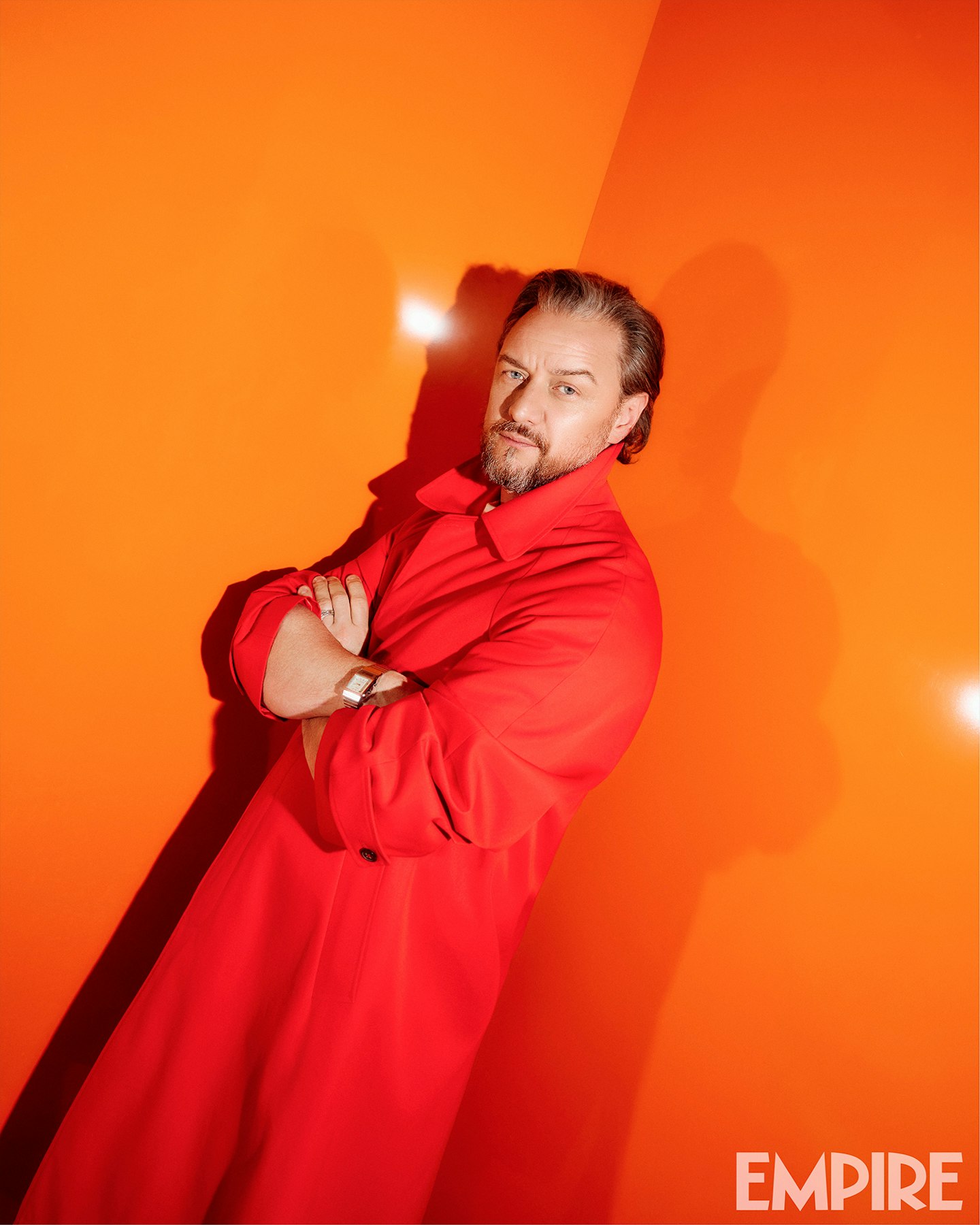
©Empire / Zoe McConnell
You’ve said that your acting choices have always been script-led rather than director-led. Why is that?
I don’t know, maybe I’m just too full of myself, but I need a good script. I’ve been on too many jobs where the script isn’t good enough, and you sit there just going, “Why does this hurt so much? Why isn’t this working?” And the reason is, we’re all storytellers, and the story isn’t even fucking well written. And it’s not even about bad dialogue. It’s about, “This thing has got no core, it’s go no soul. It’s got no beginning, middle and end. What the fuck are we doing? We’re just throwing money at a camera and we’re all trying to be truthful in front of it but it doesn’t really matter.”
Having been part of huge productions like the X-Men films and The Lion, The Witch And The Wardrobe****, was there an appeal in doing something a bit smaller, with less waiting around? Do you feel like franchise acting or directing is a different beast?
It is and it isn’t. First Class, Days Of Future Past and lots of the other ones don’t feel like different forms of acting. In terms of what happens between action and cut, which is my time, it felt really similar. When I got to do Days Of Future Past, I was like, “This is no less of a character study, because [Charles Xavier] is somebody who’s dealing with trauma and abandonment issues.” Is it at quite a large scale? Yep. Do you ever have enough time in a $200 million budget film? No. But you never have enough time. It always feels the same.
Still, where a character like Charles felt heroic in the same way as some of your earlier roles, films like Split and Speak No Evil seem to have unlocked a new life of genre villainy.
It’s been really good fun. Split appealed because it was just an opportunity to play a ton of different characters, all of whom were particularly well written.
And it afforded you the chance to work with Bruce Willis and Samuel L. Jackson on Glass****.
I’m so glad I got to work with Sam and I’m so genuinely kind of taken aback and proud that somebody like Sam still fucking texts me. (Laughs) I don’t get starstruck much and I don’t get starstruck with Sam because he’s so lovely. But I do get slightly struck sometimes. Because he fucking lets me in, he accepts me, and it blows me away sometimes. I mean, he’s one of the highest-grossing movie stars in the world. For somebody like him to have his joy and his enthusiasm and his commitment is just really inspiring. [Knowing him] is one of the few sort of badges of honour I take seriously. I don’t think about awards much. But the fact that I’m in Sam Jackson’s phonebook is one of my biggest achievements. And I’m not joking, by the way.
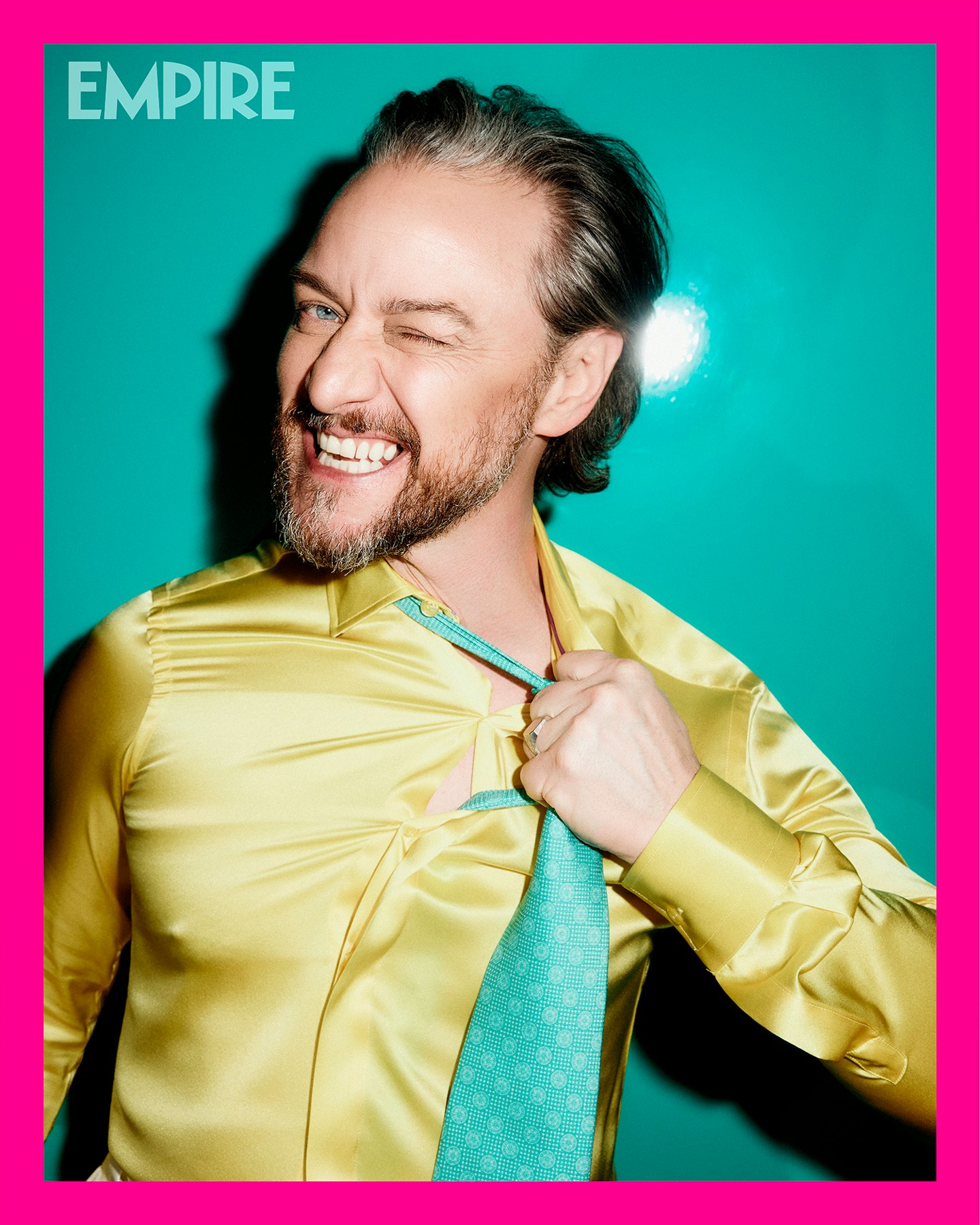
©Empire / Zoe McConnell
Are you conscious of subverting audience expectations with your acting, and now, directorial choices? As you did with Speak No Evil****?
I’d probably be wary of playing scary roles now. Actually, that’s not true. I’m going to do [Bull and Dragonfly director] Paul Andrew Williams’ next film, and we start in a week. It’s me, Erin Doherty, Paul and the producers from California Schemin’. It came together in a couple of months and [that character] is not just a scary guy, but there’s definitely a foot in that realm. If you’ve seen Dragonfly, then you’ll know what I mean. There’s a tension and a pressure.
So you’re continuing to act. Did directing live up to your expectations?
It was incredibly stressful. The most stressful experience of my life, and I did it at my midlife-crisis time of life as well. Am I directing a film because I’m having a midlife crisis? Maybe. But I love doing it. I’ve always tried to control the story from my characters’ point of view. I don’t try to get involved in other actors and I don’t want to take away from the director. But, at times, I’ve been invited by the director to get involved and I’ve ended up pitching in. I’ve always worked on the script, and sometimes it gets completely rejected. And sometimes, probably the majority of the time, it gets incorporated [into the film]. I will keep doing it. I’ve got two acting jobs back to back now, the Paul Andrew Williams film and a TV adaptation of Frankie Boyle’s novel Meantime. Maybe after those two I’ll be like, “Yeah, I don’t want to act anymore.” Or maybe I’ll be like, “Fuck, I miss acting. I’m never going to direct again.”
It sounds like the shift towards being a director has already happened.
Yes, I’ve got a couple of scripts I’m working on. Although I do need to carve out time for sitting in my pants, with a bag of pickled onion Monster Munch, watching movies.
This article was originally published in the April 2026 issue of Empire. James McAvoy was shot exclusively for Empire by Zoe McConnell, in London on January 16, 2026. California Schemin’ comes to UK cinemas from April 10.