
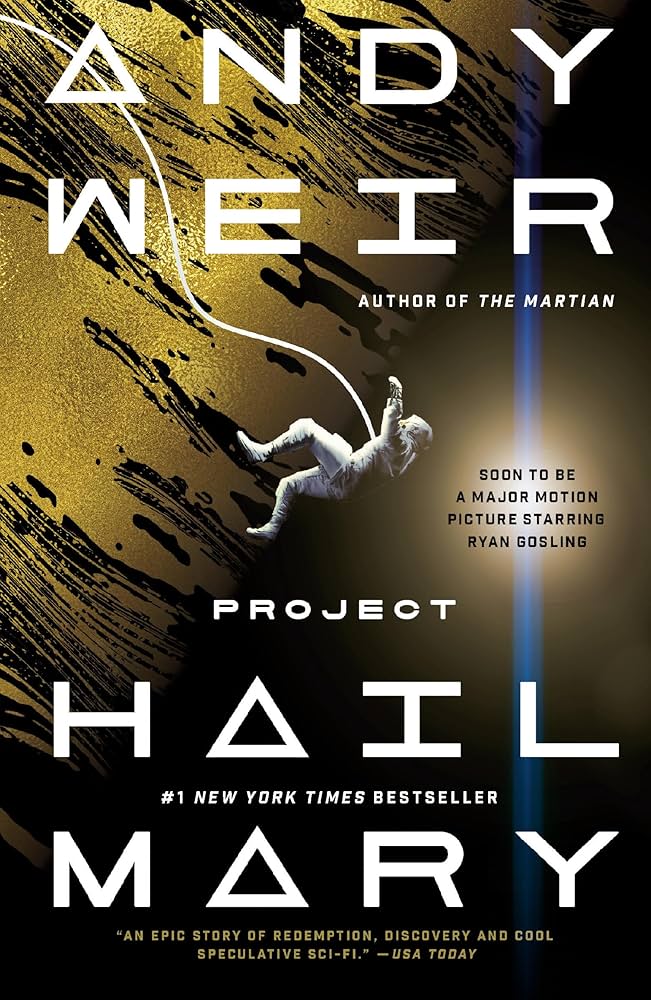
When former science teacher Ryland Grace (Ryan Gosling) wakes up on a spaceship with amnesia, he is forced to team up with an adorable alien to save the world.
A decade ago, Ridley Scott’s The Martian was released. With a script by Drew Goddard, based on the book by Andy Weir, itself compiled from what was originally Weir’s self-published science blog, it was a sleeper hit: a satisfyingly sharp science-fiction romp, in which Matt Damon’s stranded astronaut managed to survive a hostile planet while subsisting entirely on poop-cultivated potatoes.
Eleven years later, Weir and Goddard have reunited for an adaptation of the former’s third book, Project Hail Mary. Like that previous film, it’s a story about a scientist alone in space, forced to use his considerable science brain to MacGyver his way out of the mess. And like The Martian, Project Hail Mary is witty, wise, and preposterously entertaining.
You’d expect nothing less from directors Phil Lord and Christopher Miller, whose output since arriving on the scene in 2009 with food-based cartoon frippery Cloudy With A Chance Of Meatballs has been uniformly joyful. The filmmaking pair have largely taken a back seat in the past decade, stewarding the Spider-Verse films as producers (though they briefly helmed 2018’s Solo: A Star Wars Story, only to be unceremoniously fired). It’s refreshing to see them back in the driving seat. This is only their fifth film as directors, only their third in live-action, and their first that is not primarily comedic. It is a hugely confident marker of the talents they have accumulated.
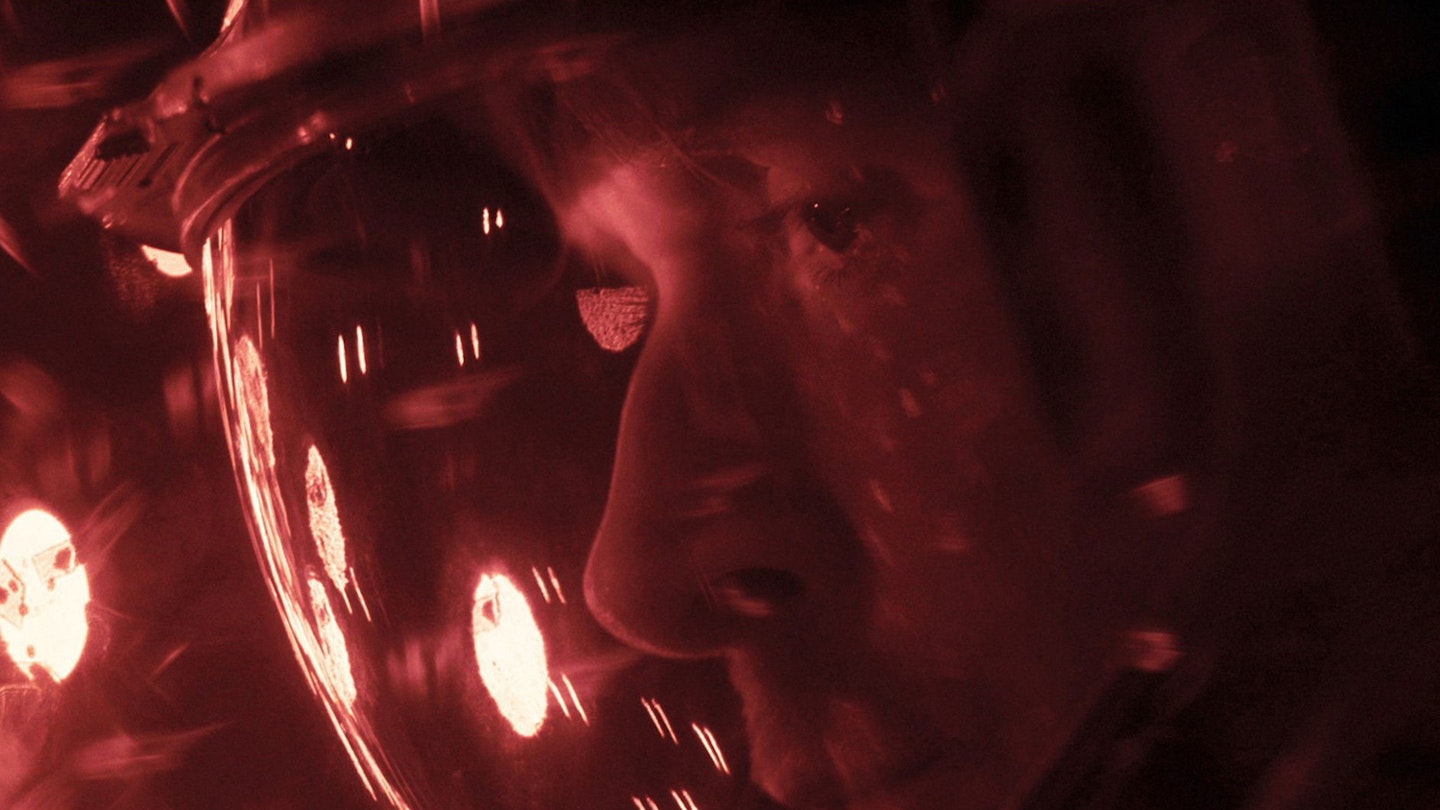
We open with Ryland Grace (Ryan Gosling, in pure movie-star mode) waking up from a coma, alone on a spaceship, with caveman hair and a nasty bout of amnesia. Looking out of the window, he realises he is “several light years from my apartment”. A dual detective story emerges: in one strand, Grace gradually unpicks the mystery of his own identity, like a Jason Bourne for nerds, the story of his life as a mild-mannered middle-school teacher slowly revealed in elliptical flashbacks.
Stupidly entertaining stuff about seriously clever speculative concepts.
Then there’s another, much bigger mystery to be solved: the sun is dying, its energy being slowly devoured by tiny extraterrestrial bacteria known as astrophage. The problem, Grace admits to his students, is no big whoop but in fact a “small-to-medium whoop” — one that could cool the Earth, triggering a mass-extinction event. So the titular Project is launched, an intergovernmental last hurrah, hoping to find answers in the one star in the galaxy which seems to resist the parasitical astrophage. Grace is sent there to find a cure for this; cue the same kind of problem-solving science shit that made The Martian so satisfying.
Where Matt Damon’s astronaut had regular communication with Earth, messages to home from the Hail Mary ship take 11 years to reach the home planet. Grace can only make cheerful video diaries. But he is not alone: around halfway through the film, we are introduced to a stony, spider-like alien creature called Rocky, whose homeworld is also under threat. They agree to team up — the language barrier, which took a whole film to figure out in Arrival, is quickly overcome with a laptop here — in order to attempt to cancel their collective apocalypse.
It is a credit to the performing flair of both Gosling and the team behind Rocky (including puppeteer James Ortiz) that this film — which for long, uninterrupted stretches features only one human character — feels so alive. It is set in the cold nothingness of deep space, yet always feels warm. The plot bears similarities to Interstellar’s impossible odds, yet unlike Nolan’s epic, Goddard’s script and Lord and Miller’s direction keep things lightly comic, with Gosling’s fidgety, charismatically goofy turn (“I talk too much, that’s my problem,” Grace admits) an ever-effervescent presence. His science-teacher grounding helps explain big concepts in an audience-friendly manner: the astrophage, for example, consume light to increase their velocity — or as Grace puts it, “They toot to scoot.”
Only on occasions does it feel as if Gosling is simply left to coast on his considerable charms. The gravity and stakes of the mission are never in doubt, and Lord and Miller allow for moments of real (small-g) grace and sincerity — you may find yourself tearing up at an alien with no face. But not every joke lands, and you sometimes wonder if they retreat to humour — their last film as directors was the out-and-out comedy 22 Jump Street — as their true safe space. It’s a little lengthy, too, the wrong side of two-and-half-hours, Goddard’s script adapting perhaps too faithfully, leaving us with one ending too many.
But this is for the most part an absolute space-smash: stupidly entertaining stuff about seriously clever speculative concepts. Hail, Mary!
A very watchable old-school blockbuster crowd-pleaser. Ryan Gosling and an alien made of rocks are the best space-based double-act since R2-D2 and C3-PO.