
Platforms: PC, PS5, Xbox Series X|S
Think of the biggest, most feature-rich video game you’ve ever played. No, bigger than that. Whatever you’re picturing, imagine more stuff to do in it, a litany of play mechanics, an even more complex story, a host of characters to meet. Make a mental mash-up of The Witcher III, The Legend Of Zelda: Breath Of The Wild, Skyrim, Final Fantasy, and even a dash of… Starfield, maybe? Congratulations – you might just about be conceiving of something close to Crimson Desert.
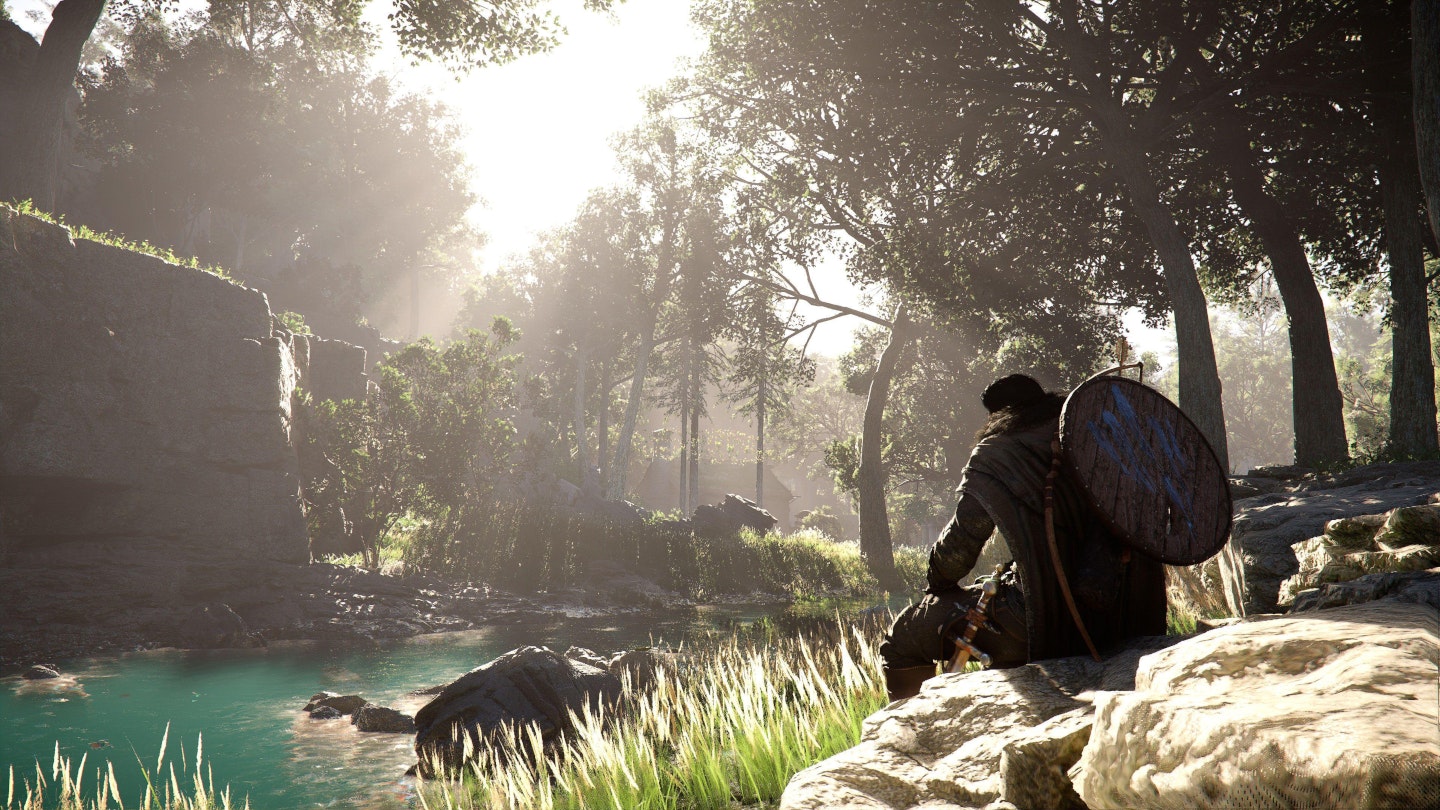
To call developer Pearl Abyss’ staggeringly ambitious open world RPG “vast” is to paint it too small, and to say it’s packed with content is to undersell the concept of density itself. Crimson Desert is positively crammed with ideas, resulting in a game that blurs genre lines and almost gives players too much to do.
Crimson Desert really is almost anything you want it to be.
As Kliff, you’re a rugged member of the Greymanes, a tribe of grizzled, wolf-themed warriors slaughtered in the opening motions by rival clan the Black Bears. Skewered by a sword and cast into a river, you wake up mysteriously healed in the province of Hemand, where you can set about rebuilding your life and seeking vengeance. At this point, you might expect a fairly standard high fantasy romp – and with an English language cast full of regional accents and liberal use of the C-words (the inventive “cockswagglers” as well as the other one you’re thinking of), one not so subtly drawing on Game Of Thrones. Then a beggar leads you on a subquest to a series of technologically advanced flying islands and basically gives you superpowers, and you start to cotton on to the fact there’s a whole lot more going on in the world of Crimson Desert.
As you explore the continent of Pywel – eventually crossing paths with some other surviving Greymanes – there’s tremendous freedom to do just about anything you like. There are all the usual RPG diversions, from helping villagers with their low-stakes chores to upgrading weapons, to less expected fare, like trading in stocks and commodities. There are a bevy of side games, from arm wrestling in taverns (which, thrillingly, isn’t just down to hammering a button to win!) to rounds of rock, paper, scissors. You can become a wannabe private detective, hunting down people or property, or a full-on bounty hunter. Eventually, there are both dragons and other fanciful mounts to pilot, although you’ll start off with a humble horse. Fancy a bit of environmental puzzle solving, lugging blocks or curious tech around with a sci-fi energy beam? Or some platforming around floating fortresses? How about some good old fashioned meaty combat, blending thunderously powerful melee strikes with an agility belying Kliff’s intimidating size, alongside a tonne of powers and abilities? There’s all that and more to get to grips with here – Crimson Desert really is almost anything you want it to be.
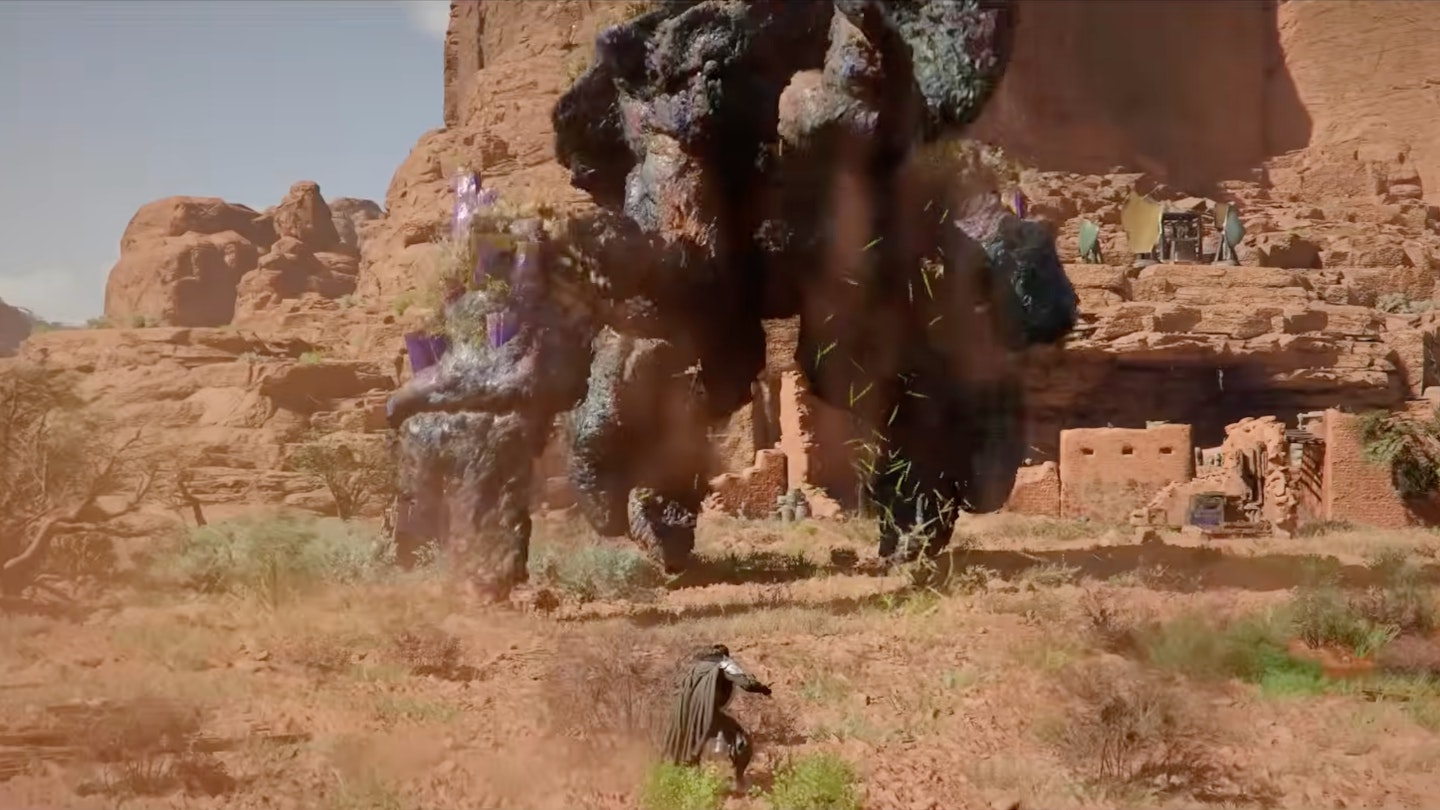
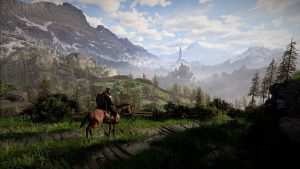
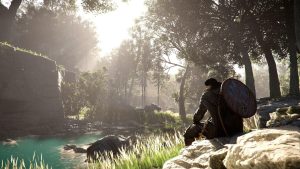
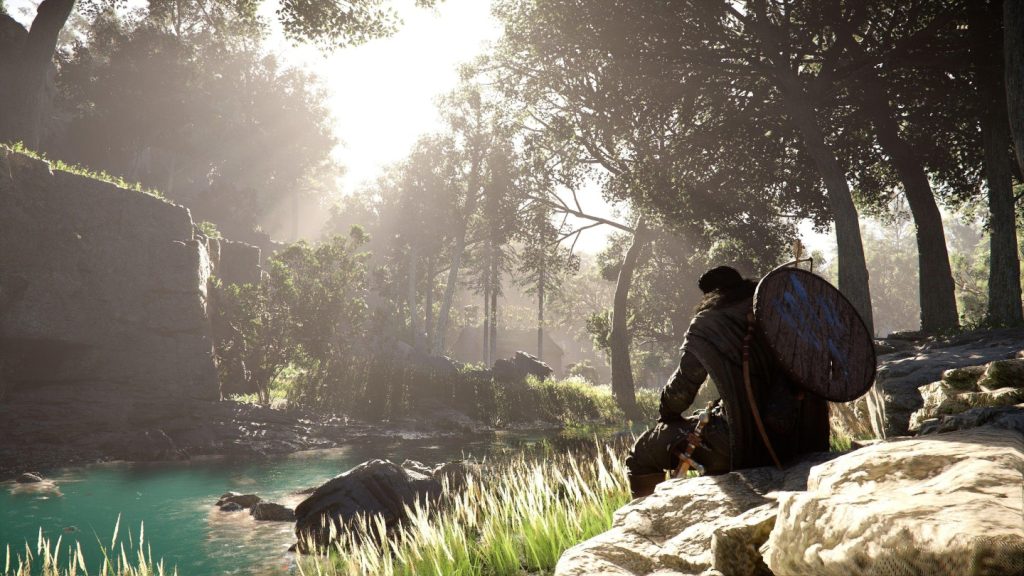
It’s also strikingly gorgeous. Pywel won’t win any awards for originality when it comes to medieval styled fantasy worlds, nor the stranger, more cosmic elements that weave in and out but carry a degree of familiarity to them, but it is all incredibly beautiful to look at. Pearl Abyss even gets a little cocky on this front – there’s a moment early on where you’re guided to “take it slow” while crossing a bridge, purely for the devs to show off the world they’ve made. It would be frustrating if it weren’t actually worth slowing down to take it all in.
Unfortunately, it’s all let down by some of the most obtuse and unintuitive controls of any game in recent memory. There’s a degree of common language that’s evolved in games over the years, particularly when playing on controllers, and Crimson Desert seems to go out of its way to ignore almost all of that lingua gamer. For instance, aiming a weapon is best mapped to the left trigger, and firing it with a pull on the right. Yet in this case, Kliff both aims and fires his arrows with the left trigger, a frankly ludicrous choice that leads to wasted arrows. Or toggling between walking and sprinting – by now, it’s muscle memory to millions to click in on the left thumbstick, but in Crimson Desert, that’s the crouch command. If you want to run, you have to double-tap A (on an Xbox-standard controller), which just adds extraneous inputs.
Even if you’re a PC player with a streak of mouse-and-keyboard puritanism, things are no better. Commands are scattered across the keyboard in haphazard fashion, with different inputs mapped to the same keys, some activated on short press, some on long. Across the (key)board, there are utterly absurd design and input choices that, in congress with the sheer overabundance of stuff to do in the game, make it nigh on impossible to remember what you’re doing between play sessions. Pearl Abyss is pushing out patches that it claims will address some of these control malfunctions, but at time of writing, the physical act of playing the game far more troublesome than it should be.
If those control woes can be massaged away, Crimson Desert could establish itself as a modern titan of open-world gaming. Even in its current form, the game is compelling – undoubtedly over-stuffed, but with so many compelling avenues to explore that you can’t help being drawn in to its weird world.