
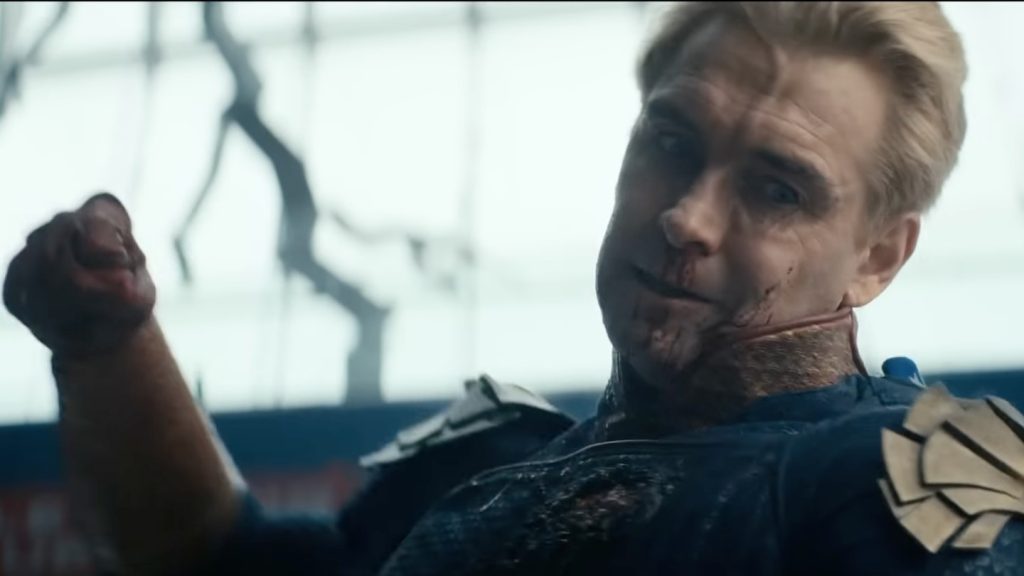
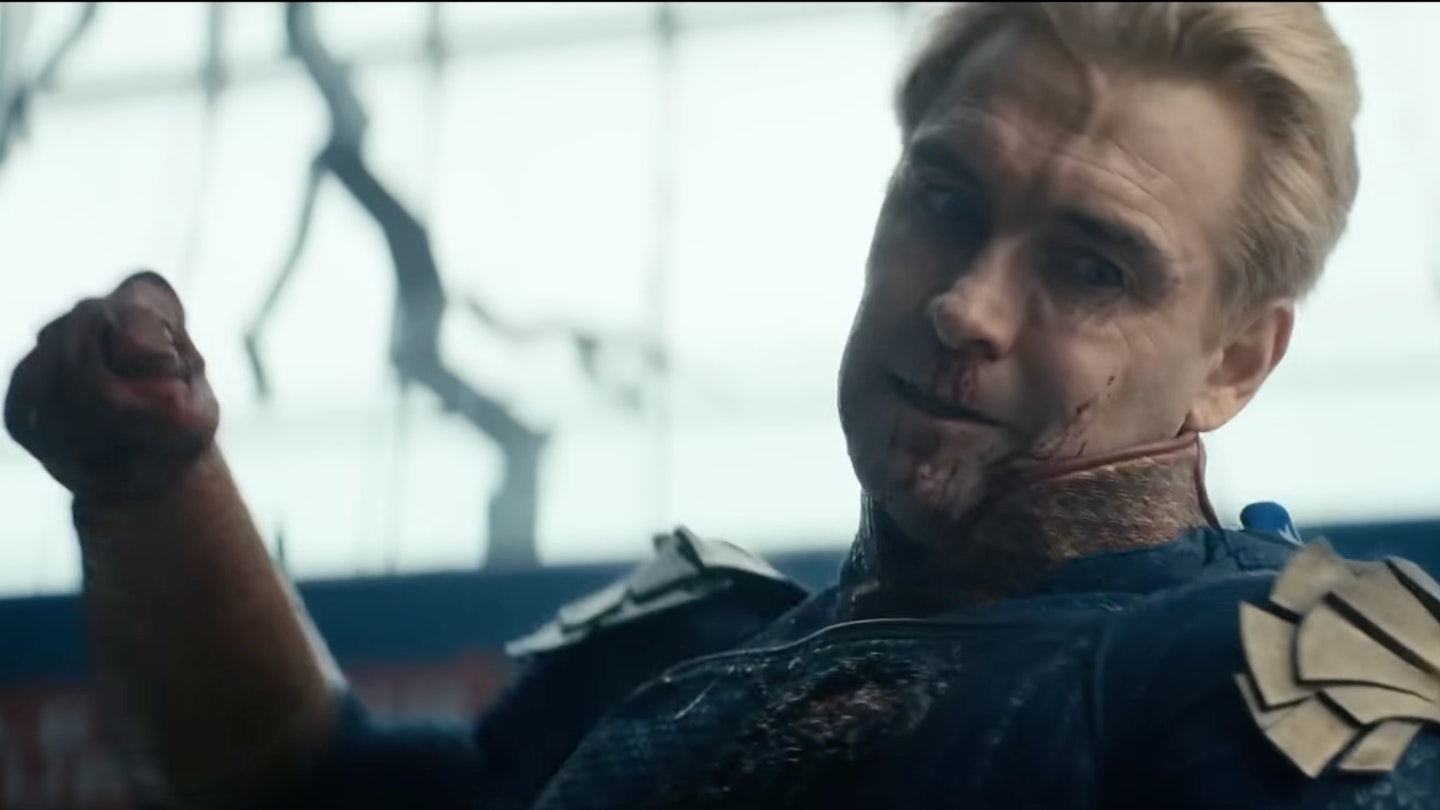
With the egomaniacal archvillain Homelander (Antony Starr) now fully in control of the United States, it’s up to The Boys to re-engineer a Supe-killing virus and stop him before it’s too late.
Streaming on: Prime Video
Episodes viewed: 6 of 8
A lot has changed since The Boys’ brand of vulgar, violent and gross satire first arrived on the superhero storytelling scene in 2019. Most notably, as its world has darkened, so too has our own. Where once the social commentary it offered felt like a funhouse mirror with bite, the political climate of the real world has become so outrageous that parodying it in 2026 simply offers a not so dimly lit reflection of our current times. Still, even if this final season makes it clear that the show’s ability to provoke and surprise has diminished, showrunner Eric Kripke and his crew have still got a few smart tricks up their sleeves.
Though the Season 2 conclusion of The Boys’ sister series Gen V teased an exciting alliance between the young Supes led by Marie Moreau (Jaz Sinclair) and Starlight (Erin Moriarty), disappointingly little is done with it. By Episode 2, the status quo of past seasons is restored, with Butcher (Karl Urban) leading his ragtag group on a mission to end Homelander (Antony Starr) once and for all. It’s all a bit too familiar, and after four preceding seasons, it feels too drawn-out. Indeed, though there are big moments that occur in the first episode, the momentum it generates is neither seized nor built on, and there is a surprising lack of urgency throughout. For a show that’s in its endgame, The Boys is content to spin its wheels far too often.
At a time when so many are currying favour with fascists, the social commentary here feels especially pointed and sharp.
Pacing issues aside, the character work remains strong. Ever more convinced of his Godhood, Homelander is by turns terrifying and pathetic, and Starr deserves kudos for the amount of interiority he brings to such an outwardly evil psychopath. The increased focus on religion means a lot of screen time for series newbie Oh-Father — a televangelist Supe through which the show skewers the hypocrisy of Christian evangelicals — and Daveed Diggs is a consistent, pompous highlight in the role.
There are some nice flourishes and shake-ups elsewhere, too. One standout episode is fragmented into vignettes from multiple characters as they go about their business, with Firecracker (Valorie Curry) emerging as its MVP. At a time when so many are currying favour with fascists, the social commentary here feels especially pointed and sharp. And the fact that Kimiko (Karen Fukuhara) can now talk to her partner Frenchie (Tomer Capone) just in time for rich conversations about what using or not using a Supe-killing virus will do for their relationship and the lives of others is another strong component of the season. It’s this heartfelt humaneness at its core that makes sticking with The Boys worthwhile, even if its final journey towards the finish line isn’t as flawless as we hoped.
Though it remains as timely as ever, The Boys’ endgame does take its time putting the pieces in place for the final showdown with Homelander — for both better and worse.