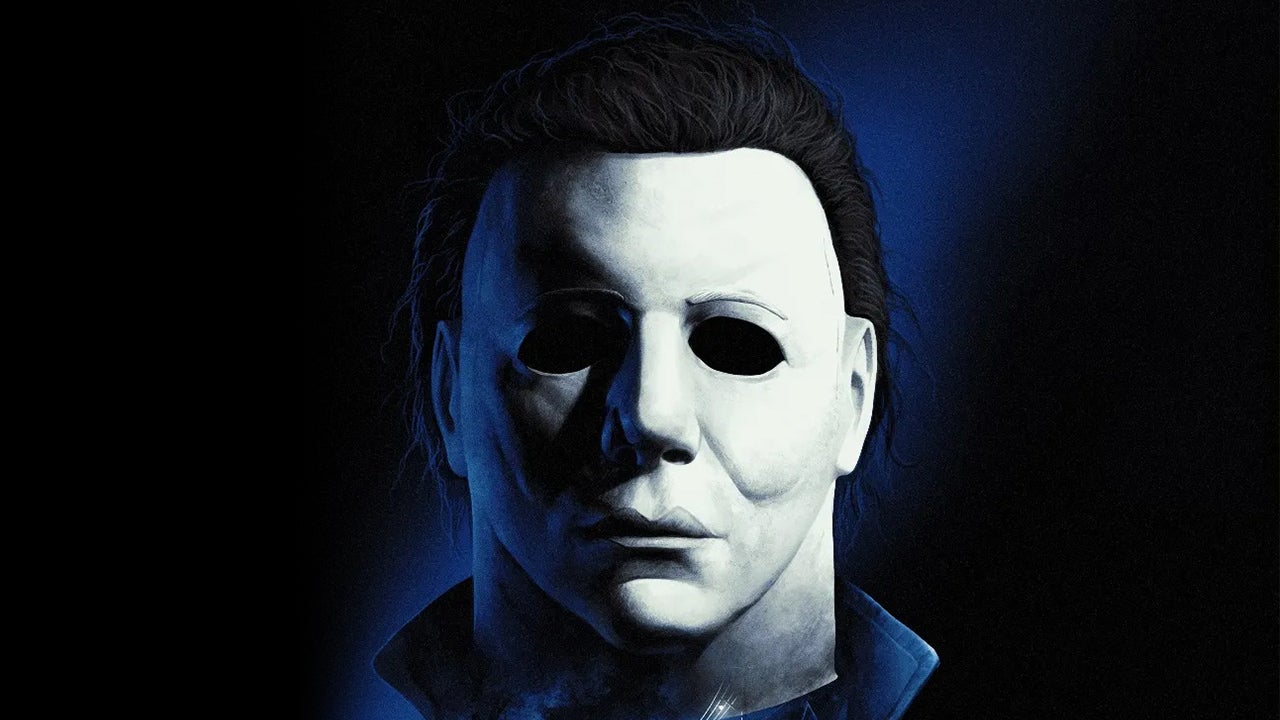


The first thing I did in Halloween was pick up a pickaxe. I thought it might give me a fighting chance against him. I was right. A couple minutes later, I ran into Michael Myers, the Shape himself. The fight that followed that quick: his knife against my pickaxe. I knocked him down, but that didn’t mean I won. He’s the boogeyman. Give him a minute, and he sits right back up. But it was enough time for me to get a headstart. If I wanted to survive a night in Haddonfield, that would have to be enough.
If there was ever a film that was primed to be an asymmetrical horror game, John Carpenter’s Halloween is it. But after spending some time with it at PAX East, what makes Illfonic’s latest stand out isn’t the asymmetrical horror structure: it’s everything around it. Unlike most asymmetrical horror joints, Halloween isn’t just a 1v4 game where Michael takes on a group of Haddonfield residents. It’s the story of the town of Haddonfield, and what happens to that town when Michael Myers walks the streets. I wasn’t just trying to save myself or the other folks I was playing with; I was trying to save the other people in town, too.
Michael’s here for everyone, including you, but he’s especially interested in Special Targets, who are named NPCs scattered throughout Haddonfield. Keeping them alive means getting to them before he does and letting them know there’s a masked killer on the loose. Each conversation is claustrophobic; I can barely see what’s around me. Every time, I’m vulnerable. Every time, he might be behind me. But once I convince the person I’m speaking to that the threat is real, we can help each other. They can call the cops; I can hand them a weapon, tell them to hide, follow me, point them to any escape we’ve unlocked. Even then, there are no guarantees. I can’t stay with them forever. But they’re better off than they were.
Every journey into a house is a risk. Each time, I wonder if I’ll open a door to see Michael on the other side, staring at me from behind the mask. I started locking doors, turning TVs off and on depending on how much noise I’m making. I open drawers and scour the trunks of cars for anything to give me an edge: a brick, a lawn dart, maybe even a joint. That one’s to take the edge off. Inevitably, he’s there: around a corner, in the house, walking towards me on the street. Sometimes, the things I’ve done to keep me safe end up backfiring. I lock a door leading outside only to find Michael between myself and the other exit. Turn around, unlock the door I’ve just locked, and hope I can make it outside before he catches me. He doesn’t run, but he doesn’t always need to to catch you. He has a knack for disappearing into the darkness, appearing around corners. I don’t always understand how, at least not initially.
The tension ebbs and flows. I know he’s not always there, and I have to navigate the town to find what I need and save who I can. But it can change in an instant. Lead Designer Jordan Matthewson told me that the design of Haddonfield itself, and making the people in it, was a crucial part of the story of each match. “We felt it was really important to embody what it feels like to be in this situation and let the horror movie unfold for you in a way that might not have happened if there weren’t a bunch of people kind of scattered throughout giving those different occurrences and encounters… We built it for population, giving that real feeling of interacting with people that you’ll care about a little bit when you interact with them, but at the end of the day, you might push them into Michael to give yourself a chance to run away.”
I feel it every time I pick up the phone to call the cops, and the camera closes in a little tighter, every time I walk through the open front door of a house I know I’ve never been inside, every time I hear a window break. Maybe he’s trying to get through it. Maybe someone’s jumped out of it to get away. Sound becomes a crucial part of navigating Haddonfield. What I hear tells me where to go, and the places I should avoid. Perhaps Halloween’s greatest success based on what I’ve played so far is that Haddonfield feels like a place that exists outside of me. Things happen in these houses when I’m not there. Matthewson told me that was intentional, too. “The environment being so in-depth was crucial to building the horror sandbox that we wanted to do. It’s about you creating your own horror movie, using the framework of this source material we have.”
Eventually, I do manage to escape, though not because I finally found the bolt cutters to unlock one of the map’s built-in exits. Enough of us call the cops and they roll in with a police wagon, and everyone who’s left makes their way over. My pickaxe was good enough to put Michael on the ground for a while, but these guys have guns. I wait until most everyone makes it inside the wagon, and then jump in myself. I’ve never been so happy to see the cops in my life.
Turnabout Is Fair Play
Then it’s my turn as Michael. I get lucky early; I’m spawned right next to another player, who is too focused on something else to notice me sneaking up behind them. I pick them up by the neck, and slice their throat open. One down, though I know residents can sometimes come back as a Sheriff’s deputy or even Dr. Loomis himself.
Michael is a different beast, one I was forced to adapt to. He walks slowly, and when he speeds up, you can hear the heavy breathing behind the mask. He starts with a knife, but he can acquire other things – like a pickaxe, which makes for some truly gruesome executions. The way he swings his knife is ponderous: if you want to make sure someone doesn’t get away, your best bet is to grab them. Stalking his victims long enough allows him to track them even if they get away. Locked doors only slow him down. Pickaxes and pistols may look like they hurt, but he’ll just rise again. He feels like he does in the films. He’s the boogeyman. But how do you put that into a video game and make it compelling to play (and play against)?
According to Chief Creative Officer Jared Gerritzen, it meant building the entire game around Michael. “It’s [from the] ground-up. It’s something that is IllFonic because we make it for the killer. We don’t make a formula and then just go, ‘Okay, this is the formula, new killer.’ We start from the killer and then the killer sets those definitions, it sets those things.” In Michael’s case, that meant watching a lot of Halloween, and realizing one of the core parts of Michael’s identity was being able to move around in the dark. As IllFonic pitched the game to Trancas International Films, who owns the Halloween license, the pacing decisions John Carpenter made could become game mechanics.
“It was purely because in a scene, it just sits there and the lights turn off,” Gerritzen tells me. “That was to eat up time. It was just one of those things that we said like, ‘Michael wants it to be dark. Why does he want it to be dark?’ We seized on the idea that darkness allows him to move in and out of this world and then we came back and we said, ‘Okay guys, this is what we want to do.’ We worked on it, we pitched it to him and they said, ‘Yeah, let’s do it.’“
That became Shape Jump, Michael’s most defining and impressive ability. As long as he’s in darkness or outside of a resident’s line of sight, Michael can slip into the darkness, which makes him much faster, allows him to move through physical barriers like fences, and plan ambushes. If you’re a citizen of Haddonfield, you might think he’s behind you only to realize he’s beaten you around the corner you were headed for. Shape Jump is extremely powerful, but it is limited. Michael cannot Shape Jump in the light, and he needs to be in darkness to reenter the physical world. Smart Civilians will run from light to light, using that to their advantage. But even the smartest Civilians make mistakes. And one slip up is all Michael needs.
If being a Civilian is an exercise in tension, inhabiting Michael is about power. The more he stalks and kills, the stronger he becomes, and the more executions and abilities he gains access to. As a Civilian, you’re not defenseless, but you are prey. Here, you’re the hunter, and there’s a sick thrill to stalking Civilians, turning off the lights at the right moment, executing the perfect Shape Jump ambush, and simply walking after a resident who is desperate to get away. The attention to detail here is impressive, from the sound of Michael breathing behind the mask to executions that mirror those seen in the films. You haven’t lived until you’ve pinned a screaming teenager to a wall with a butcher knife.
I focused on the special targets (and managed to get all of them), but the real cat-and-mouse games were against the other players. Even if they did manage to knock me down, it was only a matter of time before I was back up and on the hunt. By the end, I was even taking on the cops. All I needed to do was get them alone. I ended up securing a minor victory, even if I was too late to the police wagon to take out another resident.
Asymmetrical horror is hard, but what I loved about my time with Halloween was how different it feels from everything else in the genre while simultaneously staying true to the films that inspired it. As a Civilian, I’m not just fighting for myself; I’m fighting for my town. As Michael, I wasn’t trying to just get other players. I wanted to wipe out a town that was actively fighting back. I haven’t played anything quite like it, which makes sense because despite its imitators, there’s still nothing quite like Halloween. If IllFonic can continue to hit on what makes Halloween tick, we might have something special on our hands. Horror films have given us lots of scary guys in masks, but there’s only one boogeyman.
Will Borger is an IGN freelancer. You can find him on Bluesky @edgarallanbro.