
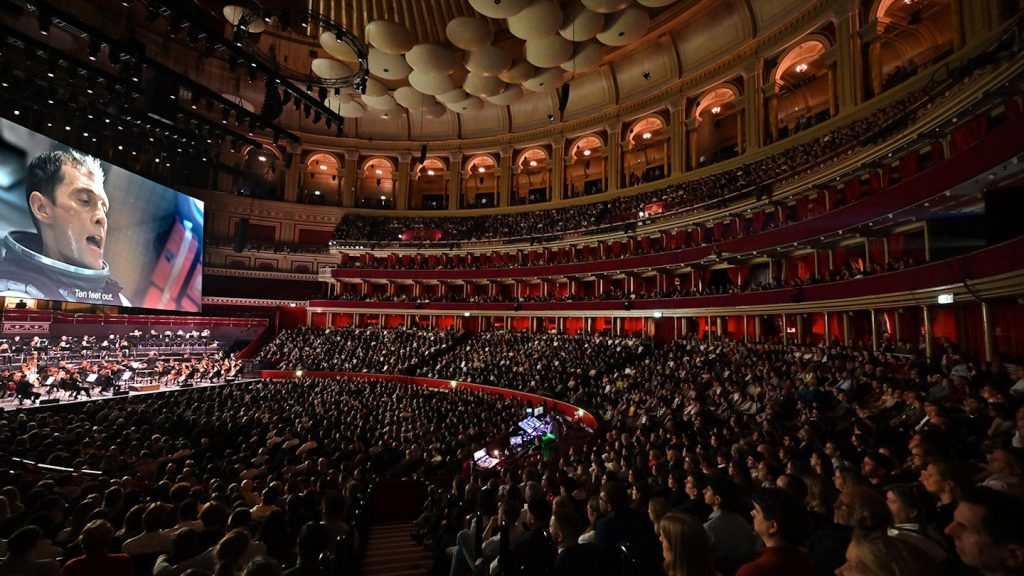
I was nervous for the oncoming onslaught, surrounded by strangers, quietly dreading the sequence and – right on cue – as it began, I began to crumble. Emotionally exposed among the Royal Albert Hall’s 5,000-strong throng. But also adrenalised. Call it masochistic if you like, but I do enjoy my heart being thumped about by cinema. Reduce me to rubble! Figuratively speaking.
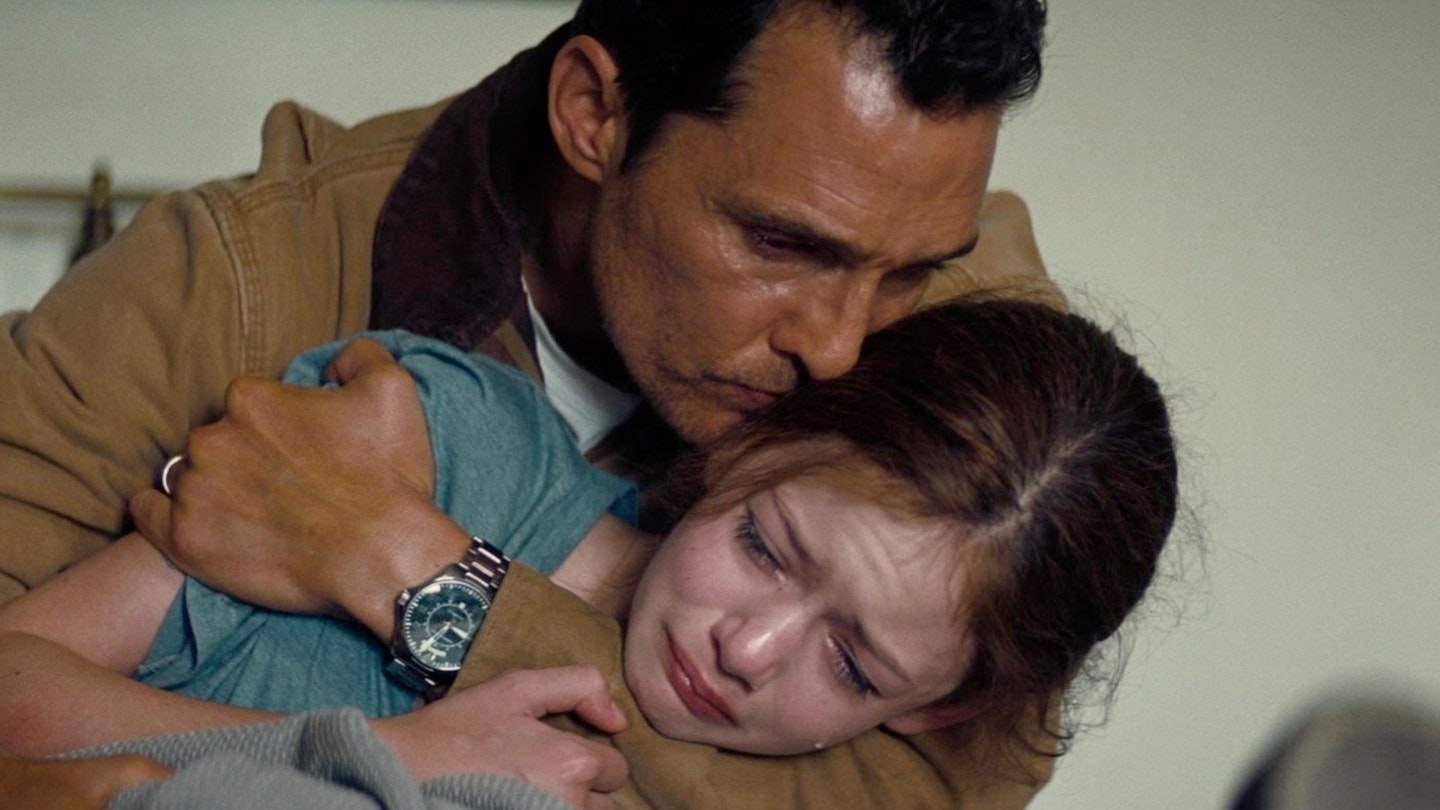
I had seen Interstellar only twice before – upon release in November 2014, and then a few weeks later at an open-air screening in a park in Sydney, bats swooping in front of the setting sun while Hoyte van Hoytema’s own magic-hour golden glow also bathed the audience. That was special. Both times, the scene in which Matthew McConaughey’s astronaut Coop receives video messages from his kids at home had the same effect on me as it did him. As he sat there uncontrollably sobbing in his spaceship, having suddenly – thanks to relativity – lost 23 years in a matter of mere hours, I sobbed too, such is the massive, merciless wallop of it all. That residue had stuck with me since. So, on Easter Sunday in London, I knew it was coming. And yet I was, it turned out, unprepared. “Hey, Dad.” “Hey, Murph.”
©Chris Christodoulou
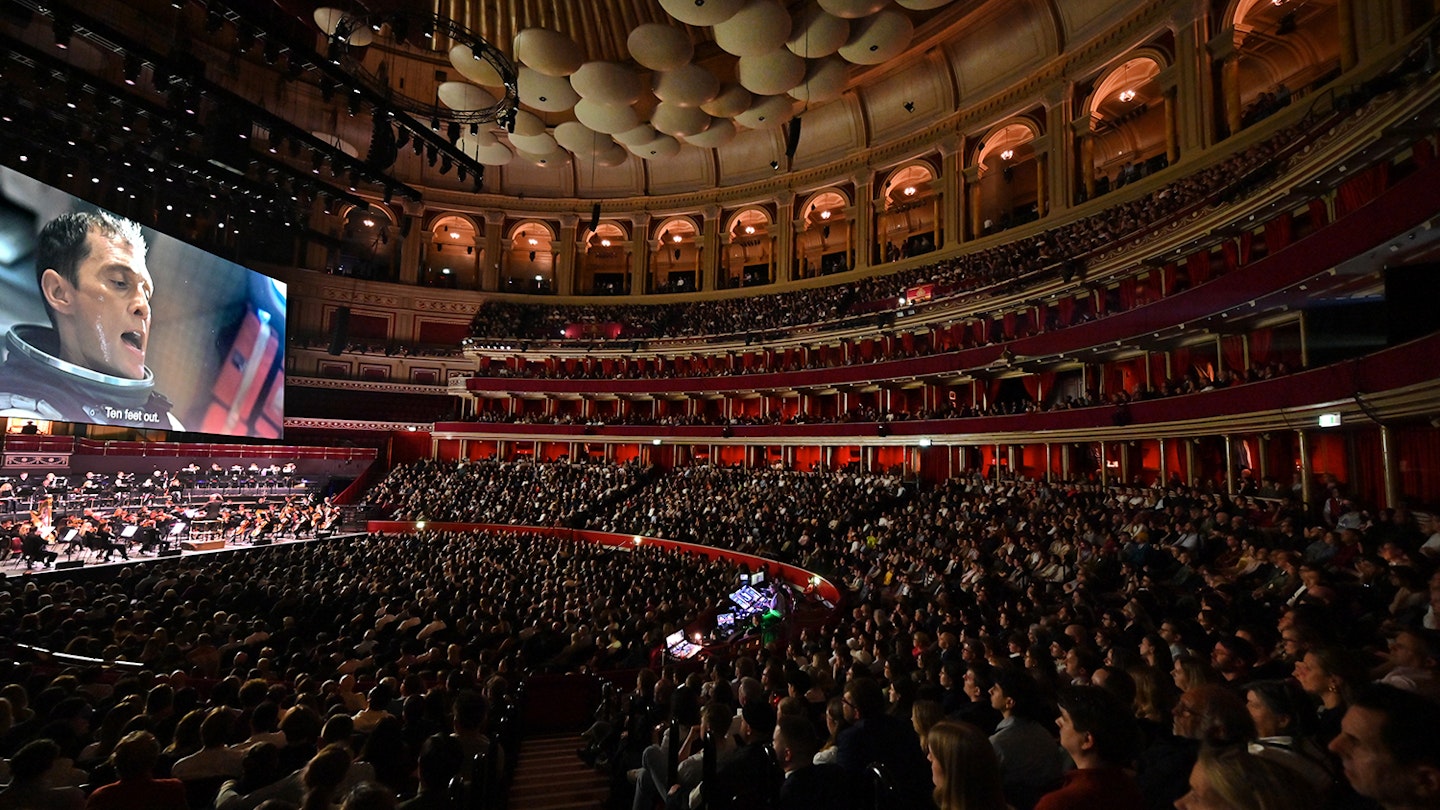
There in the Royal Albert Hall, Interstellar was projected while the Royal Philharmonic Concert Orchestra played Hans Zimmer’s score live, among them the soundtrack’s organist Roger Sayer, sat behind the venue’s 70ft-high towering beast of an organ (built in 1870, boasting 9,999 pipes and looking like something from Frankenstein’s lab). I had already lost it before the video-messages bit. Coop driving away from home – ripping through the cornfield as he heads to NASA, tears in his own eyes after leaving his distraught daughter behind – had kicked things off. And I went multiple times after that too, right up to the final stretch and Ellen Burstyn’s beatific smile: “I knew you’d come back.” “How?” “Because my dad promised me.”
There are I believe three explanations for the intensity of my response that evening.
1: The film is really fucking emotional.
2: I have my own daughter now, and so my own brain chemistry has changed, as well as my perspective on the world and my experience of life, and of cinema, particularly a film like this, particularly this exact film. Murph’s distress is my daughter’s distress. Cooper’s interactions with her are mine. My defences are down. Dismantled.
3: Seeing and hearing the orchestra provide that incredible score as it happens, at the risk of supreme corniness, was to witness human excellence. These world-class musicians overwhelmingly committing to the work, together creating something so astonishingly beautiful… that alone is a thing of awe and wonder. The movie purist in me tells me that live scoring shouldn’t work, that it would be distracting, diverting our eyes away from the screen, seeing behind the curtain as the film unfolds. But watching these people make that music infinitely enhanced Interstellar. To look down every so often, to see them right there, bringing such sonic grandeur to the room – there was, for me, something truly transcendental about it.
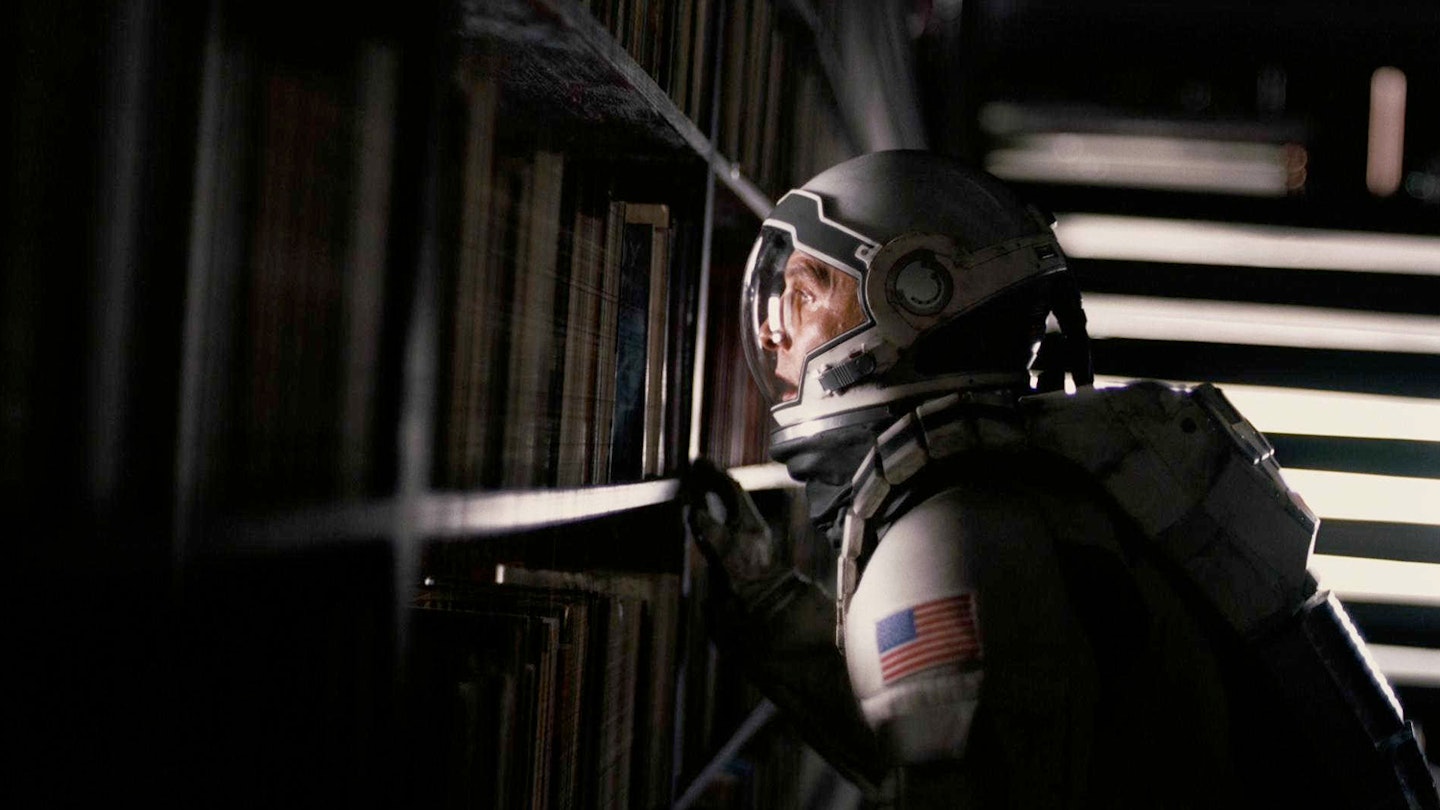
I have listened to the Interstellar score more than any other over the past 12 years. It does feel spiritual. It does feel cosmic. It does feel like you’re being carried into another realm. This was the intention.
When director Christopher Nolan first approached Zimmer, the screenplay still being written, he told him barely anything about it, simply asking him to spend a day making a piece of music to accompany a story – typewritten on a single page of paper – about a man leaving his kid because he had an important job to do. There were just two lines of dialogue on that page of paper: “I’ll come back.” “When?” Also referenced, though, was something Zimmer himself had said to Nolan a year earlier about the fact that once your children are born, you “look at yourself through their eyes.” Assignment in hand, Zimmer spent a day writing a piece about what it feels like to be a father. Nolan then stuck that piece on heavy rotation while he wrote the rest of the script.
Zimmer chose Roger Sayer for the organ work, brought to life on a then 90-year-old church organ. It’s impossible to imagine the film without it. “I made the case very strongly for some feeling of religiosity to it,” said Nolan of the score. “The film isn’t religious, but… the organ, the architectural cathedrals and all the rest, they represent mankind’s attempt to portray the mystical or the metaphysical.” It’s a deeply human instrument. An organ. Not a synth. “It can only make a sound with air, and it needs breath,” said Zimmer. “And on each note, you hear the breath, you hear the exhale.” You could hear that – and see it, and feel it – in the Royal Albert Hall. Sayer with his back to us, in thrall to the pipes, making majesty behind the keys. Taking us to church.
The silence in the Hall was deafening. No pins were dropped, but you could hear the tears.
Show-stoppers were in no short supply. Interstellar‘s docking sequence – during which Cooper has to connect his lander to the Endurance space station, despite being informed it’s impossible – is bravura enough on screen. But witnessing the orchestra play the accompanying piece, ‘No Time For Caution’, the other night, it felt like genuine life or death, Sayer going for broke, every string-player thrashing away as if there were genuinely no tomorrow. “Okay, we’re out of orbit”, said Coop, impossible mission made possible, and the Royal Albert Hall audience spontaneously erupted into applause – for Coop, for Nolan, for Zimmer, but most of all for the orchestra in the room, recreating the work with perfect precision and to overwhelming effect. (Incidentally, when Nolan and Zimmer had finished their work together, the director gifted his composer a watch – just as Coop does to Murph before he leaves for his mission. On the back of the one Nolan gave to Zimmer, he had inscribed, “This is not the time for caution.”)

Nolan took on Interstellar because of how it made him feel as a father; his producer and wife Emma Thomas said she didn’t think he could have made it before being one. “Having children,” Nolan later told The New York Times, “absolutely fine-tunes your sense of time and time passing. There’s a desperate desire to hang on to moments as your kids grow up.” Which is Interstellar in a nutshell. That sentiment is why the video-message scene is so integral, and so powerful. What we see on screen there is raw footage in every sense – it was McConaughey’s first take, and he hadn’t seen the messages before doing so. His reaction was real, and it shows. By the time Jessica Chastain’s adult Murph arrives, having refused to send any messages up to this point, the score gradually disappears. The silence in the Hall was deafening. No pins were dropped, but you could hear the tears.
Confession: I don’t cry much in the real world, despite sometimes having good reason to. For me, it all comes out in the cinema. Films help us to process things, to make sense of them. To feel them. Cinema gives us permission to cry. Possibly due to the fact that I’m having an emotional time with my own daughter at the moment, seeing Interstellar with that orchestra the other night was an extremely physical catharsis, the film’s meditations on love and loss and time hitting me like never before. Man, it’s amazing to be alive. “I’m here now, Murph. I’m here.”