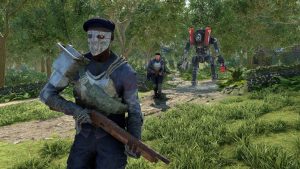

Platforms: Quest 3, Quest 3S, PlayStation VR2
Set in the same continuity as Amazon’s ultra-violent adaptation of Garth Ennis and Darick Robertson’s (even more disturbing) superhero satire comics, this VR spinoff casts players as brand-new character Lucas Costa. A back-office employee of Vought International – the sinister corporation behind the creation of “Supes” – Lucas has the terrible idea to sneak his daughters backstage to meet The Armstrongs, a close-knit family of heroes marketed to the public as a squeaky-clean superteam.
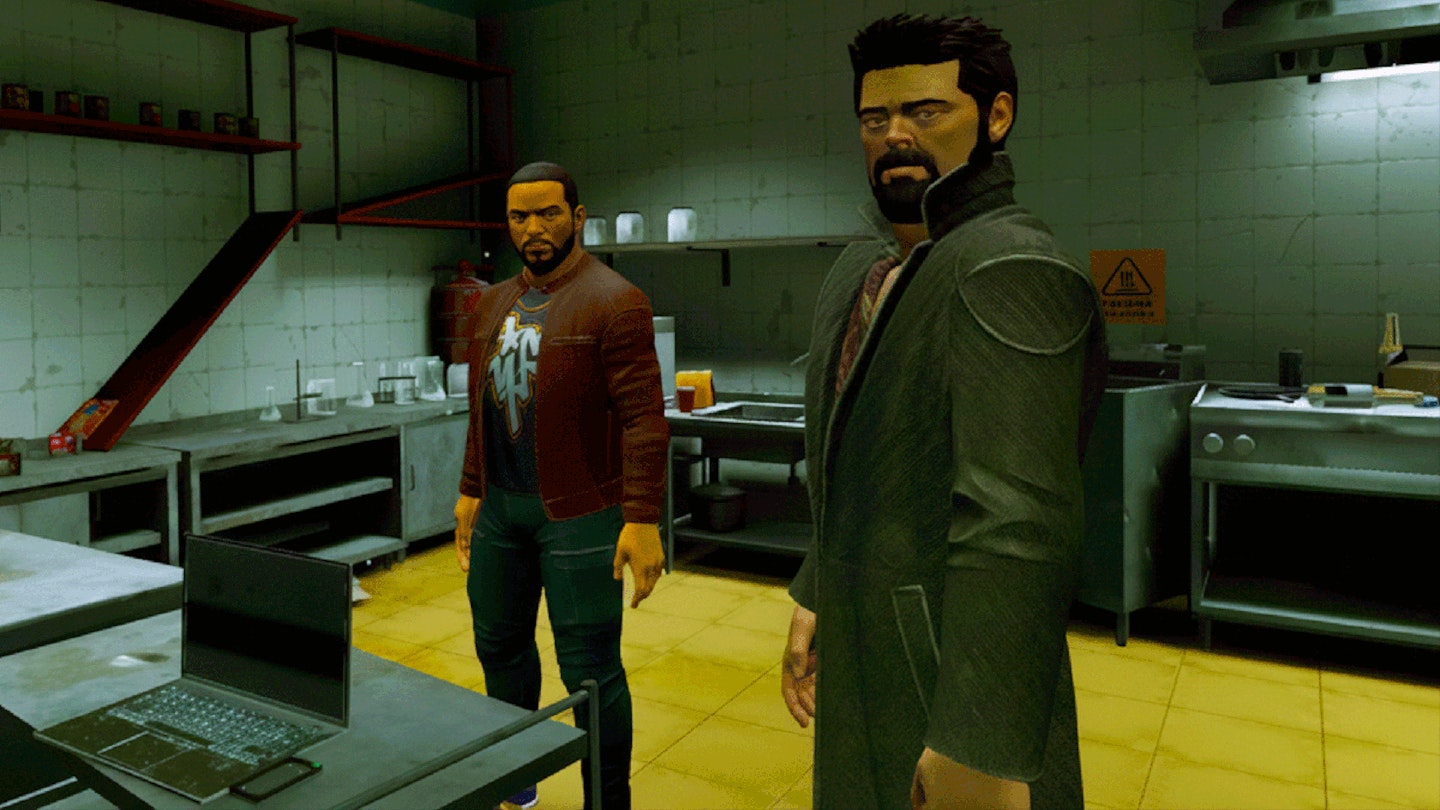
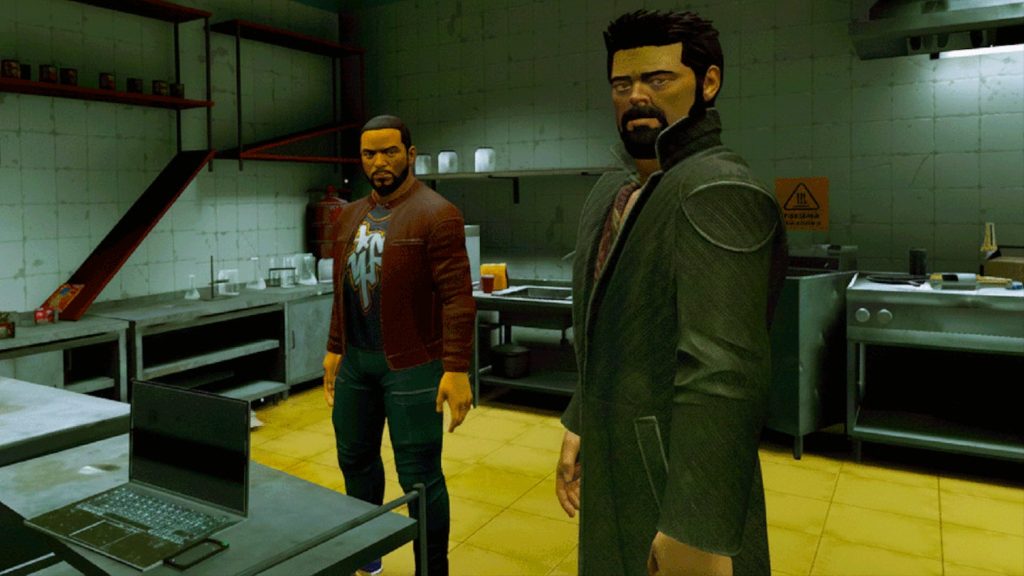
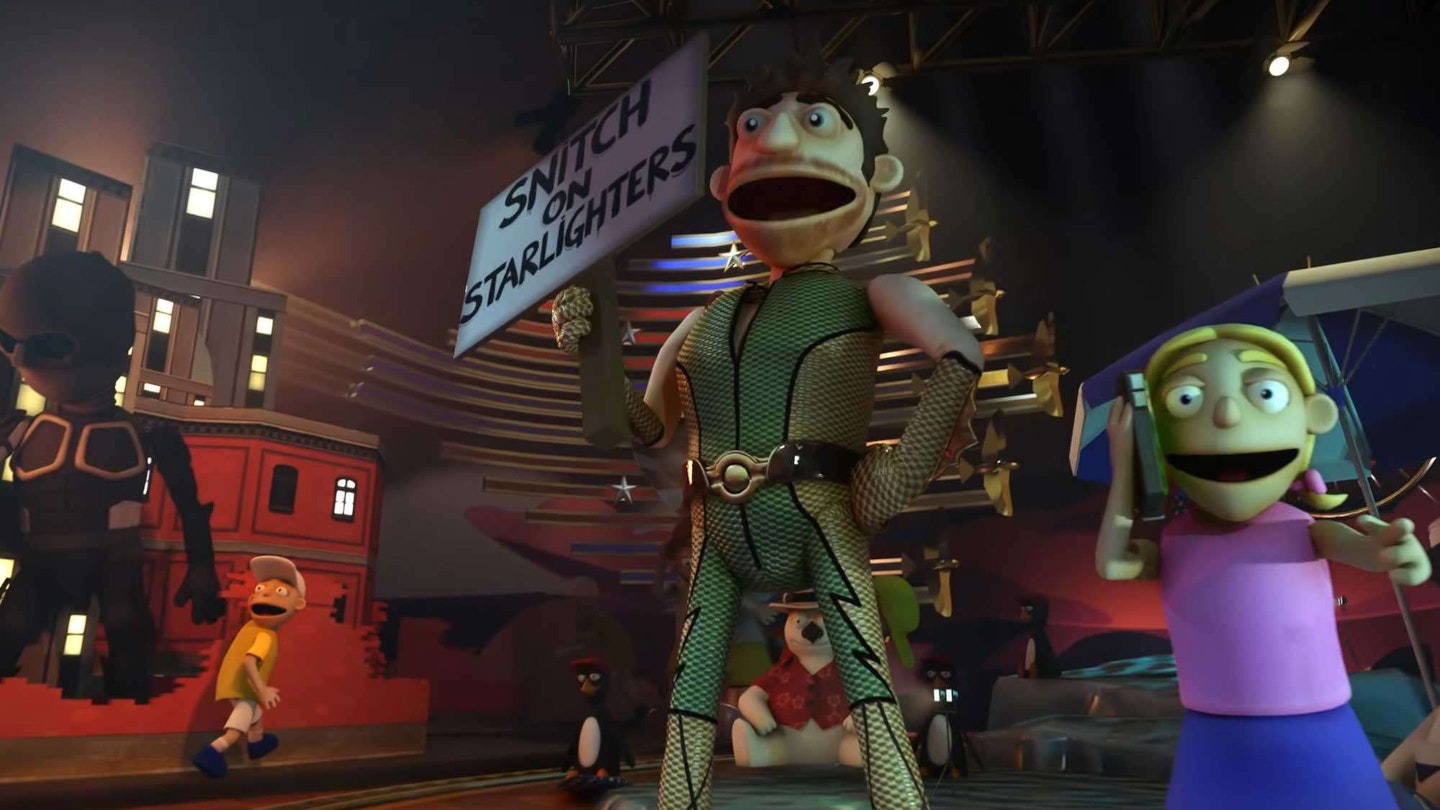
Well, you know what they say about meeting your heroes – Lucas finds this not-particularly-subtle parody of the Fantastic Four in the middle of an incestuous BDSM orgy, and their fury at being discovered leads to the loss of one of his daughters and his own grievous injuries. Found and brought back from the brink of death by Butcher and Mother’s Milk of the core team, Lucas is given a dose of superpowers courtesy of the Compound V wonder-drug and sent undercover to expose the Armstrongs and, maybe, help bring down Vought as a whole.
As a tie-in, it’s clear from the off that nothing of substance will happen that would impact the show – Lucas himself is essentially a swap-out for the TV show’s everyman figure Hughie, right down to also being a tech specialist. While that should allow game developer ARVORE the freedom to go wild, Trigger Warning stands out more for how timid it is. Almost every plot beat is predictable, both in its attempts at narrative twists and its moments of now-clichéd depravity.
Worse, it’s all quite boring to play. Lucas’ powers initially manifest as a blend of telekinesis and teleportation, which could have some interesting implementations in VR, but are mainly put to use for lengthy stealth sections. You’ll warp from air vent to air vent, lob small objects at guards’ heads, or zap behind them to yank those heads right off with a TK twist – but end up face to face and those same powers leave you no way to fight enemies off.
Even when more visually imaginative and tactile powers are introduced, such as blade-morphing arms and heat vision to crispy fry enemies, the formula of the game defaults to sneak-n’-slash. While the actual use of these powers in VR can be fun – particularly Lucas’ take on x-ray vision, allowing you to see the location of enemies through walls, activated by raising both hands to the side of your head in a “To me, my X-Men!” motion – it’s ultimately all quite bland.
Last year’s Deadpool VR at least managed to play around with a cel-shaded approach; this looks closer to a mobile game at times.
There’s also a very odd morality woven through. As Lucas, you’re absolutely appalled at the actions of the Armstrongs, and even more so when you witness the psychotic Homelander murdering an innocent security guard – but that moment comes right after the game has given you no choice but to slaughter dozens of guards to get to that cutscene. “Homelander killing = bad; Lucas killing = gameplay” is a hell of a take.
The gore of all that murder is somewhat tempered by the dated graphics of the game, and while that’s possibly a blessing for anyone who doesn’t want to tear through realistic humans like A-Train through Hughie’s girlfriend in the show’s pilot episode, the result is that Trigger Warning lacks any real visual identity of its own. Last year’s Deadpool VR at least managed to play around with a cel-shaded approach; this looks closer to a mobile game at times. It looks and feels rushed.
While there’s some draw here for hardcore fans of the show, with Laz Alonso reprising his role as Mother’s Milk, Colby Minifie as Ashley Barrett, and Jensen Ackles as Soldier Boy (sort of…), Trigger Warning is ultimately a slice of nothing – cartoon violence and try-hard shocks, sandwiched between dull, repetitive fights. Ultra-violence shouldn’t be this boring.