
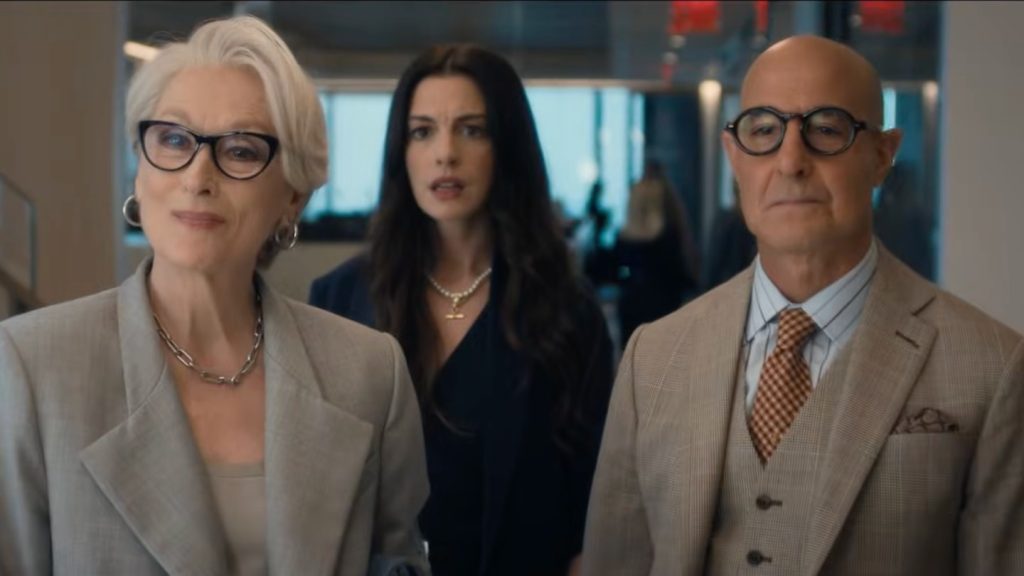
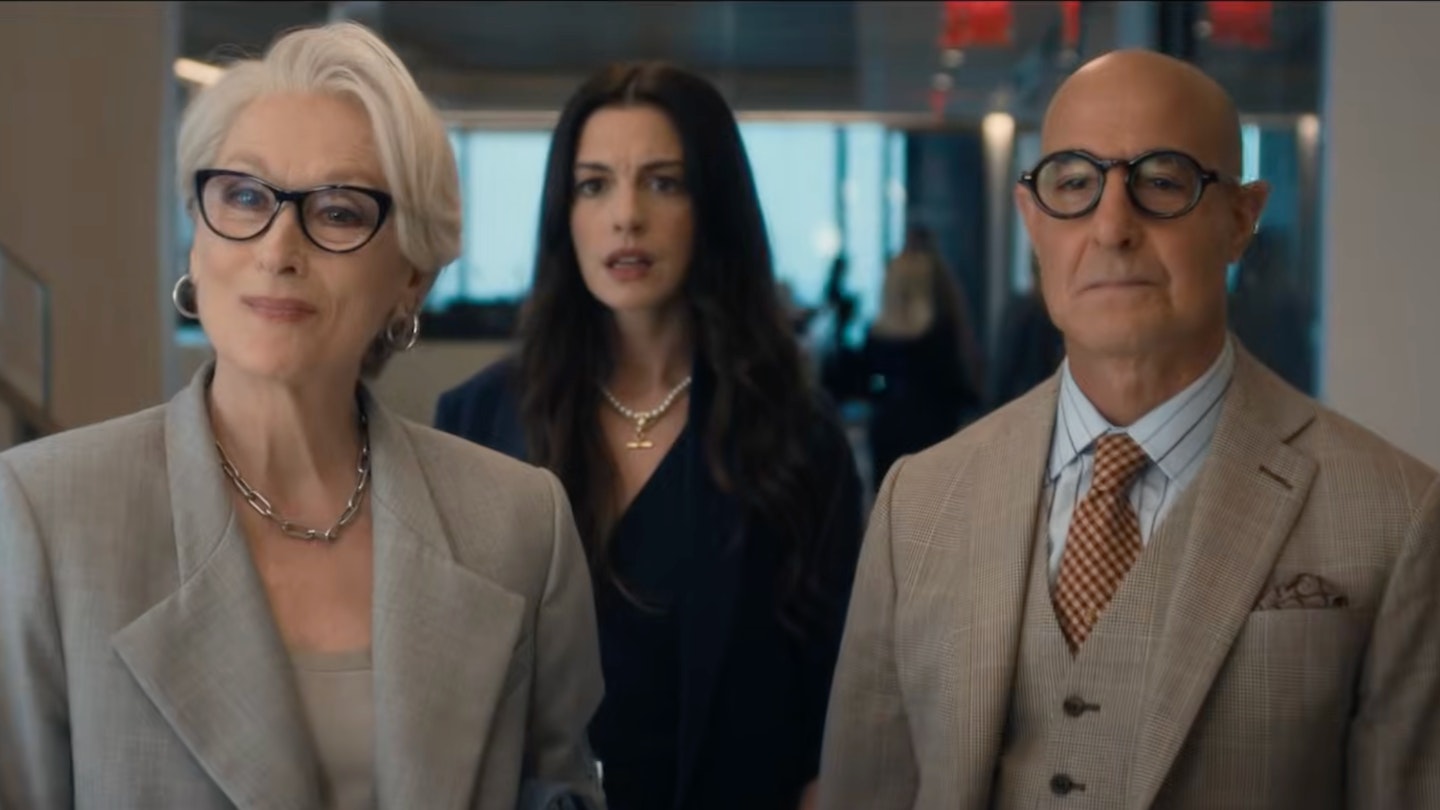
With fashion magazine ‘Runway’ in jeopardy, long-serving editor-in-chief Miranda (Meryl Streep) and her former assistant Andy (Anne Hathaway) form a shaky alliance to secure its future.
In an age where powerful leaders can’t seem to get enough of hearing their own voices, the silence of Miranda Priestly (Meryl Streep) is deafening. As imperious editor of the fashion industry-shaping magazine ‘Runway’, a pursing of her lips causes prestigious designers to lurch back to the drawing board. If actually moved to speak, her dismissive go-to, “That’s all,” sends employees spiralling into despair.
All of this made 2006’s The Devil Wears Prada deliciously entertaining: through the eyes of Anne Hathaway’s aspiring journalist Andy, we witnessed an Alexander McQueen-clad master keeping her ship afloat through ferocious tenacity, some personal sacrifice, and a carefully wielded wordless glare. When this long-awaited sequel calls for more dialogue, then, those lines had better count, as they could risk diluting her monstrous power.
Hathaway maintains plucky affability despite her character becoming more world-weary, while Blunt’s comedic timing and flashes of vulnerability save the film from feeling too serious.
Credit is due to returning director David Frankel and screenwriter Aline Brosh McKenna, who have resisted the steadfast demand for a follow-up for 20 years, insisting that they would revisit ‘Runway’ only when the right story presented itself. Instead of falling back on the same themes of the first film entirely, they move the story forward into the tumultuous landscape of journalism today. Andy, now an award-winning reporter, becomes a casualty of cutbacks at her publication. At the same time, Miranda is accidentally embroiled in a sweatshop scandal through a story she commissioned, and so her one-time underling is brought in by higher powers to rescue the magazine’s editorial reputation. Upon arrival, Andy discovers that budgets have dwindled, words like “engagement” and “digital” dominate meeting rooms, and perhaps worst of all, Miranda must pander to advertisers — well, one in particular: scorned former assistant Emily (Emily Blunt), who now holds a senior role at Dior.
It’s painful to see this titan of industry navigate such choppy seas, although there are still moments of levity (Miranda trying to hang up her own coat after she’s been banned from throwing them at her assistants can’t help but provoke a smile). Yet while the future of print journalism is a worthy subject to explore (Empire subscriptions are available through our website!) and gives the story a grounded and interesting set-up, the drama feels rather frictionless. In The Devil Wears Prada, we enjoyed a peek into the lavish and aspirational world of fashion weighted by Miranda and Andy’s sparky dynamic; now that partnership is (slightly) sturdier, and we’re instead encouraged to fear B.J. Novak’s Silicon Valley-styled scion and Justin Theroux as a boss-level tech entrepreneur, both of whom are largely forgettable.
Thankfully, the core cast are anything but. Hathaway maintains plucky affability despite her character becoming more world-weary, while Blunt’s comedic timing and flashes of vulnerability save the film from feeling too serious. Stanley Tucci as Miranda’s stalwart right-hand man Nigel returns as the pocket-square-adorned shoulder to cry on, though does get a few welcome moments to shine. Around them, the film’s world remains a taffeta-draped playground through which the characters showcase traffic-stopping designer ensembles, reminding us why they risk it all for ‘Runway’. And at its epicentre, Streep lets us a little deeper into Miranda’s psyche without losing that magnetic elusiveness. Her power survives intact, even if she’s not given a worthy adversary to unleash it upon.
A sequel that serves its characters with a fresh story instead of relying solely on the tropes of its predecessor. This high-fashion tale could have benefited from higher stakes, but Streep and company remain as in vogue as ever.