

Jump to a section:
As FPS, MMO, strategy and action adventure players, we know our stuff when it comes to PC gaming. Owning one of the best gaming laptops can be the difference between bringing home the win or taking the loser’s walk of shame. Whether it’s capturing that flag and owning the map in Battlefield 6 online or ramping up those eye-popping visuals in Assassin’s Creed Shadows, you’re only as good as your gaming setup, and that begins with choosing the right gaming laptop.
Best Gaming Laptops at a glance
We’re here to help ensure that your money goes where you need it, whether that’s on raw graphics power, maxed-out RAM, a killer CPU or a giant SSD for storing an expanding games library. And we’ve not overlooked the practical side of owning portable gaming hardware. It should be robust enough to survive being slung over your shoulder in a laptop rucksack and have the battery life to keep exploring on a long commute. There’s a range of the best gaming laptop accessories at the end of the article too, so you can carry your kit safely, keep it clean and plug in extras like a top gaming headset and avoid distractions.
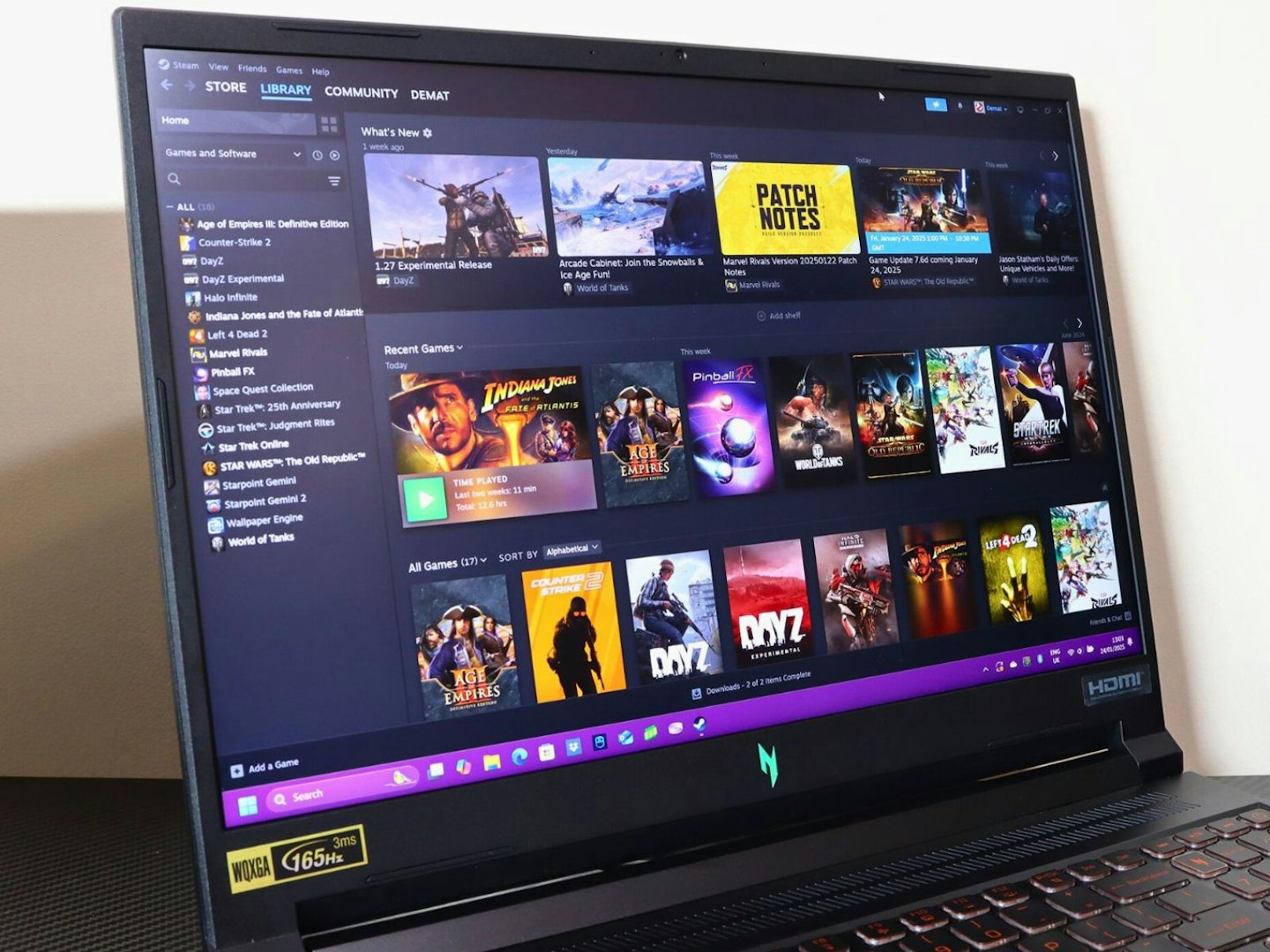
A great gaming laptop should be able to run every game in your library with ease. ©Chris Duffill, Empire
How We Chose The Best Gaming Laptops
We’ve found the best prices on popular models from brands renowned for their build quality and gamer-friendly features – like Acer, ASUS, Lenovo, MSI and HP. There are budget and high-end selections featuring the latest graphics cards, processors and high refresh rate displays; plus pointers on how to choose and laptop jargon explained.
We’ve selected the best gaming laptop for each category based on our experience as consumer tech reviewers, average user feedback, price, and suitability for each use case. We’ve made our selection based on the overall specification, including GPU, RAM, gamer-friendly features, build and ergonomics. We’ve also looked for quality screens and high refresh rates, good connectivity options and solid battery life. Retailers are selected based on price, availability and reputation as reliable and trusted sellers. Find out more about how we recommend products.
The Best Gaming Laptops in 2025
Researched and recommended
Best gaming laptop overall
 ASUS
ASUSRrp: £1299.99
Price: £1249.99
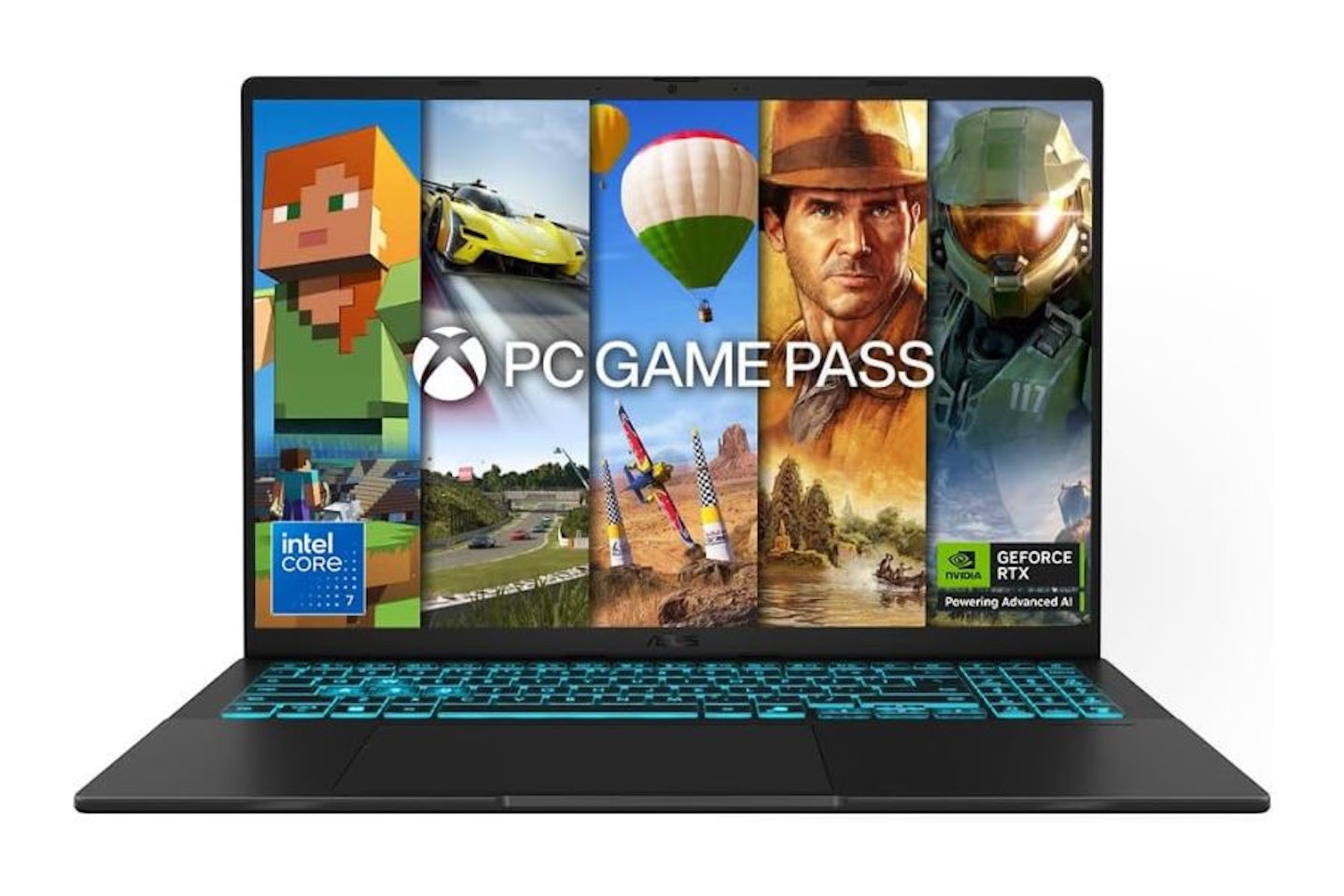
We’re huge fans of ASUS as they make some of the best gaming laptops on the market. This V16 has a 16-inch display and a scorchingly fast NVIDIA RTX 5070 graphics card. The ultra-smooth 144Hz refresh rate of the display is going to elevate fast-paced games too, delivering clean motion for shooters like Black Ops 7 and racing games. We also find that the 16-inch screen is the perfect balance of size and portability – it’s large enough to ensure the graphics are detailed, but not so big that taking it on the move is an inconvenience.
Powered by an Intel Core 7 240H processor, it sports RTX 5070 graphics and an equally ideal 32GB of RAM – a combo that will have your AAA games running at higher settings. Connectivity is pretty much future-proofed thanks to Wi-Fi 6, Bluetooth 5.3 and USB-C – so staying connected for your online matches, hooking up a wireless headset or plugging in an external SSD is fast and easy.
At close to 2kg though, we do think that this 16-inch machine is a little hefty for the size, but it does pack a lot of raw power into a slim design. Speaking of design, there are a few understated gamer accents but this is a rig that will still look professional outside of a gamer den if you need it to. For us, this is a fantastic all-rounder that overdelivers on spec for the price. It even comes with a free three month subscription to Xbox Game Pass.
Pros
- Outstanding 16-inch 144Hz display for smooth and detailed gaming
- Powerful RTX 5070 and Core 7 CPU will handle those more demanding titles
- Slim and solid chassis with understated gamer accents
- Excellent connectivity thanks to Wi-Fi 6, Bluetooth and USB-C
- 3 months of Xbox Game Pass for free
Cons
- On the heavier side for a 16-inch machine
| Display | 16.0-inch WUXGA, 144 Hz, IPS |
| CPU | Intel Core Ultra 7-240H |
| GPU | NVIDIA GeForce RTX 5070 |
| RAM | 32 GB |
| Storage | 1 TB PCIe SSD |
| Operating system | Windows 11 Home |
| Connectivity | Wi-Fi 6, Bluetooth 5.3, 1 × USB-C (DisplayPort + Power Delivery), 2 × USB-A 3.2, 1 × HDMI 2.1, 3.5 mm audio jack |
| Battery life | ~5 hours (light productivity and media use) |
| Dimensions | 35.7 × 25.1 × 1.8–2.2 cm |
| Weight | 1.95 kg |
Rrp: £1299.99
Price: £1249.99
Researched and recommended
Best budget gaming laptop
 Lenovo
Price: £899

Alternative retailers
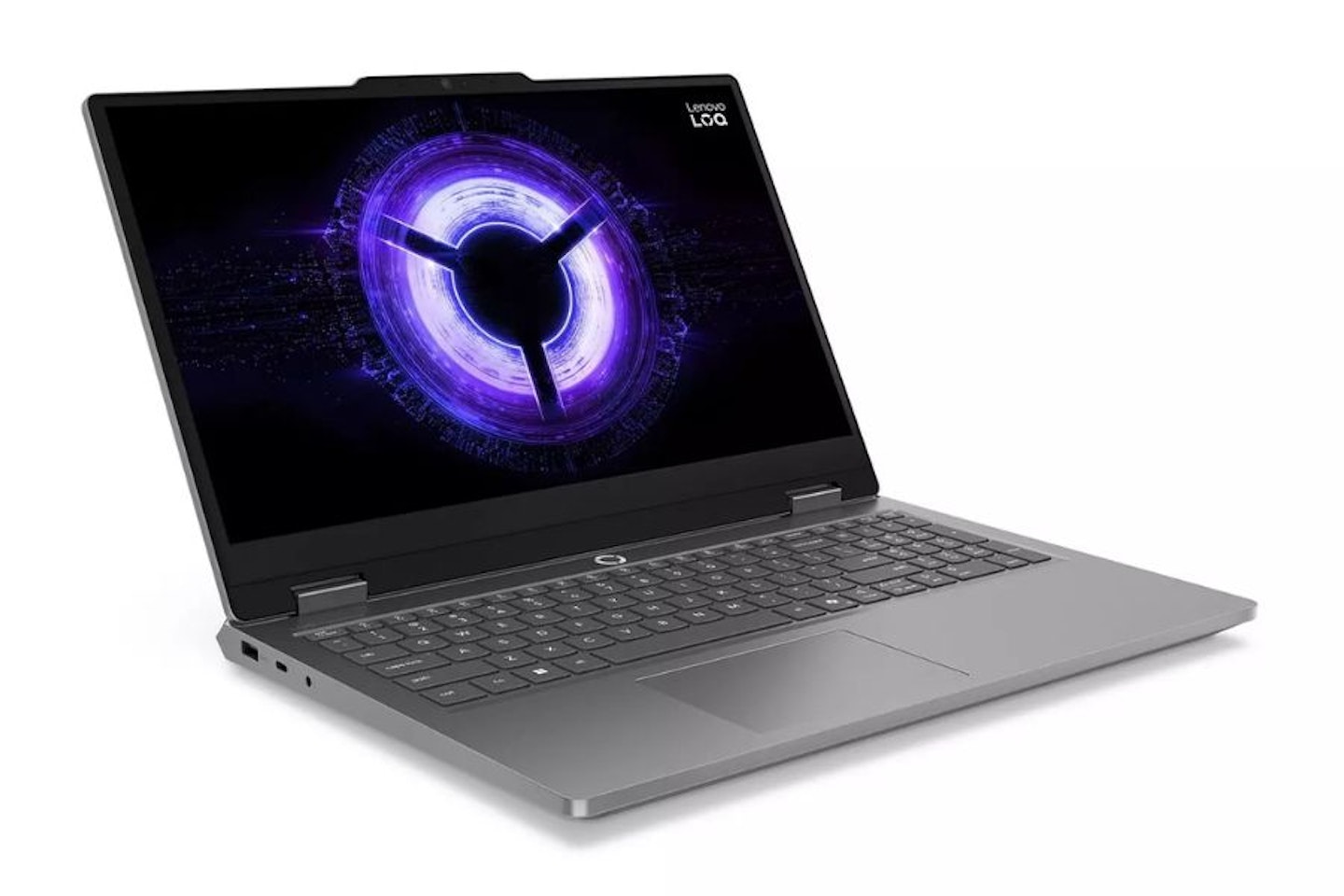
This Lenovo LOQ gaming laptop is the best budget option here, offering a ton of technical perks for the price. At this price point we’re happy to see that the 15.6-inch IPS display runs at 144Hz – twice that of many others, giving a more detailed and fluid experience all round. Lenovo’s choice of processor is where the savings are made with this system, as it’s an Intel Core i5 – but the rest of the spec balances that out nicely, making this a great low-to-mid end machine for light and casual gamers.
Entry-level gamers on a budget will get a serious graphical boost thanks to 16GB of RAM and the inclusion of a GeForce RTX 5050 graphics card. As one of the latest 50-series cards, the NVIDIA RTX 5050 unlocks advanced graphic performance that popular games need to run smoothly. It’ll do a lot of the heavy lifting here, freeing-up the i5 CPU. 16GB of DDR5 RAM is a big plus for a budget machine as well – the sweet spot for most gaming laptops when if comes to memory.
The build is classic Lenovo too – minimalist lines and sturdy construction. Port selection is generous, with both USB-A and USB-C onboard. That said, it’s a hefty 2.4 kilograms and something of a chunky wedge compared to many others. Also, don’t expect extended gaming sessions between charges, as battery life is less than 5 hours under average use. That aside, for any gamer looking to spend less this machine offers a lot for the money.
Pros
- Rare to see RTX 5050 graphics at this price
- 15.6-inch screen is the ideal size for many gamers, with 144Hz refresh rate for smooth action
- 16GB DDR5 RAM outclasses many alternative budget options
- Sturdy, portable design that will travel very well
Cons
- Short battery life when gaming or multitasking
- Heavier than most
| Display | 15.6-inch Full HD IPS LED 144 Hz |
| CPU | Intel Core i5 |
| GPU | NVIDIA GeForce RTX 5050 |
| RAM | 16 GB |
| Storage | 512 GB SSD |
| Operating system | Windows 11 Home |
| Connectivity | Wi-Fi 6, Bluetooth 5.2, USB-C, USB-A, HDMI, Ethernet, 3.5 mm audio |
| Battery life | ~5 hours for light use |
| Dimensions | 35.9 × 25.9 × 2.4 cm |
| Weight | 2.4 kg |
Researched and recommended
Best lightweight gaming laptop
 MSI
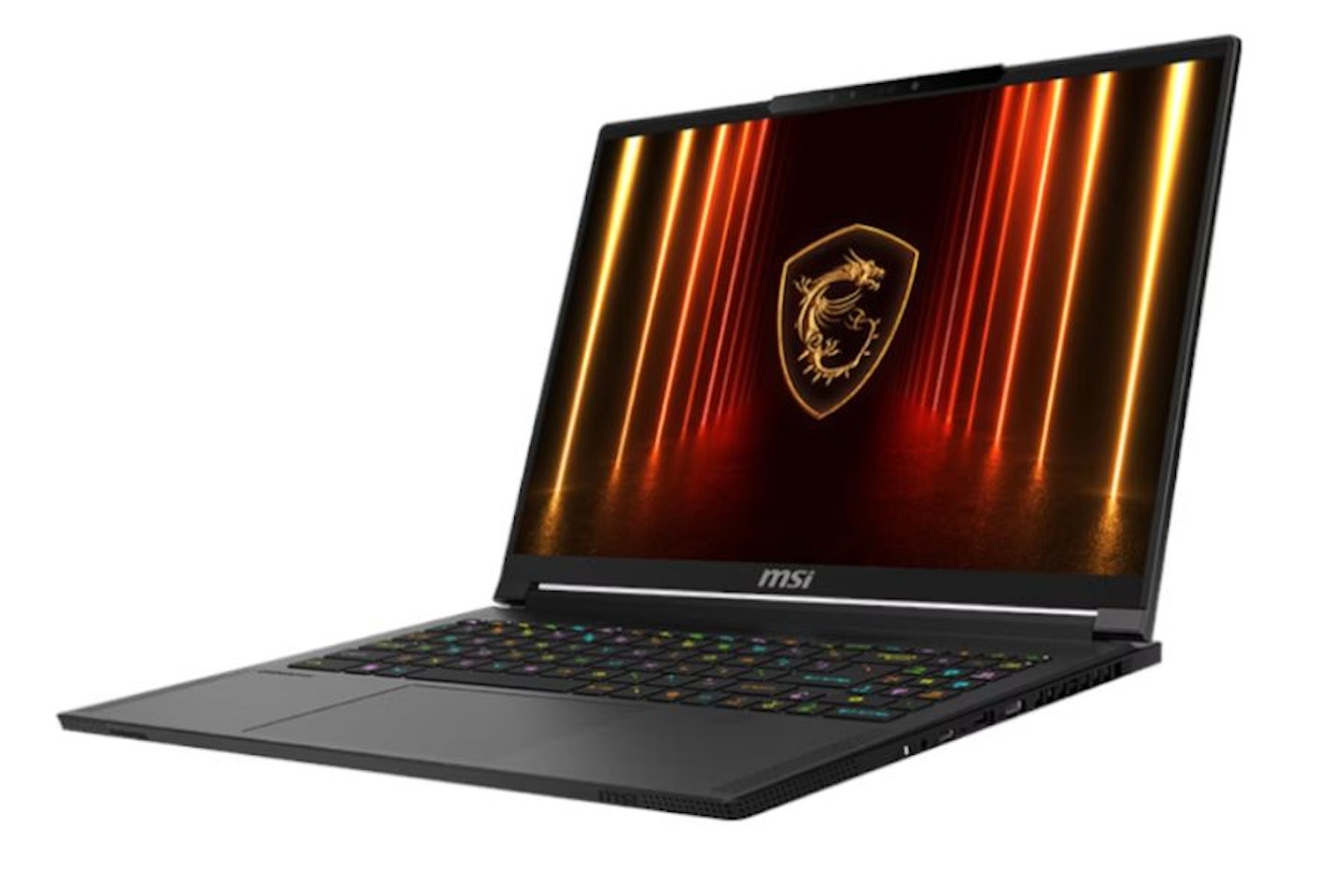
MSIMSI ups its game with this premium gaming laptop model – the Stealth A16. This is packing more tech than most, including 32GB of RAM, a Ryzen AI 7 CPU and even an OLED screen. Stealth is an apt name for such a capable portable machine, at under 2kg it’s one of the few gaming laptops that can deliver on performance without being back-breaking to carry. Incredibly it’s just a shade under 2cm thick at the slimmest end and not much more at the other, so this is an extremely practical high-end gaming option.
The stellar pairing of a next-gen Ryzen AI 9 HX 370 processor with the new RTX 5060 GPU is hard to beat. As its name suggests, the chip is AI-powered for lightning-fast multitasking and other features that benefit gaming as well as content creation. As mentioned, the 16-inch 2560×1440 pixel display is an OLED panel too, so you’ll get perfect black levels and vibrant colour for all of your titles – the sunset vistas of Red Dead Redemption 2 will look more breathtaking than ever. It also runs at a seriously fast 240Hz, so you’ll never encounter a game with a frame rate that’s anything less than smooth.
We love the minimalist aesthetic and metal chassis of this MSI. With the inclusion of Wi-Fi 7, a good array of ports and the six internal speakers it’s a rig that delivers on all fronts.
Pros
- Ultra-light and slim for a machine with this spec – perfect portability
- RTX 5060 graphics for latest-gen graphics performance
- Leading-edge Ryzen AI 9 supercharges games and content creation
- Beautifully smooth 2560×1600 pixel 244Hz screen
- Wi-Fi 7 and lots of ports to keep you connected
Cons
- For the price, some gamers might want more of an overt gamer aesthetic
| Display | 16-inch Quad HD+ OLED, 240 Hz |
| CPU | Ryzen AI 9 (HX 370) |
| GPU | NVIDIA GeForce RTX 5060 (8 GB) |
| RAM | 32 GB |
| Storage | 1 TB SSD |
| Operating system | Windows 11 Home |
| Connectivity | Wi-Fi 7, Bluetooth 5.3, USB-c (DisplayPort, power delivery), 2× USB-a 3.2, HDMI 2.1, 3.5 mm audio |
| Battery life | ~6 hours light use |
| Dimensions | 35.7 × 25.1 × 1.8–2.2 cm |
| Weight | 1.95 kg |
Researched and recommended
Best 14-inch gaming laptop
 HP
HPPrice: £1699.00

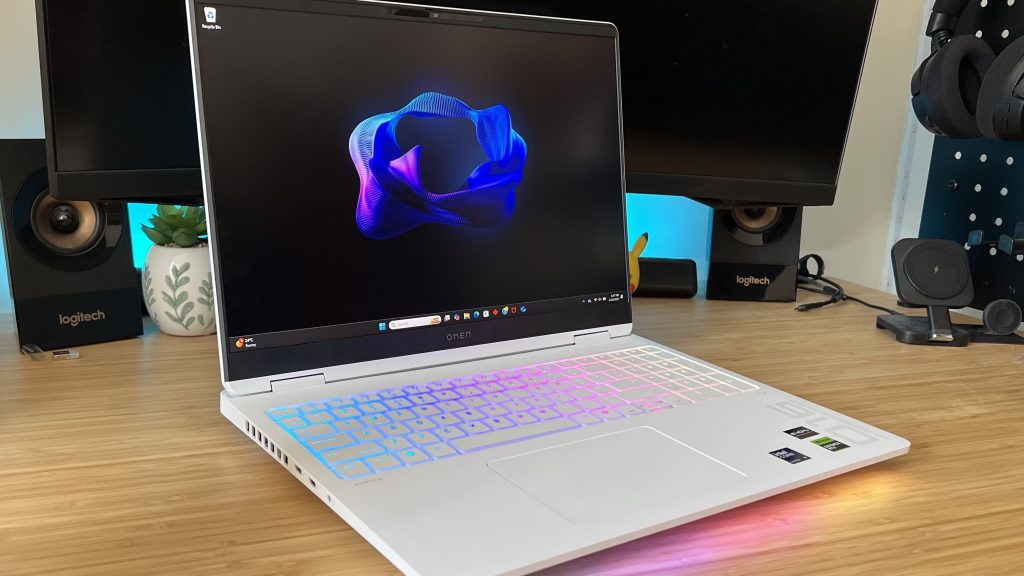
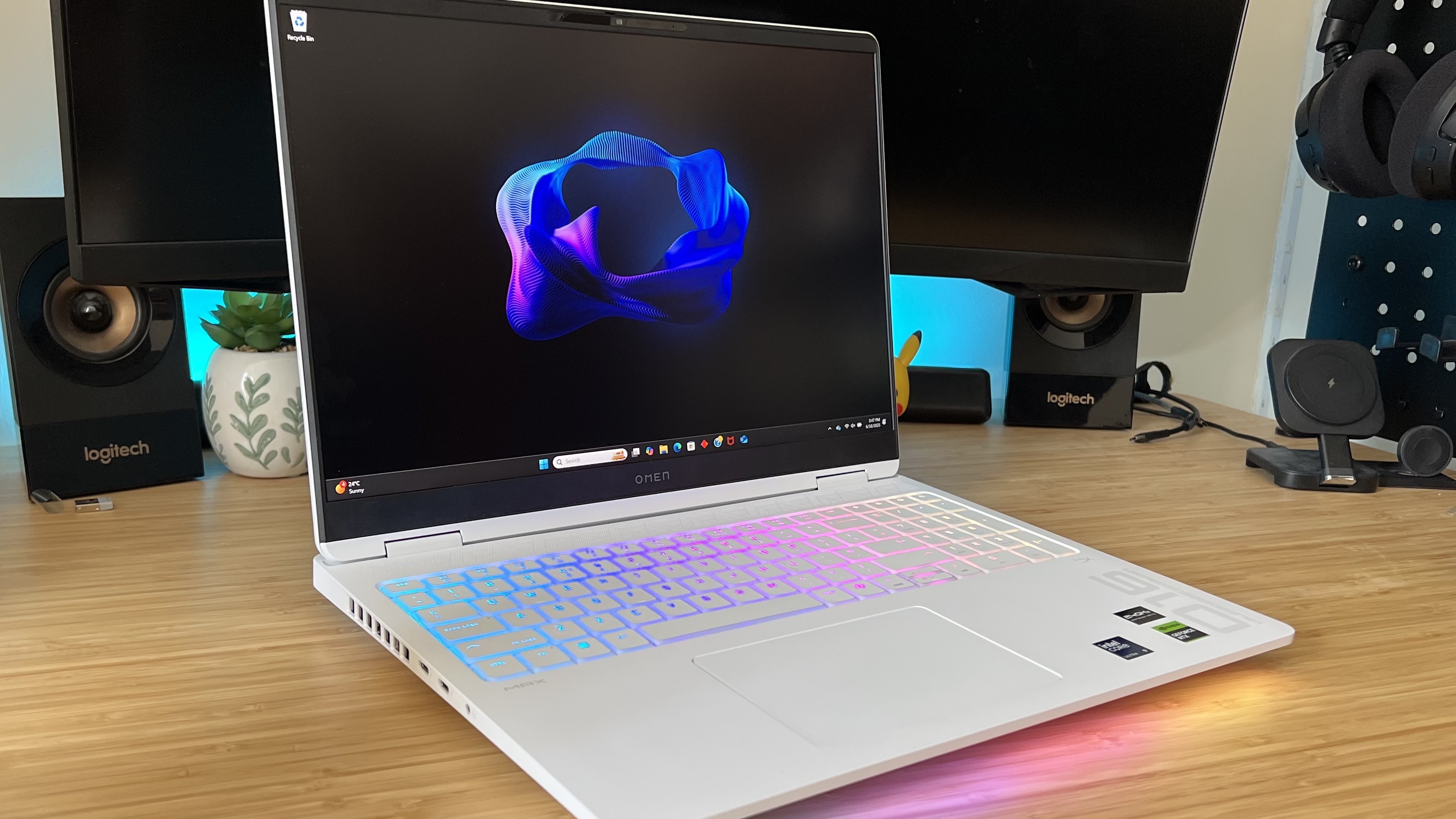
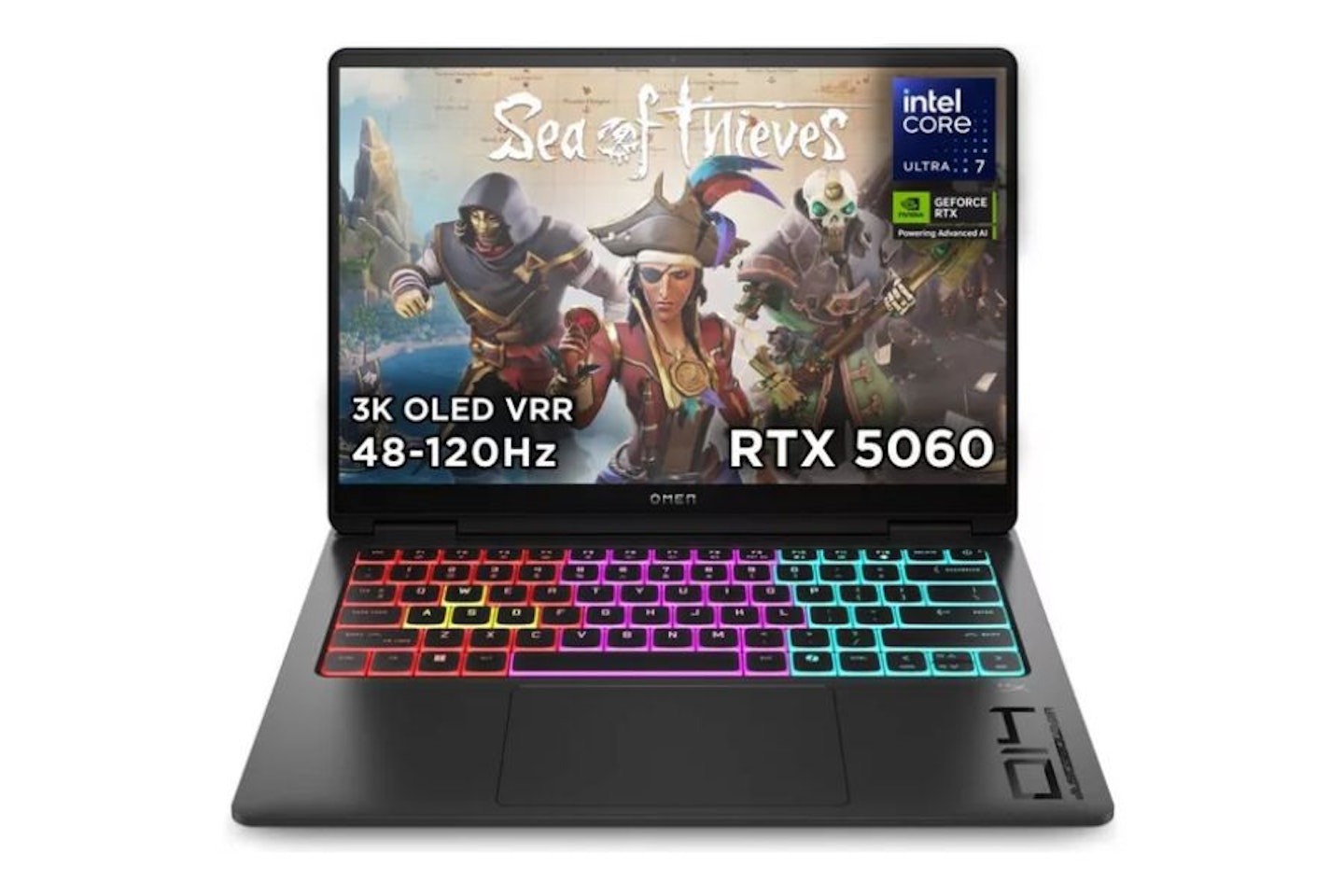
This HP OMEN Transcend 14 has a 14-inch OLED display, a Core Ultra 7 CPU and a 1TB SSD – yet it weighs-in at just 1.63kg. That small-screen spec makes this a beautifully neat and portable gaming laptop for anyone looking to travel light and keep the footprint small. Given the size, this laptop’s inclusion of DTS: X Ultra audio – a spatial sound format similar to Dolby Atmos – is a welcome addition for those not using a headset for gaming sessions.
As for the internals of this OMEN Transcend, we think that HP has set out to prove that powerful gaming doesn’t have to mean excessive bulk. This is something of a backpack-sized wonder considering what’s been crammed inside. The display may only measure 14 inches, but it’s a 2880×1800 pixel OLED – a true rarity at this size – bringing inky blacks and vibrant colour. The processor is no slouch either, as the Intel Core Ultra 7 will more than bear the load of AAA games.
Unbelievably the graphics card inside this diminutive shell is an NVIDIA RTX 5060, making this a laptop with next-gen visuals. Battery life is a pleasant surprise too, lasting up to 8 hours under general use. On the downside, you won’t be able to upgrade the RAM or SSD storage due to the compact build. That said, storage is easily upgraded using an external SSD, so this is a small nit-pick with what is a neat and brilliantly-specced gaming machine.
Pros
- Best-in-class 14-inch OLED screen with breathtaking clarity
- Core Ultra 7 and RTX 5060 deliver desktop-class power
- Only 1.63 kg and slim – perfect power meets portability option
- Excellent battery life for a gaming laptop
Cons
- No upgrade path for RAM or storage (but the port options mean adding an external SSD is easy)
| Display | 14-inch 3K OLED, 120 Hz |
| CPU | Intel Core Ultra 7-255H |
| GPU | NVIDIA GeForce RTX 5060 (8 GB) |
| RAM | 16 GB |
| Storage | 1 TB SSD |
| Operating system | Windows 11 Home |
| Connectivity | Wi-Fi 7, Bluetooth 5.4 |
| Battery life | Up to 8 hours |
| Dimensions | 31.3 × 23.3 × 1.79 cm |
| Weight | 1.63 kg |
Researched and recommended
Best 15.6-inch gaming laptop
 ACER
ACERPrice: £999.00
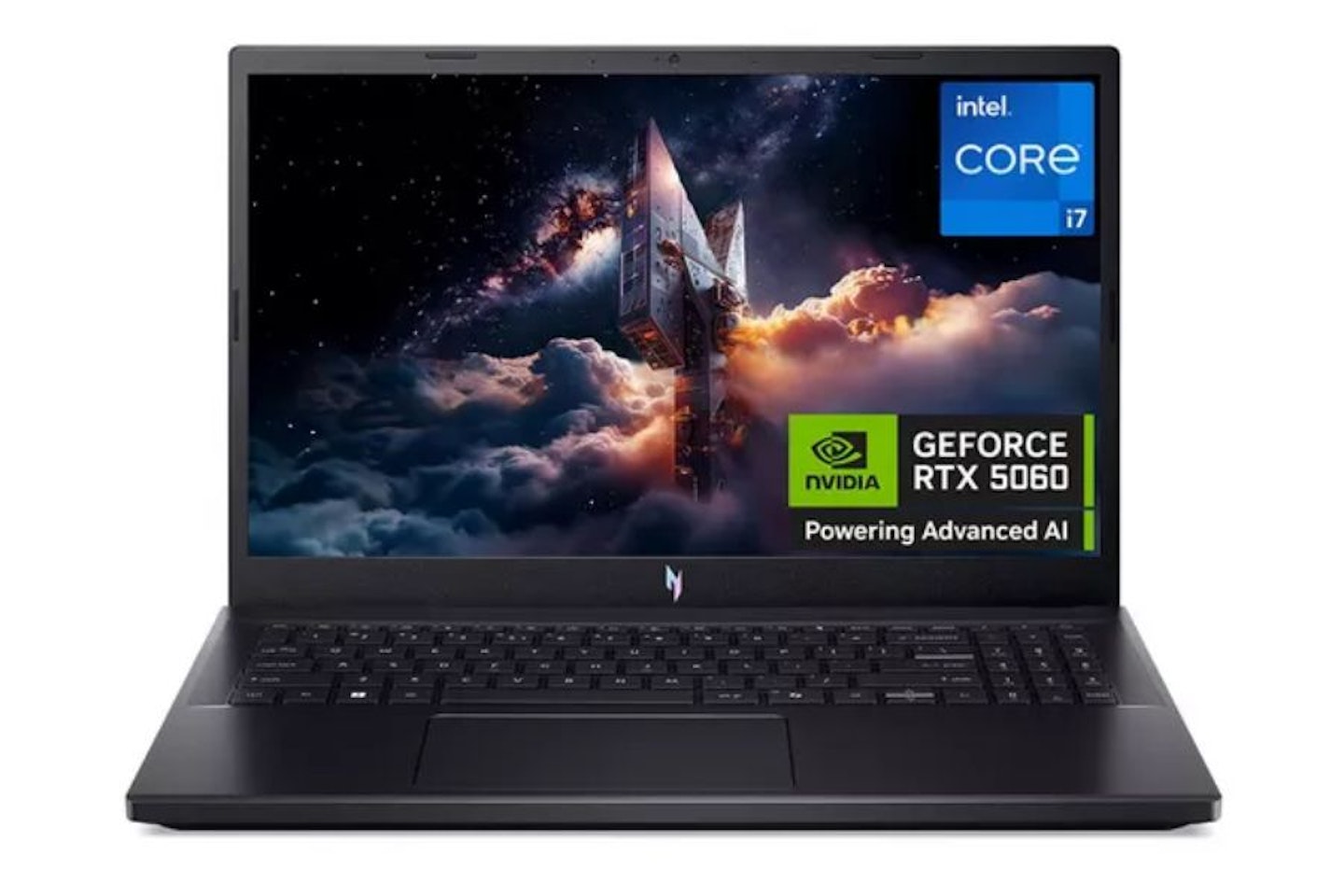
Other than having a slightly smaller display, this is an updated version of the Nitro V 16 model we reviewed. They share a Core i7 CPU, but this one now includes an updated RTX 5060 graphics card. Acer’s Nitro V15 is something of a gold standard when it comes to build quality meets gamer specifications. The sharp IPS display runs at a smooth 165Hz and there’s plenty of core horsepower under the hood, making this one of the best 15.6-inch gaming laptops on the market.
Given its size, the 15.6-inch IPS screen is the crown jewel here, offering crisp detail and a refresh rate that will support both fast shooters and immersive RPGs. Inside, an Intel Core i7 is perfectly matched with the NVIDIA RTX 5060 GPU – capable of handling demanding games at high settings with ease. The only real drawback is storage. We think that avid gamers will fill up that 512GB SSD quickly, so those with large libraries may end up adding external storage sooner rather than later.
Elsewhere, Acer’s sturdy design and build weighs-in at just over 2kg – no surprise given what’s been packed inside, but reassuringly solid for gaming on the go. Ports are plentiful too, and you’ll find both Wi-Fi 6 and Bluetooth 5.3. Battery life hovers just under 8 hours for non-gaming use, so this is also a practical gaming rig for those who need to multitask while on the move.
Pros
- 15.6-inch 165Hz display for sharp and responsive gameplay
- Intel i7 and RTX 5060 combo will deliver the latest titles with ease
- Robust chassis and solid build
- Good range of ports and connectivity, including Ethernet, HDMI and Wi-Fi 6E
Cons
- 512GB SSD limits storage for bigger game libraries
| Display | 15.6-inch Full HD IPS, 165 Hz |
| CPU | Intel Core i7-13620H |
| GPU | NVIDIA GeForce RTX 5060 (8 GB GDDR7) |
| RAM | 16 GB DDR4 (3200 MHz) |
| Storage | 512 GB SSD |
| Operating system | Windows 11 Home |
| Connectivity | Wi-Fi 6E, Bluetooth 5.3, Thunderbolt 4 USB-C, 3× USB 3.2, HDMI 2.1, 3.5 mm audio jack |
| Battery life | Up to 8 hours |
| Dimensions | 22.9 × 362.3 × 239.9 mm |
| Weight | 2.1 kg |
Researched and recommended
Best 16-inch gaming laptop
 ASUS
ASUSRrp: £1849.00
Price: £1799.00
Alternative retailers
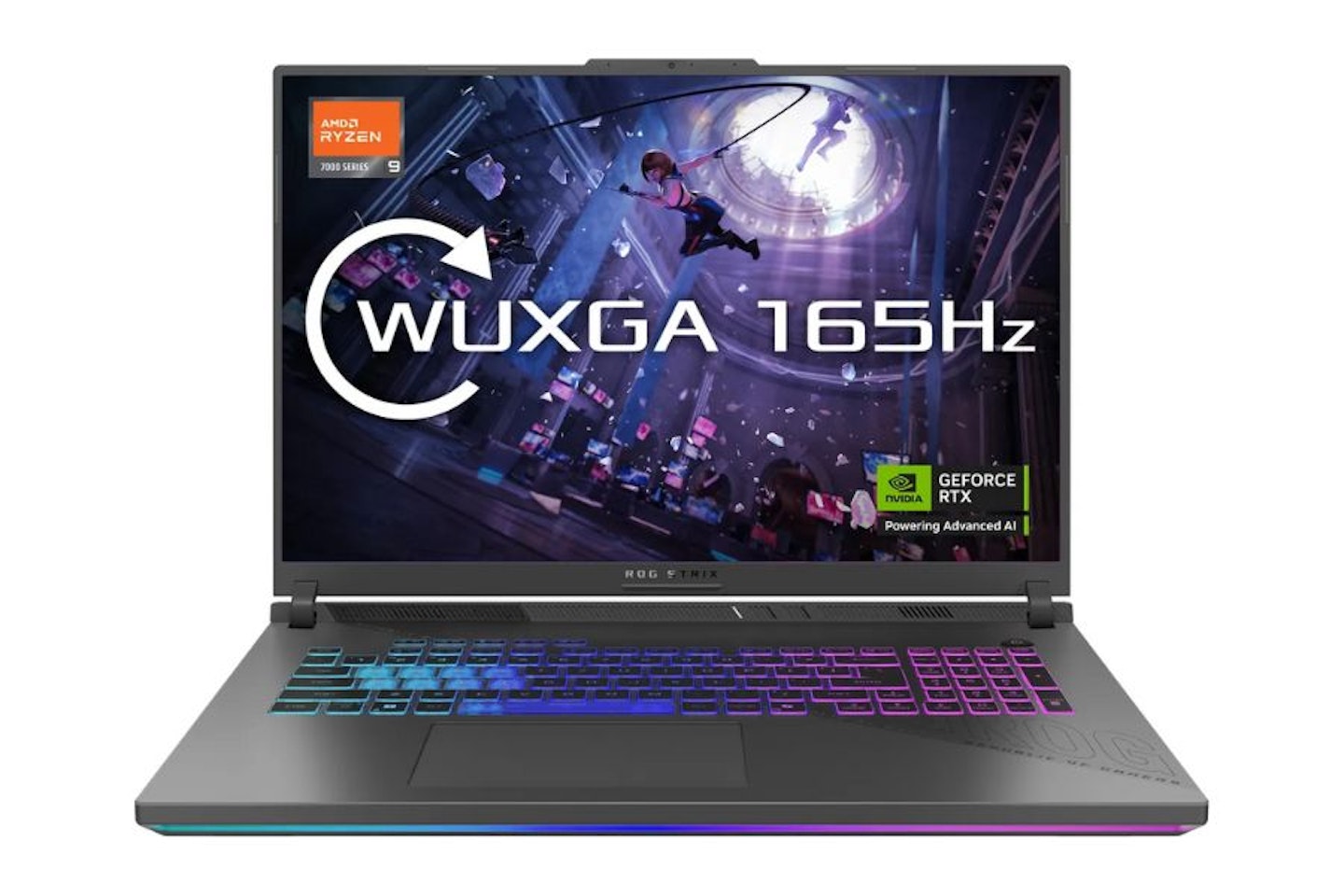
Any serious gamer looking for a 16-inch model that doesn’t skimp on the internals will love this ASUS ROG Strix G16. We’re impressed by the tech on offer here – with the NVIDIA RTX 5070 graphics card, a Ryzen 9 8940HX processor and a 1TB SSD. That’s an array that out-specs most of the others here.
First up, that 16-inch display runs at a blistering 240Hz, so you’ll be gaming at top frame rates without a hitch (and enjoying more realism thanks to the wide colour range of Dolby Vision). Inside the refined ASUS chassis lies the power-packed partnership of a Ryzen 9 7940HX processor and a NVIDIA RTX 5070 Ti graphics card. If you’re wondering what the ‘Ti’ means at the end of that, it stands for an enhanced, high-performance version of the standard 5070. That means it exceeds the requirements of current-gen games. 16GB of RAM is healthy enough to keep things running smoothly, and ASUS’ signature RGB lighting and sleek gamer aesthetic gives this laptop real presence. But bear in mind that all of this power translates to a rather hefty carry at 2.6kg.
We’re glad to see plenty of good connectivity options, so attaching external displays or peripherals will be straightforward, and cooling is handled by an advanced Tri-fan system that keeps performance at top efficiency. Throw in Dolby Atmos for spatial surround sound, and this is a real show-stopper of a laptop that doesn’t compromise on power.
Pros
- Ryzen 9 and RTX 5070 Ti for top-tier gaming
- Vibrant, colour-rich 16-inch 165Hz display with Dolby Vision
- Classic ROG styling with premium construction
- Comprehensive ports for gaming accessories
- Dolby Atmos sound support
Cons
- At over 2.6kg, all that power comes at a premium when it comes to weight
| Display | 16-inch WUXGA, IPS 240Hz |
| CPU | AMD Ryzen 9 |
| GPU | NVIDIA GeForce RTX 5070 Ti |
| RAM | 16 GB |
| Storage | 1 TB SSD |
| Operating system | Windows 11 Home |
| Connectivity | Wi-fi 7, Bluetooth 5.3, USB-C, USB-A, HDMI 2.1, ethernet, 3.5 mm audio |
| Battery life | ~6.5 hours light use |
| Dimensions | 35.4 × 26.8 × 2.3–3.0 cm |
| Weight | 2.65 kg |
Rrp: £1849.00
Price: £1799.00
Very
Researched and recommended
Best 17-inch gaming laptop
 Lenovo
Rrp: £1349.00
Price: £1099.00
Alternative retailers
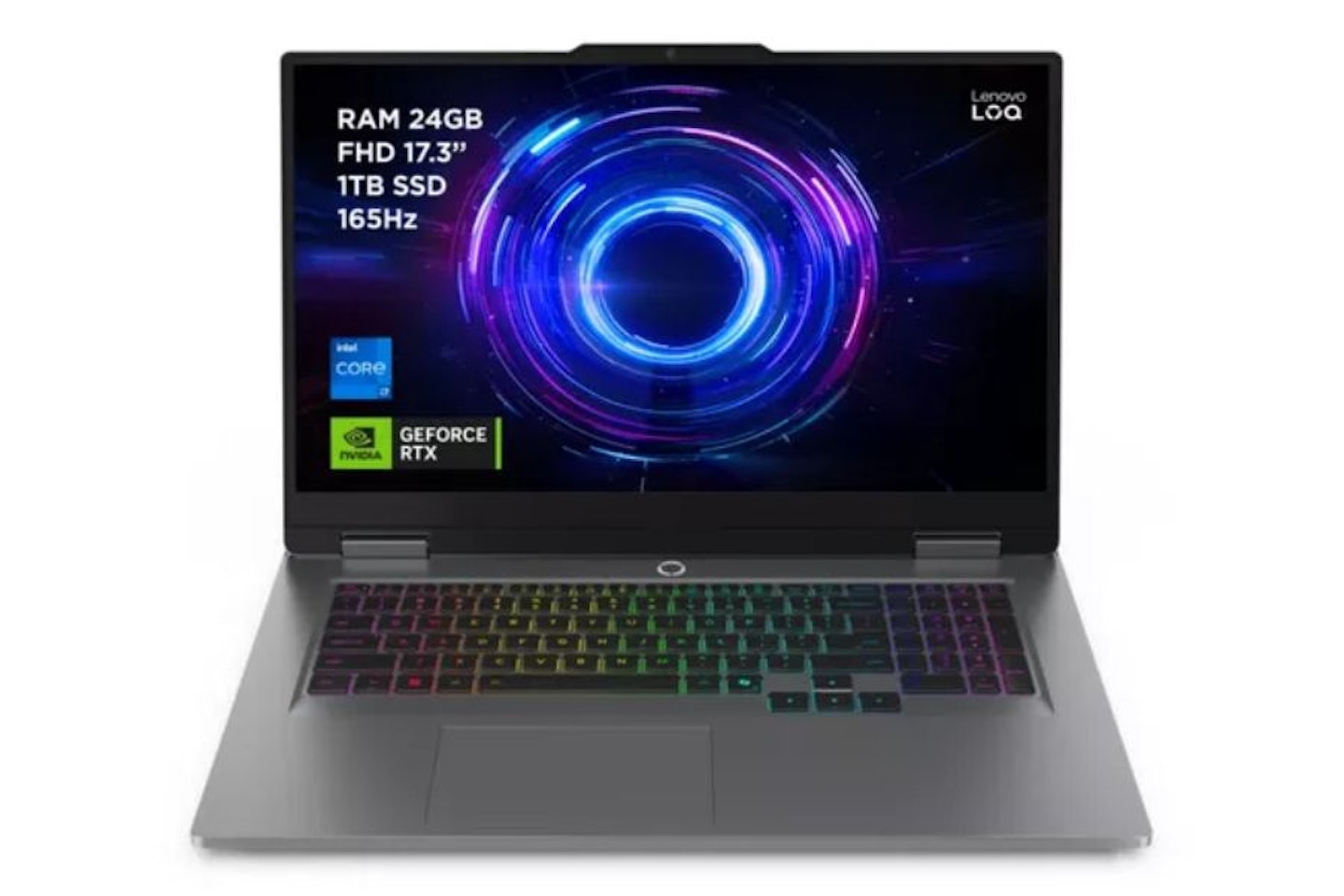
For some gamers a 16-inch display isn’t quite big enough to handle the detailed maps and various menus of some RPGs, SIMs and strategy games. That’s where this Lenovo LOQ comes in. It’s packing an impressive 17.3-inch screen with an NVIDIA RTX 5060 graphics card to drive it. While the sheer size of the display will be a big draw for those who want games to be easier on the eye, it’s the 165Hz refresh that makes it all worthwhile. Action is silky-smooth and detail-rich, making both games and creative work a pleasure during those longer sessions.
This Lenovo also has more RAM than most, with a whopping 24GB. The Intel Core i7 CPU joins forces with the RTX 5050 to deliver great performance across the board. The gaming credentials are not reflected in its appearance. It looks like a rugged and practical office laptop, and at 3kg it’s certainly one of the heaviest here. If you value an RGB LED or two you will want to look elsewhere.
However, connectivity is excellent, with a port selection that includes latest-gen HDMI and USB-C, so you’ll have no trouble plugging in extra monitors and other gear for a full battle-ready setup. As a desk-friendly gaming laptop option, this Lenovo LOQ is a big-screen behemoth to be reckoned with.
Pros
- Massive 17.3-inch 165Hz IPS display is fantastic for immersion and more complex game maps and interfaces
- RTX 5050 graphics card
- 24GB RAM for heavy-duty multitasking performance
- Typically solid Lenovo chassis
- Plenty of up-to-date ports
Cons
- Both bulky and heavy
- Lacks a gamer aesthetic
| Display | 17.3-inch Full HD, 165 Hz, IPS |
| CPU | Intel Core i7 |
| GPU | NVIDIA GeForce RTX 5060 |
| RAM | 24 GB |
| Storage | 1 TB SSD |
| Operating system | Windows 11 Home |
| Connectivity | Wi-fi 6, Bluetooth 5.2, USB-C, USB-A, HDMI, ethernet, 3.5 mm audio |
| Battery life | ~4.5–5 hours light use |
| Dimensions | 39.9 × 27.7 × 2.6 cm |
| Weight | 3.0 kg |
Rrp: £1349.00
Price: £1099.00
Very
Researched and recommended
Best 18-inch gaming laptop
 Acer
AcerPrice: £1899.00
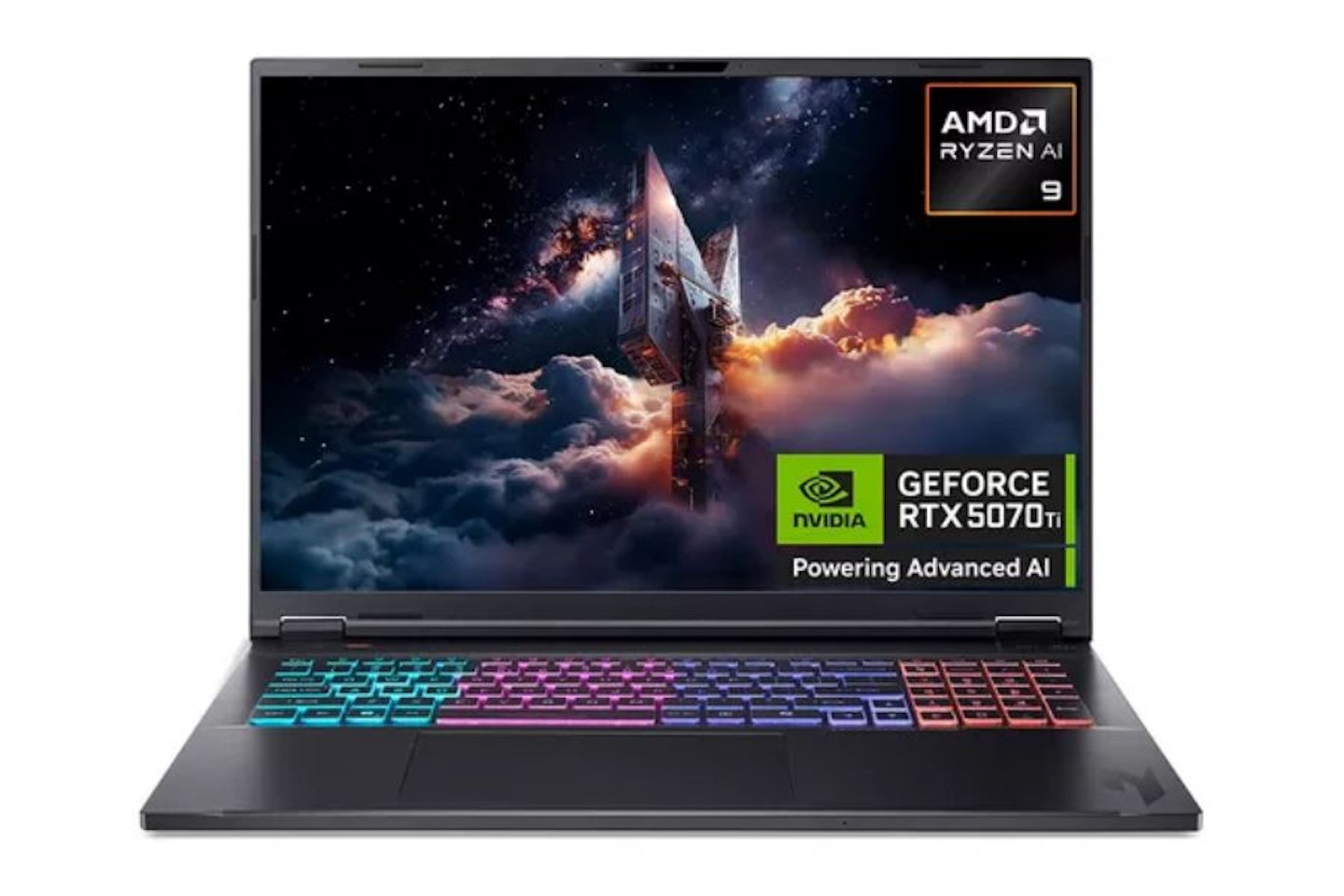
Few gaming laptops come larger than this Acer Nitro 18. Centre stage is of course the beautifully vivid 18-inch IPS display. For us, the addition of the NVIDIA RTX 5070 Ti graphics card, 16GB of RAM, 1TB SSD, and AMD Ryzen AI 9 CPU make this something of a monster rig.
With this much power and screen real estate the Acer’s Nitro 18 AI could be seen as a portable replacement for a desktop PC. That said, this is almost the heaviest of the lot at over 3kg – not entirely surprising given that massive 18-inch 165Hz screen. But we’ll take the sheer size of this model over portability every time, thanks to the extra gameplay immersion on offer – particularly for those games with detailed maps and interfaces. Under the hood lies an AI-powered Ryzen 9 365 CPU and an RTX 5070 Ti graphics card, making this one of the most powerful and future-proof laptops out there – both for gaming and AI content creation.
We’re huge fans of Acer’s design approach, and this one crams everything into a sturdy chassis alongside Acer’s quality Nitro Cooling system. The system uses Liquid Metal, Vector Heatpipes and dual fans to keep temps under control. With Wi-Fi 6E networking your livestreams and MMO sessions are going to be fast and reliable too. If you’re a gamer who prizes screen size and performance over lightweight portability, this is an impressive tournament-ready rig that will devour whatever you throw at it.
Pros
- Super-large 18-inch 165Hz screen for ultimate immersion
- Ryzen AI 9 and RTX 5070 Ti for future-proof gaming
- 1TB SSD for a good amount of games storage
- Impressive Acer cooling system and build quality
Cons
- Too heavy and large for regular commuting or travel
- Given the rest of the specs, 32GB of RAM would be a nice addition
| Display | 18-inch WQXGA (2560×1600) IPS LED, 165 Hz |
| CPU | AMD Ryzen AI 9 HX |
| GPU | NVIDIA GeForce RTX 5070 Ti |
| RAM | 16 GB |
| Storage | 1 TB SSD |
| Operating system | Windows 11 Home |
| Connectivity | Wi-fi 7, Bluetooth 5.4, USB-C, USB-A, HDMI 2.1, ethernet, 3.5 mm audio |
| Battery life | ~4.5–5 hours light use |
| Dimensions | 40.0 × 30.7 × 2.9 cm |
| Weight | 3.3 kg |
Researched and recommended
Best casual gaming laptop
 ASUS
ASUSRrp: £799.99
Price: £723.36
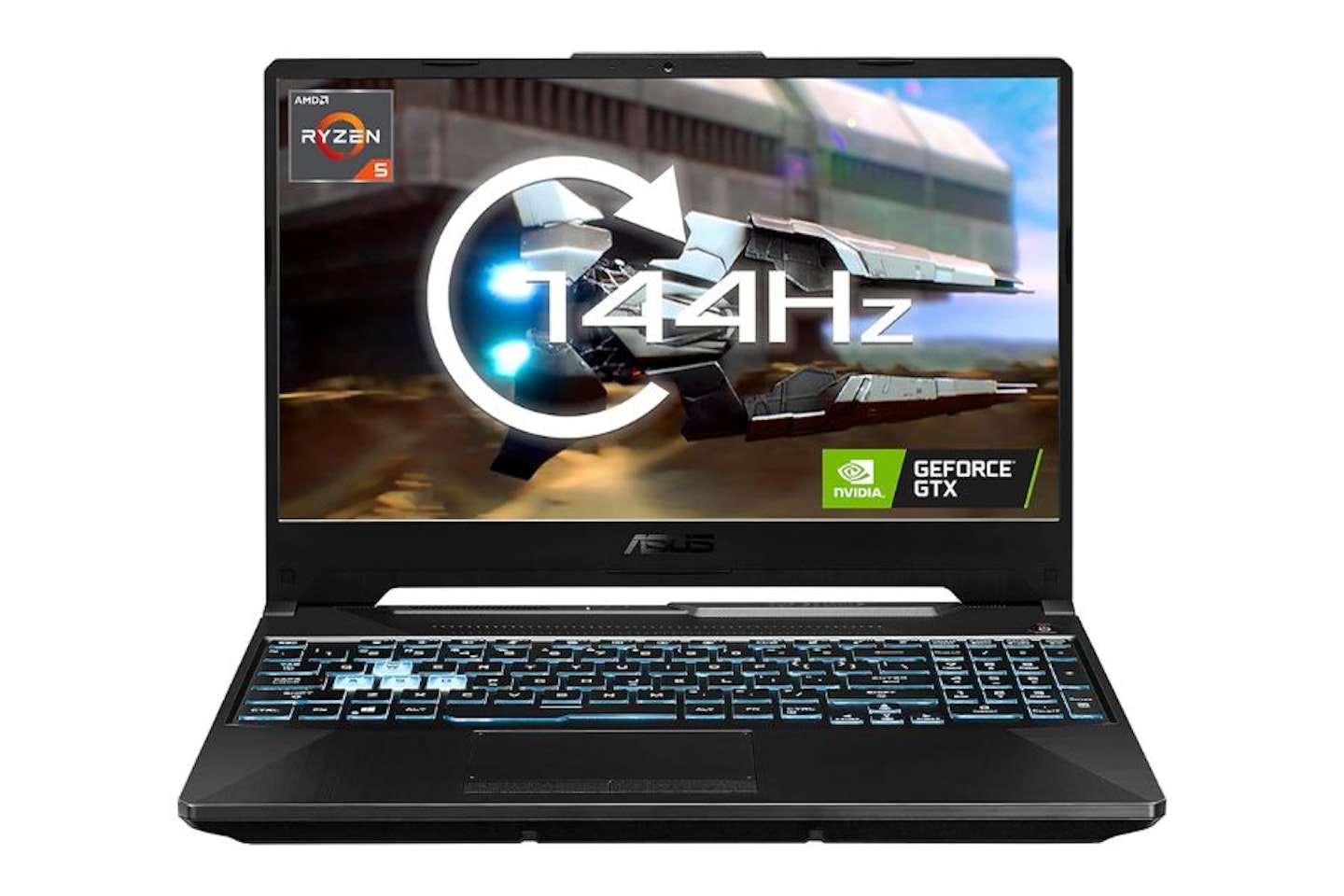
This ASUS TUF A15 is another excellent budget gaming laptop option. Its specs make it a great choice for gamers who casually play modern, more lightweight titles. The RTX 3050 graphics may not be the best here, but add the 15.6-inch screen, 512GB SSD and 16 GB of RAM and you’ll be running Valorant and Minecraft in no time.
For us the TUF A15 FA506NCG strikes a clever balance between price and performance – ideal for those who want simple and reliable gaming without going overboard. Its strongest feature is almost certainly the 15.6-inch 144Hz display, making for solid frame rates and super-smooth action. The Ryzen 7 processor is a good match for the RTX 3050 GPU (the lower-end of the NVIDIA graphics card offering), being powerful enough to handle the processing overhead that many games demand.
But let’s not forget that this is a TUF series laptop. ASUS is famous for its durable builds, so the slightly chunky slab on offer here is reassuringly solid. At just over 2kg it’s not an impossible load to carry around, either. Connectivity is excellent, with Wi-Fi 6, Bluetooth and USB-C and USB-A to choose from. Battery life is average at around 5-6 hours under mixed use, but that’s perfect for the casual gamer.
Pros
- Rugged TUF build handles college, work, and travel
- Snappy 144Hz screen ideal for competitive gaming
- Ryzen 7 and RTX 4050 for dependable gameplay
- Plenty of ports, plus Wi-Fi 6 support
Cons
- Built-in speakers have limited sound detail and depth
| Display | 15.6-inch full HD IPS LED, 144 Hz |
| CPU | AMD Ryzen 7 7435HS |
| GPU | NVIDIA GeForce RTX 3050 |
| RAM | 16 GB DDR5 |
| Storage | 512 GB SSD |
| Operating system | Windows 11 Home |
| Connectivity | Wi-Fi 6, Bluetooth 5.2, USB-C, USB-A, HDMI, ethernet, 3.5 mm audio |
| Battery life | ~5–6 hours mixed use |
| Dimensions | 35.9 × 25.6 × 2.3 cm |
| Weight | 2.3 kg |
Rrp: £799.99
Price: £723.36
Researched and recommended
Best gaming laptop for pros
 Acer
Acer Price: £4299.99
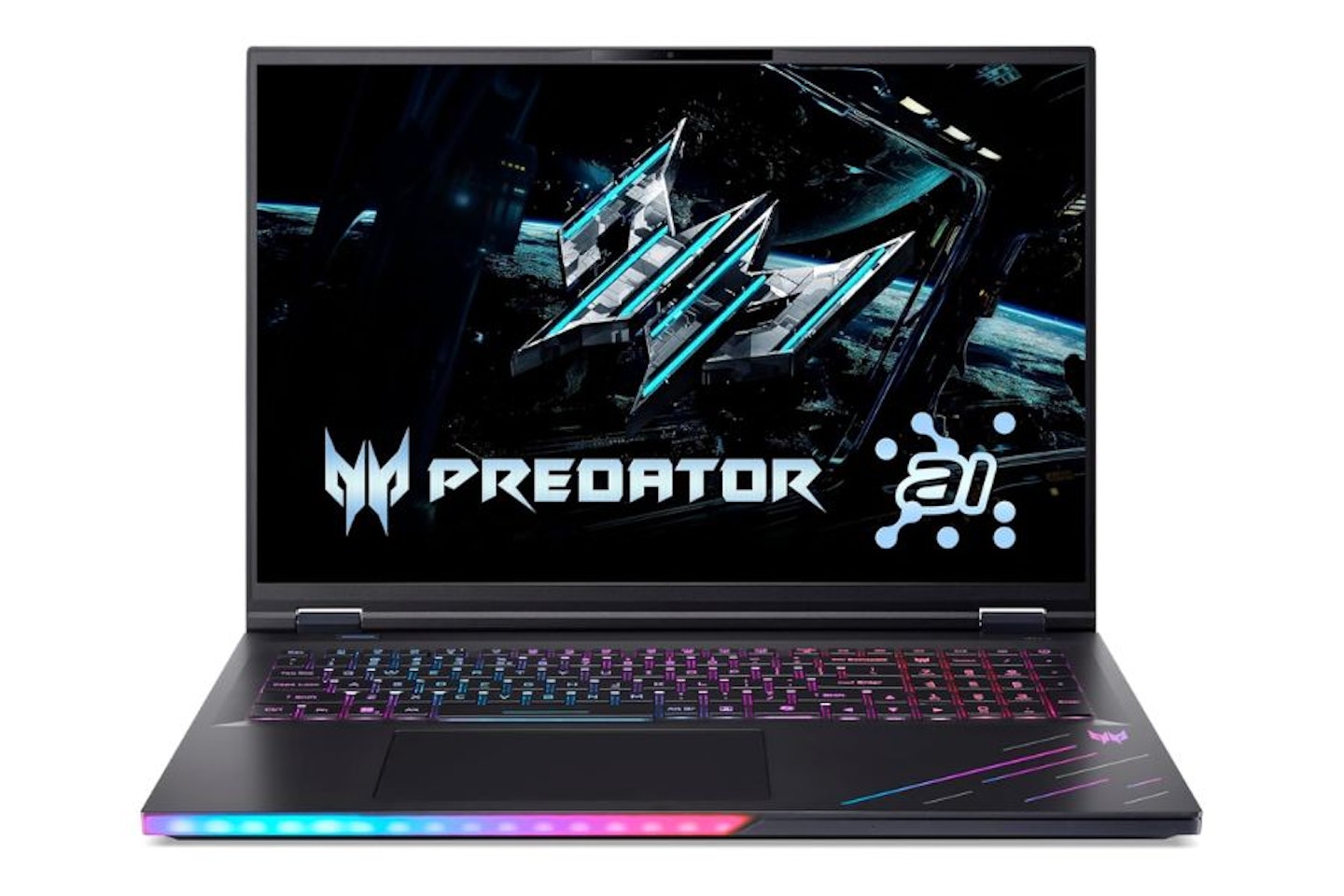
Get ready to have your gaming expectations blown away (potentially taking your wallet with them). Every aspect of this Acer Predator Helios 18 is specced to the max. Heading things up are the Intel Core Ultra 9 AI processor and RTX 5090 graphics card. Next in line are the a 2TB SSD and a 18-inch WQUXGA Mini-LED 240Hz display for the ultimate in smooth motion, brightness and contrast. You’re going to break some records with your high frame rate gaming on this system.
And then there’s the gargantuan 64GB of RAM for complete overkill when it comes to memory, not to mention extreme future-proofing. As an Acer, the overall design is expectedly brash, with sharp gamer accents and a high-quality finish. Vents are very apparent around the edges of the case as well, offering extra airflow for all of those high-power components.
The Acer Predator Helios is an uncompromising gaming laptop aimed at power users who need desktop-level speed for pro-level competitive gaming as well as top-tier single player experiences. At a staggering 3.2kg, just don’t expect to lug it around with ease. If you are going places with a rig this expensive, you’ll probably need to invest in an secure laptop bag and and extra-sturdy made-to-measure laptop sleeve too.
Pros
- Elite-tier performance from the Core Ultra 9 and RTX 5090
- 2TB SSD and 64GB RAM for max storage and performance
- 18-inch WQUXGA Mini-LED screen is extremely sharp and bright at 1000 nits
- Excellent build quality and premium feel
Cons
- Very bulky and heavy, so not the most portable gaming laptop
- With this much power, battery life is going to be under 2-3 hours
| Display | 16-inch WQXGA (2560×1600) Mini-LED IPS, 240 Hz |
| Processor | Intel Core Ultra 9 |
| Graphics | NVIDIA GeForce RTX 5070 |
| RAM | 64 GB DDR5 |
| Storage | 2 TB SSD |
| Operating system | Windows 11 Pro |
| Connectivity | Wi-fi 7, 5 USB ports, HDMI, Ethernet, and SD card reader |
| Battery life | ~2-4 hours light use |
| Dimensions | 40.1 cm x 31.29 cm x 2.95 cm |
| Weight | 3.2 kg |
Price: £4299.99
Expert’s choice
Our leading laptop is the ASUS V16 V3607VP Gaming Laptop and for good reason. For us it perfectly balances specification with price, making it the sweet spot for many gamers. With the Intel Core 7 240H processor, 32GB of RAM and RTX 5070 graphics, it’s more than capable of running the latest titles and that 16-inch 144Hz display offers the smooth and detailed motion you need with both high and variable frame rates.
At the budget end of the scale, we love the Lenovo LOQ 15IRX11E 15.6-inch Gaming Laptop. It has enough RAM and CPU power to run modern games at respectable (if not the highest) settings and is a brilliantly portable choice for the more casual gamer. Lastly, despite being at the slightly eye-watering end of the price range, the Acer Predator Helios Neo 18 is undoubtedly the laptop we’d all like for our gaming if budget allows.
| Expert’s Choice: Gaming Laptop Comparison | |||
|---|---|---|---|
| Spec | ASUS V16 V3607VP Gaming Laptop | Lenovo LOQ 15IRX11E Gaming Laptop | Acer Predator Helios 18 AI PH18-73 Gaming Laptop |
| Screen | 16” WUXGA (1920×1200) 144Hz IPS | 15.6” FHD (1920×1080) IPS, 144Hz | 18″ WQUXGA (3840 x 2400) IPS, 240Hz |
| CPU | Intel Core 7 240H | Intel Core i5-13450HX | Intel Core Ultra 9 |
| GPU | NVIDIA GeForce RTX 5070 | NVIDIA GeForce RTX 5050 | NVIDIA GeForce RTX 5090 |
| RAM | 32GB DDR5 | 16GB DDR5 | 64GB DDR5 |
| Storage | 1TB PCIe SSD | 512GB SSD | 2TB SSD |
| Battery life | Up to 4-5 hours | Up to 5 hours | Up to 2-4 hours |
| Weight | 1.95 kg | 2.4 kg | 3.2 kg |
| Verdict | |||
| Our top pick, the ASUS V16 V3607VP Gaming Laptop, stands out for its balance of high-end specs and reasonable pricing. With an Intel Core 7 240H CPU, 32GB of RAM, RTX 4070 graphics, and a smooth 165Hz display, it’s ideal for most gamers seeking excellent performance. For those on a budget, the Lenovo LOQ 15IRX11E is a great portable option that still handles modern games well. At the premium end, the Acer Predator Helios 18 AI offers powerhouse specs and a stunning 18-inch display, making it a dream choice if budget allows. | |||
Gaming Laptop Accessories
No gaming laptop is complete without a few essentials. Thankfully there’s a wide range of laptop bags, gaming mice and other peripherals on offer. Here’s our pick of the best:
Hands-on tested
Best wireless gaming mouse for FPS
Rrp: £149.00
Price: £103.00
Alternative retailers
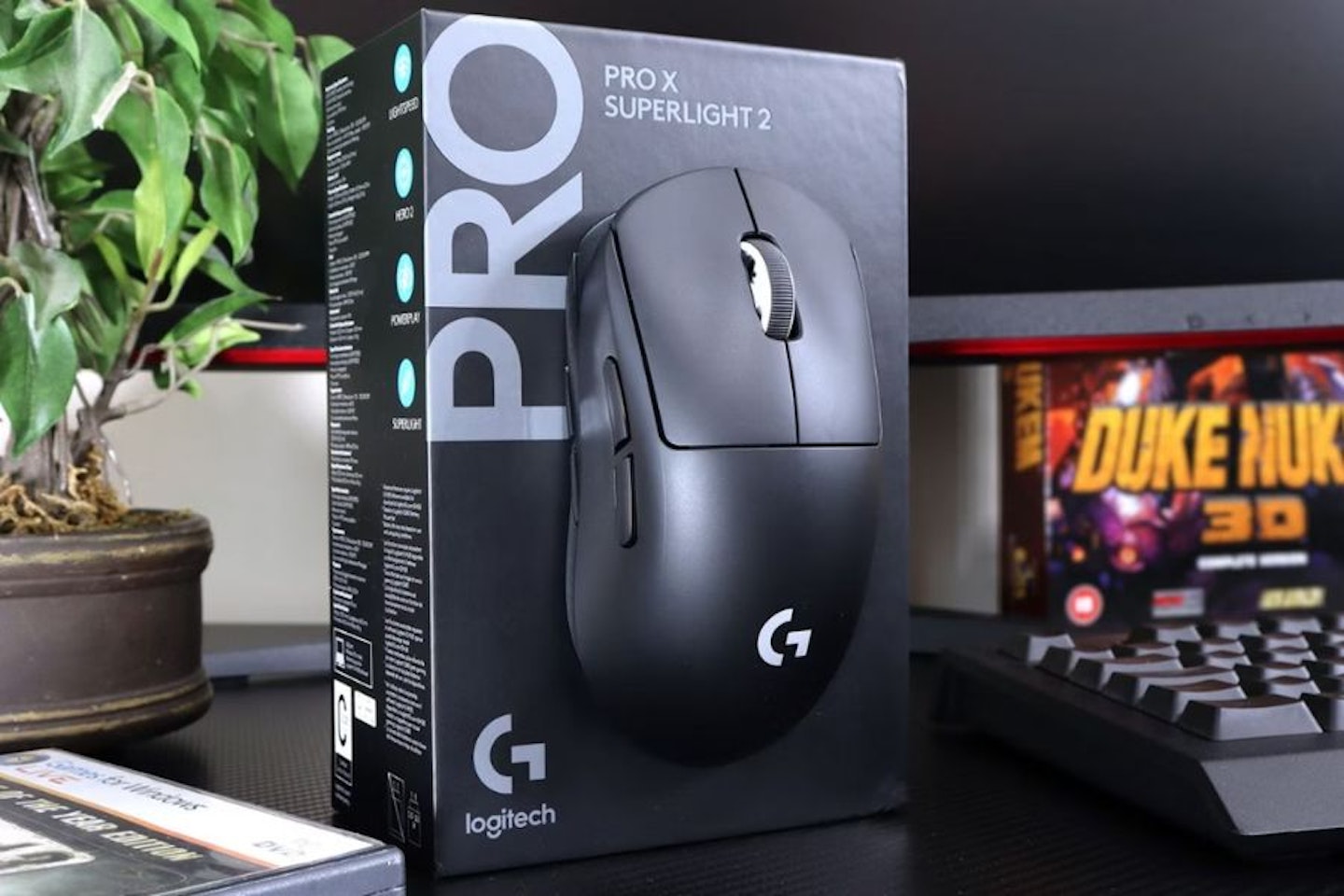
When we reviewed the Logitech G Pro X Superlight 2, we gained a competitive edge with games like Counter-Strike 2, thanks to the excellent G-Shift function which we set to toggle a lower DPI for sniping. For us, the Logitech G Pro X Superlight 2 stands out as one of the best lightweight wireless gaming mice on the market. Weighing just 60 grams, this programmable five-button mouse is built for speed and precision, making it a strong choice for competitive FPS players. While it skips RGB lighting, multiple buttons and flashy design, the blend of low weight, high sensor performance, wireless practicality and excellent customisation make it ideal for serious gamers on the move.
Rrp: £149.00
Price: £103.00
Researched and recommended
 Razer
RazerRrp: £69.99
Price: £49.99
Alternative retailers
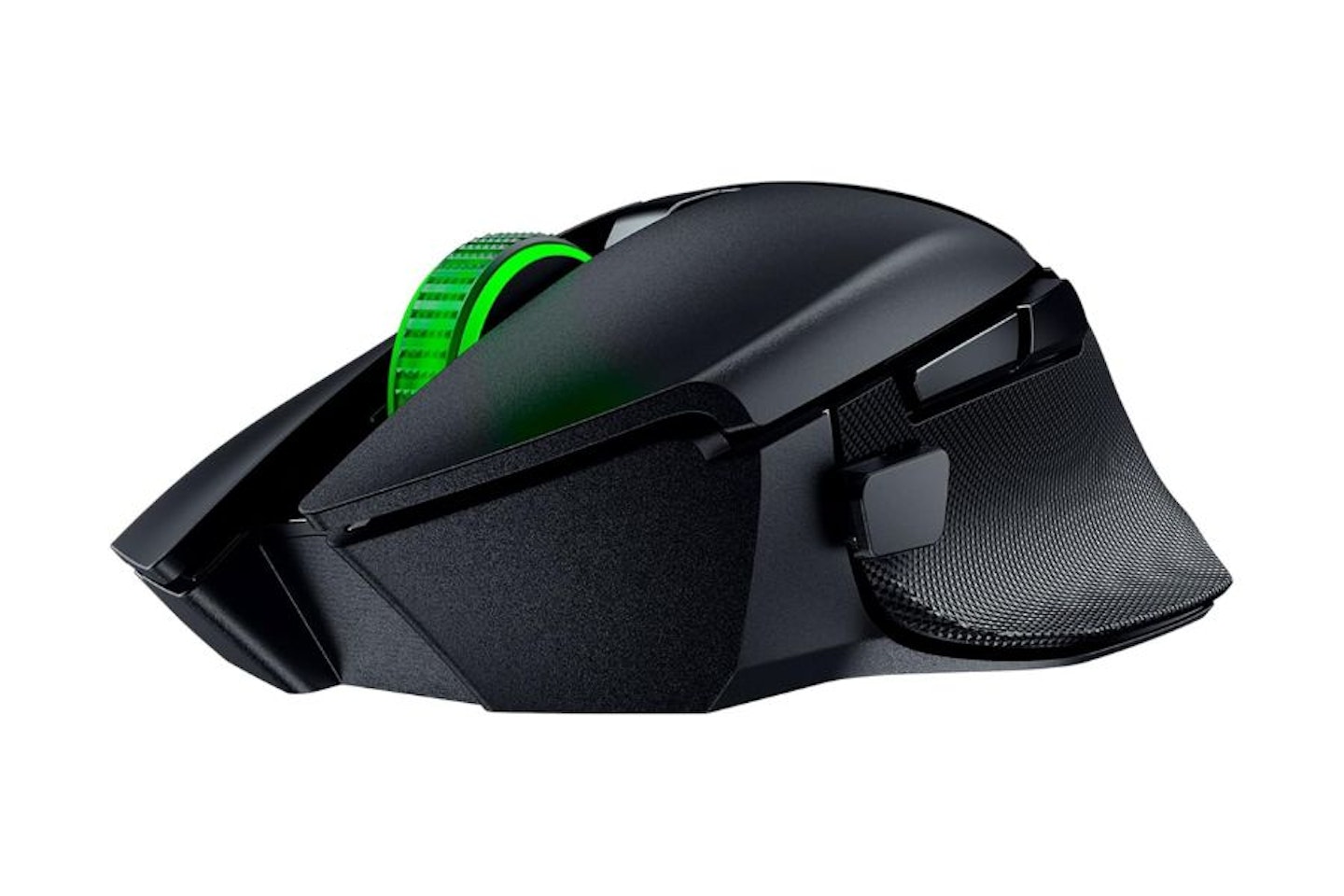
This Razer featured in our line-up of the best wireless gaming mice where we complimented its compact yet ergonomic design. Ideal for throwing into that equally compact backpack.
Rrp: £69.99
Price: £49.99
Researched and recommended
 Razer
Razer Price: £74.99
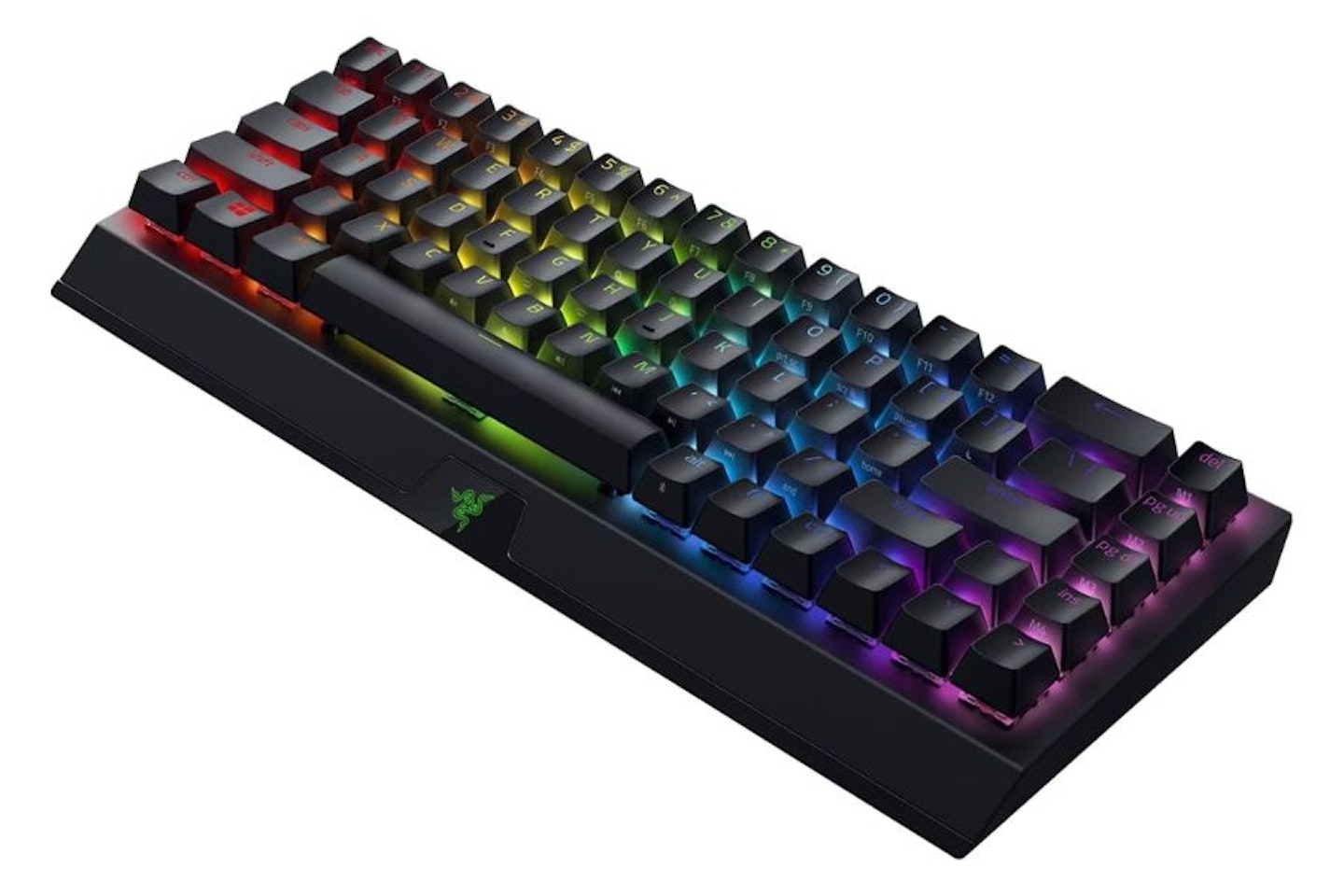
If you’re planning on packing your gaming laptop into a bag for gaming on the move you’ll need a small but responsive gaming keyboard – like this mechanical BlackWidow model from Razer.
Price: £74.99
Researched and recommended
 AOC
AOC Rrp: £99.99
Price: £65.99
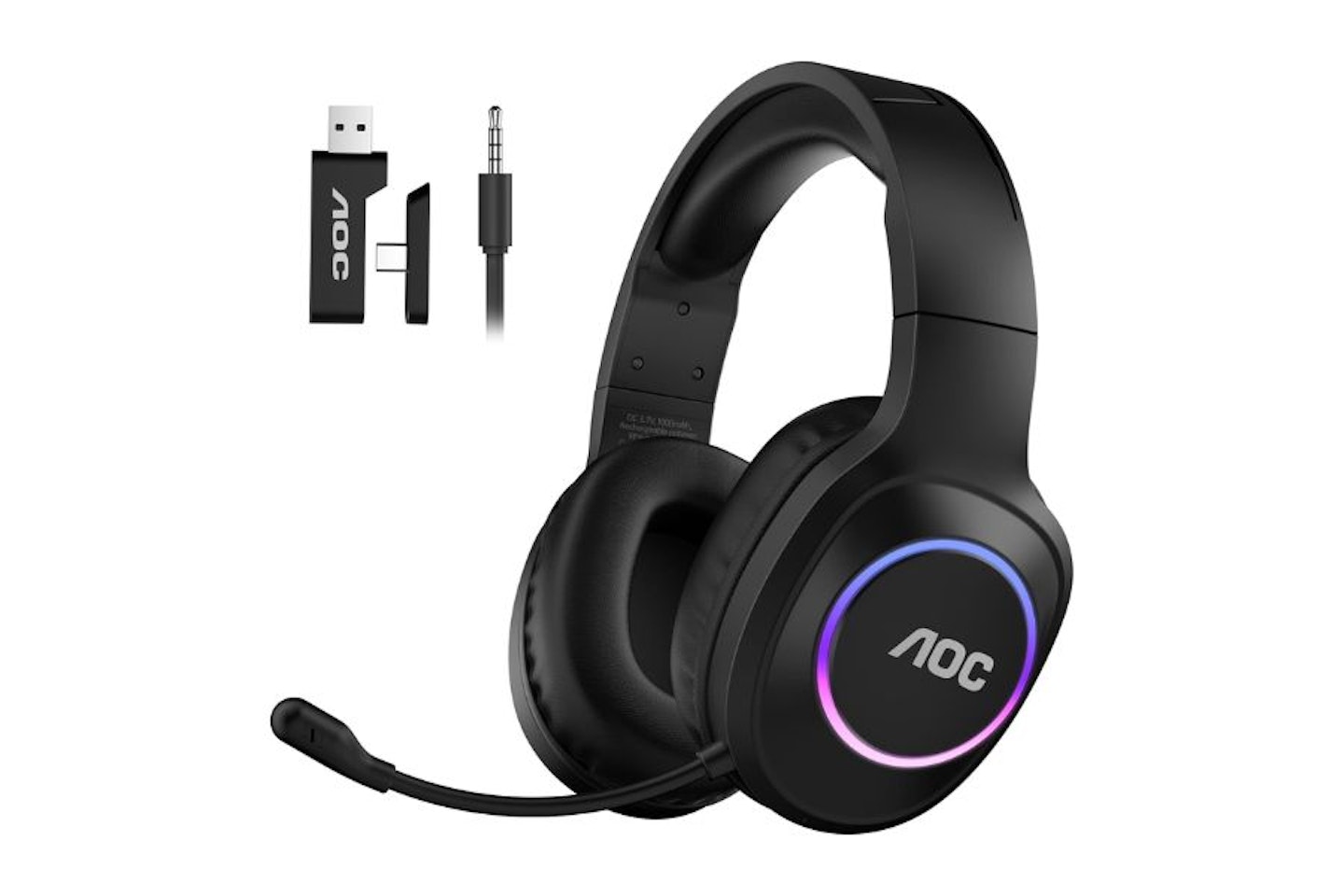
This Wireless Gaming Headset from AOC has a lot going on behind those cushioned ear pads – including noise cancellation and 7.1 virtual surround sound. Battery life is 45 hours too.
Rrp: £99.99
Price: £65.99
Researched and recommended
 Targus
Rrp: £39.99
Price: £34.30
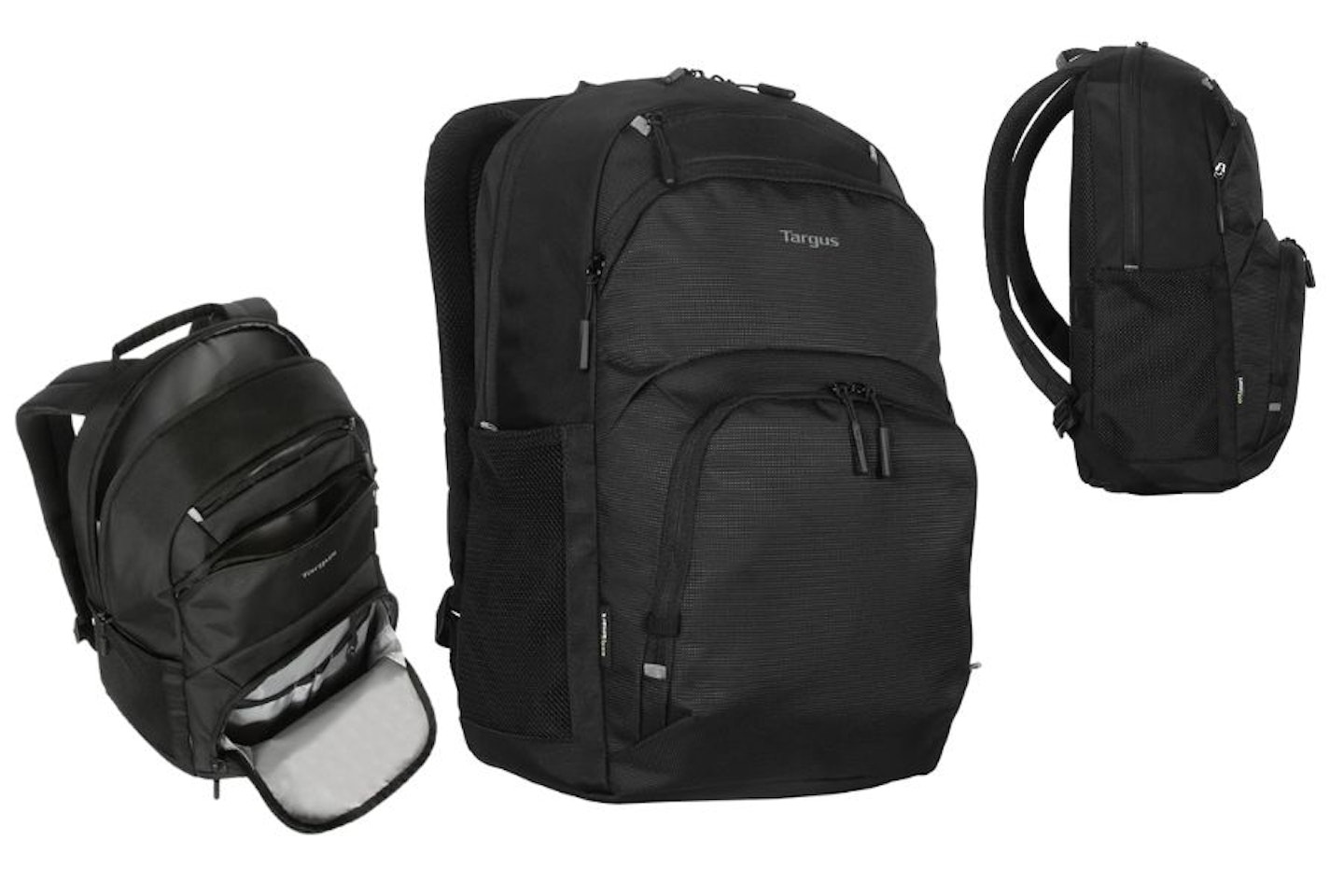
Keep your new gaming tech safe and secure on its travels with a dedicated gaming laptop rucksack. This one comes from Targus and has enough pockets for your extra kit.
Rrp: £39.99
Price: £34.30
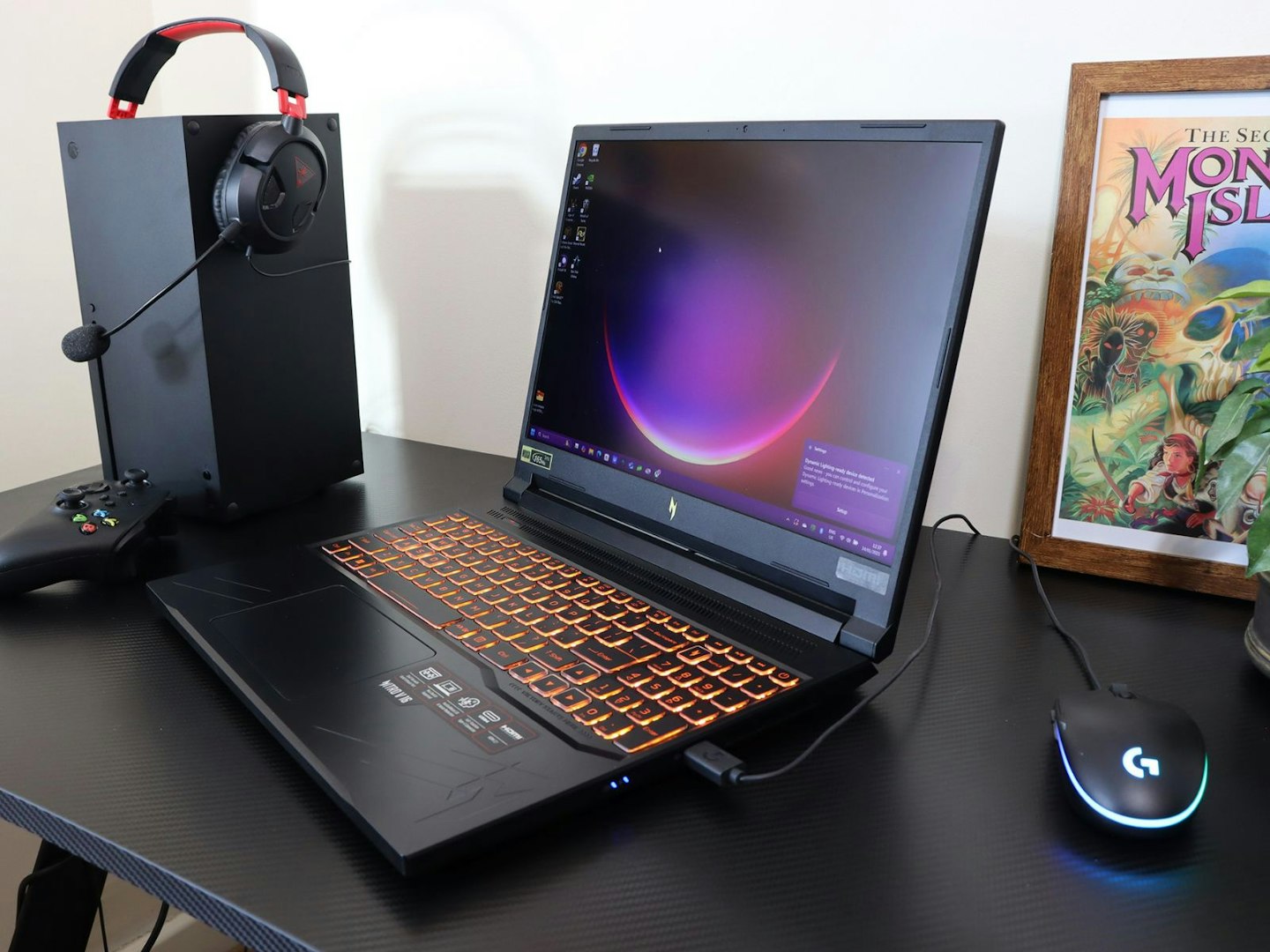
A gaming laptop is the perfect portable option for desktop PC and console gamers alike. ©Chris Duffill, Empire
What to look for in a gaming laptop
Internal specification is everything
Gamers generally want the best components available, but with prices ranging from a few hundred to a few thousand pounds, it’s often a case of focussing on what’s most important to you. Here’s what to consider:
Graphics card
No matter how much you have to spend, the graphics card should be at or close to the top of everyone’s list. If you see a laptop that claims to be good for gaming but only has the onboard/built-in type (usually described as ‘integrated graphics’) rather than a dedicated card, it’s not really a true ‘gaming laptop’.
The most recent line from leading GPU manufacturer NVIDIA is the RTX 50-series – with the RTX 5090 at the top of the range at the time of writing. A mid-low range gaming laptop for those who plays less graphically intensive titles, like RPG inspired farm sim Stardew Valley or Minecraft, would be fine with an RTX 4070 from NVIDIA’s previous generation. You’ll also find plenty of laptops with NVIDIA’s competitor, AMD. You’ll see models with an AMD Radeon RX 9070 at the higher end, and an RX 7600 at the lower end.
CPU
The world of computer processors is another two-horse race, this time with Intel and AMD vying for supremacy. There are models that have high performance CPUs Intel like the Core Ultra i9 and AMD’s Ryzen 9 range. Low-budget machines are likely to have Core i5 or Ryzen 5 respectively. However, that’s only part of the story, as each line of processors has varying specifications that affect performance:
Clock speed – This is the measurement, in GHz, of the number of cycles a CPU operates at. The higher the clock speed, the more calculations the chip can make per second. For gaming, look for 3.5 GHz to 4.0 GHz or above.
Cores – Unlike the CPUs of a a few years ago, modern chips are actually made up of several cores that can process tasks (threads) independently. This makes the multitasking capability of these CPUs leagues ahead of processors with fewer cores. However, without a decent clock speed, more cores doesn’t necessarily equate to faster speeds, especially for gaming.
NPUs – Or Neural Processing Units are AI co-processors, meaning that they’re alongside or integrated with the main CPU. As they have architecture specially designed to handle tasks that benefit from AI, the performance boost can be significant, as this extra processing power can aid both background tasks that might otherwise slow down your laptop, as well as in-game performance with simulated weather, NPC behaviours and more. An NPU isn’t a prerequisite for a gaming laptop right now, but is a high-end wish list item.
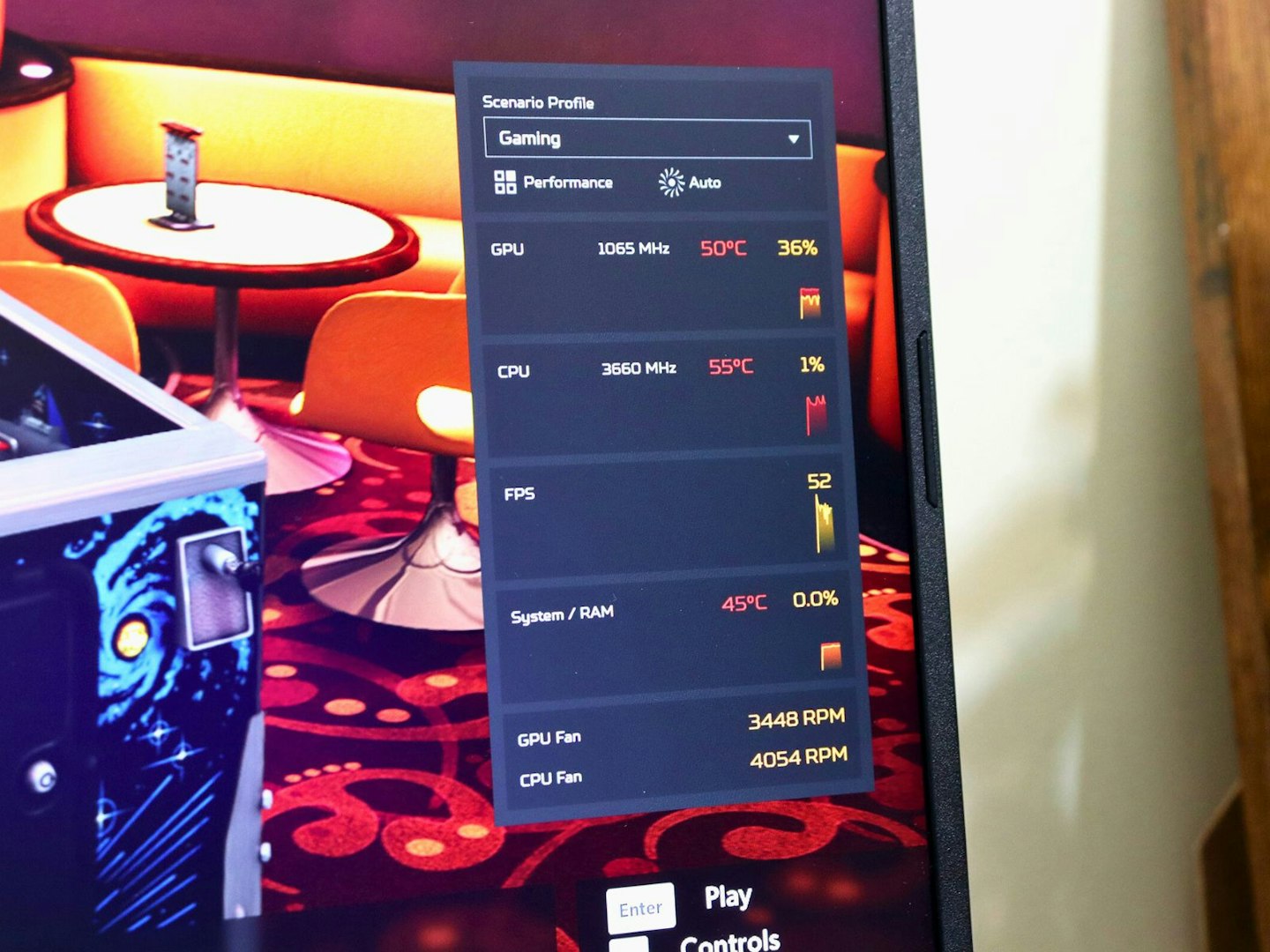
Most gaming laptops have tools that let you monitor and customise performance. ©Chris Duffill, Empire
RAM
Get as much RAM as possible – 16GB will meet the standards of the vast majority of modern games. However, some titles recommend 32GB to perform at their best. This is also a consideration if you want to run your games at 4K resolutions with high frame rates and top graphic detail settings. Yes, a GPU mainly handles the visuals, but remember that the system as a whole needs RAM to function, allowing the CPU to work at its best.
Storage
And then there’s the internal SSD for fast loading times and space for ever-larger game installs. We recommend a 1TB internal SSD, but if your chosen gaming laptop only has a 512GB SSD there’s an easy and relatively cheap fix: an external SSD (or HDD) is both small and portable.
Display
Many gamers prefer a larger screen, but the most common laptop size for gamers is typically 15-16 inches. That strikes a good balance between being practical for gaming as well as portable. A 17-18-inch gaming laptop is often a brilliant choice for those who don’t mind (or don’t need to) lug their laptop around very often. But what about the display itself?
Screen types
As with desktop gaming PC monitors and TVs, you’ll find that some display technologies are better than others for gaming. The most common type is an IPS (LCD) screen. They typically offer great performance with colour and smooth action, free from the smearing of VA panels. But now you can also find OLED or Mini-LED laptop displays that offer better brightness and black levels.
Refresh rate
The key to any gaming laptop display is the refresh rate. We’ll explain it in our glossary below, but any gaming laptop really needs a rate of 120-144Hz or higher, as the frequency directly correlates with the frame rate of your game. Want to run Baldur’s Gate III at 120fps? You’ll need a screen with the same or higher refresh rate. Trying to run a game at higher frame rates than the refresh rate of the screen will result in nasty tearing, stuttering and frame-drops – especially during fast action.
Weight and portability
This really comes down to your needs. Gaming laptops are thinner and lighter than ever, so if extra bulk isn’t a big issue we recommend larger screens where possible as that will make playing games like turn-based strategy titles that have detailed maps and complex interfaces that much easier to see. But, if true lightweight portability is everything, gaming laptops even come as small as 14-inches. The larger and more lightweight a powerful gaming laptop gets, the more you’ll need to spend.
If you are going for a 17 or 18-inch gaming laptop, there’s a good chance you’ll be using it at your desk at home without necessarily needing a monitor, so investing in a laptop stand and one of the best gaming chairs is going to look after your posture and make for comfortable gaming well into the evening.
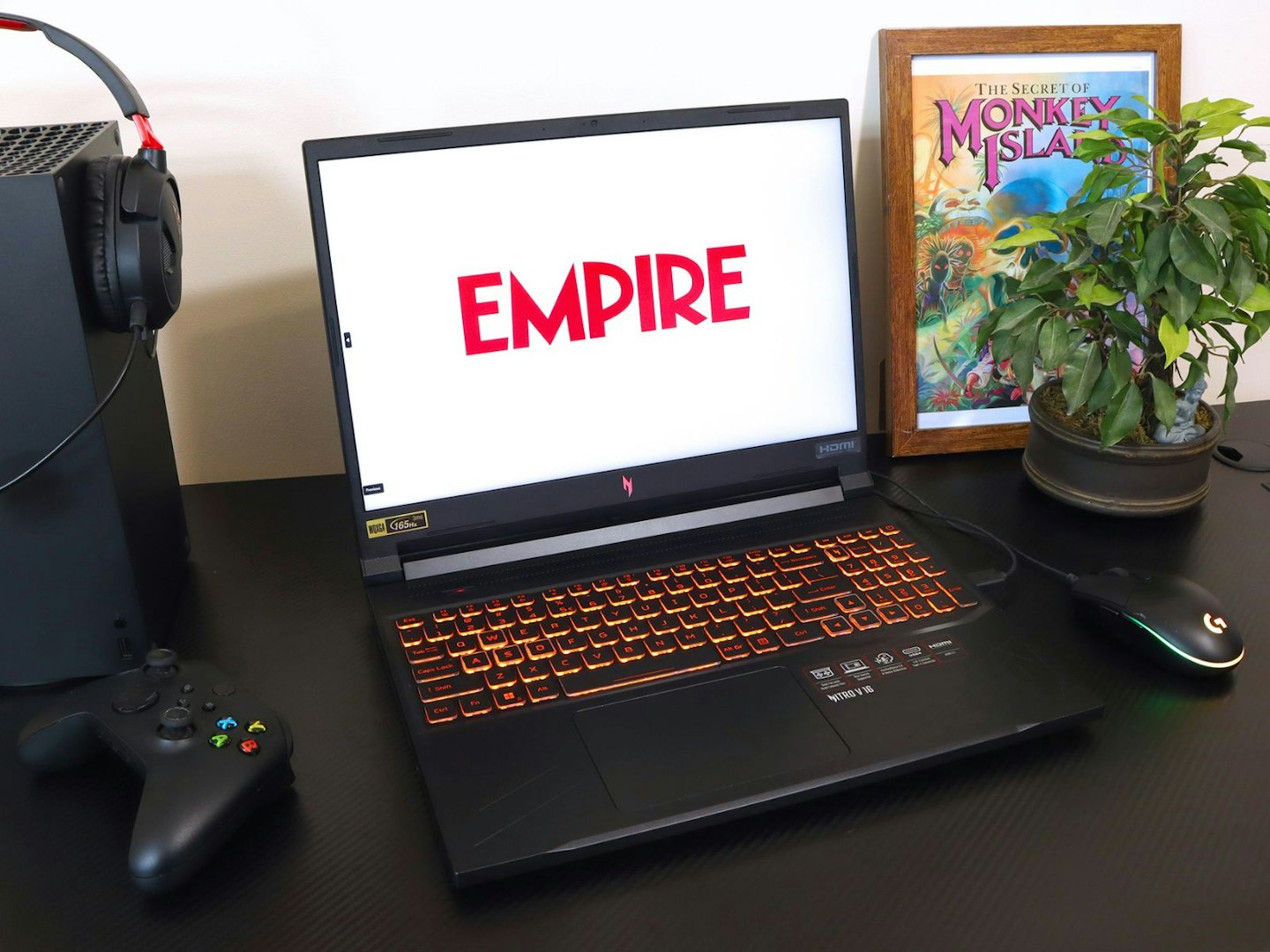
©Chris Duffill, Empire
Gaming laptop terminology
CPU: The Central Processing Unit of your laptop. It’s a single chip, often made up of several cores that can independently process various tasks, known as threads. These CPUs run at various speeds (clock speed, measured in Ghz) – the faster the better.
GPU: A GPU is a Graphical Processing Unit – the central component of a graphics card. It handles the rendering of images to the computer screen. A high-end laptop may have 32GB of RAM, with others having 16GB. Both are considered to be a good gaming specification.
Resolution: Resolution is the measurement of pixels on your screen, such as 1920 x 1080 (Full HD). The higher the pixel count, the greater the resolution – which means more fine detail. It also refers to a game’s resolution setting, with many supporting resolutions up to 4K.
RAM: Random Access Memory acts as the working memory of your laptop. The CPU and system as a whole relies on this to function. The more RAM, the more working capacity the machine has for its tasks.
SSD / HDD: The storage capacity of your laptop. This is commonly a solid-state drive (SSD) in modern gaming laptops, but you’ll still find both traditional hard drives (HDDs) and SSDs as external drives for increasing your storage capacity for files and games. Solid State Drives have no moving parts, so work faster and more efficiently than hard drives which rely on a spinning disc for reading and writing your data.
Gaming laptop FAQs
Which brand of laptop is best for gaming?
Our favourite brands are featured in our list above. Although Microsoft make laptops capable of gaming, that doesn’t mean they’re designed from the ground-up as a ‘gaming laptop. Brands like Acer, ASUS, MSI and Lenovo specialise in dedicated gaming laptops so, once you’ve read our list of the best, the brand you prefer is really up to you and comes down to your taste in design and specification needs.
How much RAM do I need for gaming?
Right now the vast majority of games are designed to run perfectly well with 16GB of RAM. More is always more of course, so there’s no harm in going up to 32GB to be future-proof. However, very few games require this to actually run. Helpfully, the games that require this amount of RAM will highlight this.
Which processor is best for gaming?
If you’re looking to put a sizable chunk of your gaming laptop budget into sheer processing power, the AMD Ryzen 7 9800X3D is one of the best on the market. It’s AI-ready and has 8 cores and 16 threads, a base clock of (4.7) GHz, and a boost clock of up to (5.2) GHz.
Which GPU should I get?
Much like high-end CPUs, the best laptop graphics card right now will set you back quite a few pounds. At the time of writing the NVIDIA GeForce RTX 5090 has AI-powered neural rendering and 24 GB of GDDR7 VRAM. But, as graphics cards are one of the most important components in your rig, it’s important to prioritise it when considering a new laptop. If you can’t stretch to a flagship GPU like the NVIDIA above, other versions exist that are only a year or so older at a much cheaper price, such as the NVIDIA GeForce RTX 5050.
Should I choose a gaming PC or a gaming laptop?
If you’re torn between a gaming PC and a gaming laptop, it all comes down to your priorities. Traditional gaming desktops are best for customisation with swappable components, top-tier cooling, and future-proofing that lets you stay ahead of the next wave of CPU and GPU-intensive AAA titles. Laptops, on the other hand, put portability front and centre. They’ll cost you more for similar performance, and you won’t be upgrading much beyond some extra RAM. But today’s lean, mean gaming laptops blend impressive performance with convenience, making them perfect for anyone who likes to keep gaming no matter where they are.
Latest updates
This guide was first published in December 2025. Any relevant future changes will be noted here.
Chris Duffill is a senior tech reviewer, writing for Empire, What’s The Best, MOJO, Yours and other brands. He specialises in home entertainment and audiovisual tech, including laptops and PCs, consoles, TVs and projectors, speakers, amplifiers, turntables and more.
He’s a lifelong gamer, starting with the BBC Micro, Atari 2600, Sinclair ZX Spectrum, Commodore 64 and Nintendo Game & Watch. Now he games on Xbox Series X and PC, with a spot of retro gaming on modern recreations like TheC64, SNES Classic Mini and The Spectrum. He has decades of experience with a wide range of audio visual equipment, software and technologies thanks to a professional background in video production, photography and graphic design. He’s also a TV and movie fanatic with a Masters in Screenwriting from the UEA.