
Twenty-five-year-old wunderkind Mozart (Will Sharpe) arrives in Vienna, leading to deep resentment in older court composer Salieri (Paul Bettany).
Streaming on: Sky Atlantic
Episodes viewed: 5 of 5
It may technically be another interpretation of Peter Shaffer’s 1979 play, but it’s Miloš Forman’s 1984 movie and its eight Oscars that loom over this show. Written by Joe Barton (Giri/Haji, Black Doves), the lavish expansion of Amadeus doesn’t soar as elegantly as Forman’s, but it finds a tune all its own.
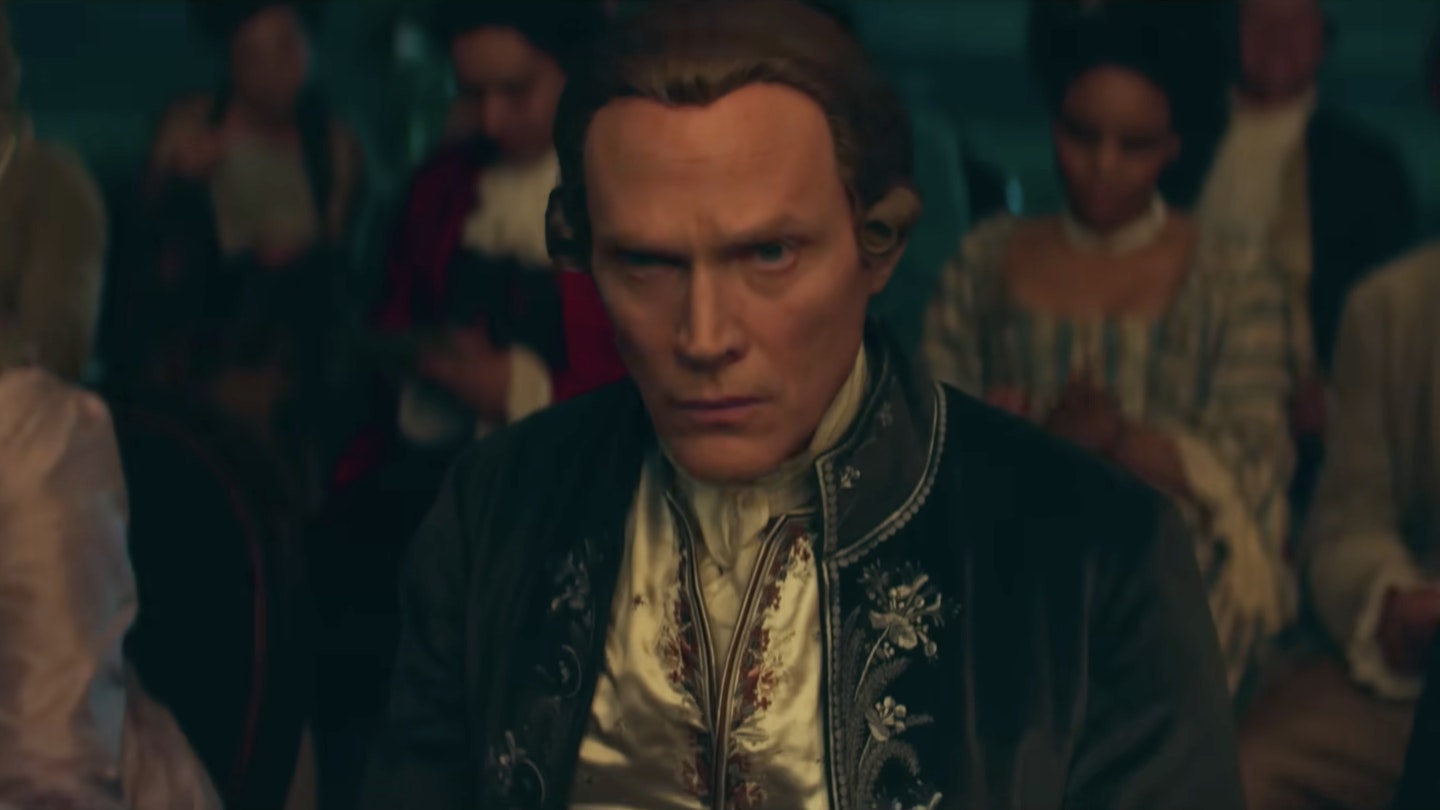
The story begins with an aged Antonio Salieri (Paul Bettany) confessing to the killing of Wolfgang Amadeus Mozart (Will Sharpe). We then flash back to their initial meeting. In Vienna, Salieri is an obsequious court composer, secretly terrified by his own mediocrity. He considers music the voice of God, so when he meets the renowned young genius Mozart and finds him to be a philandering drunk who treats his gift carelessly, Salieri’s furious that the Lord would choose to speak through someone so unworthy. He vows to destroy them both.
Barton’s dialogue is at its most sparkling when Salieri and Mozart share the screen.
With five episodes to play with, Barton has more space to explore the contrasts, and similarities, between the two men. Salieri is so consumed by his own mortality, and fear of being forgotten, that he’s too afraid to really live. Mozart lives so freely that ideas flow unimpeded. Building out from the play, we get more of Mozart’s own, less destructive demons. His preoccupation is not with the Holy Father, but his own actual lower-case dad, whose approval is always just out of reach. A home life of love and tragedy guides his compositions from merely beautiful to meaningful. It all fits in smoothly.
Barton’s dialogue is at its most sparkling when Salieri and Mozart share the screen, particularly in a scene where each lays out his own thoughts on music and God. “Maybe God doesn’t speak to you because you fucking bore him,” suggests Mozart with casual acidity (language and behaviour is not period-piece prim here — see also: bunk-ups over a buffet and Salieri having a depressed wank at his piano.)
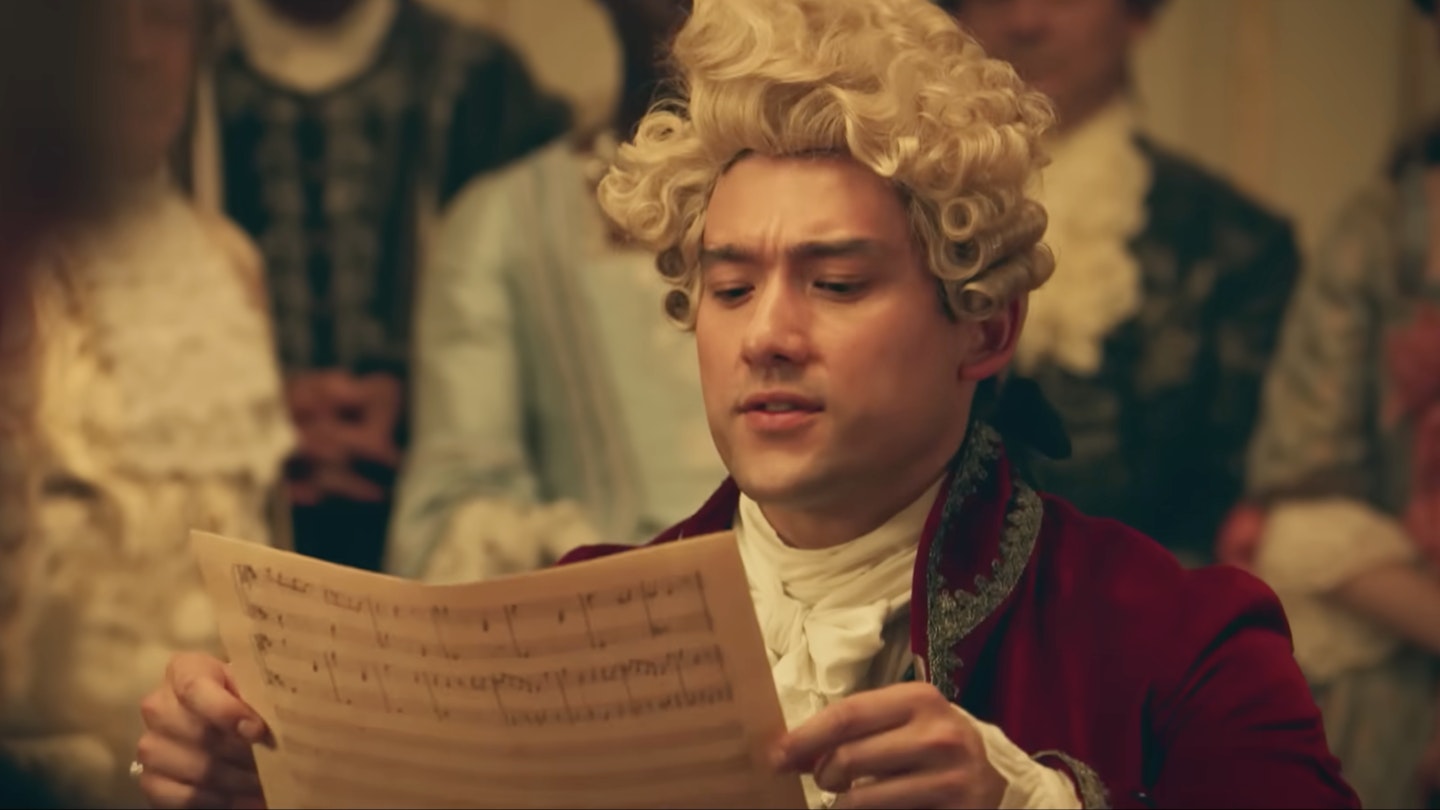
Bettany’s is the stand-out performance, a scheming villain who’s also somewhat sympathetically trapped by his own self-loathing. Sharpe, who’s several years older than Mozart was when he died, may not convince as a 20-something prodigy, but he plays the role in a lower key than the movie’s Tom Hulce, whose cartoonish giggling may have been tough going over five hours. Gabrielle Creevy is fabulous as Mozart’s wife, who has no intention of being a mere background character in her husband’s story.
If, as is so often the case these days, there’s a bit of water-treading in the middle, this more than justifies its existence. A very good series to sit alongside a great play and movie.
This is a funny, sumptuous, intelligent take on the play — far from merely a cover version.