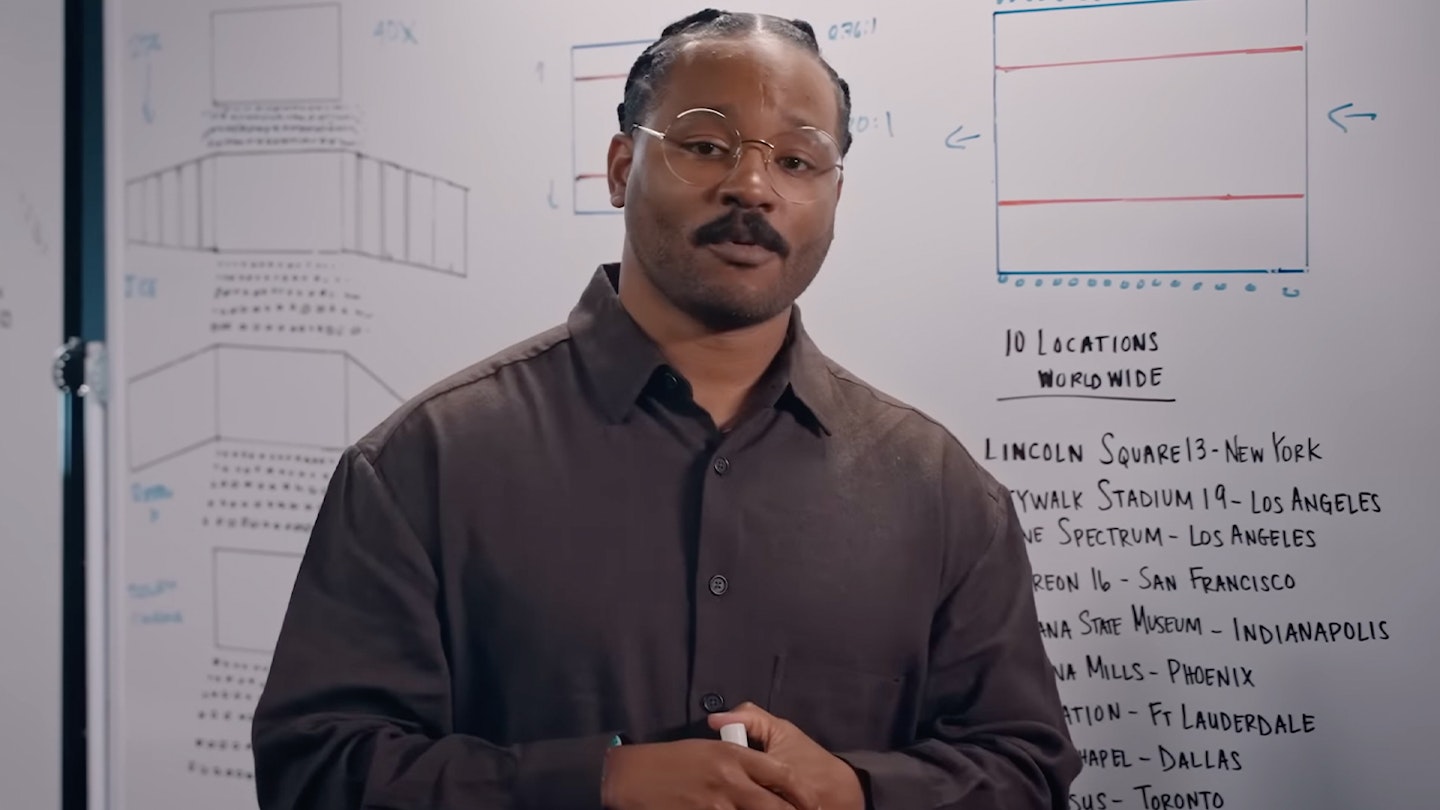


“I hope this was helpful.”
So says Sinners director Ryan Coogler at the end of his 10-minute film format explainer. Co-produced by Kodak and Warner Bros, the video saw Coogler talking through how Sinners was shot – on film, across 65mm Ultra-Panavision and 65mm IMAX film stocks – and subsequently how it would be presented to audiences worldwide, in various formats: some digital; some projected from film; some in rare large-format 70mm prints. It could have been dry. Overly technical. But Coogler’s video was none of those things. It was, ostensibly, a free mini film school lesson from a master director – unpacking how images get captured, how shots are framed, how different film stocks affect the image, and what that means for audiences. Helpful? It felt revelatory.
“This is… kind of historic?” reads a YouTube comment from @HEAVYHEARTSMUSIC. “I don’t think I’ve ever seen a filmmaker break it down like this, not even Nolan or QT or PTA. Coogler about to be inducted into the Celluloid Brotherhood lol.” @KM81_ART wrote: “After watching this I reserved my ticket to see the 70mm IMAX at the BFI. It was one of the greatest experiences of my life. It’s changed the way I think of movies.” Coogler’s video has been viewed 880,000 times on YouTube, and many millions more than that on social media sites like X, where it went viral.
So, yes, helpful. Particularly at a time when the cinema experience cannot be taken for granted. Recent weeks have seen Netflix make a bid to buy Warner Bros. The cinema industry is still building back up in the wake of the pandemic. Audience habits are shifting. And yet Coogler – armed simply with a whiteboard, a pen, and a few strips of celluloid – imparts everything that makes the cinema experience so special. It took just 10 minutes.
“Oppenheimer was the first film which was, I feel, a drama filmed in IMAX.”
“I cannot take – and nor can Kodak take – really any credit for what Ryan did there,” Vanessa Bendetti, Vice President and Head Of Motion Picture at Kodak, tells Empire. She had identified that there may be an opportunity to engage potential audiences by explaining what ‘IMAX film’ actually means. But she hadn’t anticipated what shortly arrived. “I got dropped this video that Ryan had made in one take, and they came to me and they said, ‘Can we put your logo on this, and will you guys share it?’ I’m like, ‘Are you kidding me? Yes, we will!’”
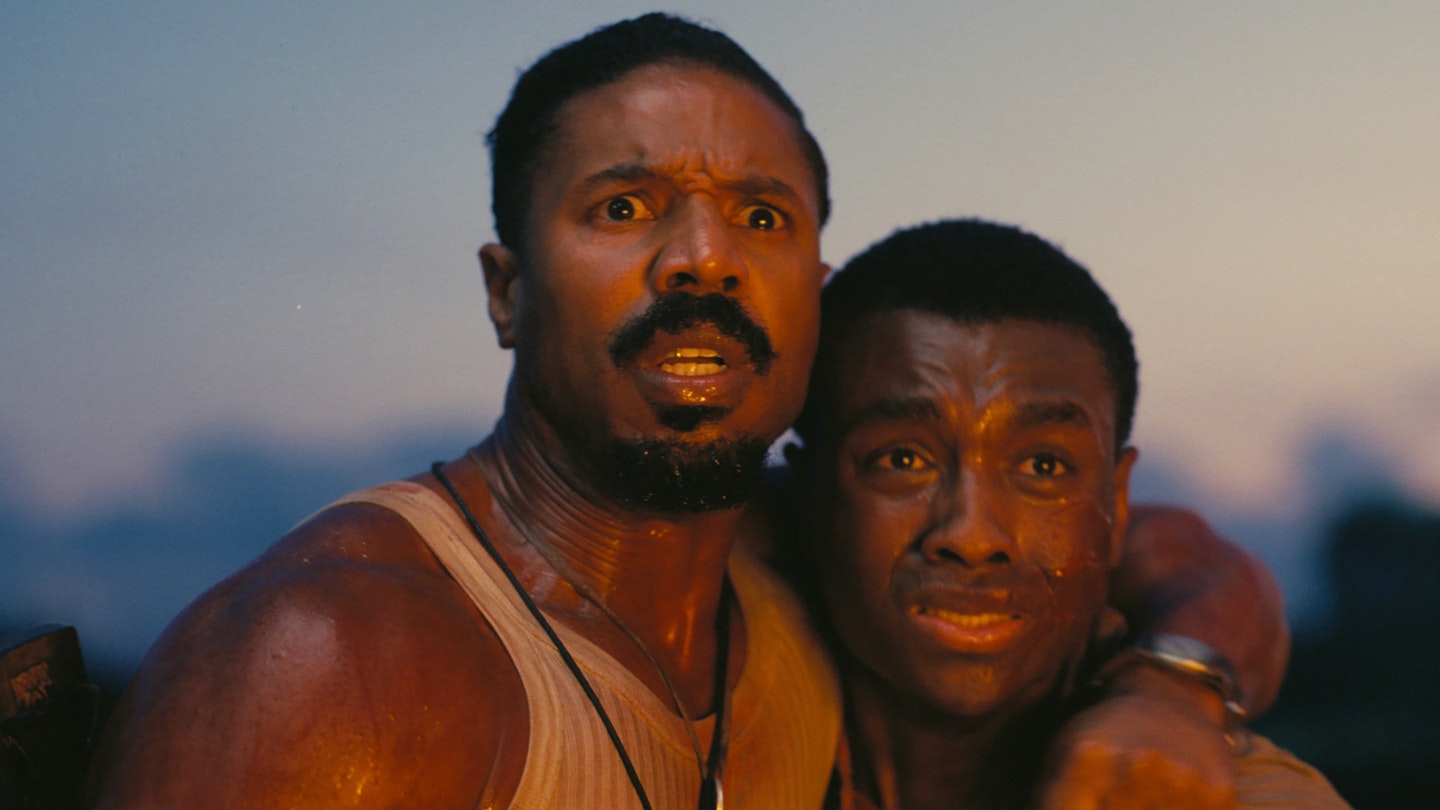
It signalled something significant: that audiences are paying more attention to how they see films, and that studios can market film formats as a box office draw. The only place you can get this experience? The big screen.
——
Ryan Coogler wasn’t the only one. 2025 brought a swathe of cinematic releases where the promise of a bigger, better experience was front and centre. The year began with The Brutalist, reviving the VistaVision format (and the mid-movie intermission). This was the format of choice for Paul Thomas Anderson’s One Battle After Another too; projected in true VistaVision on just four cinemas worldwide, plus a limited 70mm IMAX release. Beyond Sinners, Kodak released a similar video with Benny Safdie and Dwayne Johnson for The Smashing Machine, explaining the various film stocks used to tell Mark Kerr’s story – shifting from VHS, to 16mm (blown up to IMAX resolution for the film time), and closing out in 65mm. For many of the year’s biggest – and crucially buzziest – films, film itself was at the forefront.
“There’s been a real, tangible shift towards celluloid, and that’s been going on for a few years,” says Madeleine Mullett, programme manager at the BFI IMAX in London. “I’d say that there’s an auteur lead on that,” she adds. Hence: Ryan Coogler, Paul Thomas Anderson, Quentin Tarantino (whose Kill Bill: The Whole Bloody Affair came with 35mm and 70mm prints). And, let’s not forget, Christopher Nolan. Oppenheimer, with its sold-out IMAX 70mm presentations, was a watershed moment in 2023. “Oppenheimer was the first film which was, I feel, a drama filmed in IMAX,” says Mullett. “Something like Oppenheimer wouldn’t have happened with an IMAX film even five years ago. It was a huge, dramatic change in style for that format.”
Nolan’s film proved premium formats didn’t just have to be for action spectacles. The Brutalist and The Smashing Machine are character dramas; Sinners and One Battle After Another have genre elements, but they’re not summer blockbusters. And yet, when audiences know these films were captured on film, and are available to watch projected from film, it becomes event cinema in a digital age. “It’s a performance,” argues Bendetti. “No two screenings will ever be exactly the same.”
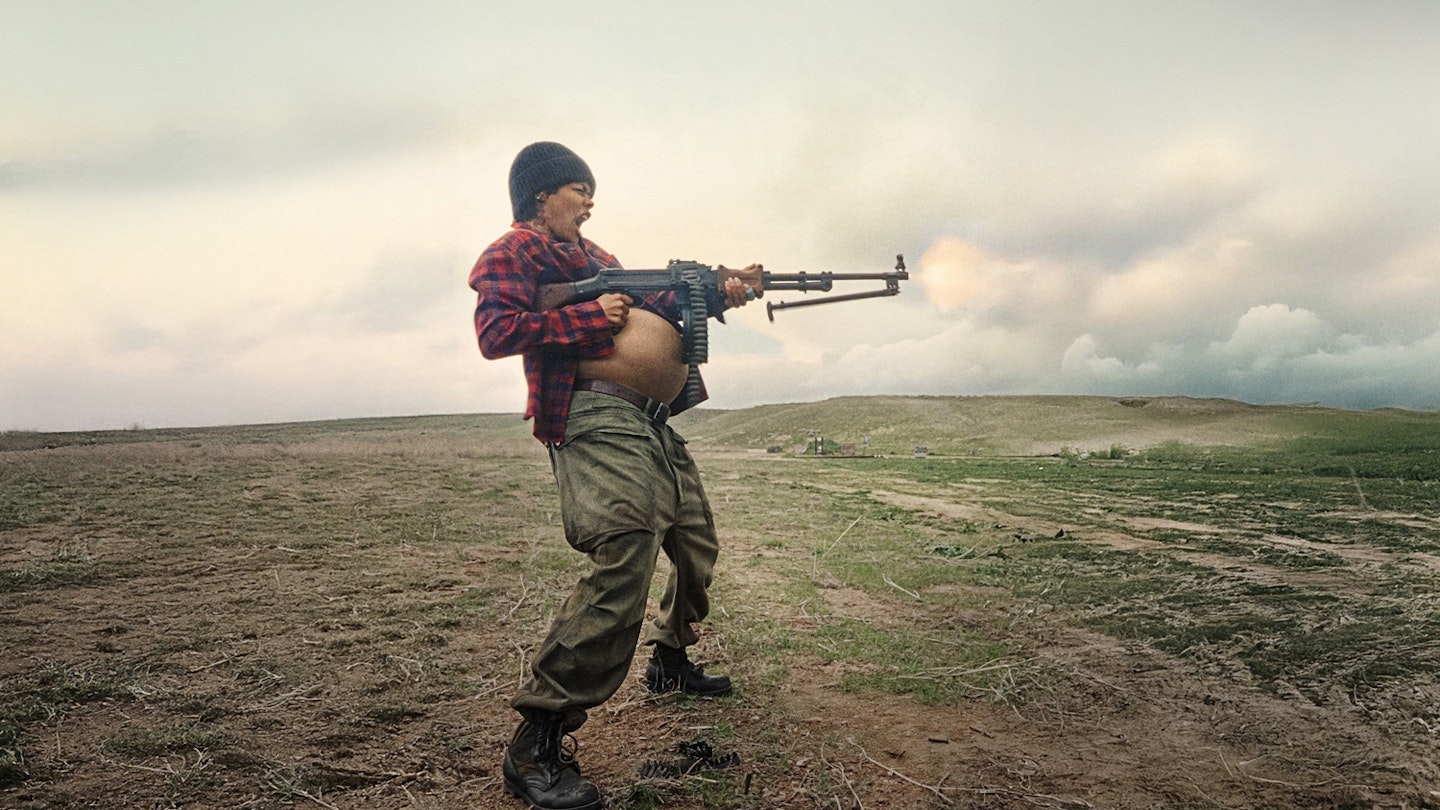
For all the benefits of digital production and distribution, Bendetti sees that celluloid is an opportunity to “go back to the real craft of filmmaking”. Long before anything reaches audience eyeballs, the impact is discernible. “[Film] really drives a process. There’s a preparedness and a discipline on set – both in front of and behind the camera – that informs a different work product,” she says. So, if talented filmmakers are using film, and film is pushing them to create something extraordinary, why wouldn’t studios seize on that to pull in punters? “Studios have seen that there’s a gold standard of quality on a project if it’s been shot on film, and they’re starting to acknowledge that there is value in that from a campaigning and release strategy,” she says.
In the cinematic ecosystem, audiences want to see something special. And filmmakers want to make something special. That’s why Ryan Coogler’s Sinners video resonated so strongly, say Bendetti. “It’s so authentic. It’s not marketing,” she says. “He’s truly saying, ‘This is why I care about this medium. This is why I’m excited that we were able to do something that had never been done before.’”
“Paul [Thomas Anderson] went to incredible lengths to do what he did.”
There’s a reason that not every film is shot on film. It’s inconvenient. Compared to digital, it’s expensive, less flexible, fraught with technical difficulty. In Coogler’s video, he explains how he simultaneously shot Sinners across two distinct film stocks in order to capture exactly what he wanted. For One Battle After Another, Paul Thomas Anderson helped revive the long-dead format of VistaVision by refurbing defunct tech. Opening all of this up to the audience sends a message: this was hard. It took effort. But that inconvenience was for the sake of artistic integrity, and the audience gets to be a part of it.
“Now you understand that Paul went to incredible lengths to do what he did, to be able to capture [One Battle] in that way, by resurrecting equipment,” Bendetti says of the film’s VistaVision production. “And then he’s gone to painstaking effort to bring it to the world in this way that is authentic to how he captured it. There’s a different level of care and commitment to have the audience experience something.”
It remains a gamble for studios. If film is expensive, and difficult – in a world where even making any movie is hard – who is it all for?
——
“It was about €170 both ways, including the [cinema] ticket.” Cinemagoer Darren Mooney – based in Swords, County Dublin, Ireland – took a flight over to London specifically to see One Battle After Another in 70mm IMAX at the BFI IMAX. He’d already seen Paul Thomas Anderson’s latest masterpiece locally on a digital DCP (Digital Cinema Package), and on 70mm film at the Irish Film Institute, and on digital laser IMAX too. But the pull of 70mm IMAX proved too much. “It is a singular screen and a singular experience,” he reasons.
Seeing Oppenheimer on that format during a chance trip to London in 2023 remains, Mooney says, “one of the greatest cinematic experiences of my life”. And so, realising that One Battle was going to be back at the BFI IMAX, he made the calculations. He saw that he could get a morning flight into London for 11am, make it to the Southbank, see the film, get back to the airport, and be back in Dublin by 7pm. “So I felt, ‘Hey, why not?’,” he says. “I don’t know when this is going to happen again.”
Making such an extensive (and expensive) journey is not, he stressed, going to be a regular occurrence. “But I thought it was very worthwhile.”
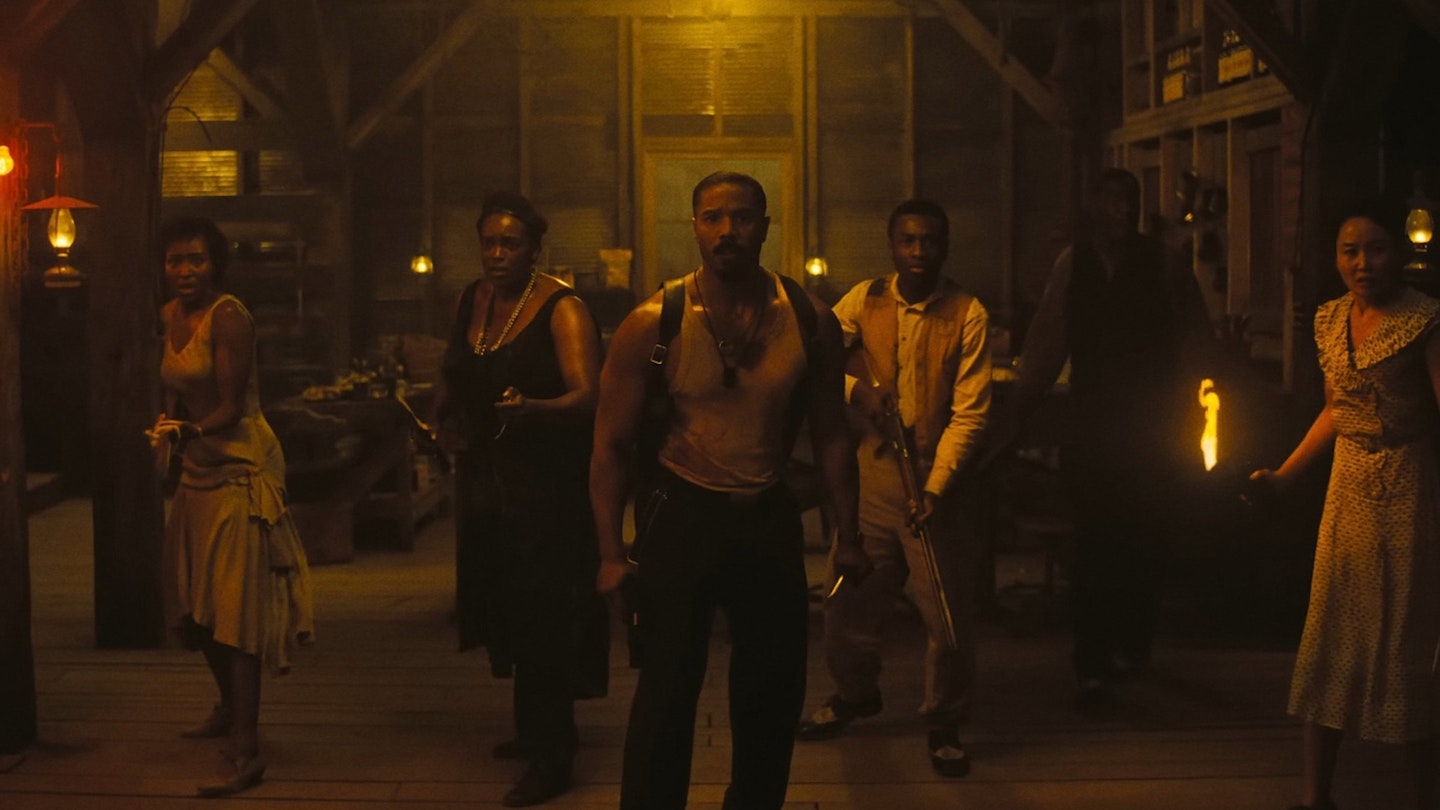
For “huge film buff” Jamie MacLaren, the BFI IMAX was his venue of choice to see Sinners, in 70mm 15-perf. When making his choice, Coogler’s video was “part of it”, he says, though he regularly seeks out similar screenings having hoovered up Christopher Nolan’s filmography on the format. “That 1.43:1 aspect ratio is such a rarity nowadays,” he says. “It feels like a massive, grand thing that doesn’t really get utilised that much anymore.” Seeing Dunkirk on 70mm IMAX at the AMC Lincoln Square, New York changed everything for him – and Coogler’s horror-blues mashup fit the large format perfectly. “The story and cinematography really lends itself to 1.43 and 70mm, because that texture and the scope of the vampires is just incredible.”
Even for those not crossing bodies of water for a cinema trip, the promise of celluloid is a major draw. “When you’re competing with streamers, it really is about what makes it different. Why would you go to a large screen cinema and pay substantially more than you would at home?” queries Mullett. Films like Anderson’s provide a clear answer. “One Battle is full-screen [IMAX] for the whole time, and it really plays into the tempo, the structure of the film, the emotional resonance that it has with the audiences. And it’s just massive.”
“Regina Hall has got these incredibly expressive eyes.”
Whether it’s on a giant screen or not, working with film delivers a fundamentally different experience than digital, on a literal chemical level. “Something happens photochemically,” explains Bendetti. “There are no two frames alike. It’s the difference between a sensor pulling in light and giving it into percentages predetermined for different variations of colour, in a Bayer pattern that arranges pixels in a finite way. And film is silver halide crystals swimming in emulsions. It’s just more aligned with the way the eye sees.” That subtle difference, she argues, is felt bodily. “In our natural lives, there’s dust in the air, there are things that aren’t in focus. Film more naturally emulates that.”
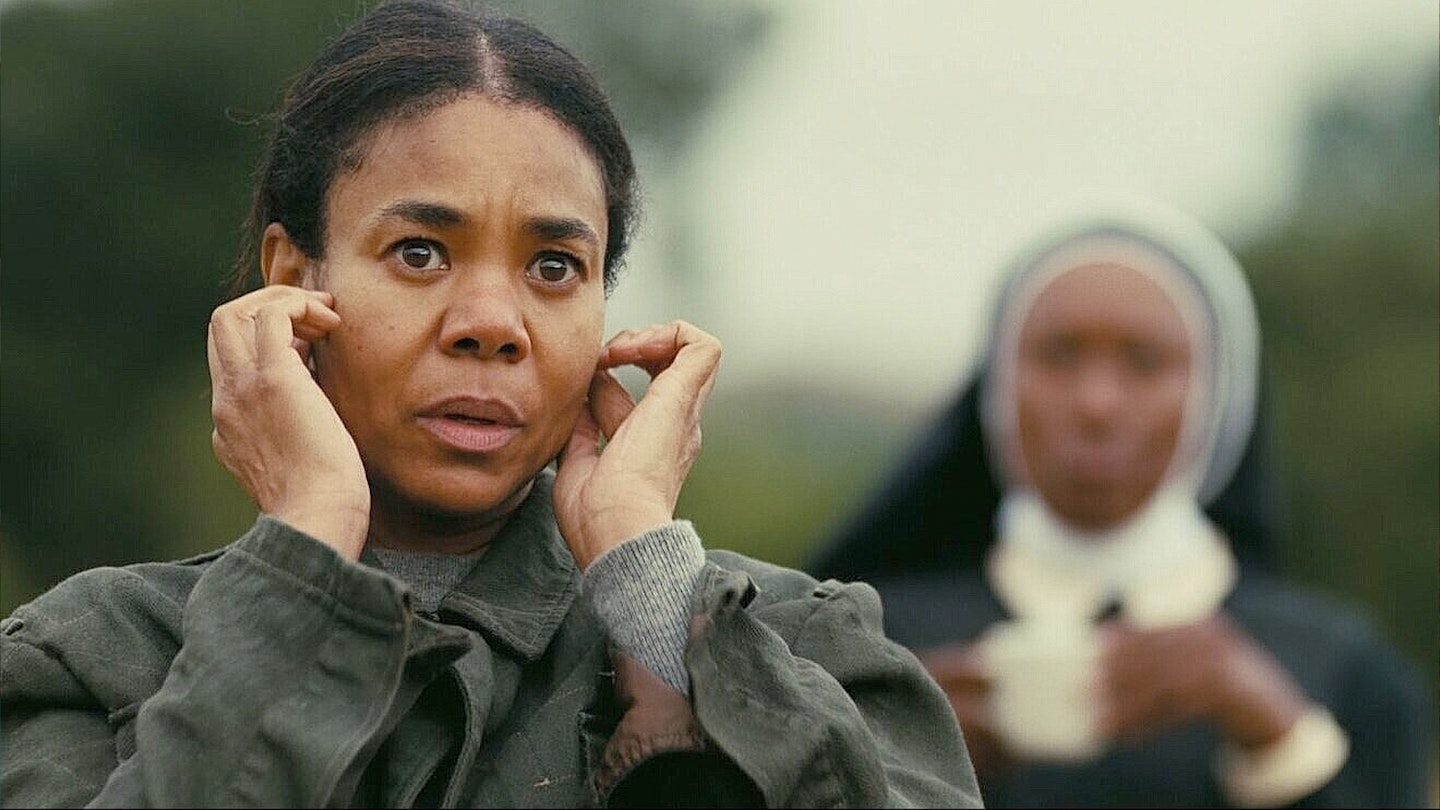
When you get into film presentation and formats, things quickly get technical. It’s film stocks and file sizes, different projectors and sound set-ups. And while clueing audiences up on those elements is important (“We’ve definitely seen that audiences respond to technical details,” Mullett says), it’s all in aid of something that’s anything but technical. “We seek out emotional experiences,” she says. This proved true for Mooney, seeing One Battle in IMAX 70mm. “The use of close ups, the Regina Hall shots look better in IMAX,” he says, “just because her face fills up the frame – she’s got these incredibly expressive eyes.”
That’s €170 well spent.
——
The history of cinema is full of domino effects and chain reactions. And 2025’s celluloid celebration arrived as a direct knock-on effect from what came before.
“[Oppenheimer] opened the door for Sinners,” says Mullett. “And then Sinners opens the door for other filmmakers.” There is a momentum building in how film – and premium formats like IMAX – might reshape the industry. “We are seeing this next generation of filmmakers who are passionate about the medium because it’s something different than what they’ve grown up with,” notes Bendetti. “It allows them to differentiate their work from everything else that’s out there.” In the wake of One Battle and The Brutalist reviving VistaVision (“Definitely a buzzword right now,” Bendetti attests), the likes of Emerald Fennell’s Wuthering Heights, Alejandro G. Iñárritu’s Digger, M. Night Shyamalan’s Remain, and Greta Gerwig’s Narnia are following suit.
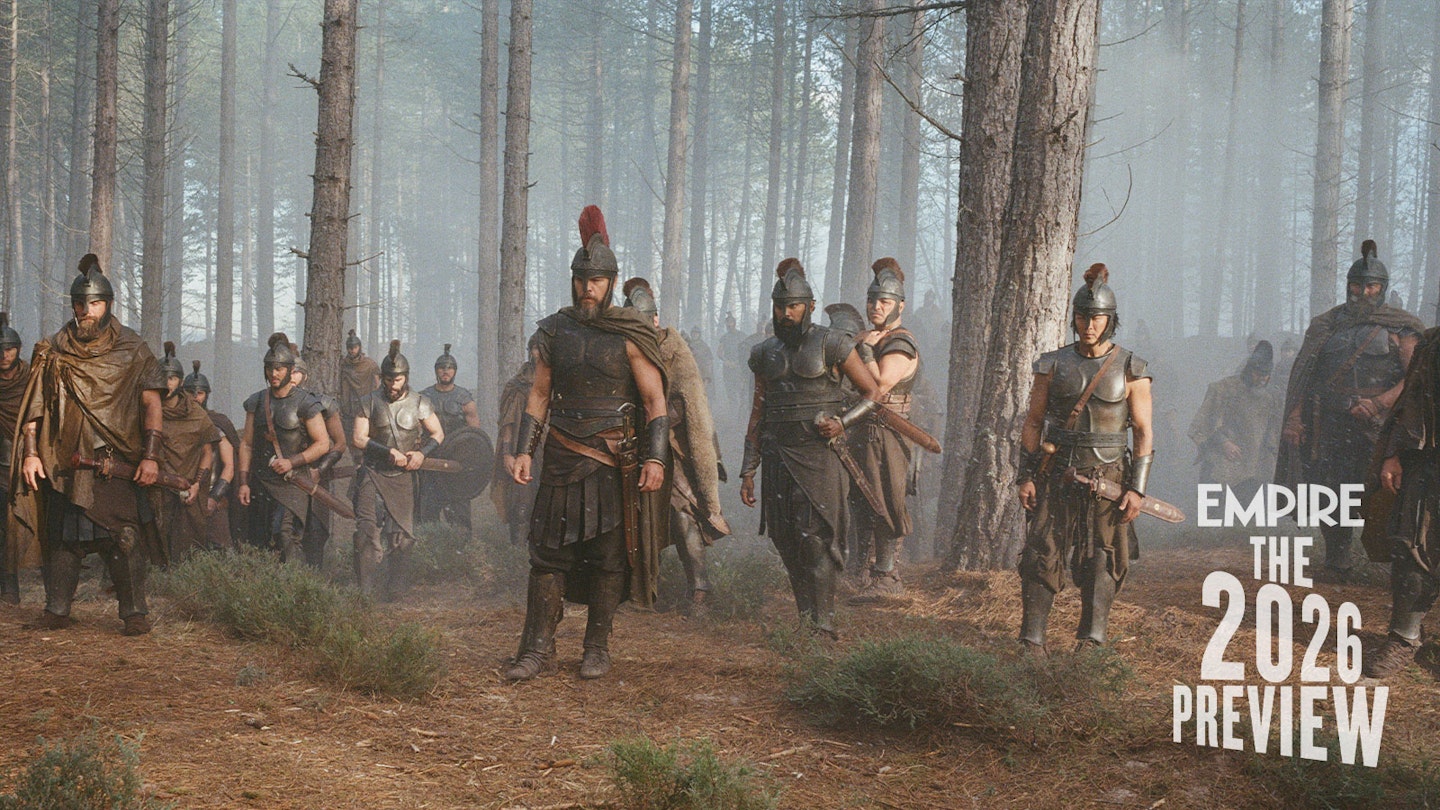
And then, of course, there’s The Odyssey. Christopher Nolan is handing the baton to… well, himself. After Oppenheimer proved what 70mm IMAX can do, Nolan has shot his entire Ancient Greek epic on the format – the first feature to ever do so.
“Nothing surprises us with Christopher Nolan anymore.”
Tickets for opening weekend IMAX 70mm screenings of The Odyssey went on sale a year ahead of its July 2026 release date; they are, of course, already sold out. Bristol-based Terrelle Graham snagged tickets for the Science Museum IMAX; even in the early hours of on-sale day, the BFI screenings were full. “It was a manic rush,” he says. “I was trying to be a bit too particular about which seat I wanted. This isn’t the time to do that!” After seeing Oppenheimer at 4am, the only time IMAX 70mm tickets were available, he’s just relieved to have Odyssey tickets in the bag. “There are more tickets coming out closer to release, but it feels nice to know that I’m seeing it opening weekend.” MacLaren, too, already has tickets to see The Odyssey twice on IMAX 70mm within 24 hours.
“Nothing surprises us with Christopher Nolan anymore,” Mullett laughs. “By breakfast time, we had sold out all of the screenings. He’s now got to a position where he can financially make sense of using a celluloid IMAX print for the entirety of the film. And it’s not just any film. It’s The Odyssey, you know? It’s like, ‘Wow, this is a turning point for the industry.’”
Premium formats aren’t just about film. Mooney sometimes chooses chair-rocking, scent-blasting 4DX when it feels right (“Dave Bautista smells like cinnamon, which was an interesting choice,” he says of Dune: Part Two). And for Avatar: Fire And Ash, an inherently digital work, James Cameron’s preferred presentation is Dolby laser projection. “For me, Dolby cinema is superior to IMAX for digital releases,” says MacLaren, who’s already seen Fire And Ash in this format. “You have the dual laser projection, and it’s graded right. You have an incredible colour palette with Dolby Vision.”
Still, in a primarily digital world, it’s film that stands out as a truly different experience. There is work to be done. IMAX venues able to project 70mm are still rare; the entire process is expensive, including for the audience, who pays a premium for that premium experience. And there’s an entire ecosystem to be maintained – from Kodak making the film, to the celluloid plants processing it, to directors and studios being willing to use it, to cinemas being able to play it, to audiences showing up for it. But amid any industry doom and gloom, this trend shows that there are people out there who really care: both filmmakers and fans.
“We made Sinners for the theatrical experience,” says Coogler as he wraps his Kodak video. “We want you guys to have all these different options.” No matter how you chose to see Sinners, the knowledge Coogler shared boosts cinema as a whole. And that, most definitely, is helpful.