

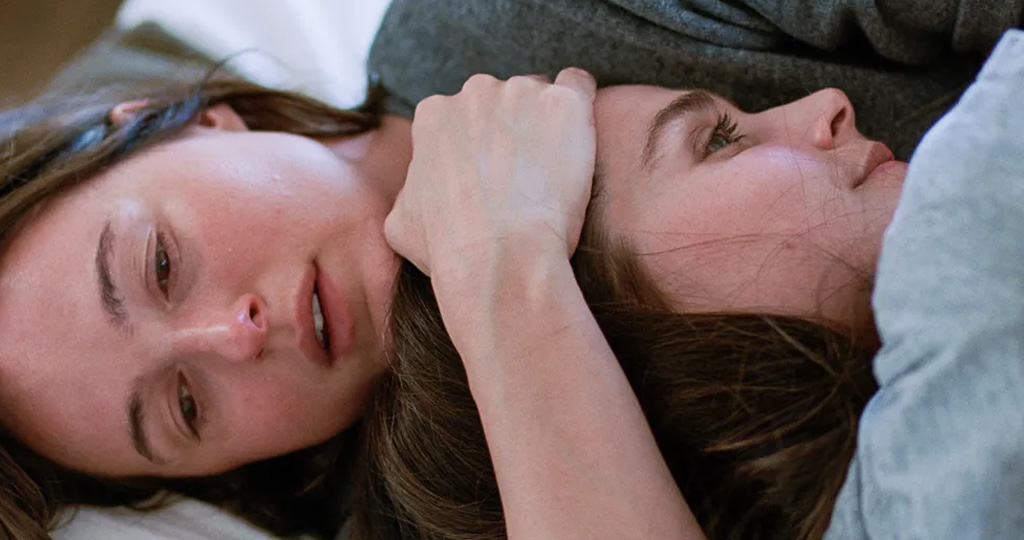
Two sisters navigate the challenge that comes with their estranged father (Stellan Skarsgård) wanting to make a film about their private family life.
Norwegian filmmaker Joachim Trier returns with another Scandinavian gem. While Trier’s renowned Oslo Trilogy — Reprise, Oslo August 31st, and The Worst Person In The World — followed young adults undergoing self-discovery, Sentimental Value sees the director broaden his focus, with a tender, insightful portrait of sisterhood, reconciliation, trauma and transformation. It’s about a fractured family unit attempting to heal through the power of cinema, unfolding with thorny dynamics and aching emotional resonance.

We first meet close-knit sisters Nora (Worst Person star Renate Reinsve), an anxious theatre actor, and Agnes (Inga Ibsdotter Lilleaas), a largely content academic historian, united in grief after their mother’s death. Enter their estranged father, legendary filmmaker Gustav (Stellan Skarsgård), who waltzes back into their lives offering a role written for Nora in a film about his mother’s suicide. It’s certainly not the apology the sisters were hoping for, after years of abandonment.
The film-within-a-film commentary is gorgeously lived-in.
So Nora refuses the role, still harbouring bitter anguish, in a scene that establishes the anchoring prowess of Skarsgård and Reinsve. His smug smile meets her narrowed gaze — micro-expressions that hint at years of an adversarial relationship. Reinsve continues her outstanding run of work with Trier, and Skarsgård’s performance proves a real highlight, punctuated by playful humour (inappropriately gifting his young grandson DVDs of The Piano Teacher and Irreversible) and a gut-wrenching processing of trauma. This opens up something darker for them all, voiced in Gustav’s devastating admission to Nora: “I recognise myself in you.”
With Nora’s rejection, Gustav finds a fan in young American star Rachel Kemp (Elle Fanning), who snaps up the role intended for Nora. It’s here that Trier and co-writer Eskil Vogt take a meta approach, delving into cinema’s relationship with reality and the imagined, the lived and the reconstructed. When Rachel delivers a heartbreaking monologue scripted for Nora, it doesn’t land with the necessary sincerity, and Nora must watch a stranger play a version of herself she’s trying to outrun.
The film-within-a-film commentary is gorgeously lived-in. Cinematographer Kasper Tuxen, meanwhile, imbues Trier’s frames with a grittiness Gustav would applaud. However, there are times when the titular sentimentality is thickly lathered, where Trier’s idealism about art takes over, with distractingly wistful diversions.
Ultimately, overlapping notions of family, cinema and healing are neatly tied up in an arresting and heartrendingly gentle finale that will leave an ache in your chest. Stripping dialogue and editing flourishes away, Sentimental Value’s final note is a showstopper.
A fantastic showcase for Renate Reinsve and Stellan Skarsgård, and another strong piece from director Joachim Trier, this is a moving drama that lingers long.