

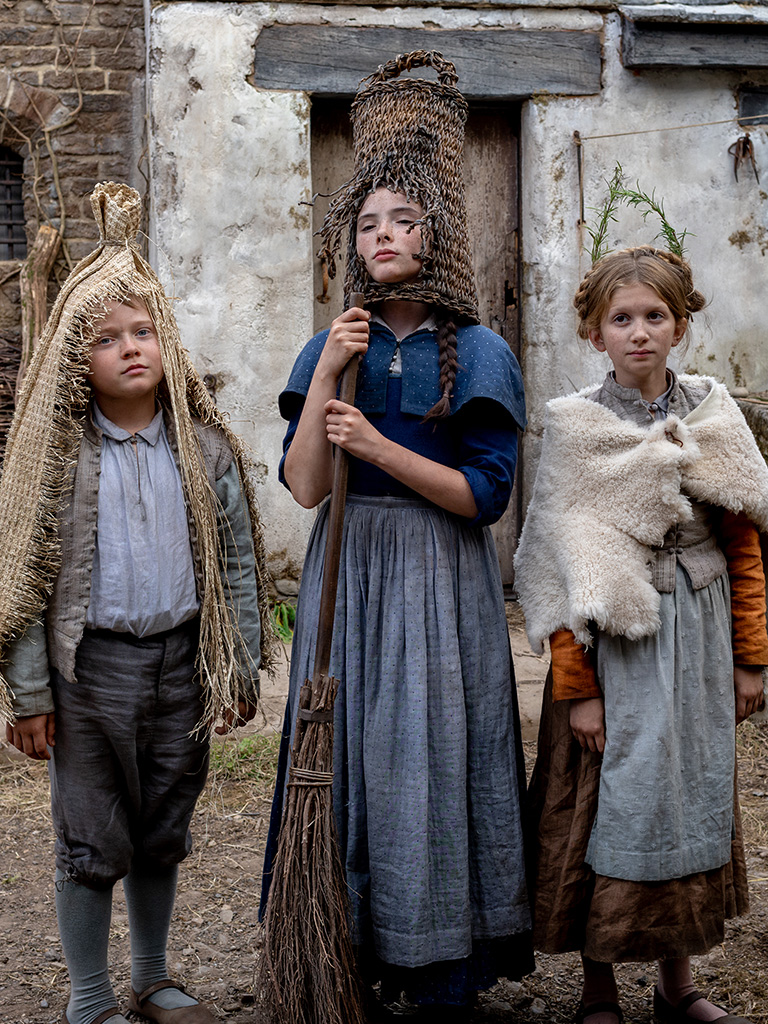
William Shakespeare (Paul Mescal) and Agnes Hathaway (Jesse Buckley) fall in love and start a family. Their only son, Hamnet (Noah Jupe), soon becomes the tragic inspiration for an important play.
There is very little we know about William Shakespeare. The few facts we do have about the playwright have been gleaned from patchy oral histories and written public records. One indisputable truth is that he had a son named Hamnet, who died aged 11, in 1596, most likely of plague. Three years later, Shakespeare wrote his most famous play, Hamlet.
It’s this curious near-forgotten nugget of personal history which gave rise to Maggie O’Farrell’s 2020 historical-fiction novel Hamnet. Ostensibly acting as a kind of ‘Hamlet: The Origin Story’, it is a rich and deeply felt meditation on death, a study of how artists channel their grief into art, and a slice of Shakespearean fan fiction which de-centred the Eternal Bard, instead giving the spotlight to his wife, Agnes.
It doesn’t feel an obvious choice of material for Chinese filmmaker Chloé Zhao — but then again, neither did her last film, the millennia-spanning Marvel superhero flick Eternals. Zhao’s early films (Songs My Brothers Taught Me, The Rider, Nomadland) were all motivated by people living on the margins; Shakespeare is arguably more of a frontline player. This is instead a story about people on the margins of a famous cultural history, a tragedy until now left to the footnotes.
Where the book front-loaded its catastrophe with elliptical storytelling, the script here (co-written by Zhao and O’Farrell) opts for a linear approach. There is the occasional portentous omen — a rising flood, a swarm of bees — but it begins romantically and sweetly, with a bucolic meet-cute between the future Mr & Mrs Shakespeare. The chance encounter between William (Paul Mescal) and Agnes (Jessie Buckley) is beautifully played: she, a woman of the forest with a gift of seeing, he, a man of words, tongue-tied. Their courtship is fast and fierce. Will woos her with a (possibly prophetic) retelling of the Greek myth of Orpheus and Eurydice. A steamy encounter in an apple shed follows. Both Zhao and Shakespeare share a love of the natural world, and her searching, inquisitive camera roams the valleys of both faces and landscapes.
Gently and convincingly, a portrait of life in Elizabethan Stratford is revealed, a place of craft and tradition, of clearly defined gender and class roles. Agnes’ birth scenes are especially harrowing; Emily Watson, as Shakespeare’s mother Mary, nicely represents the awkwardness of in-laws who don’t always see eye-to-eye — but also the quiet acknowledgement of pain and mortality. Just as the book was, this is a film about the strength, solidarity and sacrifice of women in a patriarchal society, and the silent moments shared by Buckley and Watson are very moving.
Jessie Buckley could well shatter your soul.
When the tragedy comes, as it must, it is devastating. The actors utterly sell the wrenching, suffocating, physical manifestations of grief; Buckley, in particular, could well shatter your soul. Only very occasionally do the performances feel somewhat overwrought, perhaps more theatrical than the screen requires. But nothing feels cheap. Jacobi Jupe does excellent work too, as Hamnet himself, playing him as a sensitive, sweet boy with emotional depth.
Zhao’s efforts to elicit unselfconscious child acting, clearly encouraging a naturalistic, improvisational approach on set, lends the film realism if also an occasional sense of ahistorical wobble; saying “okay” in the 16th century is not okay. And the film takes certain liberties with the history of Shakespeare’s plays, suggesting he started coming up with Romeo & Juliet years before he actually wrote it.
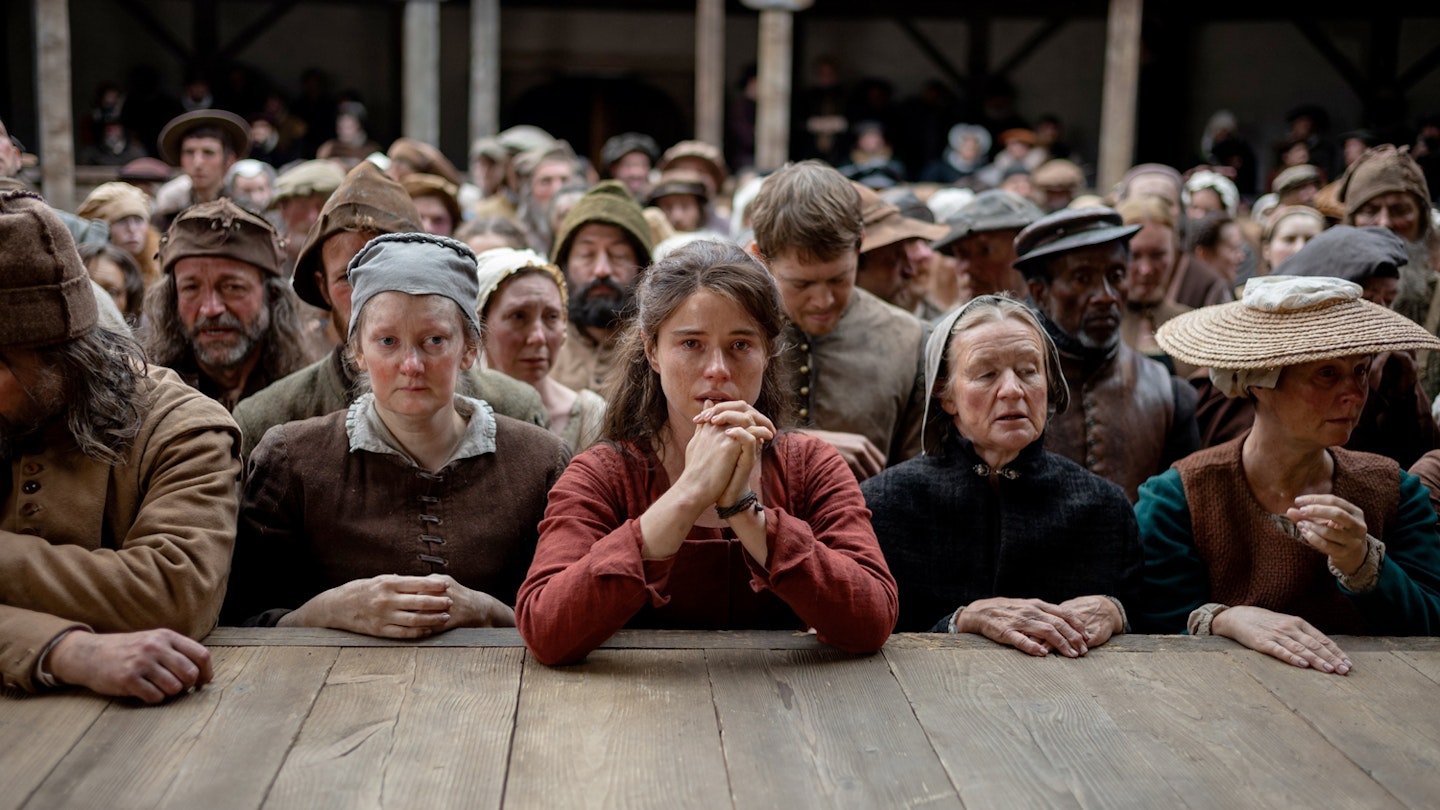
Such quibbles fade away for the heart-rending finale, when Agnes travels to London to witness a performance of Hamlet, the play, for herself. This sequence is the culmination of everything to this point. Zhao doesn’t waste it. We watch the most famous moments of the play unfold on stage at The Globe, with Noah Jupe — real-life older brother of Jacobi — as the boy prince. Allowing Shakespeare’s beautiful iambic pentameter to do the talking, we essentially witness a collective processing of trauma unfurl in real time.
In unsteadier hands, playing Max Richter’s ‘On The Nature Of Daylight’ — by this point, a popular track for many, many directors — might feel manipulative, an obvious tap for your tear-ducts. (Richter also composed an original score for the film.) But it feels earned. Those tears you will likely find on your face are of catharsis, of cinematic healing. The rest, as Hamlet once put it, is silence.
With strong performances in service to a clear, confident vision from Chloé Zhao, this is a wrenching contemplation of the “undiscovered country” of death and grief.