
In quarantined England, Spike (Alfie Williams) becomes a reluctant member of ‘the Jimmys’, while Dr Kelson (Ralph Fiennes) makes an astonishing discovery about the infected.
Nia DaCosta has an unenviable task in following last year’s 28 Years Later. Not only is she moving into a directing chair vacated by Danny Boyle, she’s making the second part in a trilogy, blessed with neither a true beginning nor a definitive end. It’s a wonder, then, that her journey into the world of the Rage virus turns out to be such a satisfyingly complete experience. If its scope is somewhat smaller than the first film’s, in many ways it surpasses it, not least in the horror stakes.
We begin as things will go on: dripping with gore. The Bone Temple picks up a very short time after the end of 28 Years Later. Spike (Alfie Williams), who ventured into the world alone at the end of the last movie, has been taken in — far from willingly — by ‘the Jimmys’, the bizarrely acrobatic, bewigged killers who served as a jarringly surreal coda in Boyle’s film. If you’re expecting a bunch of fun, eccentric zombie-killers, think again. This group are insane, sadistic murderers, like Harley Quinn meets Hannibal Lecter in flammable leisurewear. We’re reintroduced to them as they surround Spike, jeering as he does trembling battle with one of their number. A thick pool of arterial blood later, Alfie is inducted into the gang and the movie’s tone is set. This world will be cruel. Survival doesn’t mean happiness. The infected are not always the greatest threat.
DaCosta gives a masterclass in building tension and suggest-don’t-show horror.
There’s an unsentimental coolness to DaCosta’s view of this world. Dystopian as it inherently was, there was a thin streak of romance to Boyle’s film. Spike and his father had brief moments of peace — crossing a quiet causeway; watching deer gallop over rolling hills — in-between encounters with the infected. Not so for DaCosta. Life here is unrelenting. Silence is almost always to be feared, not relished, because it usually means something is stalking you. She has a lot of fun with the horror element, throwing in a few well-executed jump scares, but also driving horrible images into your mind. In a stand-out scene, in which we learn the Jimmys’ twisted interpretation of the word “charity”, DaCosta gives a masterclass in building tension and suggest-don’t-show horror. We see many dreadful things briefly, but the fear is largely played out on faces, or out of focus in the background of the frame. She leaves your brain to do its worst filling in the blanks.
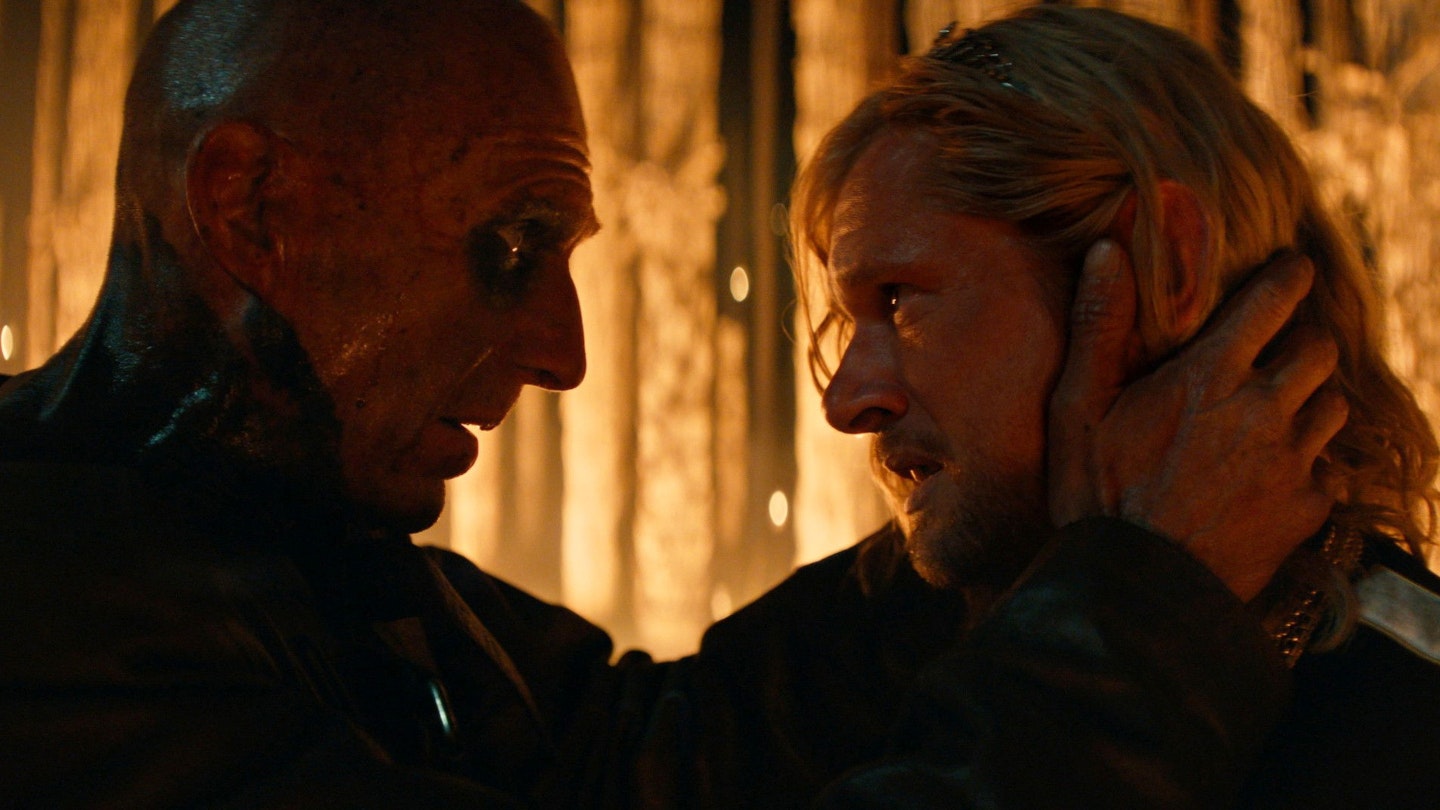
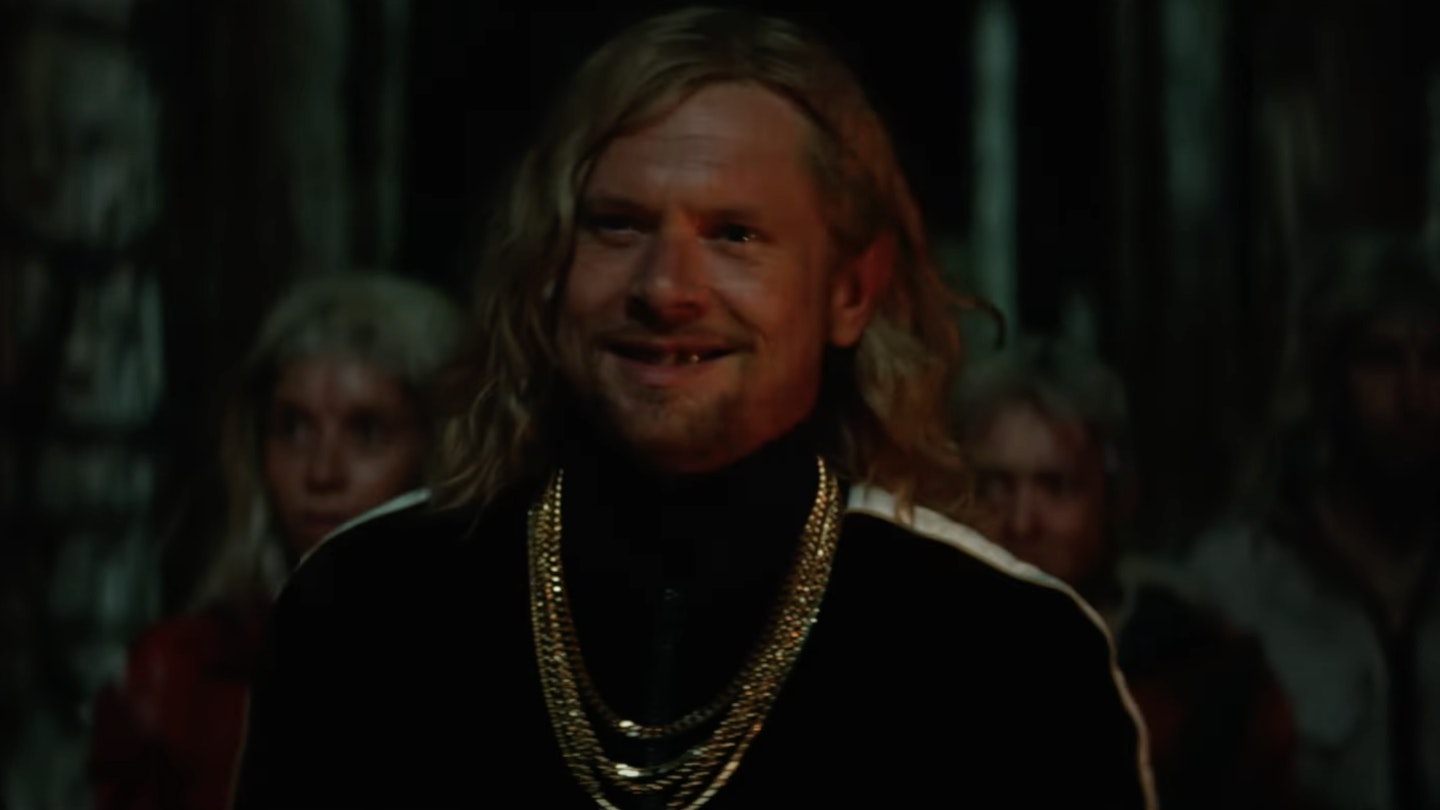
The central plot is simple: Spike (Williams building further on his excellent performance in Boyle’s film) is torn between good and evil, or more specifically, hope and nihilism. The latter is represented by Lord Jimmy Crystal (Jack O’Connell), who believes himself to be the son of Satan, unleashed on the world to destroy humans alongside his father’s “demons”, aka the infected. O’Connell, who with this and Sinners is doing good business in complete bastards, gives a deeply unsettling performance, underplaying Crystal’s violent anger and giving him a thread of fearful boyishness. Crystal’s a cult leader trying to convince himself of his own greatness by making others suffer.
The good side is embodied by Ralph Fiennes’ Dr Ian Kelson. After a relatively brief, sombre appearance in 28 Years Later, Fiennes goes to far more eccentric places here. Kelson has been experimenting with Samson (Chi Lewis-Parry), an alpha infected. By shooting him with morphine darts, he manages to briefly subdue him. The glimmer of possibility that offers seems to awaken something in Kelson, who becomes more alive throughout the film. It all comes to a peak in a wild, truly audacious climax. After an arduous journey that keeps upping the tension bit by bit, it’s a blow-out finale that’s as cathartic as it is mad.
Without the need to re-establish the world, Alex Garland’s script is leaner and more playful. There are more opportunities for asides than in Boyle’s film, which had to carry a much greater weight of plot and world-building. DaCosta takes every opportunity it offers. Sony has recently greenlit the third film in the trilogy, with Danny Boyle looking to return to direct. With the best film since the original, DaCosta has laid down a challenge to the series’ godfather: Top that. Dare you.
Simpler, but also bolder and bloodier, than its predecessor, The Bone Temple is a more-than-worthy sequel.