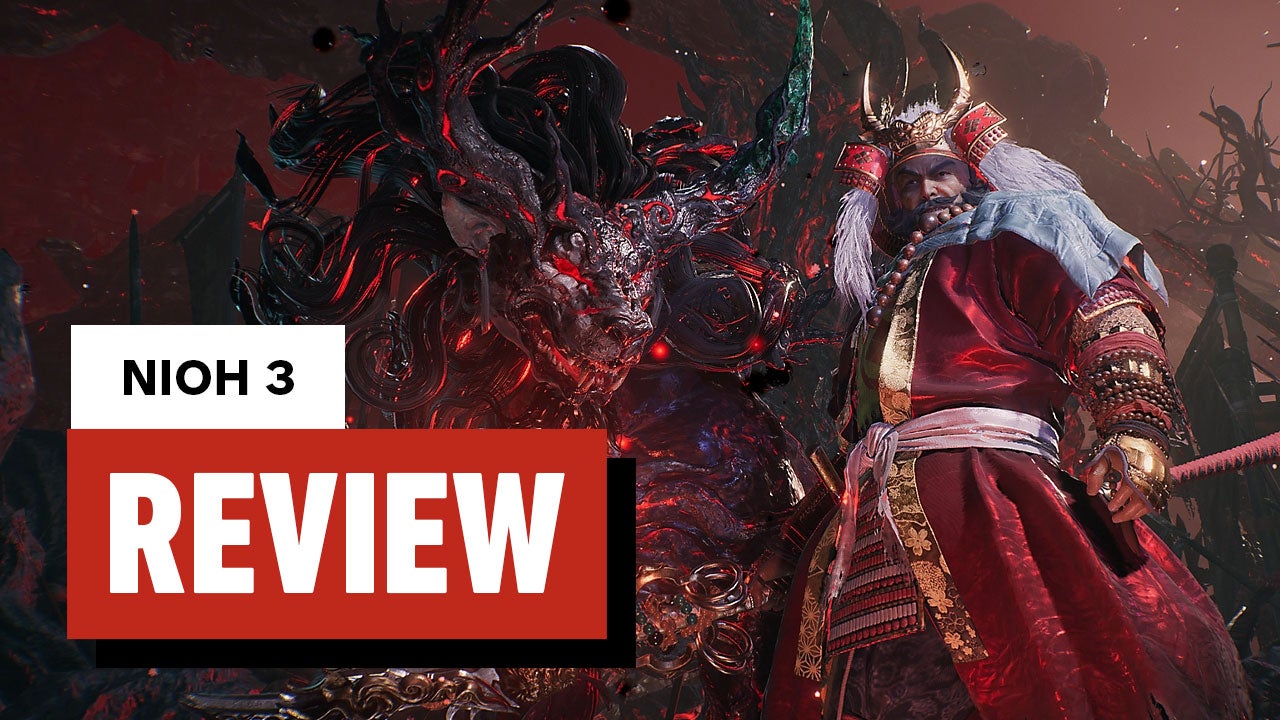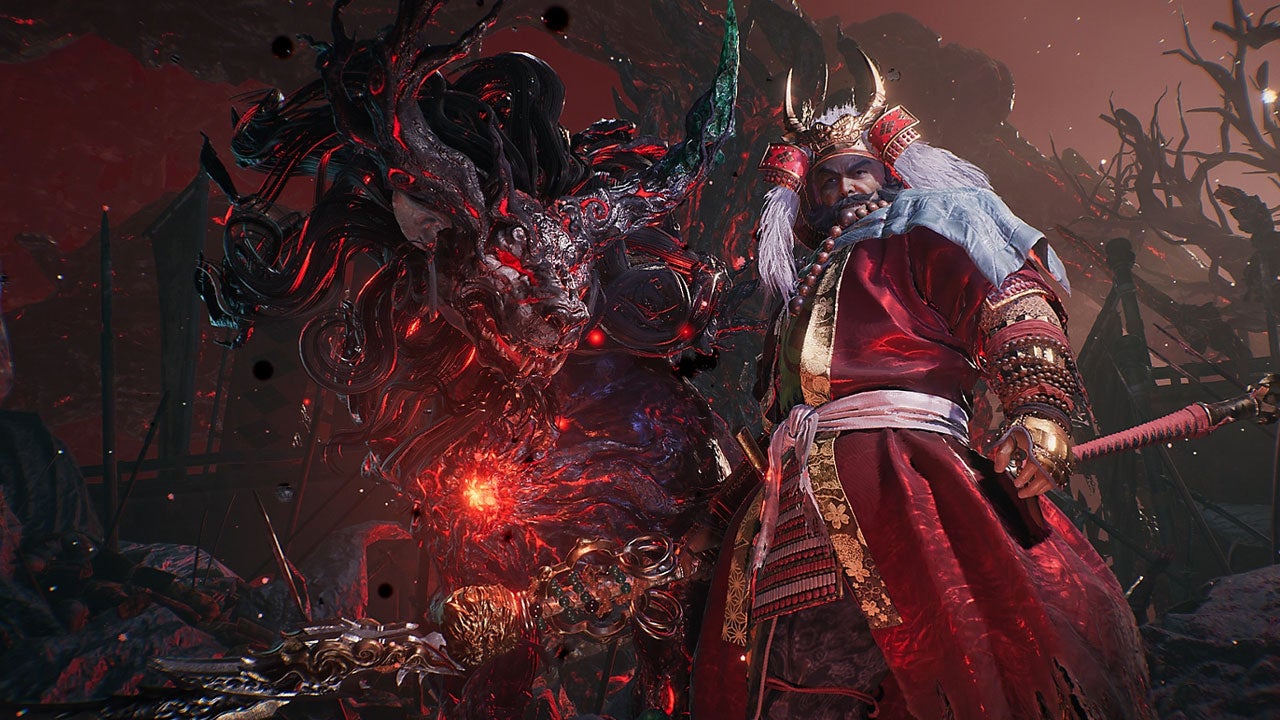

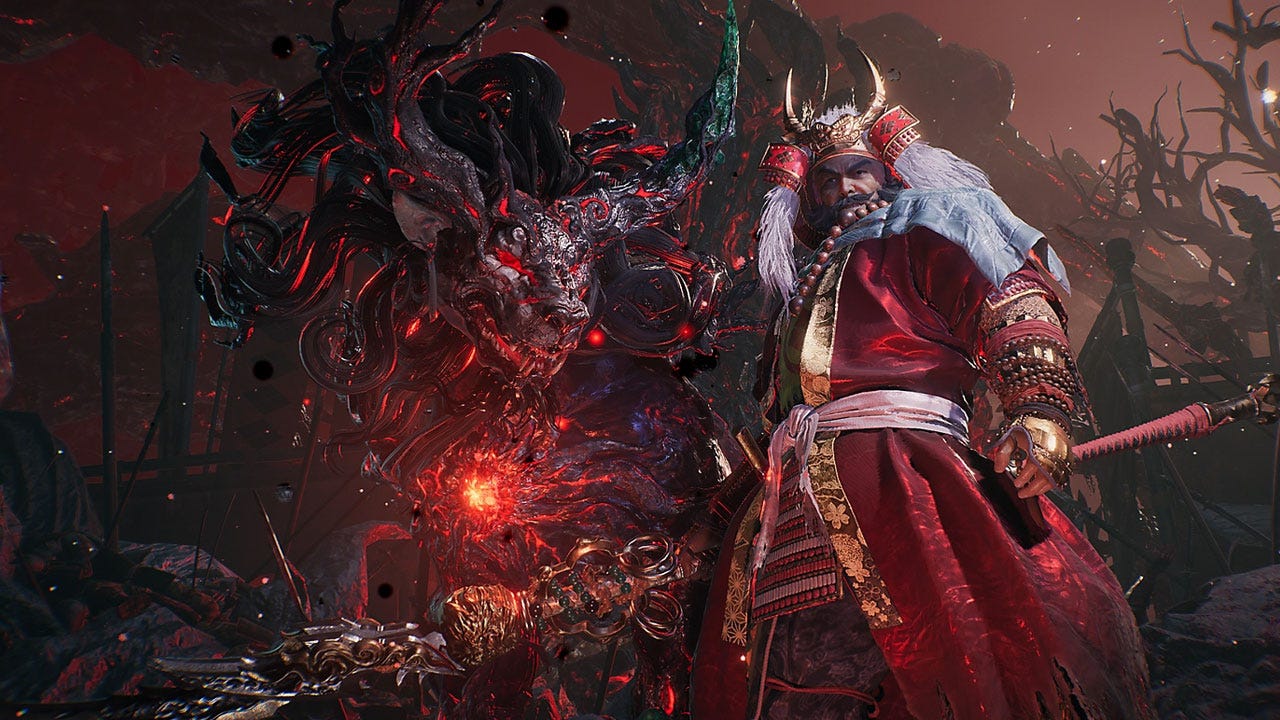
When the original Nioh hit the scene back in 2017, it emerged as the very best soulslike outside of FromSoftware itself, with exemplary combat, thrilling bosses, and absurdly deep mechanics. Nioh 2 improved just about every aspect three years later, but didn’t change a whole lot overall, essentially making it “Nioh 1, but better.” Nioh 3, on the other hand, is far more than just an iterative sequel. This is a total transformation of the formula – one that trades out static overworld maps for enormous open fields covering multiple different eras of Japanese history. This shift, plus the addition of an entirely new Ninja Stance that changes the rules of Nioh’s combat and a litany of smaller quality of life adjustments, all amount to the most significant shake up the series has seen up to this point, and one of the best Soulslikes to date.
To get the bad out of the way first, one area that has not seen any sort of significant shake up is the storytelling, and that’s a shame because it has always been one of the weakest elements of the series. Like previous Nioh games, the story serves mostly as a means to guide you through a fictionalized retelling of significant battles and wars in Japanese history – one in which monstrous yokai, magical stones with corrupting influence, and Guardian Spirits are commonplace. You play as Takechiyo, the grandson of Ieyasu Tokugawa, and heir to the seat of Shogun, who must travel back in time to obtain a means of defeating an ancient evil that has corrupted the present.
The biggest issue with Nioh’s story is that it’s very dry and, to be frank, just kind of boring. Someone with a better knowledge of Japanese history may get more out of it thanks to knowing the context and significance of these historical figures and events, but for a layman like me, there’s just not enough work done to make you care about what’s going on in each of the eras that Nioh 3 took me to. Fortunately, cutscenes are short, the choreography is great, and these story shortfalls never get in the way of the action elements that otherwise make Nioh 3 one of the best soulslikes around.
I’ll say this right out of the gate: Nioh 3 has the best combat of any soulslike, past or present, end of story. It nails the feel and look of its weapons, the variety within those weapons, the depth of its mechanics, the challenging and aggressive enemy AI, the multitude of different approaches you can take in any given combat encounter, and the list just goes on-and-on. It’s all best-in-class quality at every level.
Nearly all of that was true about Nioh 2 as well, but what elevates Nioh 3 even further into the stratosphere is the split between two different combat modes: Samurai and Ninja. Samurai mode is the traditional Nioh combat experience, characterized by careful resource management through the usage of stamina-restoring Ki Pulses, the need to switch between low, medium, and high stances depending on the given encounter, and a careful balance of defensive techniques and offensive rushdown.
Ninja Mode, on the other hand, is a brand new style of Nioh combat that switches out the aforementioned Ki Pulses and stance switching, replacing them with much faster attacks that require far less stamina, allowing me to basically suffocate enemies with strikes without even giving them a chance to fight back. In addition, Ninja Mode also gives you access to three ninjutsu attacks – like shuriken, traps, and magical spells – which refill as you land attacks and are great for targeting enemy weaknesses or hitting annoying flying enemies.
The two modes can be swapped freely on the fly, and they even have their own equipment sets, letting you essentially build two different characters with different combat focuses and styles. Team Ninja smartly avoids falling into the trap of forcing you to use one stance over another in order to defeat a certain type of boss or enemy, which often stymies creative combat expression in other games. Instead, both stances are always viable, and the choice of whether one is better than the other for a particular type of encounter is always left up to your discretion and playstyle.
It was always a great feeling to return to a boss that I previously died against, and adjust my strategy by using either more or less of one of the modes. For example, in a fight against a boss with powerful but predictable attacks, I might stick to Samurai Stance so I can parry their attacks and have more stamina left over to counterattack. But in a fight against a faster and more erratic boss, I might focus on Ninja Stance and use my quick step mist ability to maneuver around to their more vulnerable backside and avoid having to block all together.
While I have a clear preference for the flexibility and speed of Ninja Stance, developer Team Ninja has done a great job of balancing the two stances to make them both worth swapping between regularly. Samurai Mode feels a little weaker at a base level, but is balanced by being much better defensively – it also has an additional mechanic called Arts Proficiency that rewards you with a powered up special or heavy attack if you’re able to fill up a meter by landing attacks and successfully blocking without taking hits. Meanwhile, Ninja Mode feels like Team Ninja finally taking off whatever limiters they might have placed on the combat in previous games in the service of balancing stamina management, lifting up their hands and saying, “you know what, just go wild.”
Perhaps the biggest departure from previous Nioh games is the shift from a mission structure to a series of open worlds. Over the course of Nioh 3’s 40+ hour campaign, you’ll be time traveling around from the Edo Period, to the Heian Era, to the Bakumatsu Era, and even to antiquity. Every period that you travel to comes with its own enormous battlefield to explore, with tons of points of interest all over the map, featuring optional bosses, challenging combat encounters, and worthwhile rewards.
That last bit is important because one of the few complaints I’ve historically had about the Nioh series has been a lack of satisfying rewards due to the random nature of loot drops. The loot is mostly still random in Nioh 3, but there are now other meaningful rewards for you to seek out. Clearing out Lesser Crucibles will power up your Guardian Spirits, granting you access to new Spirit Skills; defeating Masters will unlock new nodes on specific weapon skill trees; finding Jizo Statues will allow you to select from a variety of bonuses that will aid you when you’re inside a Crucible; sniping the weasel-like Chijinko demons out of the sky will get you elemental variations of techniques in your skill tree; you’ll find equippable skills in the many chests strewn all throughout the world; and all of this on top of the already existing Kodama and Scampus collectibles that existed in past Nioh games.
Doing these open world activities also adds to an Area Exploration rating, which itself comes with rewards, from stat bonuses, to skill points, to more areas of interest becoming pinpointed on the map. Rarely was I ever surprised while exploring any of the Nioh 3 open zones, but I at least was well rewarded for my time, which counts for a lot in a game where you need every advantage you can get.
But while exploration is well incentivized and the environmental design of these huge open landscapes is impressive, Nioh 3’s open worlds feel like they are missing a unique identity. Part of the problem stems from the fact that you’ll fight the same enemies in just about every zone. This was an issue with the previous Nioh games as well, and it is felt even more so when you’re wandering through visually distinct open worlds that all still feel the same. There are almost no enemies that feel unique to a time period. The cyclopes that appear in the Warring States Era are the same ones that appear in the icy Heian period, except instead of rocks, they throw snowballs.
There is at least a fairly wide assortment of enemies to face overall, and a large number of them are completely new to the series, but it is a little disappointing that the returning enemies don’t have any new tricks or attacks to keep me on my toes.
Not that you’ll really need anything extra to be kept on your toes. Nioh 3, like the previous two games, is very difficult, even by soulslike standards. Enemies and bosses are relentlessly aggressive, and if you’re not careful about your stamina management, you’ll find yourself regularly being stunned and vulnerable to high damage grabs that will kill you in just about one hit. But that difficulty is key to why the combat of Nioh 3 is so thrilling. Besides, even though the difficulty is high, checkpoints are well placed, shortcuts are abundant, and load times are super quick, so I rarely became frustrated despite dying 290 times over the course of the campaign.
Loot remains the most frustrating element of Nioh 3. The fact is, this is a loot system that exists for the benefit of New Game+ at the detriment of a first-time playthrough. For New Game+ and beyond, it’s great. You’re able to dig deep into your collection of gear, pick out useful sets and plan builds around their powerful set bonuses, and really get into the nitty gritty of gear customization. But until you get to that point, gear gets outdated so quickly that it just feels like a waste of time and resources to even bother with it. I’ve played enough of these games to know I shouldn’t sweat the loot on my first playthrough, instead just equipping the gear with the highest number and moving on. But my prayers go out to anyone tackling Nioh 3 for the first time, because poring over the literal thousands of pieces of gear on top of all of the equippable skills, skill tree, prestige points, guardian spirits, and soul cores that can be placed in either the yin or the yang position, it’s just… a lot.
Thankfully, there is now an auto-equip feature that allows you easily equip the most powerful gear you own with just the press of a button. What is especially nice about it is that you can set it to automatically equip based on weight. So, for example, you could just set it to equip all of the heaviest gear you have if you don’t care about having a bad dodge with just a few invulnerability frames, or you could set it for a balance of good gear and a good dodge. Or you could go toward the other extreme and set it to auto-equip the best gear that still lets you zip around the battlefield, even if it means leaving one or two gear slots completely empty.
Auto-equipping obviously has its limitations, as it doesn’t take into consideration the build-defining special effects of a weapon or set bonuses. But it does give you an option to dramatically reduce the amount of time spent playing the menu game of Nioh 3, without impacting those who enjoy the process of meticulously fine tuning their builds at every point of the campaign.