
Platforms: PS5, PC
The Nioh series has always struggled to find an identity. 2017’s original Nioh focused on William Adams, the real-world English navigator who earned Samurai status in Japan in 1600, lending a ‘fish out of water’ vibe to Adams’ battle against legions of yokai demons. 2020’s prequel Nioh 2 leapt back to the 1580s, focusing on fictional half-human, half-yokai hero Hide, but felt a touch more rooted in the culture and mythology of its setting.
This long-awaited third instalment splits the difference, casting you as Tokugawa Takechiyo, another real historical figure, but sending you on a time-travelling, spirit-powered journey through Japanese antiquity to battle against your evil brother and his army of yokai that probably wouldn’t stand up to academic scrutiny. There are some pretty big liberties taken with this version of Takechiyo being an entirely customisable character too, although the creator tool is brilliantly detailed for those who do want to tailor their avatar to their liking. Like its predecessors though, the “who” isn’t quite as important as the “what”, and what Nioh 3 excels in is phenomenal action gameplay.
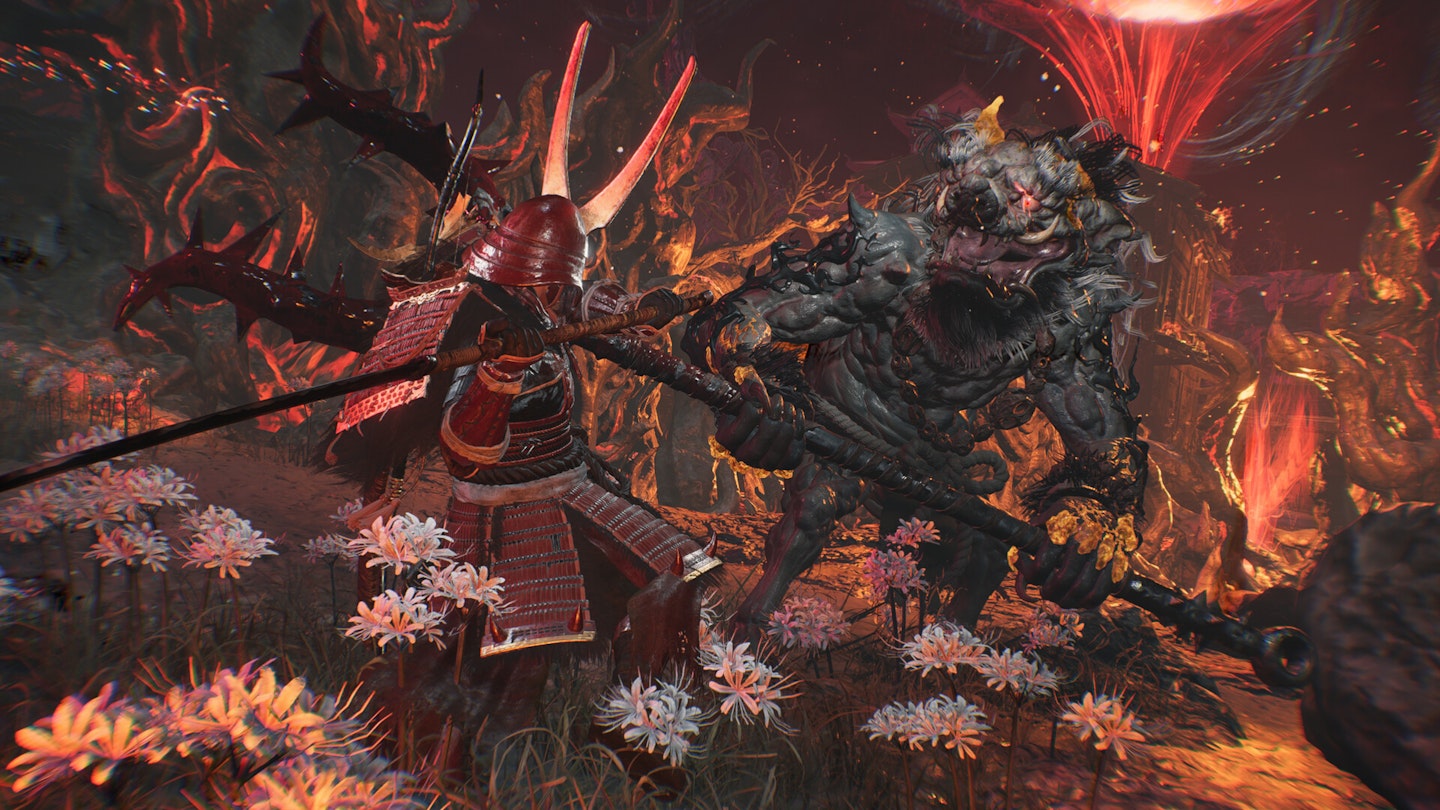
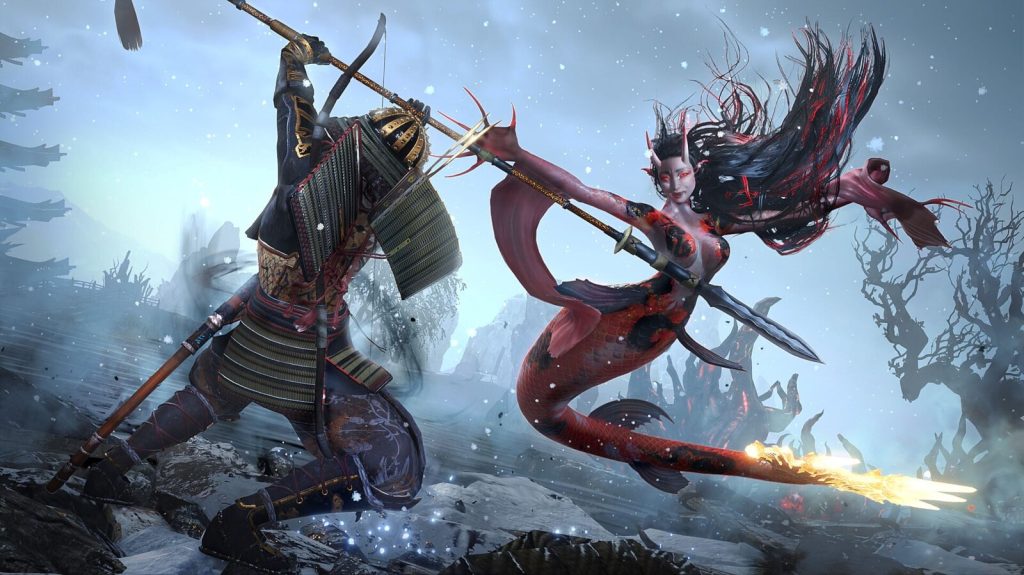
This latest entry in developer Team Ninja’s Soulslike series retains all the hallmarks of the genre – blistering difficulty, precise combat, a resource to gather from fallen enemies and spend on levelling up, the risk of losing it all when (not if) you fall to one of those enemies, and signature battles against seemingly impossible bosses – but puts its own spin on all of it. This is more fluid, with a greater range of movement (double jumps!), and a few big changes that meaningfully differentiate Nioh 3 from the competition.
The biggest shift – for the series and possibly the genre as a whole – is that you can switch seamlessly between two combat styles, Samurai and Ninja. The former is closer to the previous Nioh games, with heftier, more precise weapons – think katanas, odachis, and spears – and a stance-switching mechanic. Playing in Samurai mode means mastering attack pacing, deflections, and dodges, with moves in this style draining more Ki – basically stamina. A “Ki Pulse” system, where well-timed taps of R1 (on PS5, version tested) after landing an attack replenishes some of that stamina, is intended to makes fighting in this mode a bit more balletic — a dance of attack and retreat as you deplete and recharge your Ki. Samurai also adds a new Arts Gauge, a meter that charges with your attacks and allows you to unleash slow but powerful super strikes.
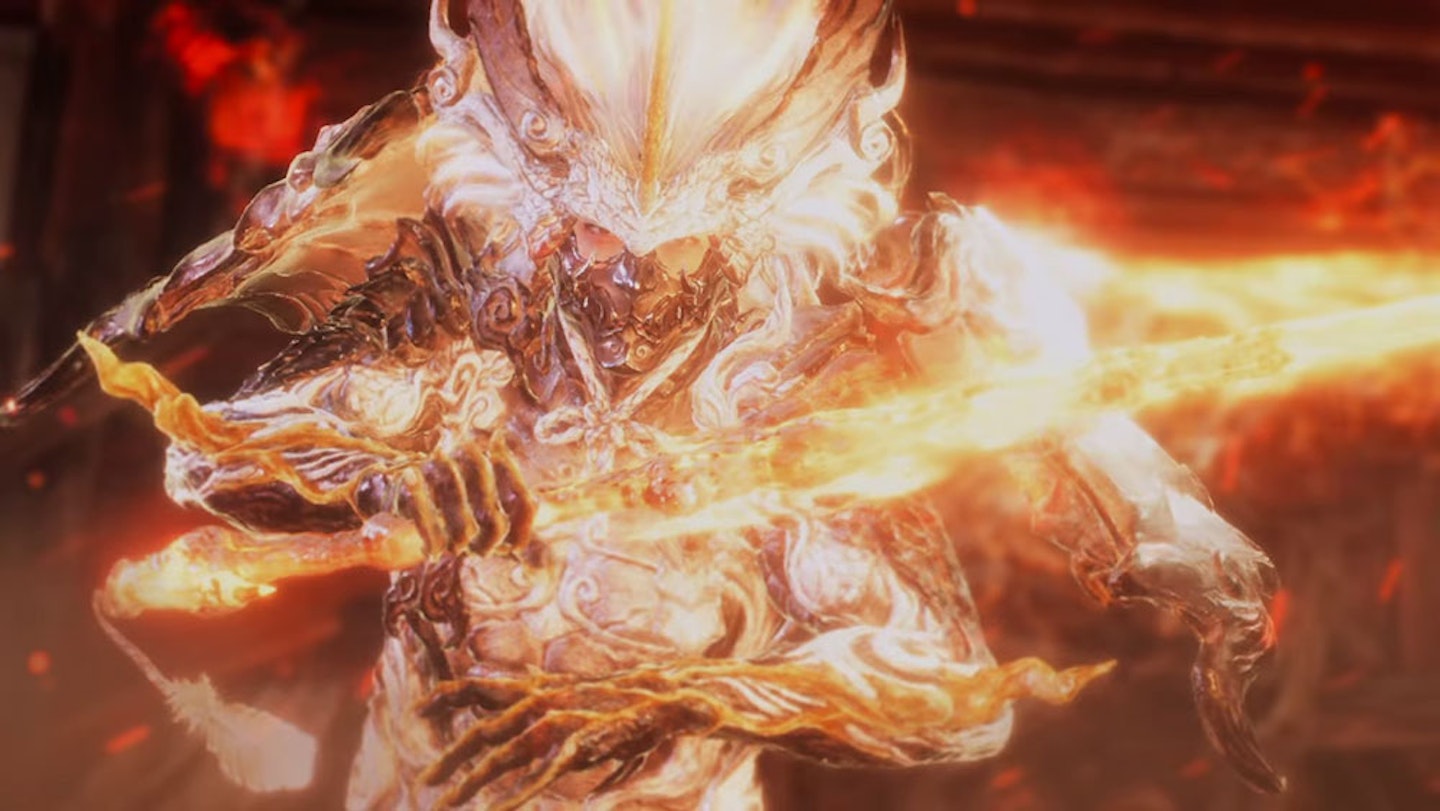
Ninja style changes things up entirely though. It’s much faster, unsurprisingly closer to the feel of Team Ninja’s Ninja Gaiden games or, especially when the screen is filled with enemies, Koei Tecmo’s _Dynasty Warriors_games. Ninja style utilises lighter weapons and ranged attacks – including dual hatchets, tonfas, and Wolverine-style wrist-mounted talons – that complement the faster pace and drain much less Ki, and some Naruto-style superpowered Ninjitsu moves to master. The trade-off is that as a Ninja, there’s no way to replenish Ki. Instead, R1 activates a “Mist” move, which creates a brief doppelganger to attract enemy attention while you dive for cover and wait for Ki to automatically refill.
Nioh 3 elevates the martial combat to some of the best that any Soulslike has ever delivered.
The idea is to switch back and forth on the fly, reacting to the needs of the battle at hand. It mostly works, and there’s even a set of moves that gives you an attack bonus for perfectly executed switches. Unfortunately, that Ki Pulse feels perpetually tricky to pull off, which can break your flow entirely. There are some workarounds – the skill “Running Water” lets you perform a Ki Pulse by dodging instead of actually pulling off the perfectly-timed button trick, for one – but many players will likely end up favouring the Ninja approach.
Whichever style you favour, there are a host of weapons to get to grips with, and Nioh 3 makes each of them feel unique. Your choice directly impacts how you approach each encounter, forcing you to account for range, speed, recoil, and recovery time, and how that all interacts with each enemy’s own attack patterns. There’s a whole tree of skills to unlock for each weapon type too, boosting their potency and allowing players to really hone in on play styles they prefer. On a purely mechanical level, Nioh 3 elevates the martial combat to some of the best that any Soulslike has ever delivered.
The other big shift is Nioh 3 adopting a semi-open world approach, closer to Elden Ring than the defined, linear maps of the earlier games. It’s not a single, vast field though, opting instead for several pretty big ones, one for each period of Japanese history you’ll be taking a blood-soaked tour through. There are areas that hearken back to the more constrained design of earlier Nioh games, with plenty of shortcuts and secrets to uncover, but the more open approach gives you the option to go and explore somewhere else if a particular area is proving too tough – although cruelly, and aside from some of the absolutely brutal bosses, the tutorial section is probably the most difficult sequence of the game, throwing you up against some savage foes before providing you the tools to handle them. Good luck, beginners.
Nioh 3 does feel a bit more accessible than its peers, though. Areas are clearly marked with a recommended level, and completing activities scattered across them increases an exploration rating that in turn rewards you with bonuses or skill points. It’s a bit Assassin’s Creed-y, but means there’s always something to do, and constantly offers more ways to tweak your personal build for Takechiyo.
All that exploration and the inevitable monster slaying you’ll engage in along the way has the unfortunate side effect of drowning you in loot drops, though. There’s loot everywhere, almost overwhelmingly so, most of itvariations on the same items. There are some tools that can auto-discard the detritus, but you’ll likely spend far too long menu diving to sort out what’s worth keeping.
It’s also worth noting that the English language dub is awful, lacking any emotion and with practically every single Japanese name or cultural term being mangled. Nioh 3’s story isn’t exactly one for the ages, more a vehicle to justify lashings of ultra-stylish ultra-violence against fantastically designed daunting demons, but it’s one still better experienced with the original Japanese performances and subtitles.
With its sharp combat, varied styles, and more open worlds, Nioh 3 edges out its predecessors to become a new high point for the series, although some of its more finnicky mechanics and moments of drudgery hold it back from genre redefining greatness.