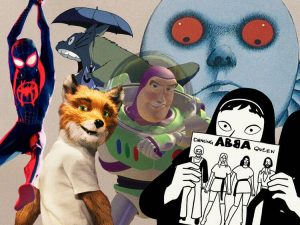

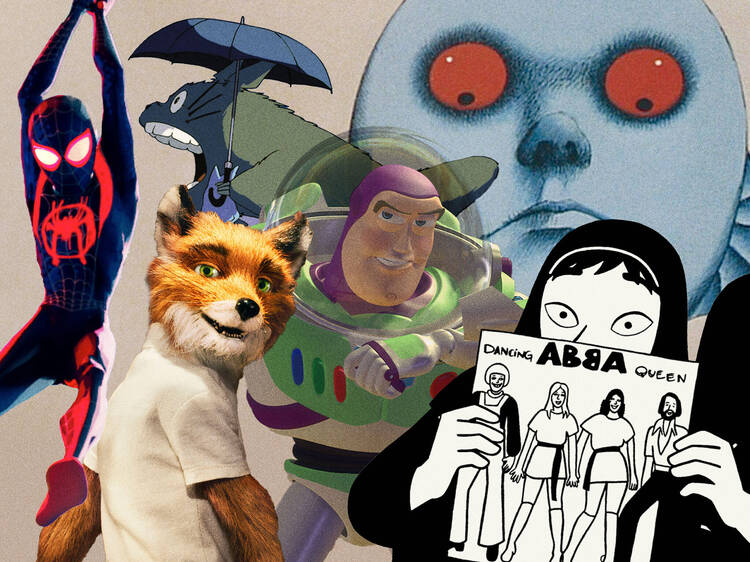
For nearly 100 years, the animated movie as we know it has existed – an artform that, like live-action cinema, sprung from shorts and grew into a major medium in its own right. If the biggest landmark was the arrival of 1937’s Snow White And The Seven Dwarfs – which marked the start of feature-length output from Walt Disney Animation Studios – from there the animated film flourished and evolved, spawning brand new pioneering technologies, new narrative possibilities, new studios, and new visual styles. Today, that gives us a field that encompasses nearly a century of Disney favourites, other major studios like the game-changing Pixar, British claymation titans Aardman, and Japan’s legendary Ghibli, and styles that range from traditional hand-drawn 2D features, to lavish computer-generation confections, painstakingly-produced stop-motion, and everything in between.
How We Chose The 50 Best Animated Movies Ever Made
In truth, our process for establishing the 50 greatest animated movies ever made was fairly straightforward. Our team of critics here at Empire, the world’s biggest movie magazine, got together and cast our votes for the 50 greatest animated movies ever made. The only rule? No animated shorts allowed — hence no The Wrong Trousers, no What’s Opera, Doc?, no Duck Amuck or The Snowman, here. With that covered, and in full embrace of the fact animation is a medium rather than a genre, we set out to create a list that comprises a banquet of tastes and tones. We have traditional family adventures, black-and-white coming-of-age stories, self-referential meta-features, superhero stories, devastating war films, and imaginative flights of fantasy – all showing that animation can be far more than just cartoons for kids (though we do, of course, love those deeply too). Read the full list below, and delve into the endless possibilities that the animated medium allows for.
Empire’s 50 Greatest Animated Movies Of All Time
50 — 41
50) Little Amélie Or The Character Of Rain (2026)
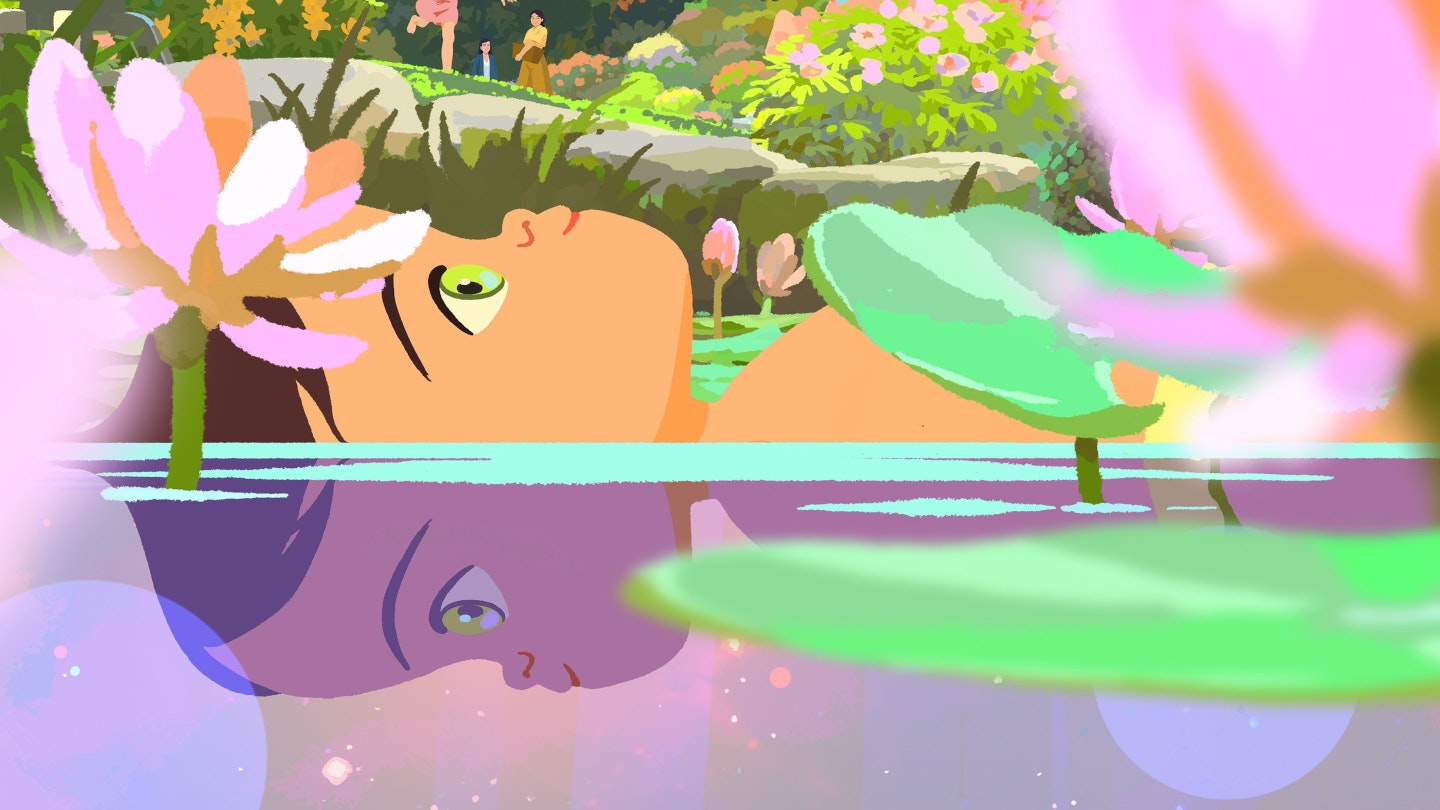
Director(s): Liane-Cho Han Jin Kuang, Maïlys Vallade | Runtime: 1hr 18m
In Japan, there is a belief that, until the age of three, a child is more like a god than a human being. And in Liane-Cho Han Jin Kuang and Maïlys Vallade’s vividly animated, 2026 Oscar nominated adaptation of Amélie Nothomb’s memoir, that belief sparks a rapturous exploration of the world — in all its exquisite beauty and existential terror — as seen through the eyes of a child. The movie follows Amélie (Loïse Charpentier), a precocious toddler living in rural 60s Japan who finds herself newly awakened to life’s wonders (and her self-perceived godliness) by some grandma-gifted white chocolate. A beautifully hand-crafted paean to childhood and self-discovery that fondly evokes everything from Miyazaki to Monet to Mamoru Hosoda’s Mirai while marching to the beat of its own, sumptuously watercolour-painted drum, Little Amélie is 78 minutes of pure animated joy.
Read Empire’s review of Little Amélie Or The Character Of Rain.
49) The Triplets of Belleville (2003)
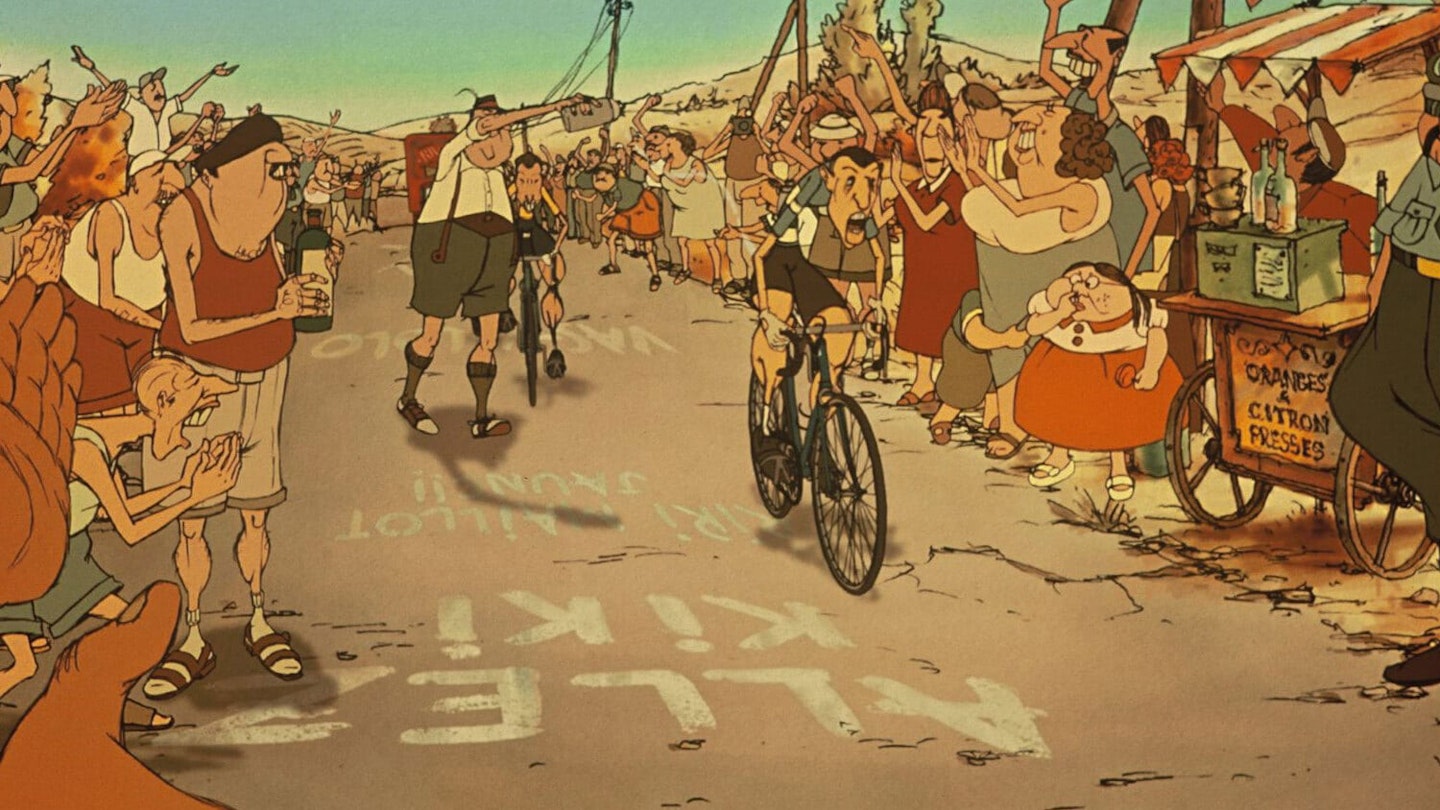
Director(s): Sylvain Chomet | Runtime: 1hr 20m | Streaming on: Curzon
There are at least cinquante reasons to see The Triplets Of Belleville, French animator Sylvain Chomet’s astonishing debut. For starters there’s the practically dialogue-free plot (a club-footed grandmother mounts a rescue mission to save her grandson from the Mafia during the Tour de France), the set-pieces (the opening musical number, a pedalo chase, a last reel getaway), a great supporting cast (sad-faced cyclists, larger-than-life mobsters) and the titular ageing music hall stars who steal the show. It spices up a silent movie look with surrealism but thrives on daring to go to a place most animation doesn’t dare: it flits between sadness and satire (Belleville is a thinly-veiled America) and nostalgia to become a paean to times gone by. Somehow it also manages to be funny as hell.
Read Empire’s review of The Triplets Of Belleville.
48) It’s Such A Beautiful Day (2012)
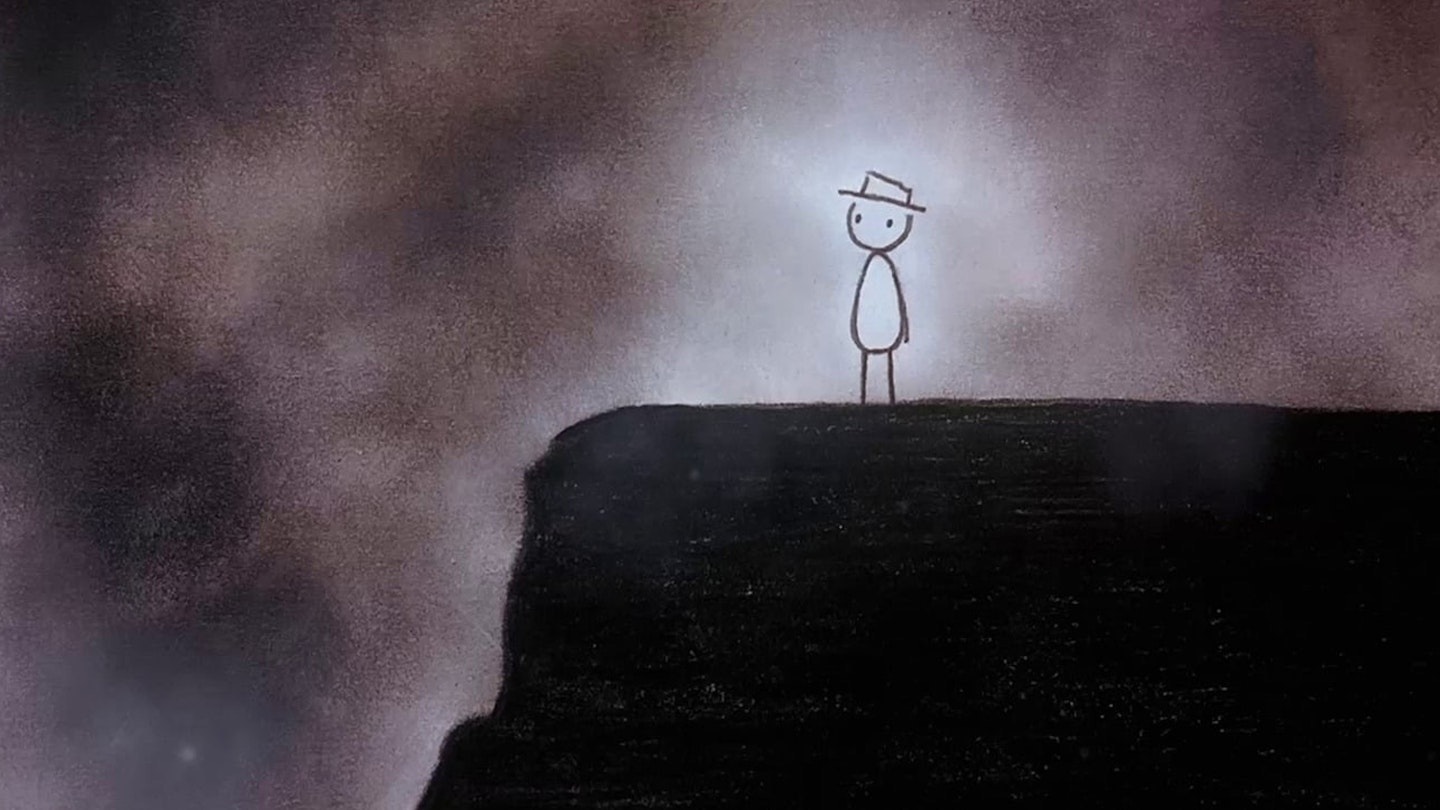
Director(s): Don Hertzfeldt | Runtime: 1hr 2m | Rent/Buy on: Vimeo
Not a U2 song, It’s Such A Beautiful Day is film as flicker book. A feature version of indie cartoonist Don Hertzfeldt’s short film trilogy, it follows stick-and-circle figure Bill – round head, oval body, dots for eyes, cool hat – through his life in short vignettes, all filtered through a blurrily-framed iris. For such a thin character, Bill has a surprisingly rich inner life. As Hertzfeldt provides wall to wall narration, the story zeroes in seemingly random small details — Lion King slippers, leaf blowers — that coalesce into a huge exploration of our place in the universe. The animation is the scratchiest black and white imagery imaginable, so the effect is hand-crafted, charming and, somehow, strangely moving. A 62-minute doodle to savour, it just makes you wish you’d done more with those absent-minded scribblings you did during Double Maths.
47) Loving Vincent (2017)
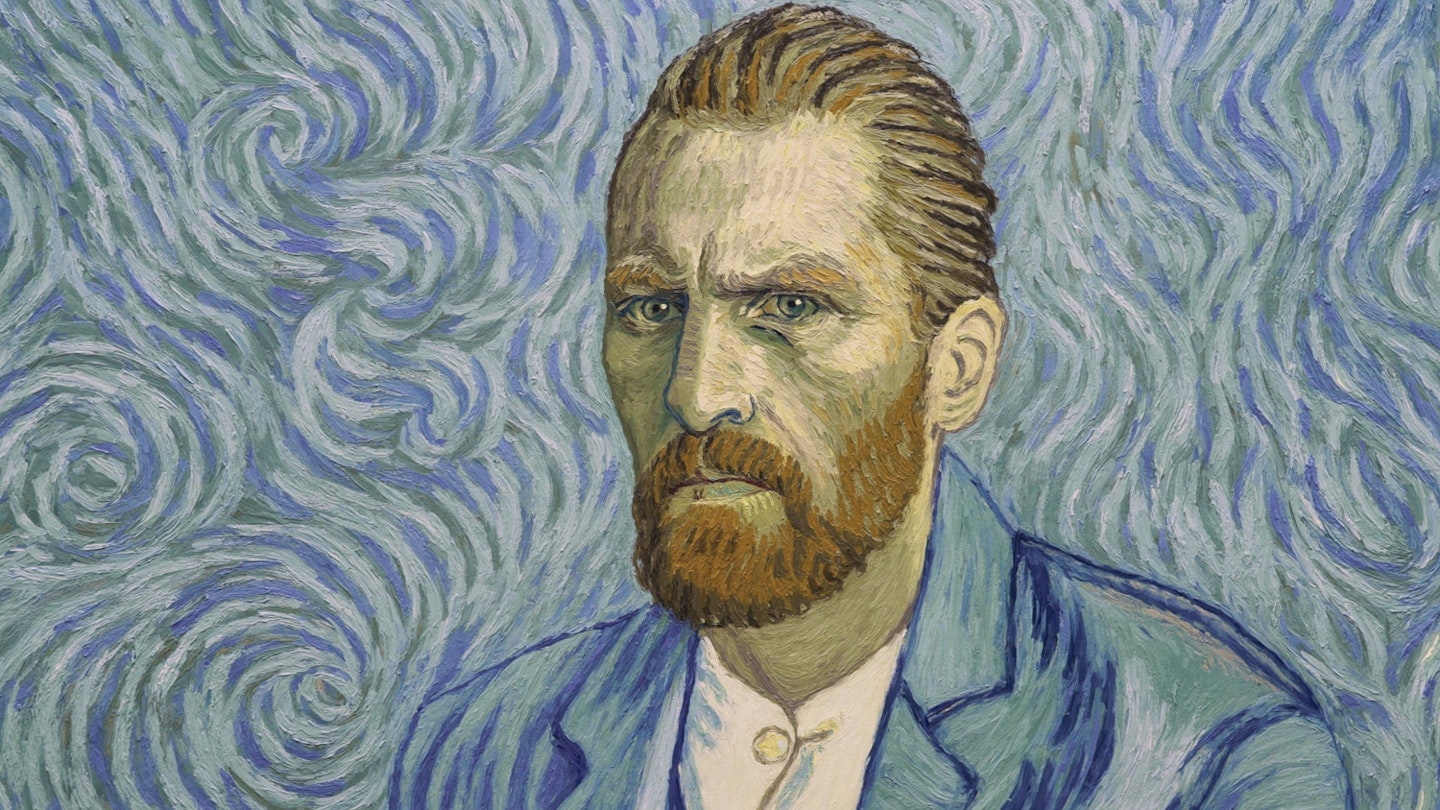
Director(s): Dorota Kobiela, Hugh Welchman | Runtime: 1hr 35m | Streaming on: Rakuten
The stats surrounding Loving Vincent are off the hook. Over a period of six years, a team of 125 painters from 20 countries painted over 65,000 frames of film in the style of Vincent Van Gogh (you know, the sunflowers guy). Employing a rotoscope technique favoured by Richard Linklater in Waking Life and A Scanner Darkly, directors Dorota Kobiela and Hugh Welchman create a living breathing tribute to Van Gogh’s art wrapped in a detective story to discover the true nature of the painter’s death. It has its oddities — you get to see what the likes of Saoirse Ronan and Chris O’Dowd would look like if they posed for VVG — but it’s intricately designed as a tribute to Van Gogh’s craft, both in overview (the gentle pastels, the inky blacks) and the details (the end credits point out the exact paintings that have been homaged). It begins with Van Gogh’s quote – “We cannot speak other than by our paintings” – and by the end Loving Vincent becomes a vivid insight into the artist’s life by letting the form become the content.
Read Empire’s review of Loving Vincent.
46) Robot Dreams (2023)
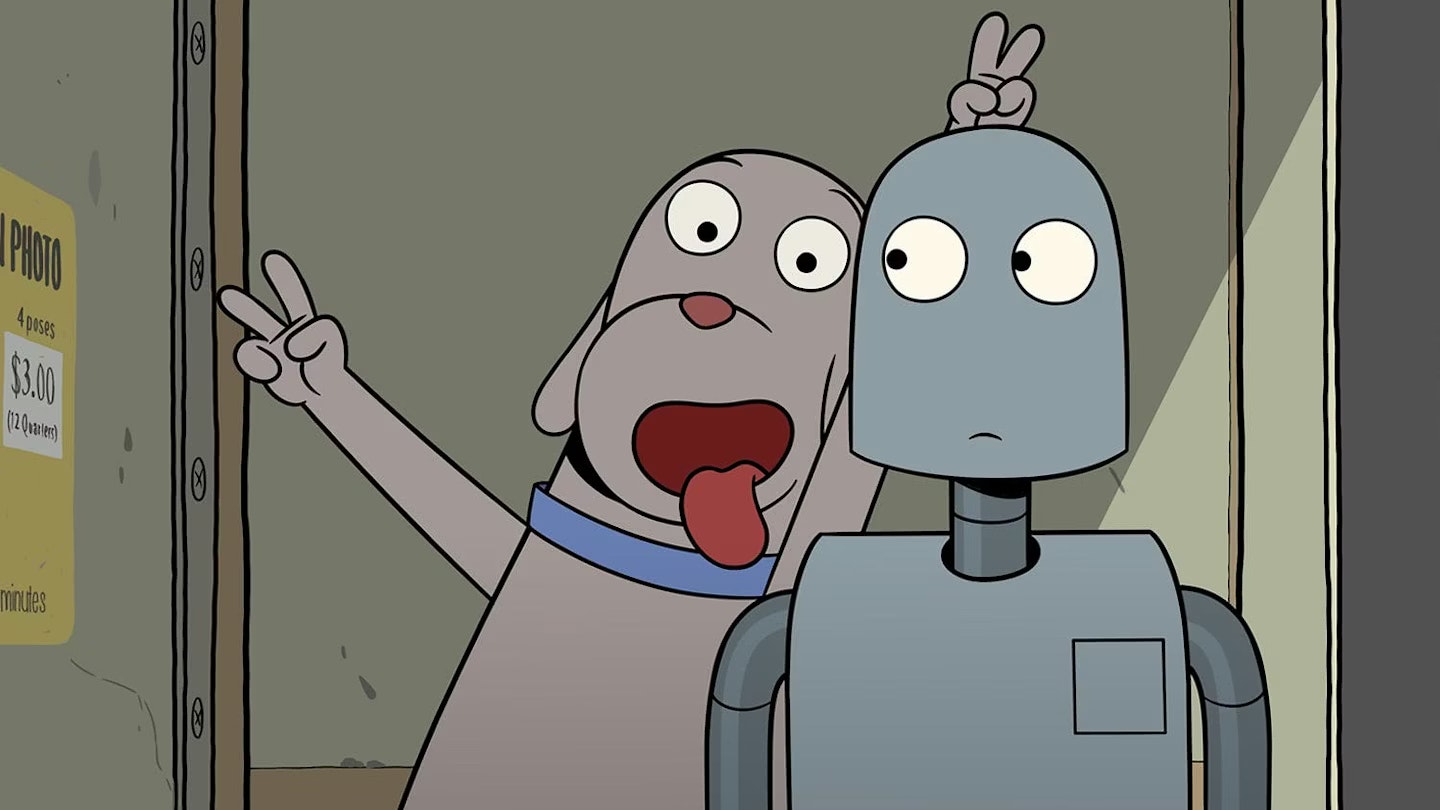
Director: Pablo Berger | Runtime: 1hr 43m | Buy/Rent on: Amazon Prime, Apple TV
Based on Sara Varon’s wordless 2007 graphic novel, Pablo Berger’s virtuosic 2D animation Robot Dreams is so much more than the robot-and-his-dog buddy comedy audiences may have been expecting. Set in an anthropomorphised early ‘80s New York, Berger’s simply (but never simplistically) drawn movie introduces us to a lonely dog whose search for friendship leads him to order and build himself an ‘Amica 2000’ robot companion. But while a delightful Earth, Wind & Fire soundtracked montage revels in showing our inseparable bot-and-barker duo venturing out into the world together, tragedy strikes on an ill-fated Coney Island trip. It’s from here that the film transcends itself, as Robot and Dog’s search for one another — episodically chronicled in a series of gorgeously imaginative flights of fancy — feeds a soulful exploration of the fragile beauty of our connections and the transformational, enduring power of love.
Read Empire’s review of Robot Dreams.
45) How To Train Your Dragon (2010)
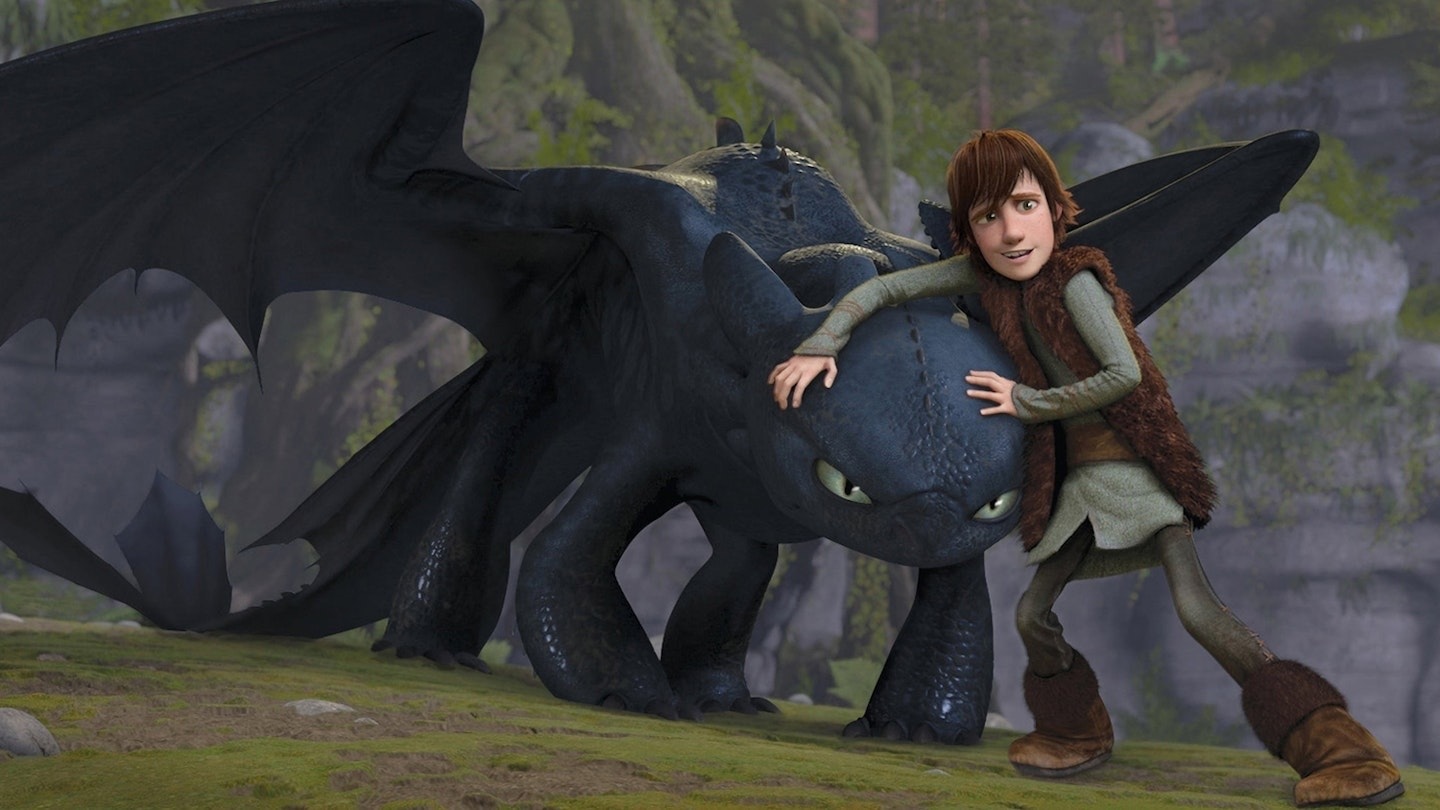
Director(s): Dean DeBlois, Chris Sanders | Runtime: 1hr 38m | Rent/Buy on: Apple TV, Prime Video
While DreamWorks Animation has been criticised for chasing the franchise dragon (pun entirely intended), this trilogy is a soaring example that the company can point to as to why it’s not always the enemy of creativity and charm. Originated by Dean DeBlois and Chris Sanders (with the two subsequent films mostly on DeBlois’ watch), How To Train Your Dragon boils down to a boy and his dog story – where the boy is a nerdy, gawkward Viking, and the dog is a powerful Night Fury dragon that has natural camouflage and can shoot plasma blasts from his mouth. Rather than letting the characters run (or fly) in place, the series (and its small-screen spin-offs) make the smart choice to evolve the story and deepen the emotion, and the look of the movies is a painterly, often spectacular use of CGI.
Read Empire’s review of How To Train Your Dragon.
44) Snow White And The Seven Dwarfs (1937)
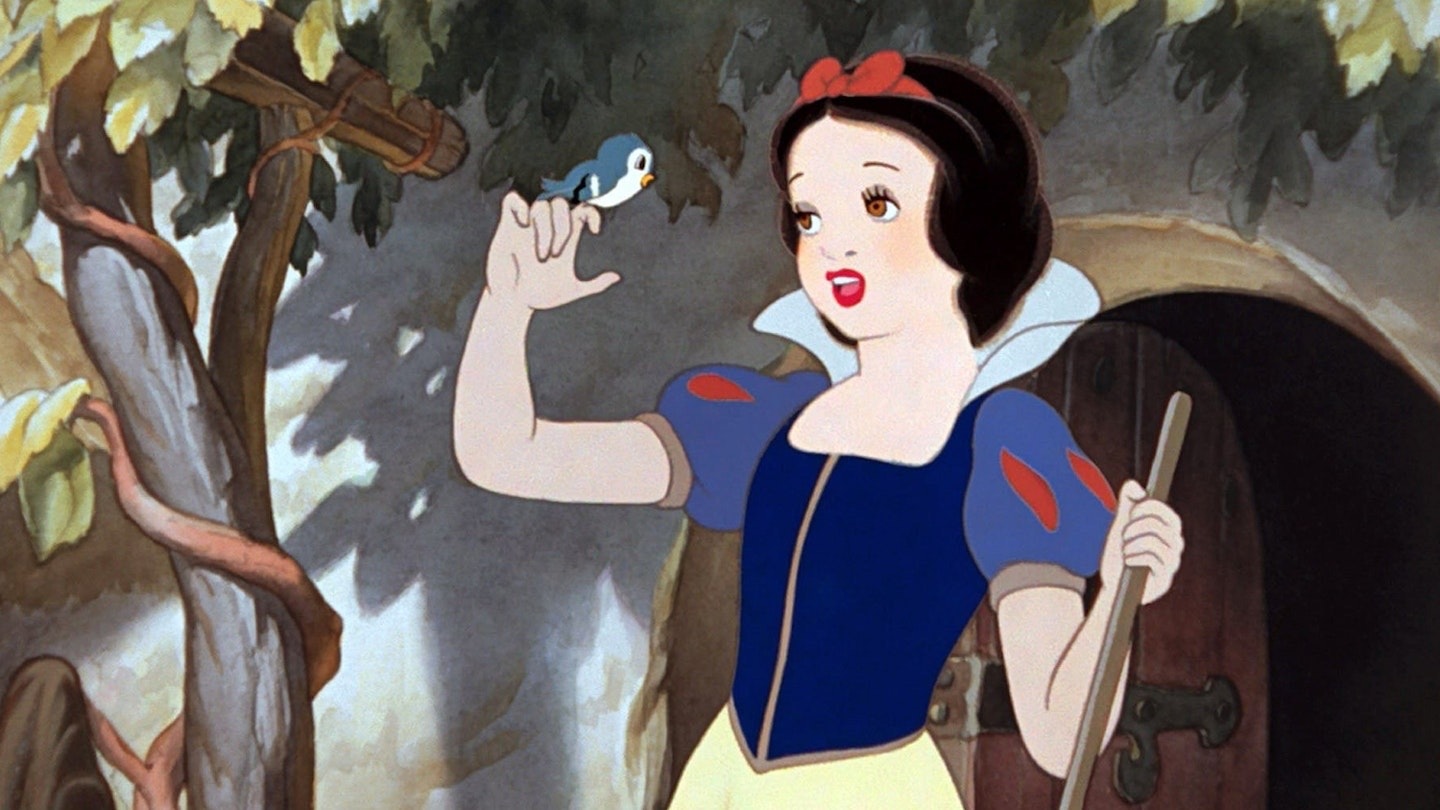
Director(s): David Hand | Runtime: 1hr 29m | Streaming on: Disney+
Few would claim it as their favourite Disney film, but without Snow White no other movie on this list might even exist – it’s that simple. The first American feature-length animated film set the template for, well, everything that followed – Walt’s team of animators using pioneering multiplane camera techniques to take audiences inside an old German fairytale with all the usual elements (an innocent young princess, a jealous old queen, cute forest creatures, the looming spectre of death). If it’s narratively episodic, stitching together several sequences that were devised like the Silly Symphonies shorts the studio was long known for, it still plays like a contemporary animated feature – not bad for a film that’s nearly 100 years old. With its distinctive characters (each Dwarf has its own flair), brilliant design (the dripping poisoned apple is iconic), and ear-worms like ‘Heigh Ho’, there’s no wonder it caught audiences’ imaginations and changed the course of Hollywood forever.
Read Empire’s review of Snow White And The Seven Dwarves.
43) Shrek (2001)
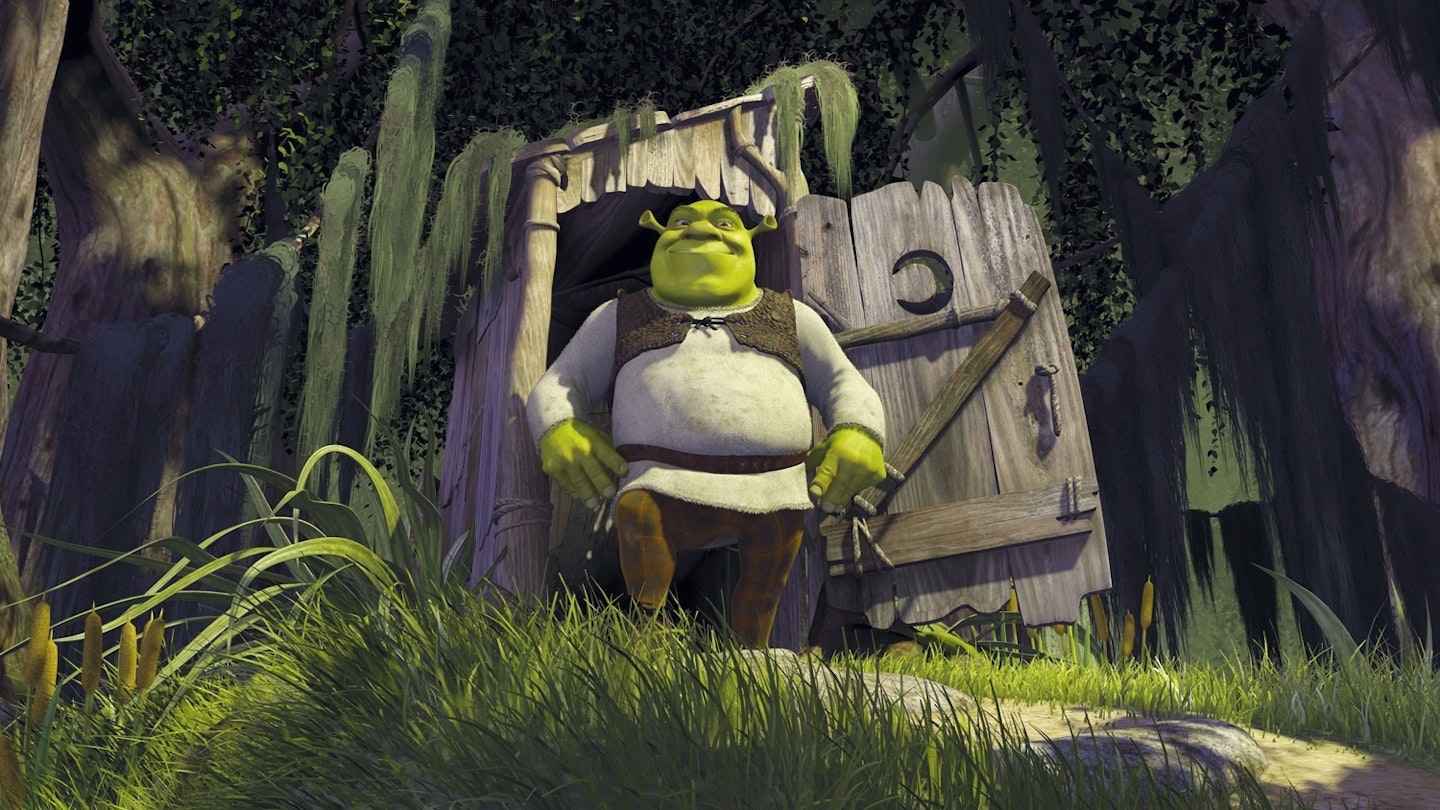
Director(s): Andrew Adamson, Vicky Jenson | Runtime: 1hr 30m | Streaming on: Disney+, Prime Video, Now TV
Twenty years on, Dreamworks’ side-swipe at Disney’s dominance of the animated landscape might not feel as fresh as it once did – but if it ain’t the sharpest tool in the shed anymore, it’s still a raucous, colourful blast. Right from its opening moments, Shrek rips up the fairytale rulebook and quite literally wipes its arse with it – centering a giant green ogre as our hero, making the princess a monster at heart, and depicting the villain as an oppressive ruler of Disneyland-alike kingdom Duloc. If Mike Myers’ Scottish (emphasis on the ‘ish’) accent is an inspired touch, it’s Eddie Murphy’s Donkey who enlivens the whole film – the legendary comedian in full freewheeling form. As a buddy-comedy that liberally swipes at an entire Magic Kingdom’s worth of tropes and characters, and that (for better or worse) ushered in a new era of pop-culture references galore, it remains game-changing, and very, very funny.
Read Empire’s review of Shrek.
42) Flow (2025)
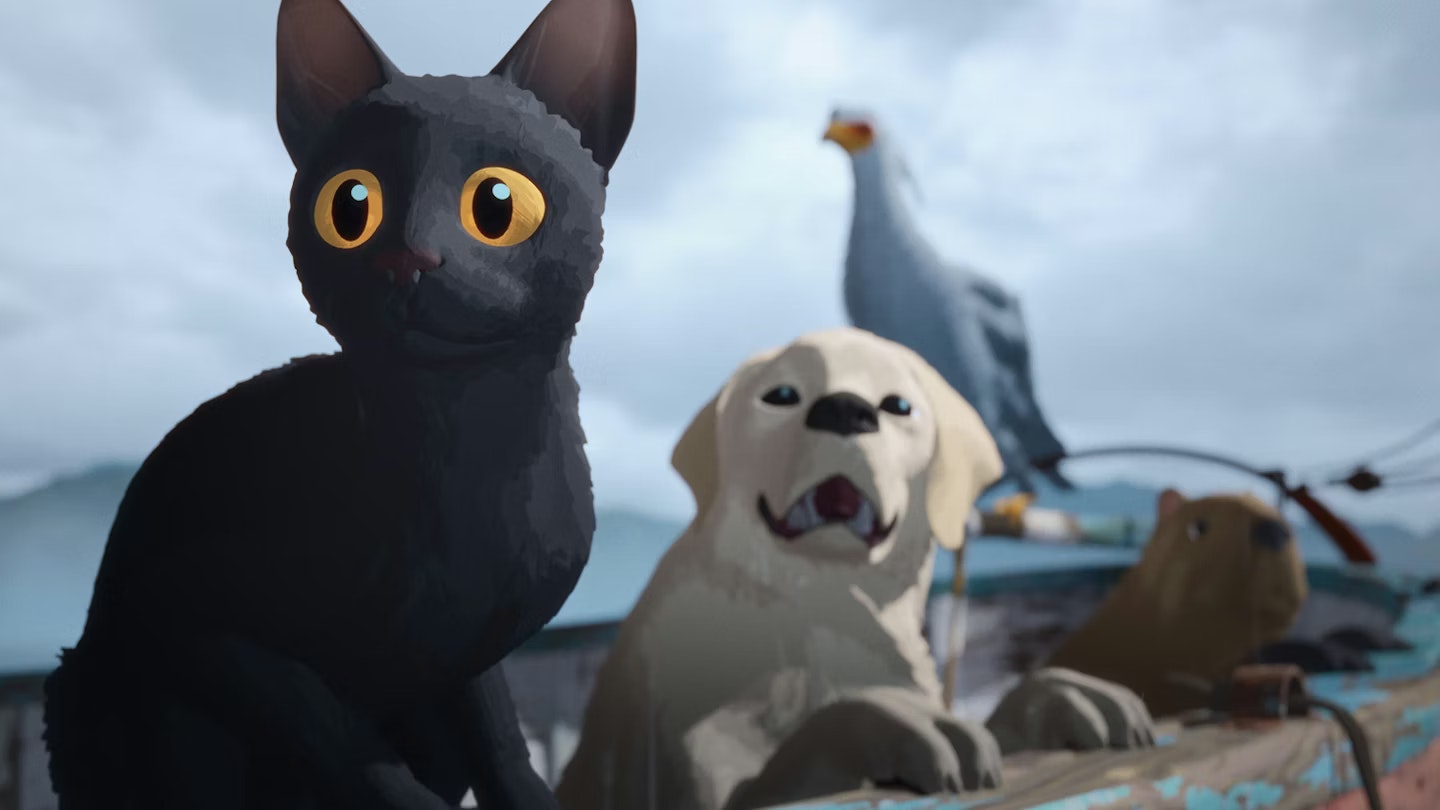
Director: Gints Zilbalodis | Runtime: 1hr 25m Rent/Buy on: Amazon Prime, Apple TV
Already, Flow has seemed to live nine lives. The second film from Latvian animator Gilts Zilbalodis was created by a remarkably small team, on free 3D software Blender; from there, it went on to win Best Animated Picture at the Oscars, reaching audiences all around the world along the way. And it’s clear why – the gently post-apocalyptic tale of a cat traversing a flooded landscape, encountering several other animals along the way (some dogs, a lemur, a capybara, and a secretary bird among them), is a meditative and mesmerisingly beautiful odyssey, its lucid, dialogue-free storytelling accessible to… well, everybody, of any age, of any language. Part adventure movie, part survival drama, part fable, Flow is undeniably original, a great film in its own right – and one that proves anything is possible in an age where filmmaking tools are available at the click of a button. Those nine lives are set to live on for a long, long time to come.
Read Empire’s review of Flow.
41) The Tale Of The Princess Kaguya (2013)

©Studio Ghibli / Studiocanal
Director: Isao Takahata | Runtime: 2hrs 17m | Streaming on: Netflix
The final film from Studio Ghibli’s co-founder Isao Takahata takes its inspiration from one of Japan’s oldest folktales, The Tale of the Bamboo Cutter. When an old man finds a tiny baby in a bamboo stalk, he takes the divine child home to raise her with his wife. What follows is an exploration of the small wonders of a mortal life, and the abject tragedy of each one’s loss, culminating in a heart-rending denouement that will hit you harder than you can ever possibly imagine. Brought to life with impressionistic brushstroke visuals and awash in gentle watercolours, it looks like nothing else the famed animation house has ever produced, making Princess Kaguya all the more impactful. An incredible legacy for Takahata and a movie that, in the shape of Kaguya’s astonishing flight-by-moonlight palace escape, gave us one of the most visually remarkable sequences in the history of the medium.
Read Empire‘s review of The Tale Of The Princess Kaguya.
40 — 31
40) Waltz With Bashir (2008)

Director(s): Ariel Folman | Runtime: 1hr 30m | Streaming on: Curzon
Israeli filmmaker Ariel Folman’s feature is a mash-up of animation and documentary, of the personal and the political – and as such emerges as a film like no other. In essence, it’s a confessional account of Folman’s experiences as a rookie soldier during Israel’s 1982 invasion of the Lebanon. Only it’s a period of his life ‘Ari’ – the director’s animated avatar – can’t remember, so he interviews ex-Israeli soldiers to piece together the experience. The filmmaking is extraordinary – the opening featuring a pack of 26 snarling dogs bombing through a city under a mustard gas sky grips from the get-go – mixing telling moments of introspection, surreal imagery (the waltz of the title danced by a single soldier) and combat footage that still scars. Cinematically, intellectually, emotionally, Waltz With Bashir is that rare film that pushes the medium on to greater heights.
Read Empire’s review of Waltz With Bashir.
39) The LEGO Movie (2014)
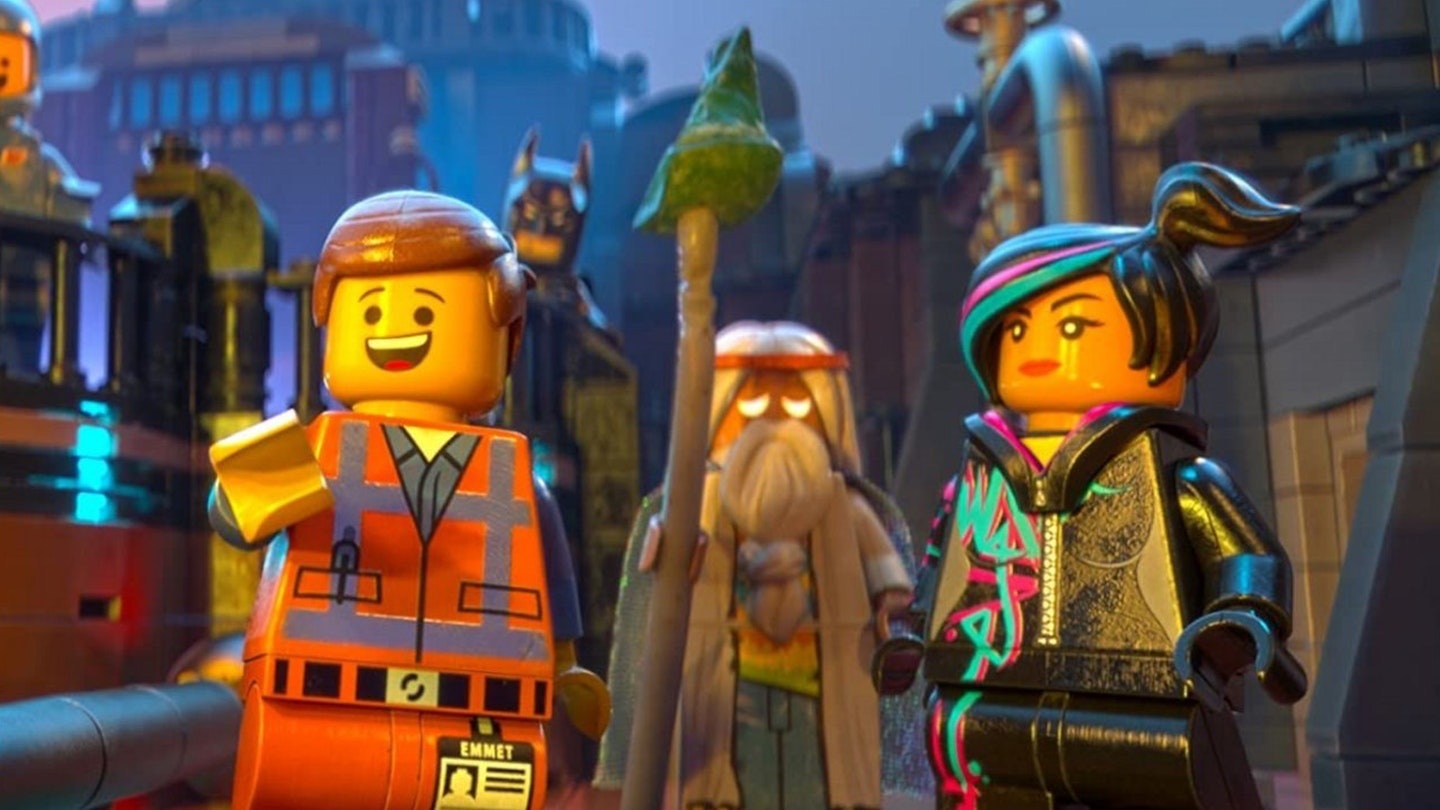
Director(s): Phil Lord, Christopher Miller | Runtime: 1hr 40m | Streaming on: Now TV
In true Lord & Miller style, it shouldn’t have worked – but a movie spun off from an inanimate toy somehow became way more than a cynical cash-in. The LEGO Movie smartly zones in on the creative ethos of the building-block toy to tell a story about imagination and the power of play, that’s also about the dangers of conformity and the need for self-expression – all wrapped up in rapid-fire pop culture gags. While the film centres on basic-minifigure worker drone Emmet (Chris Pratt) and his ‘chosen-one’ journey to defeat Lord Business (Will Ferrell) and become a Master Builder, it’s the madcap cameos that steal the show – especially Will Arnett’s hilarious take on Batman, shortly thereafter given his own film. Best of all, the CGI animation imitates the look and feel of stop-motion, presenting the whole film as a real-life (imaginary) LEGO adventure, complete with marks and scratches on every brick.
Read Empire’s review of The LEGO Movie.
38) Grave Of The Fireflies (1988)
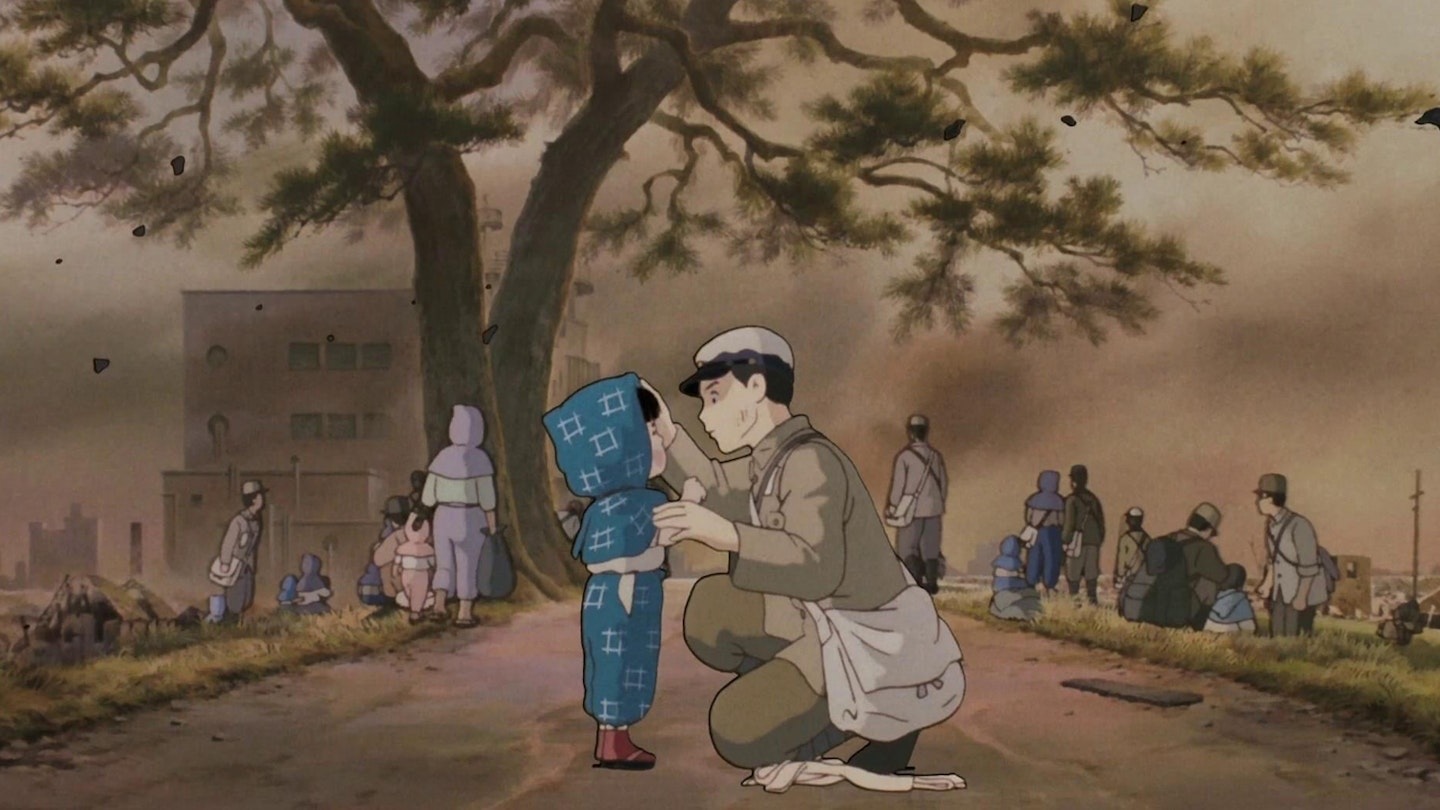
Director(s): Isao Takahata | Runtime: 1hr 29m | Streaming on: Netflix
For most people, Grave Of The Fireflies is the sort of masterpiece you’ll probably only watch once. The first film from Isao Takahata, the other pillar of Studio Ghibli alongside co-founder Hayao Miyazaki, is a harrowing, heartbreaking World War II story – both a tribute to the lives lost due to the ripple effects of the conflict, and an indictment of the societal failures that led to the tragic deaths of so many lives away from the frontlines. It follows teenage boy Seita (Tsutomu Tatsumi) and his little sister Setsuko (Ayano Shiraishi) who are displaced after bombs destroy their home city of Kobe. They go to live with their aunt, until they’re forced to leave when rations run low – and from there, the two struggle to survive in the wilderness, cherishing the time they’re able to spend together while starvation kicks in. Vividly animated, with stirring imagery – the titular fireflies offer a faint glow in the evenings as the pair huddle in an abandoned bomb shelter – it’s a masterful, emotional work. But be warned: it’s really, _really_sad (as its subject matter demands).
Read Empire’s review of Grave Of The Fireflies.
37) Anomalisa (2015)
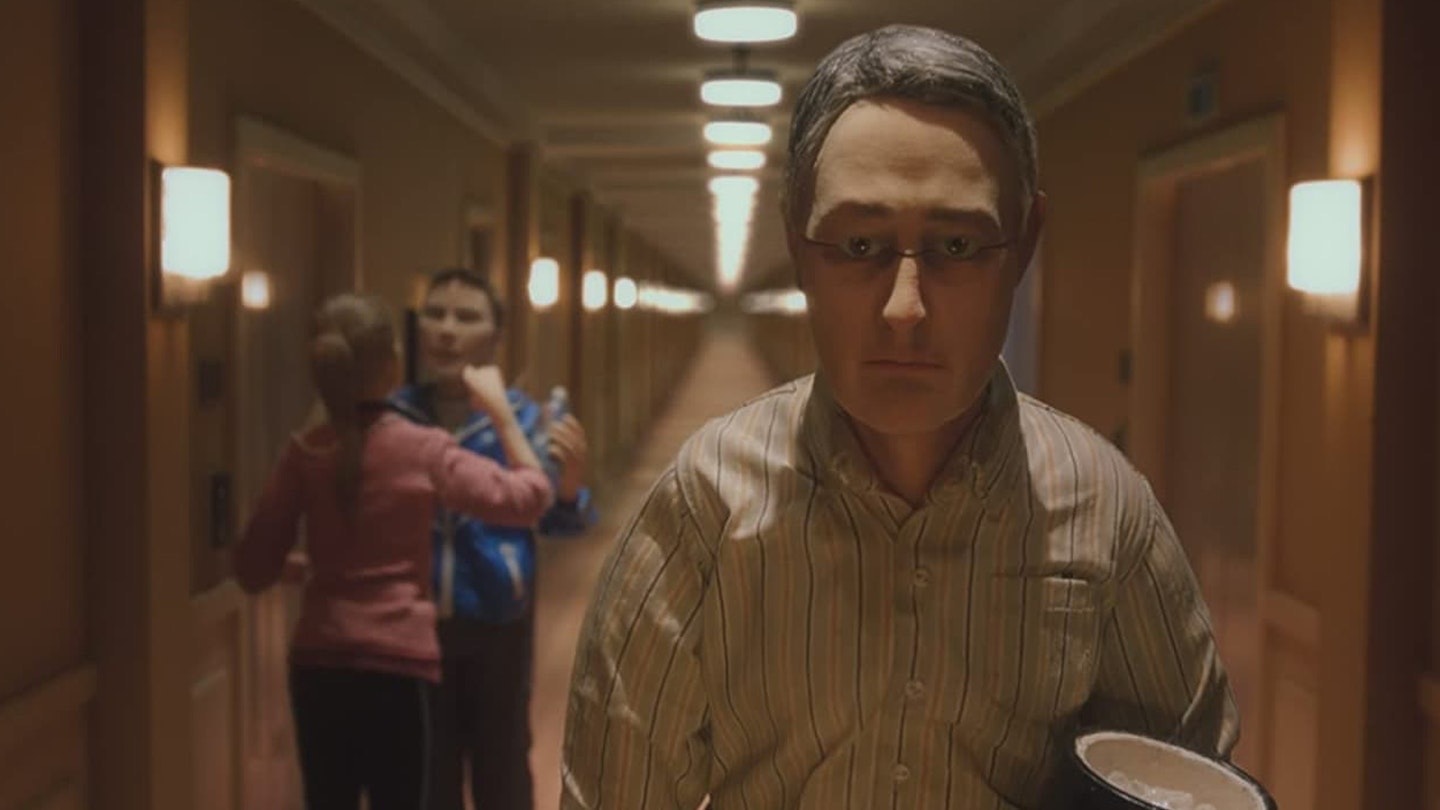
Director(s): Charlie Kaufman, Duke Johnson | Runtime: 1hr 30m | Streaming on: Prime Video
When Charlie Kaufman entered the world of stop motion animation, it was never going to be a cookie-cutter effort. Starting life as a one-act play and funded by Kickstarter (there are 1070 special thanks in the end credits), Anomalisa, co-directed by animator Duke Johnson, is a tiny heartbreaker of a picture. It’s basically a study in mid-life ennui, as demotivated motivational speaker Michael Stone (David Thewlis) checks in to a Cincinnati hotel for a conference. He meets Lisa (Jennifer Jason Leigh, playing multiple parts) and what follows is a beautifully-observed first encounter, laced with insecurities and regrets, building up to puppet sex and Lisa’s heart-breaking rendition of Cyndi Lauper’s ‘Girls Just Want To Have Fun’. Of course, the last act enters its own zone of bat-shit craziness (hello, antique Japanese dildo) but, perhaps more than any other Kaufman work, what you are left with is a tender take on what it means to be human.
Read Empire’s review of Anomalisa.
36) Moana (2016)
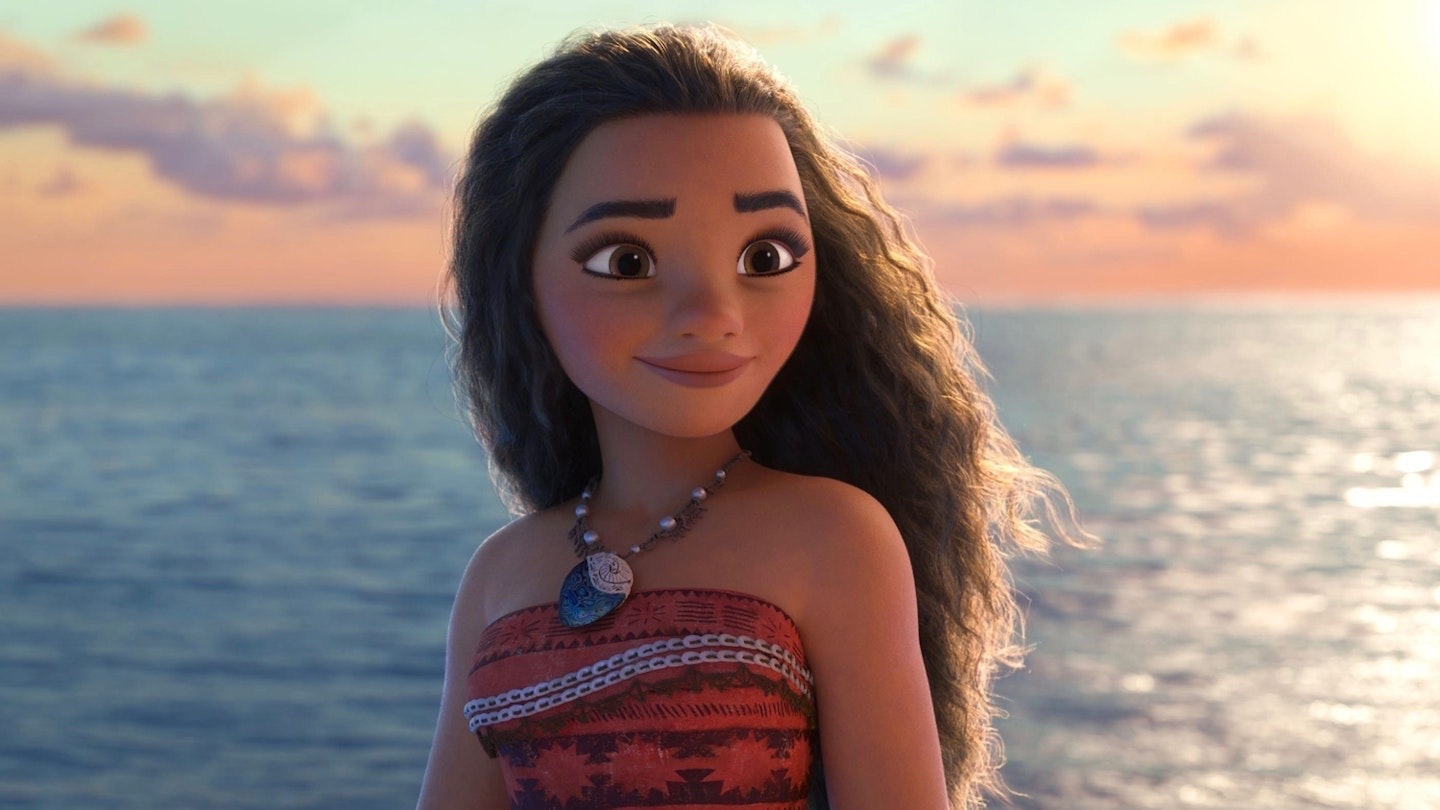
Director(s): John Musker, Ron Clements | Runtime: 1hr 53m | Streaming on: Disney+
Riding high off the success of new-wave Princess movies like Tangled and Frozen, Disney delivered another contemporary classic, packed with earworm songs from a fresh-outta-Hamilton Lin-Manuel Miranda. If Moana herself belongs in a lineage that stretches right back to Snow White, she’s firmly in the ‘Disney Princess 2.0’ mould – the daughter of a chief, a brave seafaring warrior seeking a better future for her people, without a love-interest in sight. The film shines from beginning to end with its loveable characters and vibrant Pacific island imagery – all gleaming blue seas and lush vegetation – and boasts a Ghibli-esque approach to good and evil, savouring balance and harmony in favour of traditional battle-won victory. Factor in a stack of outright Disney-bangers, Jemaine Clement channelling Bowie as a giant glam monster-crab, and a Mad Max-style action sequence with warrior coconuts, and you’ve got a modern great.
Read Empire’s review of Moana.
35) My Life As A Courgette (2016)
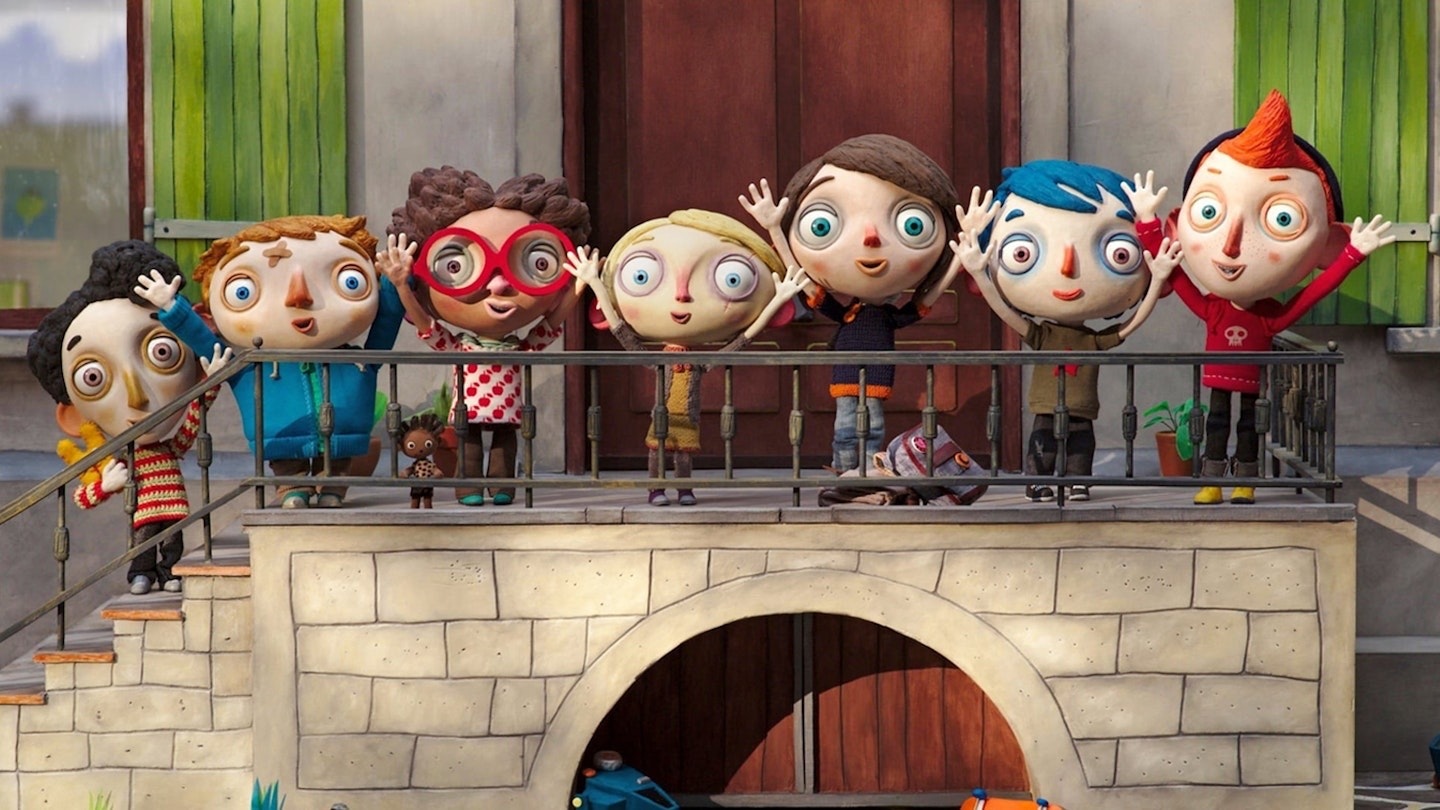
Director(s): Claude Barras | Runtime: 1hr 6m | Rent/Buy on: Apple TV, Prime Video
In between essential coming of age drama Girlhood and the all-conquering masterpiece Portrait Of A Lady On Fire, Céline Sciamma – one of the most exciting filmmakers in the world today – wrote a stop-motion comedy about a kid named Icare with blue hair and a nose like a (you guessed it) courgette. Yet, as strange as it may seem, the Claude Barras-directed film has Sciamma’s fingerprints all over it, from Icare’s alcoholic abusive mother — it is she who nicknames him Courgette — to suicide, to the lives of damaged kids in an orphanage. If it sounds grim, it is, but the darkness is balanced out with warmth, humour and wisdom. It’s also full of vibrant animation – a punk-disco thrown for the kids by the teachers is a delight – that remains relatable, allowing the story’s empathy, sensitivity and hope to make the biggest impression.
Read Empire’s review of My Life As A Courgette.
34) Millennium Actress (2002)
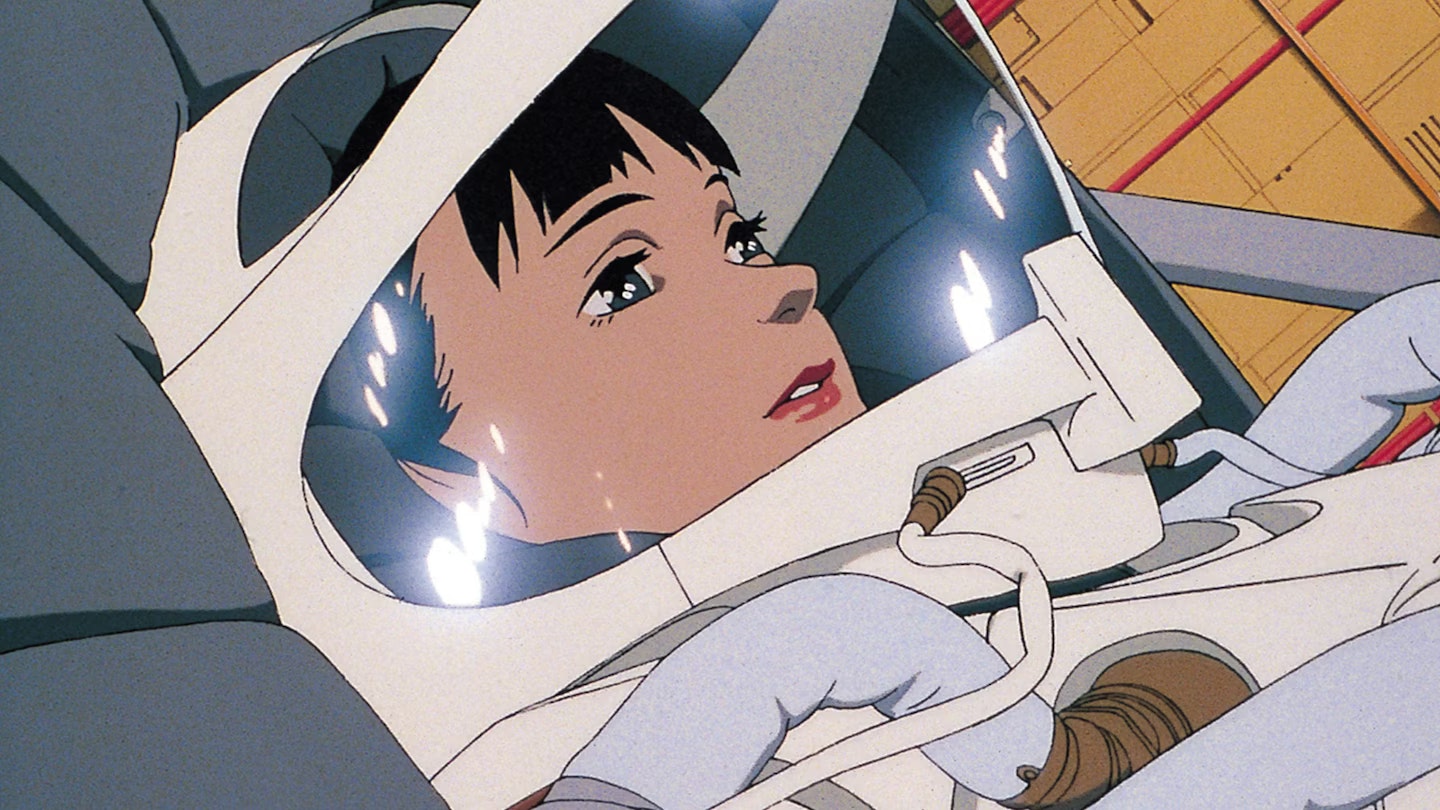
Director: Satoshi Kon | Runtime: 1hr 27m | Buy on: HMV
How do you follow up one of the darkest, most paranoiac thrillers ever made? If you’re Satoshi Kon, director of Perfect Blue, then the answer is simple: you make one of the loveliest, most heartfelt love-letters to cinema imaginable. And that’s precisely what Millennium Actress, Kon’s last cel-animated movie, is. Following a TV interviewer and his cameraman as they — and we — are taken on an immersive odyssey through the memories and career of an acclaimed Japanese actor, Chiyoko (Miyoko Shôji). From the aesthetic and cinematic stylings of Ozu and Kurosawa to Kaiju b-movies and the French New Wave, we cross oceans of time with Chiyoko, witnessing in the process a reclamation of youth, wonder, romance too in the twilight of the ageing star’s years. It’s cinema as an act of undying love — and it’s somehow barely an hour-and-a-half long. A must-see.
33) Hercules (1997)
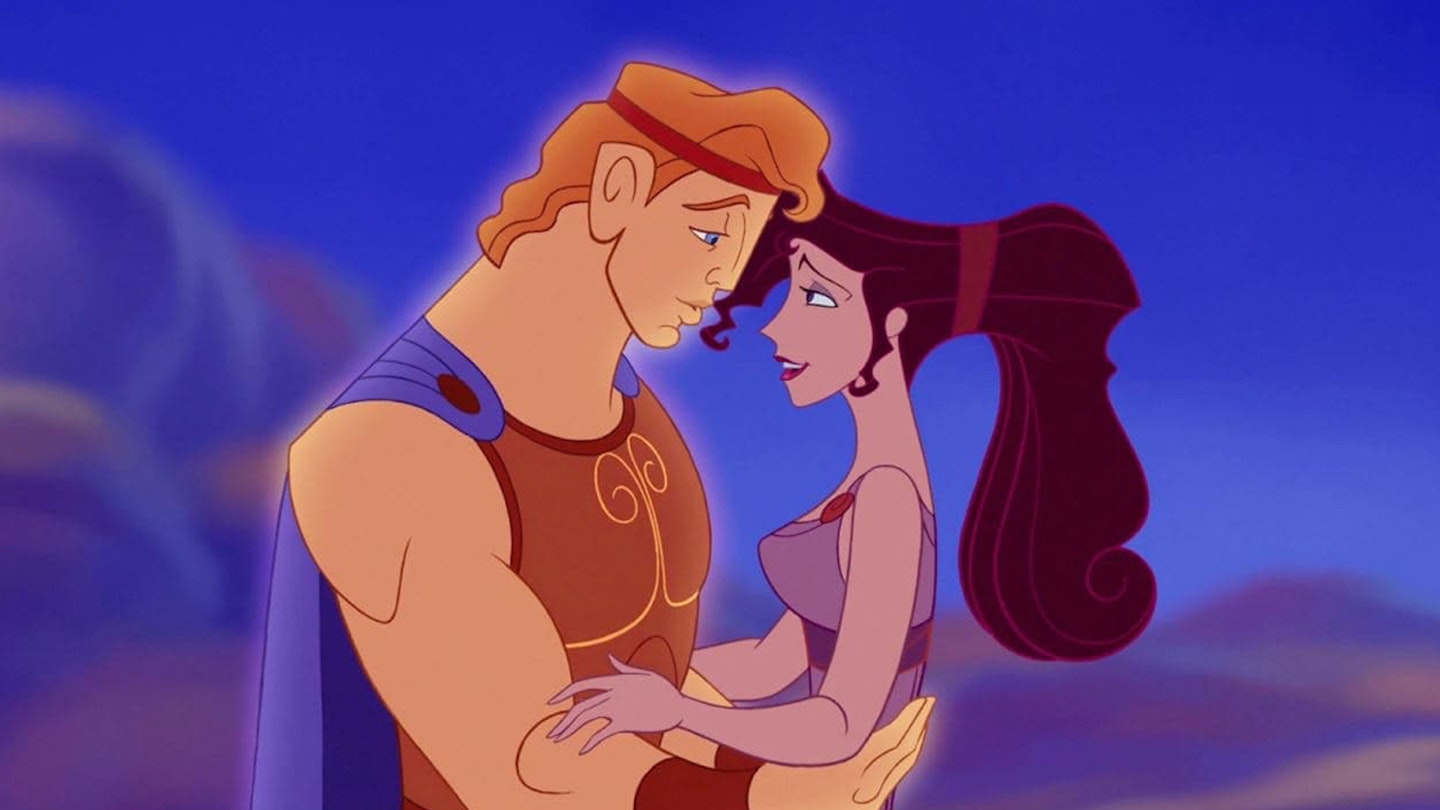
Director(s): Ron Clements, John Musker | Runtime: 1hr 40m | Streaming on: Disney+
A charming combination of mythically-inspired animation and screwball-inspired comedy makes Hercules a comfortable entry in the ’90s Disney Renaissance, even if it went a little under-appreciated at the time of release. Studio stalwarts Ron Clements and John Musker made their follow-up to Aladdin another underdog story, this time about the son of Greek gods Zeus and Hera, who becomes a human outcast with godly powers after Hades’ henchmen fail to turn him completely mortal. Voice cast standouts include Danny DeVito as, well, Danny DeVito in satyr-form, and Susan Egan as the Barbara Stanwyck-inspired anti-damsel-in-distress Meg. Throw in a soundtrack of gospel bangers – not to mention Michael Bolton’s rousing rendition of ‘Go The Distance’ – and you’ve got an energetic, slyly funny romp.
Read Empire’s review of Hercules.
32) Toy Story 2 (1999)
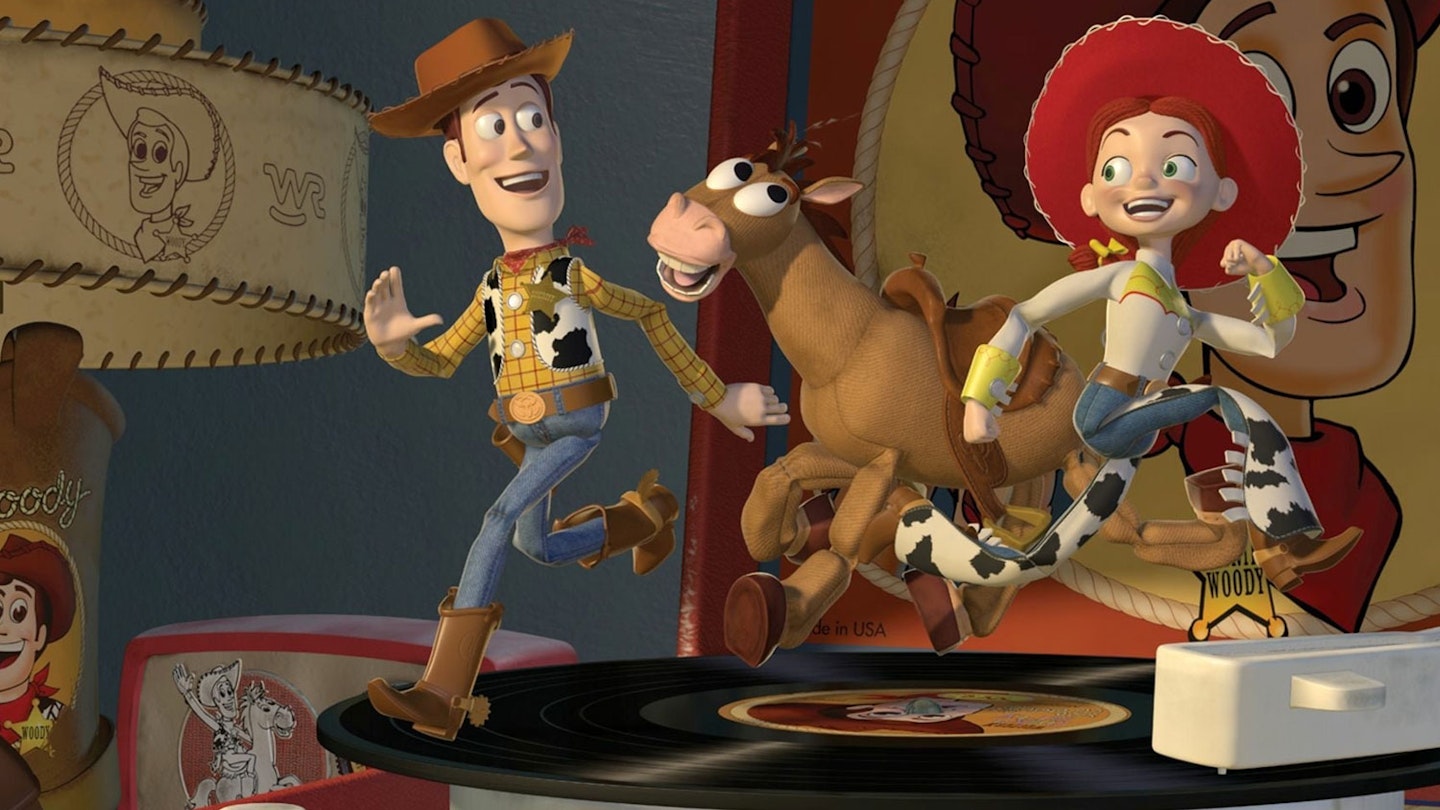
Director(s): John Lasseter | Runtime: 1hr 35m | Streaming on: Disney+
How do you follow-up the most game-changing animated movie in decades? You expand the character roster with more toys that audiences will fall in love with (hello, Woody’s Round-Up gang), deepen the emotional pull (who doesn’t cry at ‘When She Loved Me’?) and pile on the Empire Strikes Back references. If it could never hope to recapture the surprise of the original, Toy Story 2 proved Pixar was no flash in the pan – a sequel originally destined for straight-to-video was simply too good not to hit the big screen. In true Empire style, it expands the world and splits up our gang – sending Woody into the big bad world of retro toy collectors, and dispatching Buzz and co to save him in a jaunt that takes in a hilarious Barbie-centric trip through Al’s Toy Barn. It’s a sequel that showed there was plenty of life yet in these toys – and this time, everyone was looking.
Read Empire’s review of Toy Story 2.
31) 101 Dalmatians (1961)
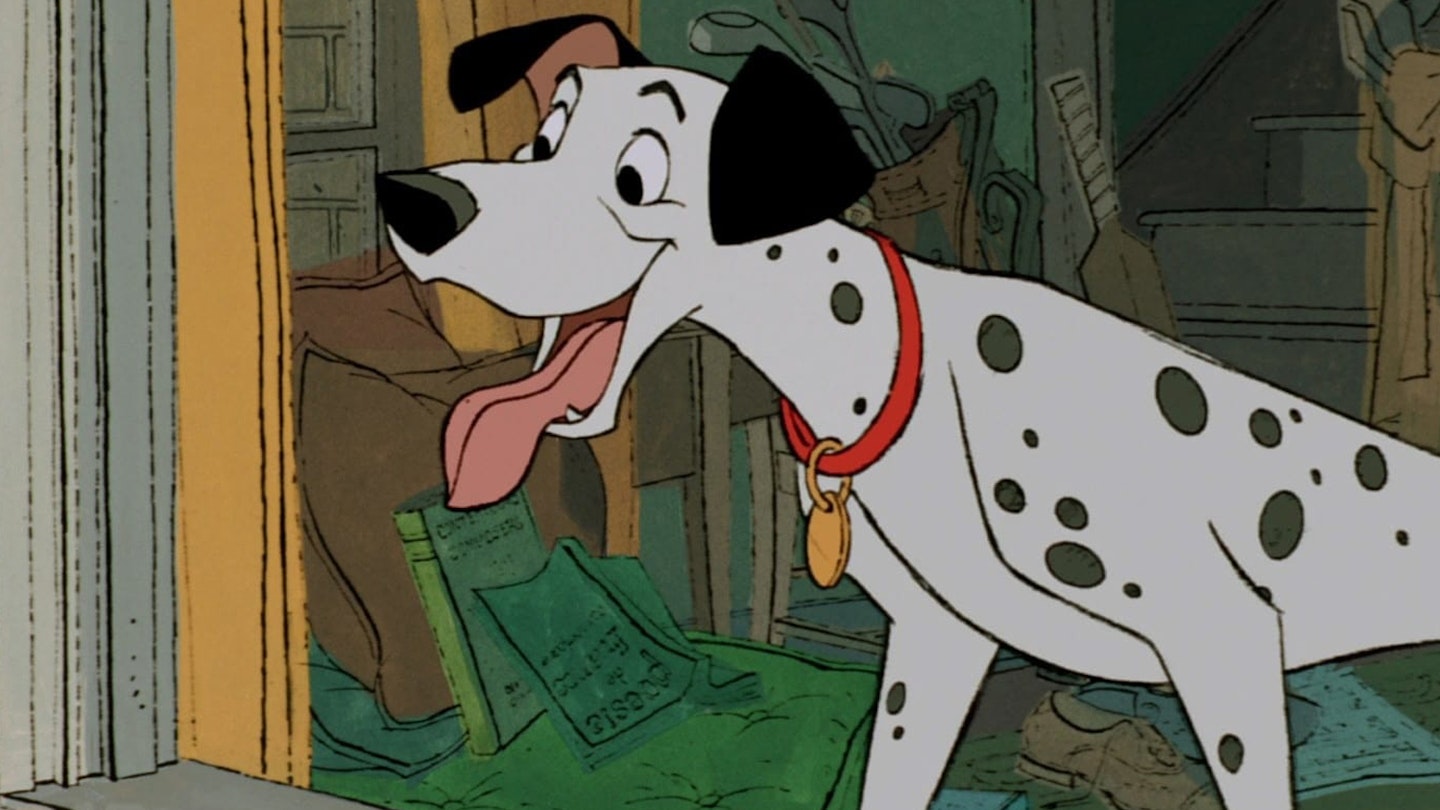
Director(s): Wolfgang Reitherman, Hamilton S. Luske, Clyde Geronimi | Runtime: 1hr 23m | Streaming on: Disney+
Slap-bang in the middle of Disney’s silver age came an adventure that looked unlike any other film from the studio before it. The lavish, expansive vistas of Sleeping Beauty were replaced with textured sketchbooky scrawls thanks to the new cost-cutting Xerox animation process – resulting in a film that feels properly hand-crafted and full of life, simpatico with its jazzy score. Adapting Dodie Smith’s novel, it was (at the time) a rare contemporary Disney film, bringing 1960s London to life in the tale of a loved-up couple, their doe-eyed dogs, and a maniacal fashionista intent on dog-napping their litter of newborn puppies to make a fur coat. If the dalmatians themselves are adorable, it’s Cruella De Vil who steals the movie – a properly iconic villain, a scrawny creature in a hulking fur coat, with green-smoke-spewing cigarettes, and that damning screech of “imbeciles!” All in all, it’s a dog-gone delight.
Read Empire’s review of 101 Dalmatians.
30 — 21
30) Bambi (1942)
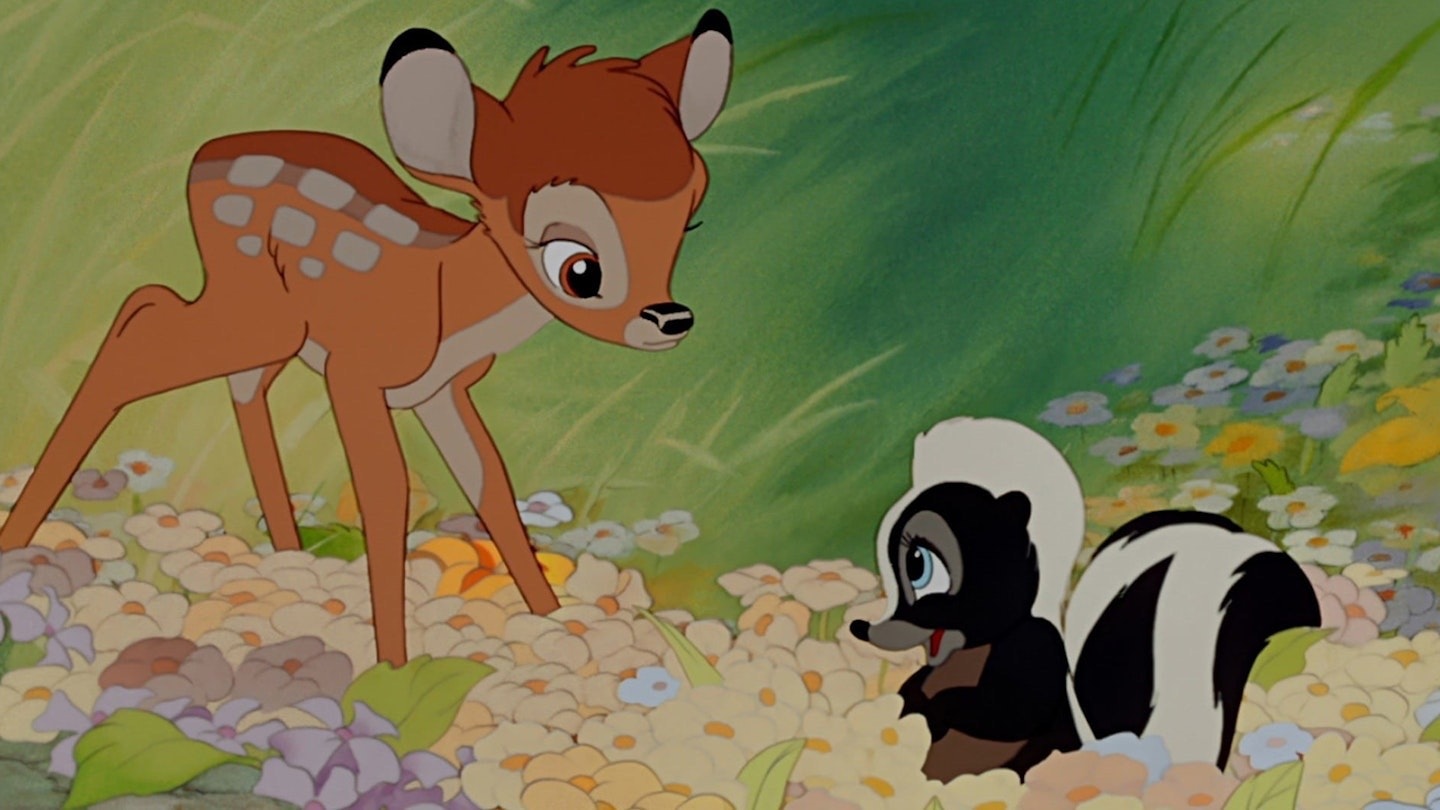
Director(s): David Hand | Runtime: 1hr 15m | Streaming on: Disney+
Both visually and emotionally, Bambi is a strong contender for Disney’s most beautiful animated film. Right from its extended opening multi-plane shot through layers and layers of dense forest, it’s a lush pastoral coming-of-age story that revels in recreating the sense of life, love and loss inherent in the natural world. The plot is minimal – particularly in its opening half, more intent on immersing viewers in the forest’s flora and fauna – but ultimately hugely moving, as newborn fawn Bambi makes friends, loses his mother (in a sequence that’s now traumatised multiple generations of children) to hunters, falls in love, and grows into a stoic Great Prince Of The Forest like his father before him. The narrative’s maturity sometimes clashes with more kid-friendly characters like hyperactive bunny Thumper and skunk Flower, but its closing cyclical imagery is properly stirring.
Read Empire’s review of Bambi.
29) Wallace And Gromit In The Curse Of The Were-Rabbit (2005)
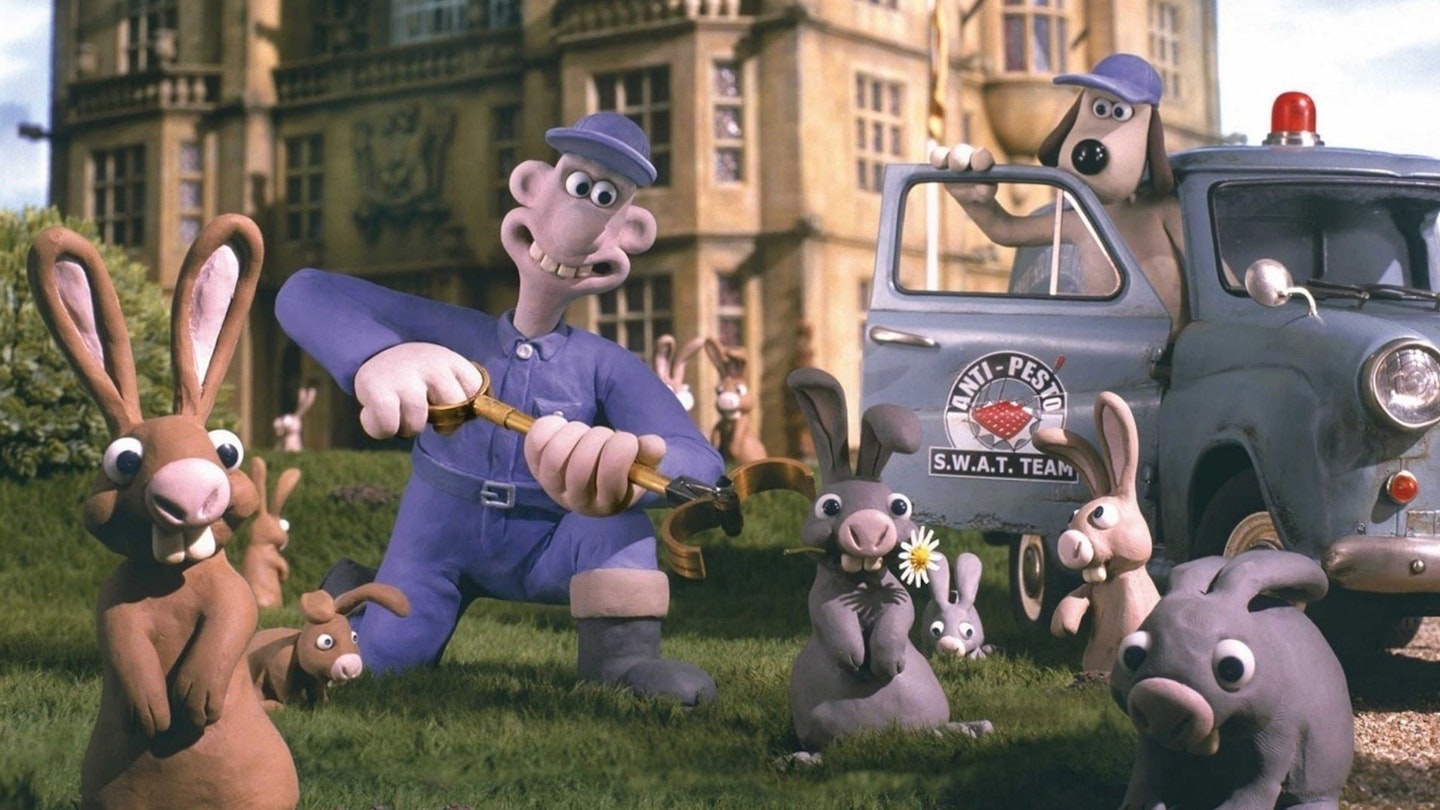
Director(s): Nick Park, Steve Box | Runtime: 1hr 25m | Streaming on: Now TV
It’s not every film that can take two beloved stop-motion characters from a series of shorts and TV specials and put them up on the big screen for a rollicking, Hammer horror-inspired comedy. But Were-Rabbit is just one reason why no one should underestimate the Aardman team, who were able to bring their British sensibility to a (relatively) big-budget American animated movie. The larger canvas doesn’t short-circuit the charm of inventor Wallace (the late, great Peter Sallis) and his silent, smart canine chum, and this is stuffed with the sort of sly winks and fun characters we’ve come to expect from the duo’s outings. The film itself may not have set box office records (we have noticeably not seen a second film featuring the pair), but it won the Animated Feature Oscar in 2006 – and good thing, too, if only for all the gardening puns.
Read Empire’s review of Wallace & Gromit In The Curse Of The Were-Rabbit.
28) Song Of The Sea (2014)
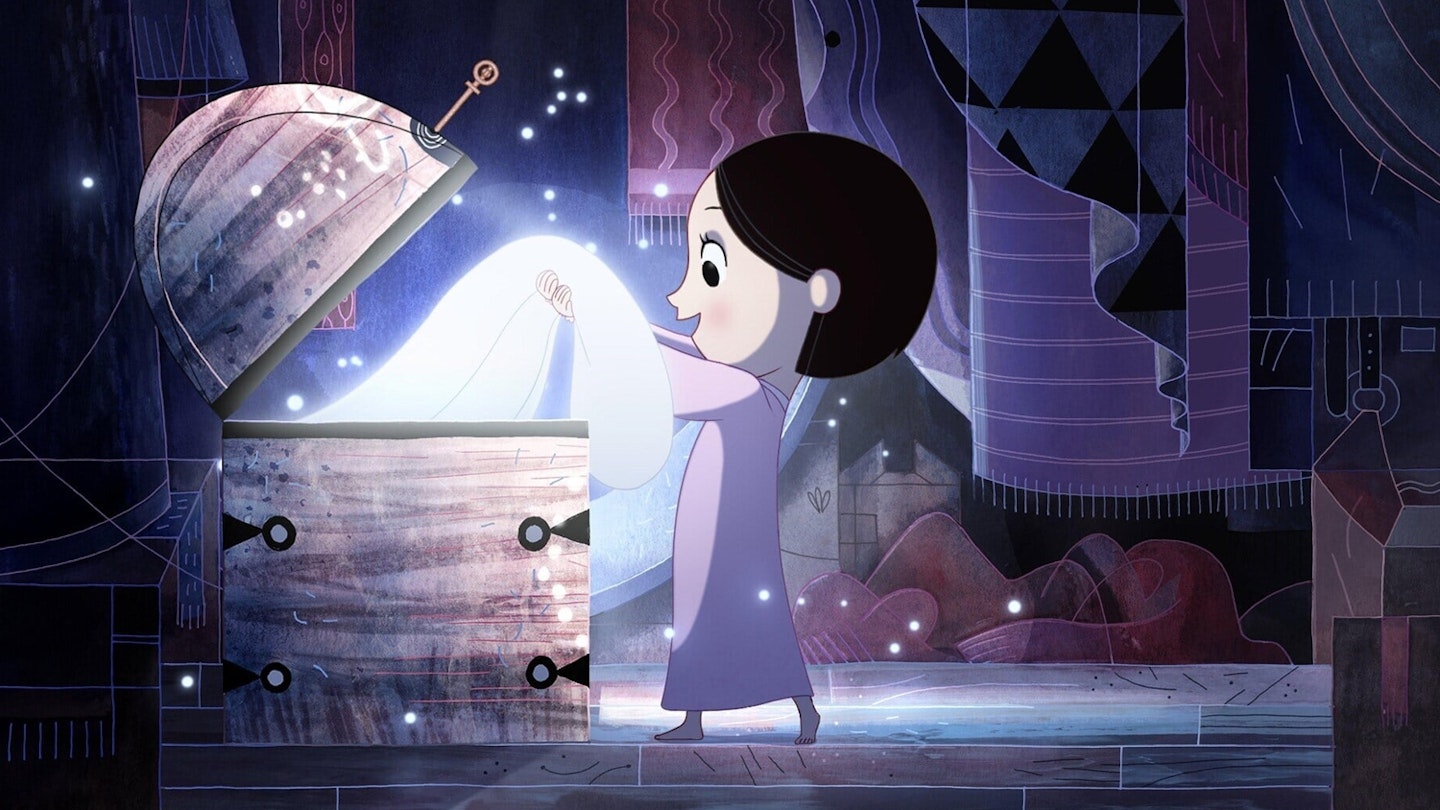
Director(s): Tomm Moore | Runtime: 1hr 34m | Streaming on: StudioCanal
The second film from Irish animation house Cartoon Saloon is breathtakingly gorgeous – painterly and ethereal, blending stylised character models with finely-detailed backgrounds that glow with a bioluminescence befitting its subaquatic selkie-centric story. If Song Of The Sea plays to kids as a straight-up adventure, for older audiences it’s a delicately drawn fable about grief and family, as stoic dad Conor (Brendan Gleeson) is left to raise his son Ben (David Rawle) and newborn daughter Saoirse (Lucy O’Connell) after his wife dies in childbirth – and there may be more to Saoirse than meets the eye. Pulling from Irish folklore and steeped in a sense of cultural specificity, Song Of The Sea confirmed Cartoon Saloon as a major new voice in the medium – one whose artistry, storytelling and charm matches up to the greats of Ghibli, Disney, and Pixar.
Read Empire’s review of Song Of The Sea.
27) Your Name. (2016)
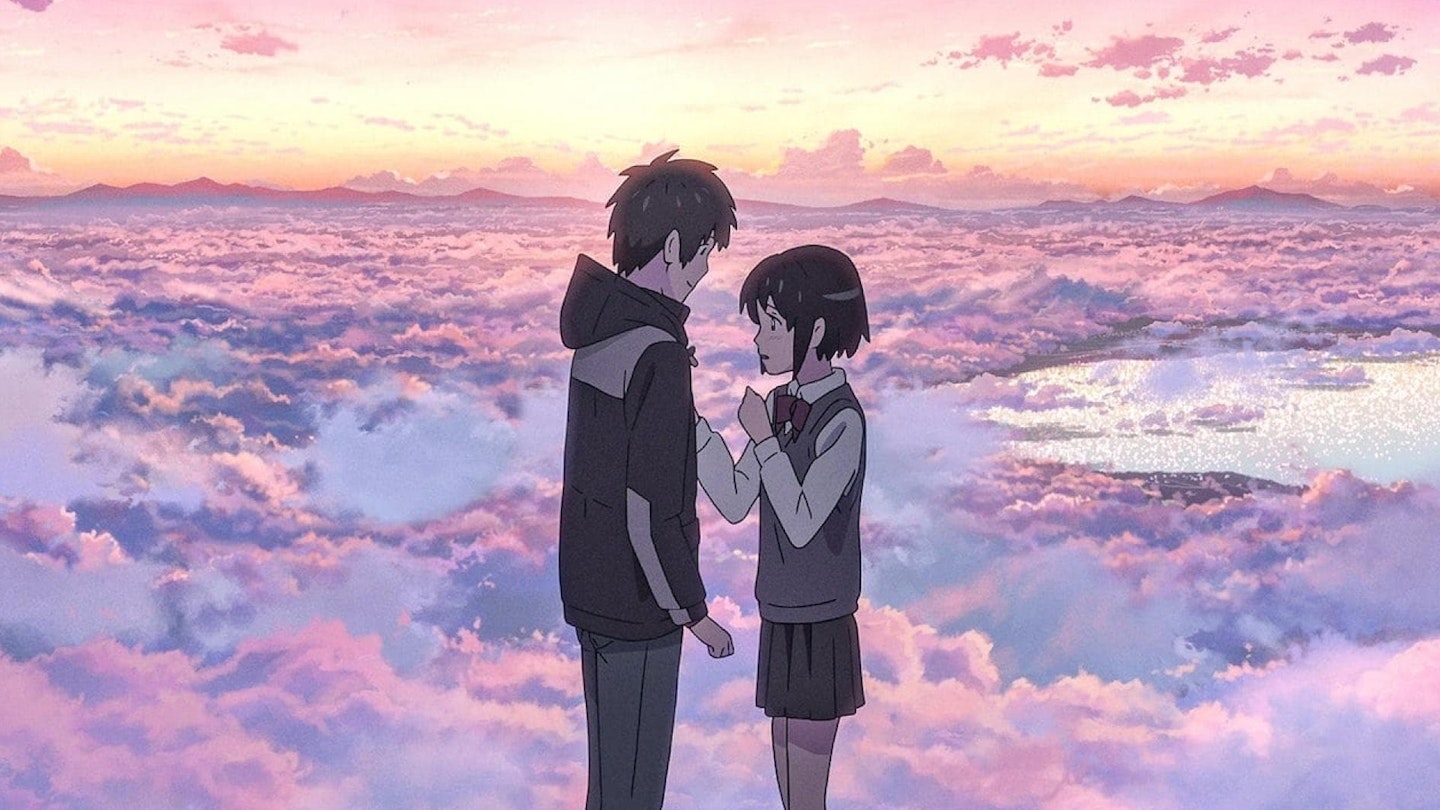
Director(s): Makoto Shinkai | Runtime: 1hr 46m | Rent/Buy on: Apple TV, Prime Video
Makoto Shinkai’s record-breaking body-swap anime glitters and gleams – light bounces off surfaces in glorious shimmers, refracts through the sky, reflects from buildings and iPhone screens with breathtaking beauty. It’s a film of two halves – the first is sweet, charming and witty as small-town girl Mitsuha (Mone Kamishiraishi) and Tokyo boy Taki (Ryunosuke Kamiki) find themselves waking up in each other’s bodies, perhaps thanks to the cosmic interference of a passing comet. And once their growing metaphysical relationship hooks you in, the second half of the film shifts gears into high-stakes melodrama with major emotional punch. If there’s plenty of subtext about Japan itself – the push and pull between rural traditions and buzzing cities, its history of natural disasters – it’s the dazzling visuals, soaring soundtrack by band Radwimps, and that central pairing that make Your Name. an instant classic. Fittingly, it’s a body-swap film that gets under the skin.
Read Empire’s review of Your Name.
26) The Prince of Egypt (1998)
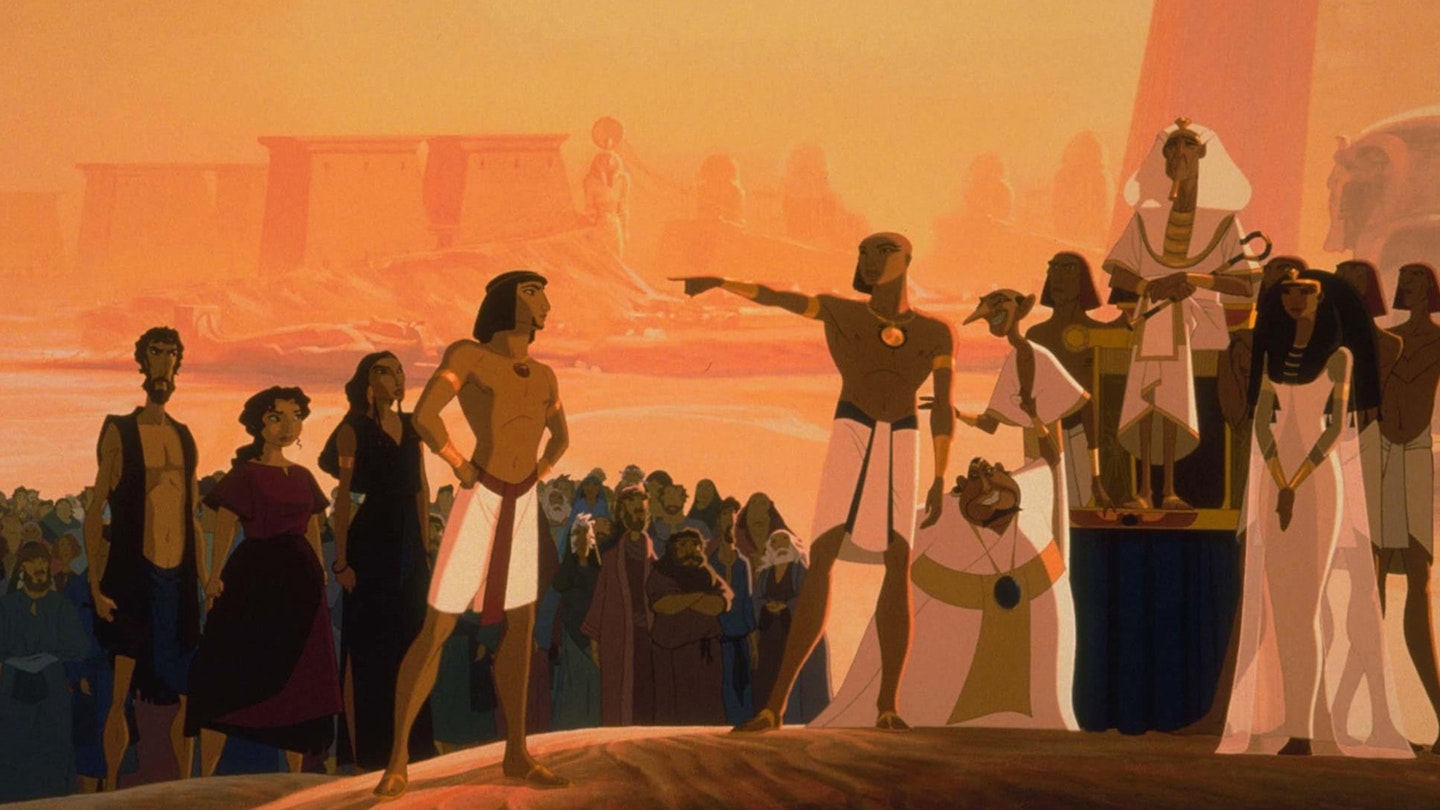
Director(s): Brenda Chapman, Steve Hickner, Simon Wells | Runtime: 1hr 39m | Streaming on: ITVX
A continuation of DreamWorks Animation’s early mission to become a competitor to Disney while bringing animation to older audiences, The Prince Of Egypt masterfully blends CGI with traditional 2D animation; a first for the studio. An army of animators were summoned to make this biblical epic, pitched by studio co-founder Jeffrey Katzenberg as an animated adaptation of The Ten Commandments. Alongside its stunning Egyptian vistas and finely-drawn, expressionistic characters – not to mention a giddily tense chariot race sequence – it boasts gargantuan ’90s star power, with Michelle Pfeiffer, Sandra Bullock and Jeff Goldblum amongst the voice cast, with Val Kilmer in a dual role – lending his rich timbre to both Moses and God himself. As if that weren’t enough, Hans Zimmer’s staggeringly cinematic soundscape and an Oscar-winning accompanying duet from vocal powerhouses Whitney Houston and Mariah Carey makes this ambitious venture a rewarding entry at a time when DreamWorks became a viable Disney rival.
Read Empire’s review of The Prince Of Egypt.
25) Wolfwalkers (2020)
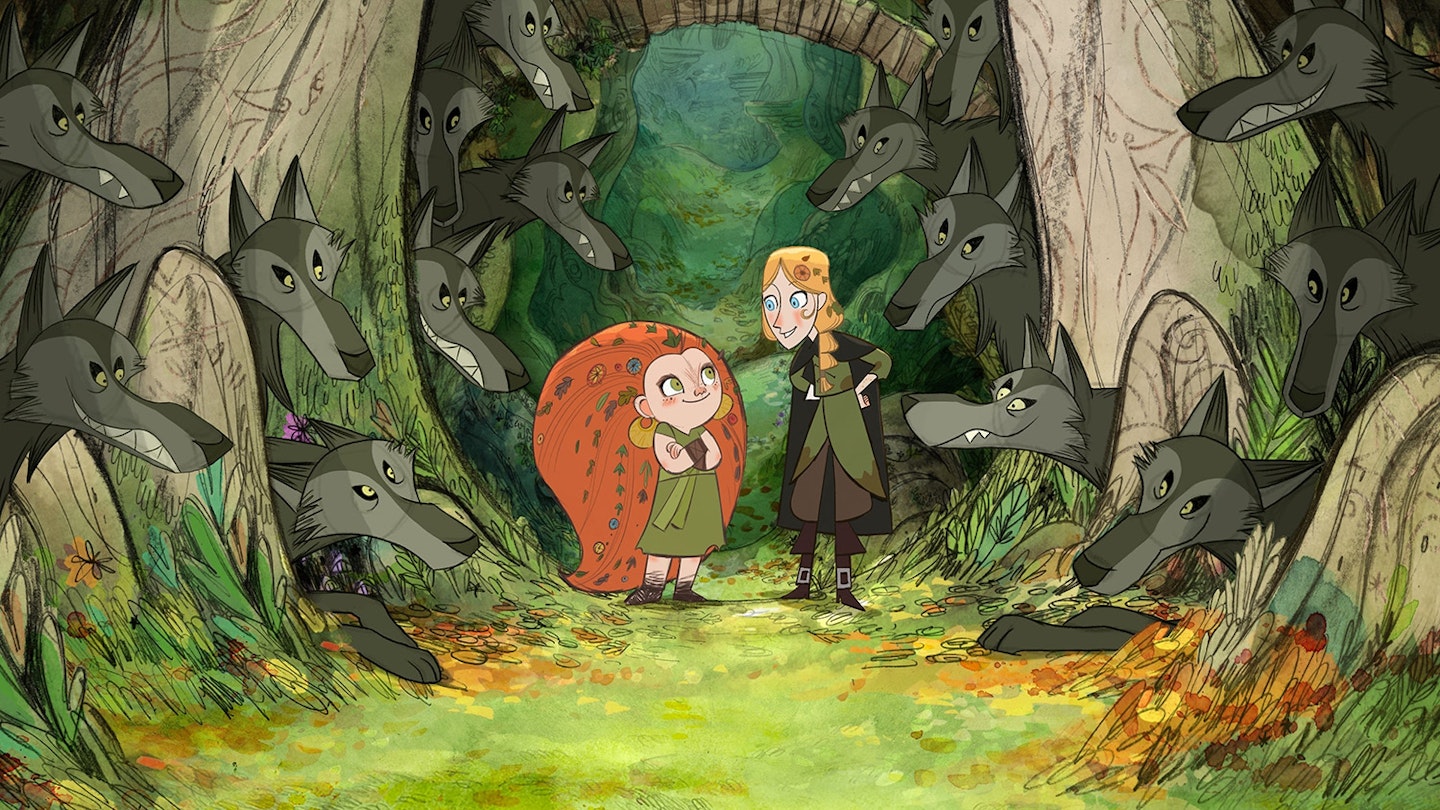
Director(s): Tomm Moore, Ross Stewart | Runtime: 1hr 42m | Streaming on: Apple TV
Cartoon Saloon’s Irish Folklore Trilogy concluded with this fantastical tale set against the very real issue of English colonial destruction in Ireland. Robyn (Honor Kneafsey), the daughter of a hunter dispatched to wipe out the local wolf population discovers a kindred spirit in a pack and fellow youngster Mebh (Eva Whittaker), who embodies a wolf when she sleeps. Together, the pair sets out to save the wolves and the forest from the schemes of the Lord Protector (Simon McBurney). Moore and the Saloon gang have always trodden their own animated path, and Wolfwalkers is no different, mixing boxy woodcut style for the townsfolk with loose, flowing line work for the creatures of the woods. Both sweet and powerful, it’s a crime that the pandemic meant it was predominantly seen on TV screens.
Read Empire’s review of Wolfwalkers.
24) Aladdin (1992)
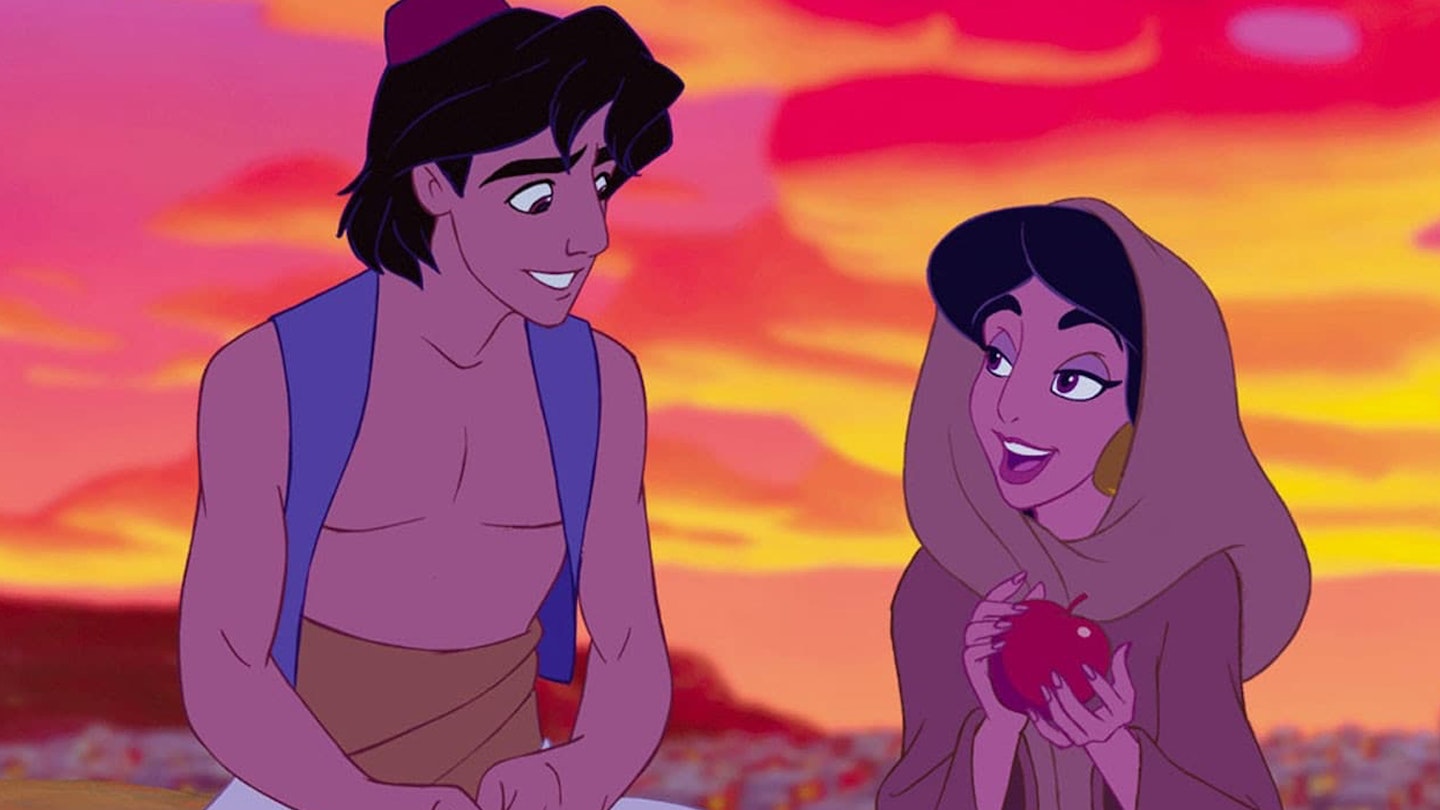
Director(s): John Musker, Ron Clements | Runtime: 1hr 35m | Streaming on: Disney+
If you want a perfect example of how ultra-expressive animation can complement and benefit a freewheeling comic masterclass of a voice performance, look no further than Aladdin – because the title character has the entire show stolen from him by Robin Williams’ Genie. The big blue guy is a creation of pure, cartoonish elasticity – shape-shifting from second to second as the comedy icon’s firecracker heavily-improvised performance explodes in multiple directions at once. That the visual comedy lives up to William’s wit is a marvel – no wonder Will Smith and Guy Ritchie couldn’t match it in the live-action version. Beyond the Genie, Aladdin is still a belter thanks to its Alan Menken and Howard Ashman songs, Gilbert Gottfried’s acerbic Iago, and its underdog story of a ‘street-rat’ who bags himself a magic lamp – and might just win the heart of Princess Jasmine (Linda Larkin). The Middle-Eastern stereotypes certainly don’t fly today, but everything else does – the carpet included.
Read Empire’s review of Aladdin.
23) Pinocchio (1940)
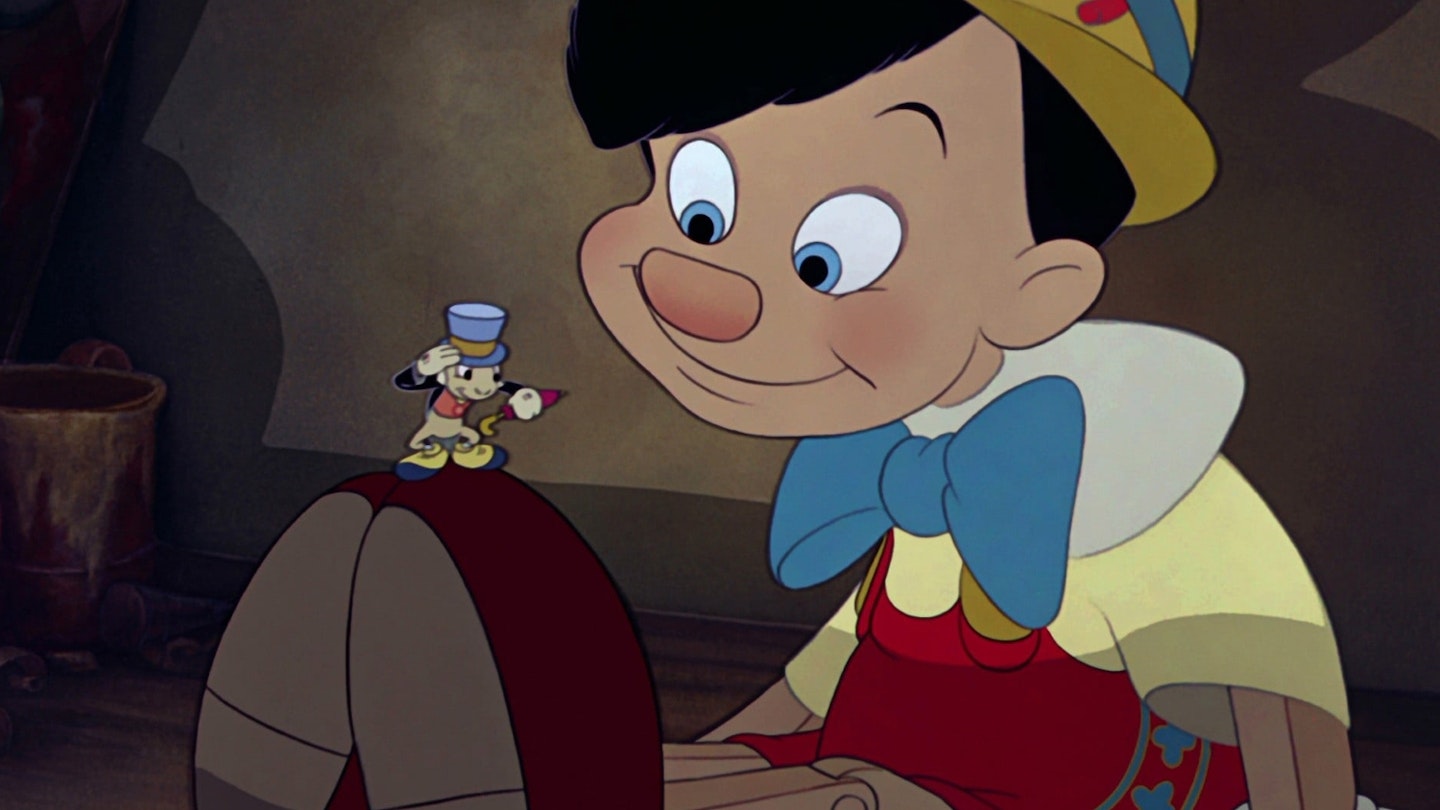
Director(s): Ben Sharpsteen, Hamilton Luske | Runtime: 1hr 32m | Streaming on: Disney+
Disney’s second animated feature is a major leap forward from Snow White – more narratively expansive, more technologically complex, and way, way darker. Adapting Carlo Collodi’s novel, it follows the titular wooden puppet on an existential quest to earn his humanity – one that finds him exploited by a shady show-businessman, swallowed by a rampaging whale called Monstro, preyed on by an upsetting cat-man, and, in a truly disturbing sequence, taken by a demonic coachman to the sinful ‘Pleasure Island’ where rebellious boys are mutated into donkeys and shipped off for nefarious purposes. It is, in short, not really one for kids – but adults will find much technical mastery in its vivid tracking shots and creepy character animation. Plus, it has a stellar song in ‘When You Wish Upon A Star’ – nowadays the unofficial Disney theme tune.
Read Empire’s review of Pinocchio.
22) Coco (2017)
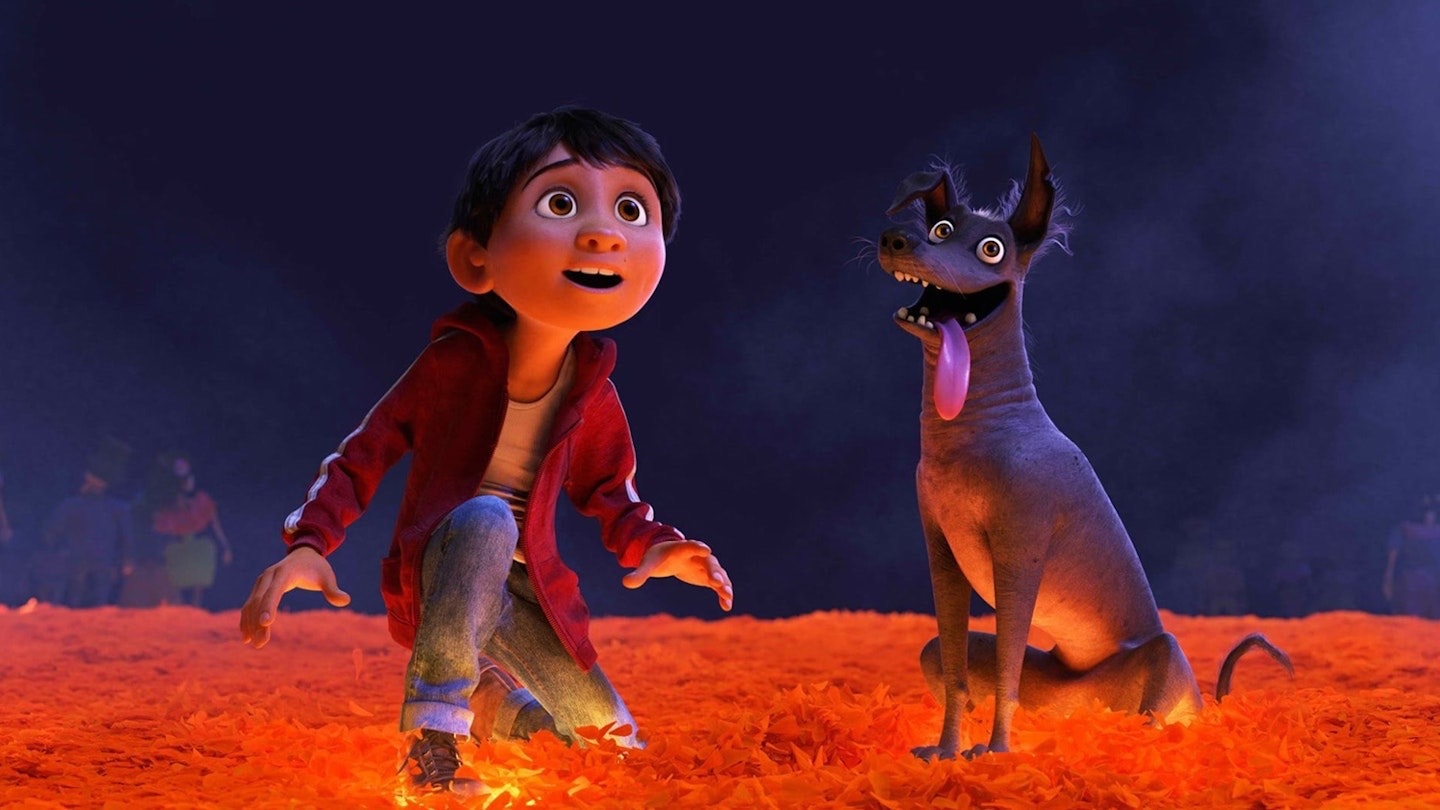
Director(s): Lee Unkrich | Runtime: 1hr 46m | Streaming on: Disney+
Rarely a team to rest on its laurels (and it has some well-earned laurels), Pixar, spearheaded by Lee Unkrich, decided to really challenge itself and develop a film showcasing the cultural touchpoint that is the Day of the Dead. Or at least, that’s the background — the real story here is of young Miguel (Anthony Gonzalez), who dreams of being a famous musician like his idol, Ernesto de la Cruz (Benjamin Bratt). That’s no straightforward ambition, especially when his family has banned music after his great-great-grandmother’s husband left her to pursue a career as a performer. (Literal) buried secrets come into play as Miguel crosses to the land of the dead on a mission to learn the truth. Coco is a vibrant film that honors Mexican cultural traditions, and – because the Emeryville studio is so good at it – plucks at the heartstrings as effectively as some of the guitar players here. The movie itself and original song ‘Remember Me’ both won Oscars, each well-deserved.
Read Empire’s review of Coco.
21) Fantastic Mr. Fox (2009)
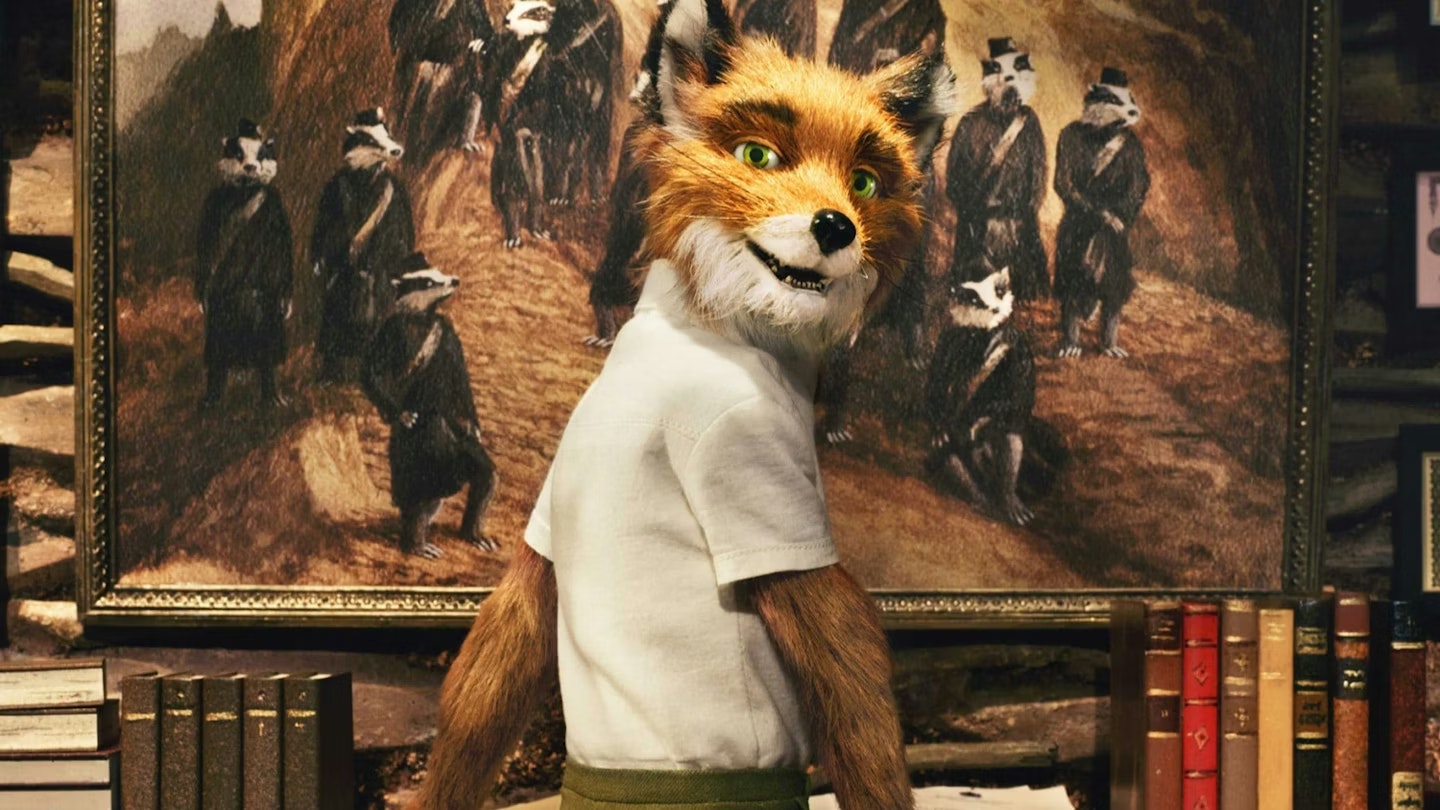
Director: Wes Anderson | Runtime: 1hr 27m | Streaming on: Disney+, Apple TV+
George Clooney is on sparkling form as the insouciant titular thief-turned-hero in Wes Anderson’s Fantastic Mr Fox, a stunning stop-motion adaptation of Roald Dahl’s classic children’s novel. With its eye-catching autumnal palette, intricately detailed armatures, and picturebook scenery, Anderson’s film conjures a cosy, lived-in world that’s impossible to resist, no matter how old or young you may be. And from within it, he faithfully tells Dahl’s slight story of a wily fox taking on three horrible crooks whilst artfully expanding it to further explore the themes of fatherhood, familial dysfunction, and community that permeate his own filmography. Partly a hair-raising heist film that gives Clooney’s Ocean’s flicks a run for their money, partly a study in silliness filled with child-friendly cussin’, but above all else a decidedly Wes Anderson picture, Fantastic Mr. Fox is an animated feature par excellence. Also, Willem Dafoe plays a villainous alcoholic sewer-rat in this, and Jarvis Cocker sings and plays the banjo. What more could you want?
Read Empire’s review of Fantastic Mr. Fox.
20 — 11
20) Beauty And The Beast (1991)
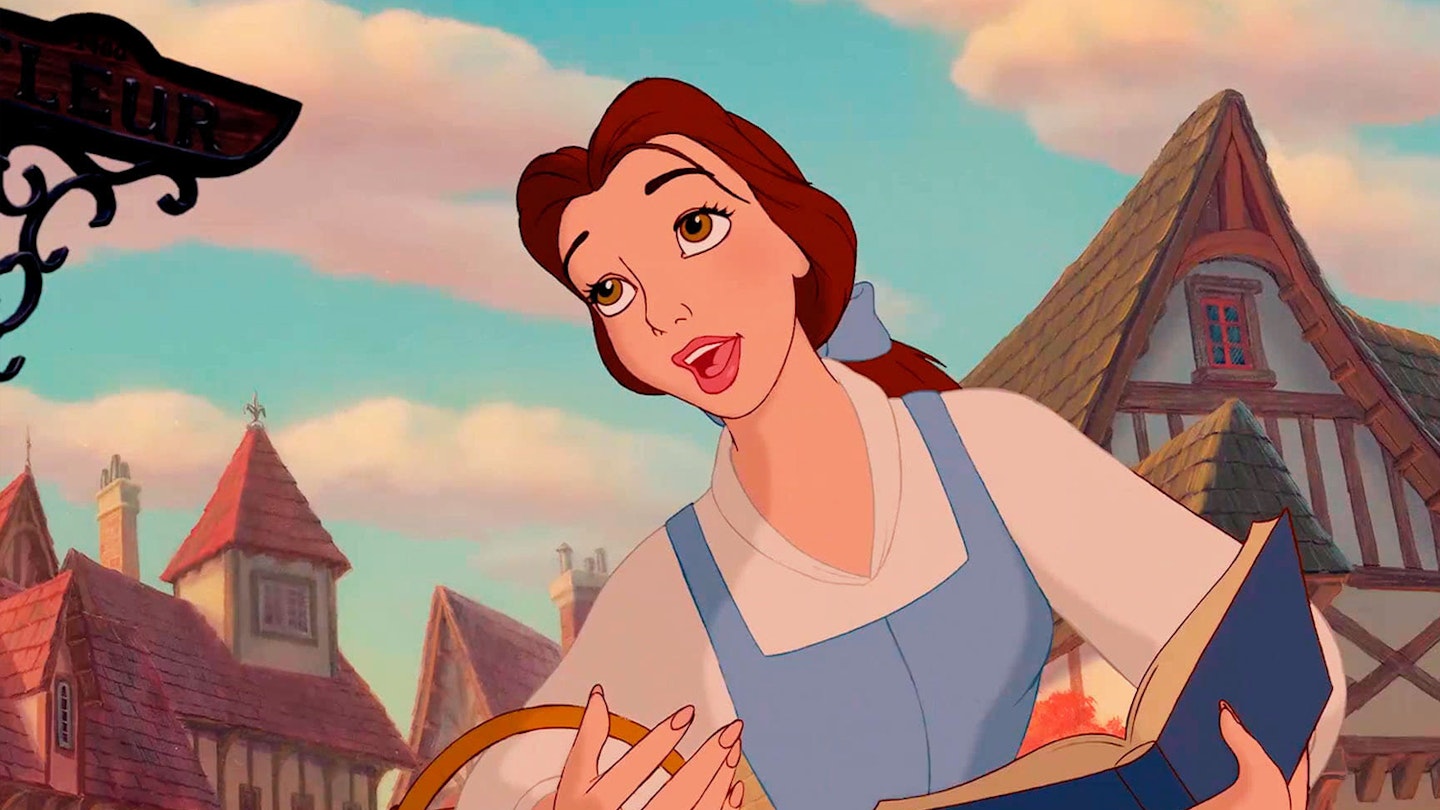
Director(s): Gary Trousdale, Kirk Wise | Runtime: 1hr 33m | Streaming on: Disney+
A soaring, Broadway-calibre musical meets sophisticated, pioneering animation in Disney’s landmark fairytale. Beauty And The Beast is truly a marvel in terms of animated architecture – from the beast’s cavernous, gothic castle, to the overstuffed shelves of Belle’s (Paige O’Hara) beloved bookstore. Yet Disney didn’t sacrifice its childlike sense of wonder in the name of showing off its new approach to animation. The film’s choreography remains some of the studio’s finest, be it Belle’s opening number with her nose in a book, skimming blissfully through the inner workings of her small town, or the central ballroom setpiece that coaxes out the tentative romance between beauty and beast. Yet its twinkle lies in the character design of the castle’s cursed inhabitants – each a little sad and wonky, but not without lashings of charm – as well as in the much-loved lyrics of Howard Ashman that inform some of the film’s most delightful moments. “Try the grey stuff, it’s delicious. Don’t believe me? Ask the dishes!”
Read Empire’s review of Beauty And The Beast.
19) Sleeping Beauty (1959)
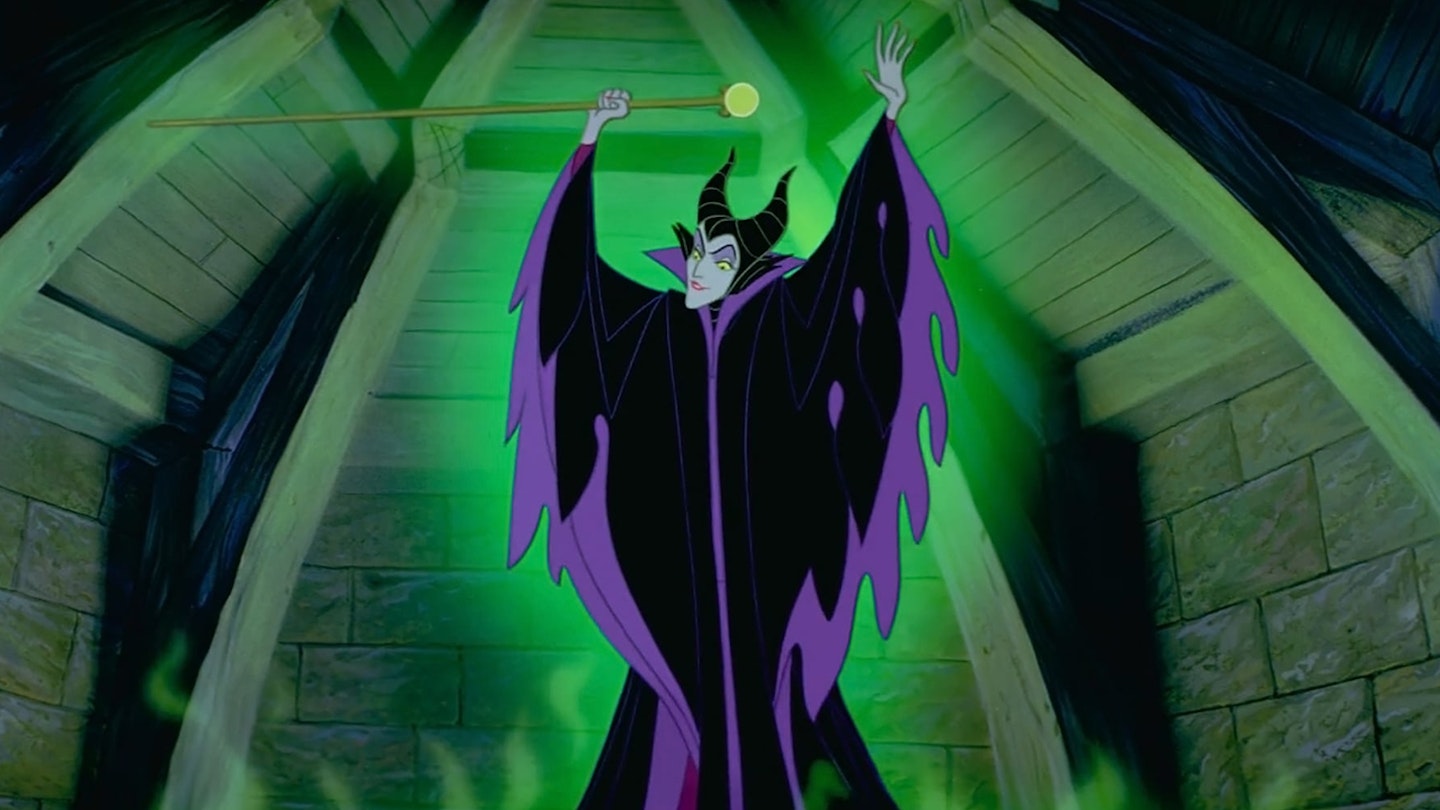
Director(s): Clyde Geronimi | Runtime: 1hr 19m | Streaming on: Disney+
From its medieval setting, to its iconic villain, to the sheer width of its frame, everything about Disney’s third princess movie feels epic – a rich fantasy saga that has more than just romance on its mind. Painstakingly produced over the course of eight years and backed by a Tchaikovsy-inspired score, Sleeping Beauty is gorgeous in every respect – full of stylistic touches inspired by renaissance art, with stunningly detailed backdrops and dynamic character designs delivered on an expansive Cinemascope canvas. If the story itself is pretty slight (evil fairy curses baby, baby grows up and eventually falls into an enchanted sleep, the kiss of a prince breaks the spell), it’s all livened up by the magnificent Maleficent (Eleanor Audley), a cracking, cackling villain with a flair for the dramatic, even transforming into a green-fire-breathing dragon for a climax that today echoes Game Of Thrones. Ironically, it was slept on at first – flopping on release, and only seen for what it was in the decades that followed: an absolute beauty.
18) Monsters, Inc. (2001)
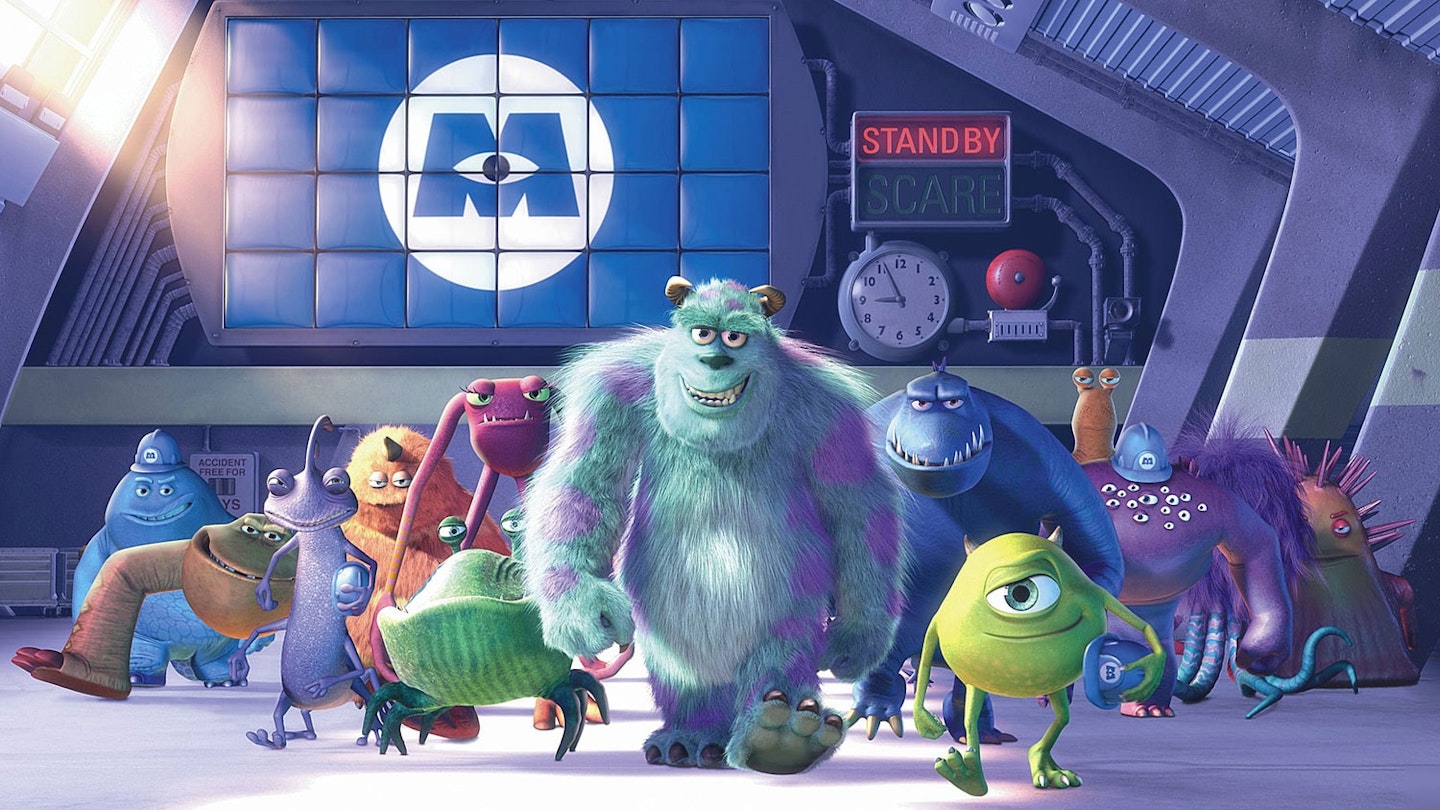
Director(s): Pete Docter | Runtime: 1hr 33m | Streaming on: Disney+
If you were to tot up a list of Pixar’s most loveable characters, and another list of the most brilliantly imaginative worlds they’ve created, Monsters, Inc. would come out near the top end of both. After two Toy Story films and A Bug’s Life, the studio proved it really had the goods to become one of the greats with a sweet, silly and sentimental buddy comedy about monsters who are secretly terrified of the kids they spook every night. Hanging out with James P. Sullivan (John Goodman) and Mike Wazowski (Billy Crystal) – a furry blue top-scarer and his sardonic green ball of a co-worker – is a total joy, as is spending time in the streets of Monstropolis, packed with eye-catching beasts, sight gags galore, and Harryhausen in-jokes. If the fish-out-of-water set-up (Mike and Sully accidentally unleash human girl Boo in the monster city) is mined for major laughs, it provides huge emotional punch as they come to realise she’s not a danger at all – just try not to weep at that final ‘Kitty!’
Read Empire’s review of Monsters, Inc..
17) The Nightmare Before Christmas (1993)
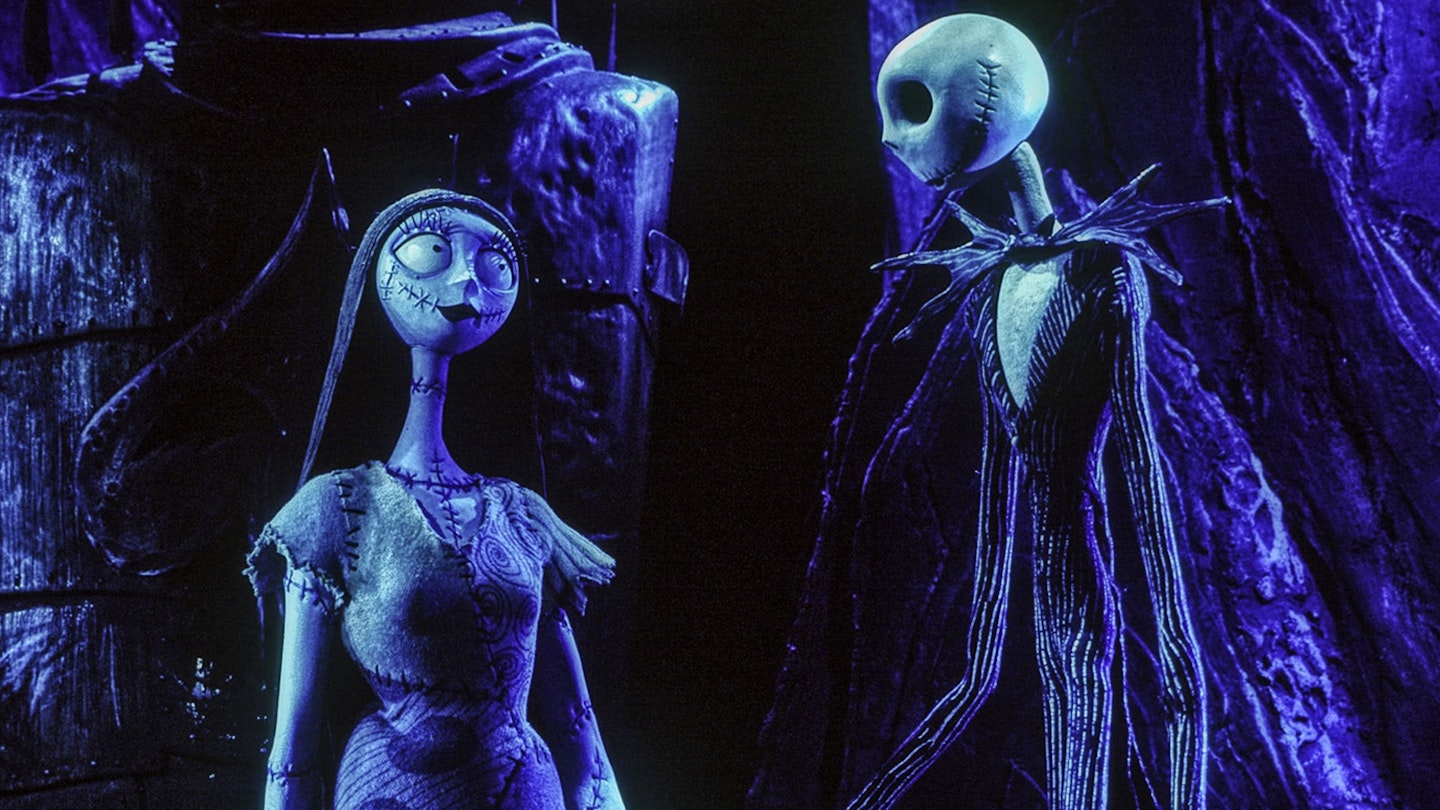
Director(s): Henry Selick | Runtime: 1hr 20m | Streaming on: Disney+
An animated beacon of hope for Jack Skellingtons everywhere, Tim Burton’s Henry Selick directed gothic musical remains a beloved, wretched festive treasure. Everything about this gorgeous gothic stop-motion fantasy endures because of its off-kilter charms, beginning with the angular and disproportionate character design, which Burton dreamed up with visionary effects artist Rich Heinrichs. The jewel in the crown is, of course, Skellington (Chris Sarandon) – the disgruntled Pumpkin King who finds a new lease of life under the glowing lights of Christmas Town – but each ghastly and/or ghoulish addition to the ensemble is a gnarled, slightly terrifying work of art. Composer Danny Elfman, a self-professed Skellington type who even supplied the character’s singing voice, imbued the film with its haunting cadences and morbid soundscape, which at times manifests into intoxicating musical numbers. The film took a meandering journey to the screen, in part due to Disney’s failure to accept Burton’s vision – but when it arrived, it was unlike anything that had ever come before it, and continues to touch the hearts of outsiders everywhere.
Read Empire’s review of The Nightmare Before Christmas.
16) Toy Story 3 (2010)
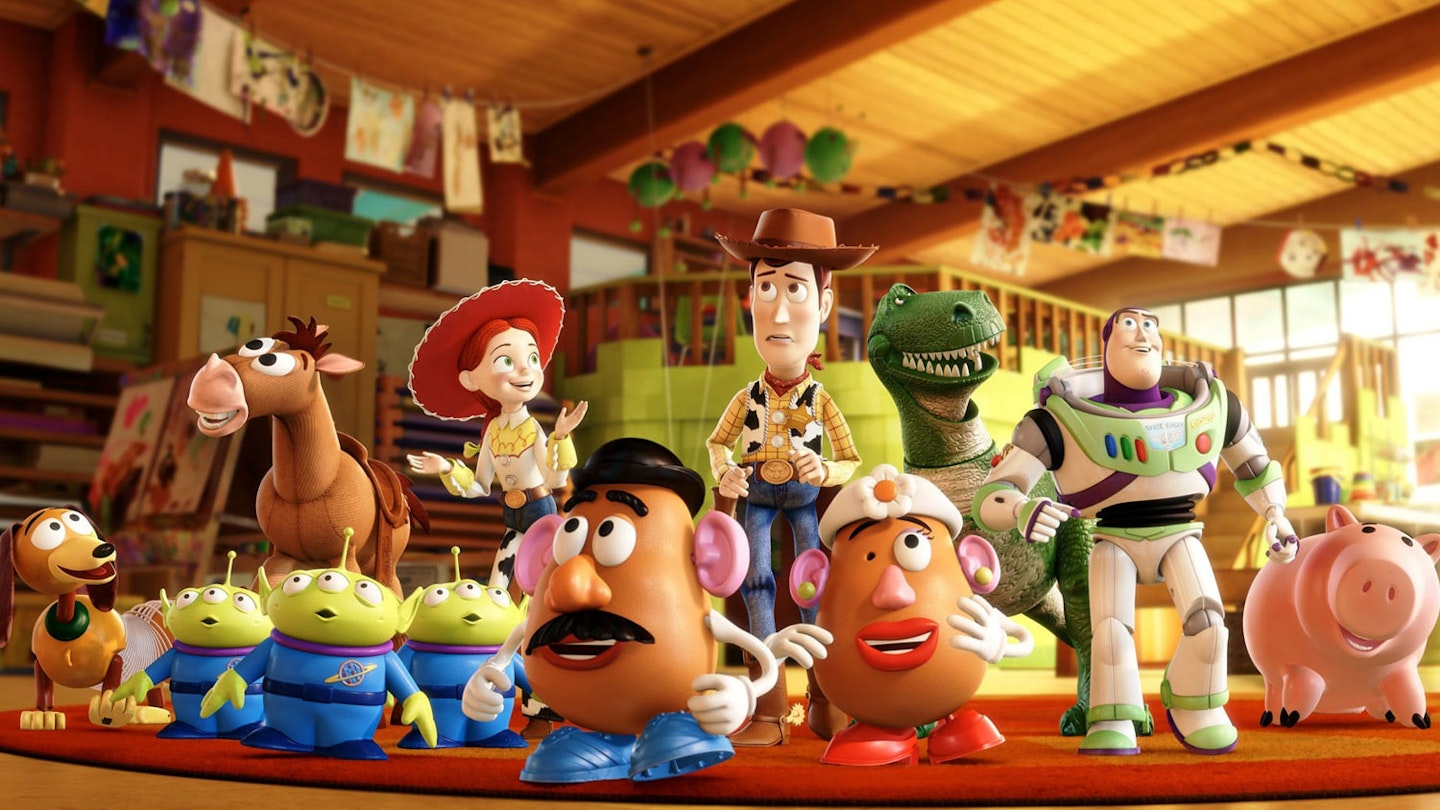
Director(s): Lee Unkrich | Runtime: 1hr 46m | Streaming on: Disney+
The original Toy Story was a groundbreaker. Toy Story 2 rescued a sequel from the jaws of straight-to-video oblivion. No pressure, then, for the third outing, which had to follow those two hits. Under the careful, thoughtful direction of Lee Unkrich (who had been with Pixar since the first film), Toy Story 3 deepens the narrative of Woody, Buzz and the rest of the gang by having them confront the prospect of moving to a new home when their owner Andy outgrows them. The Toy Story films had always been about heart, loss, family and terrifying, cymbal-crashing monkeys (okay, maybe that one just applies to the threequel), but the third finds Team Pixar on fantastic form. One scene in particular (one word: incinerator) sent fans — including noted Toy Story 3 superfan Quentin Tarantino – into paroxysms of worry and sniffles with its palpable sense of finality.
Read Empire’s review of Toy Story 3.
15) Persepolis (2007)
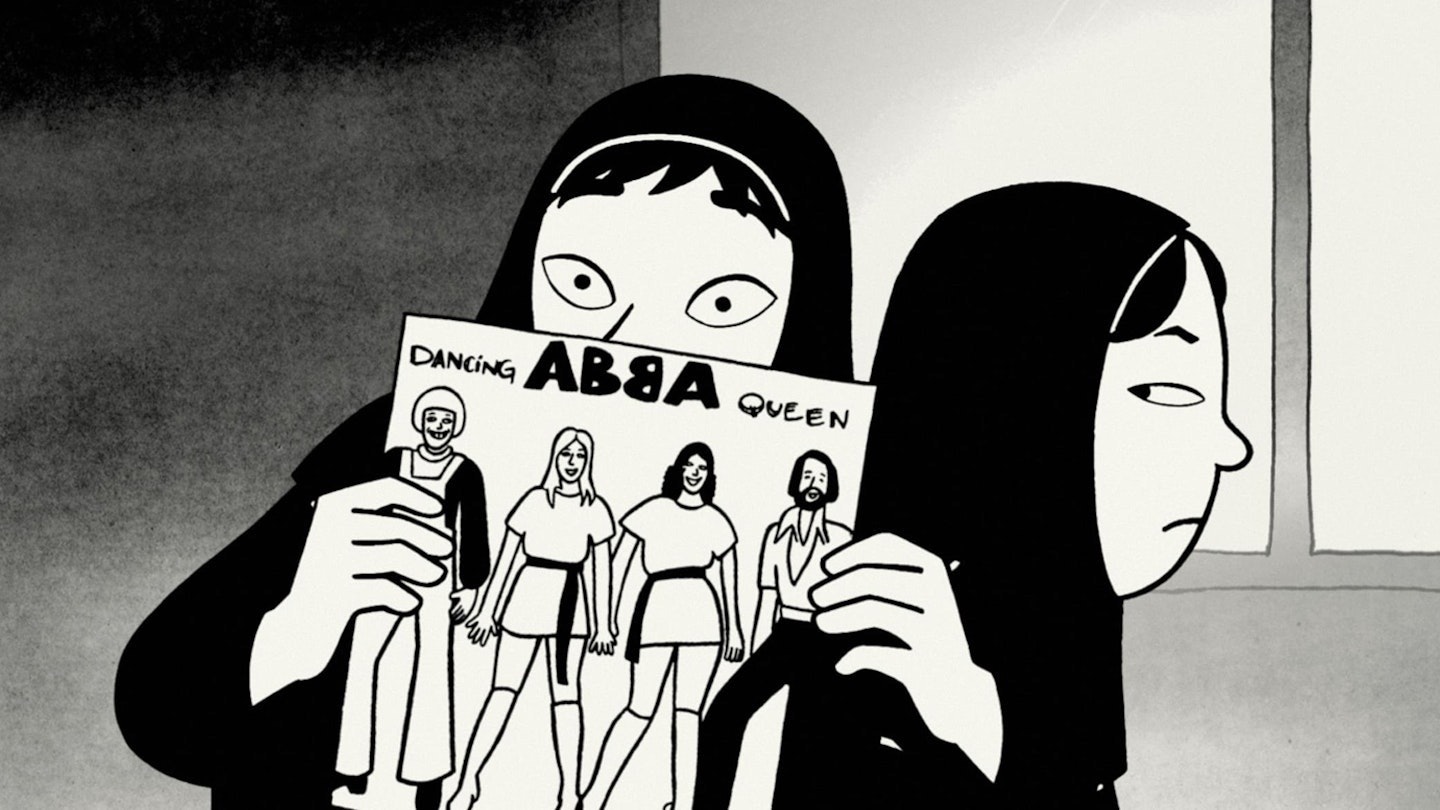
Director(s): Vincent Paronnaud, Marjane Satrapi | Runtime: 1hr 35m | Streaming on: StudioCanal
Few international animations have garnered the same global success as Persepolis. That the film takes place amidst the Islamic revolution – captured through a broad, unfussy style of animation in a mostly monochrome palette – is only further testament to the power of its storytelling. The film is co-adapted by Marjane Satrapi from her autobiographical graphic novel series of the same name. Through documenting her young life in Tehran and later Austria, Satrapi relays the torment inflicted on her leftist family and friends by the Shah through the eyes of her punkish, Bruce Lee-loving tearaway. The way in which Satrapi weaves her humanist beliefs into this simple yet elegant narrative is effortlessly moving, and made her the first woman director to be nominated for Best Animated Feature at the 2008 Academy Awards.
Read Empire’s review of Persepolis.
14) Ratatouille (2007)
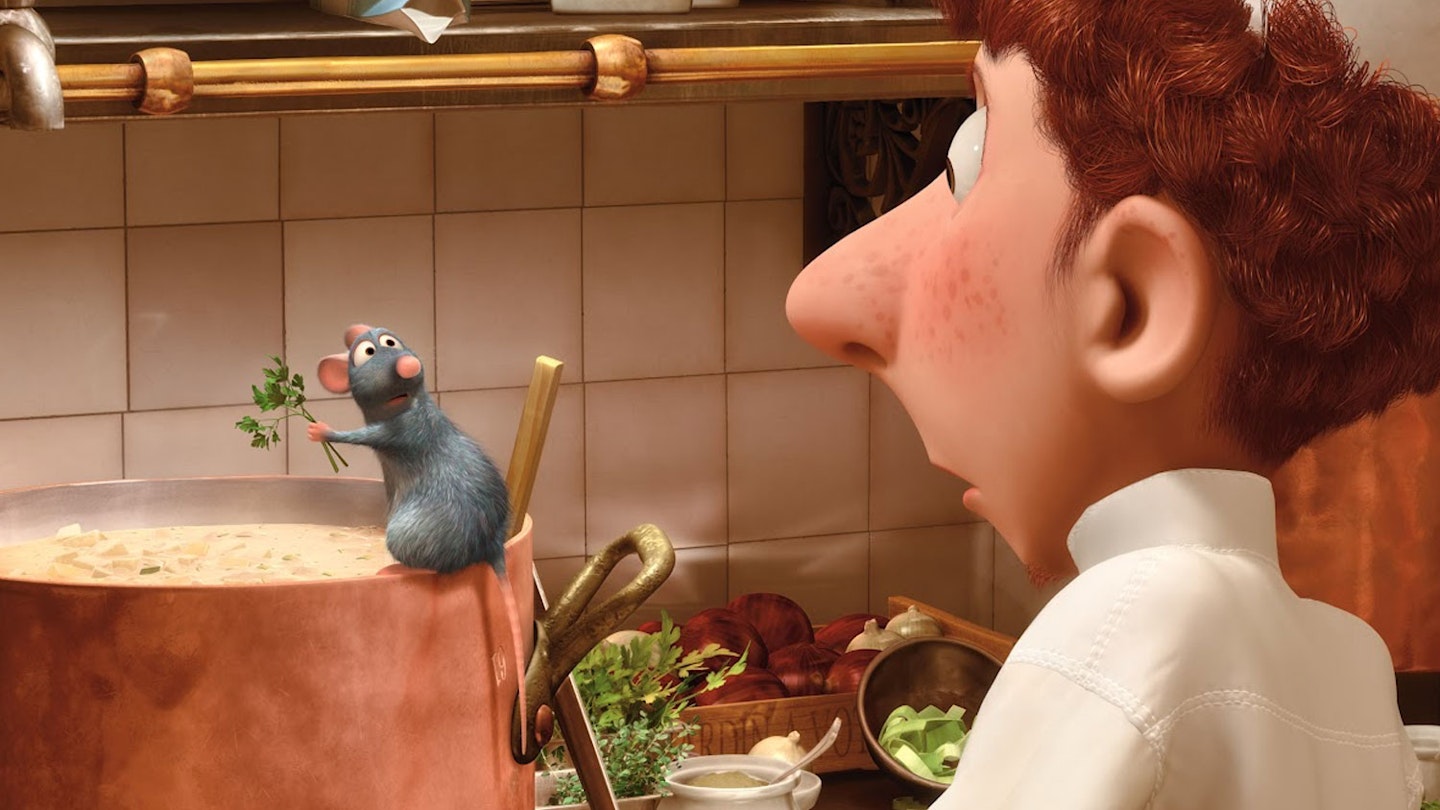
Director(s): Brad Bird | Runtime: 1hr 52m | Streaming on: Disney+
The magic of Ratatouille isn’t just that Pixar made a film about a rat chef that somehow doesn’t make the audience want to run for the nearest sick bucket – it’s the sensory elegance of it that’s most dazzling. Director Brad Bird’s most impressive feat is turning smells into sights – ingredients become wafts of abstract colour that complement each other as sub-par dishes become works of culinary art, a symphony of swirling scents completed by Michael Giacchino’s gorgeous score. Patton Oswalt lends his voice to Remy – a rat with a gift for cookery who teams up with hopeless human Linguini (Lou Romano) in an effort to get his dishes out into the world. But given Remy’s rodent status, the discovery of the real little chef would spell disaster for his future. Even by Pixar standards, this sometimes overlooked effort overflows with charm and beauty – just see the scene in which snooty critic Anton Ego (Peter O’Toole) takes a bite of the film’s titular dish and is transported back to the warmth and love of his own mother’s cooking. Not bad for a film with a pretty basic pun title.
Read Empire’s review of Ratatouille.
13) The Incredibles (2004)
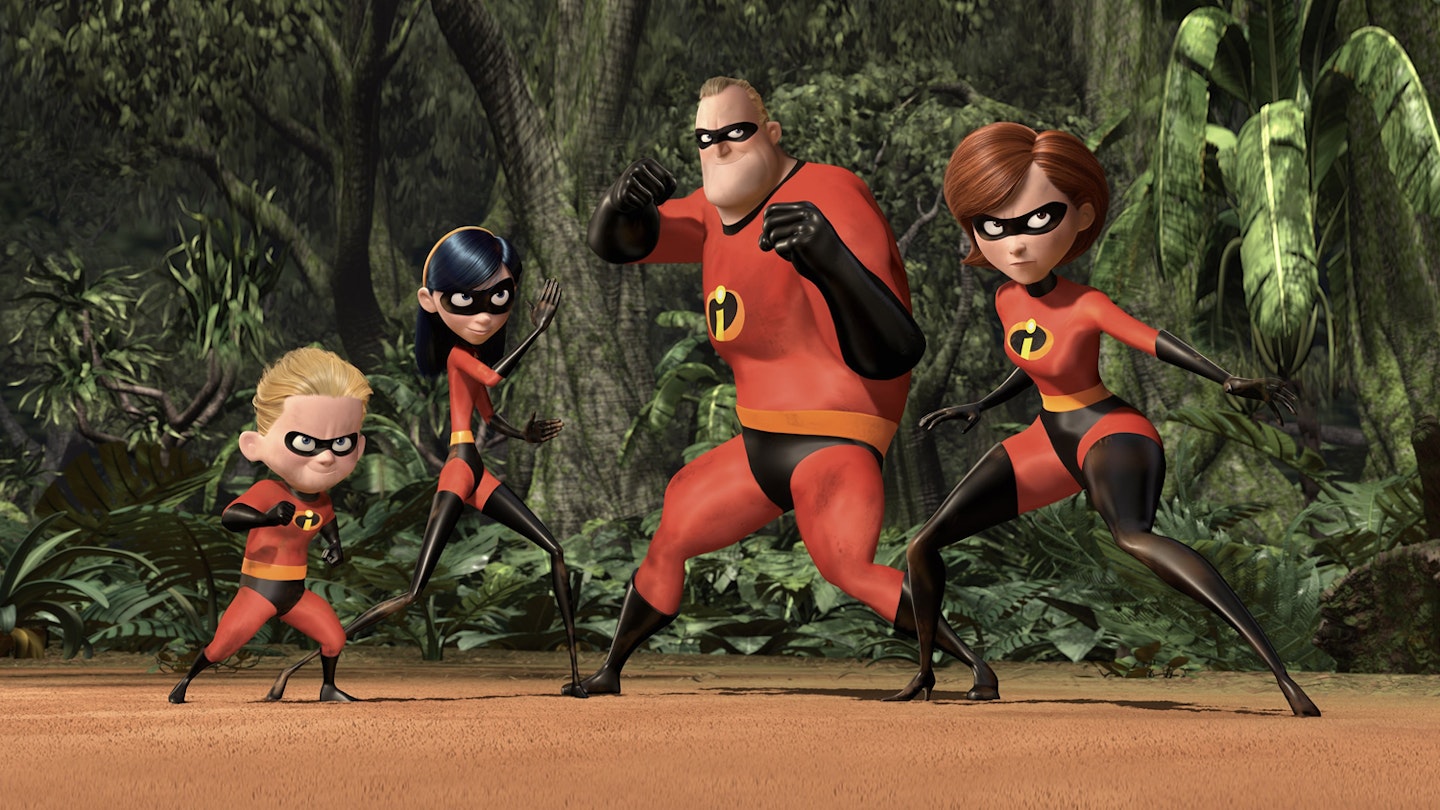
Director(s): Brad Bird | Runtime: 1hr 57m | Streaming on: Disney+
A few years before the Marvel Cinematic Universe’s creators found their winning blend of superheroic action and quippy humour, Brad Bird beat them to it. The Incredibles, his first Pixar film, rocketed him straight to the company’s ‘Brain Trust’ of directors who help to shepherd other filmmakers’ work and revealed itself to be a spry, warm take on the sort of family dynamics at play in teams such as The Fantastic Four. Focusing on “supers” Bob (Craig T. Nelson) and Helen (Holly Hunter) Parr, who have given up the hero game to raise their family, it sees Bob itching to get back in action despite government pressure to stay out of the way. A mysterious opportunity offers more than he bargained for, and the Parr clan will have to combine their abilities to combat a new threat. Bird wasn’t just ahead of the game on the heroic front – he also pinpointed the dangers of toxic fandom and the dangers of capes on costumes. The latter point, of course, outlined by the Bird-performed Edna Mode, fashion consultant to heroes. A character for the ages, dahling.
Read Empire’s review of The Incredibles.
12) Up (2009)
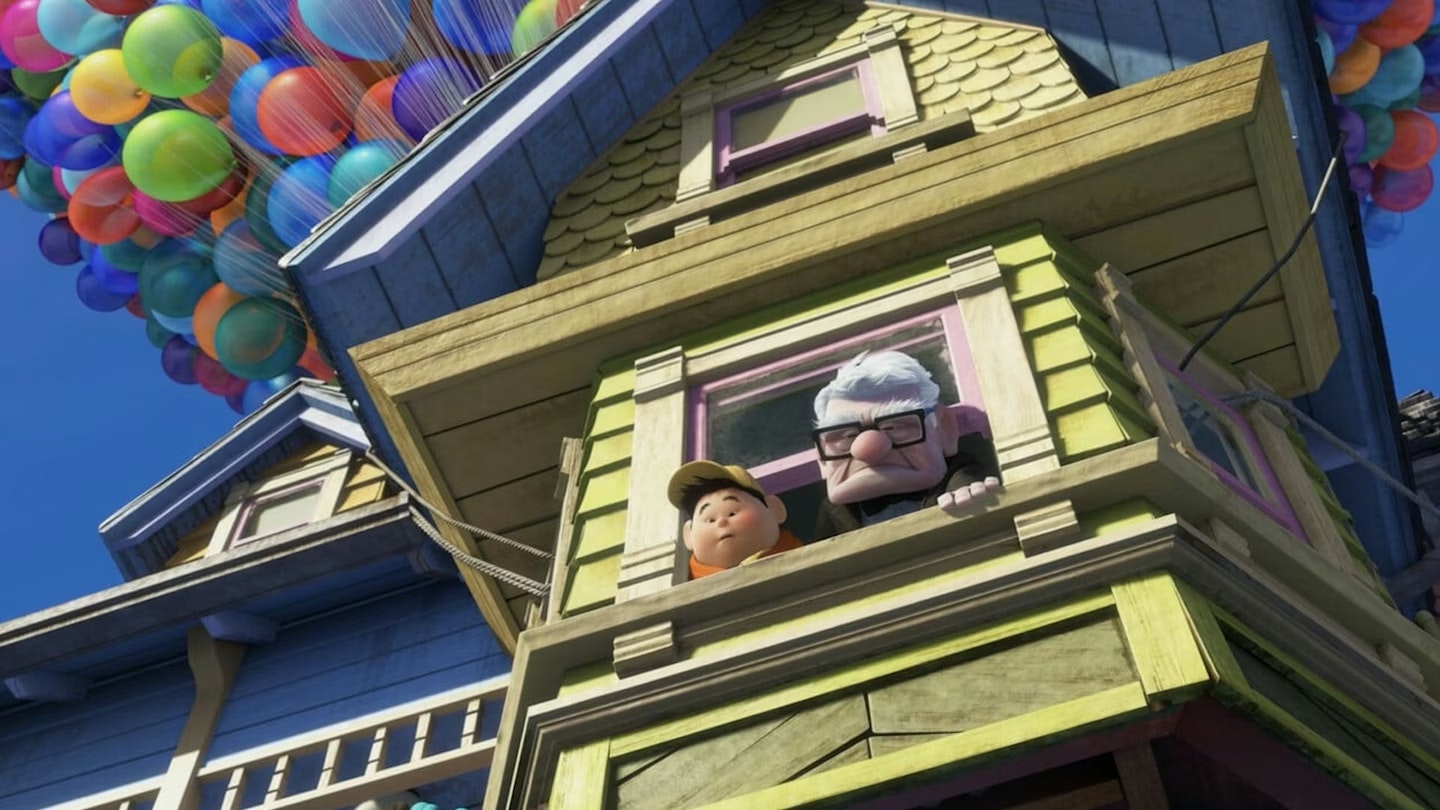
**Director(s):**Pete Docter | **Runtime:**1hr 37m | Streaming on: Disney+
Everyone talks about the opening 10 minutes of Up. And rightly so – it’s its own mini-masterpiece, beautiful and heartbreaking as adorable couple Carl and Ellie experience the ups (marriage, picnics, dancing) and downs (miscarriage, bereavement) of life in a single montage that guarantees floods of tears. But what comes next is equally miraculous – a wild, weird adventure movie in which the elderly Carl (Ed Asner) and energetic boy scout Russell (Jordan Nagai) unwittingly float away to South America on a flurry of vibrant balloons, encountering a giant bird called Kevin, a pack of talking dogs (“Squirrel!”), and an evil explorer. It’s a heady mix, but director Pete Docter coheres it all spectacularly – the grounded grief and the exotic escapism somehow exist in perfect harmony. Now that‘s a Pixar miracle.
Read Empire’s review of Up.
11) The Lion King (1994)
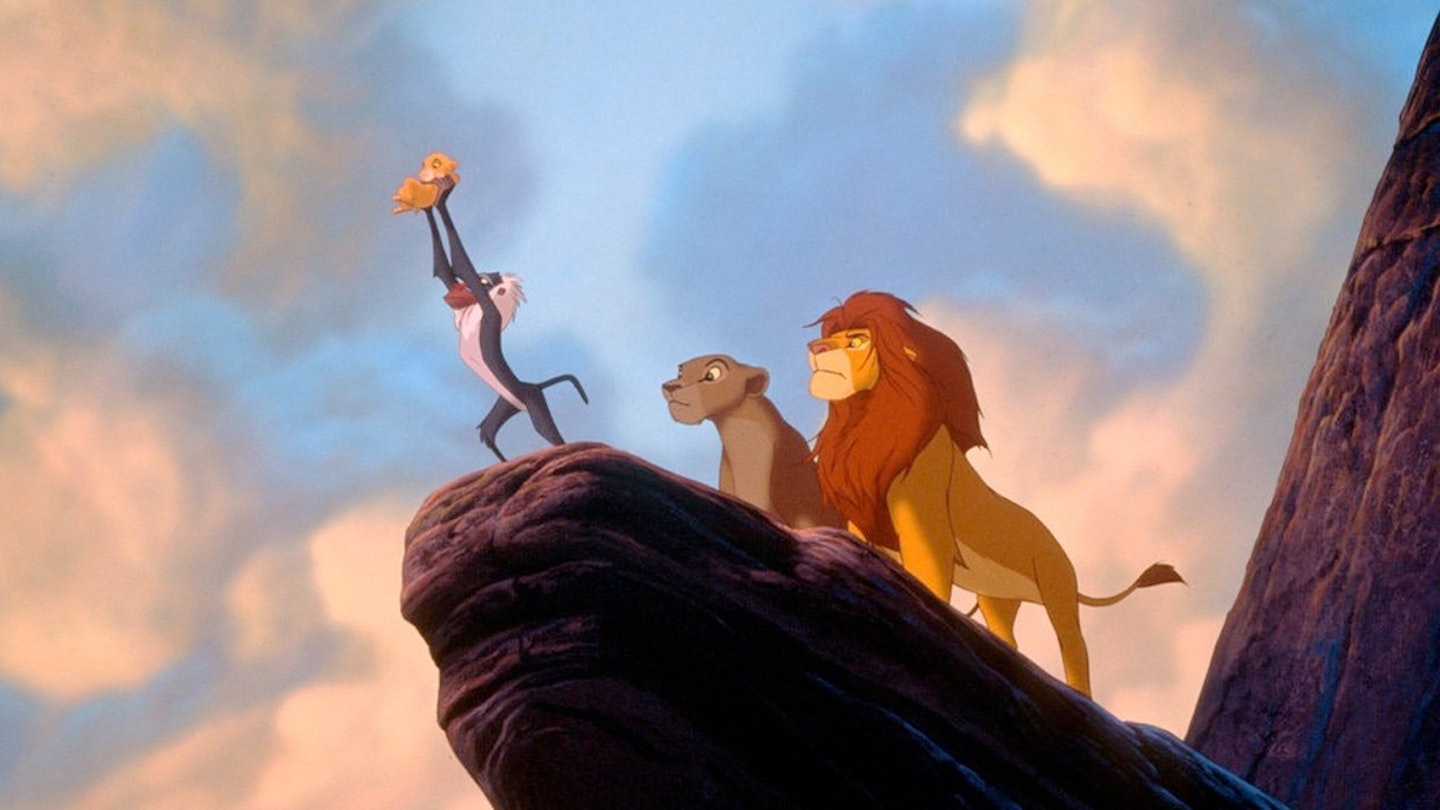
Director(s): Roger Allers, Rob Minkoff | Runtime: 1hr 34m | Streaming on: Disney+
In the heart of Disney’s ’90s renaissance, The Lion King found the studio back at the peak of its powers – and its anthropomorphised animal take on Hamlet is an astonishing thing. Essentially a sun-kissed African companion piece to Bambi, it’s a coming-of-age tale infused with murder and subterfuge – as lion cub Simba (Matthew Broderick) grows up in the expanse of Pride Rock, experiences a life-shattering parental death, and eventually takes his father’s place as the ruler of the animal kingdom. Timon and Pumbaa (Nathan Lane and Ernie Sabella) emerge as gold-standard sidekicks once Simba runs away from home, the Elton John-penned songs are off the chain (‘The Circle Of Life’! ‘Hakuna Matata’! ‘I Just Can’t Wait To Be King’!), and none other than James Earl Jones lends his booming voice to patriarch Mufasa. All these years later, it’s even clearer – The Lion King ain’t no passin’ craze.
Read Empire’s review of The Lion King.
10 — 1
10) Kubo And The Two Strings (2016)
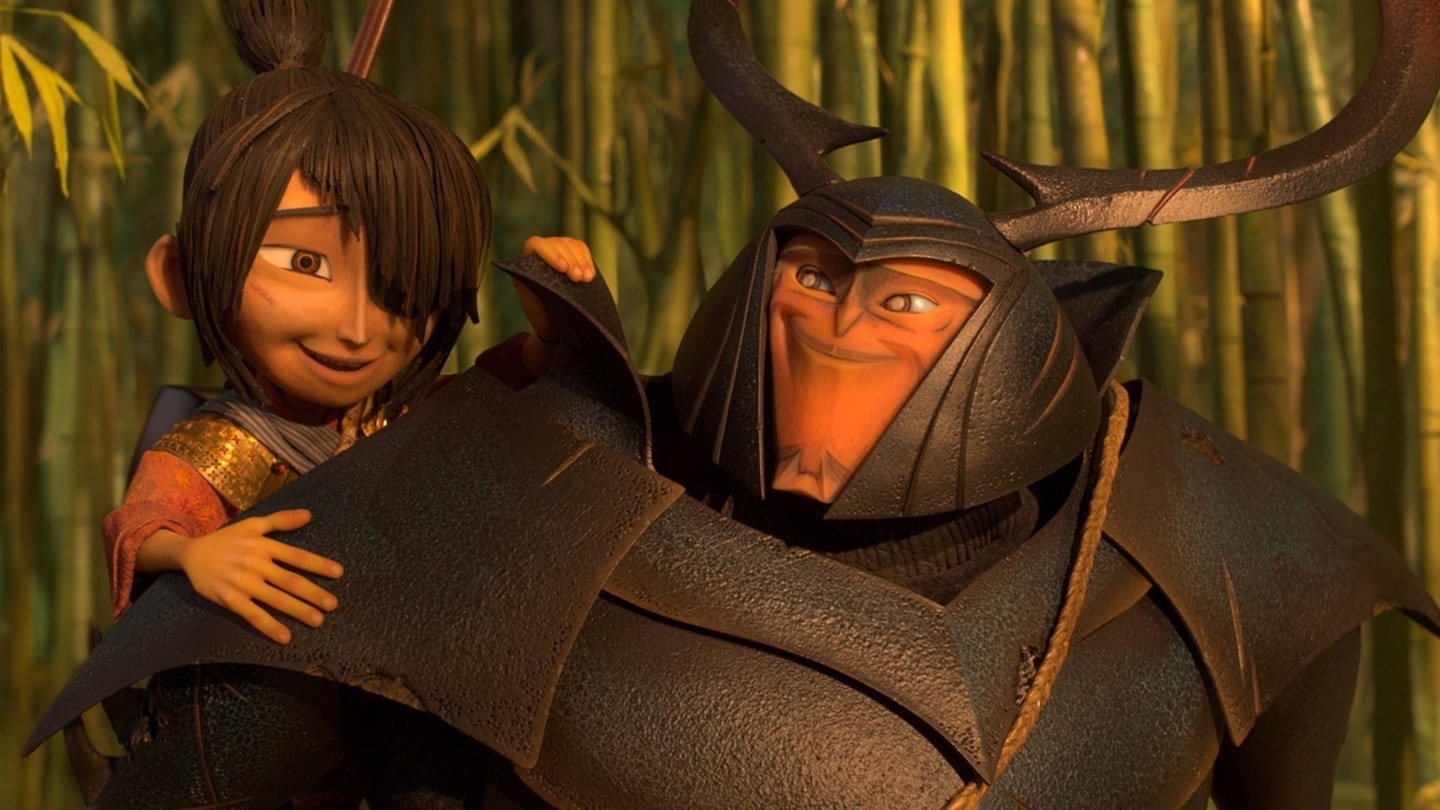
Director(s): Travis Knight | Runtime: 1hr 42m | Streaming on: ITVX
By this point, it was already clear that Portland-based animation studio Laika could produce great movies – but Kubo is widely regarded to be the pinnacle of their filmmaking so far. Drawing from samurai stories, it follows young Kubo (Art Parkinson and his, er, challenging family. His mother is dying, his grandfather stole one of his eyes when he was an infant, and his father is missing, presumed dead. Under attack from his aunts (who are sent by his grandfather to steal his other eye), Kubo must head out on a quest to find his father’s armor, the one thing he hopes can stop his grandfather. It’s an enchanting affair, bolstered by great voice work from Ralph Fiennes, Charlize Theron, Matthew McConaughey and George Takei, plus an eminently re-listenable score from Dario Marianelli, and has earned its place as one of the most creative and stylish examples of stop-motion out there.
Read Empire’s review of Kubo & The Two Strings.
9) The Iron Giant (1999)
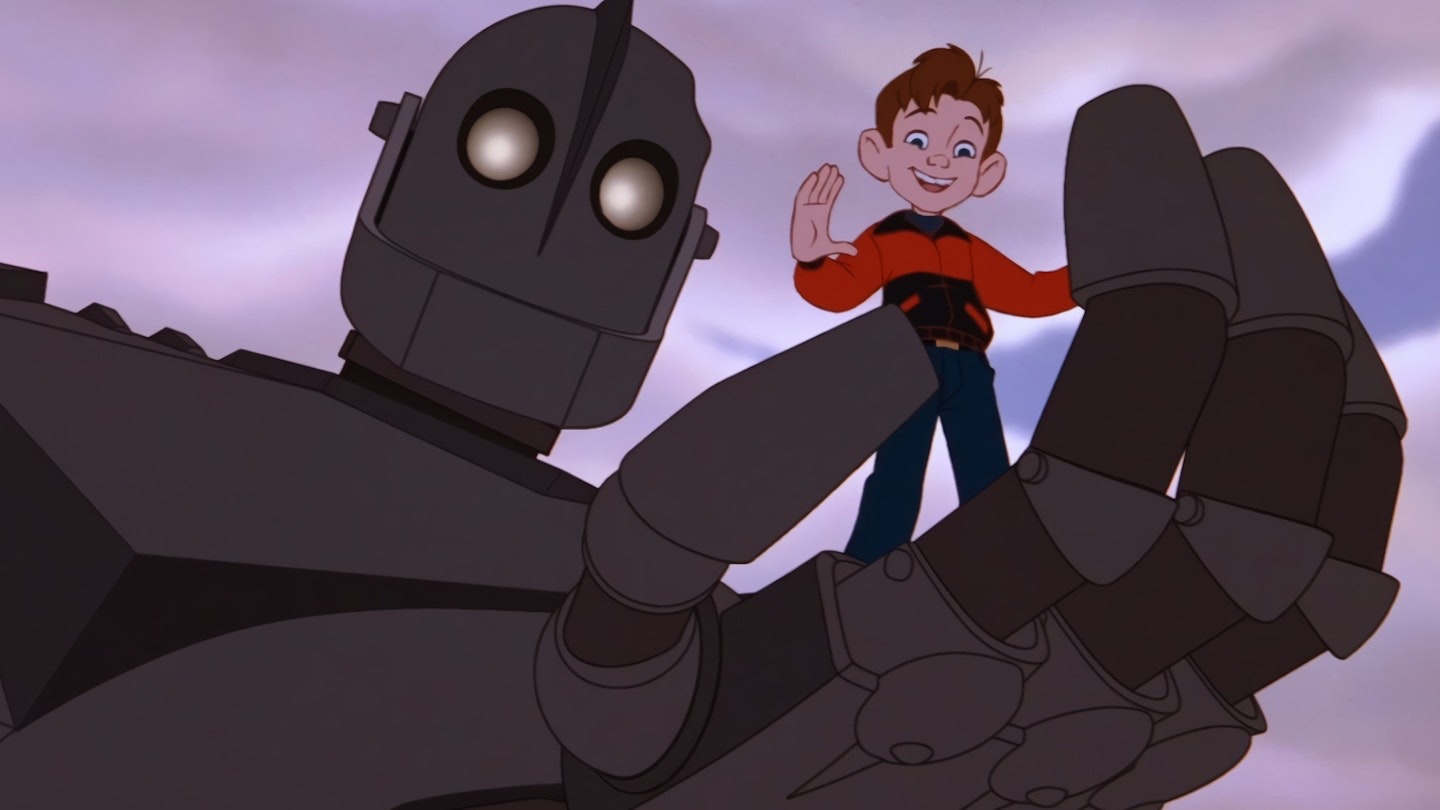
Director(s): Brad Bird | Runtime: 1hr 26m | Buy/Rent on: Apple TV, Prime Video
Before he joined CG giants Pixar, director Brad Bird worked with co-writer Tim McCanlies to (very loosely) adapt Ted Hughes’ The Iron Man. A beautiful, emotional throwback to 1950s paranoia thrillers, at its core it tells the heartening E.T-esque story of a lonely young boy and the giant robot who becomes his best friend. Bird weavs in themes of identity and fighting against the box people might wish to shove you in, while showing just how impressive traditional animation can be (even if the Giant himself is a computer-generated creation). Add in a gravel-gargling Vin Diesel as the voice of the towering metal man, and you’ve got a winner that sadly didn’t connect at the box office but has long since earned cult classic status. Oh, and have a giant box of tissues ready for the tears you’ll shed by the end.
Read Empire’s review of The Iron Giant.
8) Akira (1988)
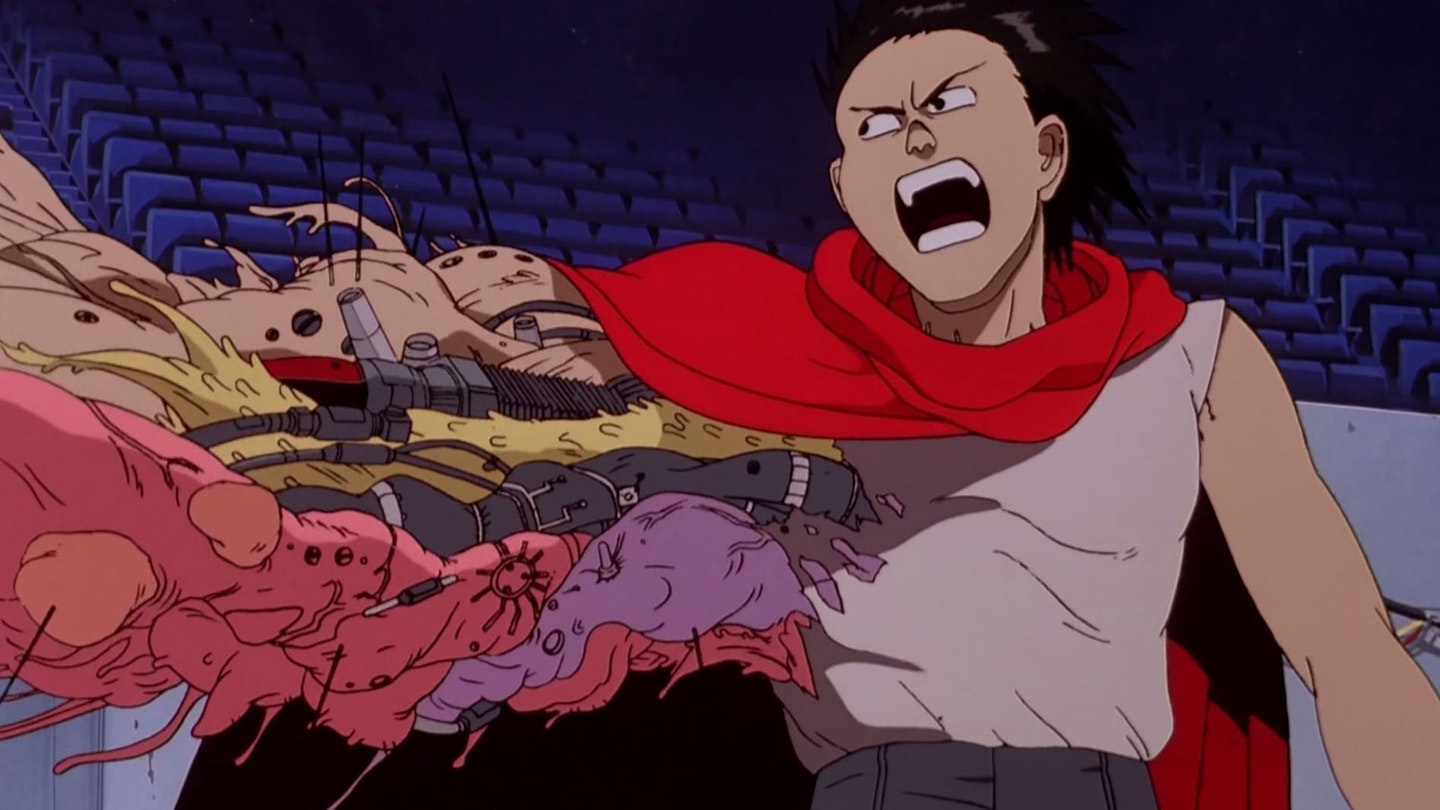
Director(s): Katsuhiro Otomo | Runtime: | Buy on: Amazon
To say Akira is insanely influential would be a major understatement. Not just in the world of anime, but beyond that – everything from The Matrix to Stranger Things can be traced back to Katsuhiro Otomo’s monolithic masterpiece. Set in (what used to be) the future of 2019, it follows a gang of biker kids in the sprawling city of Neo-Tokyo. When Tetsuo (Nozomu Sasaki) is injured in a crash and taken to a top-secret government facility, experiments give him telekinetic powers that soon spiral out of control and threaten to destroy the city – just as the mysterious Akira did 30 years previously. It’s up to his friend Kaneda (Mitsuo Iwata) to try and stop Tetsuo becoming a monster. Visually astonishing, thematically layered, and with dazzlingly kinetic action, Akira is captivating – even as its final reel becomes an increasingly abstract blend of metaphysical musings and flesh-mutating body horror.
Read Empire’s review of Akira.
7) Spirited Away (2001)
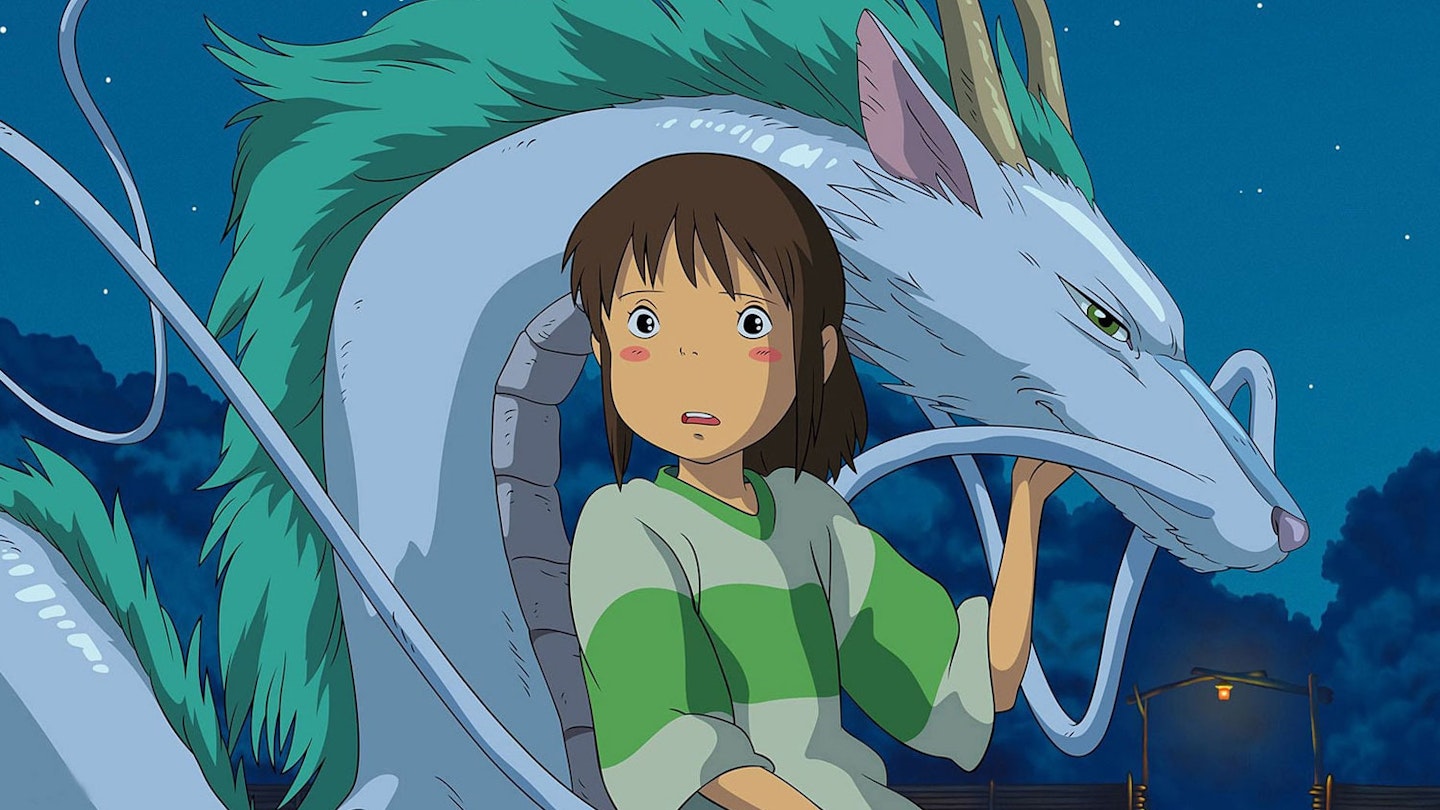
Director(s): Hayao Miyazaki | Runtime: 2hrs 5m | Streaming on: Netflix
The film that brought Studio Ghibli to the Western mainstream is, curiously, not its most accessible work – but Hayao Miyazaki’s coming-of-age fairytale is so steeped in gorgeous, culturally-specific Japanese imagery it’s no wonder it captured the world’s imagination. Darker than your typical Disney fare, it centres on Chihiro (Remi Hiiragi) who becomes trapped in a grand, mythical bathhouse frequented by spirits after her parents are transformed into pigs. There, she’s forced to work by the witch Yubaba (Mari Natsuki), and forms a friendship with dragon-boy Haku (Miyu Irino). If the narrative is often loose, especially as the film continues into its second hour, Spirited Away is beguiling and enchanting, conjuring up an entire world of curious creatures while contemplating notions of identity, spirituality, personal growth, environmentalism, and moral ambiguities that extend beyond simple good and evil.
Read Empire’s review of Spirited Away.
6) Toy Story (1995)
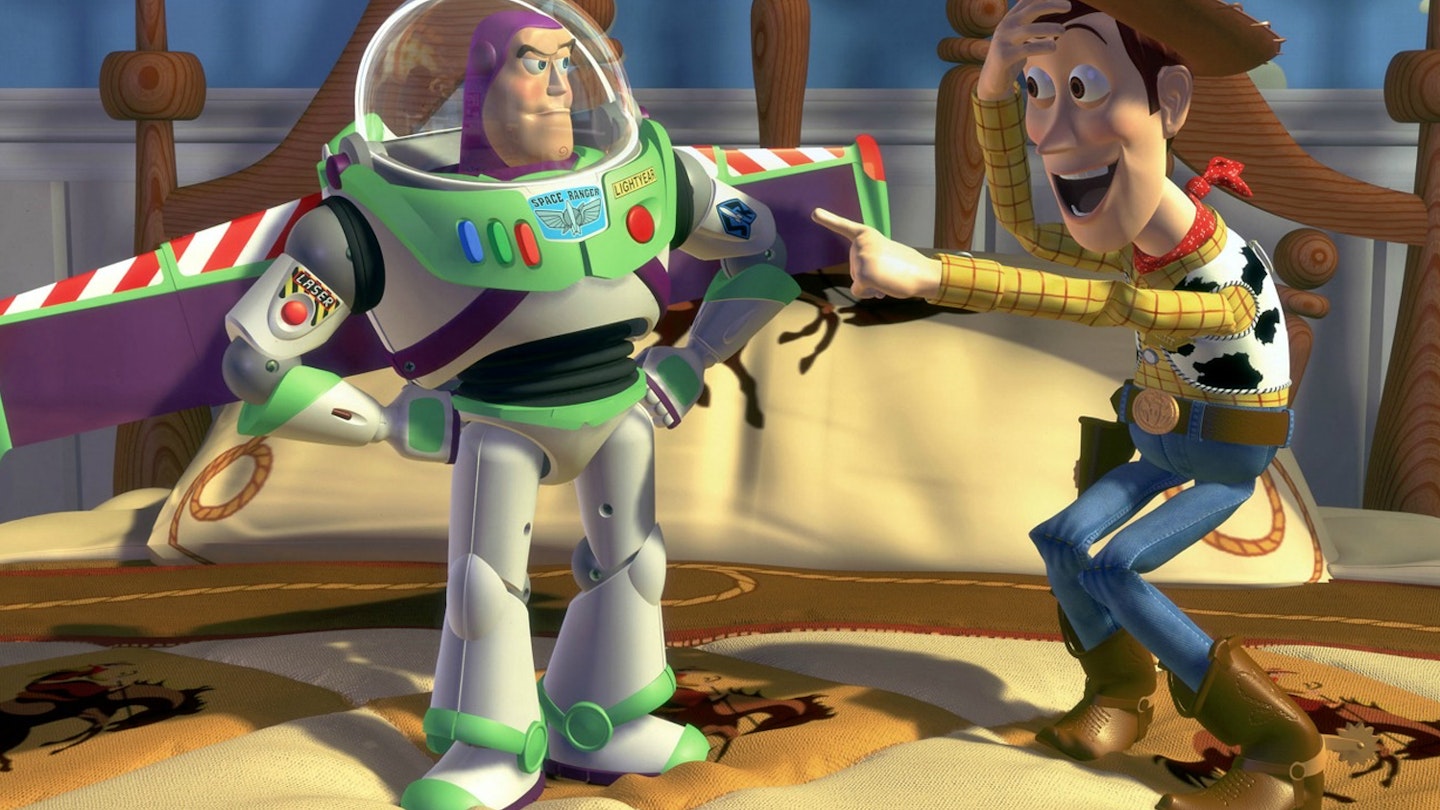
Director(s): John Lasseter | Runtime: 1hr 25m | Streaming on: Disney+
On a technical level, the impact of Pixar’s first full-length feature can’t be understated. It’s as significant a leap forward for the medium as the debut of Snow White And The Seven Dwarfs was nearly 60 years previously – cracking open a whole new world of fully-3D computer-generated animation. Using technology pioneered by the studio (in collaboration with Apple), Toy Story wasn’t just a phenomenon in its own right: it changed the visual style and filmmaking approach of nearly every major studio animation for decades to come. But beyond its seismic influence, it still stands up as a shining example of everything Pixar does best – it has dynamite buddy-duo dynamics in the bickering Buzz (Tim Allen) and Woody (Tom Hanks; it explores the emotions of anthropomorphised objects or animals; it creates an entire imaginative world from the seemingly everyday; and its screenplay is richly layered with characterisation and gags that work just as well for adults as they do for kids. The sequels might go bigger, but the original Toy Story remains a totally pure blast of creative joy – and nothing has been the same since.
Read Empire’s review of Toy Story.
5) My Neighbour Totoro (1988)
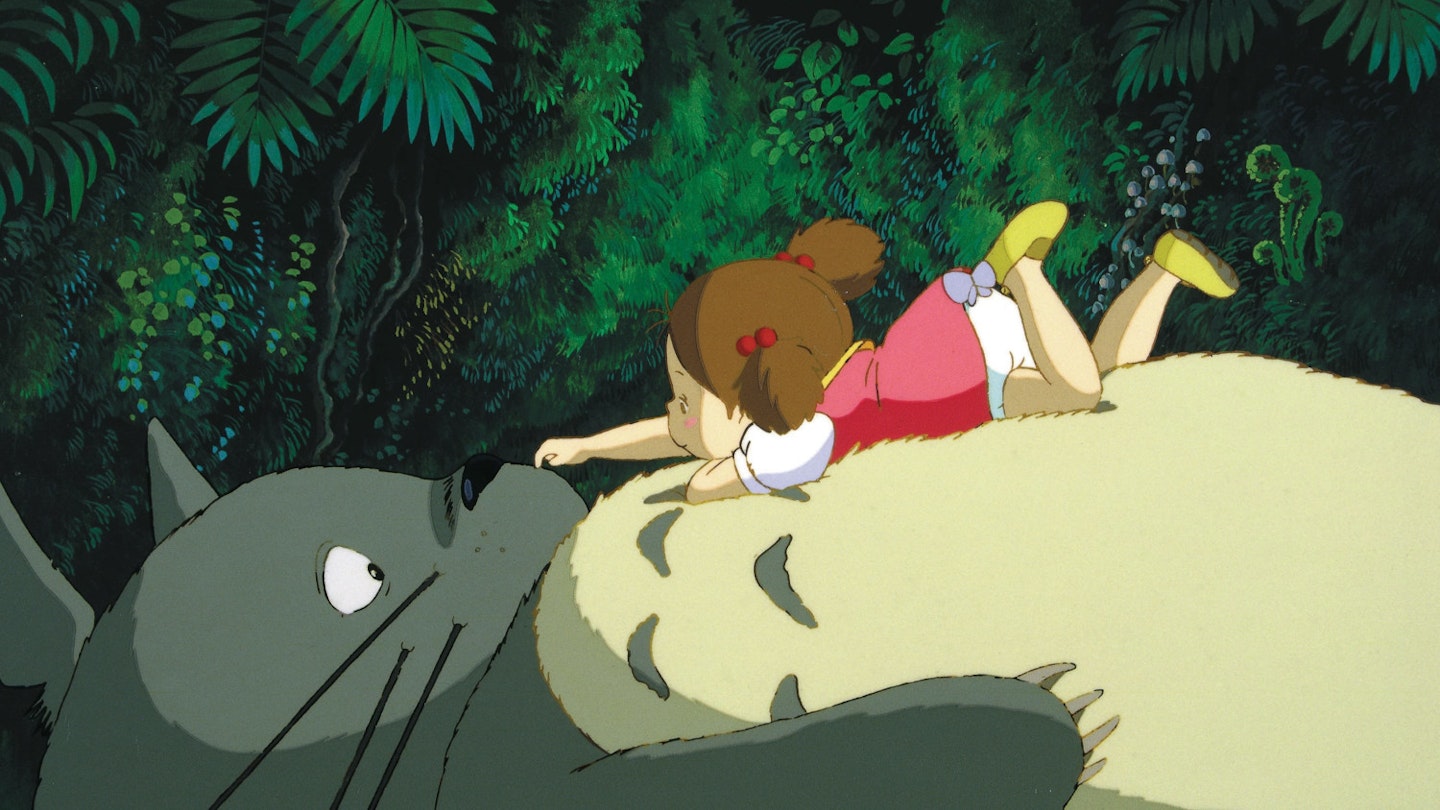
Director(s): Hayao Miyazaki | Runtime: 1hr 27m | Streaming on: Netflix
It’s impossible not to be charmed by the sheer goodness that exudes from Hayao Miyazaki’s ode to childhood. My Neighbour Totoro is bursting with imagination, while being far more laid-back than most kids’ films – a gentle jaunt into the Japanese countryside, filled with forest spirits, friendship, and furry creatures. Sisters Satsuki (Noriko Hidaka) and Mei (Chika Sakamoto) find themselves spending a summer holiday in a rural house while their mother recovers from an illness in hospital, and soon find a giant, grey furball in the nearby woods. If that sounds simple, well, it is – but it’s that simplicity that makes the film such a delight, coupled with the fact that there’s no villain or antagonist across the entire runtime. From Totoro himself, to the Soot Sprites (which return in Spirited Away) and the Catbus, it’s full of iconic imaginative designs, serene imagery, and with a theme-tune that’ll never leave your head: “To-to-ro to-tooo-ro!” It’s no surprise that Miyazaki’s first masterwork topped our rundown of the best kids’ movies ever made — this is the kind of animated movie you love your whole life through, that speaks to the child and to the child inside quite unlike anything else.
Read Empire’s review of My Neighbour Totoro.
4) Wall-E (2008)
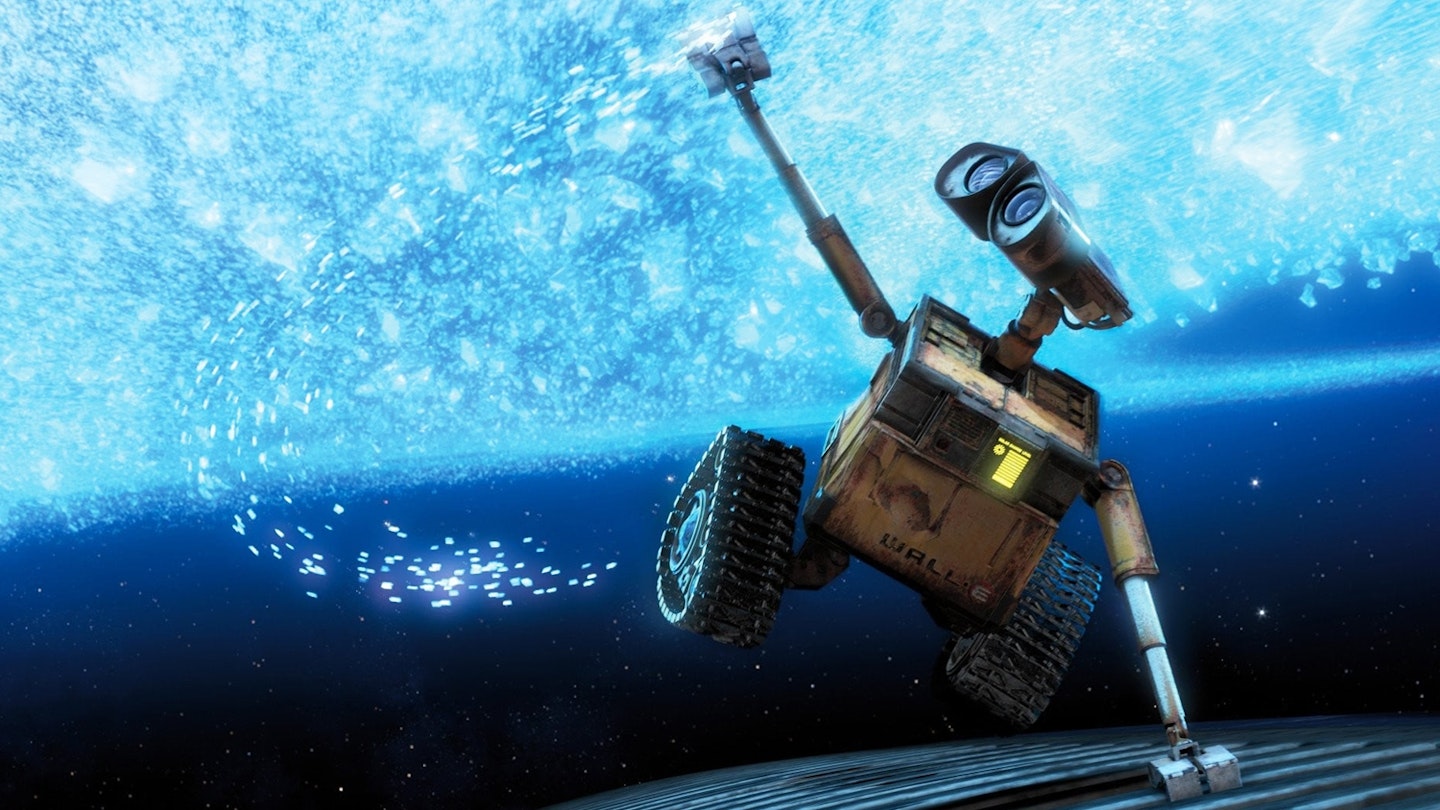
Director(s): Andrew Stanton | Runtime: 1hr 40m | Streaming on: Disney+
The opening act of Wall-E is nothing short of astonishing: a largely dialogue-free trundle around the scorched remains of human civilisation, as the titular robot cleaner crushes Earthly detritus into neat cubes while pining for any kind of companionship. It’s at once chilling and charming – the adorable swivel-eyed Wall-E contrasted against the horrifying mess we’ve left behind. The scope of it is stunning – and then in swoops fellow robo Eve, turning the whole film on its head, as Wall-E becomes smitten and a warped sci-fi rom-com eventually gives way to an intergalactic chase movie. From the fire extinguisher-assisted space dance, to Wall-E dancing along to Hello Dolly, to a mission to protect the one final piece of viable plant life, Wall-E is frequently breathtaking. With its dire ecological warnings, it’s a film sure to resonate deeply for decades to come – all the while being a masterful piece of science fiction, with heart-popping emotion to boot.
Read Empire’s review of Wall-E.
3) Princess Mononoke (1997)
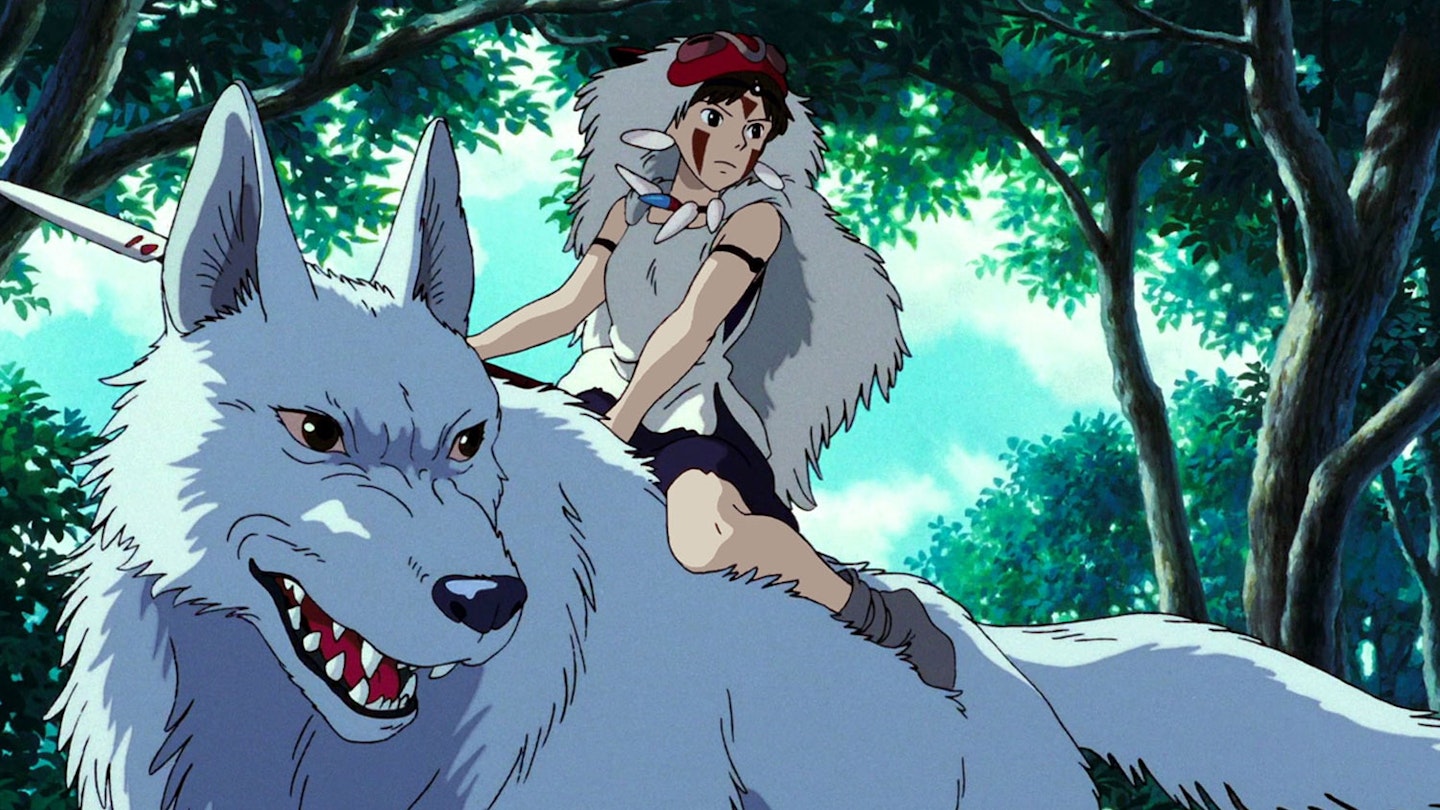
Director(s): Hayao Miyazaki | Runtime: 2hrs 14m | Streaming on: Netflix
With lopped limbs aplenty, giant marauding boars, and a flesh-mutating curse, Princess Mononoke is darker than your usual Ghibli fare. It’s a stunning, sweeping epic though – a uniquely Japanese fantasy saga that feels equivalent to Lord Of The Rings in its mythical scope and narrative sprawl. It’s perhaps the best example of Hayao Miyazaki’s environmentalist themes – in which civilisation isn’t necessarily evil but must find a way to co-exist with nature, as explosive conflict threatens the future of both. Set nearly 1000 years ago, the story centres on Ashitaka (Yoji Matsuda), a warrior whose arm becomes cursed in a battle against an infected boar god. Venturing west in search of a cure, he finds himself caught up in a war between the industrious people of Iron Town and the raw power of the natural world. With slick, kinetic action, ethereal imagery, and a nuanced narrative, Mononoke is a mammoth achievement.
Read Empire’s review of Princess Mononoke.
2) Inside Out (2015)
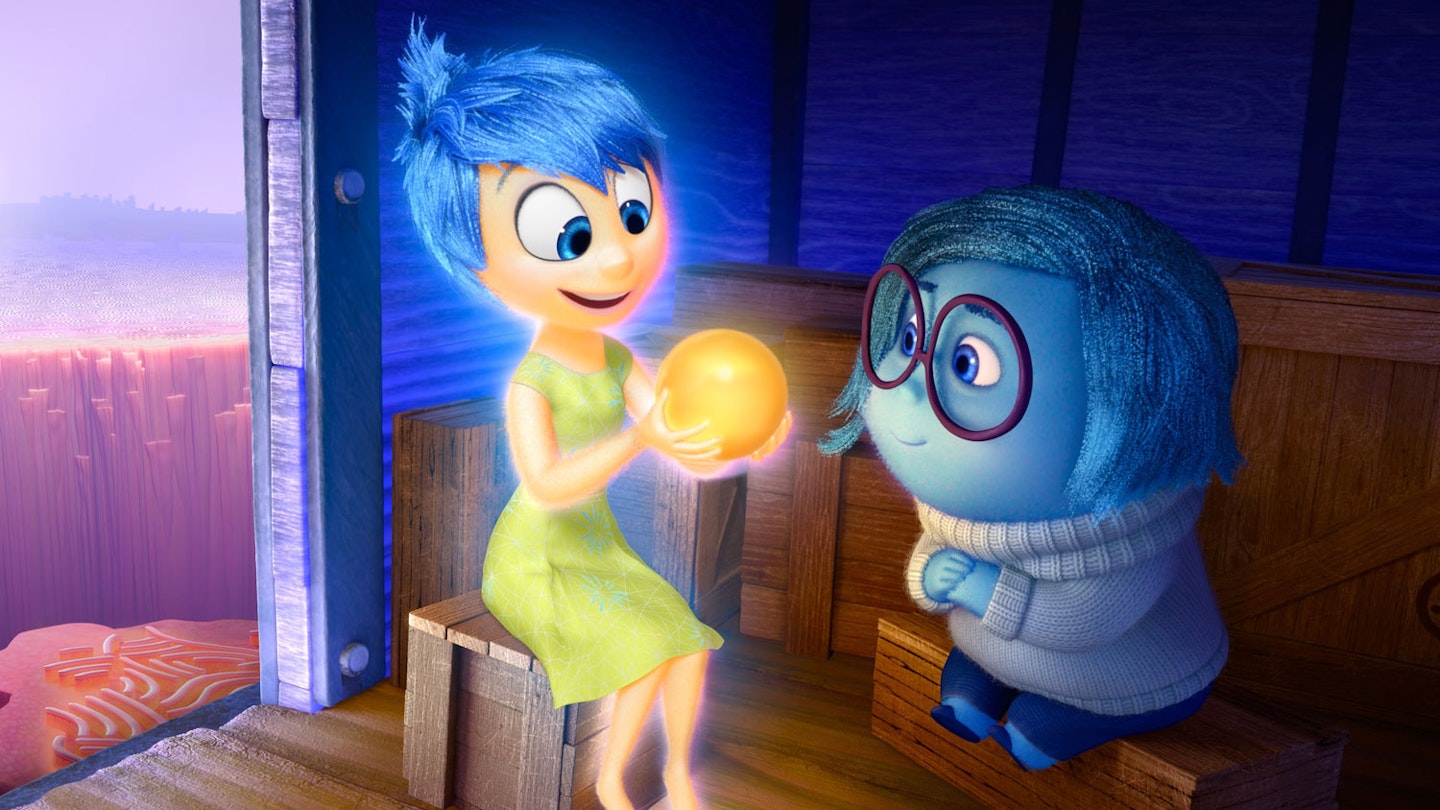
Director(s): Pete Docter | Runtime: 1hr 36m | Streaming on: Disney+
Few films can claim to have the sheer emotional intelligence of Inside Out – a film about intelligent emotions that’s both a rollocking adventure, and a nuanced exploration of feelings, dreams, memory, and imagination. If the protagonist is technically Riley (Kaitlyn Dias), really it’s the voices in her head – Joy (Amy Poehler), Sadness (Phyllis Smith), Fear (Bill Hader), Disgust (Mindy Kaling) and Anger (Lewis Black) – that take centre stage. With all the upheaval of moving to San Francisco with her family, Riley’s inner world is thrown into turmoil – teeing up an existential odyssey as Joy and Sadness careen through the corridors of her mind, via abstract thought, the dream factory, and halls filled with precious memories. It’s beautifully conceptualised and gorgeously realised, resulting in a remarkable work of art whose perceptive notions about the need for sadness, the way happy memories become tinged with melancholy over time, and how we each find our own paths towards our coming of age will surely resonate for generations to come. And don’t even get us started on Bing Bong…
Read Empire’s review of Inside Out.
1) Spider-Man: Into The Spider-Verse (2018)
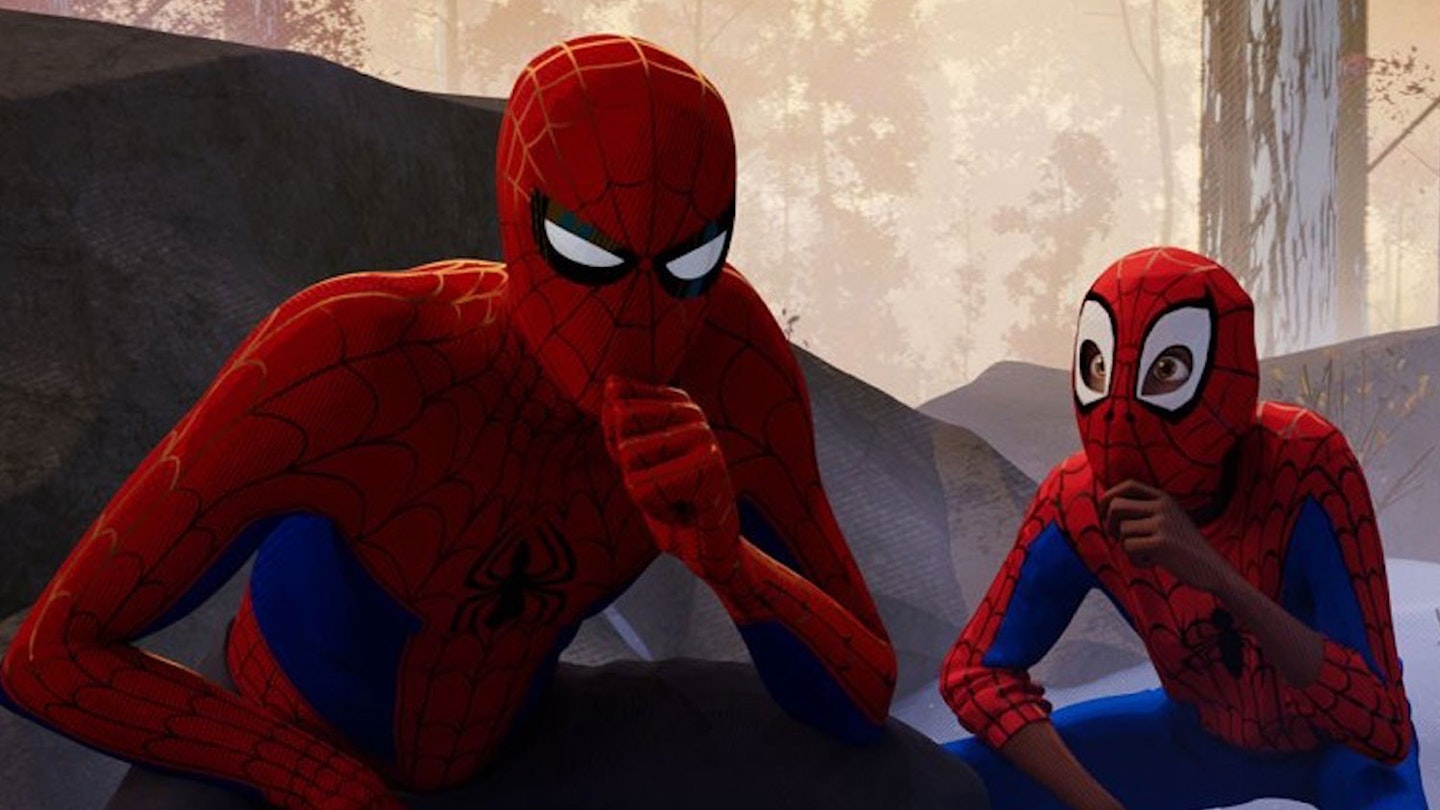
Director(s): Bob Persichetti, Peter Ramsey, Rodney Rothman | Runtime: 1hr 57m | Streaming on: Now TV
If Toy Story was the biggest leap forward for mainstream feature animation since Snow White, it took another 23 years for the needle to shift so significantly once again. But then in thwipped Spider-Verse, boasting a jaw-droppingly ambitious visual identity that feels completely distinct from anything else – blending 2D and 3D textures with comic book paper flourishes, amending the frame-rates of different characters within the same scene, chucking in blasts of acid-flash colour, and leaning into the cartoonish, exaggerated qualities that animation makes possible. And that’s before you see our hero Miles Morales (Shameik Moore) sharing the screen with the black-and-white Spider-Man Noir (Nicolas Cage), the anime Peni Parker (Kimiko Glenn), and the Looney Tunes-esque Spider-Ham (John Mulaney) all in one frame. It’s an all-out pop-art freak-out of a movie, with gorgeous details and genius sight gags packed into every frame (‘Bagel!’).
And all the visual razzmatazz serves a real emotional purpose, too, encapsulating the characters’ head-spaces. When Miles’ Spidey-senses kick in, they do so with pulsing psychedelic colours. And when he’s at the peak of his powers in the stand-out ‘What’s Up, Danger’ sequence, the screen flips so that his head-first leap of faith down to the city below instead appears sees him ascending to the heavens, the entire world pivoting around him. Away from the visuals, the characters are layered and loveable, Miles proves himself a more-than-worthy Spider-Man, the multiverse storyline is brilliantly handled, and the emotional gut-punches land with total accuracy too. Plus, with Phil Lord and Chris Miller on producing duties (Lord co-wrote the screenplay too), it’s packed with their signature laugh-out-loud gags. Spider-Verse excels on so many levels, it’s already an instant classic – both as a superhero movie, and as an animated masterwork. It’s a film so ahead of the game, it feels like it blasted in from another universe entirely.
Read Empire’s review of Spider-Man: Into The Spider-Verse.