

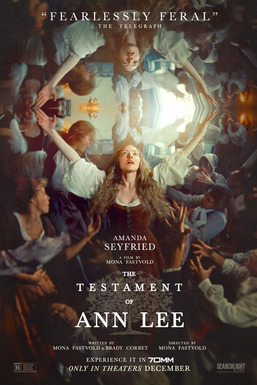
In 18th-century Manchester, spiritual leader Ann Lee (Amanda Seyfried) founds new religious movement the Shakers, before travelling to America to spread the word.
A musical biopic of the woman who led a tiny branch of Christianity in the 1700s may sound like a pretty niche prospect — but with The Testament Of Ann Lee, director and co-writer Mona Fastvold (The World To Come) is employing every tool in her movie-making arsenal to shine a light on this little-known corner of history.
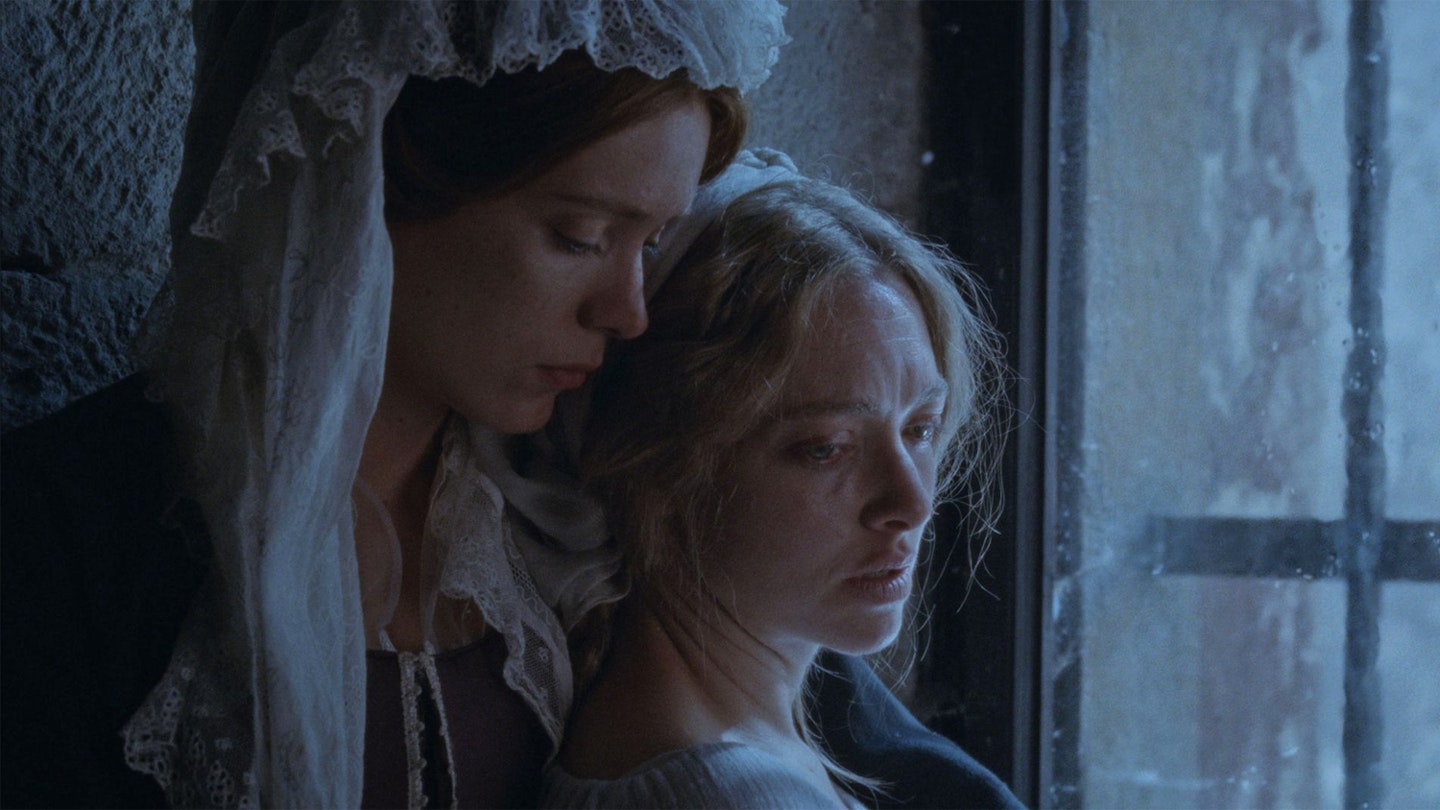
The film depicts the origin of the Christian sect known as the Shakers, so named because of how they worshipped through ecstatic song and dance. They were led by Ann Lee (played in utterly committed fashion by Amanda Seyfried), a young woman from Manchester who rose to prominence after proclaiming herself as the second coming of Christ. Facing resistance to female religious leaders in the UK, she and her few followers (including Christopher Abbott as frowning husband Abraham, and supporting MVP Lewis Pullman as brother William) journeyed across the Atlantic to build a settlement and spread their gospel from upstate New York.
Despite the period setting, much here feels remarkably prescient.
It’s quite a tale, and one that meanders at times — but Fastvold is less concerned with telling you every detail than she is with putting you in the hearts and minds of her characters. With incredible use of music (by The Brutalist‘s Daniel Blumberg) and choreography (by Vox Lux‘s Celia Rowlson-Hall) adapted from real Shaker hymns, songs and movements, the film sweeps you up in the group’s devotion to their cause, each primal gasp and yell and throwing of their arms to the heavens conveying the sense of euphoria they felt in prayer. An impeccably edited routine on the ship’s deck is a breathtaking standout, but the music flows through every scene, allowing Seyfried to showcase her triple-threat talent.
Despite the period setting, much here feels remarkably prescient. The Shakers may live by a standard of evangelicalism rarely seen these days, but their core values — pacifism, creativity, gender equality, communal living — allude to a type of progressive thinking. Lee’s vehement espousal of celibacy is somewhat antiquated, but, as implied here, derives from trauma over her exposure to sex as a child, the violence of multiple difficult pregnancies and infant loss. She sought control over her body by removing others’ expectation to access it — which, nearly 300 years later, is still a completely understandable instinct.
With the Shakers reaching a peak of around 4,000 members, but reduced to only a handful in the present day, this telling of their story is like a glimpse at a moment in time when one woman believed she could make the world better — and for a short while, for some people, she did. Niche, it may be — but that’s a testament worth paying attention to.
A one-of-a-kind cinematic experience from Mona Fastvold, shot in glorious 70mm, fuelled by music and movement that will shake your soul. See it on the big screen, if you can.