

Jump to a section:
We believe in genuine research and hands-on testing. If you do too, click here to add Empire as a preferred source on Google.
A monitor can be dull. A background fixture of corporate comedies, they seem to exemplify mundanity rather than disrupt it. Little more than makeshift mirrors for a David Brent tie adjustment. However, this needs must computer component becomes a must-have when doing more than simply scanning emails and spreadsheets. Turn away from work and towards play, and another possibility presents itself: a gaming monitor. Now, that’s a far more interesting proposition.
Intricate artistic choices get lost on bog-standard displays, and they can’t keep up with the pace of the action. These screens serve to properly reflect the painstaking work of designers and programmers. For that, quality resolution, high refresh rates and low response times are required – all of which are prioritised by the best gaming monitors. Plus, with gamers as their focus, they often include extra features to make PC or console campaigns even more enjoyable.
The best gaming monitors, at a glance
We’ve investigated models from leaders in the field – like ASUS, AOC & MSI – to see which can stake a claim as the best of the bunch. That said, as with all premium tech, there’s the potential for the price to spiral. If you want to spend more than £1,000 there are options out there, including colossal curved UltraGear and Samsung creations (the LG 45GX950A-B and LS49CG954SUXXU Odyssey, for instance). But past a certain point you’re paying for display real estate that most gaming desks will struggle to accommodate. You may find that one of the best TVs or projectors is actually a better bet.
For a dedicated gaming setup though, a suitably sized screen is a no-brainer. Below are a variety of options to show what the gaming monitor market has to offer. Selecting OLED over IPS or curved over flat should reflect not just your budget, but also what and how you play. The best choice for a casual gamer won’t necessarily be the same as that for a first-person shooter, action-adventure or strategy expert. We’ve analysed these definitions and distinctions in our terminology guide but, for now, here’s our pick of the best gaming monitors of 2026.
How we chose the best gaming monitors
Our choices are determined by our experience as consumer tech journalists. Through research and testing, we have compared different monitors to see which offer the best value. We’ve selected a range of monitors, each with their own use case, as we realise that your choice will be determined by budget, space, related hardware and other factors. Reliable and respected retailers and brands are featured. Further information on how we test and choose products is available, and links to a comprehensive list of specs for each monitor can be found at the end of this guide.
Best gaming monitors in 2026
Researched & recommended
Best gaming monitor overall
 ROG
ROGPrice: £599.00
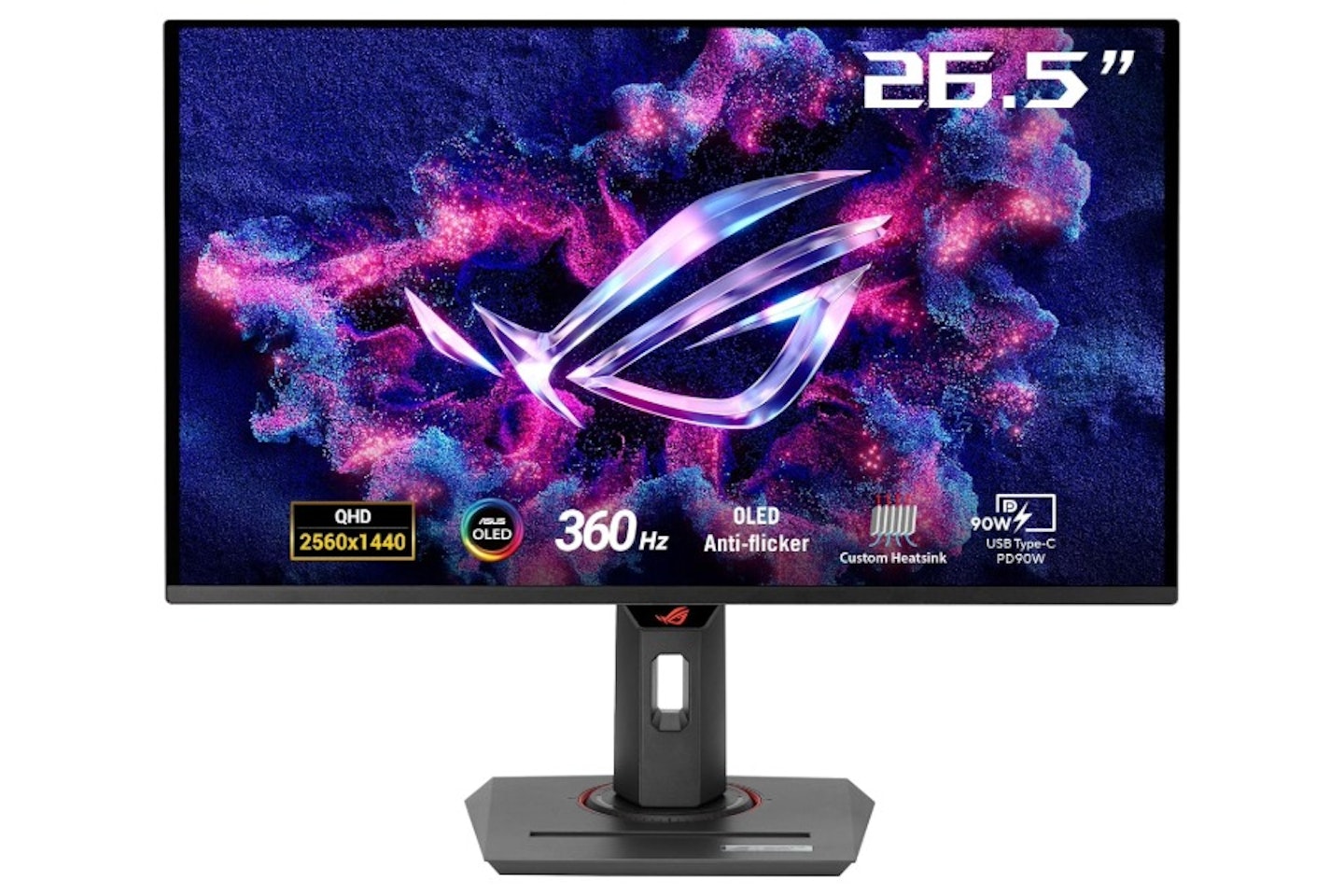
Gaming is often just one part of what computer companies do. That can’t be said of ROG, where the name itself (Republic of Gamers) is the giveaway. The brand is highly regarded for its gaming hardware, and when it comes to its monitors we think the ROG Strix OLED XG27ACDNG is the first place you should look.
This is a 27-inch gaming monitor with 1440p resolution. There’s a strong case for arguing that’s the perfect combo. You can find out more about those numbers at the end of this guide, but they essentially result in a screen that’s not so small that you lose detail and not so large that things can appear stretched. At this size and pixel density things are working in harmony without overburdening your GPU (Graphics Processing Unit) – a risk with larger 4k monitors. It also delivers a 360Hz refresh rate and a 0.03ms response time. Both brilliant for fast-paced gaming. The refresh rate of most 32-inch TVs is 60Hz, so 360Hz is exceptional. A high rate means the display updates more frequently, letting you react quickly to in-game events. Likewise, a response time of less than a third of a second rules out motion blur so that sweeping camera pans and moving targets are as precise as possible.
So, strong fundamentals which shouldn’t be undersold. However, you’ll find that they’re not unheard of in monitors of this price. What you’re less likely to encounter is an extremely impressive QD-OLED display. This technology is increasingly the benchmark for quality and a feature of many of the best TVs. Offering per-pixel illumination, they provide deep blacks and staggering contrast. You can expect vivid imagery that makes everything from eerie night-time stealth missions to sunlit racing tracks immersive. HDR support further broadens the colour palette and enhances highlights for a more cinematic experience.
One essential it does overlook is audio, but sound is often better served by external speakers, and other practical considerations are here in abundance. There are broad input options, DisplayWidget Center software to adjust settings, custom heatsink to help prevent screen burn and a height adjustable stand (with tilt, swivel and pivot). Ultimately, a spec sheet this impressive is a rare find at this price and that’s why the ROG Strix OLED XG27ACDNG takes the top spot as the best overall gaming monitor.
Want to spend less? The XG27AQDMG is a version down from this monitor and has a different RRP due to its Glossy WOLED instead of OLED screen and the lower refresh rate. However, those changes don’t prevent it from being an extremely desirable display for gamers.
Pros
- QD-OLED display with 1440p resolution balances sharp visuals and GPU efficiency for immersive gaming
- Performance features include a 360Hz refresh rate and 0.03ms response time, ensuring ultra-smooth gameplay
- Premium build with extensive adjustability to find the best angle for you
Cons
- Budget will need to factor in speakers as these are not included
| Screen size | 26.5-inches |
| Resolution and screen type | 2560×1440, QD-OLED |
| Refresh rate | 360Hz |
| Response time | 0.03ms |
| HDR | DisplayHDR 400 True Black |
| Connectivity | 1 x DisplayPort 1.4, 1 x HDMI 2.1, 1 x USB-C, USB hub |
| Speakers | No |
| Energy rating | F |
| Dimensions (w x h x d, with stand) | 60.9 x 44.9 x 18.8cm |
| Weight (with stand) | 6.1kg |
Price: £599.00
Researched & recommended
Best budget gaming monitor
 Samsung
Price: £88.99
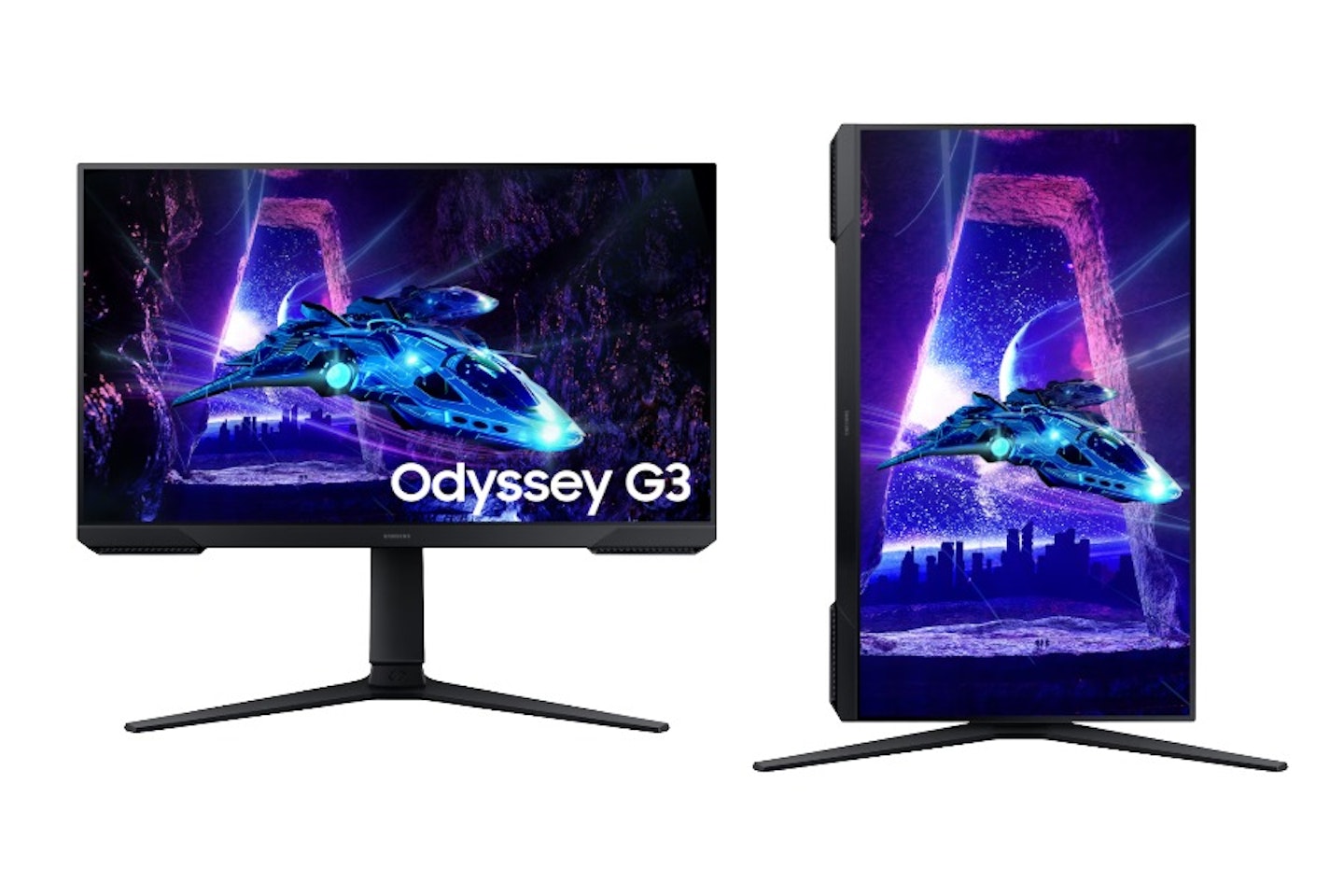
At close to £100, the 24-inch Samsung Odyssey G3 is our best budget monitor choice. It features all the gaming monitor basics, but offers great value by taking things that little bit further.
The refresh rate, for instance, is 180Hz (many cheaper 24-inch screens will top out at 100Hz). Likewise, a 1 millisecond response rate is impressive. Both contribute to lag-free gameplay. Elsewhere, AMD Freesync helps with preventing screen tearing. This means that the frame rate delivered by the GPU is in sync with the monitor’s refresh rate and not likely to create mismatched or ‘torn’ images.
On a more practical level, it includes a feature which is frustratingly difficult to find on smaller, less expensive monitors – height adjustment. Not only does the G3’s ergonomic stand deliver this, but it also allows a 90 degree pivot so that the screen can function in portrait. Eye Saver mode is another functional but important addition which should help you play for longer by minimising blue light. Plus, there’s the more gamer-focussed addition of a crosshair to help you line up shots from a virtual bow, or BFG if you’re revisiting Doom.
It’s a VA (Vertical Alignment) rather than an IPS (In-Plane Switching) panel, which is actually nothing to do with price. Each technology has its own benefits and it’s a matter of personal preference which to opt for. Generally speaking, a VA panel offers higher contrast ratios for deeper blacks. So if you’re gaming in a darker room, this might be a particularly good choice. Conversely, if you need a screen for somewhere where there’s lots of unavoidable light you might find that it looks washed out. It’s also a 1080p resolution, something which keeps the price low but is not as good at doing justice to many modern games. For that, a 1440p screen is preferred.
If height adjustment isn’t an essential, the AOC 24G4HRE is also great value. It’s an IPS screen and features an even higher refresh rate than the G3.
Pros
- Ergonomic stand with height adjustment and 90-degree pivot – rare at this price point
- AMD FreeSync minimises screen tearing for a better visual experience
- Less lag thanks to a 180Hz refresh rate, great for a budget monitor
Cons
- Doesn’t feature a USB hub for connecting peripherals like a mouse or keyboard
| Screen size | 24-inches |
| Resolution and screen type | 1920 x 1080, VA |
| Refresh rate | 180Hz |
| Response time | 1ms |
| HDR | HDR10 |
| Connectivity | 1 x DisplayPort 1.4, 1 x HDMI 2.0, headphone jack |
| Speakers | No |
| Energy rating | E |
| Dimensions (w x h x d, with stand) | 54.4 x 49.8 x 23.4cm |
| Weight (with stand) | 3.9kg |
Price: £88.99
Researched & recommended
Best 1440p gaming monitor
 AOC
AOCPrice: £249.00
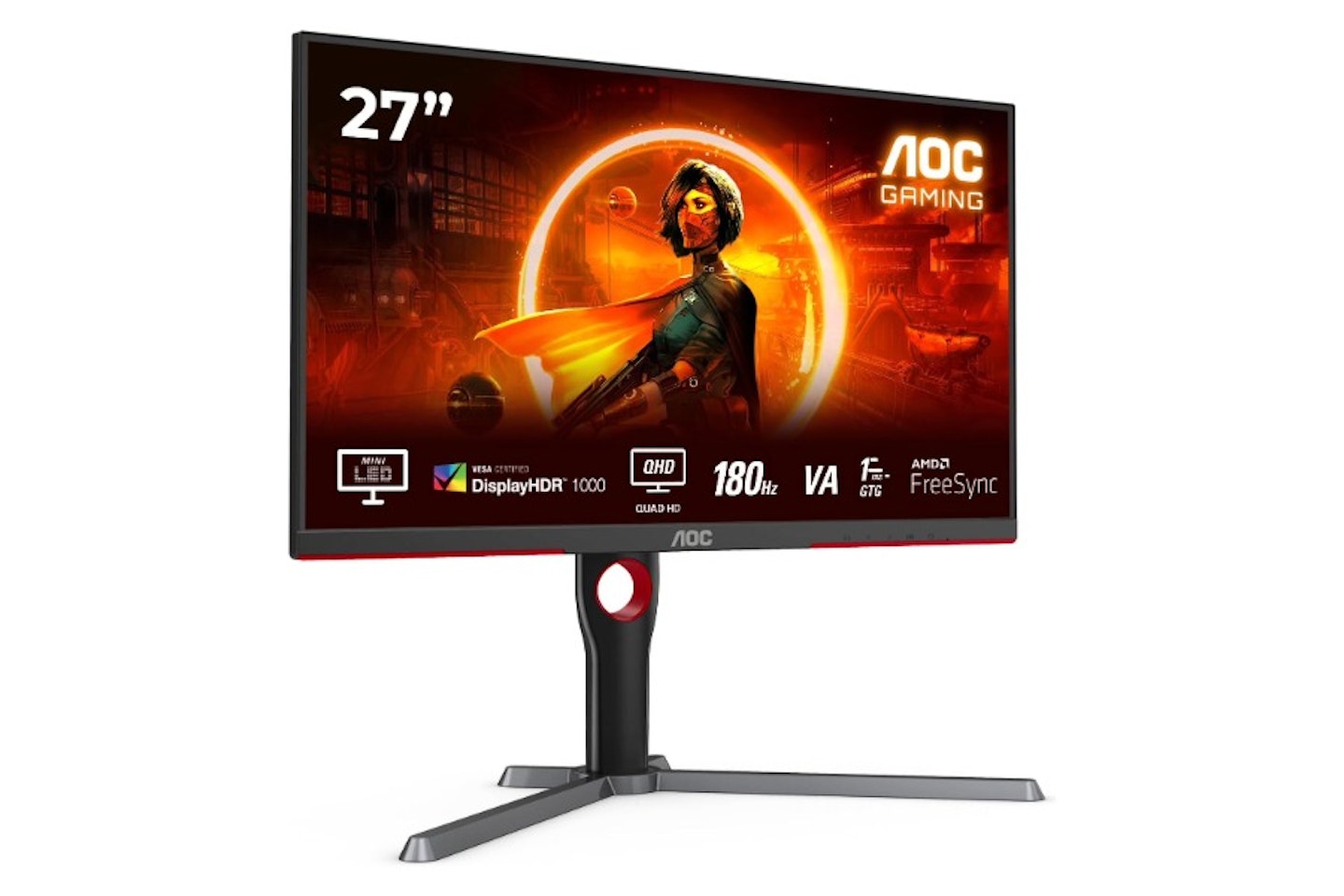
Gaming at 1440p is advisable for most titles released in the last ten years or so. New AAA games are certainly best served by this resolution or 4K. The ROG Strix above is a 1440p monitor, but for another option that won’t set you back as much we think the AOC Q27G3XMN has a lot going for it.
The lower RRP is partly due it not being an OLED display. However, it’s still something of a rarity among low cost monitors as it features Mini-LED backlighting. Normally reserved for 55-inch TVs and up, these smaller LEDs are able to turn off or dim in distinct areas of the screen. This creates dimming zones which go some way to replicating what an OLED can offer. What this means in practice is deeper contrast and better brightness. To find this tech in a 27-inch gaming monitor at this price is surprising.
The trade-off for this advanced display tech is a no frills approach in areas like connectivity. USB ports are missing and the HDMI connection is 2.0 rather than 2.1, so it’s not necessarily the best choice if you’re buying a monitor for newest generation console gaming or as a hub for a broad setup. However, with VRR (Variable Refresh Rate) support for smoothness, HDR (High Dynamic Range) for richer colour and a height adjustable stand for better ergonomics, it offers great value for PC gaming.
For a 1440p monitor with HDMI 2.1 connectivity (supported by the PS5 and Xbox Series X/S) AOC also make the Q27G4SRU.
Pros
- Mini-LED backlight technology provides impressive contrast with 1,000 local dimming zones
- Fast response time helps with action-packed games
- 1440p resolution is perfect complement to most modern titles
Cons
- Monitor stand and connectivity options are both on the more basic side
| Screen size | 27-inches |
| Resolution and screen type | 2560 x 1440, VA |
| Refresh rate | 180Hz |
| Response time | 1ms |
| HDR | DisplayHDR 1000 |
| Connectivity | 1 x DisplayPort 1.4, 1 x HDMI 2.0, headphone jack |
| Speakers | No |
| Energy rating | G |
| Dimensions (w x h x d, with stand) | 53.3 x 61.4 x 30.3cm |
| Weight (with stand) | 5.43kg |
Price: £249.00
Researched & recommended
Best 4K gaming monitor
 Gigabyte
Price: £699.97
Alternative retailers
4K is increasingly sought after for both televisions (you can find plenty of TVs 43-inches and larger that support it) and gaming monitors. That’s because it’s the highest quality resolution which is readily available. The benefits of rarer 8K screens are negligible and the price will be significantly more – see the Dell UltraSharp, for instance. 4K resolution provides excellent picture quality and great immersion.
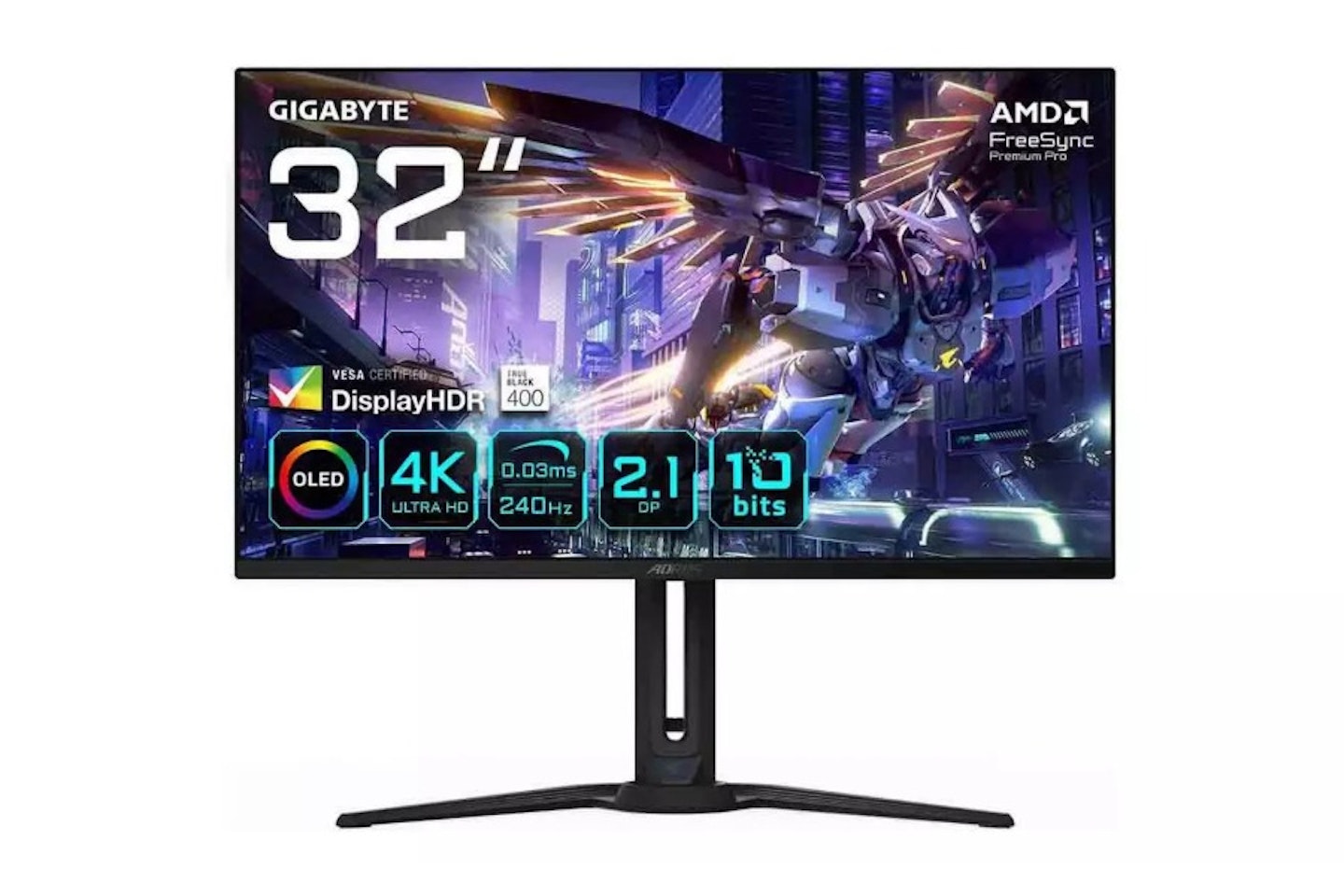
We’ve selected the Gigabyte AORUS FO32U2P as the best 4K gaming monitor because, quite simply, it’s a premium piece of equipment that has the mechanics necessary to do justice to 4K content. Despite that, it undercuts several competitors when it comes to price. Its 4K sharpness is backed up by a 32-inch panel boasting impressive colour accuracy and wide viewing angles. Whether you’re sinking hours into an open world adventure or getting lost in cinematic blockbusters, there’s a vibrancy and depth to the display that makes games, films and even day-to-day work feel markedly more engaging.
Its HDMI 2.1 bandwidth means it’s compatible with the PS5 and the Xbox Series X|S. As both of those consoles also have a top refresh rate of 120Hz, the AORUS’s 240Hz rate is more than sufficient. If using a PC then, significantly, it also supports DisplayPort 2.1, so the monitor can work at its maximum refresh without compression (as long as your graphics card is up to the task). Do check your desk before committing to buying though, as the boomerang-like stand might take up more space than is ideal.
Ultimately, the combination of clarity, speed and versatility make the Gigabyte AORUS FO32U2P a frontrunner for anyone chasing a 4K gaming experience.
4K monitors can be found at smaller sizes, the KOORUI S2741LM is 27-inches and has a compact stand. It’s impressed users with what it can offer for less than £400.
Pros
- Excellent connectivity options including HDMI 2.1 and DisplayPort 2.1
- 4K resolution supported by OLED screen tech for deeper black levels and contrast
- Response time of 0.03ms matches the most expensive monitors
Cons
- If also using for streaming movies then there’s no support for Dolby Vision HDR content
| Screen size | 31.5-inches |
| Resolution and screen type | 3840 x 2160, QD-OLED |
| Refresh rate | 240Hz |
| Response time | 0.03ms |
| HDR | DisplayHDR True Black 400 |
| Connectivity | 2 x HDMI 2.1, 1 x Displayport 2.1, 1 x Displayport 1.4, 1 x mini DP 2.1, 1 x USB Type-C, 2 x USB 3.2 downstream ports, 1 x USB 3.2 upstream port, headphone jack, microphone jack |
| Speakers | 2 x 5W |
| Energy rating | G |
| Dimensions (w x h x d, with stand) | 71.8 x 61.4 x 15.9cm |
| Weight (with stand) | 8.53kg |
Price: £699.97
Researched & recommended
Best curved gaming monitor
 Dell
DellPrice: £698.98
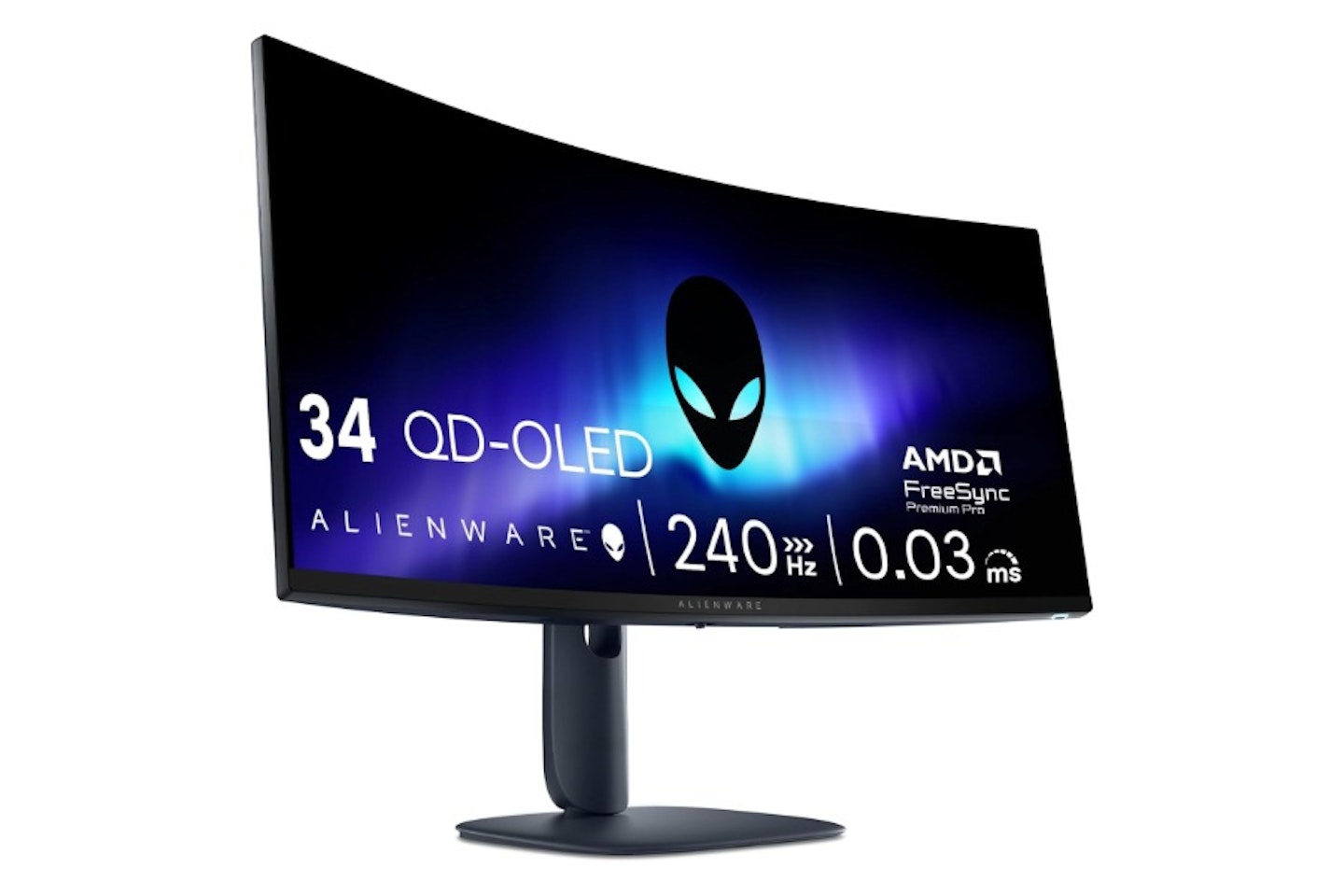
If you’ve never used a curved gaming monitor, you’re in for a treat. The aim of this wraparound design is to engross you in gameplay, and that’s exactly what the best examples can do. The Alienware AW3425DW is one such screen.
An 1800R curve (a radius of 1800mm) is a good introduction to this type of display. 1000R monitors exist, but if you’re not familiar with a curved screen you may find it too stark a change from a flat panel. The gentle curve of the AW3425DW draws you in and is further helped by the OLED tech which ensures great contrast.
A low input lag at its maximum 240Hz refresh rate and premium gaming features to eliminate screen tearing (G-SYNC compatibility, AMD FreeSync Premium Pro and VESA AdaptiveSync) combine to deliver smooth and responsive gameplay. If you’re going to be using your monitor for content editing as well as gaming then DCI-P3 99.3% colour gamut and Delta E<2 factory colour accuracy (more on these in our guide below) will help with that.
Like many monitors it doesn’t have built-in speakers, but it also doesn’t feature a headphone jack which is more disappointing. A wireless gaming headset solves that problem if you don’t want to disturb others when virtually racing or roleplaying.
For a budget curved gaming monitor we suggest the AOC CQ27G2SE. During our testing we found that it had plenty of adjustable settings to create a setup which suits your gaming style.
Pros
- A 1800R curve is a good introduction to this type of monitor without sacrificing immersion
- The QD-OLED display delivers vibrant colours and deep blacks for detailed scenes in shadows
- A 240Hz refresh rate and 0.03ms response time provide ultra-smooth, lag-free gameplay
Cons
- No jack for connecting a headset
| Screen size | 34-inches |
| Resolution and screen type | 3440 x 1440, QD-OLED |
| Refresh rate | 240Hz |
| Response time | 0.03ms |
| HDR | DisplayHDR True Black 400 |
| Connectivity | 1 x DisplayPort 1.4, 2 x HDMI 2.1, 1 x USB-A, 1 x USB-B, 1 x USB-C |
| Speakers | No |
| Energy rating | F |
| Dimensions (w x h x d, with stand) | 81.4 x 55.5 x 23.2cm |
| Weight (with stand) | 8.14kg |
Price: £698.98
Researched & recommended
Best ultrawide gaming monitor
 MSI
MSIPrice: £298.97
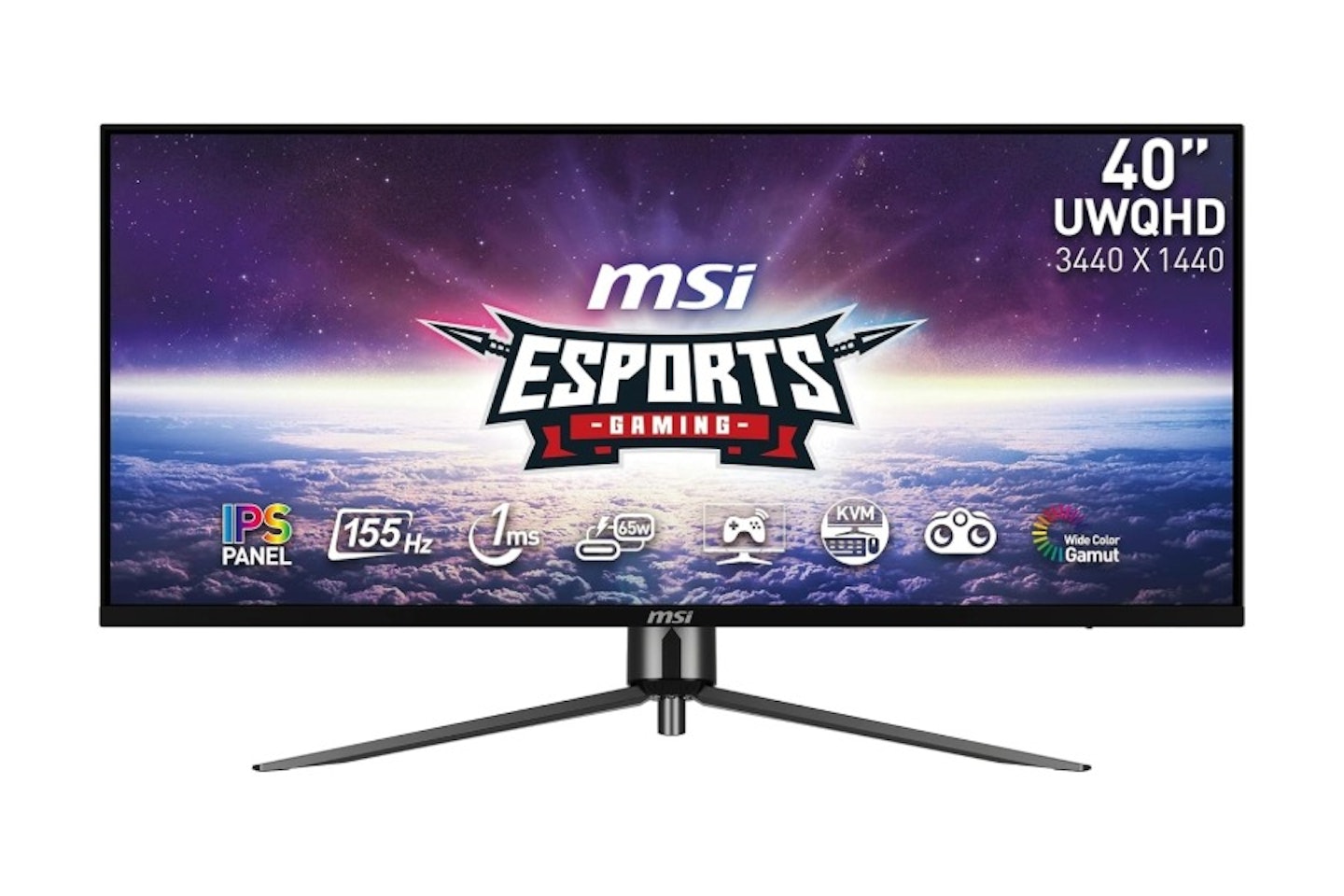
Gaming monitors can get very big indeed (the largest we’ve tested is the 57-inch Acer Predator Z57). This can result in price tags which are also mammoth and, even if that isn’t off-putting, for most home setups they aren’t going to be very practical. However, you’ll find that the ‘ultrawide’ tag is also frequently applied to much smaller screens, and sometimes that description is a bit of a stretch (no pun intended). For a monitor which justifies the moniker without taking up too much room, there’s the MSI MAG 401QR.
If you have your heart set on ultrawide gaming, this display allows you to achieve it in an extremely budget friendly way. That doesn’t mean that it’s lacking in the gaming essentials though, and it’s a great example of why plumping for a monitor over a TV of the same size can bring the most out of your games. The refresh rate of the best 40-inch TVs maxes out at 60Hz, whereas this MSI screen promises to dial that up to 155Hz.
Beyond the usual tech which serves to make gaming seamless, this screen also has an in-built KVM (Keyboard, Video, Mouse) switch. This allows two separate systems to connect simultaneously to one monitor. Handy if you want to use it for PC and other gaming, or for switching between work and play. That said, ultrawide monitors and console gaming are not a natural fit as consoles are designed for a ratio which the monitor doesn’t match. This can result in black bars on either side of the screen. However, for PC play, the MSI MAG 401QR is an affordable and adept route to an ultrawide existence.
The MSI MAG 401QR is a more budget ultrawide model. If you’re happy to spend more and get a bigger display we think the AOC AGON AG493UCX2 has plenty going for it, including the fact that it’s curved.
Pros
- Budget-friendly route to ultrawide gaming
- Multiple connectivity options and KVM switch offer versatile device compatibility
- Wide colour gamut provides good visuals
Cons
- Stand only tilts – detach the base and connect to a more ergonomic stand if you want pivot swivel and height adjustment
| Screen size | 40-inches |
| Resolution and screen type | 3440 x 1440, IPS |
| Refresh rate | 155Hz |
| Response time | 1ms |
| HDR | DisplayHDR 400 |
| Connectivity | 1 x DisplayPort 1.4, 2 x HDMI 2.0, 2 x USB-A, 1 x USB-B, 1 x USB-C, headphone jack |
| Speakers | No |
| Energy rating | F |
| Dimensions (w x h x d, with stand) | 94.5 x 53 x 29cm |
| Weight (with stand) | 10.3kg |
Price: £298.97
Researched & recommended
Best gaming monitor for PS5
 Sony
SonyPrice: £863.99
Alternative retailers
There’s nothing to prevent brand mixing when creating a gaming setup, but if you’re looking for a gaming monitor for a PS5 then picking a Sony model is the natural choice.
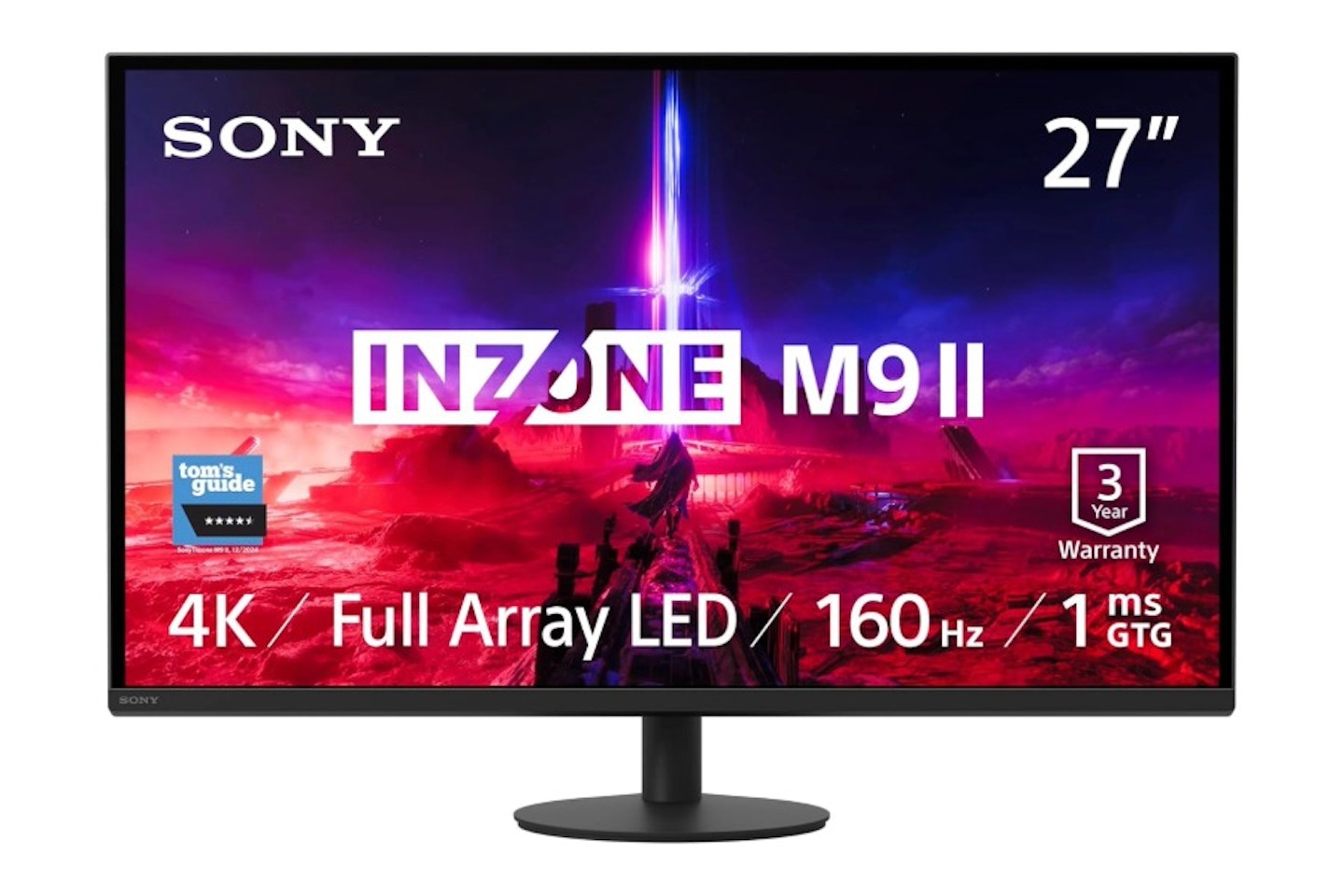
This logic influenced our decision to select the Sony INZONE M9II as the top pick in our selection of the best gaming monitors for a PS5, but it’s also a good size, has some considered design elements, and plenty of connectivity options (including that all-important HDMI 2.1 input). This last aspect is particularly important if you’re a console as well as PC gamer who will be using a monitor as a hub.
It’s a 4K full-array LED screen which offers great contrast thanks to HDR600 and 750 nits of brightness. Higher brightness means the screen will look good even in rooms with limited natural light. The 160HZ refresh rate exceeds the PS5’s 120Hz cap and the 1ms response time places it firmly in the premium category. Another potential, if often overlooked, benefit is the compact stand which means a small footprint for your gaming desk – that’s more room for your gaming keyboard, mouse and controller.
Sony gaming monitor options are few and far between, to spend less you’ll need to consider other brands. One model that includes an HDMI 2.1 connection and matches the PS5’s refresh rate is the Gigabyte M27UP. It’s a third of the price of the M9II.
Pros
- Good level of brightness (750 nits) makes highlights pop
- Suited to PS5 gaming as it uses Auto HDR Tone Mapping with the console
- HDMI 2.1 bandwidth for stunning 4k performance at 120Hz (PS5 and Xbox Series X|S)
Cons
- More expensive than other monitors with comparable specs
| Screen size | 27-inches |
| Resolution and screen type | 3840 x 2160, IPS |
| Refresh rate | 160Hz |
| Response time | 1ms |
| HDR | DisplayHDR 600 |
| Connectivity | 1 x DisplayPort 1.4, 2 x HDMI 2.1, 2 x USB-A, 1 x USB-B, headphone jack |
| Speakers | 2 x 2W |
| Energy rating | F |
| Dimensions (w x h x d, with stand) | 61.5 x 52.8 x 61.5cm |
| Weight (with stand) | 6.4kg |
Price: £863.99
Researched & recommended
Best portable gaming monitor
 UPERFECT
Price: £119.99
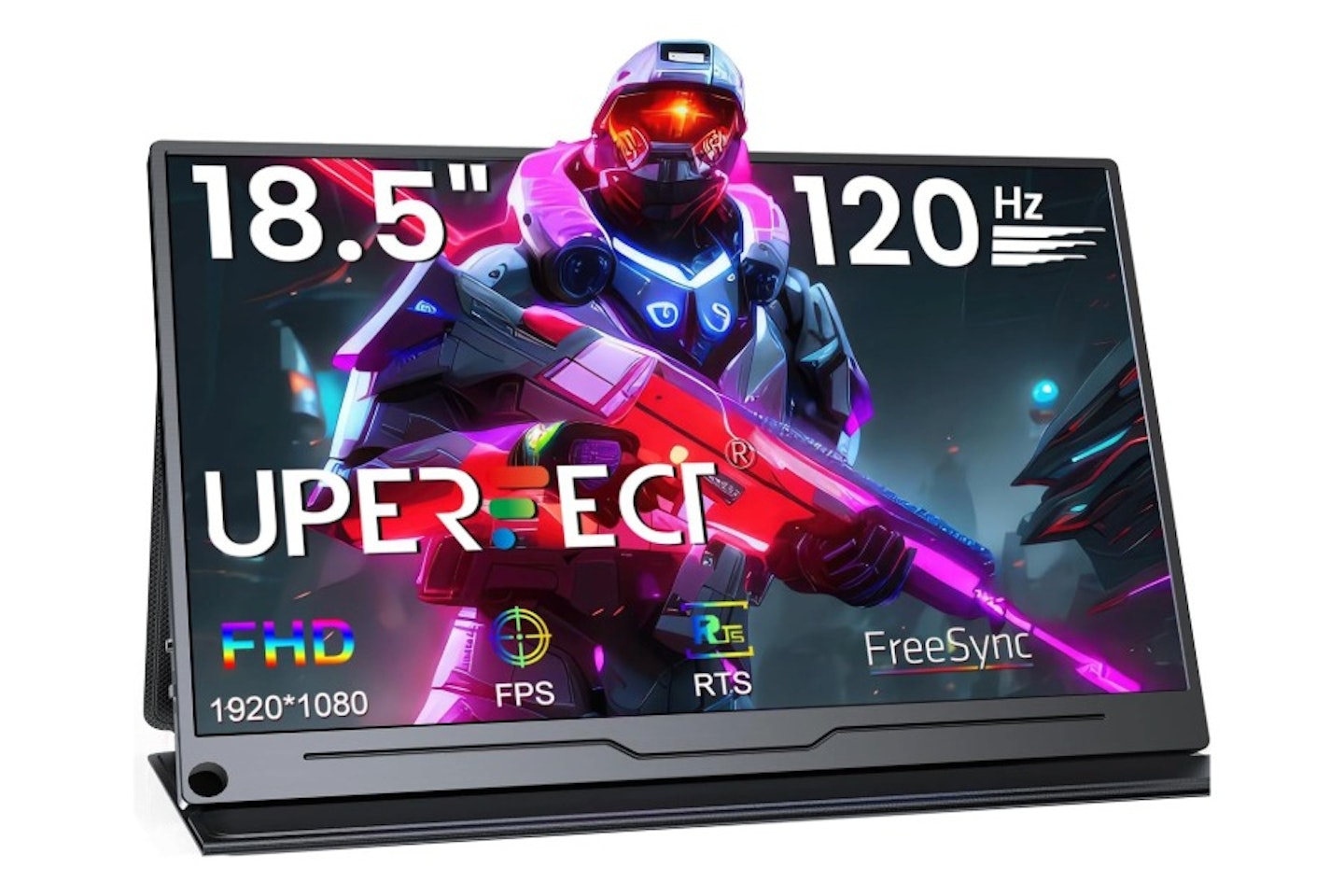
Portable monitors don’t offer the same power or wealth of features as their non-portable counterparts. However, when choosing a monitor for gaming on the go, or if looking for a second screen which is easy to pack away when not in use, all the same considerations apply. You want to seek out good response times, decent refresh rates and quality resolution. For that reason, we’re highlighting this 18.5-inch screen from UPERFECT.
For PlayStation, Xbox or Switch 2 gamers, this monitor offers convenience, but at a size which isn’t so small that you’ll need to squint to identify your on-screen character. The 18.5-inch display is a 1080p resolution which is more than adequate for casual gameplay, while the 120Hz refresh rate is higher than we’d expect. Input lag is kept to a minimum, so you’re unlikely to notice a pronounced delay during general play, although serious esports competitors may crave something snappier.
However, again, those sorts of numbers are only likely to be encountered with stationary screens. A portable screen is for other scenarios, and the slim form of this monitor and the included magnetic cover make transportation and set-up simple. If working with limited space, looking to take a screen to game parties, or wanting another option for productivity and play, it’s a solid choice.
ROG, the same brand as our best overall choice, does make portable gaming monitors. They’re rarer and more expensive, but something like the ASUS ROG Strix XG17AHPE may be of interest if your main monitor is a ROG.
Pros
- Size, weight and touchscreen make it a great for taking with you when travelling or using as second monitor
- Integrated dual speakers emphasise that it’s made for gaming on the go
- 120Hz refresh rate offers impressive visuals for a portable screen
Cons
- Will not offer the same premium features of a dedicated gaming monitor
| Screen size | 18.5-inches |
| Resolution and screen type | 1920 x 1080, IPS, touchscreen |
| Refresh rate | 120Hz |
| Response time | 3ms |
| HDR | Yes, unspecified |
| Connectivity | 1 x Mini HDMI, 1 x USB-C, headphone jack |
| Speakers | 2 x 1W |
| Energy rating | A |
| Dimensions (w x h x d) | 42.6 x 26.3 x 1.2cm |
| Weight | 1.26kg |
Price: £119.99
Researched & recommended
Best 1080p gaming monitor
 ASUS
ASUSPrice: £189.99
Some pro gamers prefer a 1080p screen because they prioritise high frame rates over visual clarity. This can make all the difference for the sort of titles that crop up in fast-paced e-sports competitions. However, 1440p monitors can run at 1080p, so it’s still often better to go for 1440p (which may also offer great features like OLED, which 1080ps will lack) and then scale down as required. Instead, a 1080p gaming monitor is worth considering if you’re looking to spend less or intend on connecting it to a budget PC which may lack a separate graphics card. That’s because it’s a less demanding resolution.
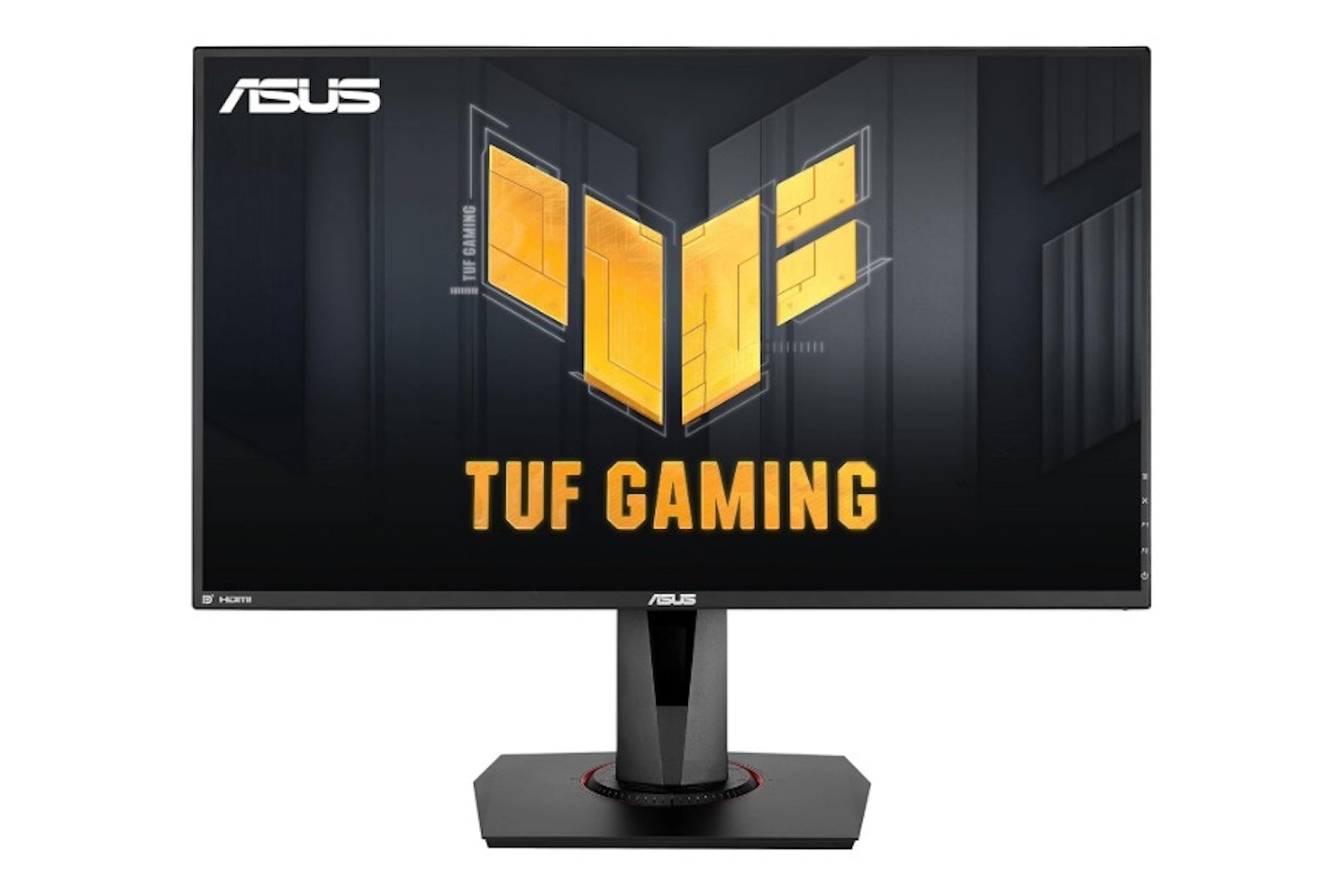
The ASUS TUF VG279QM is a few inches larger than our budget pick, the Samsung Odyssey G3, which is also a 1080p monitor. That size difference somewhat accounts for the slight rise in price, but it’s also got a higher refresh rate – 280Hz compared to 180Hz, a real boon at this price. Combining that with its 1ms response time and NVIDIA G-Sync compatibility makes motion blur and screen tearing a rarity, provided your graphics hardware can keep up. Plus, like the G3, its height can be adjusted and it can be rotated 90 degrees.
24-inches is arguably the best size for a 1080p screen. As the VG279QM is 27-inches there may be some image stretch, but we think that the other impressive technical specs outweigh that concern.
If you’d prefer a 24-inch 1080p monitor, the AOC 24G4HRE is an extremely low cost option with very respectable refresh and response rates.
Pros
- 280Hz refresh rate ensures brilliant motion handling for accurate gameplay
- Build quality and adjustability (including portrait mode) gives greater control
- Includes speakers in the event that you don’t want to use external audio devices
Cons
- Not a great choice for console gaming due to limited compatibility with advanced features of PS5 and Xbox
| Screen size | 27-inches |
| Resolution and screen type | 1920 x 1080, IPS |
| Refresh rate | 280Hz |
| Response time | 1ms |
| HDR | DisplayHDR 400 |
| Connectivity | 1 x DisplayPort 1.2, 2 x HDMI 2.0, headphone jack |
| Speakers | 2 x 2W |
| Energy rating | F |
| Dimensions (w x h x d, with stand) | 61.94 x 50.67 x 21.14cm |
| Weight (with stand) | 5.6kg |
Price: £189.99
Researched & recommended
Best OLED gaming monitor
 LG
LGPrice: £548.99
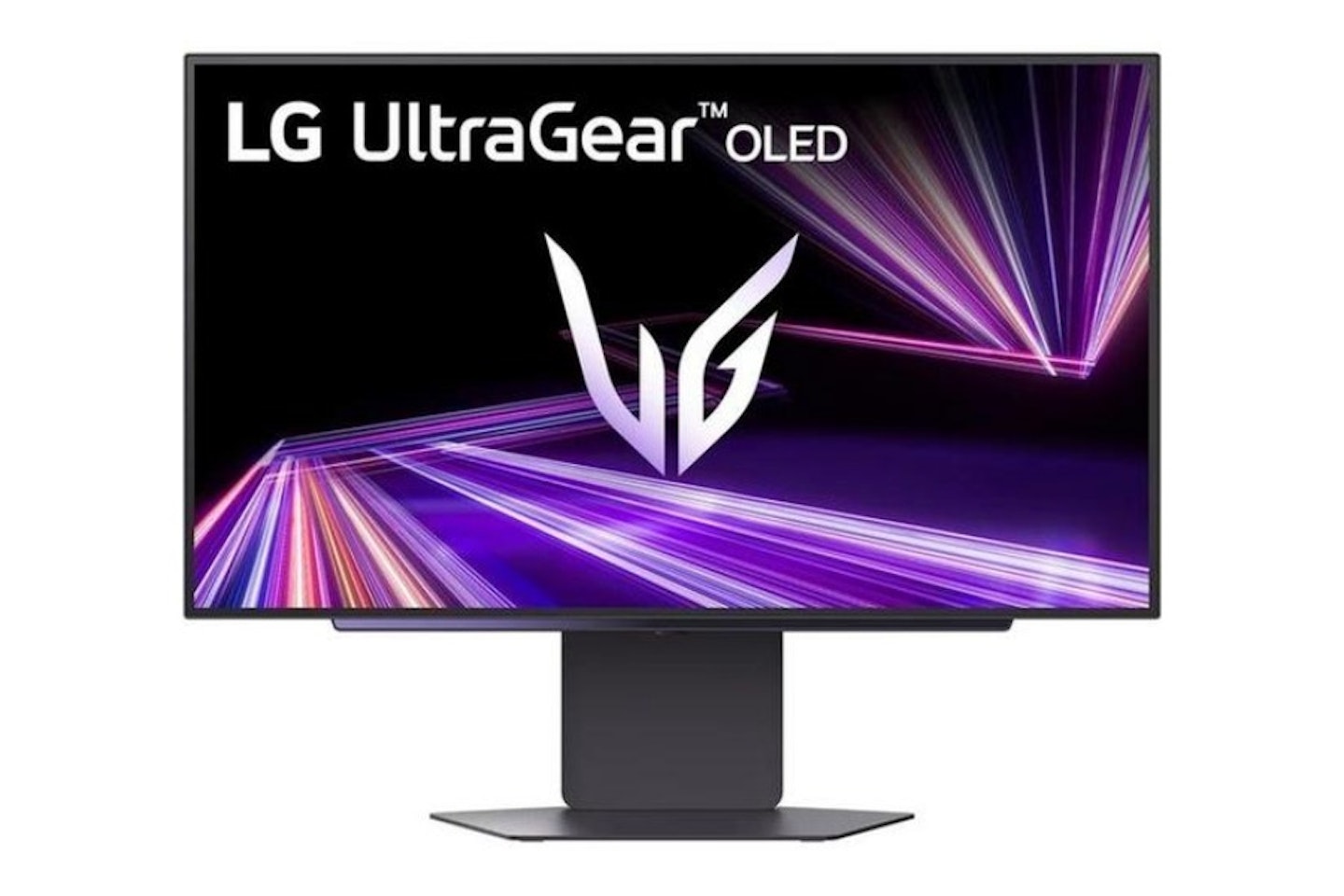
Our best overall choice is an OLED screen, but if you want an alternative option consider the LG UltraGear GX7.
The QLED or OLED question has long been part of the conversation when it comes to TVs, but the same applies to monitors. While both have their merits, OLED stands out in some significant ways, and that’s also why they tend to be more expensive. We view them as the preferred option for gaming because of their ability to offer superior contrast and marginally less input lag (particularly important for online gaming).
LG says that this monitor is the first to be powered by its 4th Gen OLED technology. This delivers a staggeringly high 1500 nits of peak brightness for clearer gameplay. Crucially, there’s also the ability to adjust settings in order to prevent burn-in. This is where there’s a permanent retention of faint images on the screen, and it’s particularly a risk with OLEDs.
Beyond a brilliant 27-inch OLED display, this monitor offers all the expected premium punch thanks to a high refresh rate and low response time. An added bonus is DTS: X spatial audio via the headphone jack. You’ll need a compatible pair of surround sound headphones to take advantage, but it’s a great way of creating even more immersive gameplay. Like Dolby Atmos, it precisely places individual sounds in a 3D space.
One potential oversight is the lack of DisplayPort 2.1 bandwidth. It enables ultra-high resolutions without the need for compression and is included with several monitors otherwise comparable with the GX7. One such alternative is the ROG Strix XG27AQDMG.
Pros
- OLED screen, refresh rate and response time are all premium features which enhance gaming
- 1500 nits of peak brightness is exceptional and makes it particularly bright for an OLED
- DTS: X spatial audio support for surround sound gaming
Cons
- Lacks DisplayPort 2.1 bandwidth – a more modern technology which some other premium monitors include
| Screen size | 26.5-inches |
| Resolution and screen type | 2560 x 1440, OLED |
| Refresh rate | 280Hz |
| Response time | 0.03ms |
| HDR | DisplayHDR True Black 500 |
| Connectivity | 1 x DisplayPort 1.4, 2 x HDMI 2.1, 2 x USB-A, DTS headphone port |
| Speakers | No |
| Energy rating | F |
| Dimensions (w x h x d, with stand) | 60.5 x 57.9 x 24.9cm |
| Weight (with stand) | 9kg |
Price: £548.99
Expert’s choice: Best gaming monitors of 2026
Your gaming monitor choice will be influenced by many factors, not least budget. However, if you’re looking for premium tech to get the most out of your games we feel you can’t go far wrong with the ROG Strix OLED XG27ACDNG. It’s spot on for size and resolution, and brings some advanced tech to the fore. Taken as a whole, we believe it offers great value for money.
If you’re looking to spend less, then AOC is probably the brand with the greatest variety in its inventory. This allows you to focus your spending on the aspects that you value most. A great all-rounder is our best 1440p choice, the AOC Q27G3XMN.
| At a glance: ROG Strix XG27ACDNG vs AOC Q27G3XMN | ||
|---|---|---|
| ROG Strix XG27ACDNG | AOC Q27G3XMN | |
| Screen size | 26.5-inches | 27-inches |
| Resolution / screen type | 2560 x 1440, QD-OLED | 2560 x 1440, VA |
| Refresh rate | 280Hz | 180Hz |
| Response time | 0.03ms | 1ms |
| HDR | DisplayHDR 400 True Black | DisplayHDR 1000 |
| Connectivity | 1 x DisplayPort 1.4, 1 x HDMI 2.1, 1 x USB-C | 1 x DisplayPort 1.4, 1 x HDMI 2.0, headphone jack |
| Speakers | No | No |
| Verdict | ||
| The ROG Strix XG27ACDNG delivers top-tier tech and performance for gamers wanting the best, while the AOC Q27G3XMN is a strong value pick for those on a budget. | ||
Gaming monitor accessories and essentials
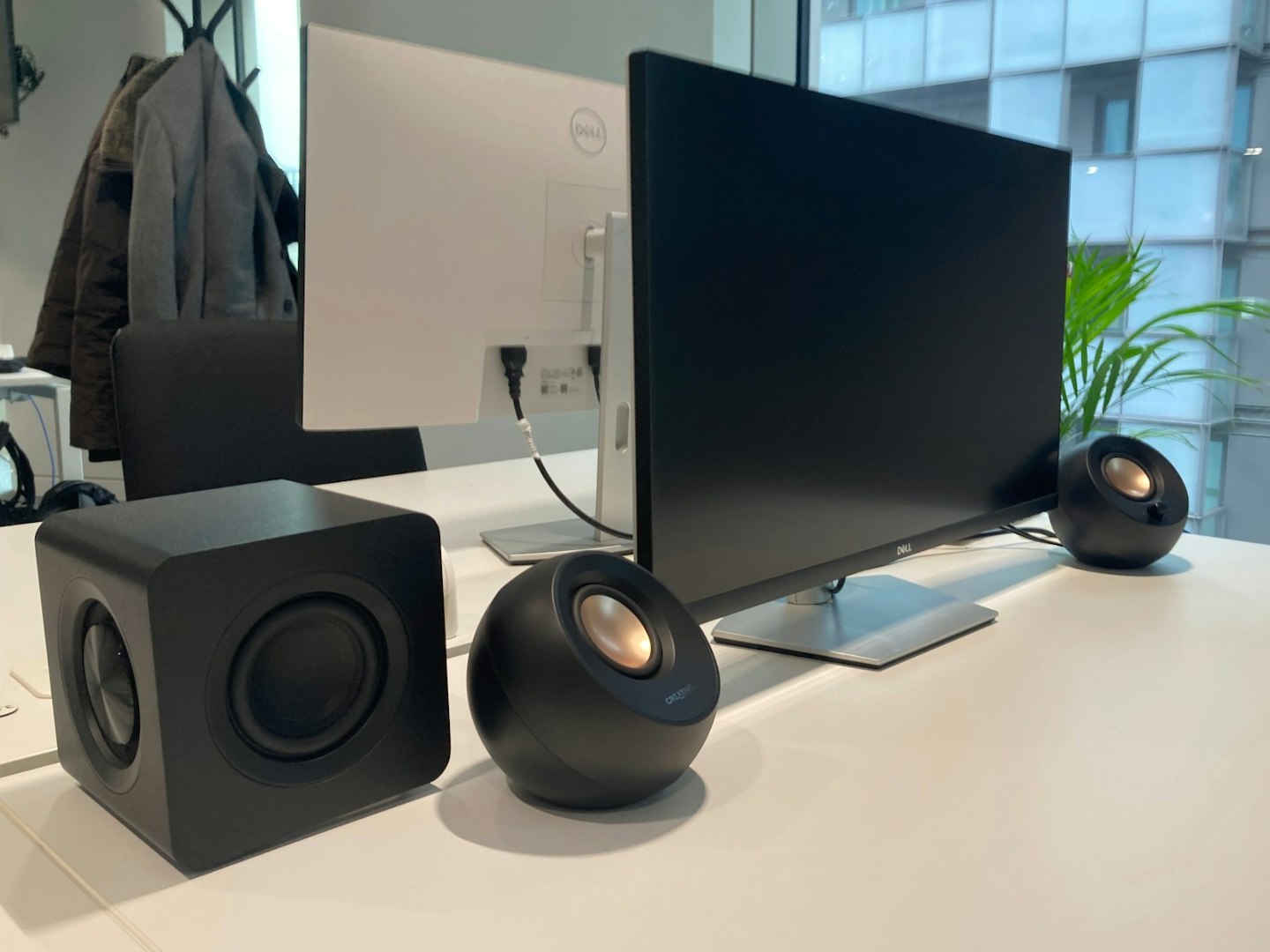
Creative Pebble X Plus speakers with subwoofer ©David Ker/Empire
Some of the items below (like cables) are likely to come with a monitor. However, there are other products specifically designed for monitors which will be additional purchases. Whether they’re optional or essential will depend on your needs and the monitor you’ve chosen.
Speakers: Regardless of whether a monitor has speakers, it will benefit from a more powerful external set. Some, like Creative’s Pebble X Plus (pictured), will include a subwoofer for extra bass – brilliant for action games and movies.
Stand: For a screen without much adjustability, a monitor stand (BONTEC Monitor Stand Riser, eg) may be needed to ensure that the display aligns properly with your line of sight. It can also be used to create further space to store items.
Arm: An arm (like the ProperAV Swing Arm) can be attached to a desk to allow for a greater degree of movement of the monitor.
Light bar: Monitors will sometimes have their own features to help with avoiding eye strain, but a light bar can come in handy when this isn’t the case. The BenQ ScreenBar and other LED lamps let you have more control over how your monitor is lit.
USB hub: If a monitor has lots of ports then a USB hub is probably not needed, but if that isn’t the case (or if you have lots of accessories you need to connect) it could well be necessary. Anker’s USB-C Hub is one option.
HDMI cable (2.1): You may already have an HDMI cable from a previous piece of kit, but it’s possibly not the latest generation or long enough to reach your console or PC from your screen. HDMI 2.1 cables are widely available from brands like UGREEN.
DisplayPort cable (2.1): As with HDMI, DisplayPort technology doesn’t stand still. DisplayPort 2.1 is a high bandwidth standard. If your monitor supports it then it could help with faster, more reliable play.
Screen cleaner: Perhaps less exciting, but no less important – if you’ve spent money on a monitor it’s worth ensuring it looks its best. A screen cleaner kit will help.
What to look for in a gaming monitor
Most of the time with home entertainment, the more you pay the more advanced tech you’re able to get your hands on. Gaming monitors are no exception. It therefore makes sense to set a budget and then determine what your non-negotiables are. For example, if your desk can only accommodate a screen of a certain size, there’s no point looking at certain larger monitors even if the features and price point are appealing. Below are some of the major areas which are important to consider before making your choice.
Display size and type
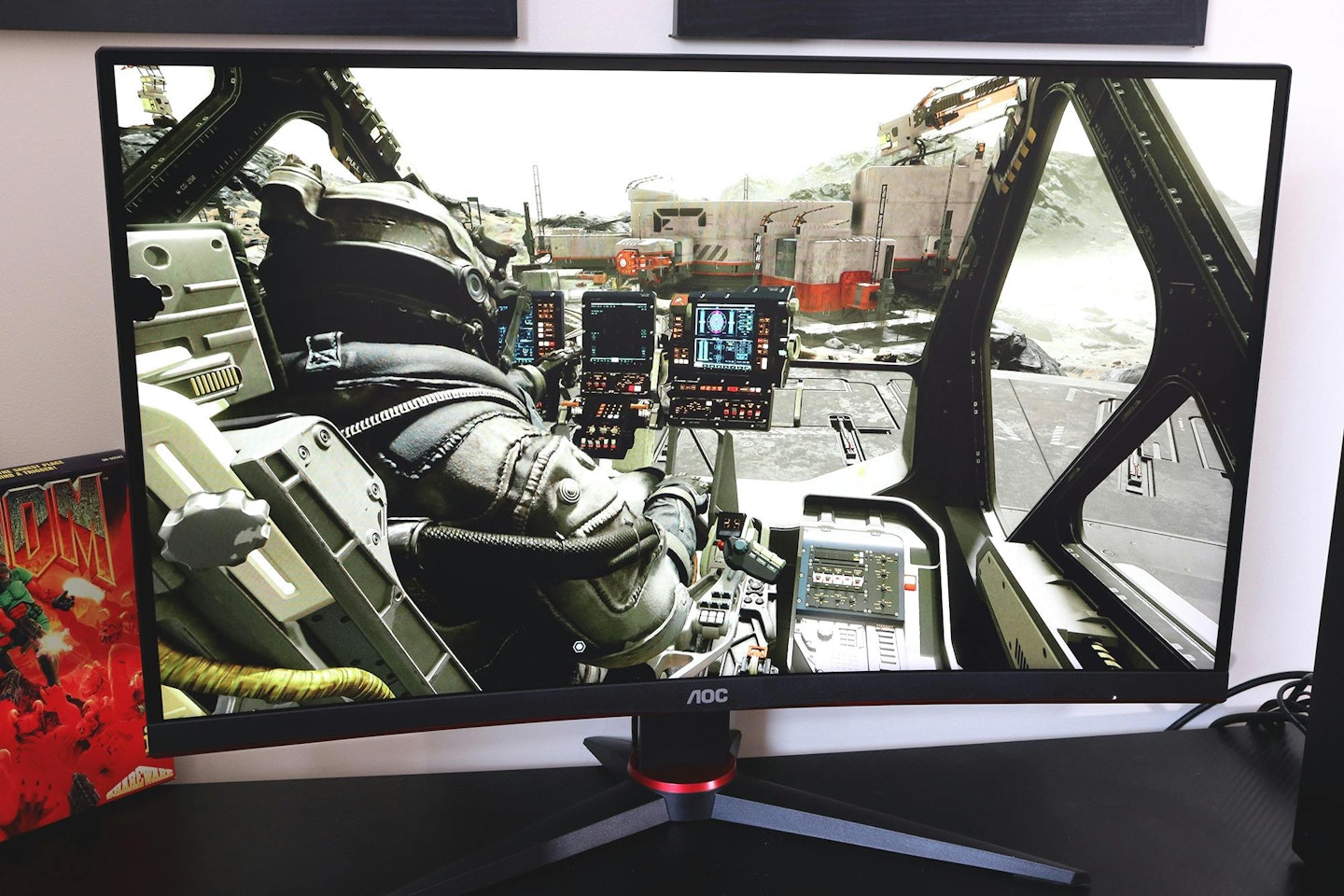
Starfield on the AOC CQ27G2SE gaming monitor ©Chris Duffill/Empire
The smallest modern non-portable gaming monitor is around 24-inches, while the upper limit is ever increasing (though 57-inches is the largest readily available size at the time of writing). Your personal space will decide which screen size is practical, but hopefully between 27 and 32-inches is realistic. We say that as lots of gaming monitors are available in this range, so there’s a huge amount of choice. All the standard health considerations then apply, including how far you should sit from a monitor. The Health & Safety Executive suggest a distance of about an arm’s length, with your eyes level with the top of the screen.
Naturally, the larger you go with screen size, the more you’re able to fit on the display. This can help with gaming immersion, but it’s also an advantage if you have lots of windows open. The other side of this is that pixel density will often be lower the larger the screen gets. This is why a 27-inch rather than a 32-inch gaming monitor is sometimes advisable, as the clarity of images and text may well be better. You’ll note, we’re not being categorial here. That’s because a 32-inch screen can easily outperform a 27-inch screen when it comes to precision if the other elements which make it up are also taken into account. The type of screen, for example. There’s much overlap here with TV tech, as panel technologies are the same irrespective of whether you’re looking at a screen with a gaming mouse or remote control in hand. LED (Light-Emitting Diode) monitors are common and normally cheaper than OLED (Organic LED) screens as the latter is a newer and superior technology. If your budget allows, an OLED monitor is recommended as it can ensure greater picture quality (find out more in our QLED vs OLED explainer).
Finally, there’s whether to go for a flat or curved screen. We’ve explained why some people prefer curved monitors when discussing our choice of the best curved gaming monitor. You may find that it’s an easy way to create more gripping gameplay. However, the degree of curvature isn’t consistent across screens, so if you know that it’s a design you like you’ll want to check the radius specification (1000R or 1800R, for instance).
Resolution
Resolution refers to the total number of horizontal and vertical pixels arranged on a screen. In our selection above you’ll find 1920 x 1080 (Full HD), 2560 x 1440 (Quad HD) and 4K screens (Ultra HD). Price will usually increase in line with the quality of definition.
4K is prized because it offers four times the resolution of Full HD. That means sharper, more lifelike images. Edges are more defined, textures stand out, and distant objects in game worlds can be spotted more easily. This is particularly noticeable in open world and story-driven titles, where the environmental nuances add to the immersion. Again though, this outcome will only be achieved during gameplay if the resolution is backed up by other factors, such as a suitably powerful PC. This is why some pro gamers deliberately opt for 1080p screens. A lower resolution is less demanding and can deliver higher, smoother frame rates, particularly important with fast-paced gameplay.
So, be led by what the rest of your setup is capable of and whether you want to play frenetic or more leisurely games.
HDR
HDR(High Dynamic Range) is a key feature in modern monitors. It boosts the range between the darkest blacks and the brightest whites on your screen, while also expanding the array of colours that can be displayed. This means more detail in both shadowy corners and brightly-lit areas, allowing games to appear much closer to how we see the world with our own eyes.
The true impact of HDR depends on a monitor’s brightness capabilities (measured in nits), its ability to display a wide colour gamut, and how faithfully it handles dark and light zones. Some monitors may advertise HDR support but lack the hardware to deliver proper results. Again, it pays to look past the logos and take a more holistic view. This is particularly the case as not all HDR is created equal. When comparing monitors you’ll find that HDR is referred to in a number of ways: HDR10, DisplayHDR 1000, True Black etc. The larger the number the better the HDR, with a significant improvement once the 1000 mark is reached. Display HDR True Black is used with reference to OLED screens. The distinction is due to OLED allowing each individual pixel to produce its own light. It’s therefore not a question of how much pixels can be dimmed, as they can turn off completely. However, it’s still the case that the number is indicative of quality. VESA (Video Electronic Standards Association) has provided a detailed breakdown of HDR performance criteria.
Refresh rate
Measured in hertz (Hz), refresh rate tells us how many times per second a display updates an image. It’s important in gaming monitors because it impacts motion and blur. When the refresh rate is high, on-screen movement is clearer and easier to track. This can offer a significant advantage, making reactions more instinctive and enemies less likely to slip past unnoticed.
To make the most of a gaming monitor with a high refresh rate, your PC or console needs to be able to produce enough FPS (frames per second) to match it. For example, a game running at 120 FPS will look its best on a 120Hz or faster monitor. If your frame rate is routinely lower than your monitor’s refresh rate you won’t see the full benefit. Sometimes it may be beneficial to cap your monitor’s refresh rate so that it aligns withe the FPS of the game you’re playing. But of course, you’ll only be able to dial this down, not go beyond the monitor’s top rate. That’s why it makes sense to go for a monitor with a high refresh rate if possible, and also one which gives you a good amount of control over settings so you can make adjustments as and when required.
Many PC games (Cyberpunk 2077, for instance) include FPS monitoring tools, but you’ll also be able to track this using NVIDIA, AMD or Windows software.
Response time
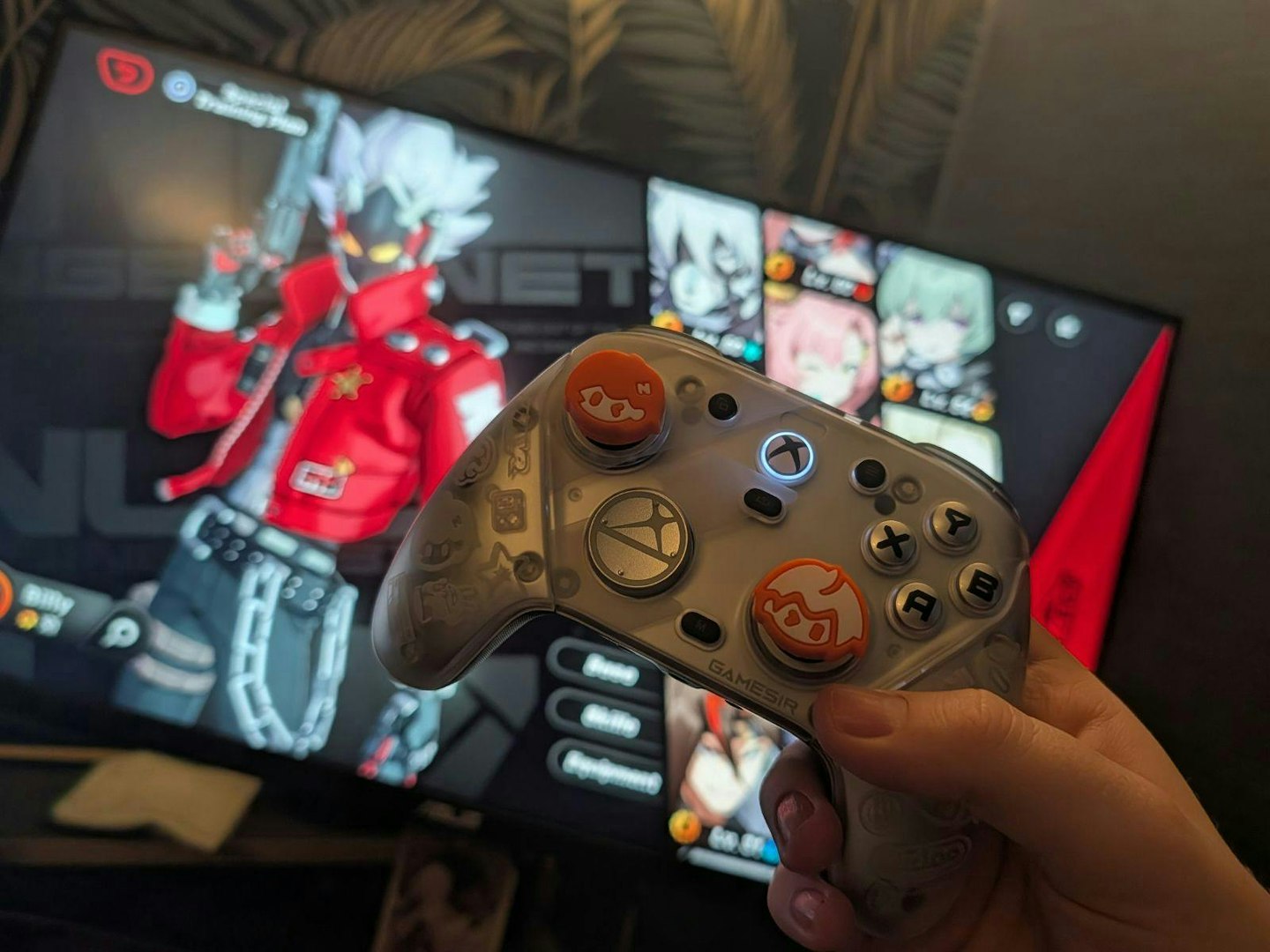
Input lag is the delay between a command (from a controller, for instance) and the reaction on screen. GameSir G7 Pro pictured ©Kyle Purves/Empire
Response time is the per millisecond measurement of how quickly a pixel can change from one colour to another. Of the monitors we’ve selected above, the highest response time is 3ms (the UPERFECT portable monitor). All of the others are 1ms or lower, with our best overall choice offering a superbly low 0.03ms.
When response rate is high (in other words, slow), you may notice a phenomenon called ‘ghosting’, where fast-moving objects leave a faint trail or blur behind them. By contrast, a monitor with a low response rate will help to keep visuals sharp and free of distracting artefacts.
It’s also worth noting that response rate is different from input lag, which measures the delay between your commands and the monitor’s reaction. Both are important for competitive gaming.
Audio
Some gaming monitors will have built-in speakers, many will not. We don’t consider speakers an essential because even if they’re present the sound they produce is likely to be less than spectacular. That’s an inevitable consequence of the size and shape of a monitor. You’ll probably find that even an inexpensive pair of external speakers or a budget soundbar will offer a better audio experience. Some are made specifically with gaming in mind, like the RGB lighting-laden bars from Razer.
There will be the occasional area of audio focus from a gaming monitor which offers a genuine benefit. For example, the inclusion of DTS Headphone: X in some LG monitors, like the UltraGear GX7 27GX700A-B, is great to see. With a headset that shares these capabilities, you will have an easy route to surround sound.
Connectivity
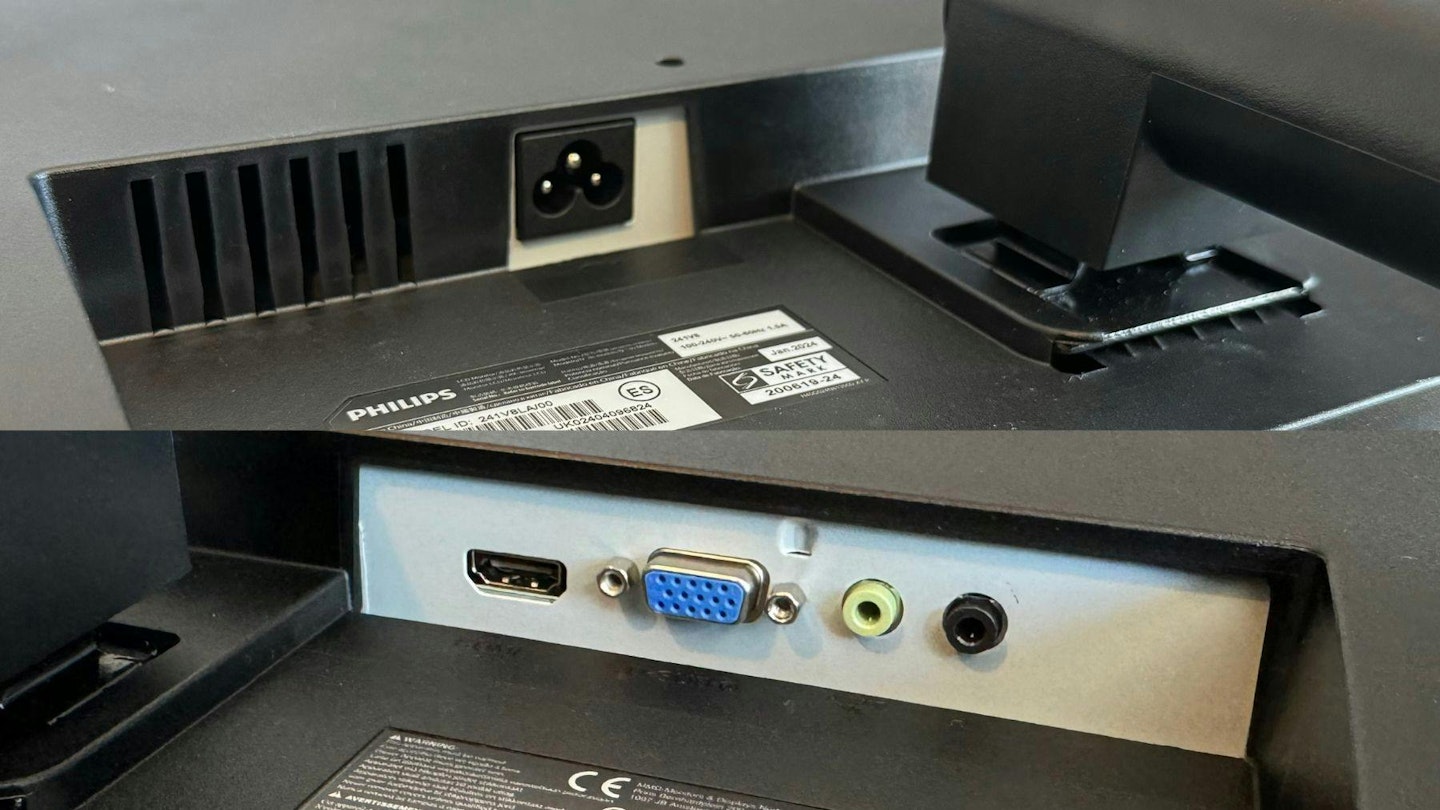
A budget monitor will have basic connectivity options ©Harvey Isitt/Empire
A good degree of connectivity is important for any computer monitor, and this is particularly the case for a monitor for gaming. If a monitor doesn’t have the necessary connections then you’re not going to be able to take advantage of what it, and your PC or console, can offer.
Most gaming monitors offer a mix of HDMI and DisplayPort inputs – both capable of carrying high-definition video and audio. DisplayPort is often preferred by PC gamers, especially for higher resolutions and refresh rates, while HDMI can be more universal (useful for consoles, laptops, and streaming devices). Having the latest versions of these ports can be important if you have expensive and advanced tech elsewhere in your setup. For example, we’ve discussed how having an HDMI 2.1 connection will match that offered by the PS5 and Xbox (see the Gigabyte AORUS FO32U2P).
Some monitors also include extras like USB hubs and headphone jacks. USB ports can be handy for connecting gaming peripherals like mice and keyboards and keeping your desk tidier. Audio outputs allow for quick swaps between speakers and headsets with minimal fuss. In short, a monitor with the right selection of inputs can save time and hassle, let you use multiple devices without unplugging cables, and help future-proof your system as new standards arrive. That said, with Bluetooth only getting better, relying on wired connections for the best results is becoming less and less the case. The best wireless mice, like the Logitech G2 Pro X Superstrike that we tested, are more than up to the task.
Ergonomics
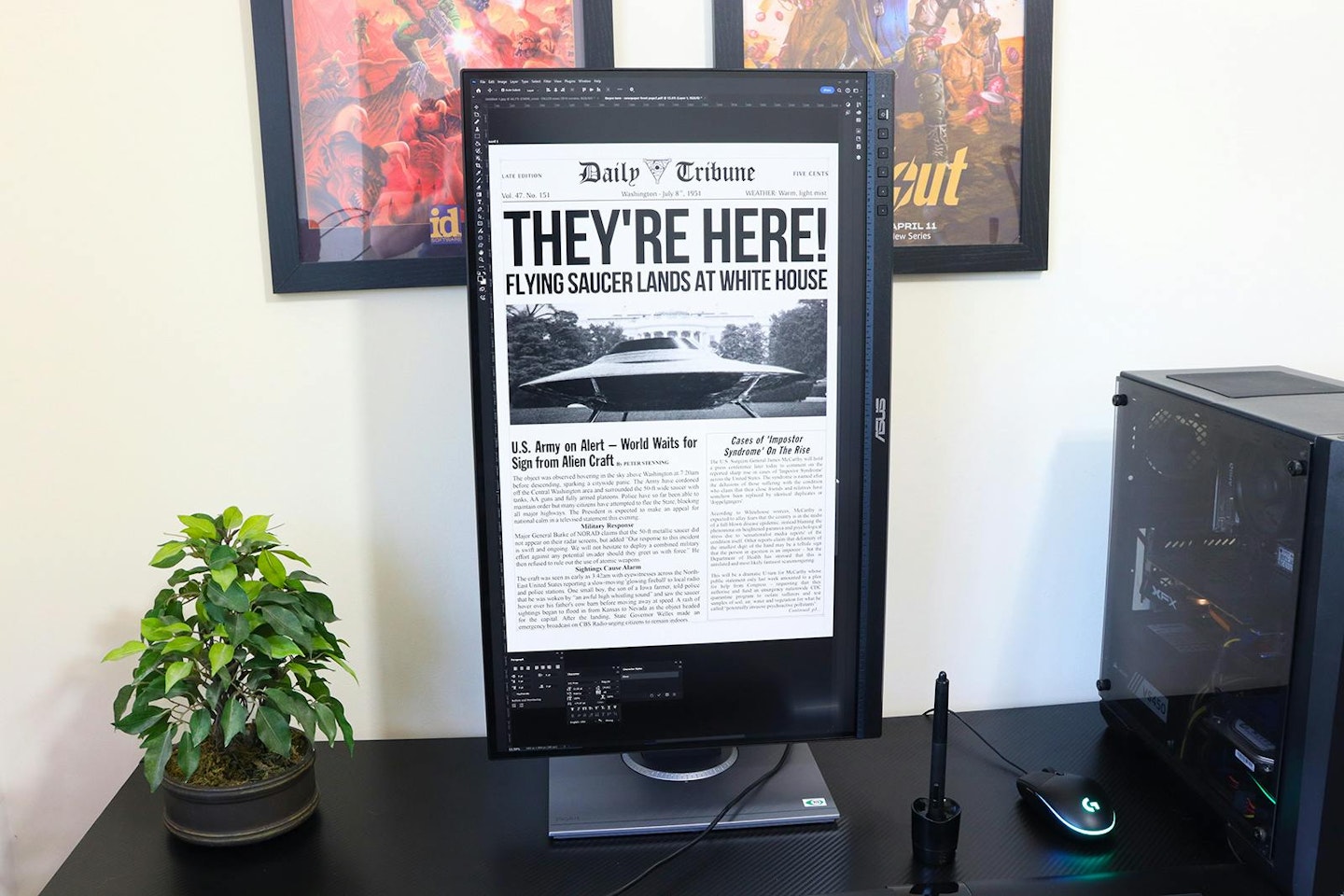
Some monitors can rotate 90 degrees ©Chris Duffill/Empire
The majority of the monitors we’ve chosen are height adjustable with a good degree of tilt, swivel and pivot. These are factors worth bearing in mind when choosing a monitor. Cheaper models will tend to be static and limit your control over placement, which could be particularly annoying if gaming from a room with variable lighting. If that’s the case you might also want to ensure that your monitor is VESA compliant so that you can attach a desk mount.
Even more significantly, a poorly positioned monitor can lead to neck strain, backache, or eye discomfort, particularly if you’re sitting for hours at a time. Ergonomic adjustments let you align the top of the screen with your line of sight (normally in conjunction with a quality gaming chair), reduce glare, and maintain the perfect viewing distance, all of which help fend off fatigue and discomfort.
Some gaming monitors, such as the Samsung Odyssey G3, can be rotated 90 degrees into portrait mode. While not necessarily critical to gaming, as a gaming monitor may be used for other tasks too this flexibility is useful.
Special features
Control of settings on a basic monitor will likely come via buttons on the underside or back of the display. More premium models will include monitor management software which will give you greater control over fundamental settings and more complex configurations.
Beyond that, gaming monitors may offer gaming specific special features like a crosshair. This is where a a dot or cross is added to the screen as a consistent point for aiming in first-person shooter titles. It saves precious seconds during online combat by letting you line shots up quickly. Some monitors, like the ROG Strix XG27ACDNG, take this a step further by automatically changing the colour of the crosshair so that it stands out against the visuals on screen.
Full specifications of our choices
• ROG Strix OLED XG27ACDMS
• Samsung Odyssey G30D
• AOC Q27G3XMN
• AORUS FO32U2P
• Alienware AW3425DW
• MSI MAG401QR
• Sony INZONE M9 II
• UPERFECT UTouch
• TUF GAMING VG279QM
• LG UltraGear OLED GX7
Gaming monitor terminology
Any discussion of gaming monitors will involve plenty of technical language. We’ve discussed these terms throughout our guide, but here’s a quick glossary or some of the ones that frequently crop up.
DCI-P3 A colour standard covering a wider gamut than traditional sRGB (standard Red, Green, Blue). DCI-P3 allows monitors to display more vibrant and lifelike hues.
Delta E<2 Delta E measures colour accuracy – a value below two indicates differences in displayed colour are virtually imperceptible to the eye, ideal for creative work as well as gaming.
G-SYNC and FreeSync These are adaptive sync technologies from companies NVIDIA (G-SYNC) and AMD (FreeSync) designed to eliminate screen tearing and reduce stutter by matching your monitor’s refresh rate with the output of your graphics card.
GPU Short for Graphics Processing Unit, the GPU is the dedicated chip in a PC, laptop or console responsible for rendering everything you see on screen.
HDR High Dynamic Range enhances picture quality by boosting contrast and extending the range of colours and brightness, resulting in more realistic and immersive visuals.
Input lag The short delay between a command (such as a mouse click or key press) and the action appearing on screen. A low input lag is vital for competitive gaming.
IPS, VA, TN These are types of display panels. IPS (in-plane switching) offers top-grade colour and wide viewing angles, VA (vertical alignment) excels in deep contrast and blacks, while TN (twisted nematic) is known for fast response times, often at the expense of colour and viewing angles.
KVM switch A KVM switch (Keyboard, Video, Mouse switch) allows you to control multiple devices, such as PCs or laptops, with a single set of peripherals and one monitor. With the press of a button, you can swap between connected systems without the need to unplug or rewire anything, keeping your desk clutter-free.
Mini-LED This technology uses much smaller LEDs for the backlight in LCD panels, allowing for more precise control over brightness and contrast. This results in improved HDR performance, deeper blacks, and less halo effect compared to standard LED backlights.
OLED Stands for Organic Light Emitting Diode, where each pixel emits its own light. This allows for true blacks, superb contrast, and fast response times, making it a favourite for both gaming and film. QD-OLED is a next-generation of this technology that blends OLED’s self-lit pixels with a layer of quantum dots. This results in even brighter images and a broader range of vivid colours without sacrificing OLED’s deep blacks. WOLED is short for White OLED. This panel structure uses a white OLED base with colour filters, improving overall brightness and efficiency while delivering the characteristic deep blacks of OLED screens.
Nits A measurement of brightness; more nits mean a brighter screen, which is especially handy for HDR content and gaming in well-lit rooms.
Refresh rate The number of times per second (in hertz) a monitor updates an image – a higher refresh rate translates to smoother, more fluid motion in games.
Resolution The total number of pixels on the display, given as width by height. Higher resolution brings sharper, more detailed images.
Response time How quickly a pixel changes from one colour to another, measured in milliseconds. Lower values help reduce motion blur and ghosting in fast action.
VRR Variable Refresh Rate technology adjusts the monitor’s refresh in real-time, staying in sync with your GPU’s output to eliminate tearing and stutter.
Gaming monitor FAQs
What monitor is best for gaming?
The best monitor for gaming is one that balances high refresh rates, low response times, and strong adaptive sync support (such as G-SYNC or FreeSync) to ensure smooth, tear-free visuals. An OLED panel will typically offer the best combination of vibrant colour and fast performance, but will cost more as a result. Resolution should match your hardware’s capabilities, with 1440p or 4K offering greater detail. Ultimately, it comes down to your preferred genres, budget, and the power of your gaming device, but we’ve selected the ROG Strix OLED XG27ACDNG as our best overall choice.
How much should I spend on a gaming monitor?
How much to spend on a gaming monitor really depends on your priorities and hardware. For a solid, entry-level experience, £150–£250 gets you Full HD and a decent refresh rate, while mid-range models at £300–£500 typically offer higher resolutions, faster panels and better colours. If you’re after top-tier features like 4K, OLED or elite refresh rates, expect to spend upwards of £700. However, this will only be worth it if your PC or console can make full use of these features.
What is the best OLED 4K gaming monitor?
We believe the LG UltraGear GX7 27GX700A-B stands out as one of the best OLED 4K gaming monitors available, thanks to its stunning visual clarity, ultra-fast response times and smooth performance at high refresh rates. It offers deep blacks, vivid colours and support for both G-SYNC and FreeSync for tear-free gameplay. Those seeking cinematic visuals and rapid-fire reflexes in a monitor under £1000 will find it tough to beat.
Is a monitor worth it for gaming?
A dedicated monitor is often a sound investment for gaming, offering superior refresh rates, lower input lag and clearer visuals compared to most standard televisions or laptop screens. These advantages translate directly into smoother gameplay, quicker reactions and more immersive experiences. For anyone who values competitive edge or simply wants to make the most of modern games, a gaming monitor is well worth considering.
Should I choose G-SYNC or FreeSync?
Both G-SYNC and FreeSync are designed to eliminate screen tearing and stutter by matching your monitor’s refresh rate with your graphics card’s output. If you’re using an NVIDIA GPU, G-SYNC is generally more seamless, while FreeSync is the go-to for AMD users and can often be more cost effective. Many modern monitors support both, so it’s worth checking compatibility with your hardware before deciding
Should I go for an IPS, TN or VA panel?
Choosing between IPS, TN and VA panels depends on your priorities: IPS panels offer excellent colour accuracy and wide viewing angles, making them ideal for those who value rich visuals and versatility. TN panels are best suited for competitive gamers seeking the fastest response times, though they sacrifice colour and angles. VA panels sit in the middle, delivering deeper contrast and better blacks, though motion handling may not quite match the very fastest displays. All that said, the panel type is only one element of a gaming monitor and will be as good or bad as its other specs.
Latest updates
This article was first published in March 2026. Future relevant additions and amendments will be noted here.
David Ker is a journalist with more than a decade of experience in print and digital publishing. He appreciates technology made with its environmental impact in mind and which presents him a further means to pursue his love of music, reading, games, TV and film. Above all, with so many options out there, he’s interested in products that display something out of the ordinary and offer value for money. Hard to please, he assures Empire readers that he’ll be a discerning critic on their behalf.