

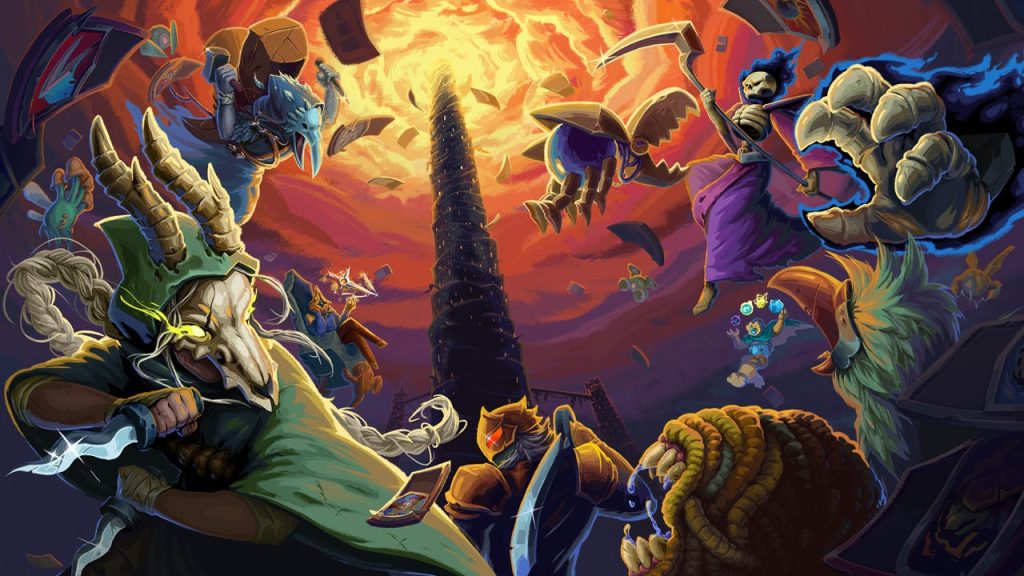
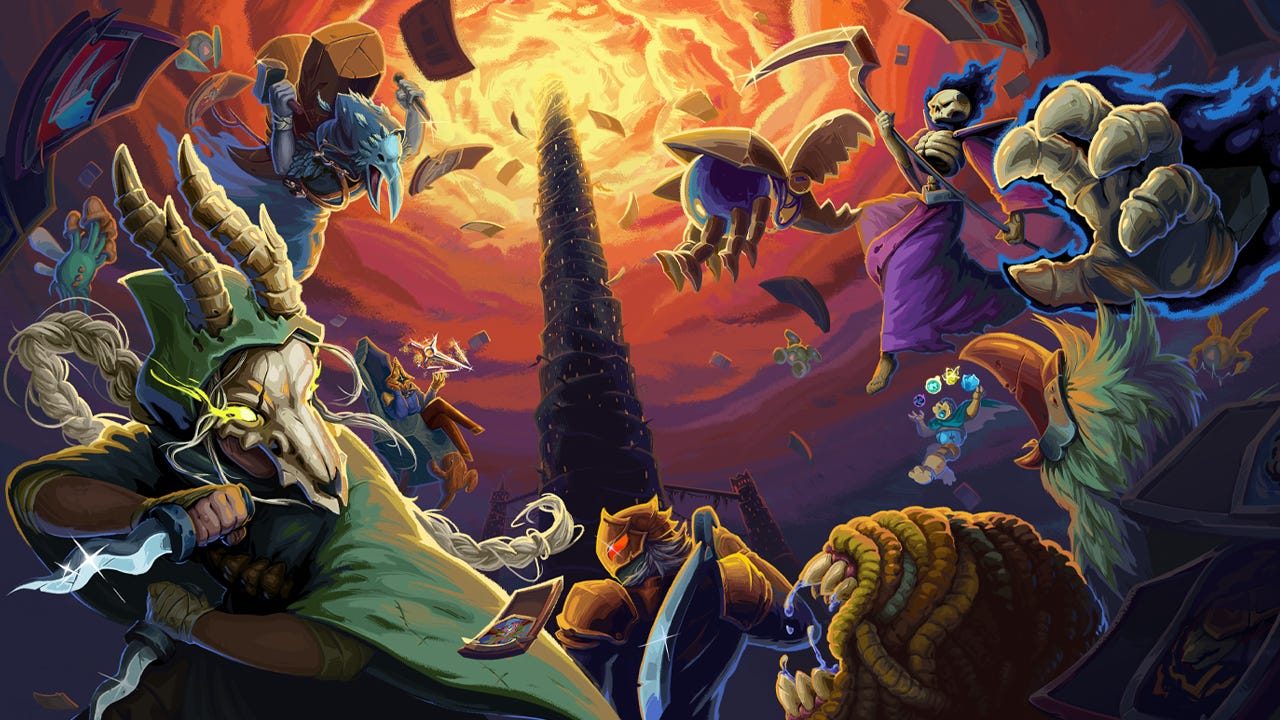
On its Early Access launch day, before I’d unlocked anything, I was struck by how much Slay the Spire 2 felt more like a remake of the original Slay the Spire than a sequel. The tutorial didn’t tell me – someone with over 1,000 hours in the original – anything I didn’t already know. The map where you choose your path and whether to aim for riskier battles with higher rewards or potentially lower-stakes encounters (which can still turn wild on you) is exactly the same, and the turn-based combat follows basically all the old rules of how you spend your allotted energy points to play cards that build up your armor and hack away at the enemy’s defenses and health until one side or the other is dead.
That’s not a bad thing when your starting point is one of the all-time greats – just a few months ago I lavished praise on another deckbuilding roguelike sequel, Monster Train 2, for a similar approach. And as I’ve progressed and unlocked some of the new content over the first eight or so hours of runs, this follow-up has come more into its own: Two entirely new characters – the Regent and the Necrobinder – join three revamped ones, and loads of new enemies, bosses, artifacts, and random events make Slay the Spire 2 feel worthy of being called a sequel, even if it’s extremely familiar in its opening hours. It also has a new art style that’s very quickly won me over with its larger characters and less subtle animations (including more elaborate enemy deaths) that make it a bit more lively even though everybody’s holding still most of the time.
Since we’re still so early, I’ve been concentrating my progression efforts on my old favorite character, the Defect. This faulty robot is a lot chunkier-looking this time, but his orb-summoning and evoking mechanic is carried over almost unchanged. However, balance is different enough that as someone who routinely blasts through Daily Climbs in the original, I’ve only managed to win a couple of runs thus far – my first, as the Ironclad (which is probably kinda rigged to make us feel powerful), and one more since as the Defect. Part of that is that there are quite a lot of new cards to unlock that will certainly make things a bit easier than when I’m working with just the basics, and part of it is me cockily charging head-first into battles with elites and bosses I’ve never seen before and getting my butt handed to me as a learning experience. But it’s not like I go into a roguelike of any type expecting to win runs early on – losing and then improving is a big part of the fun.
One area developer Mega Crit has definitely gotten a little more inventive is with special events, some of which can give you a sort of quest that can span across acts (think a more formal version of the first game’s Red Mask interaction). I’ve gotten a map in Act 1 that led me to a huge treasure pile in Act 2, and a key in one act that opens a chest in the next. There’s also a bird egg that must be hatched at a rest site (so it comes at the opportunity cost of not healing yourself or upgrading a card). Those are represented by unplayable cards until their quest is resolved, so there’s at least a minor consequence to carrying them with you because they take up space in your deck and hand that could’ve gone to something useful in the moment.
I’ve also seen a bit more willingness to let us tweak how cards work beyond simply upgrading them. A few new modifiers like letting you re-use a card, making defense cards exhaust but gain +1 after use, giving you an extra energy the first time you play a card, making a card retainable, etc. – these all have the potential to make builds a lot more flexible than in the original.
The big feature that truly sets Slay the Spire 2 apart is the up-to-four-player co-op mode, and in the couple of runs I’ve done with others, it’s been more than a little chaotic. Within each turn of combat, it’s a real-time free-for-all where everybody plays their cards at once, so if you’re not coordinating your attacks over voice chat it gets crazy extremely quickly as the cards stack up and wait their turns for their animations to play out. If you plan on getting anywhere as a team you’ll definitely want to make sure you’re working together, because Slay the Spire 2 balances out the presence of multiple players by dramatically increasing enemy hitpoints (and their attacks hit everybody at once), so you’ll need to focus fire to take out priority targets quickly. Given there’s no matchmaking to find random people to play with, though, it’s safe to say you’ll be in some form of communication with your teammates.
Things are made a little more forgiving in co-op in that downed players are automatically revived to 1HP after a battle and you can use your rest site action to heal a teammate instead of yourself. You also get the same number of random artifacts as you have players each time they’re handed out, which lets you choose the best fit for each of your builds (with any disputes settled randomly). I can see that giving you a major leg up over simply taking whatever pops out of a chest. I’ve also gotten a few co-op-specific cards that allow me to boost my teammates, such as giving them a random card to play in combat.
Of course, I expect that the difficulty will ramp up pretty dramatically as well, and require even more planning of your order of operations than you have to do alone. It’s deliberately designed to make you and your teammates hash things out in conversation: You can’t see a teammate’s entire hand, but they can mouse over one card at a time and it’ll be displayed over their character’s head so you can see what they’re talking about. I also love how you can draw on the map now, plotting out where you’re going or just doodling. (That works in single-player as well, if you want to leave yourself a note.)
I will say that it would be great if Mega Crit could find a better solution for what happens when someone in your party has to bail mid-run, because right now that person’s character just stops and you have to abandon your game with nothing to show for it. To be fair, a typical run isn’t going to go more than an hour and everybody should know what they’re getting into before setting out on a group adventure, but things happen.
After just one day of playing there’s certainly a lot more here to cover, especially since it at least appears to be largely “complete” in terms of how much content is here (though who knows how much bigger Mega Crit plans to make it before 1.0). Outside of the balance changes we’ve been told to expect, the only real indication that this is an early access game is the goofy MS Paint-style placeholder art you’ll see on a handful of cards and in the progression tree that serves up bite-sized bits of lore as you unlock new cards, potions, and artifacts.
So how long will it take me to wrap up this review? Hard to say: this isn’t really the kind of game that you ever fully “beat,” and if the first one is any indication I’ll likely still be doing the randomized Daily Climbs in Slay the Spire 2 well into the 2030s. But I expect I’ll be able to form some coherent thoughts about its new ideas within the next week or so of bashing my head against its various bosses and figuring out how to generate the star currency the Regent uses to cast his spells and how to manage the Necrobinder’s pet skeleton hand. So check back next week for more impressions, and tell us how your early runs have been going so far in the comments.

![Valve Stands Firm the Steam Machine Will Launch In 2026 Despite Delays, ‘Memory and Storage Shortages’ Still Challenging [UPDATED]](https://imdbnews.ir/wp-content/uploads/2026/03/valve-stands-firm-the-steam-machine-will-launch-in-2026-despite-delays-memory-and-storage-shortages-still-challenging-updated.gif)