
Valve has responded to the New York Attorney General’s lawsuit, stating it has “serious concerns with the alterations the NYAG claims are necessary to make to our games.”
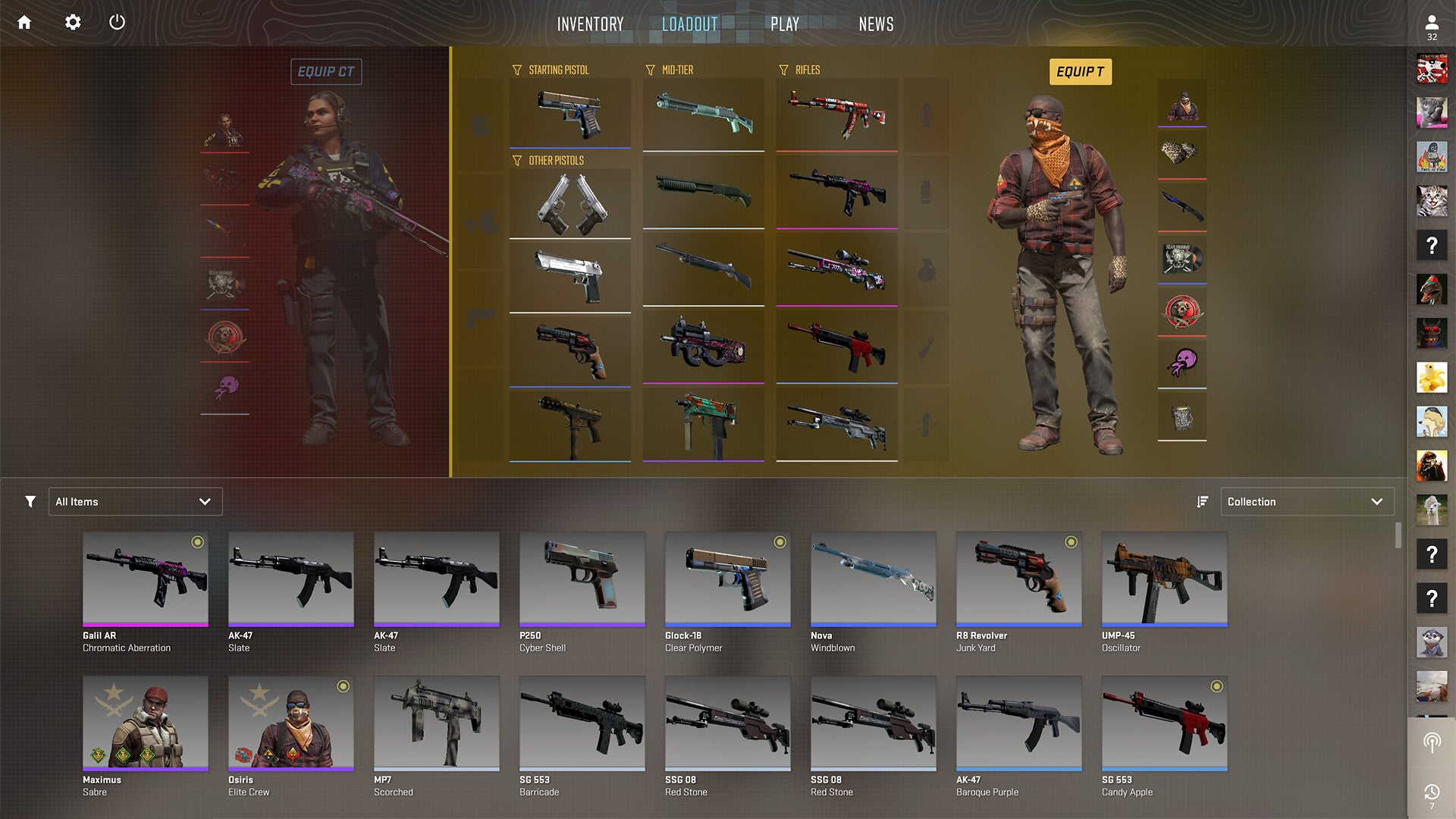
The attorney general of New York, Letitia James, announced her office was suing Valve at the end of February, alleging the platform illegally promotes gambling to children. Following an investigation, the office of the attorney general “found that Valve’s video games, including Counter-Strike 2, Team Fortress 2, and Dota 2, enable gambling by enticing users to pay for the chance to win a rare virtual item of significant monetary value.”
“In Valve’s most popular game [Counter-Strike 2], the process resembles a slot machine, with an animated spinning wheel that eventually rests on a selected item. The randomly selected virtual items have no in-game functionality but can be sold online for money, with one item reportedly being sold for more than $1 million. The lawsuit alleges that Valve has made billions of dollars luring its users, many of whom are teenagers or younger, to engage in gambling in the hopes of winning expensive virtual items that they can cash in on. With this lawsuit, Attorney General James seeks to permanently stop Valve from continuing to promote illegal gambling in its games and to pay disgorgement and fines.”
Unusually for Valve, the company has shared its response publicly, claiming it has been working with the AG since early 2023 to “educate” them on how virtual items are won and shared in its games.
“We shared with the NYAG that these types of boxes in our games are widely used, not just in video games but in the tangible world as well, where generations have grown up opening baseball card packs and blind boxes and bags, and then trading and selling the items they receive,” Valve wrote. “On the physical side, popular products used in this way include baseball cards, Pokémon, Magic the Gathering, and Labubu. In the game space, digital packs similar to our boxes date back to 2004 and are in widespread use. Players don’t have to open mystery boxes to play Valve games. In fact, most of you don’t open any boxes at all and just play the games — because the items in the boxes are purely cosmetic, there is no disadvantage to a player not spending money.”
Valve added that it has shared its efforts to shut down accounts found to be using its game items on gambling sites in violation of the Steam Subscriber Agreement, its efforts to combat fraud and theft of users’ items, and “our extraordinary measures to stop gambling sites from taking advantage of Steam accounts and Valve game items.”
“Valve does not cooperate with gambling sites. To date, we’ve locked over one million Steam accounts that were being misused by third parties in connection with gambling, fraud, and theft. We’ve also shipped features (like trade reversal and trade cooldown) to discourage gambling sites’ ability to operate and protect Steam users from fraud. And we forbid any gambling-related business to participate in or sponsor tournaments for our games,” the company stressed.
Valve also shared candid observations about the lawsuit, writing: “We have serious concerns with many of the alterations the NYAG claims are necessary to make to our games.
“First, the NYAG seems to believe boxes and their contents should not be transferable. They appear to assume digital mystery boxes and items in our games are different from tangible items like baseball card packs (which contain random cards), and to take issue with the fact that users have the ability to transfer the items they receive through Steam Trading or user-to-user sales on the Community Market. We think the transferability of a digital game item is good for consumers — it gives a user the ability to sell or trade an old or unwanted item for something else, in the same way an owner can sell or trade a tangible item like a Pokemon or baseball card. NYAG proposes to take away users’ ability to transfer their digital items from Valve games. Transferability is a right we believe should not be taken away, and we refuse to do that.”
It also claims that the NYAG wants to gather further personal data from Valve’s players — “beyond what we normally collect in the course of processing payments” — including “evasive technologies for every user worldwide.” The office is also demanding additional age verification, even though Valve stresses that most payment methods used by Steam users in New York already have age verification built-in. “Valve knows our users care about the security of their personal information, and we believe it’s in our and their interest to only collect the information necessary to operate the business and comply with law,” it added.
It also took issue with NYAG’s comments about the link between games and real-world violence, which Valve dismisses as “a distraction and a mischaracterization we’ve all heard before.”
Valve closed by writing: “We respect New York’s right to determine the laws governing behavior in the state. We will of course comply if the New York legislature passes laws governing mystery boxes — something it has not done despite considering the issue a few times. Such laws would be the result of a public process, presumably with input from the industry and New York gamers.” However, it claims the commitments demanded by the “went far beyond what existing New York law requires and even beyond New York itself,” and while it “may have been easier and cheaper for Valve to make a deal with the NYAG, we believed the type of deal that would satisfy the NYAG would have been bad for users and other game developers, and impacted our ability to innovate in game design.
“Ultimately, a court will decide whose position — ours or NYAG’s — is correct. In the meantime, we wanted to make sure you were aware of the potential impact to users in New York and elsewhere.”
Vikki Blake is a reporter for IGN, as well as a critic, columnist, and consultant with 15+ years experience working with some of the world’s biggest gaming sites and publications. She’s also a Guardian, Spartan, Silent Hillian, Legend, and perpetually High Chaos. Find her at BlueSky.