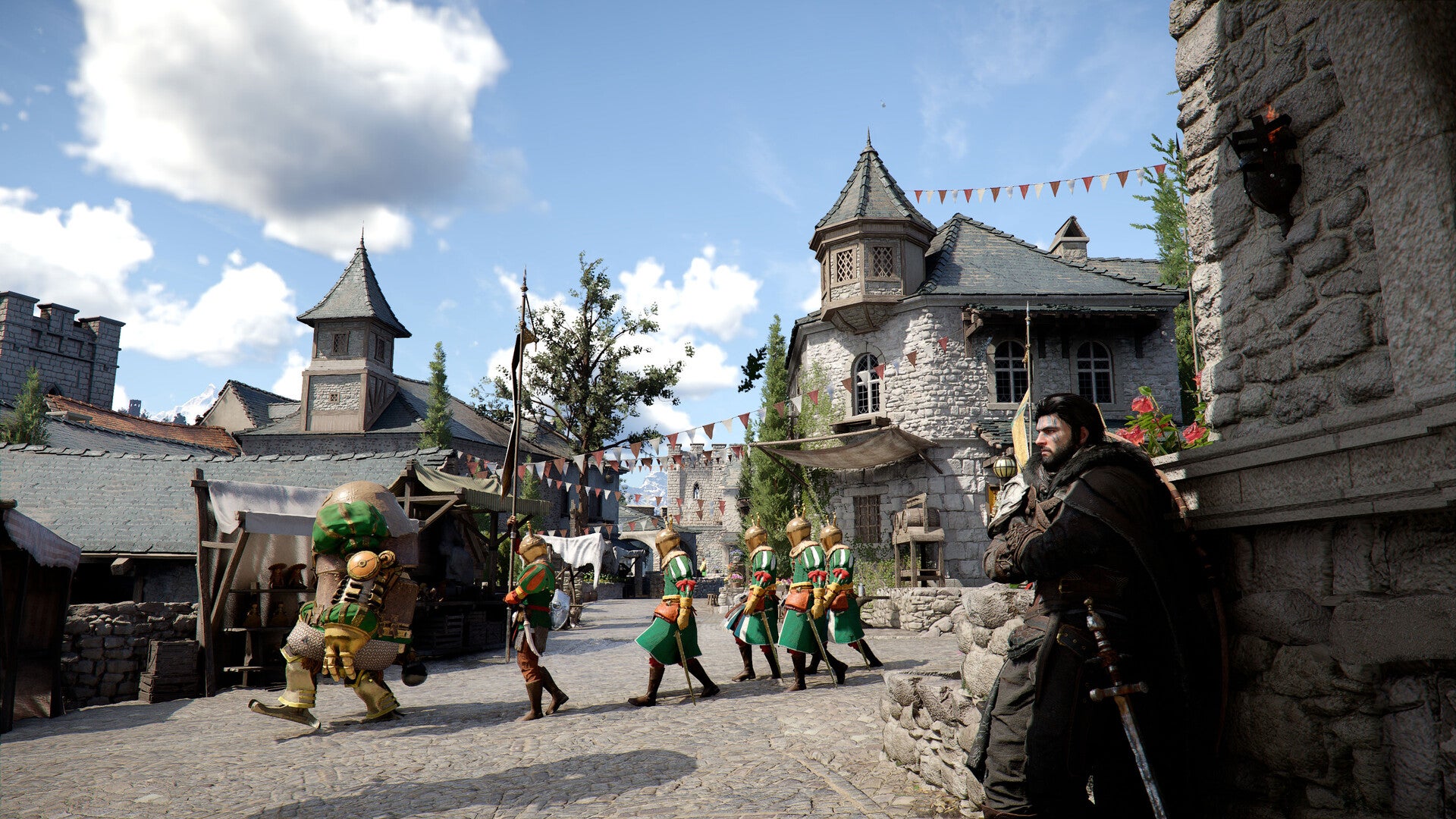

Crimson Desert just launched yesterday to a bit of a chaotic and mixed reception from critics. That hasn’t hampered its sales, but those two million players are starting to stumble into some concerning issues in their first day in Pywel, including the presence of what some are saying may be AI-generated art assets.
A number of threads have popped up around social media of players questioning the human authenticity of certain art assets, specifically signs and paintings around the game. There’s this painting of two swordsman with a lot of odd angles:
.reddit-embed-wrapper iframe { margin-left: 0 !important; }
There are these odd-looking gentleman with funky fingers:
.reddit-embed-wrapper iframe { margin-left: 0 !important; }.reddit-embed-wrapper iframe { margin-left: 0 !important; }
And while all of the above I could see there being an argument for just some funky proportions, the piece that really seems like solid evidence of generative AI is this painting of various men and horses. Just start looking at the horses’ legs, and keep going. What… is going on here?
.reddit-embed-wrapper iframe { margin-left: 0 !important; }
Our own writer Brendan Graeber stepped in and found us some more examples that are just off in ways that really don’t make sense for a human to have done:

Use of generative AI to create assets, particularly final, published ones, has been a hot-button issue in games over the last year. Multiple companies have been under the magnifying glass both for confirming they did use it or even seeming to use it. Nintendo had to deny accusations of generative AI use in Mario Kart World for various billboards. Activision has experienced an ongoing outcry for generative AI assets found in Call of Duty, as has EA for Battlefield. Larian Studios went through a whole round of public backlash late last year when it was revealed in an interview that its upcoming game, Divinity, was using generative AI behind the scenes for things like concept art and placeholder text. Clair Obscur: Expedition 33 was stripped of an indie Game of the Year award last year when it was revealed that a generative AI asset inadvertently made it into the final release build of the game. None of these controversies appear to have impacted the sales of these games, but they’ve certainly turned segments of the public’s perception of them.
If this is generative AI art, however, this would put Pearl Abyss in violation of Steam’s AI Content policy, which requires generative AI use to be disclosed on the game’s store page. Crimson Desert’s page has no such disclosure at the time this piece was written.
We’ve reached out to developer Pearl Abyss and have asked them to confirm or deny whether generative AI was used on finished assets in Crimson Desert. The studio already garnered positive press just last month when marketing director Will Powers confirmed that all the game’s main and quest NPCs were voiced by human actors, not generative AI, including in multiple languages.
Rebekah Valentine is a senior reporter for IGN. Got a story tip? Send it to rvalentine@ign.com.