
A documentary which filters modern geopolitics through the work of the British author behind Nineteen Eighty-Four and Animal Farm.
“From the totalitarian point of view, history is something to be created rather than learned.” So wrote novelist, essayist, and journalist George Orwell in 1946, as he was gathering ideas for what would become his final book, the dystopian and depressingly prescient Nineteen Eighty-Four. Eighty years later, with Orwell’s warning a bleak reality, documentarian Raoul Peck (I Am Not Your Negro) investigates how the writer came to predict the future, and how shockingly accurate those predictions were.
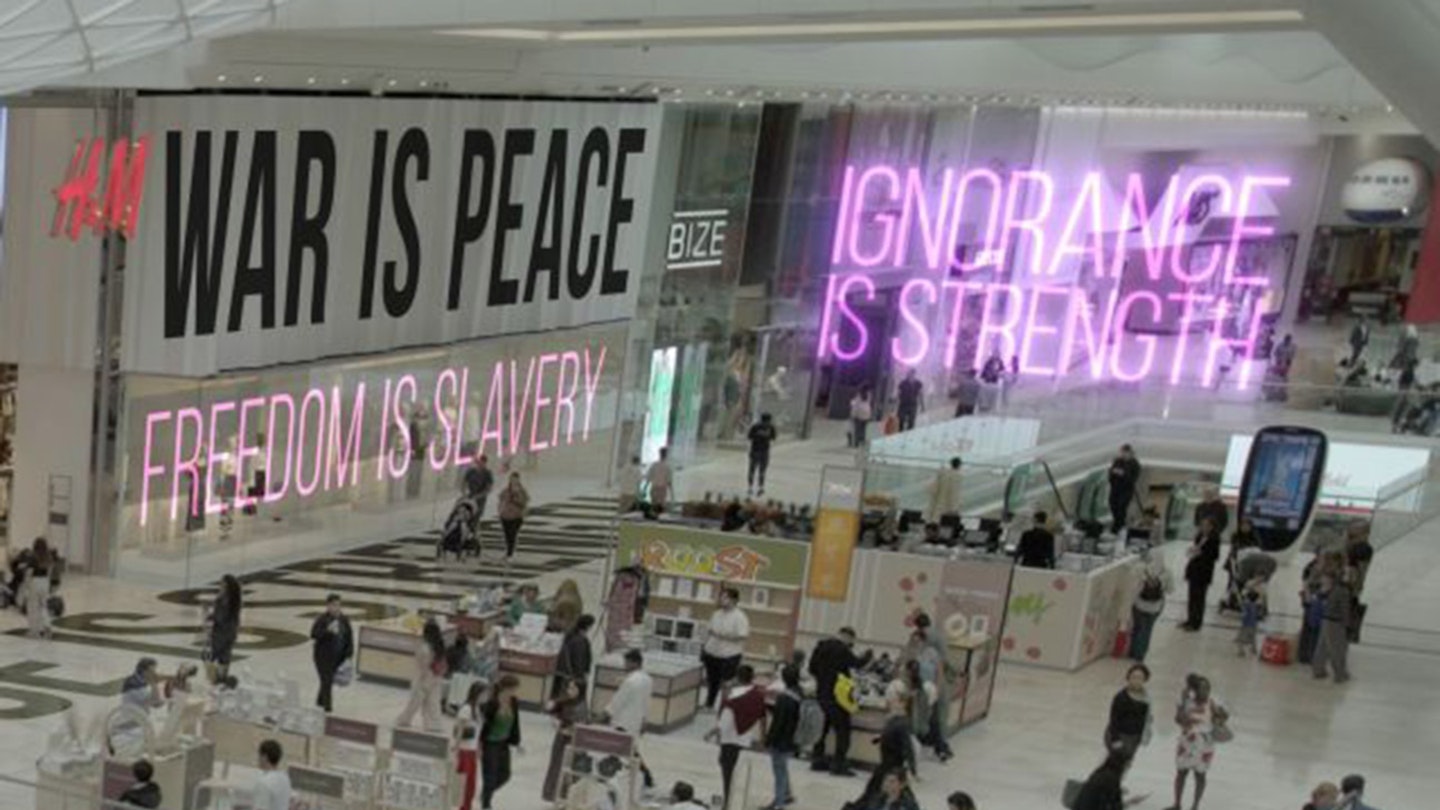
If it’s an Orwell biography you’re after, look elsewhere. Peck provides only the minimum background information required to understand where Orwell was coming from. Instead, he leans heavily into drawing parallels between the ideas contained in Animal Farm, Nineteen Eighty-Four, and various essays, and the methods of 20th-century leaders who’ve pushed their agendas through lies, corruption, suppression and state-sanctioned violence. Orwell’s words, delivered with weighty gravitas by Damian Lewis, are set to news footage and clips of movies and documentaries from around the world to highlight a post-truth present enabled by unregulated social media and a global ruling class greedy for power and control.
Peck, like Orwell, wants you to question and interrogate what you see and hear from those in power.
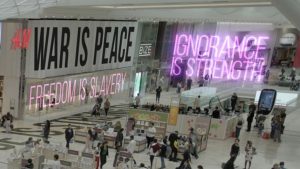
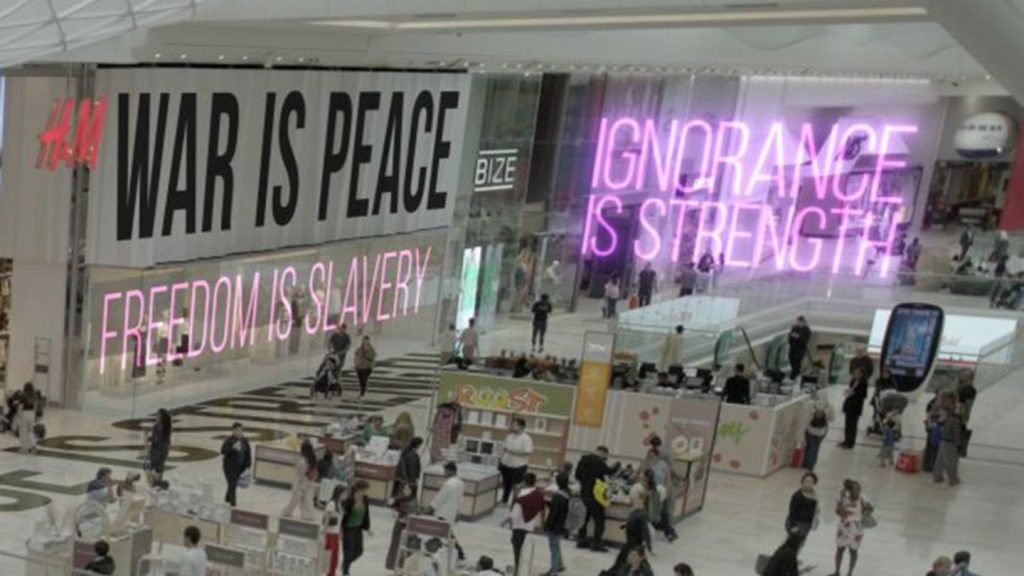
The format is strong and convincing: Peck’s choices are laser-focused, and many of the cuts between fictional films and news footage illustrate a sickening similarity. Big Brother’s anti-Eurasia broadcast, for example, flows into justifications for invasions by George W. Bush and Vladimir Putin so seamlessly, it’s hard to tell where fantasy ends and reality begins. The use of language, so close to Orwell’s heart, is also effectively examined, with doublespeak phrases like “special military operation” and “pacification” called out for what they really mean. Peck, like Orwell, wants you to question and interrogate what you see and hear from those in power.
This, however, is where the film fumbles a little. There’s no doubting where on the political spectrum Orwell: 2+2=5 sits, so you know what you’re getting here. But even as Lewis speaks Orwell’s words about questioning your own side as thoroughly as you would the other, Peck offers no criticism of a liberal viewpoint. Left-wing politicians are conspicuous by their absence, escaping the film’s anger as if they made no contribution to our Orwellian present. There’s also a nagging feeling that none of this is new: it’s hardly original to say that we seem to be living inside Orwell’s nightmare visions these days. And the film offers little hope beyond a last-minute call for resistance. If you, like so many, feel overwhelmed and powerless right now, this might not be the feel-good movie for you.
A bitter howl at the injustice of the modern world, intellectualised through one of literature’s shrewdest figures. Powerful and eye-opening, but Orwell himself might have preferred a less partisan approach.