
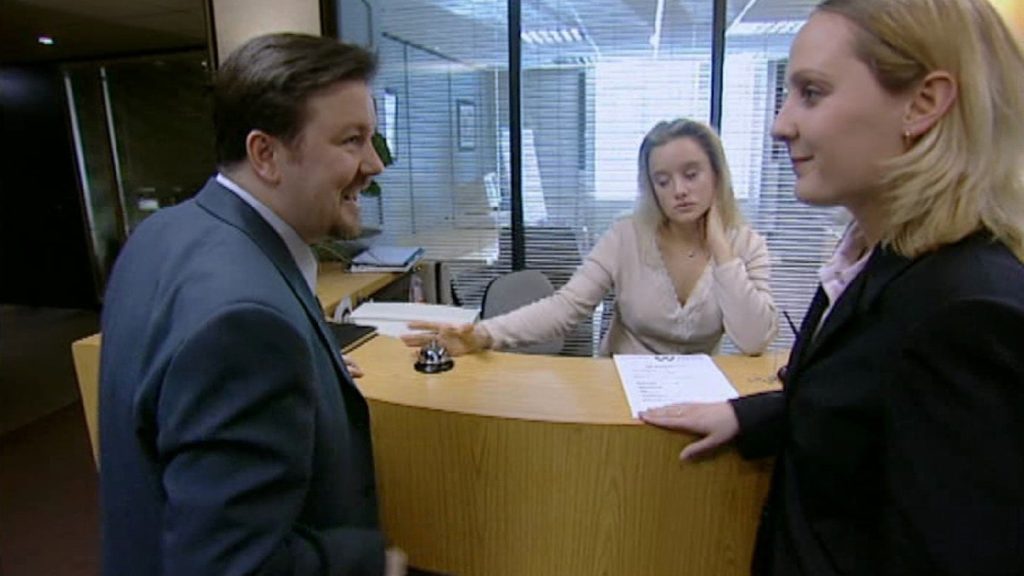
What would comedy be without David Brent? Without the employees of Wernham Hogg? Without The Office, and everything that came after? Frankly, it doesn’t bear thinking about. And 25 years later, it’s still a TV masterpiece, perfectly calibrated with knockout comedy, heartfelt romance, and everything in between.
To mark the 25th anniversary, Pilot TV’s Boyd Hilton sat down with Ricky Gervais himself to look back on the legacy of The Office, and how it all came to be.
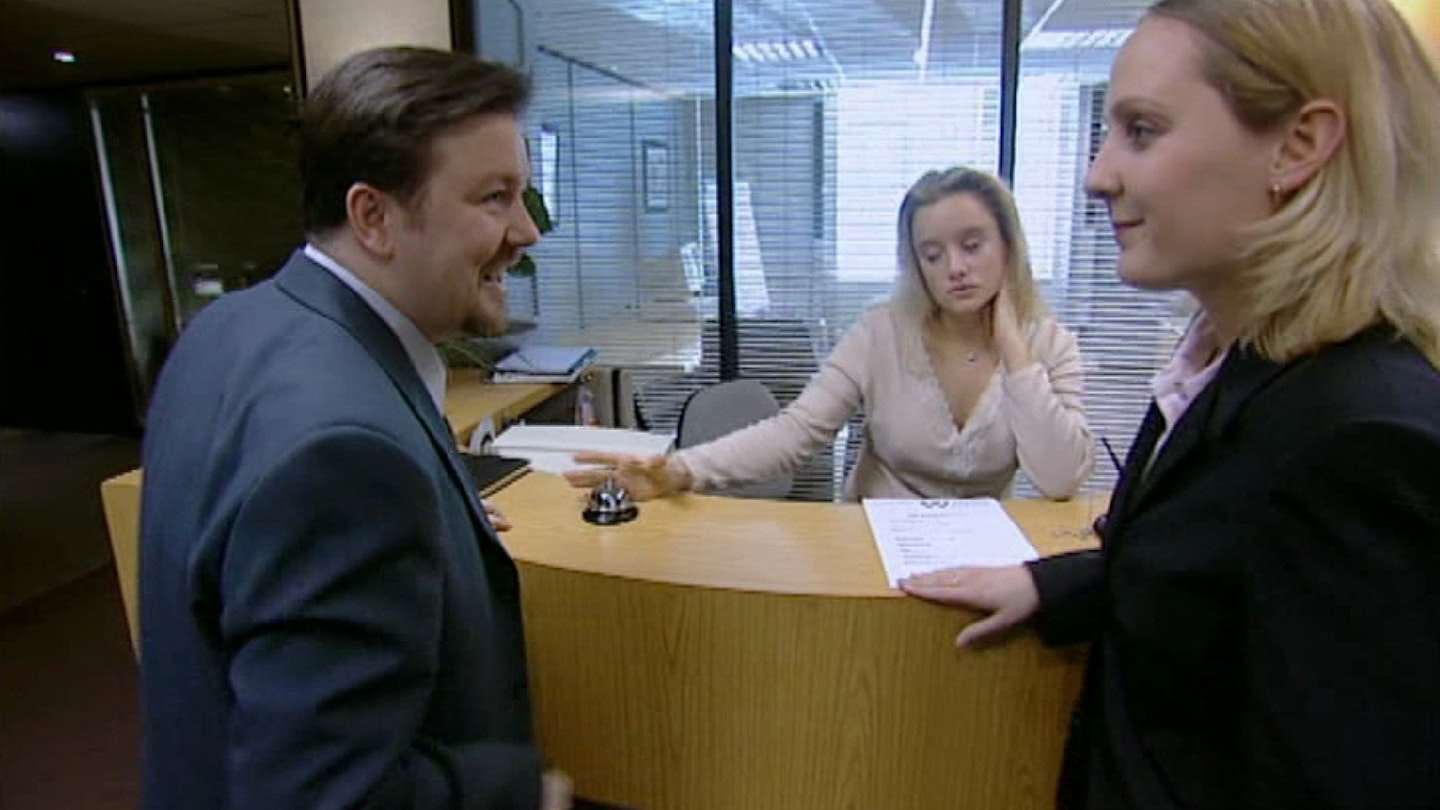
PILOT: When you were making The Office all those years ago, what were your ambitions for it?
RICKY GERVAIS: Honestly, I just thought, “Maybe some of the people that like some of the things that I like on BBC Two will like this”. I thought I’d get a percentage of Partridge and Monty Python and Fawlty Towers fans; so while I was the new kid on the block, I thought people would recognise what we were trying to do, and I thought, “If you like this sort of stuff or if you like Spinal Tap, some of you might like this”. I thought we might get a million people watching it on BBC Two, and they might let us do another series. It was never, “This is going to be a massive hit”. Let’s not rewrite history. The first episode went out on a Monday night, at 9.30pm, on the 9th July on BBC Two, 2001. I remember the first scheduler put it at 10 o’clock, against the second series of Big Brother. I went, “You are mental. You are fucking crazy. We will get killed – that is our audience, people who work in an office, so will they watch a new series about an office, or Big Brother?” So they moved it to 9.30pm.
When you were writing the first series, did you have any inkling it was going to be something special?
I wanted it to be something special, and the fake documentary thing was a tantalising part of that. We made it seem so real. We put restrictions on ourselves to not break the documentary rules. Later I realised we probably stuck to those rules more than real documentaries. You know how even real documentary crews say, “Can you do that again? We have a camera waiting”, well we didn’t even do that. We invented the mic getting left on and people getting caught out in front of the cameras by accident. So I think the extent to which we took the faux documentary form so seriously made it feel real and special. And you don’t need to change things that much; you don’t need to be ultra-innovative for people to go, “Oh, that’s different”; it can be a tiny amount different and seem really different. Of course, I wasn’t the first to do fake documentary – I got that from Christopher Guest and those guys.
Were you confident your performance as David Brent would underline that realism?
I wasn’t a trained actor, and I hadn’t gone to drama college or anything, so I didn’t know any of the rules, but I knew what real life felt like, so I just did that. And that helped make it real. I wasn’t the first to act naturally – most indie films and arthouse films had very naturalistic acting. They weren’t like Hollywood. It wasn’t the first thing with no stars in it, but that was quite important. In fact, I remember when I was doing [Channel 4 series] Meet Ricky Gervais, I didn’t do the second series because I didn’t want to become too famous. I wanted people to watch The Office and think, “Is this a real documentary?”, just for the first two minutes, at least.
But I was very confident with the character. I knew David Brent in my bones. I’d known him for years, from when I worked in a normal job and I’d do impressions of the boss getting things wrong and when we shot our own little Brent pilot in half a day, I went back to where I worked. I worked in an office for nine years, which is where the observations come from, and where the realism comes from. I felt confident because even if didn’t know about set design and locations, I could make sure everything looked authentic and as it did in real life. I was trying to emulate real life. So, all those things came together, and I knew what I wanted to see on telly.
Can you talk about the casting. How easy was it to find those people like Martin Freeman, Mackenzie Crook and Lucy Davis?
I was slightly naive there because they were based loosely based on people I’ve known or met. I thought I could just find the actor that looked like the person he was based on, but then you’re just restricting yourself. So, the guy who Finchy was based on was pretty close. I mean, we just looked and looked, and we found Ralph Ineson and he was great.
Gareth was based on a guy I went to school with, when I was 14. I talked about him before in my stand-up. I won’t say his real name, but it wasn’t Gareth. But he was in the TA [Territorial Army], and he’d say things like, “When you’re captured by cannibals and they’re boiling you they show you pornographic pictures, so you get an erection and there’s more meat”, and he believed these things. But he was sort of like a sporty, rugger sort of guy who fantasised about getting into the army. So I was looking for someone who looked like they could get in the SAS. And then Mackenzie Crook walked in, and it was even funnier because now it was a guy who weighed about seven stone who looked like a baby bird, talking about killing a man, so it was funnier.
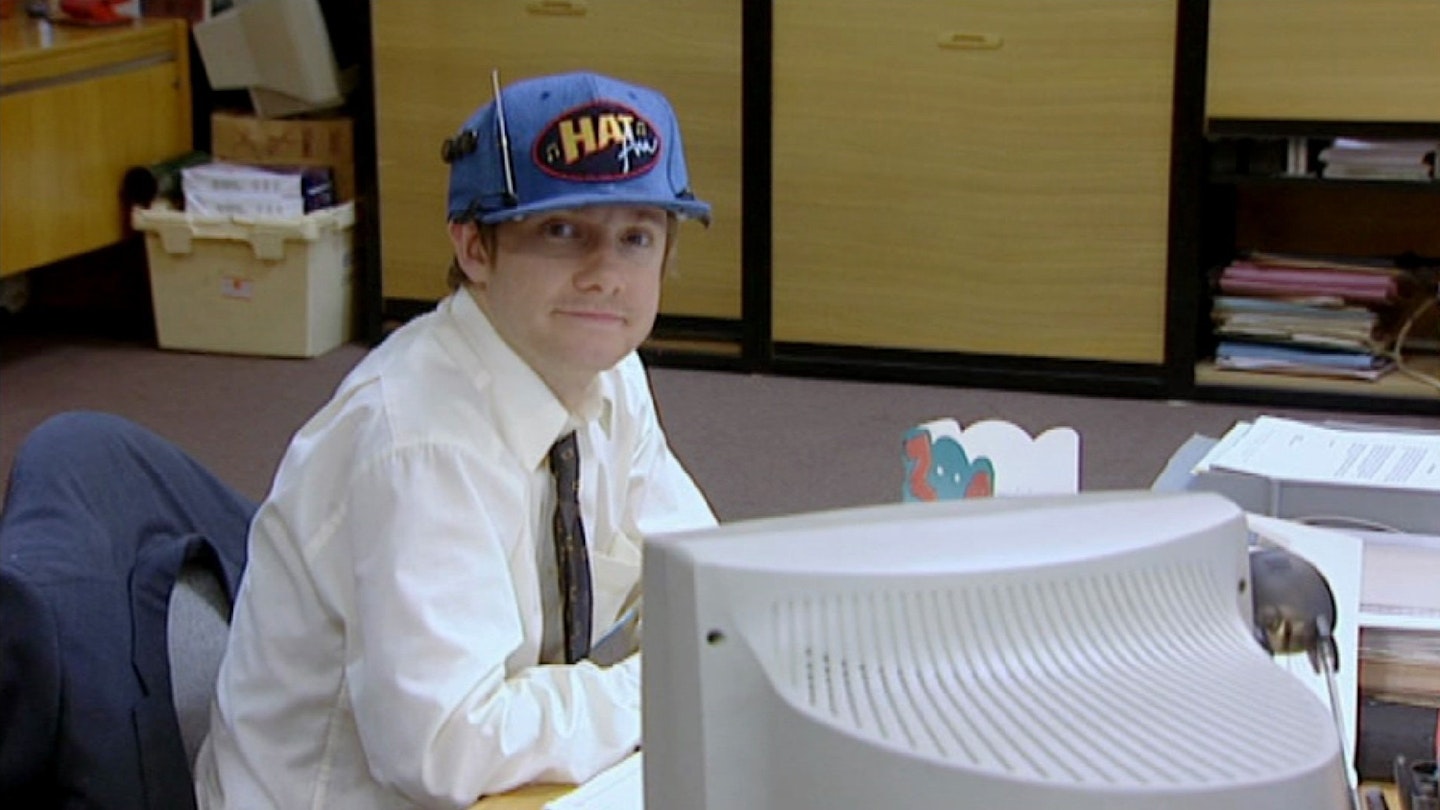
I’d met Mackenzie on The 11 O’Clock Show and I met Martin Freeman on a sketch show called Bruiser and also [Ricky’s partner] Jane had worked with him so I was aware of him. But again, the guy he was based on was actually sort of quite a chubby, Norm-from-Cheers sort of guy who would just sit there and make wry comments. He was a bit of a slob. But then Martin came in and did it with much more verve and affection. You look and look and look, and you find the best person for the job, and that might not be who was in your head, but you realise that might be even funnier. And that was true of all of them: we looked and looked and we got down to final recalls, until you go, “That’s the one”.
They also had to do it like they haven’t learned lines, because it was so important to be naturalistic. Some people thought The Office was ad-libbed. And that’s a testament to the actors, making it look like they came up with it off the top of their heads. Everyone gets it now, but to say to actors back then, don’t be funny, don’t widen your eyes, don’t overreact, don’t mumble and so on and they’re like, “You’re telling me to stop acting?” Well, sort of, yes.
The pop culture references – like Brent saying ‘Wassup!’, and talking about his comedy heroes and so on – felt unusual at the time. How important were those elements?
I think the best observational comedy is always about getting things off your chest. But what I never talked about at the time, and I think rarely since, was that I also wanted The Office to be a comedy about comedy, because I grew up loving comedy and sitcoms and I always thought it was a pipe dream to actually make one. When you’re a kid, when you’re a working-class kid, you don’t think, “I’ll do a sitcom one day”, you think, “I’ll watch a thousand sitcoms and love them”. You don’t think, “I could do that”, and I never really thought like that. I think the first time I thought like that was when I thought I could get a good job, maybe I could become a vet or something, but I never thought, “I know what I’ll do. I think I’ll become an international comedian!” And I’ve still never tried to do that. I’ve never had a five-year plan. When I was a comedian, I was already a comedian before I realised I was a comedian. [laughs]
Did you ever have that imposter syndrome as a working-class guy co-creating your own sitcom?
Yeah, well, well a couple of things there. First, I was 36 or 37 at the time, so, I didn’t think that I was an apprentice or anything. I thought, “How hard can it be?” I knew what I wanted to see on telly, and I wanted to make a fake docusoap, so I knew what I wanted. It was an easy thing to start with – it was emulating a documentary style, it was one camera, and I knew how I wanted the actors to act. I also knew that I wasn’t taking someone else’s script and panicking about that; instead, I’d been living with it for two years, and I was in it, so I could control the pace. Also, I didn’t have huge ambitions. I didn’t think, “I’ve got to make this so good that it wins all the BAFTAs and stuff”.
Did you feel pressure to get it right because you might not get the opportunity again?
Maybe deep down, but it wasn’t a big risk. It didn’t cost anything. I think the first series was 140 grand an episode, which was a good, standard budget for the time, and it went out in the summer, and no one cared about TV in the summer. As I say, it went out on a Monday night, and no one cared what was on a Monday night! So it was low risk, low pressure. And I couldn’t believe my luck. We didn’t know what’s going to happen. But it didn’t matter. I think the first episode got about 1.5 million viewers. And I was happy with that. And it got recommissioned during the run, or soon after. And then they repeated series one, and it got two and a half million. So that said something. I was conscious of the wave, the turn. A lot of people who had slagged it off started changing their minds. I remember [TV critic] Garry Bushell saying, “I’ve got to say I was wrong about The Office”. And that’s when I thought, “This is happening now”. And what I said earlier about that slight innovation… you suffer from slight innovation, because people go, “What’s this? I haven’t seen this before. I don’t like it”. That’s why every romantic comedy from Hollywood is the same as the one before. It’s why before you watch a rom-com they show you the trailer for another rom-com which is the same, assuming you’ll go and watch it. So, you suffer a bit if you make your rom-com – or your sitcom – just slightly different, but eventually you overtake that problem.
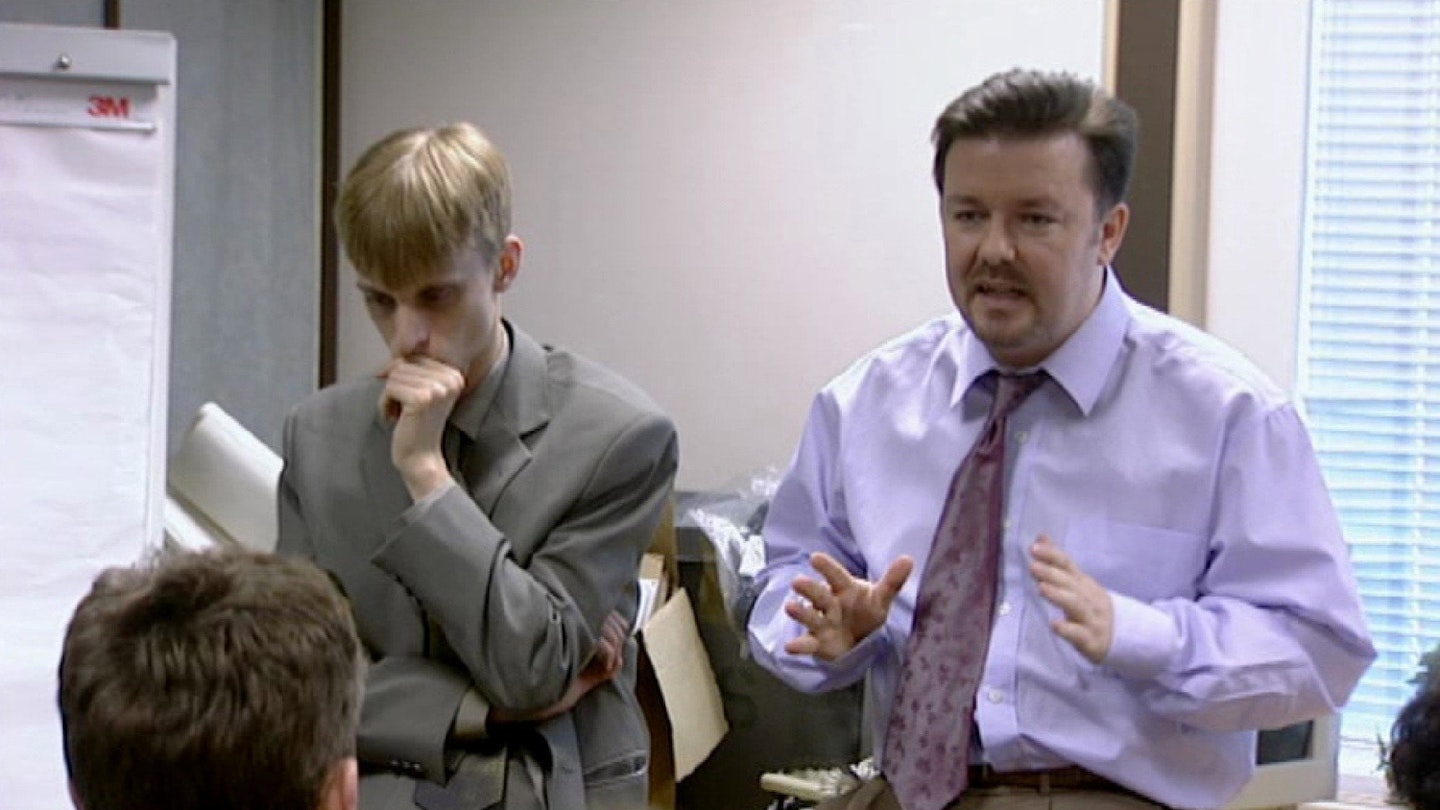
It was quite a slow burn, right?
Yeah. It’s interesting that everything I’ve ever loved, I didn’t like much the first time, and everything I loved straight away, I don’t like anymore. It’s like with banal boyband pop music – you love that tune the first time you hear it, but you hate it in a week, but with a new Radiohead album, on first hearing you’ll be thinking, “What the fuck is this? What the fuck is going on?”, but then it gets into your head, you start to love it. All the things I’ve ever loved, I didn’t like at first, from Radiohead to David Bowie to The Simpsons, and The Wire. With The Sopranos, I stopped half-way through the first episode then someone said I should watch it again. So, I watched it again and loved it. I did feel that that was happening with The Office on a much smaller scale.
Do you ever think, “What if it never got commissioned?”
Well, I actually thought, “If this doesn’t work out – fine. I’ll do something else”. It didn’t bother me, because it’s only in retrospect when you realise, “Oh my god. Imagine if you hadn’t done The Office”, or you’d done something else or you took the other job, but everyone can think that about life. There was no master plan. There was no pressure. It was more like, “I just can’t believe my luck, so I’d better do it right”. There was a certain amount of that as well, I suppose because I was a failed pop star 15 years before, so I thought now it’s about hard work and dedication and getting it right. I realised that my mistake when I was trying to be a pop star was, I should have been trying to be a musician. So, I knew this was about directing it, taking charge, doing it right. Whatever happens, it’s about doing it right, so that was my philosophy. I couldn’t believe my luck, so I wanted to get all those things off my chest. I’d been watching telly for 30 years. I knew the character inside out. It’s starts with Brent and then you have to build the backdrop of what it’s like working in an office.
Brent could have been anything. He could have been a motivational speaker, he could have a marketing manager, he could have been an officer in the army, he could have worked in a bank. He could have been anything where he wanted to be famous for being himself. And that was the biggest influence, apart from real life, those docusoaps in the ‘90s when ordinary people got their 15 minutes of fame. And that’s what Brent was like: he wanted a piece of that.
How important was the romantic element?
Crucial. I think I sort of stole that from the Marx Brothers. When I was a kid, they used to be on late Saturday night and my older brothers and sisters used to get together and have a curry, and they used to watch the Marx Brothers. So I was exposed to these characters and I loved them. I thought they were amazing and I thought Groucho was the wittiest man in the world. And I probably didn’t even get the nuance of him being a loser. Then I read about how they started in Vaudeville and they ran around being insane and funny and all that. Then this producer told them he could make them massive stars and keep all that madcap comedy stuff, but he wanted to put in a love story as well. Because if you are crazy for an hour and a half, people get sick of you. But if you’re trying to get two lovers together, people let you off. So that was the idea, really, that amongst all this madness of David Brent trying to be famous, Gareth being an idiot etc, there were two ordinary people: Tim and Dawn.
The other influence on that was Laurel and Hardy, where you’re either a Stan or an Ollie and I’ve used this forever, because there’s a Stan and Ollie in everything. Sometimes there’s multiples of Stan and Ollie and sometimes they even swap, and Ollie is a staple of comedy: an ordinary guy trying to do something he’s not equipped to do. He thinks he can; Ollie is a bit pretentious; he thinks he’s amazing. Stan is an idiot, and he doesn’t mind being an idiot. It’s the satisfied fool. And so, in our show, among all these fools, there were Tim and Dawn, two ordinary people who knew their lot.
It felt like a stealth rom-com. Now it’s impossible to imagine it without that element.
Well, the other thing that I liked about it was that it was arbitrary. When you go to work in an office, you don’t choose the other seven people you work with – they’re just there. So, it wasn’t ever going to be a zany sitcom but Tim and Dawn make it grounded. They make it matter. The other thing is that comedy is an intellectual pursuit. And unless you see something emotional, it doesn’t really matter. That’s why in sitcoms, anything can happen and it can go back to square one every week. The tricky bit is to change it. And most sitcoms don’t. I remember when the scripts were written, and [producer] Jon Plowman said, “Don’t worry too much about the order they go out in”, and I went, “No, we have to worry about the order otherwise it won’t work”. And he said, “Oh okay then” because he was so used to sitcoms where the order of episodes didn’t matter. Our show doesn’t just go back to square one. And I got that from The Fall And Rise Of Reginald Perrin. That’s the first sitcom I saw that was a developing story, and it really, really changed week on week. So all those things, all those tiny little things: you beg, steal and borrow from all the things you loved and hated, and you just put it in the pot.
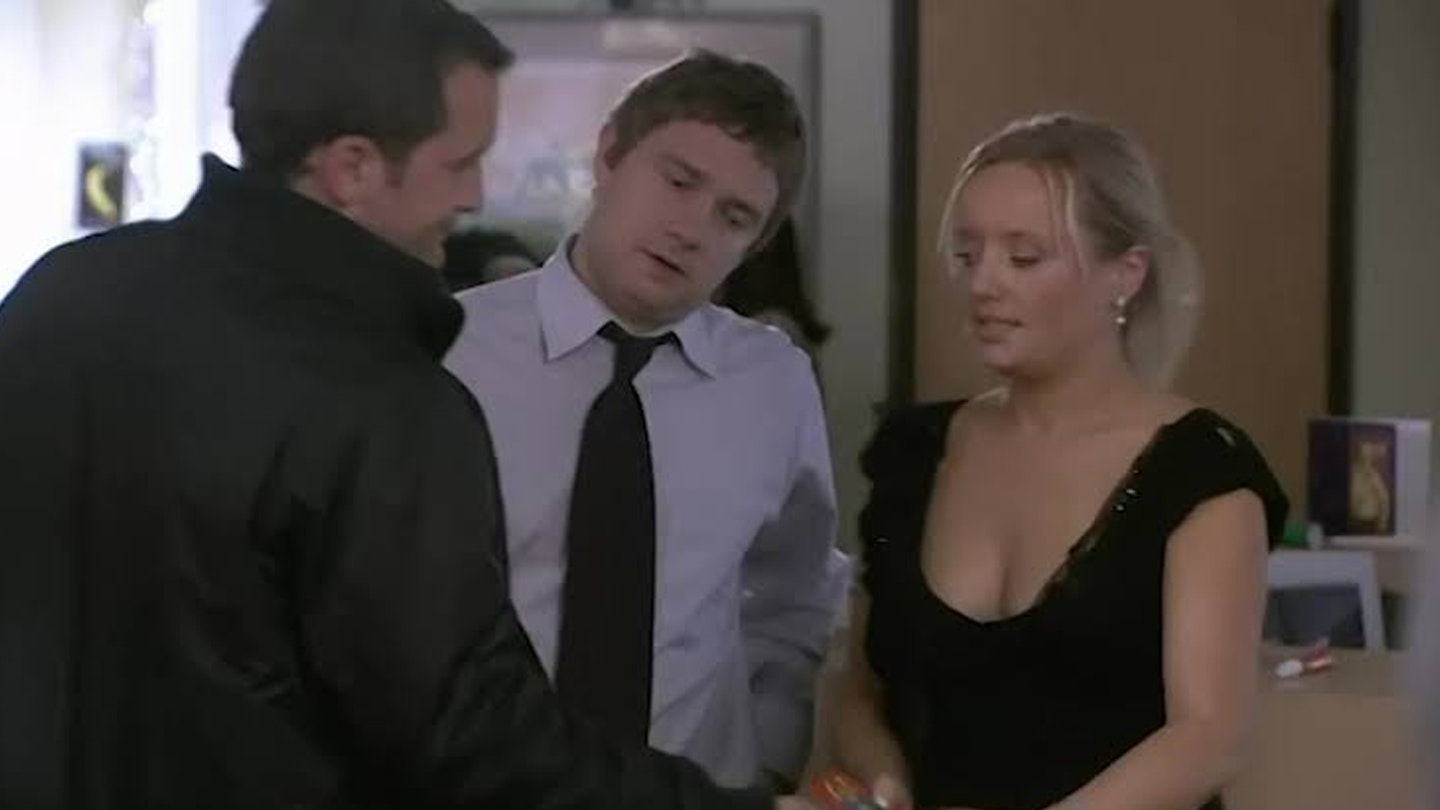
Was it important to have real jeopardy for Brent represented by Neil (Patrick Baladi) wielding power over him?
Yes. So, here’s my theory of sitcom: you need to be trapped in some way, right? You need to need that job, or you need to be tempted — so Tim’s there because he likes Dawn. I think there’s always a family element, either literal or in Bilko where the army is his family. And you need an external threat. That can be a nasty neighbour or in Only Fools And Horses it’s the criminals or the police who are on to him, with The Office it was the Swindon lot but mainly, yes, it was Neil, Brent’s nemesis, a man who was slightly better at everything than him – slightly younger, slightly more handsome, slightly funnier, slightly more popular.
You don’t need much. You don’t need a big, convoluted plot, you don’t need to know about paper, or about business, you just need to know that these people might lose their jobs: done. No one goes, “Well it was a shit job anyway”. No, Brent loves the job. It just needs to have some sort of threat. And then you just don’t need to go into too much. You just need to remind people where they are, and I tried to make everything middle: middle management, middle-age, middle England, middle everything. Nothing fancy. And you calibrate everything down. So, you don’t need to have a kidnapping or a siege, or the terrorist attack or anything surreal, or ghosts. So, if anything slightly good happens, it’s really good. It’s a big victory. Same with the romance. Tim and Dawn knew they were being filmed and she had a boyfriend, so they couldn’t declare their love, they couldn’t kiss. Now, just brushing past him or him looking over at her, and, and then the way she looked up: that became massive, because it’s all relative.
As well as the comedic stuff, it’s also an emotional show from the start, right? In episode one, you make Dawn cry…
Yes, well the scene where we make Dawn cry is a vehicle to show that Brent thinks he’s the life and soul of the party and everyone loves him. And then when the cameras are rolling and he tries to show the camera, it doesn’t work. With Brent, it’s all about the blind spot. We’re laughing at him because of the chasm between how he thinks of himself, and what other people think of him. That was really important and that’s where the talking head bits came into it, so he could say, “They love me out there… it’s like Dead Poets Society”, and he goes out there and no one’s really bothered. It was the beginning of seeing his narcissism where he’s thinking, “Love me. Give me money and airtime, please make me famous!”
I remember watching The X Factor and people crying, saying, “I want this so much!” I’m going, “What’s that got to do with me? How am I involved? Go and get a job then!” So, it was the beginning of that sort of, “If people would just know me, they would love me” scenario. Brent wanted to be able to walk into a room and have people say to him, “You are the funniest, wittiest man I’ve ever met. You’re also a philosopher”. He wanted to be loved. And I still say his worst mistake – because it was about the workplace and how you act at work as well – was mistaking popularity for respect. And that’s what’s wrong with selling people this lie of fame. Now everyone’s famous — everyone’s famous on Instagram. So, everyone’s got abs, and they’re standing next to a boat they don’t really own. And there are people going, “I haven’t got a boat or abs”, and I want to say [shouting], “NOR HAVE THEY! Stop worrying about it!” [laughs]
The scene where Tim takes off his mic when he and Dawn go into the room and we don’t know what they’re saying, did you write dialogue for that?
Yeah, that was all written, all planned. I remember one of the producers saying, “You might need an alternative shot — this might not work.” So, I just thought “Well, it definitely will now, I’ll make sure of it”. And it worked great because it’s a tiny moment. Tim saying, “She said ‘no’ by the way”. But because everything was quiet and there was digital silence, it made it big. I think that’s another thing that I’ve always tried to do is to make the ordinary extraordinary. If you start with the extraordinary, you’ve got nowhere to go and then anything can happen. I remember when I was a kid I watched Superman, and as soon as he could go round the earth the wrong way and go back in time I thought, “Well that’s it!” There was no point watching after that.
“Milligan, Cleese, Everett, Sessions****”: Did you have different options for that line?
I think John Sessions asked David Baddiel if we were taking the piss. But we weren’t taking the piss. There is a certain amount of bathos to it but only because those are absolutely revered people and whoever you say next will be funny. And the reason I chose “Sessions” was because the word itself “Sessions” is funny — it’s a great name to say. I wanted him to know that. Sometimes it was just fun, saying things like that, for example Brent listing the local towns: Burfield, Tadleigh, Winersh. He’s saying these ordinary things like they’re meaningful because to him they are.
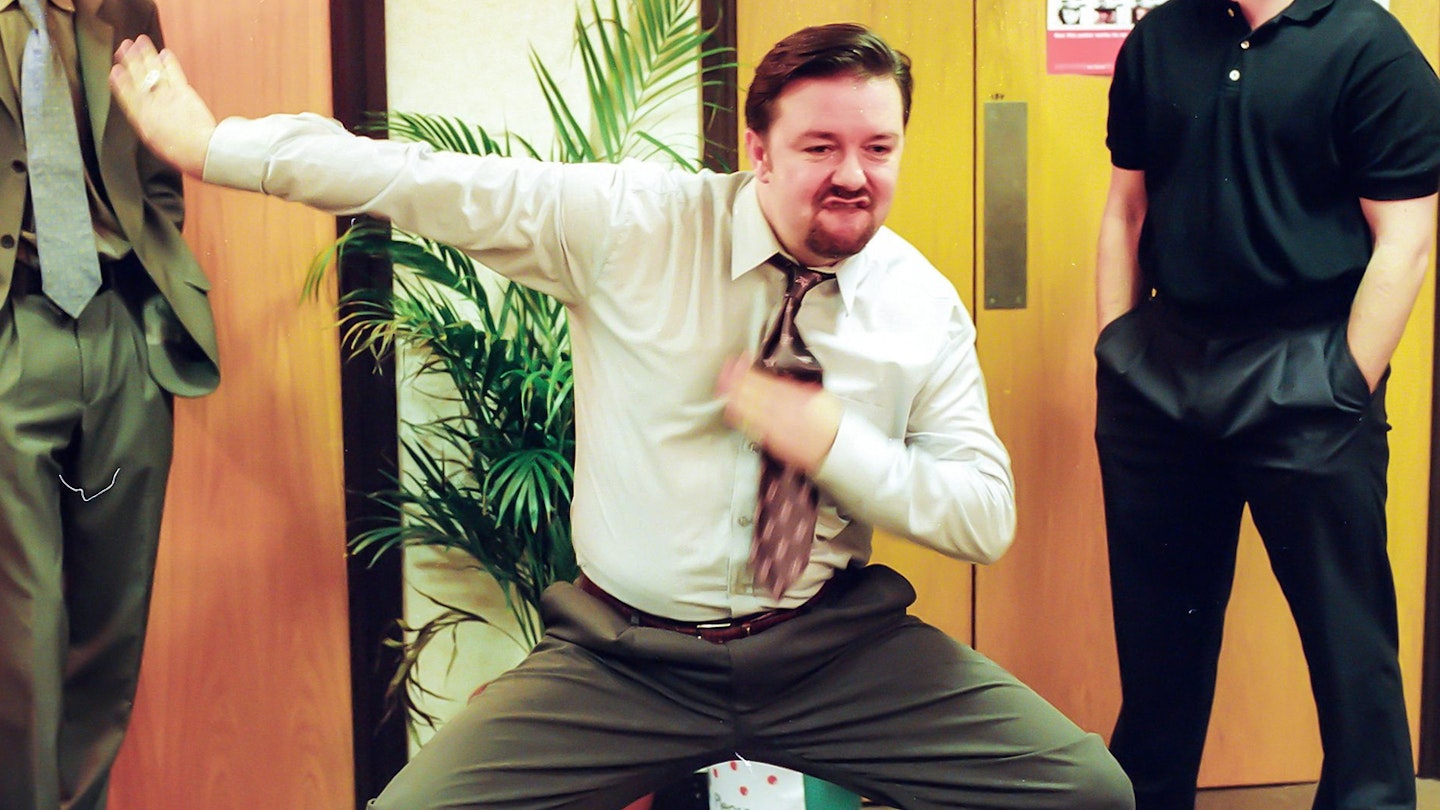
Brent’s dance: do you remember actually thinking about putting those moves together?
Yes I do. Again, it was something I used to do to get a laugh. I used to take the piss out of those dancers you’d see on variety shows on TV, like the Wayne Rogers Connection, and when I saw them, I would just think, “Why would you ever do that? Why would you ever dance like that?” And I just thought it’d be funny to do that, to be this man thinking he is a good dancer, and then you have to work back from that and the more you work back and put structure around it, the funnier it is. And what better than for Neil to do a really good dance, and then Brent panic and think, “I’ve got to show them. I will do anything. I will do ANYTHING!” And it’s not a joke as such, but it’s such a climax to a man desperate to win. Same as him saying “I think there’s been a rape up there!” That is not a punchline to a joke. But when you realise what context it’s in, it’s really funny. He will say that in a roleplay, just to win the roleplay, and there was never meant to be a winner, but he had to win the roleplay, so he came up with that!
And that scene, that whole thing came up because I used to have to do management training when I worked in an office. And the first couple of years we would have a professional come in, like Rowan in The Office, and we’d all sit around and do these really good things. But then there were cutbacks, and they said they were going to do their own management training that year. So some of the managers got together and they tried to do it, and they couldn’t. I remember me at the back with someone watching these two other managers do it, and they did a role play of a complaint at a hotel. And this is what they did: The first one said, “Right I’d like to make a complaint,” and the other one said, “I don’t care. Why don’t you get lost?” Then the other one says, “I’m never coming here again”. Then they said they were going to show the right way to do it. And one of them says, “Well, what seems to be the problem, sir?” “This isn’t working.” “Oh well I’ll change it right away sir and can I give you a free night here?” “Yes, thank you very much.” And I’m thinking that’s not always possible! You could just give them a thousand pounds! So what you’re saying is, “Don’t be an arsehole.” Is that what you’re saying? We laughed about that amongst ourselves, and it must have just gone into my brain and then 10 years later I’m using it in the training day episode.
What was the editing process like?
It was key, particularly because we were shooting a fake documentary. The Office was coming in at 45 minutes each episode, and with the first series it broke my heart that we had to lose 15 minutes. Now I relish it. Because I know what’s left is good. There was this old ad for John West salmon which went, “It’s the salmon John West rejects that makes John West salmon the best”! And I remember thinking, “Yes if you throw away all this stuff, even if it’s good, that means what’s left is even better”.
What did you learn while you were making The Office****?
It was a learning process and I’m still learning, I’m still trying other things, but what I’ve learned that never changes comes down to: what are you telling us? With all the innovations, with all the technology, Avatar and CGI where anything can happen, what doesn’t change is one human being telling another human being what sort of day they’ve had. That will never change. What’s important is character. It’s character every time. The advice I give to new writers is: show me who are we watching. I need to love or hate this person within five to 10 pages. Just let me see him get up and make breakfast — don’t say a word, just let me see him get up. How does he look at a letter? How does he look at the dog? Who is this this person? Why are we watching?
**What was the atmosphere like on set?**I might have mucked around and been really annoying because it amused me [laughs]. But now I will say, if I’m the one that corpses and fucks my lines up and mucks around, it does lighten the atmosphere. I think having a miserable set is not worth it. I don’t want to win awards for the best show ever, where it was the worst experience of my life. Because real life is still more important than a sitcom. So I wanted to enjoy every minute. I demand that it’s fun. Everyone else would probably say, “It was a fucking nightmare – he ruined my best takes!” The actors make me laugh, and people would say, “Why did you laugh – you wrote that line”. And I say, “Yeah but they did it really well!”
So yeah, I would cough just before someone’s take and ruin it. Even though I admit it was for my amusement to put them off and make Martin Freeman angry, I still say it made the day better. And we came up with something that we wouldn’t have otherwise. There’s a little bit of alchemy, just before a take or at the end of the take, where that little moment might make it funnier. So yeah, I’m still a big fat annoying child, because I can’t believe my luck. It’s still the best job in the world, so why would anyone complain?
Was Finchy created to show Brent isn’t that bad?
Yes, that’s exactly right. You think Brent’s a bit of a twit, but he’s not a bully, he’s not a nasty person. He just wants to be one of the gang. He doesn’t hurt people. He only hurts himself. And that was very important. I correct the people who say, “So what’s it like playing the boss from hell?” I say, “He’s not a boss from hell. He is a bit confused. He wants to be loved. He’s been told that being famous will sort it all out. He’s quite a sweet guy, really. I’d have a drink with him”. I wanted people to know that, but it takes a long time, because he was in charge, and that’s what’s funny as well. I think you have to be trapped in a certain way, in a sitcom and it has to be either literal, like you’re in the army like Bilko, or you’re in prison like Porridge, or you’re economically trapped or emotionally trapped like Steptoe & Son. When I was a kid, I thought, “Why doesn’t he leave home?” Well, he’s got to look after his dad. You don’t realise that until you’re older. So you’ve got to be trapped. That’s why you’re there.
How much pressure did you have over the second series?
We did feel the pressure about what to do for the second season. And I remember thinking “Well, we didn’t know what to expect for the first, so we shouldn’t know what to expect for the second. And don’t just second guess anyone. Just do something else, just do what you think you like, not what you thought they liked, because you’ll get it wrong”. It was easier to write series two for the cast because we knew what Martin could do and what Lucy could do and we could work in their physicality, putting things in about their hair and the way they walk, and it was fantastic.
Why do you think it resonated so much?
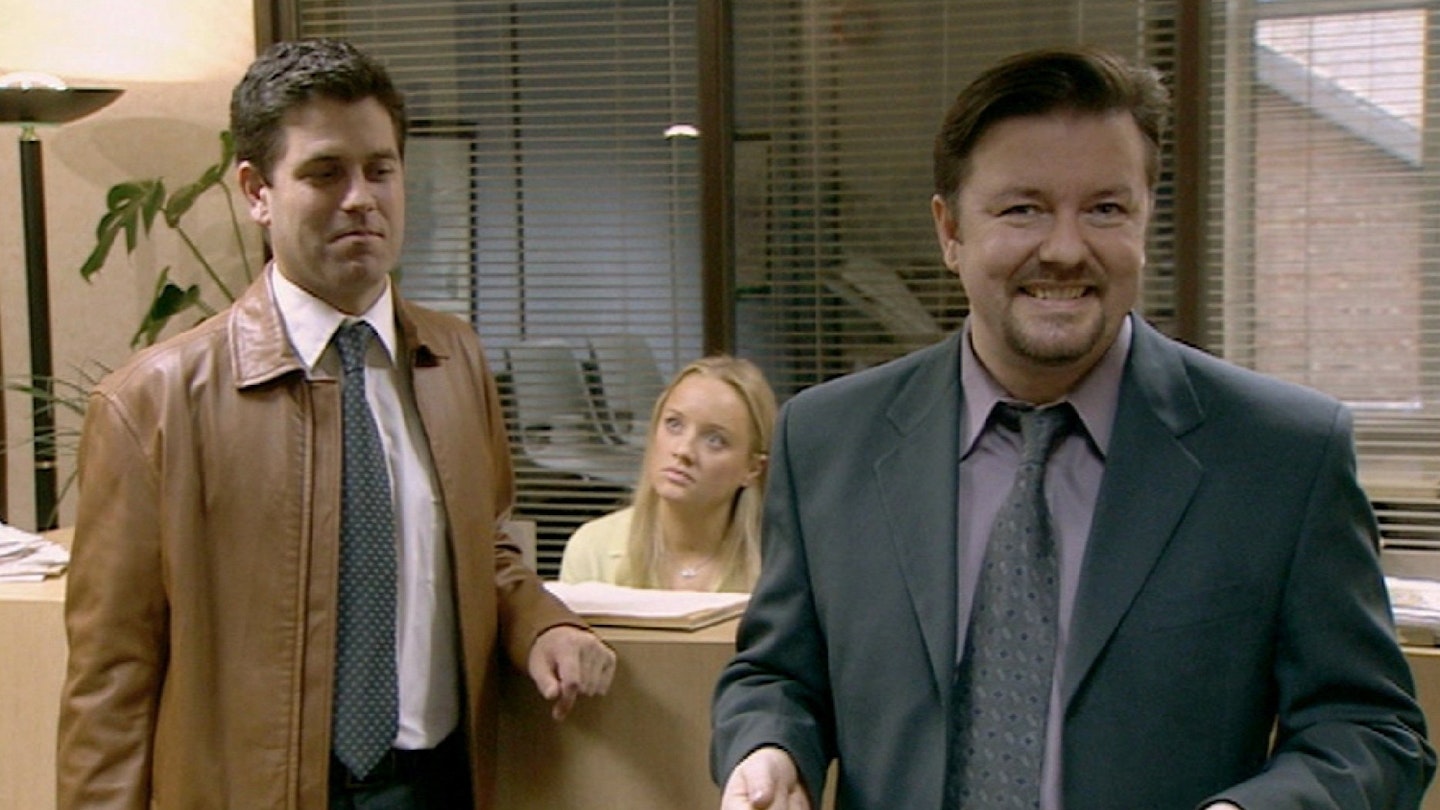
I think there’s lots of reasons why it resonated. I think it resonated because everyone has that sort of day. What’s that saying? “Drama is real life with the boring bits taken out”. Well, I was more fascinated with the boring bits being left in. What do you do with the boring bits? The boring bits are watching a clock and talking to people you wouldn’t really want to talk to. That’s funnier to me than having a great day. You know, all those little things. You know when you watch Friends, Chandler’s making great jokes, and everyone’s laughing. What happens when someone’s not as funny? What happens when you think you’re funny, and you do a joke and no one laughs? Let’s have a look at that vacuum. I’ve never been one to be embarrassed but I’m embarrassed for other people. If I’m in a group of people and we’re all laughing, and someone makes a crap joke, and no one laughs, I want to go back in time. I want to go, “Whatever you do in a minute, don’t do that joke, please.” So I do like honing in on the shittier bits of life – the boring bits, the unfunny bits, the say-the-wrong thing bits, the failure – all those things excited me a lot more, and I still say that about stand-up. No one wants to hear what a great day you’ve had; no one wants to see what a great holiday you had. They want to know he got drunk and had a fight with the air steward!
Did you get many notes from the BBC?
We really didn’t. Just little things. I remember thinking whenever I walked into the BBC or on to the set, that I had a big flaming sign on me saying, “Get away, get away from me!” and I think that’s because I was in my late thirties and I was thinking, “Just let me fail, just let me fucking fail, right?” I remember the first meeting with [producer] Jon Plowman after he’d seen the little demo video we made of Brent. He really liked it but he had one question: “If David Brent is so bad at his job, how has he kept it?” And I said, “Let’s have a walk around the BBC, shall we?” And he laughed and said, “Good point”. And that was it. I think that was the only note. There was a time when we were in the edit and I was told “Oh they didn’t like this”, and I said, “Okay, send it back to them with a note saying, ‘How’s this?, but don’t change anything”, and the reply came back saying, “Thanks – much better.”
What is your favourite episode?
I think it’s episode four [‘Training’]. So much came from that episode. A lot happens. Tim blurts out his love for Dawn, and he can’t take it back and now everyone knows. Brent goes ballistic to be the centre of attention: he gets the guitar out and Freelove Freeway came out of it. “We used to have a political reggae song called Equality Street” was an ad lib on the day, and then when I did 10 years of Brent for Comic Relief, I thought, I should write that song. And that became the seed of Life On The Road. So a lot came from episode four. I love David Brent being a failed musician as well, which touched upon my own history of being a failed pop star.
Did you always have in mind that you’d stop at two series and then have that emotional climax of the Christmas specials?
Well, I’ve always written the first series like it could be the last. Just in case, because you never know. I could get hit by a bus. So we could have concluded it there after one series and it would have been a very short-lived sitcom. But no, I always wanted to do two series. I knew that Fawlty Towers was the most highly regarded sitcom in the world, and it had done two. I know there are great sitcoms that have done 300 episodes, but they’ve got 24 producers and 92 writers, and I never wanted to do that. So when it came to our auteured, cottage industry of a show, 12 episodes was good, and I always thought the Christmas special was a bonus. But I knew that would be it. But I think it’s a good template. I don’t think it has to be that way. And I think a certain amount of it is because I want to do something else. You don’t want to hang around too much, because people think they want a fourth series or fifth series, but they don’t know what they want, really. And I think it is easier is with 50 people involved, but I don’t think you can keep the interest or the quality up much over two or three series.
How big a moment was Brent telling Finchy to “Fuck off”?
It was big because of how small the world was. How many times do you tell people to fuck off – like once a week. It’s not a big deal, but it was for Brent because Finchy was his hero, his abusive hero. So it was massive. Then Brent met a girl who said “Be yourself,” and it was a big victory because Brent suddenly thought, “Be yourself? That’s interesting! That’s an interesting concept!” Tim and Dawn: that’s the biggest. But again, not particularly big in filmic terms. When you think of people getting shot to death in The Godfather, people going into space, we just have this girl deciding she’s leaving her fiancé. But in our world, that’s massive. And we don’t know what happened. We don’t know they live happily ever after. Because no one knows. And I got that from two films really: one, The Apartment, when they’re already friends, and they know each other, and all she has to say is “Shut up and deal.” There’s no kiss, just “Shut up and deal.” Brilliant. And then in The Graduate when they’re finally on the bus and they sort of look at each other and they’re thinking “So what now?”. Well, we don’t know. Maybe you should just call this conversation “What did Ricky steal from?” [laughs]
So what do you say when people ask what happened to Tim and Dawn?
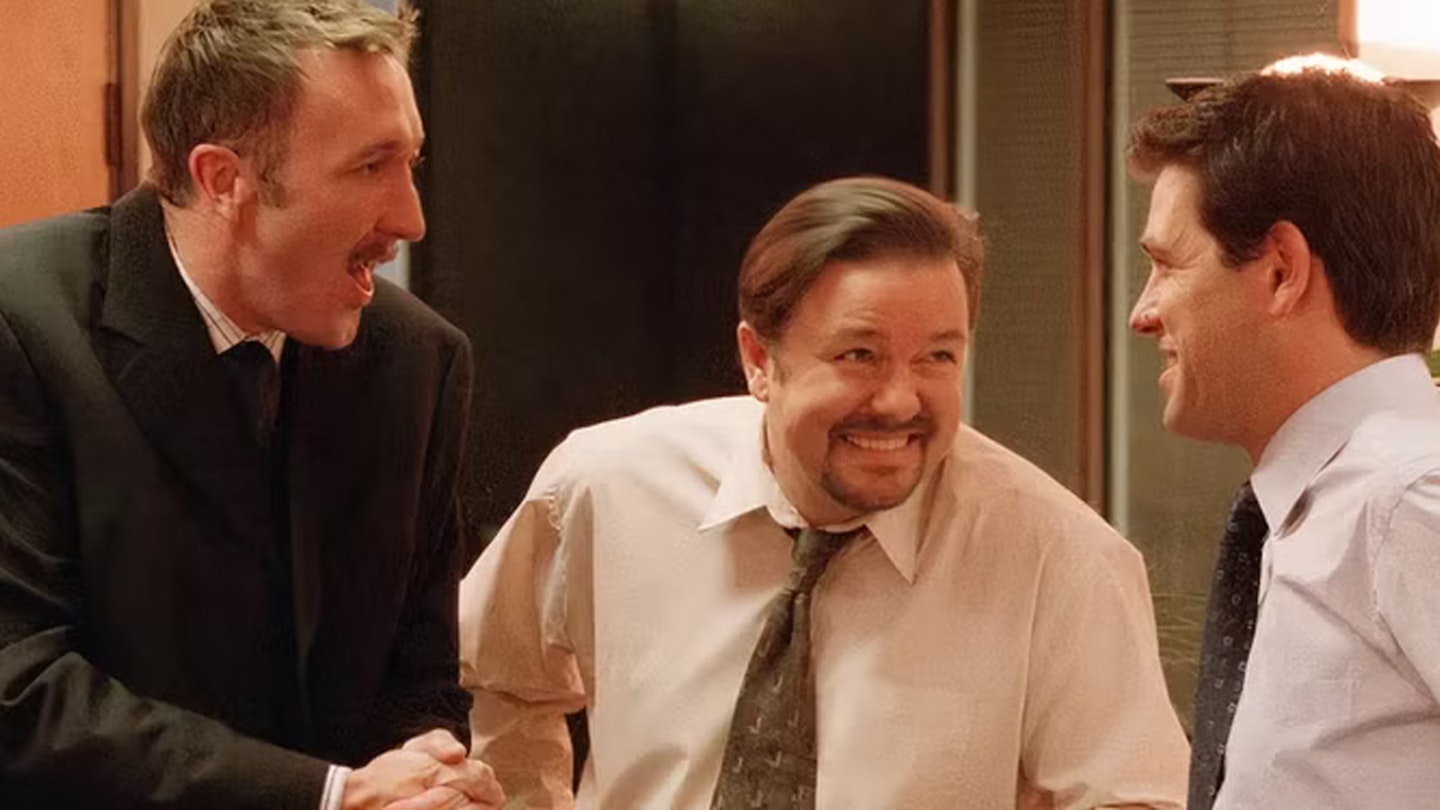
I don’t want to tell them that I haven’t thought about it. It’s a constructive fiction. And also, the answer is, “What do you think?” And that’s why I should never show them because they’ve had too long to think about it. There’s a thousand things that could have happened, and 999 are going to be disappointing. What do they think they want? They could be married with five kids but what does that mean? We don’t know how good that is. That might be terrible. The best thing to say is that they’re happy. They’re fine.
Did it take a while to decide on the music choices for the finale? Yazoo and Take That?
No, because you sort of do it from your own library. We rarely used songs, because we wanted it to be a sort of a timeless British sitcom. But that Yazoo song was just perfect. It just worked. And you can’t tell why – it was just a good, cool slow song at a disco, and there aren’t many of those. It would have been over-egging it to put on Lionel Richie, so it just sort of worked.
When it went out on that Monday night in July, in 2001, what do you remember?
I remember I watched episode six go out when I was in Edinburgh, and I did a week [of stand-up shows] between the fifth episode, and the sixth episode, and I think the Monday night still wasn’t sold out – with 50 seats. So that’s how I thought life was going.
At what point did you realise that it had become a cultural phenomenon?
Well, I think it was a gradual process. I think that I was aware of what it was at the time. And then I was aware of what it was two years down the line, and then I was aware that when Extras came out they said it’s not as good as The Office. But now, at the moment, I think it’s big among the people who loved it when they were 13, 14 or 15. So I think for every 35 to 40 year old, it’s in their parlance. People tell me husbands and wives talk to each other like they were in The Office. And I’m aware there’s a cult of The Office now. In the first couple of years, if there was an article about chairs or bad backs, or a bad boss, or a goatee and bad dancing, anything to do with a bad boss, there would be a picture of David Brent. And that’s gone away, because new things come and go, but what’s good about The Office is it’s always around. I love the fact that it’s always remembered.
Do you remember when it became popular among Americans?
I remember when a journalist told me that [Simpsons creator] Matt Groening loved the show. He’d got a British DVD, and he watched it on a plane or something. And that was the first spark, and then you start hearing other people talking about this little show called The Office. I remember I got a phone call when I was walking down Wardour Street on my cell phone, and it was Ben Silverman [from NBC]. And he said, “I want to remake The Office for America.” I went, “Okay,” and he said, “Where are you, I’ll come to you?” And within 25 minutes, we were having a coffee in Starbucks, and the ball was already rolling by the time we’d gone to the Golden Globes in 2003. That was suddenly another level. That week I won two Golden Globes, met with Ben Silverman about the remake, got invited to do an episode of The Simpsons, and that was just on the Monday! Then JJ Abrams asked me to do an episode of Alias and I did my first dramatic role and I still haven’t watched that episode because I’m all serious in it, playing a terrorist.
Finally, what is the one single moment or scene that you’re most proud of in The Office****?
I do love the timing and the silence and the inappropriateness of “I think there’s been a rape up there.” I think that is so quintessentially Brent. Right on his ‘A’game! And I’m probably proudest of the first bit of acting I did when he begs for his job back, but it’s a personal thing because I had to be real, and it’s not perfect but I think I’m proud that I tried to get people to genuinely feel sorry for another bloke who they’ve laughed at for all that time in the middle of a sitcom. And I’m proud of the songs — they’re pretty good songs coming from a middle-aged man working in an office who thinks he can be Bruce Springsteen. I’m very proud of the whole thing. You know, it’s amazing that it made a connection with people. Whatever anyone says when people recognise it and it means something to them. It was Thom Yorke that said, “The point of it is to make a connection with strangers.” And there’s nothing like it – you don’t know them, you don’t see them, but you know that someone somewhere is watching you make a prat of yourself and it’s cheered them up for half an hour. That’s a lovely feeling.