
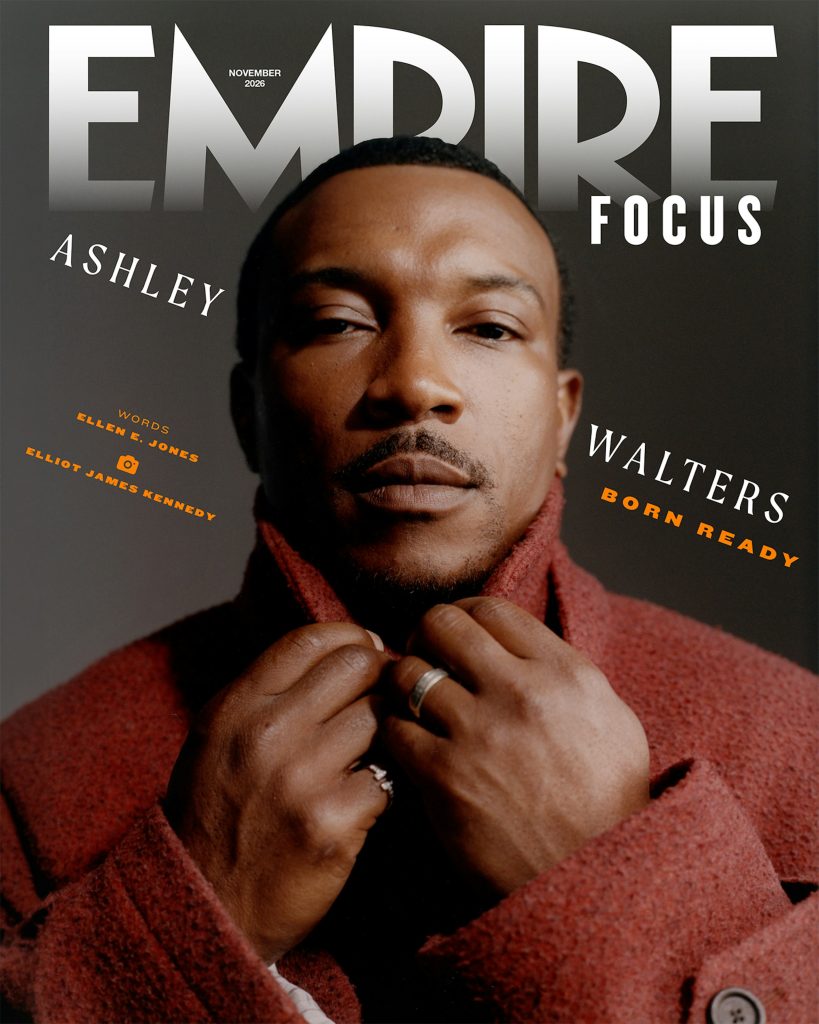
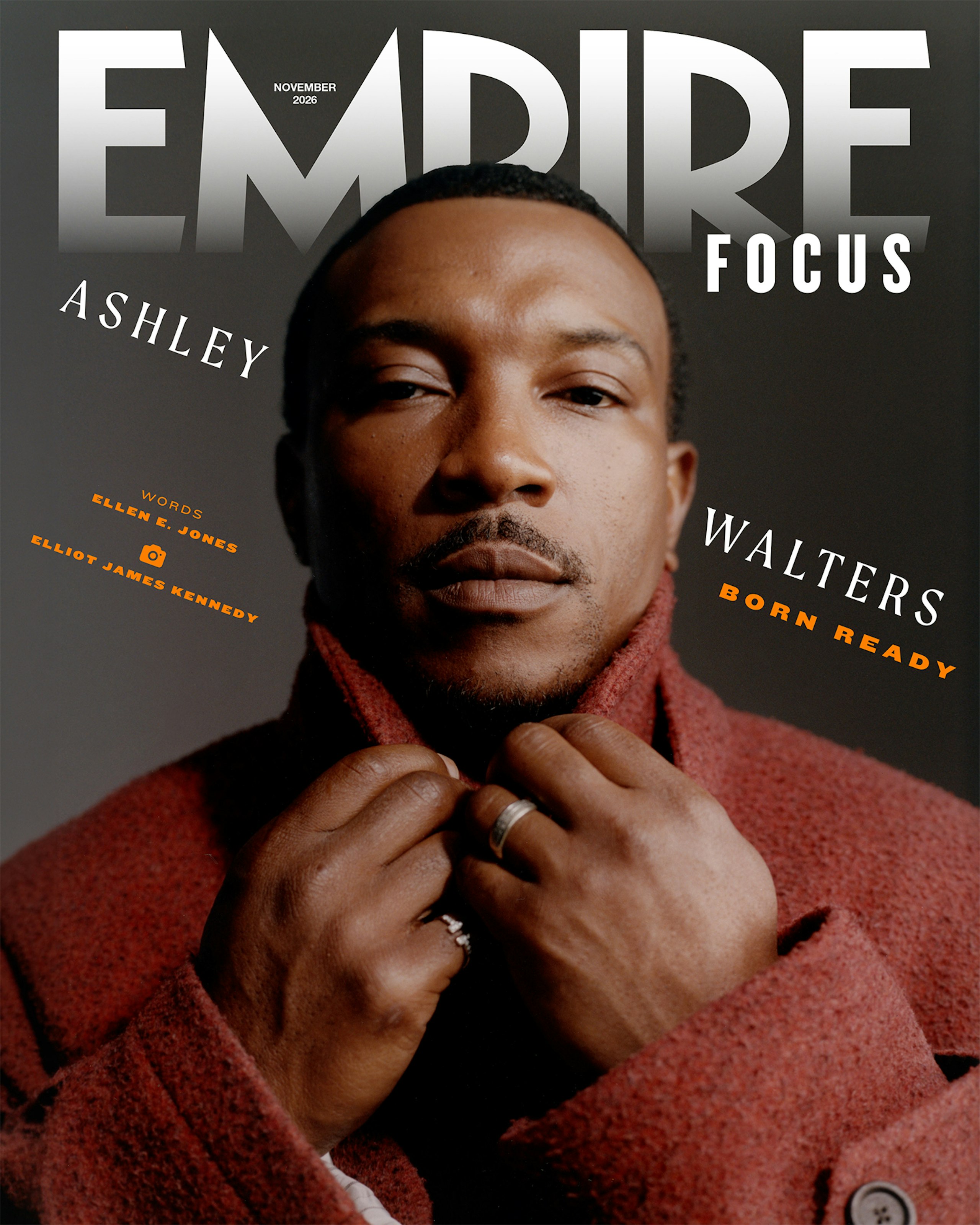
Everybody’s supposed to get their 15 minutes of fame. As a child actor (in the likes of Grange Hill and The Bill) turned prominent member of UK garage-collective So Solid Crew, Ashley Walters had his (plus another ‘21 Seconds’) before he turned 20. That’s when it all went wrong. For the first time, anyway. In 2002, he pleaded guilty to carrying a loaded firearm and was sentenced to 18 months in a young offenders’ institution.
Upon release, Walters returned to acting, just in time to ride the mid-’00s ‘urban thriller’ wave of hard-hitting social dramas and blatant yoofsploitation flicks. These were British films, mainly about the lives of working-class Black people, mostly written and directed by middle-class white people — and thus deriving much of their credibility from actors like Walters. His Sylvia Young Theatre School training and TV experience meant he usually had the edge on fresh-from-the-ends rapper contemporaries, and in 2004 he won a BIFA for Hackney gun-crime drama Bullet Boy. His criminal record led to visa issues, which didn’t help with a potential Hollywood career, but he went on to garner international recognition as swaggering ‘shotter’ Dushane Hill, in the Channel 4/Netflix gangster epic Top Boy. And by 2016, a British Film Institute study found that Walters had become — along with Kidulthood’s Noel Clarke — one of British cinema’s most prolific Black leads.
It was somewhat inevitable, then, that the two would team up on screen, co-creating Bulletproof, Sky One’s answer to Bad Boys. It had three series before being abruptly cancelled in 2021, after multiple allegations of sexual misconduct and bullying were made against Noel Clarke. Walters severed their connection, saying, “My thoughts are with the women who have come forward.” But his work also spoke for itself: since the beginning of this decade, Walters has starred in a string of dramas which thoughtfully confront outmoded notions of masculinity, as well as class, race and power, including his Emmy-nominated turn as a tired cop in Netflix mega-hit Adolescence.
Maybe all the highs and lows were building towards this: Walters’ feature-directing debut, Animol, a tough-going, tender-hearted prison drama with an unexpected queer love story at its centre. It’s written by Nick Love (yes, the same Nick Love behind Danny Dyer’s geezers ’n’ gak fare), yet infused with Walters’ own sensibility, and it augurs a new era in his unparalleled, unpredictable career. As Dushane would have it: say less. Here in a north London studio after our photoshoot, we let Walters do the talking…
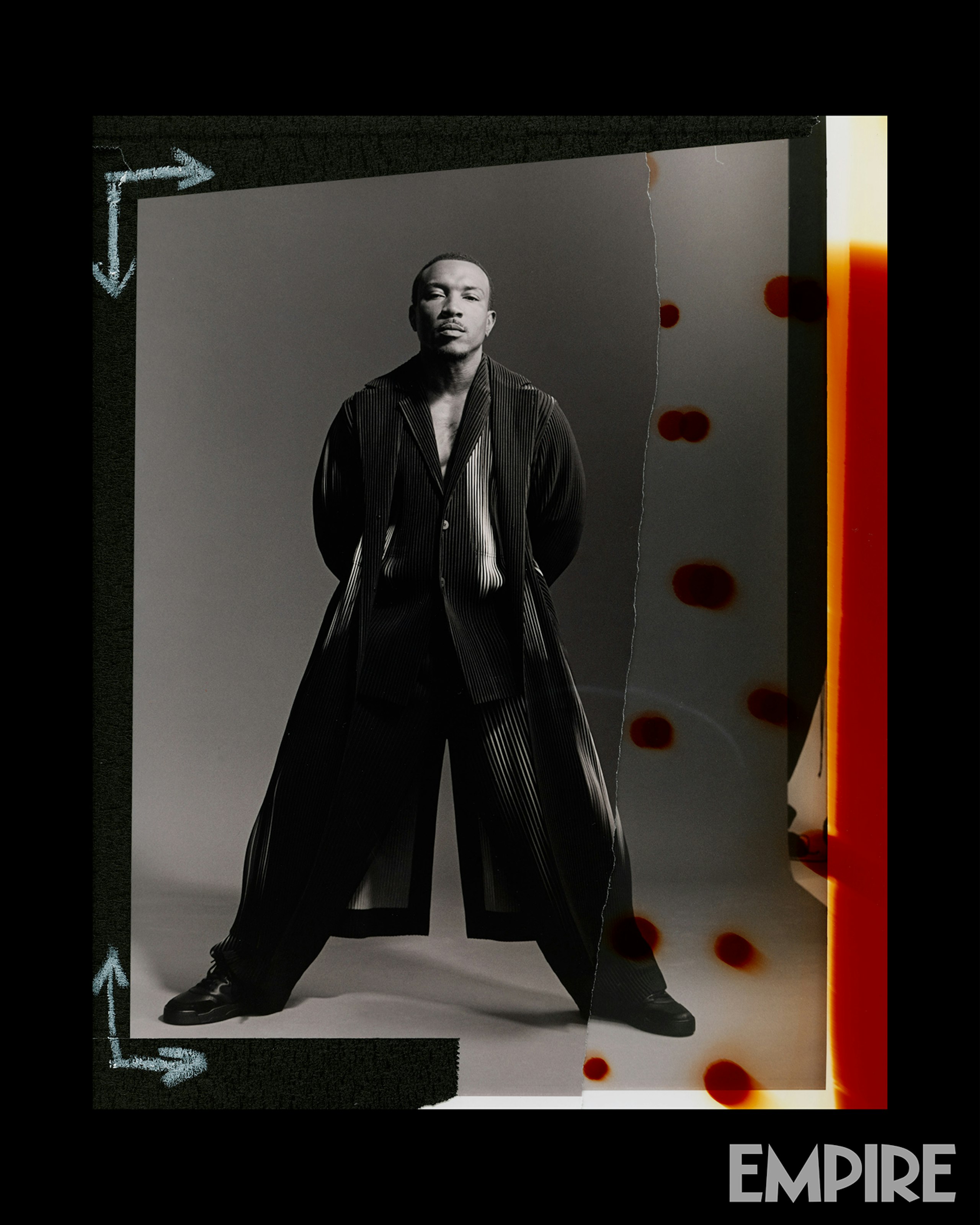
© Elliot James Kennedy / Empire
EMPIRE: How long have you had ambitions to direct?
Ashley Walters: I don’t think the thought of me directing came until I was told I couldn’t. That was when Top Boy and Bulletproof were coinciding, and I was an executive producer on both. I was trying to push into my contract that I should be allowed — if I wanted — to direct an episode, and was told, very nicely and politely by both companies, that I wasn’t experienced enough. So that was the trigger. But paying attention on set has always been my thing. I was always watching directors, and talking to directors, and making friends with directors.
What did you learn from directing episodes of Ackley Bridge and A Thousand Blows that you brought to Animol?
In the beginning, I was pretty shy about pushing my vision, because you’re working with so many experienced people, a DOP that’s been in the game 25 years, or whatever. You’re like, “I want it to look like this,” and they’re like, “No, that’s not really how it’s done.” It’s [about] getting to the point where you’re brave enough to say, “Well, I really don’t care ‘how it’s done’. This is how I want it.” Then you get a bit of ‘how it’s done’ — it’s still in there— but you get something authentic or magical too. I love directing, because of that magic. Y’know, the script’s written, then I take it and it becomes mine for a bit, then the editor takes it and it’s no longer mine, and then the audience watches it, and they take it how they want… Just that process is one of the most magical experiences.
When I was growing up in Peckham, it was beautiful to me. It was colourful, it was lush.
Was the queer element of the Animol script daunting for you?
So, that’s what pushed me towards it. I understood straightaway that this is going to be quite controversial, and I think the Black community are going to be asking why I decided to make this for my first film, etc. But for me, when I was in prison, I saw a lot of queer people there, being bullied, being downtrodden, and I think, at that time, I was suffering with the hangover of growing up in a very homophobic environment. I’d been brought up [to believe that] talking about being gay and being queer was wrong. Like, “Why you standing like that? You look gay!” — all that stuff. So stepping into the film and TV world was eye-opening for me, because there are queer people everywhere! And all of those preconceptions I had, I left behind. I made some great friends, with some amazing people. And I’ve seen people suffering with coming out and just being themselves. So [for that reason] it was really important for me to do this film.
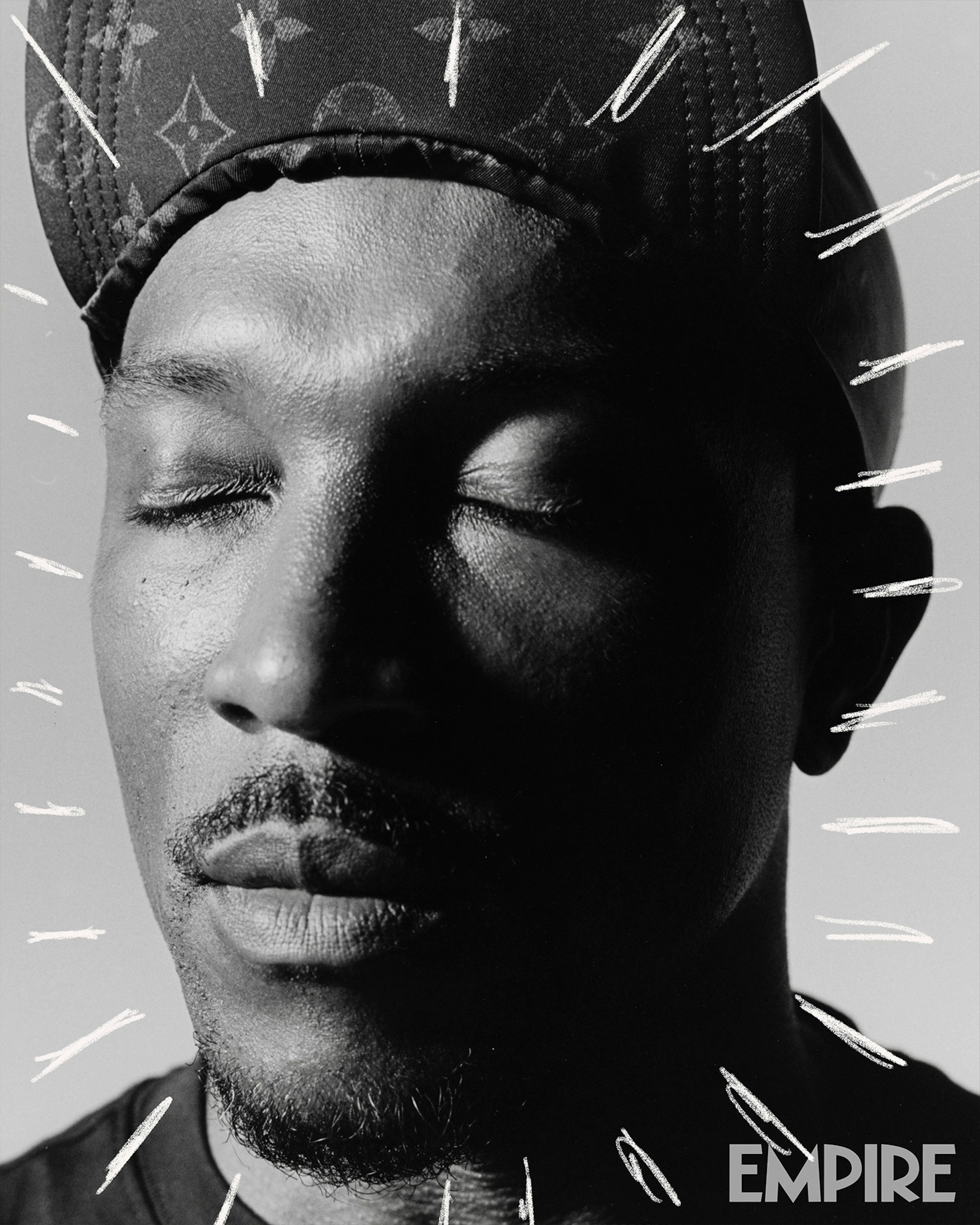
© Elliot James Kennedy / Empire
How much of your own experience is in this film?
What you see is how I saw it. The look, the colours, were all from my memory of prison. How the landings are is how I remember them. The arm bands that people wear to distinguish what level they’re in; all my idea. I wasn’t as vulnerable as Troy (the initially naive lead character, played by Tut Nyuot), but I was definitely also a fish-out-of-water. When I got into prison, I was gangster no. 1 in the UK press. People were in there waiting to beat me up. So I understood Troy trying not to be seen, as much as possible. But what happens in prison is — to survive — you have to act. You have to put on a show of masculinity and power, to ward off anyone who potentially sees you as a target.
A bit like being a first-time film director, then.
Yeah, basically, that sort of vibe. And I definitely have a connection with Troy in the sense of he shouldn’t be there, in prison, and I felt the same… I mean, I committed the crime; Troy didn’t. So actually, I should have been there (smiles sheepishly). But I felt like, “This is wrong.” Like, why am I here? I didn’t foresee this for myself, y’know?
The cinematography of Animol is very striking. It doesn’t look like your typical prison film…
Yeah, I hate watching UK films or TV shows that are set in prison or on the roads — in the inner-city areas, y’know? — and they’re always so bleak and grey. I always felt like that’s the voyeuristic perspective. That’s for the middle-class person who drives past Peckham on their way to Dulwich and says, “Oh, that looks grim!” Whereas, when I was growing up in Peckham, it was beautiful to me. It was colourful, it was lush, I enjoyed the spaces and I had a lust for life. So I wanted to shoot it how it feels for the people inside it, rather than the people outside, looking in.
It’s interesting that, as a director, you’re reacting against that typical British urban thriller, because, as an actor, you starred in quite a few of them!
Yeah, yeah, I know. It’s my fault that everyone’s doing it (laughs).
What was that period like for you, from the inside?
Y’know, it was easy for my agents in the beginning, because I was coming from So Solid and I already had the gangster reputation. I was getting work hand-over-fist. Then I took that decision that we were gonna step away from that. I said to my agent, “I want to act. I need to do other roles.” And it’s so weird how life works, because then Top Boy came (laughs). I read that, and I was like, “I know what I said, but I gotta do this, man!” Because I’d just finished watching The Wire around that same time and I was like, “Nah, this is up there [with The Wire]. Like, this is proper.”
There was a lot of conversation around that time about TV and film’s responsibility for perpetuating harmful stereotypes of young Black men as criminals. What’s your take on that?
Going into Top Boy, we understood how this could glamourise or perpetuate that sort of thing, but our main aim was to tell an authentic story. Because a lot of these characters are real characters — just with name changes — and a lot of the people they’re based on, I knew. It may sound a bit weird, but our main aim was, “I want those people, whose lives we’re portraying, to call me and go, ‘This is it. You hit the nail on the head.’” And then the rest of it? I don’t know what else I can do. And I did listen a lot to it. Y’know, I was in barber shops on the weekends, and 12-year-olds would come up to me and say, “I love you, man,” and then their parents would pull them away, like, “Don’t talk to him.” And this is Black families, Black parents. I would sit and talk to them for hours. But I walked away from it, like, “Okay, I get it: I know what I was intending to do, but it didn’t work for everyone.”
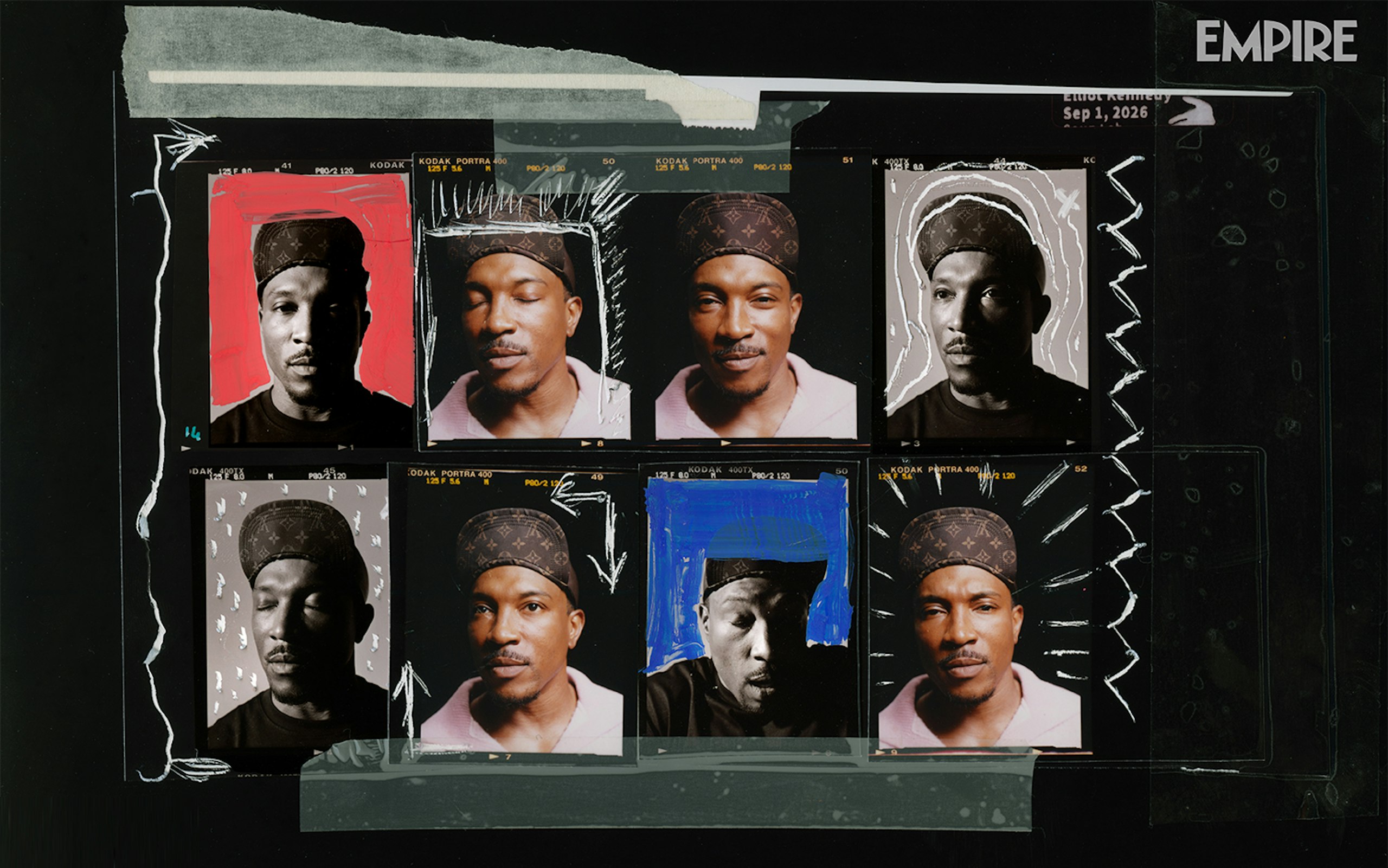
© Elliot James Kennedy / Empire
But then also, I grew up on Scarface, The Godfather, GoodFellas… all of those films that are based on the Mafia. We don’t ever talk about glamourising violence in those films. We accept them and praise them for what they are. I think sometimes Black films and shows were scrutinised more than everything else. And I just think people who’ve been oppressed for such a long period of time, when they eventually get their voice, they’re going to be talking about their oppression! And then, when they get that out their system, they want to start writing the romcoms, the action stuff, maybe superhero stories, like Rapman with Supacell. So, there’s a balance: I think we should be careful about stigmas and stereotypes. And also, just let people be creative and grow.
Stephen Graham plays a prison social-worker in Animol, marking your third collaboration in as many years, after A Thousand Blows and Adolescence. Tell me about the first time you met.
We did a sitcom on MTV years and years ago (2004) called Top Buzzer. Stephen played a weed dealer and I was this rapper called Bugsy, his customer. I find it really difficult to make friends, but there are rare occasions when you meet people — and we had that pretty early on. Also, he’s smaller than me, and I’m usually the smallest in the room, so I’m like, “I’m gonna roll with you, so I feel tall.”
My inspirations are very rarely new films. The Goonies is probably my favourite film in the world.
And did you recognise in him whatever it is that’s allowed him to go on and have the kind of success he’s had?
Of course. I mean, he cares. That’s what it is. It’s that for all great actors: they care enough to put themselves on the line. He cares enough to interrogate himself, interrogate me, interrogate the script. And he always comes with ideas — especially if he doesn’t want to do what’s on the page. That can be tough for a director, but you always appreciate it, because it helps. And, as an actor, I was always in awe of his confidence. I come from a place where — remember — I was the gun-toting gangster that everyone hated. I was a bad boy, and I’d spent years trying to reverse that narrative, by being as nice and easy-going as I could on set. You’re like, “If I say I don’t like it, what are they gonna think of me? I’m gonna be the ‘angry Black guy’.” Then watching Stephen [be assertive] and produce great, quality work off the back of it, made me realise that, actually, I’m doing myself and the job an injustice by not interrogating what’s in front of me.
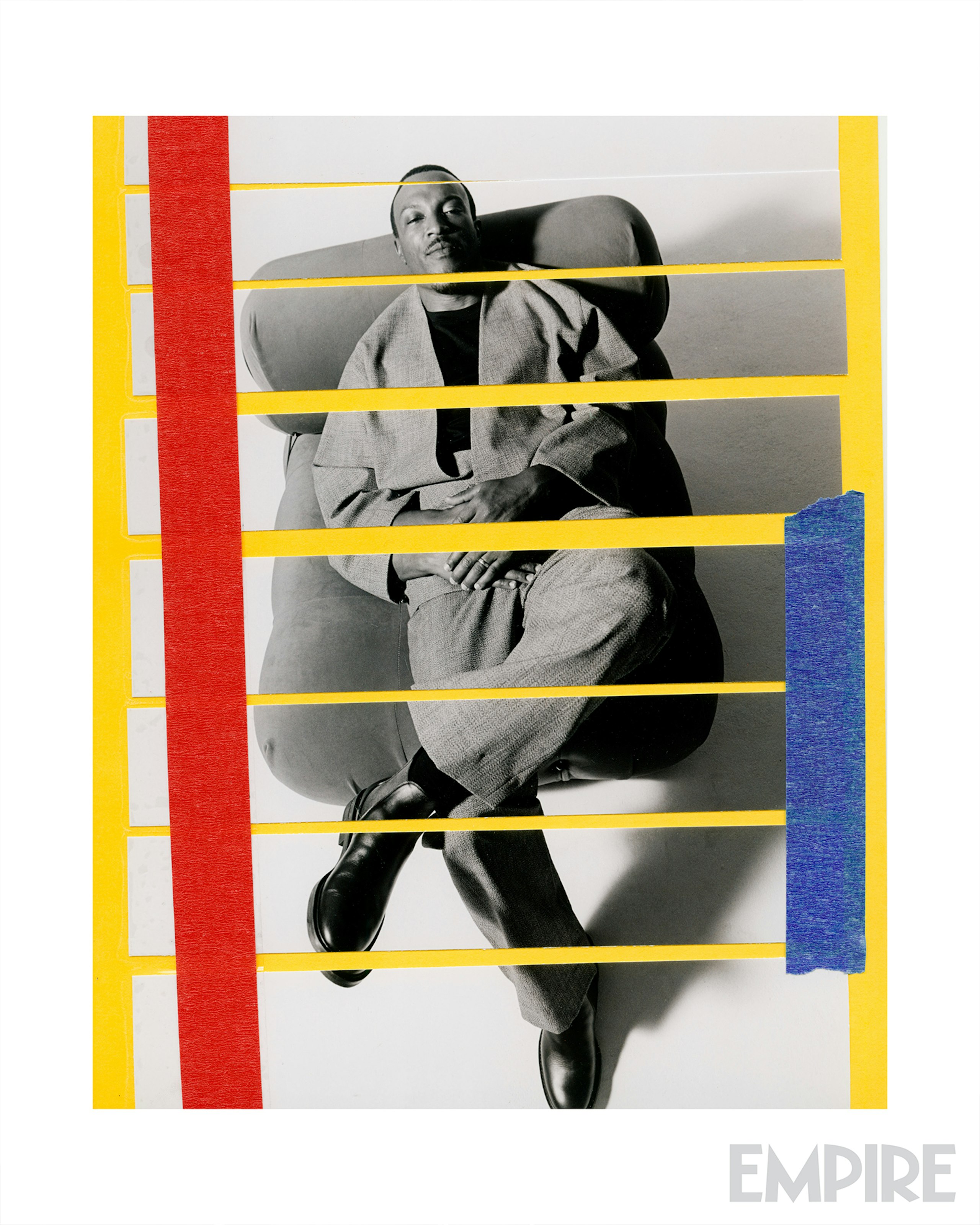
© Elliot James Kennedy / Empire
What are you watching at the moment that’s inspiring you?
My inspirations are very rarely new films. The Goonies is probably my favourite film in the world, right? And it’s my favourite film mainly because of the narrative arc. I feel like we’ve lost films that start somewhere and finish somewhere else. The simple story of underdog meets underdog, the struggles, halfway through the film you get that montage of them training to defeat their demons, and then we see them win. I grew up on that. That was Flight Of The Navigator. That was The Goonies. That was Stand By Me. That was The Mighty Ducks. All of those films I grew up on, and I’m trying to find [that] again in the work that I do now. I mean, I’m not saying I would turn down a Marvel, but I do really enjoy telling a story of inspiration.
I’ve got a few scripts I’d like to make next. One, I’m developing with Khadijah Mellah, the young hijab-wearing Muslim girl from Peckham, who became a jockey and won the elite Magnolia Cup. That came from my family’s experience moving to Kent seven years ago. There weren’t any other Black people up there, and my daughter started coming home from school saying stuff like, “I don’t want to be Black anymore, why isn’t my hair like everyone else’s?” Me and my wife were so worried. And she’s fine now — but that was, for me, about lack of representation. Then you read stories like Khadijah’s, with beautiful Black women who are succeeding against all odds, and it’s like, “Why can’t my daughter know about this? Why isn’t there a film about her?” Then you realise: “Ah. I’ve got to make this film.”
[Remain] was my first time playing a comedic role. So it was all new to me.
You’re still acting too. You’re in M. Night Shyamalan’s upcoming film, Remain.
Beautiful film. It’s me, Jake Gyllenhaal, Phoebe Dynevor. Brilliant, brilliant experience. Me and my wife are big M. Night fans. Listen: he’s got a cult following and he’s also in that space now where there are people that are like, “I don’t really mess with his films anymore.” But I’m one of those people who is always going to go see anything he makes. I think this film is kind of him going back to his roots, and that’s what appealed to me in this script — the Sixth Sense of it all. It’s essentially a love story about a man who falls in love with a ghost, and I play the man’s best friend, but I’m into ghosts. My character knows everything about the supernatural.
You’re like Whoopi Goldberg in Ghost.
Basically. You could say that. It was my first time playing a comedic role. The character is like Kevin Hart, he’s the hype one, always smiling and happy. So it was all new to me. But Night is an amazing, next-level director. He knows exactly what he wants and takes all the pressure away from you.
You’ve been through so many different eras, experiences that many people don’t see the other side of. What is it that allows you to keep going when things go wrong?
Well, because I expected it. I expect the disaster. Maybe you might see me accepting an award — maybe for Animol, or something — down the line. When you see me, just know that behind my eyes, I’ll be thinking, “What’s the next thing that’s gonna go wrong?” I’ll be waiting for it, because this is how the wave works, isn’t it? You have a brilliant time, and then there’s always going to be something.
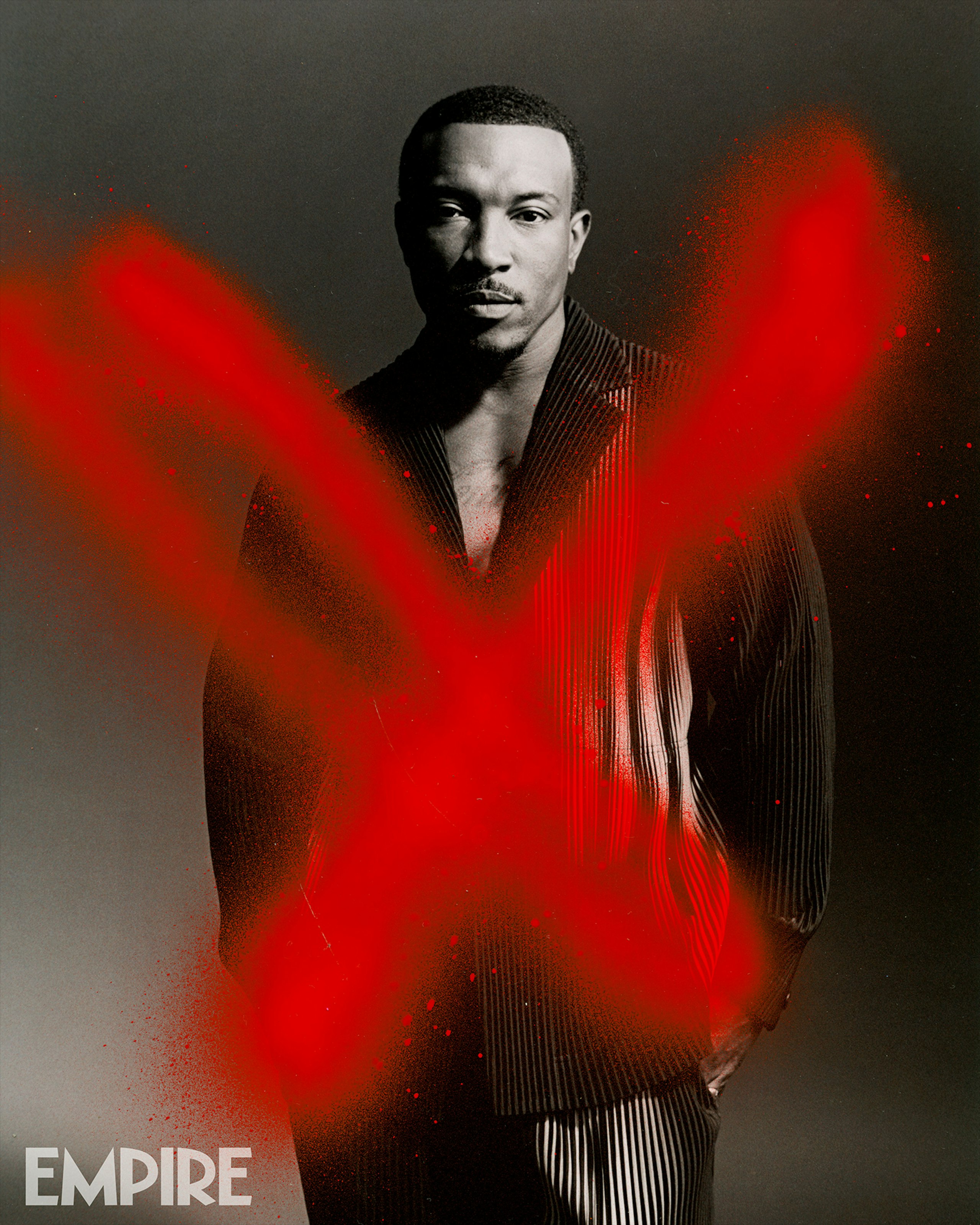
© Elliot James Kennedy / Empire
But underneath that, there must be another layer of, “Whatever happens, I can handle it.”
Oh yeah, of course. I mean, the key to it is — and this is gonna sound so naff — but, trying to wake up every day and be the best person I can be. Then I don’t worry too much. Because look where we are — there are people being cancelled for all sort of things and for someone in my position, even if you haven’t done anything wrong, you’re like, “Is it gonna happen to me?” You get anxious. But the way to soothe that anxiety is simple: Just be good. Focus on your work, treat people with respect; how you’d want to be treated. And get on with your life.
Is there some dream or marker of success that you’re still pursuing?
If I can be honest, before this past awards-season, I didn’t care about awards. I wasn’t interested. Some will say that’s because I didn’t get any! But I really didn’t care. I went into the Adolescence run thinking, “Well, I’m just happy to be in America, and this is great.” When I lost the first [Emmy] — I didn’t lose it, because Owen (Cooper, his Adolescence co-star) won it, and he deserved it — but just sitting there, in that moment, when they didn’t say my name, I was like: “I want this now.” And then it became a thing. So I think, if there’s anything I want, some awards would be great. But that’s not a must. And, where my career is, I’m happy. Anything from here on in is bonus stuff, isn’t it?
But… you would like an EGOT? Like Whoopi?
But an EGOT would be great, yeah.
This article was originally published in the November 2026 issue of Empire Magazine. Ashley Walters was photographed exclusively for Empire by Elliot James Kennedy at Studio Monde, London on September 1, 2026. Animol comes to cinemas from October 30.