
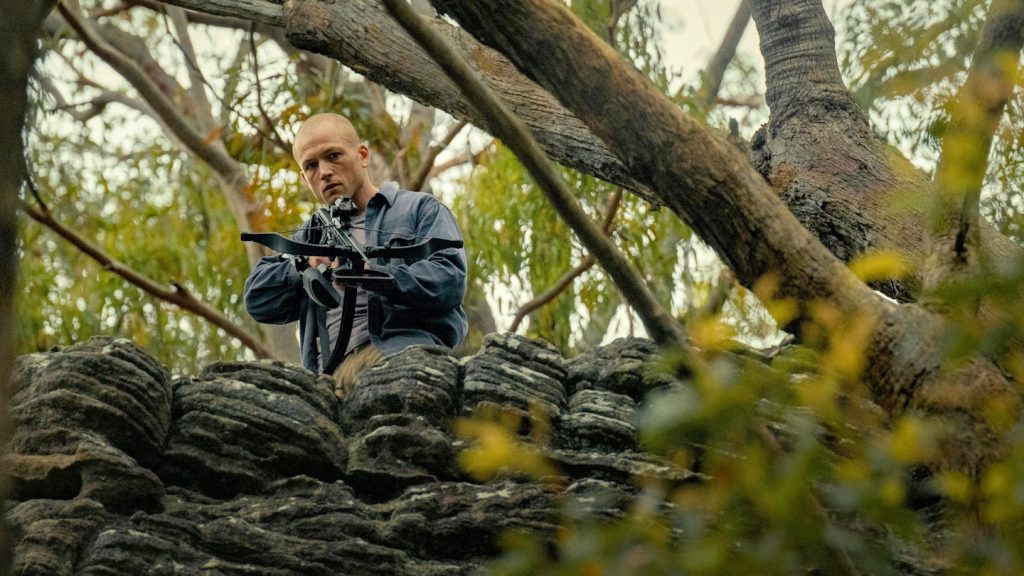
While camping in the Australian Outback, Sasha (Charlize Theron) finds herself being hunted by weird loner Ben (Taron Egerton).
Apex has been described as a “survival action thriller” — which is not untrue. It certainly comes from a man whose name has become synonymous with this very specific subgenre. Icelandic director Baltasar Kormákur has a habit of telling stories about people in extreme environments — whether on the slopes of the Himalayas (2015’s Everest), on the run from a man-killing lion (2022’s Beast), in frozen waters for six hours (2012’s The Deep), or being forced to hang out with Mark Wahlberg (2013’s 2 Guns).
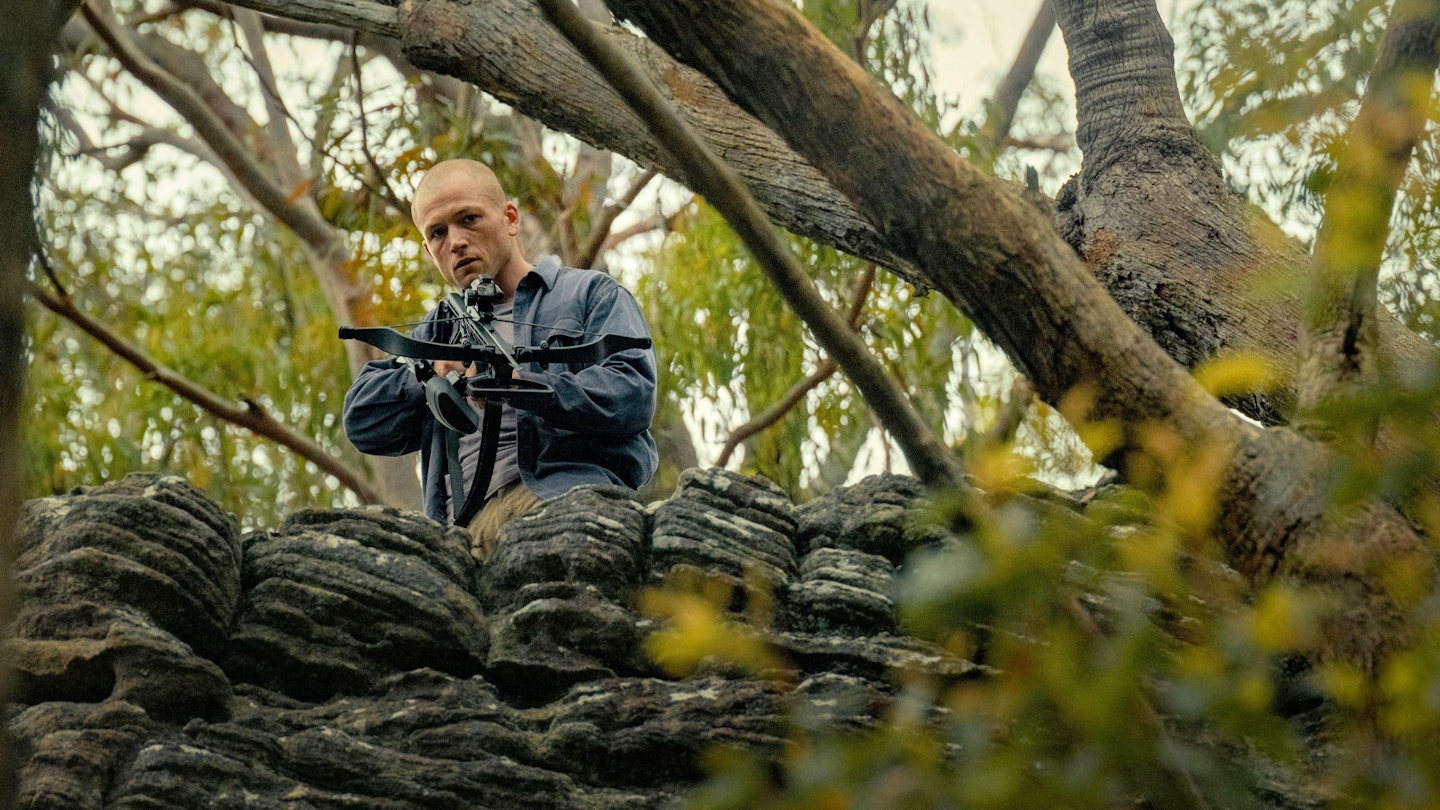
But Apex is something else, too. It is a horror film, a Most Dangerous Game chase across land and river and forest and cliff: the point in the Venn diagram where extreme sports meet extreme terror. It’s a very effective genre exercise, slick, to the point and methodically gripping, while, at just a touch over 90 minutes, never outstaying its welcome.
After following the rarely observed Mission: Impossible 2 rules — always front-load your film with a vertigo-inducing pre-titles cliff climb — it begins proper in the manner of a not-from-round-here psychological thriller, an Eden Lake, a Straw Dogs, or — more specifically, given the setting — a Wolf Creek. Sasha (Charlize Theron) is still raw from a recent tragedy, and heads to the Australian Outback for a personal pilgrimage of healing. She’s immediately made to feel uncomfortable by the local game hunters, and Kormákur nicely summons the sense of unease and dread you can feel as an outsider in a provincial town, all sweaty and unsettling.
A really handsomely made bit of schlock.
It’s during one of these unnerving encounters that Sasha first meets Ben (Taron Egerton), who — as they so often do — initially seems like one of the good guys. He defends her honour and offers helpful directions. But it soon becomes clear that Ben is very much not one of the good guys. He spends a little bit too much time out in the woods, flashes the occasional creepy smile and appears to love his mum in all the wrong ways, Norman Bates-style.
Egerton is a canny bit of casting in a rare villain role, the Welsh actor morphing his natural charisma and sinewy frame — so winning in the likes of Kingsman or Rocketman — into something sinister and terrifying. Ben’s boyish, impish delight at hunting down his prey with a crossbow would almost be oddly charming, if he didn’t also share Hannibal Lecter’s predilection for human liver.
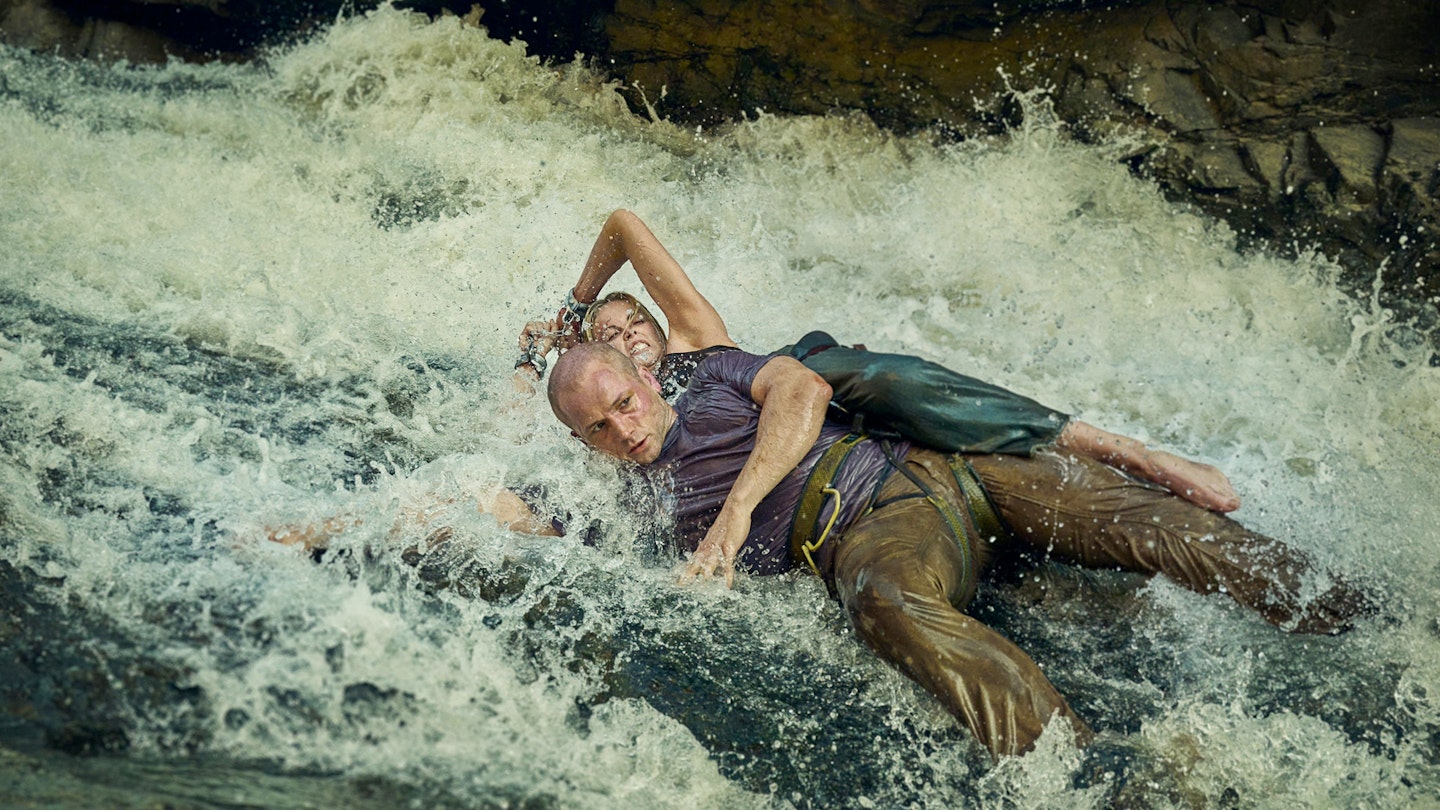
Theron, meanwhile, is completely commanding as Sasha, in a performance physically and emotionally on a par with her unforgettable turn in Mad Max: Fury Road. Far from a naive waif, Sasha is satisfyingly über-capable in the wild, largely avoiding the terrible decision-making that frequently plagues these kinds of films. Theron makes for a convincing outdoorswoman: she abseils, she cave-dives, she kayaks, she free-solos up rock faces and camps under the stars — all, seemingly, for real.
Think of Apex, then, as the effective Point Break of horror films. It is a really handsomely made bit of schlock, B-movie stuff on an A-movie budget. Perhaps we’ve been disappointed too many times by the excessive green-screen of recent streaming slop, but this is a film which really benefits from its epic cinematography, seemingly infinite landscapes seen from drones, almost all shot on location in New South Wales. (Shame, then, that it’s bypassing the big screen and going straight to Netflix.) It feels more grounded, relatively speaking, than Kormákur’s last disaster flick Beast, which necessitated a lot of computer-generated lions for Idris Elba to punch in the face. There is obviously CGI here, including a hugely impressive tracking shot all the way off a cliff — but it feels far more seamless and well-integrated than what we’ve become used to.
Where it is not always seamless is in how elegantly it threads its themes together. This is hardly a film that is especially profound, as meditative on the subject of grief as a film with the line, “It’s a drastic bummer!” can possibly be. It’s about as shallow as its canyons are deep, and gets a little bit silly towards its grisly finale — you will be reminded of Gollum during the film’s most eye-rolling moment. But on the whole, it makes the most of its ruthlessly efficient genre template. The final boss Sasha must overcome is not Ben, but her own personal demons — free-solo climbing as exposure therapy. It might not be the kind of psychiatry recommended on the NHS, but as a viewing experience, this is one worth hooking your belay onto.
Just a solidly made cat-and-mouse thriller, with muscularly committed performances from its two leads. It’ll make you want to explore the Great Outdoors and simultaneously never leave your house again.