
Whether it’s the shrunken world of Grounded or the monster-collecting hijinks of Palworld, it really only takes one great idea to make all the familiar parts of a survival game feel completely new. Subnautica did just that way back in 2014 by plunging the usual formula underwater, easily emerging as one of my favorites by the time it left Early Access in 2018. Eight years and one icy spin-off later, Subnautica 2’s own Early Access debut has once again pulled me in like an ocean current, and the game-changing addition of co-op multiplayer makes the depths a little less lonesome. Of course, with red barriers waiting for you outside of the small map that’s currently available and a short list of gear and craftables to work through, I started to run low on new things to do and build after just a few hours, which does make this ocean feel more like a pond at the moment. But that won’t be a surprise to anyone who followed the original from its early days, and dipping my toes in now has made me extremely excited for the updates that await us in the months and years to come.
Returning fans will recognize most of the weird stuff going on in Subnautica 2. A creepy water planet filled with dangerous sea life? Check! A sci-fi story that goes from mildly stressful to soul-crushingly depressing in a matter of hours? Check! Building massive bases and crafting gear and vehicles solely so that you don’t have to keep swimming to the surface to catch your breath as often? You know it! This sequel doesn’t change a whole lot about the core structure of the first game, and wisely submerges itself almost entirely back into the water after Subnautica: Below Zero experimented with more action on land. You’ll gather resources that help you travel farther away from your life pod and explore deeper reaches of the ocean, facing new threats as you do – whether that be infected waters filled with hostile lifeforms or oppressively hot regions with volcanic geysers that threaten to boil you alive.
One area Subnautica 2 improves upon its predecessors is its story, which takes the mostly environmental storytelling style of the original and pulls it up from the depths, offering something that’s even more compelling (and often a complete bummer, but in an intentional way). Though we don’t get to see more than a tease as of its Early Access release, this early section is already chock full of interesting characters and sci-fi concepts, as well as some truly devastating revelations along the way. What’s great is that while this story is certainly more direct, it manages to tell it while retaining the sense of isolation and mystery that feels like an essential part of the series. If anything, learning more about the state of the world and the terrifying planet you find yourself on only heightens the disquiet as you explore. And if this is just a taste of things to come, then I genuinely fear what’s in store.
While the story is a significant leap forward, many of the survival mechanics remain mostly the same with a few new additions and optimizations here and there. You’ll still hunt for various crafting materials like copper and silver, scan every bit of flora and fauna in sight to unlock new schematics, and cook up all the kelp and seafood you can stomach so you don’t starve. That process is a bit more streamlined now as just about every material has multiple functions to make collecting them a worthwhile use of your time – no longer will you be filling up your storage with acid mushrooms and feel quite silly a few hours later when you realize you grabbed more than you’re ever likely to need. The pacing (at least in the sections currently available) also feels much better, as I always felt like I knew exactly which materials to hunt for and which areas I should explore next, and never felt my progress slow in the 15 hours it took me to hit the current wall.
One interesting new idea is the ability to modify your genes via the bio lab machine, which can either be built in your settlements or found in the world. These allow you to gain access to new active abilities, like one that lets you quickly dash around underwater after a cooldown, or passive abilities, like one that gives you a larger lung capacity. The ability to customize how you play is a pretty neat feature, although (like everything in this Early Access build) there’s only a handful of options at the moment, so it’s a bit hard to tell what that system will look like once it has a chance to evolve over time.
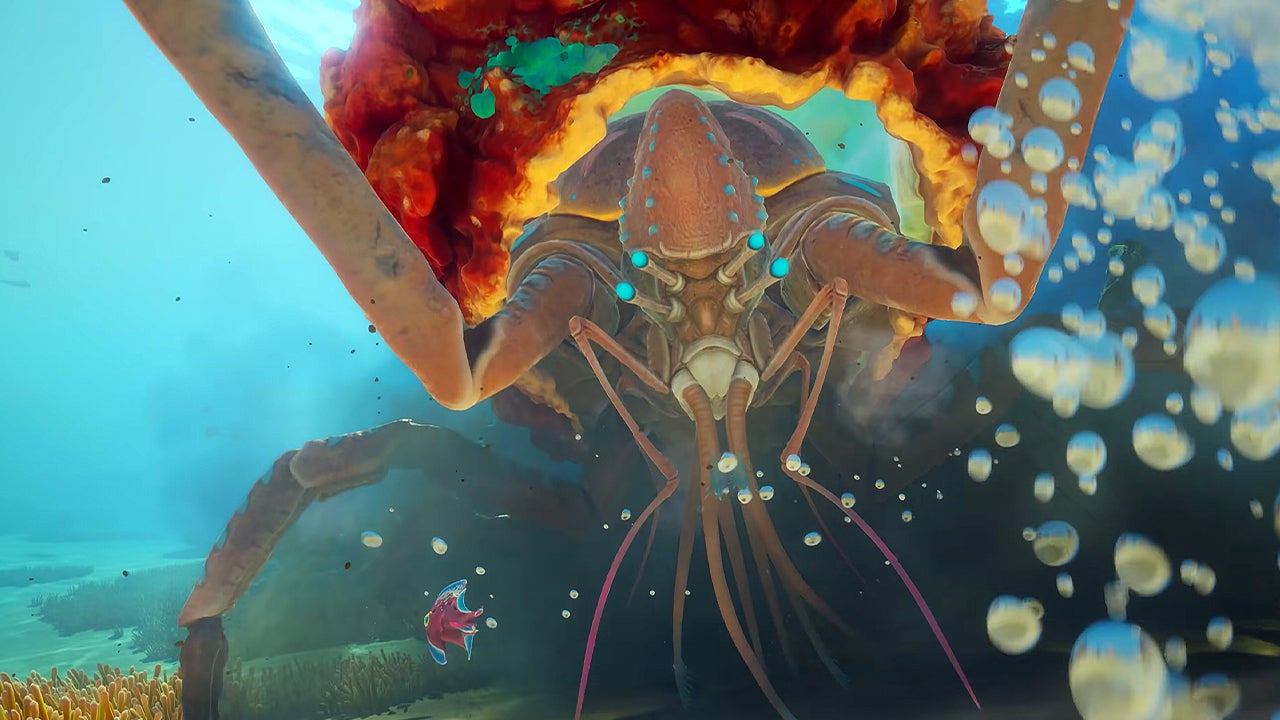
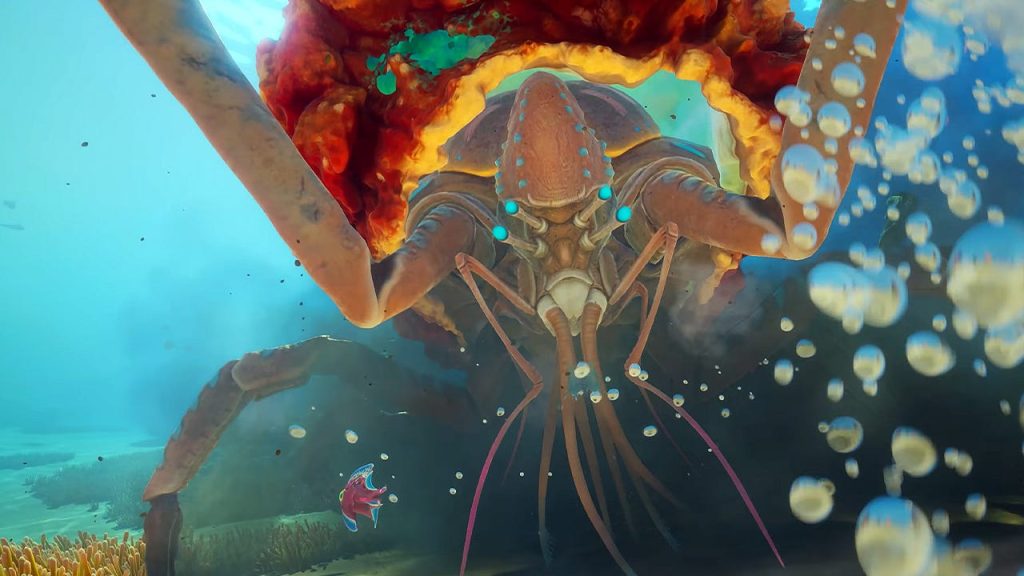
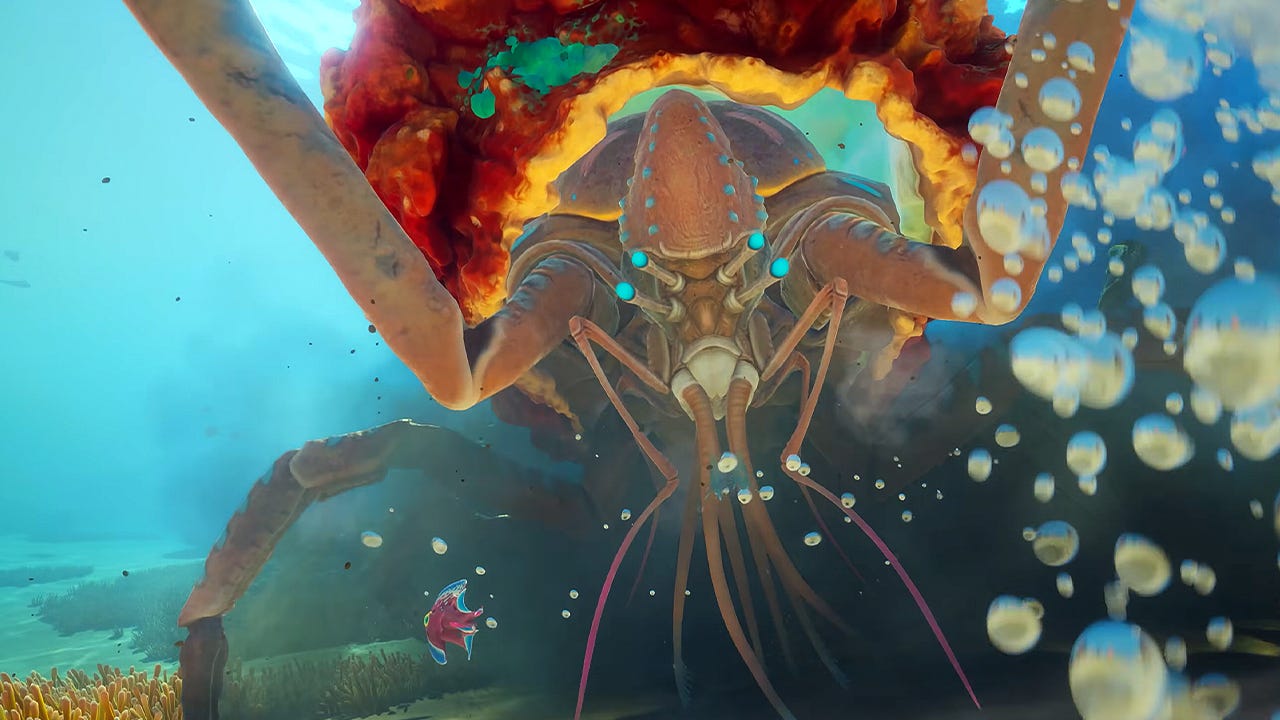
The survival loop might not be particularly novel, especially for those who have braved Subnautica’s waters before, but per usual, the main draw is that you’re required to explore increasingly unpredictable and dangerous depths if you hope to continue moving forward. That’s where Subnautica 2 shines, as each new stretch of water or unexplored cave features untold dangers, surprising lifeforms, and bits of lore to find along the way. Some areas are covered in diseased lifeforms and swarming with carnivorous fish until you can identify and destroy the sources of the corruption, while another has an enormous clam-like creature hiding valuable resources within its shell that can be claimed by those willing to risk waking it.
Moments like these, where everything is new and unexpected, are the best parts of Subnautica 2, so it’s great that they occur at a near-constant pace throughout the currently explorable area. However, once again, the only downside is that you will run out of new areas to explore somewhat quickly if you are looking to jump in right now. Exploration shifts from feeling like a dangerous delve to a bit like a casual farming game once all the mystery is gone and you know where everything is, especially once you unlock and upgrade the Tadpole (a vehicle that makes traveling quick and oxygen storage mostly irrelevant).
Base building, one of the other major pursuits you’re bound to spend loads of time on, has been greatly improved in Subnautica 2 (though it faces a similar shortage of stuff to chase in its current state). The best adjustment to building is how much simpler setting up, expanding, and modifying bases is, as you can now just place a room and then tug and pull at it to increase its size in any direction, adding windows, hallways, and doors as you go with almost no friction. Building is often one of those things that you lose hours to in survival games, but often feels like you’re fighting against the shoddy mechanics in order to do so. This was almost never the case in my time with Subnautica 2, which is downright impressive given how easy it could have been to make building bases underwater a complete pain in the neck. The addition of currents throughout the world is also an interesting new wrinkle, not only because they add some chaos to exploration by whisking you away, but also because they can be used as a renewable power source if you set up camp nearby, which I found quite clever.
By far the biggest addition, more than all the evil fish and scary seawater, is multiplayer. I really enjoy playing survival games with friends, so this feels like something that absolutely needed to be in the sequel. Playing in co-op is exactly what you’d expect – you can invite folks to your world and start exploring, collecting, and building together, and that’s a pretty awesome time, even if it does make progression go startlingly fast and remove some of the fear and isolation found in the solo experience. The only drawbacks are that you currently can’t play in someone else’s world unless they are actively online, and offline worlds are forever separate from multiplayer saves, so your friends won’t be able to come see all the neat stuff you’ve been working on if you started that particular run in singleplayer mode.