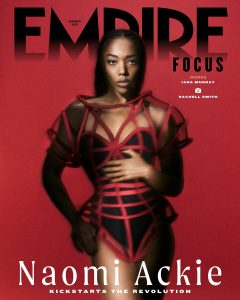

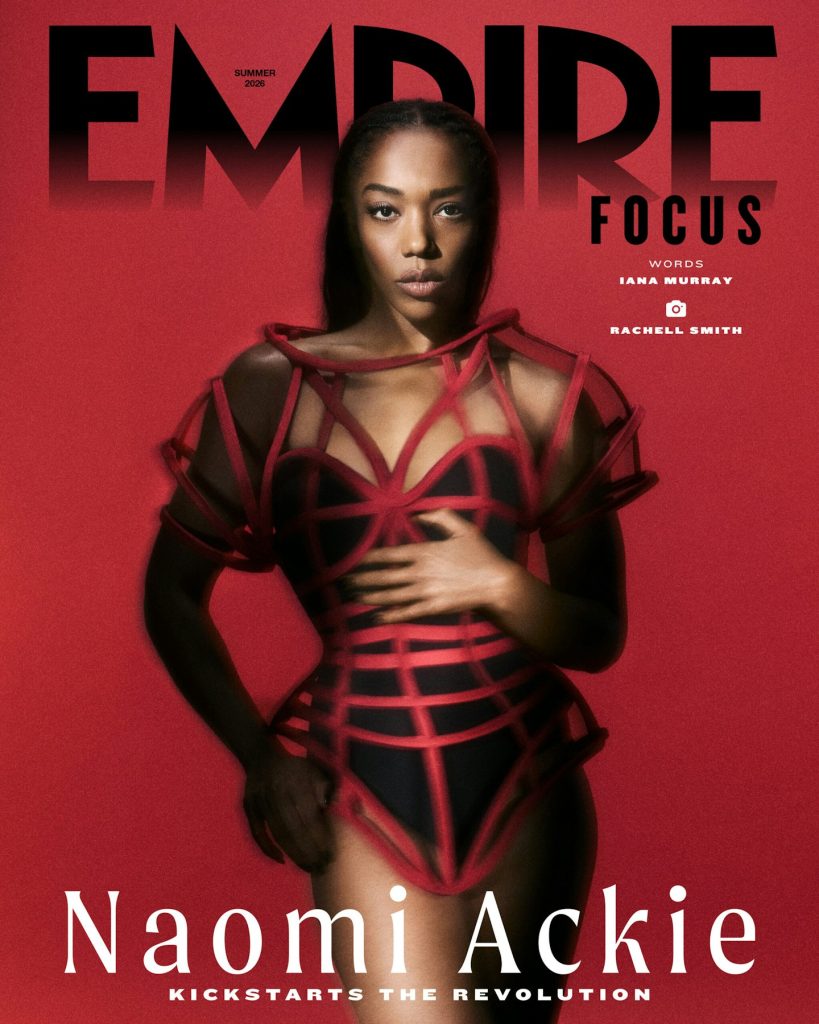
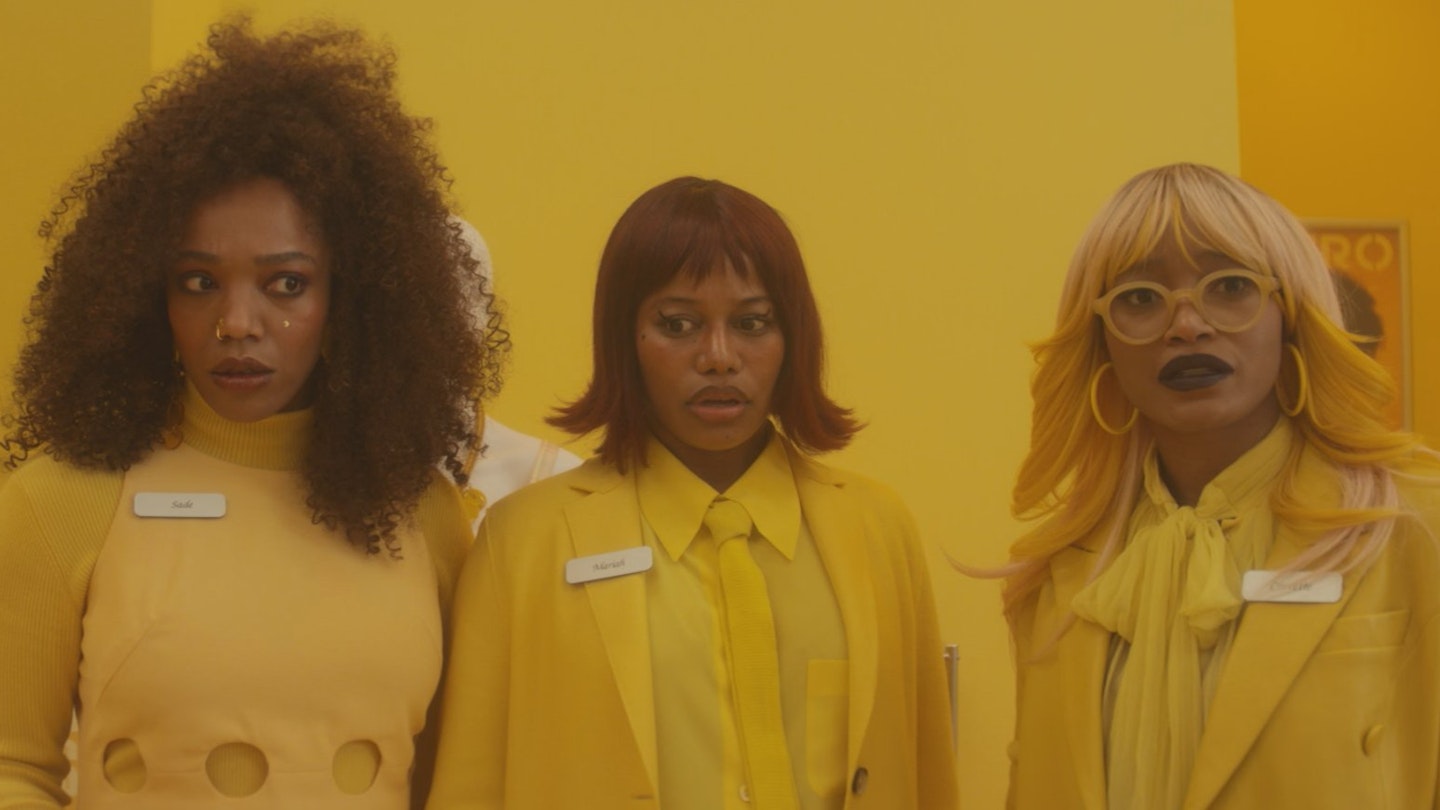
Naomi Ackie has developed an affinity for going against the grain. In the upcoming I Love Boosters, Boots Riley’s extravagant, satirical stab at the fashion industry, she plays noble shoplifter Sade — who undergoes molecular restructuring and time-travel to invent the perfect outfit. Not a conventional second goes by.
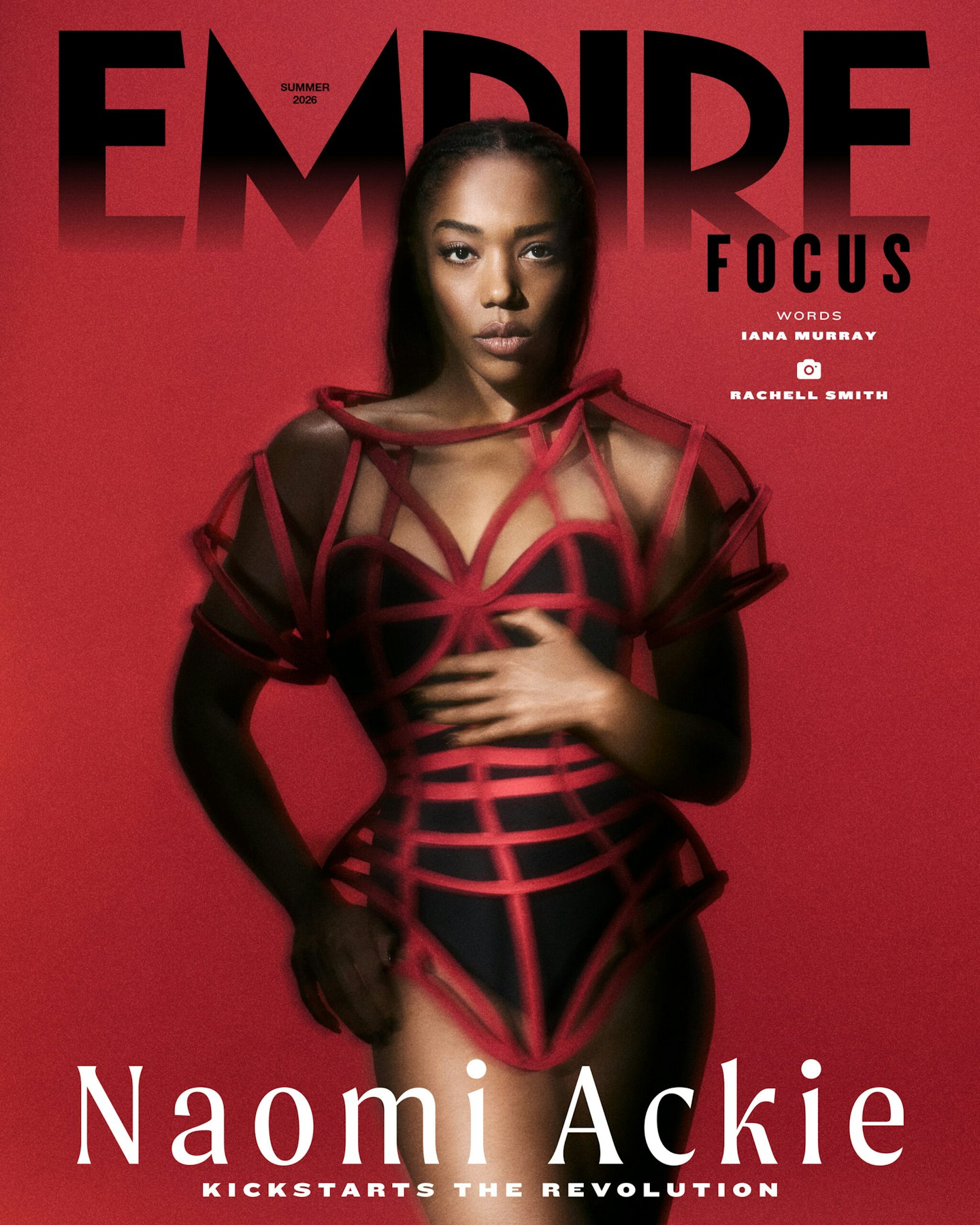
For the past few years, the 34-year-old Londoner has chosen to work with directors who aren’t afraid to confront the darkness of humanity, and who back it up with provocative, daring visions. But her career is about more than just ticking off the likes of Bong Joon Ho (sci-fi comedy Mickey 17), Steve McQueen (semi-autobiographical school drama ‘Education’, part of anthology Small Axe) and Zoë Kravitz (eat-the-rich satire Blink Twice) from her bucket list — she’s worked with enough esteemed directors to know how to sniff out a good one. “It’s a trend I noticed amongst filmmakers,” she says, kicking back in a London photo-studio after Empire’s shoot in April. “The more open they are, the more curious they are, the better the work.”
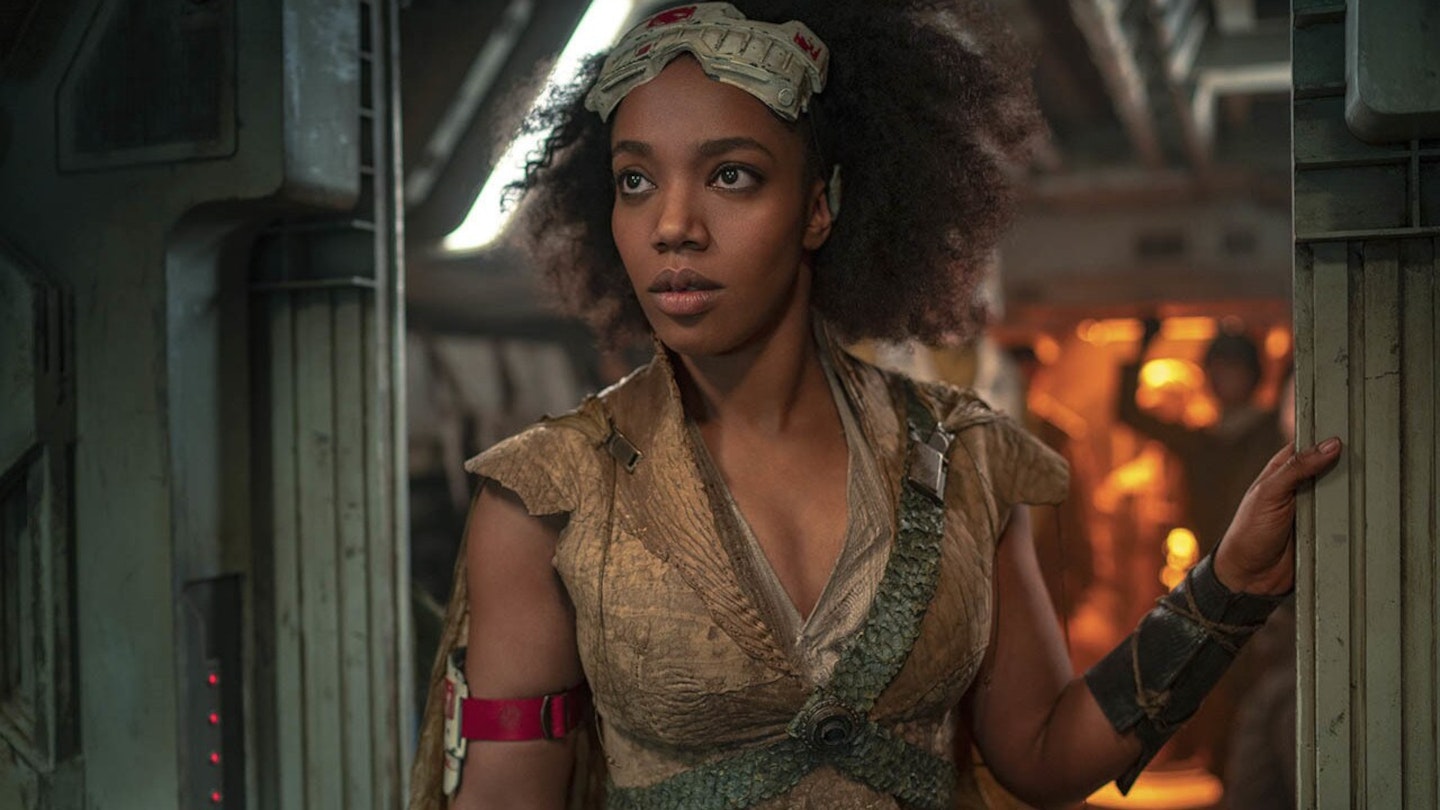
Ackie has dabbled in franchise fare: she wielded a bow and arrow on furry-alien horseback in Star Wars: The Rise Of Skywalker. She delivered full-bodied commitment to the Whitney Houston biopic I Wanna Dance With Somebody. She picked up a BAFTA for her breakthrough as a repressed murderer in Channel 4’s The End Of The F***ing World. But of late, she has been pushing more and more against convention.
This October, we’ll see her in DC’s Clayface — a comic-book film, but one written by Mike Flanagan and directed by Speak No Evil’s James Watkins. And with I Love Boosters, Ackie could shape-shift under costumes that grew more elaborate with each passing day, and deliver an anti-capitalist rallying cry all at once. It was just what she needed to feed that hunger for rebellion.
———
EMPIRE: You work with filmmakers who have a lot to say and have singular ways of expressing those ideas. Is that something you’ve felt drawn to?
NAOMI ACKIE: The thing is, I love talking about big ideas. I come from a family [where] around the dinner table, we always end up talking philosophy and politics and religion and faith and the world. That feels like a really natural part of the way that I communicate. And then when it comes to projects, I think big concepts allow me to be way more specific about performance, because if you’re working with someone who’s like, “Hey, here’s the entire world — this is going to be your specific task, to build this world out,” that feels way easier for me than being part of a story where I can make any decision I want about who the character is. When it’s a very specific [world] with a very specific message and the message matters more than the character, that’s when I know exactly what I need to do.
That aligns with I Love Boosters, where your character has a very specific role in a very specific world.
I was like, “This is a bit of me!” Boots is so incredibly specific [in] his world-building. All the films and projects he’s made belong in the same world, and yet tell different stories. There is this element of magic realism and absurdism that I’m really in love with. I like to play on that scale. If I think about Mickey 17, that has a level of surreal absurdity to it. Strangely, I even think about The End Of The F***ing World. The message sits stronger, I think, when the world is more specific. Those big-question ideas like I Love Boosters, which is essentially about people coming together to fuck up shit.
I Love Boosters is essentially about people coming together to fuck up shit.
What was it like being privy to Boots Riley’s creativity, which seems so boundless?
Some parts of the script, I was like, “I don’t know what it’s going to look like.” There are images within there where I was like, “I guess I’m gonna have to just go with it.” You can’t quite visualise some of the stuff and yet it really works. In my career, I really trust whoever’s leading. Luckily for me, the people I have been able to work with I really respect, and I think if you surrender to someone’s vision, and you say, “Okay, what do you need [from] me to help flesh out this idea that you have?”, then the acting becomes in service to a story, and less about you. It’s an important tool so that you can hold onto your ego and constantly remind yourself that this is not about you. This is about a character, supplying something to the story and to a message that could possibly enlighten people down the line.
What did you see as your character’s function in this story? In this world, the ‘boosters’ (shoplifters) are rebelling against the system but are also attracted to it.
Sade is the grounding force. [Keke Palmer’s] Corvette is a big dreamer and we need big dreamers in the world. Much like myself when I was younger, sometimes dreaming big makes you very individualistic and selfish. That’s why you need really important grounding forces in your life to remind you that it’s not just about you. Your special talent isn’t there just to show off. It’s useful for potentially building community, and I think my character’s influence in the film is this reminder that community is the most important thing. What is the point of being celebrated as the best fashion designer in the world if you’re fucking people over? There’s no joy in that. I think she’s the one who delivers that message to Corvette.
Mickey 17 also has a very specific world that you got to play around in. (Set on a planetary colonisation mission, Ackie plays the loyal partner to Robert Pattinson’s Mickey and his numerous disposable clones.)
Bless Rob, I think he was knackered on that job! He did not get an easy time. There were details within those sets and within the costumes that I don’t even think people really got to see. You know when our characters get arrested and they get put into the prison cells? There were these water bottles that were shaped like [the ones for] a gerbil in a cage. I revel in people’s creativity.
Mickey 17 is funny and ambitious, but the most moving thing about it is that it’s actually really romantic. Your character Nasha finds her person and loves every version of him, even the parts of himself he doesn’t like.
I love the fierceness of the love. I love how brash Nasha is and how much she will fuck a bitch up to protect that love. I might do it in the future, but it doesn’t feel like me to do a really classic romantic film, because that’s not how I see relationships. I think romantic relationships are beautiful because they’re quite messy and visceral. It’s got its own complete DNA structure that can’t be replicated. The thing that another human being brings out of you is so specific and it can be just the most wonderfully eye-opening experience. Mickey 17 is probably the most romantic I will ever get.
You also mentioned The End Of The F***ing World. Was it tricky to find your character, Bonnie?
That was probably the hardest to find. Once I did, it clicked, but I remember getting the breakdown for Bonnie. It said something like “odd”. I remember that key word. Playing odd is not possible. It’s so subjective that you have to try many different things. With Bonnie, we actually did get rehearsals for that one, and that was really helpful because I needed to figure out how she moved in the space. I realised through rehearsal that if I placed my energy backwards, so, like, energetically I’m trying to move away from everyone that I see, it did something to my eyes. I could pretend to try and be a human being and everything was kind of dead. So really, instead of her being odd through other people’s eyes, she feels odd in her own body.
At one point you had considered giving up on acting, but then you won the BAFTA for The End Of The F***ing World. Did it mean something to you to win at that point in your life?
It was transition time. I won the BAFTA during Covid. The laptop was on a cardboard box because I was moving house. The thing about awards is they are always so subjective. It’s a group of people in a room who might all happen to agree that this is their favourite performance, but that doesn’t really mean much. It’s a great compliment and it’s an amazing message of, like, “You’re doing something good.” To be honest, that validation happened when I got nominated, not necessarily the winning. It gave me a bit of a confidence boost when I needed it.
Do I want to do a kick-butt film? Yes.
Did Star Wars come at that transitional time of your life?
I filmed it before [The End Of The F***ing World], but The End Of The F***ing World definitely came out first. That was so funny because it’s like, the movies! People are like, “We’re gonna make you a star!” I was 26 and I was thrust into this giant world where they were like, “Your life is going to change,” and it didn’t.
This is a mad story. I had done Star Wars, [but] it hadn’t come out yet. I had auditioned and gotten one of the main parts for the Game Of Thrones prequel, ‘The Long Night’. I did the pilot, and I had a great time and my part was really cool. I was like, “Wow, now I’ve got Star Wars AND Game Of Thrones.” And then a Marvel audition came along and I was in the last round for that. I was talking to my family, like, “Guys, this could be it for me. I’m going to be some sort of Comic-Con legend.” And within the same week, I found out that I didn’t get the part in Marvel and the Game Of Thrones [show] wasn’t going ahead. My dad had to take me on a drive around London because I was crying my eyes out. But I think back now and I’m grateful, because I wouldn’t have the career I have now. I have so much freedom. I’ve just been a part of a DC [movie]. It comes around.
You’ve mentioned before that you grew up watching Marvel movies, hoping you’d be in them one day.
As I’ve gotten older, the things that I want to do or express have changed. Do I want to do a kick-butt film? Yes. All I want to do is play a role where I get to wear something really cool and kick people’s arses. It’s a goal and I want to achieve it. I don’t know when in my life, but I want to achieve it. I have huge respect for those films. I adore doing combat stuff.
You were able to do combat in Star Wars, at least.
God, that was fun. There was even more — I think they cut some of Jannah’s (Ackie’s character) stuff. But all of that was a huge lesson for when you’re approaching physical work. I just finished doing a boxing film (Ruth Greenberg’s sports drama Sugar, co-starring Eve Hewson). It was eight months training in boxing. It’s exciting stuff. The beginning of those skills that I learned in Star Wars have paid off ten years later.
The DC film you have coming up is Clayface. On paper, it sounds like something really different because you’re working with director James Watkins and screenwriter Mike Flanagan, who both have horror backgrounds.
This is what I mean — the right things find you. My love will always be smaller films. I really love genre films, and I love acting in genre films. The fact that it’s the DC world with this indie influence and this genre-led influence feels like the world I belong to. This project was so much fun to make and the community there was incredible. It was the same kind of deal with Rob on Mickey 17. Tom [Rhys Harries, who plays Clayface] went through a lot more than I did. The thing I love about genre work is that you know what the criteria is, and your job is to push it to its furthest limit. So this mash-up [between] a horror film and a comic-book film is interesting. I think it’s really smart of DC, because it brings in horror lovers, comic-book lovers. We’ll see what happens.
In the past you’ve talked about the difficult journey you had with I Wanna Dance With Somebody, but what were the lessons you took from that experience that informed your choices moving forward?
The most positive thing about playing Whitney was I realised that I love getting very specific about the body. I heard this song the other day, and it really made me want to learn how to do samba. I was like, “Oh, maybe I’ll tell my agents I want to do a film that centres around dance so that I can learn how to dance.” With Whitney it was like this crash course into a skill of how to be a superstar singer. But there was so much joy in the time it took to do it, in the same way that there’s so much joy in the seven months of horse-riding training I had to do for Star Wars. Or the eight months of boxing training [for Sugar]. There was a lesson there of letting go of the idea of perfection and also digging in, getting your hands dirty, and doing the work. You can’t shortcut those things and the result always ends up on camera. I remember feeling certain things, and the body’s starting to do it before your mind does it. It just feels like magic. My boyfriend said that when we first met, I was still dancing like Whitney.
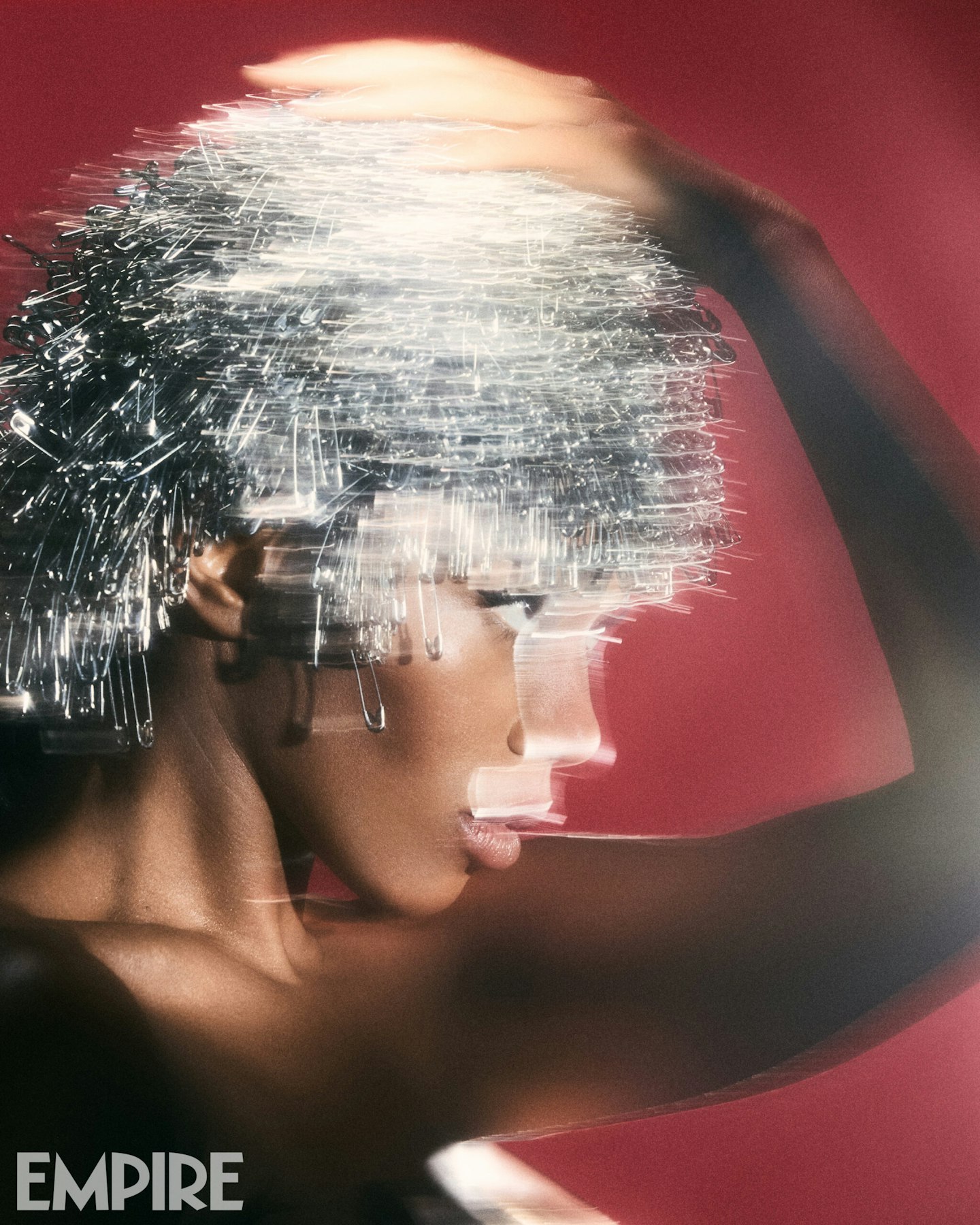
You’ve worked with so many incredible, experienced directors. Where does Steve McQueen rank in that?
Very highly, and I hope he hires me again. I was on that project for, like, two days. (Ackie plays a child psychologist in Small Axe’s ‘Education’, McQueen’s five-film anthology centred on the lives of West Indian immigrants). It was a really quick thing for me, but I got to observe him and he’s so encouraging and specific. I think that’s my favourite quality: if a director is specific, I feel like I can do anything, because all I need is a good note. Steve McQueen is incredible. He has the power to access these worlds that not a lot of people get to see and he expands it. He’s just so sensitive to story, and what he was doing was a huge feat. The fact that this was a world that was real, for one. It’s historical, and it is a culture that not a lot of people get access to. It’s a really hard thing to pull off, and he pulled it off incredibly.
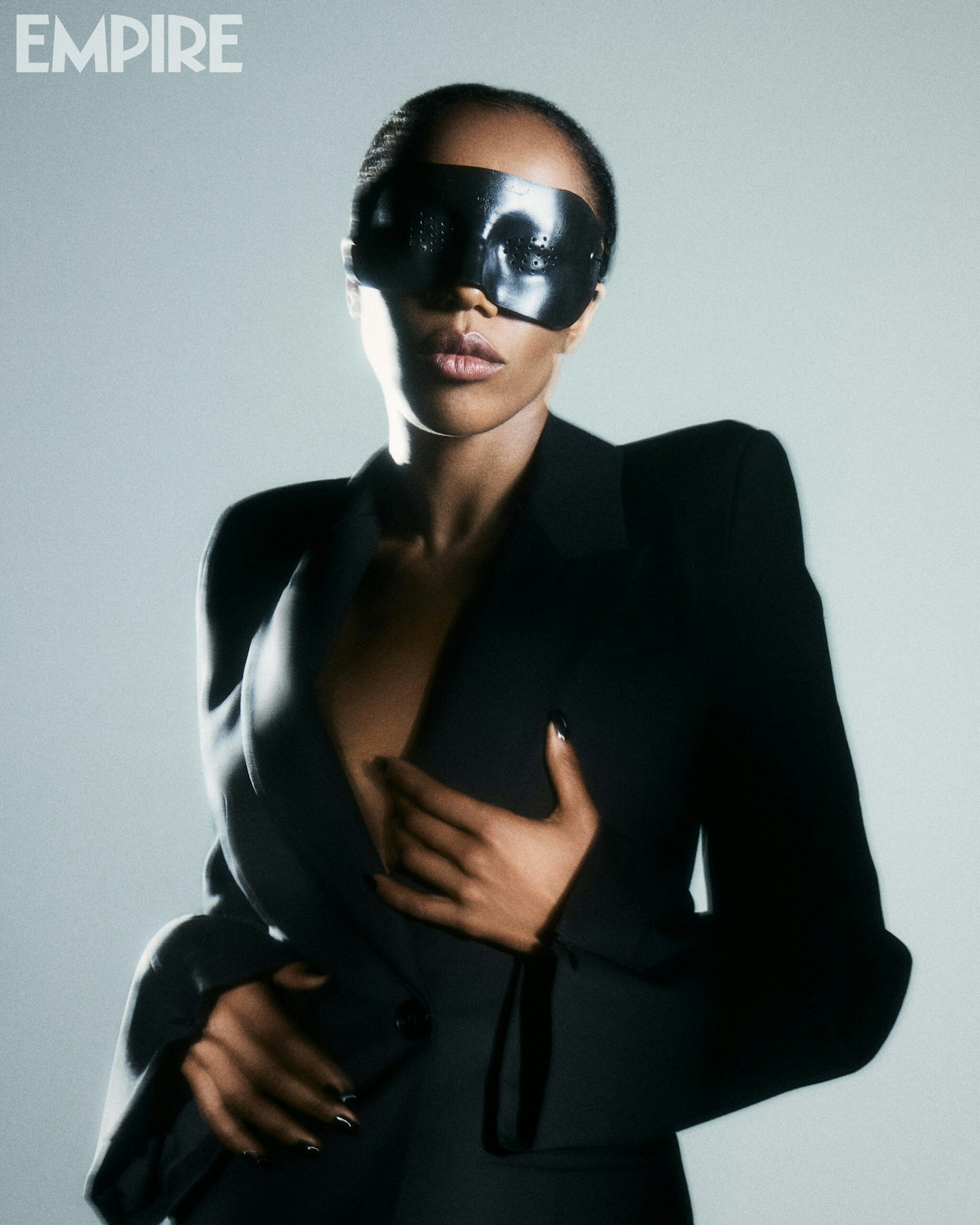
Conversely, you’ve also worked with a number of first-time directors. Recently you starred in Zoë Kravitz’s Blink Twice and Eva Victor’s Sorry, Baby, which overlap slightly in themes around power and sexual violence, but they also bring levity in their own distinctive ways. How did you find walking that tightrope of joy and darkness in both films?
I’m always attracted to things that can hold many things in the same space, because that’s what life actually is. Sorry, Baby feels extremely grounded and extremely real, and then obviously Blink Twice is a little bit fantastical, but only a little bit. But even so, the world that Zoë created within Blink Twice was extremely vivid and very visceral. The thing that actually makes it easier to access the tougher ideas, the darker elements, is that you have this brightness, because it gives you somewhere to go. It’s what they say about Shakespeare: don’t play the tragedy. And sometimes there’s a mistake made with these really dark things, that you have to hold that atmosphere constantly. The most effective thing for an audience, I think, is when they are able to slightly forget that things are maybe going to go a bit wrong. Those things feel more real than just staying in the darkness. Or doing comedy. I don’t think I’d do well in a comedy.
No?
Not without it having some level of something else to it. Some people can do it because they’re funny. I’m not funny. I did Blink Twice and then Sorry, Baby came up and I remember talking to my team and being like, “Do I want to do another film that covers this subject?” Because the subject means a lot to me. Would it cross the same lines? And it just didn’t feel like it did, partially because my character [in Sorry, Baby] was there to support Eva’s character and that felt different. But it also felt like [Blink Twice] is about the trauma and what happens immediately after. Sorry, Baby is about the healing process. It felt like looking at the same thing from different perspectives. Those are cool projects. Who knows what I’ll be up to next time?
This article was originally published in the Summer 2026 issue of Empire Magazine. Naomi Ackie was photographed exclusively for Empire at Loft Studios, London, on 13 April, 2026. I Love Boosters is in US cinemas from 22 May and arrives in UK cinemas later this year.