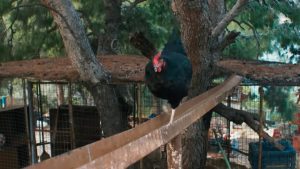

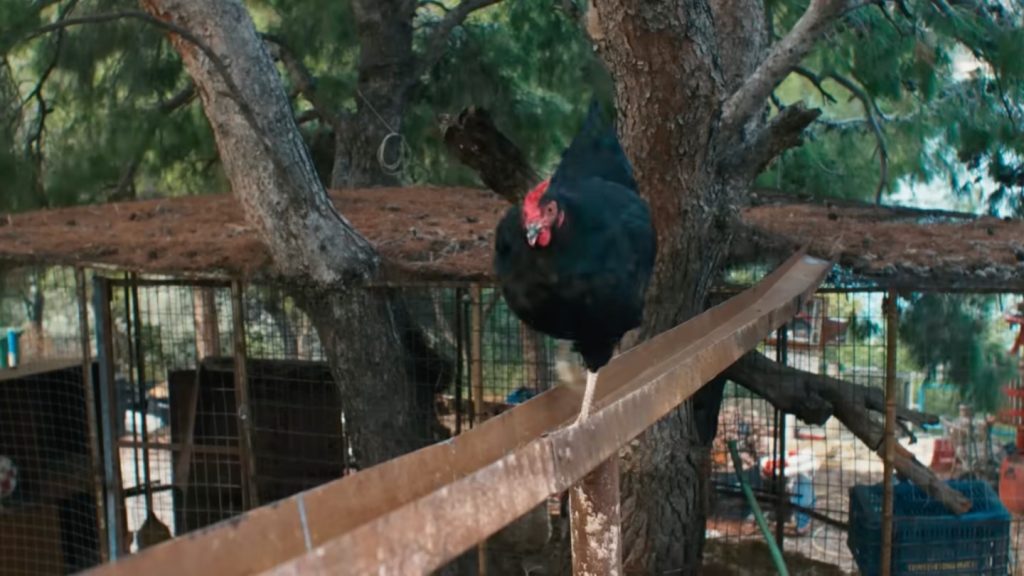
After a battery-farm chicken escapes death’s clutches, it finds sanctuary in a seafood taverna on the Greek coast, only to cross paths with a gang of unruly thugs.
What with EO, Cow, and Kedi, cinema seems more interested in the inner lives of animals than ever before. György Pálfi’s nail-biting drama Hen is the latest in this creaturely canon, offering a bird’s-eye-view of human affairs. With the help of their plucky protagonist, the Hungarian filmmaker and co-writer Zsófia Ruttkay take a cold, hard and sometimes darkly comic look at casual human cruelty.
The film’s opening sequence makes this starkly clear from the outset. A visceral close-up of a chicken mid-laying cuts to mechanised conveyor belts ferrying eggs (and, soon enough, fuzzy yellow chicks) through their various life stages — contrasting the vitality of these living beings with the bleak, metal-clad emotionlessness of mass-scale farming. The prodigious fowl of Pálfi’s title is one of many birds destined to be discarded.
The result is an understated, remarkably moving portrayal of the hen’s emotional existence.
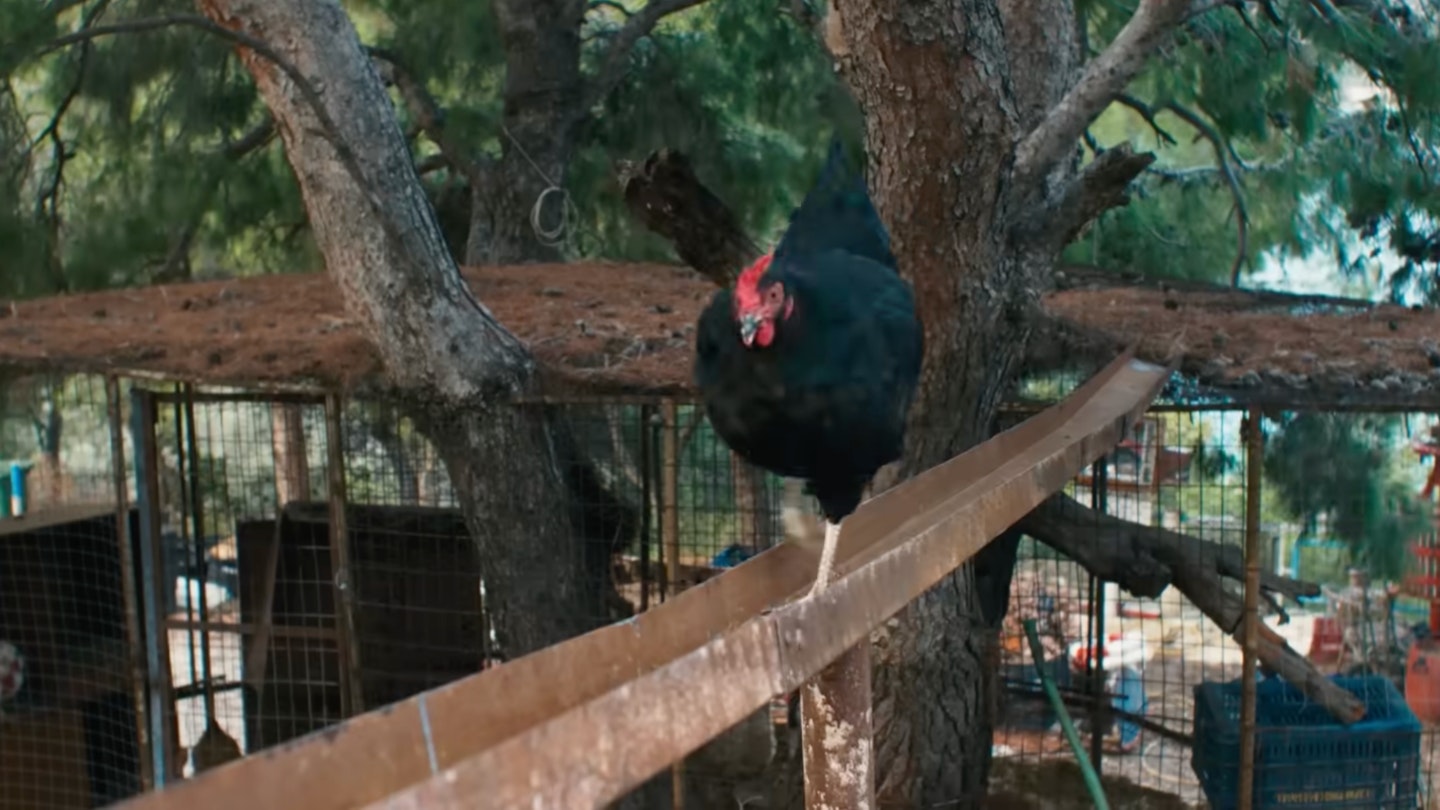
But a second shot at life arrives when a farmer fortuitously leaves a window in his vehicle open, and the heroic hen bolts for freedom. In a series of what can only be described as action sequences, the hen wends its way through protests, markets and shops, and navigates a close call with a fox, gradually getting its bearings in this unfamiliar, manmade world. Pálfi’s drama relies heavily on the star power of its animal protagonist — played by eight talented real-life chickens — and cinematographer Giorgos Karvelas’ roving camera honing in on minute details in the hen’s behaviour and the outer environment. The result is an understated, remarkably moving portrayal of the hen’s emotional existence.
This endearing birdie often eclipses the humans of the tale, though. The wayward hen winds up being taken in by the gentle-natured proprietor of a seafood taverna (Yannis Kokiasmenos); in turn oppressed by his mobster son-in-law (Argyris Pandazaras). Their portion of the story is significantly leaner, meaning the connection the film tries to make between human and animal suffering doesn’t feel robust. Yet this hardboiled parable is fascinating — and, with help from Szőke Szabolcs’ droll score, funny — at every turn, and is sure to make you think twice next time you’re in the egg aisle of the supermarket.
This Hungarian-language drama is a wild, surreal, harrowing and funny ride that may even win you over to veganism. Think Chicken Run for intellectuals.