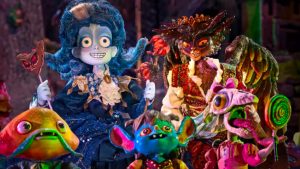

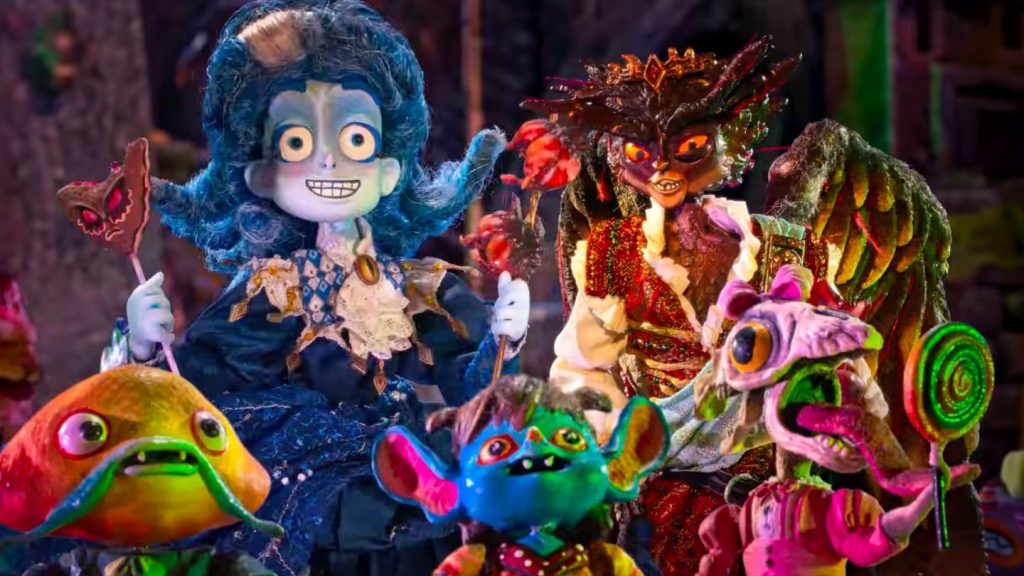
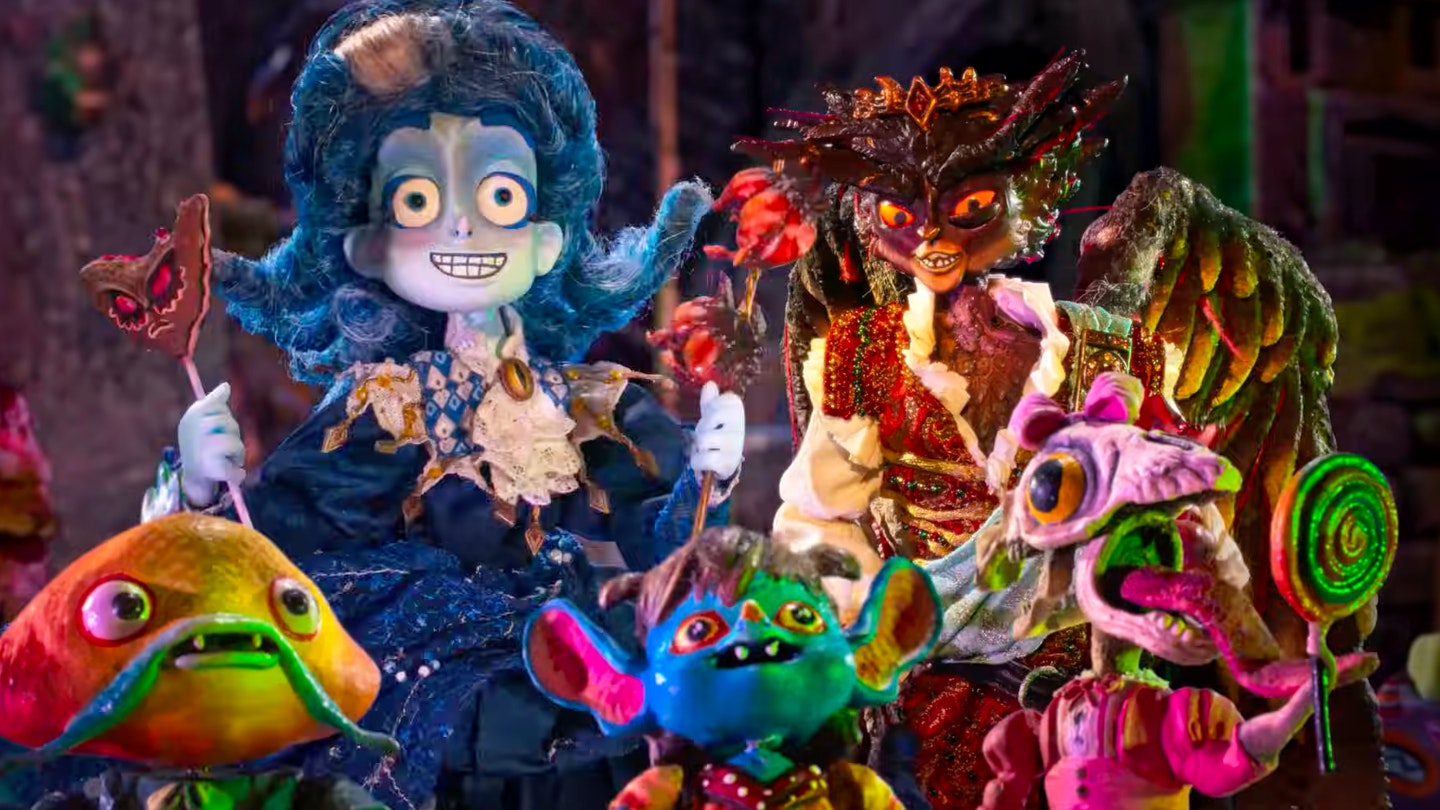
Francisca Imelda (Habana Zoé), a frustrated young writer in 19th-century Mexico, turns into a ghost to travel to a fantastical realm where her macabre literary creations live. Accompanied by tormented Prince Herneval (Arturo Mercado Jr), Francisca — reinvented as Frankelda (Mireya Mendoza) — must try to restore the balance between fantasy and fiction.
Considering all that Mexico has given cinema — the Three Amigos of Guillermo del Toro, Alfonso Cuarón and Alejandro González Iñárritu; Luis Buñuel’s Los Olvidados and The Exterminating Angel; Goal!’s fictitious footballing savant Santiago Muñez — it’s a wonder that it’s taken this long for the nation’s first feature-length stop-motion animation to arrive. But arrive it has, and in quite some style. Hailing from Cinema Fantasma, a studio started by brothers Arturo and Roy Ambriz in a tent on their parents’ rooftop, I Am Frankelda — a prequel to the brothers’ own hit Cartoon Network/HBO Max show Frankelda’s Book Of Spooks — is a phantasmagorical wonder, bursting at the seams with bright ideas and jaw-slackening designs, and only sometimes buckling under the weight of its own sprawling mythos.
Released in 2021, Frankelda’s Book Of Spooks introduced viewers to the titular Frankelda (voiced by Mireya Mendoza), a quite literal ghostwriter loosely inspired by Mary Shelley. Almost a Mexican Grizzly Tales For Gruesome Kids, the show sees Frankelda tell scary stories filled with Spooks — supernatural entities reliant upon human fear for their survival (yes, it’s a bit Monsters, Inc.) — aided by her curmudgeonly enchanted book Herneval (Arturo Mercado Jr). I Am Frankelda then spirits us back in time to mid-19th century Mexico to tell us the story of how a frustrated young writer named Francisca Imelda, whose talents go unappreciated in a sexist society, first came to enter the mythical realm of Spooks; how the tortured prince Herneval lived (and loved) before becoming leatherbound; and how the Book Of Spooks and its arachnoid and avian denizens came to be — and indeed nearly not be — as the barriers between the realms of fantasy and fiction threatened to crumble. All in a sprightly 104 minutes!
…the world that has been built here — along with its weird, wonderful, and frequently many-eyed mythic figures — is nothing short of breathtaking.
I Am Frankelda, as you may have surmised by now, is a lot to take in. And even for the most well-schooled of fantasy lovers, the Ambriz brothers’ lore-rich, exposition-heavy brand of worldbuilding can at times feel overcomplicated to the point of distraction. Seven feuding clans is arguably about two too many for the Spooks’ home of Topus Terrenus to comfortably handle; the Spooks’ politically tumultuous history is less finely threaded through the narrative than totally knotted and tangled up within it; and when it comes to the finer details of I Am Frankelda’s particular brand of magic, a Tenet-style ‘don’t try to understand it’ approach is best advised. (All this and we haven’t even talked about Luis Leonardo Suárez’s alternately terrifying and insipid, fuzzy-legged royal ‘nightmarer’ Procustes!) But still, the world that has been built here — along with its weird, wonderful, and frequently many-eyed mythic figures — is nothing short of breathtaking.
There are flavours of Henry Selick and Tim Burton in Topus Terrentus’ baroque, twisted Gothic architecture, all twisting towers and swirling staircases, crooked floors and cobwebbed nooks and crannies. There are hints of Jorge R. Gutierrez and of that great Mexican fabulist, Guillermo del Toro (an advisor and mentor figure on this film), in I Am Frankelda’s nightmarishly beautiful, beautifully nightmarish supernatural characters, each lovingly handcrafted with an ever-so-slight jankiness that only adds to the movie’s DIY, ‘I wish I could reach out and touch it’ charms. Reaching beyond the world of cinema, the influence of Gustave Doré and his exquisite Divine Comedy engravings, and of Auguste Rodin’s extraordinary ‘The Gates Of Hell’ sculptural rendition of Dante’s Inferno — replicated, _Frankelda-_style, in the movie’s dramatic opening — inexorably thrum beneath this film’s surface, too, giving the world Cinema Fantasma has created a real sense of timelessness and grandeur.
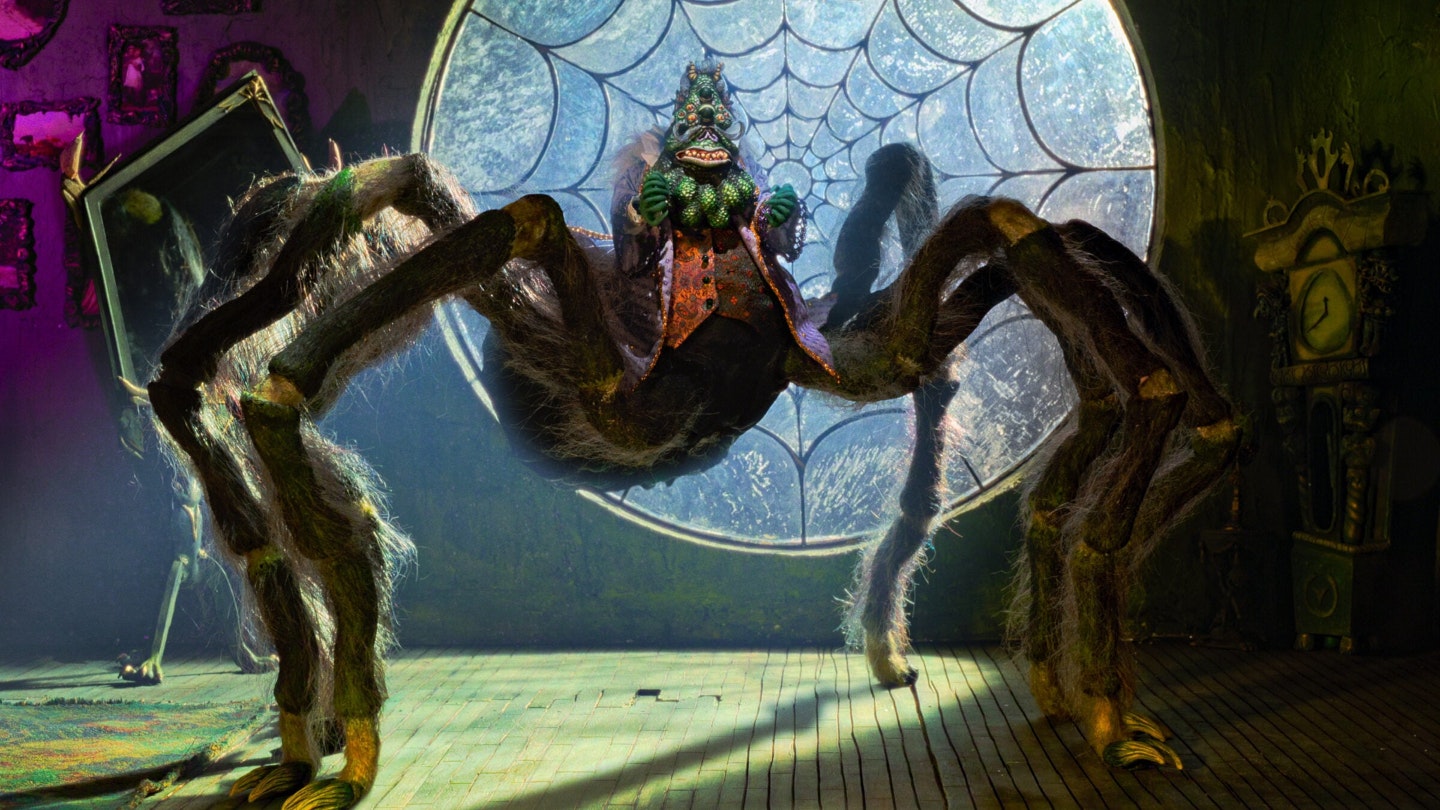
Even with all the myriad reference points and inspirations baked into I Am Frankelda’s DNA, however, make no mistake: this is a true original from the Ambriz brothers. Nowhere is this more evident than in the movie’s showstopping ‘Prince Of Spooks’ sequence. Coming towards the end of the movie, at a moment where our spirited Goth-girl hero Frankelda’s own creations seem to have overwhelmed her and the lines between the worlds of fiction and reality have been erased almost entirely, this musical number — a banging, operatic villain ballad the likes of which we’ve not heard since The Hunchback Of Notre Dame and Disney’s Renaissance Era heyday — really pushes the boundaries for the stop-motion medium, blending intricate puppetry, papercraft and gorgeous oil-painted segments into a real feast for the senses. (And if that mixed-media prospect tantalises, just wait til you see the glasswork, resin, and claymation creations that further colour and texture Topus Terrentus — truly, nothing here is done by halves.)
Key, ultimately, to I Am Frankelda’s success, bringing balance to the movie’s visual spectacle and unwieldy mythology, is the strength — and simplicity — of its core message. This is, when all’s said and done, a story about what it means to be an artist who knows what they have to say, who knows how they want to say it, and who will go through hell — literally, if needs be — to be heard. To create on their own terms. This is what Frankelda does. And this is what the Ambriz brothers have done. Long may they continue.
An everything-and-the-talavera-sink stop-motion delight that synthesises magic, music and the macabre into a mostly exhilarating, occasionally exhausting cinematic experience, Mexico’s first stop-motion feature was more than worth the wait. Bring on its second!