
Given it’s a franchise boasting multiple sequels with “masterpiece” status, it somehow feels like a hot take to say that the original Toy Story is still the best of the bunch. With Toy Story 2’s epic scope and Toy Story 3‘s emotional gut punches (I’ve still not recovered from the furnace sequence) it’s easy to forget just how sharp, witty, emotional and genuinely subversive the OG Pixar adventure is.
I was an eight-year-old boy when Toy Story was released in 1995, obsessed with two things: movies and toys. At this particular time I was obsessed with my Mighty Morphin’ Power Rangers which, like Buzz Lightyear, boasted blinking laser lights, sound effects and impressive wingspans. So it’s safe to say I was the ideal demographic for this particular movie. Toy Story’s central conceit – originally conceived by Pixar co-founder John Lasseter – was a beautifully simple and relatable one for most children: what do your toys get up to when you leave the room?
While Woody has softened through the sequels, in the original he’s actually pretty mean.
Even as a child, I was aware that Toy Story was a ‘big deal’ because of how different it looked to any other animated film. This was the dawn of 3D computer animation. Despite having won an Academy Award for their computer animated short Tin Toy in 1989, the idea of animating an entire feature film in this style felt like a big risk, particularly given the popularity of the “renaissance”-era Disney movies of the early ‘90s – all megahits that were beautifully rendered in the classic 2D style animation. In comparison, the computer animation in Toy Story has dated a little (particularly the human characters, who look like they’ve wandered in from a PlayStation cutscene) but it feels crucial to this particular story. Toy Story wouldn’t have worked if it looked like The Lion King or Aladdin. This was a world of man-made plastic toys. It needed to feel artificial, yet tangible.
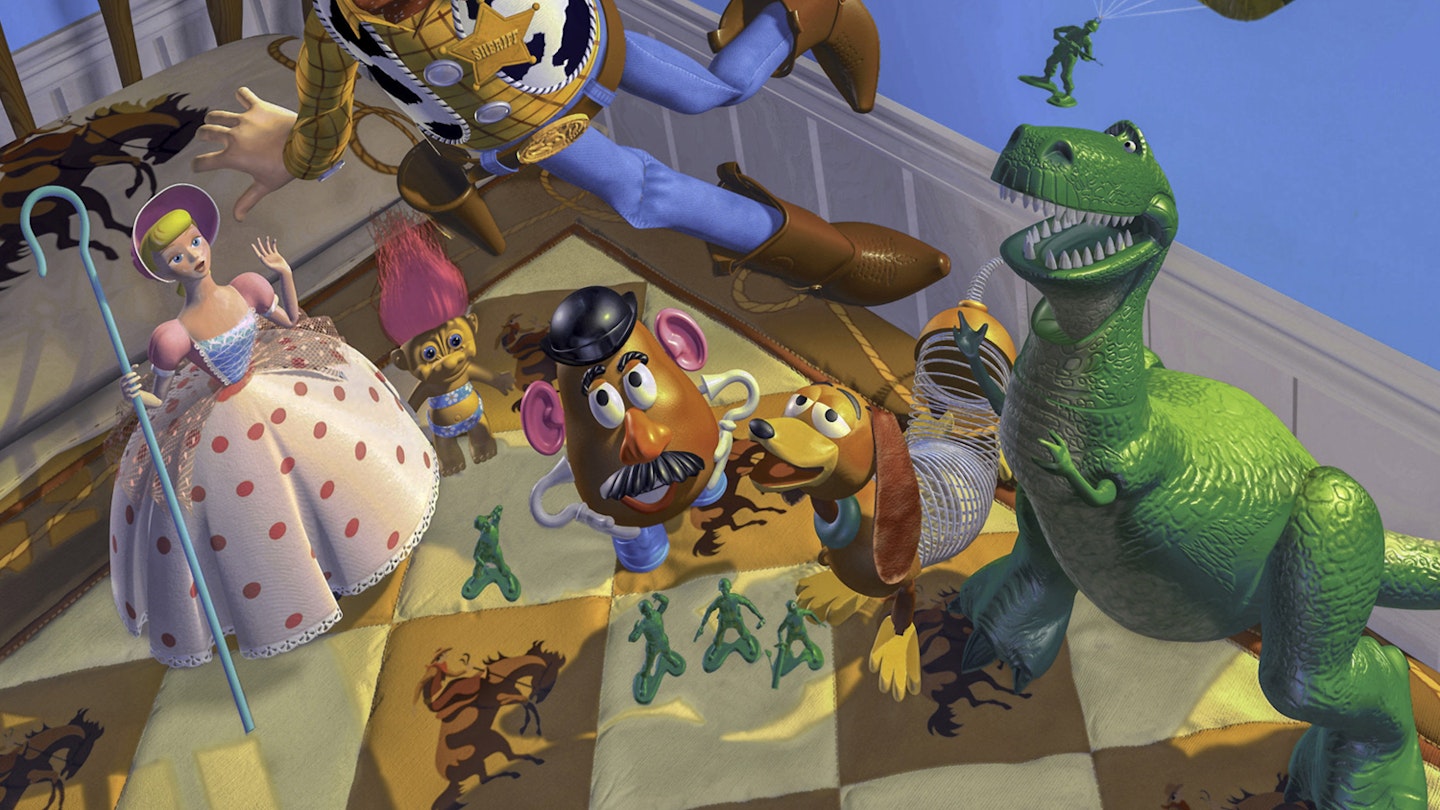
The opening sequence demonstrates this perfectly as it introduces us to Andy and his toys, which are all familiar real-world products – a slinky, an Etch-a-Sketch, a piggy bank, a Mr. Potato Head. We see a typical, recognisable scenario from a classic western play out, in which a criminal stages a “stick-up” in a city bank, but told through inanimate toys that are controlled and voiced by a human child. We’re not in a magical storybook fairytale like Beauty And The Beast, but a tangible, three-dimensional world. Here, we can see the shine of the plastic action figures, the lens flare from the sun beaming through Andy’s window and the reflections on Buzz Lightyear’s retractable helmet. Unlike Aladdin and Jasmine on their magic carpet, Buzz Lightyear doesn’t fly – he simply falls with style as he bounces and collides with other everyday items in Andy’s room. There’s a realism behind the magic.
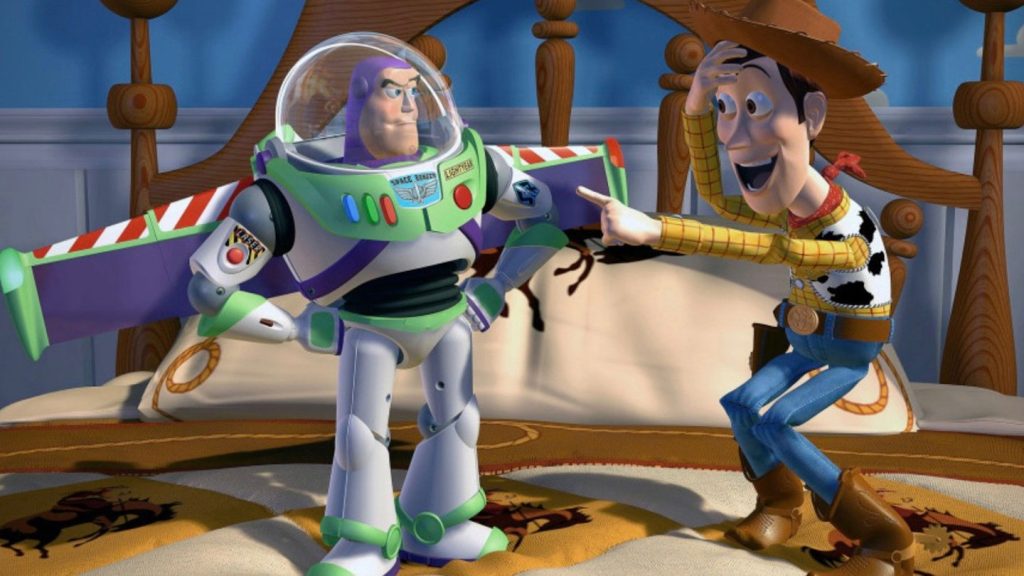
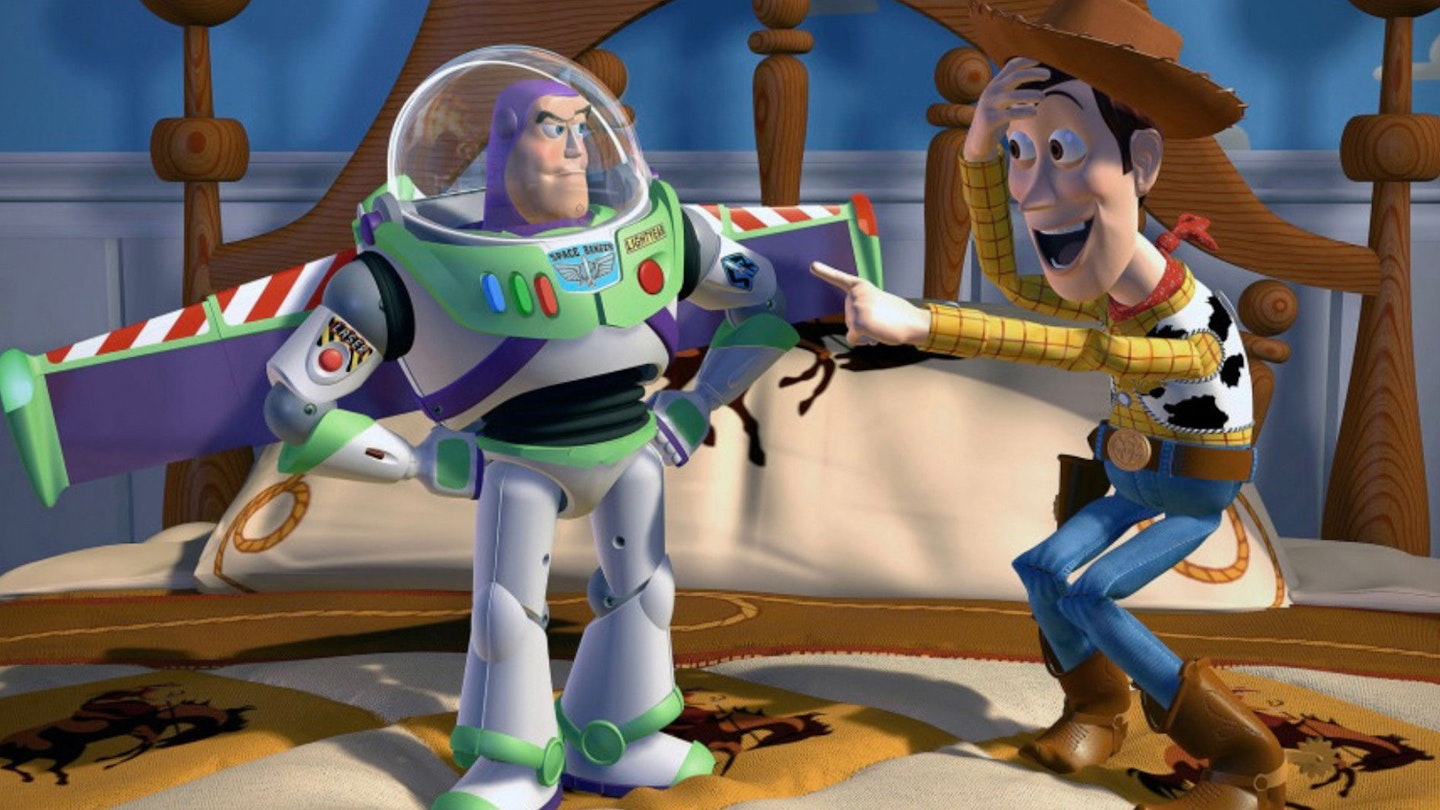
Toy Story wasn’t just a risk because of the new, experimental technology behind it, but also due to its buddy comedy format with two somewhat unconventional main characters: a deluded toy who thinks he’s a real space ranger and a bitter, jealous cowboy who’s desperate to get rid of him. Woody and Buzz Lightyear aren’t your classic Disney heroes. While Woody has softened throughout the sequels, in the original he’s actually pretty mean, driven by bitterness, jealousy, cynicism and his desire to be the boss. The script – co-penned by Joss Whedon, king of quippy, cynical, self-aware dialogue – contains a lot of sharp buddy-movie take-downs (“The word you’re looking for is space ranger.” “The word I’m looking for I can’t say, because there’s pre-school toys present!”). Early drafts of the film actually made Woody even meaner before Disney advised Pixar to soften his edges. Even so, there’s something unnerving about watching our hero maniacally drive a remote-control car towards his rival with the intention of knocking him off a ledge and getting them out of the picture. Of course, it helps that Woody is played by the most likeable man in Hollywood. Tom Hanks brings a magic and warmth to Woody, even when angrily screaming “YOU ARE A TOY!” at a blissfully oblivious Buzz Lightyear.
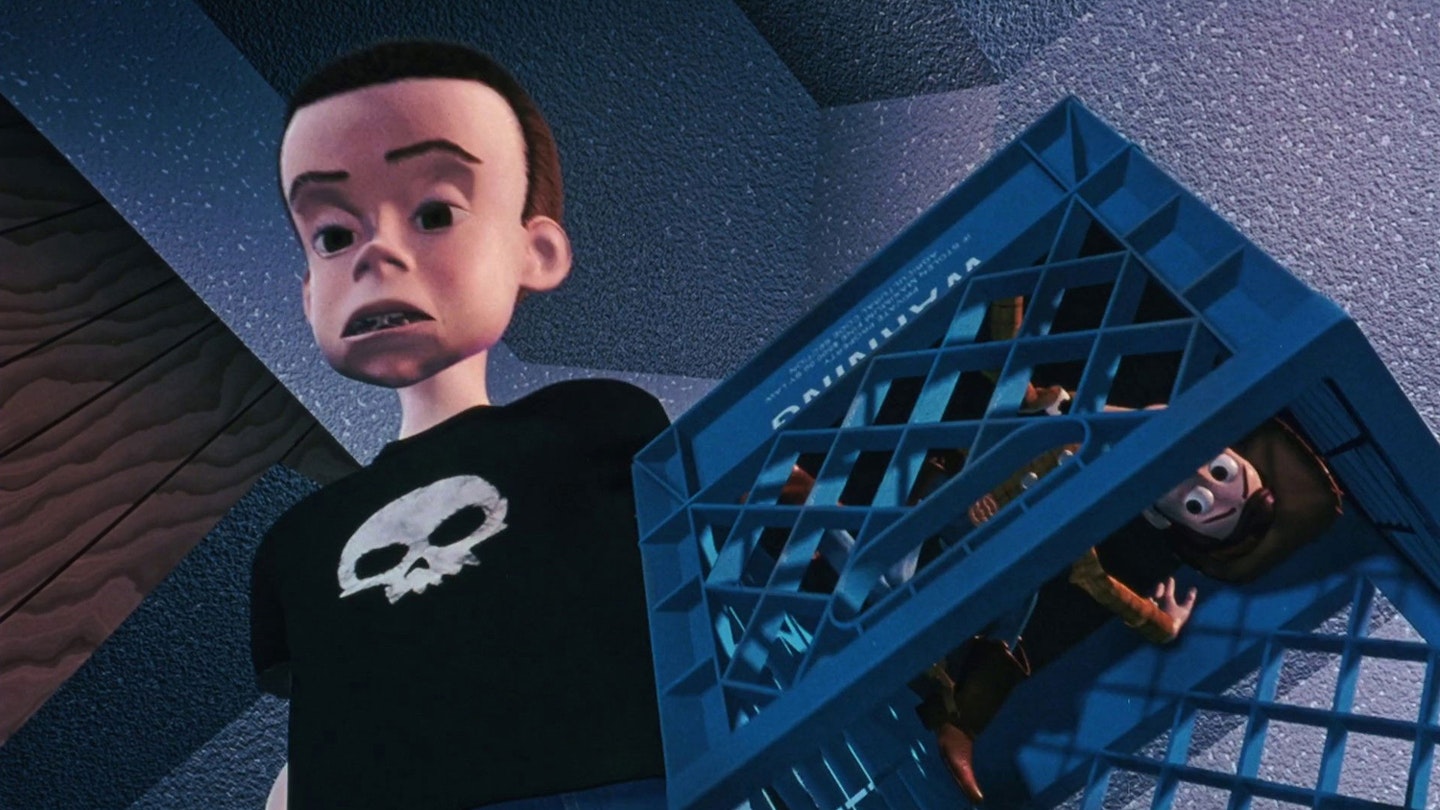
The film’s subversive energy peaks as Woody and Buzz find themselves stuck in the bedroom of Sid, the terrifying psychopathic kid next door with a penchant for torturing toys. As a burgeoning horror movie obsessive, it’s no wonder I loved Toy Story as a child. It remains the darkest and scariest movie in the franchise. Even that furnace sequence in 3 or the creepy antique store sequence in 4 don’t compare to the genuine terror of Sid’s room, in which creepy toys who have been mutilated and Frankenstein-ed back together emerge from the darkness and menacingly crawl towards our heroes like something out of The Conjuring.
In fact, this is a film filled with references to horror cinema. The carpet in Sid’s house matches the carpet in Stanley Kubrick’s The Shining, and surely it’s no coincidence that 1988’s Child’s Play – the original Chucky, made seven years earlier – is about a boy called Andy whose best friend is a talking toy.
Buzz discovers that being a child’s favourite toy is even more fulfilling than being a space ranger.
There’s psychological horror in the mix, too, when Buzz leaps from the top of Sid’s stairs in an attempt to fly – only to physically and mentally crash down to Earth, losing an arm and descending into an existential crisis. This is the best Buzz Lightyear movie of the franchise, journeying from confident spaceman, to complete meltdown (“I am Mrs. Nesbitt!”), to eventual acceptance of self-worth, played with genuine pathos by Tim Allen. While Buzz feels somewhat relegated to a comedic secondary character in the sequels, this is just as much Buzz’s story as it is Woody’s.
After a heart-stopping climax – as Woody and Buzz escape Sid’s clutches and ‘fall with style’ back into Andy’s car – they settle their differences and accept each other, and themselves. Woody realises this town is big enough for the two of them, and Buzz discovers that maybe being a child’s favourite toy is even more fulfilling than being a space ranger. Ultimately, as Randy Newman’s iconic theme for the film, ‘You’ve Got A Friend In Me’, suggests, Toy Story is a story about friendship, told with nuance, maturity and even a little bit of darkness.
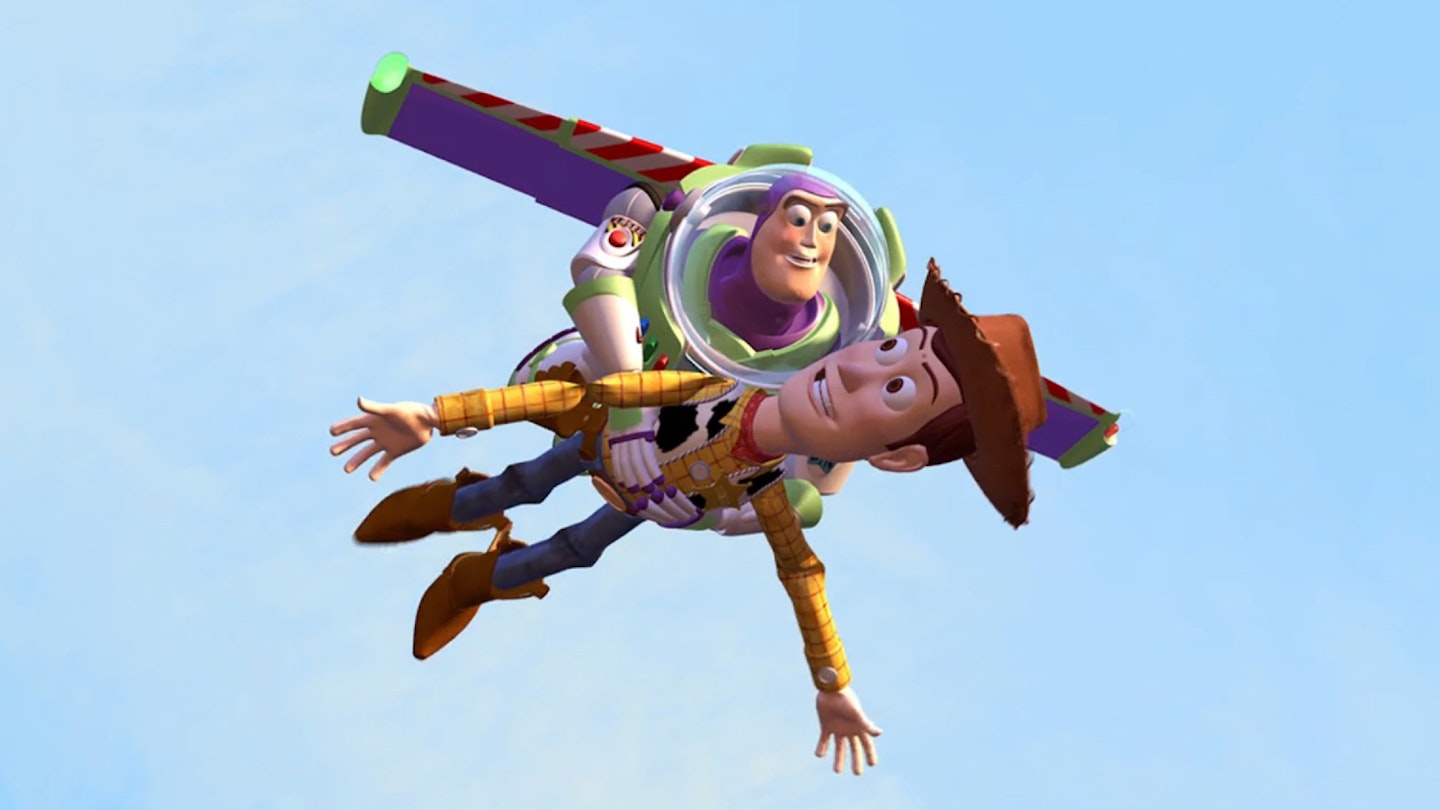
The risks taken in storytelling, characters and technology paid off. Toy Story was a juggernaut success and established Pixar’s signature knack for tackling bold, tough subject matter in a smart, accessible way for kids and adults alike. Without its huge success, we wouldn’t have such unique, strange and boundary pushing animated gems as Up, Inside Out and indeed, the Toy Story sequels. Thanks to Toy Story, there are no limits to where mainstream animated storytelling can go. To infinity and beyond.
Toy Story is streaming now on Disney+