
Sound and vision. When you break cinema down to its most fundamental elements, this is what you’re left with. What do you see? What do you hear? And how does that make you feel? It’s the true alchemy of the movies – that the right combination of image and audio can elicit such a bodily reaction.
I can think of few films that understand – and utilise – this so profoundly as Speed Racer, the Wachowski sisters’ psychedelic cartoon-turned-live-action fantasia. It’s a film whose sheer formal daring still boggles the mind, whose use of colour and kinetic energy remains unsurpassed; a deeply unserious masterpiece that breaks and rebuilds the entire language of what a motion picture can be in real-time.
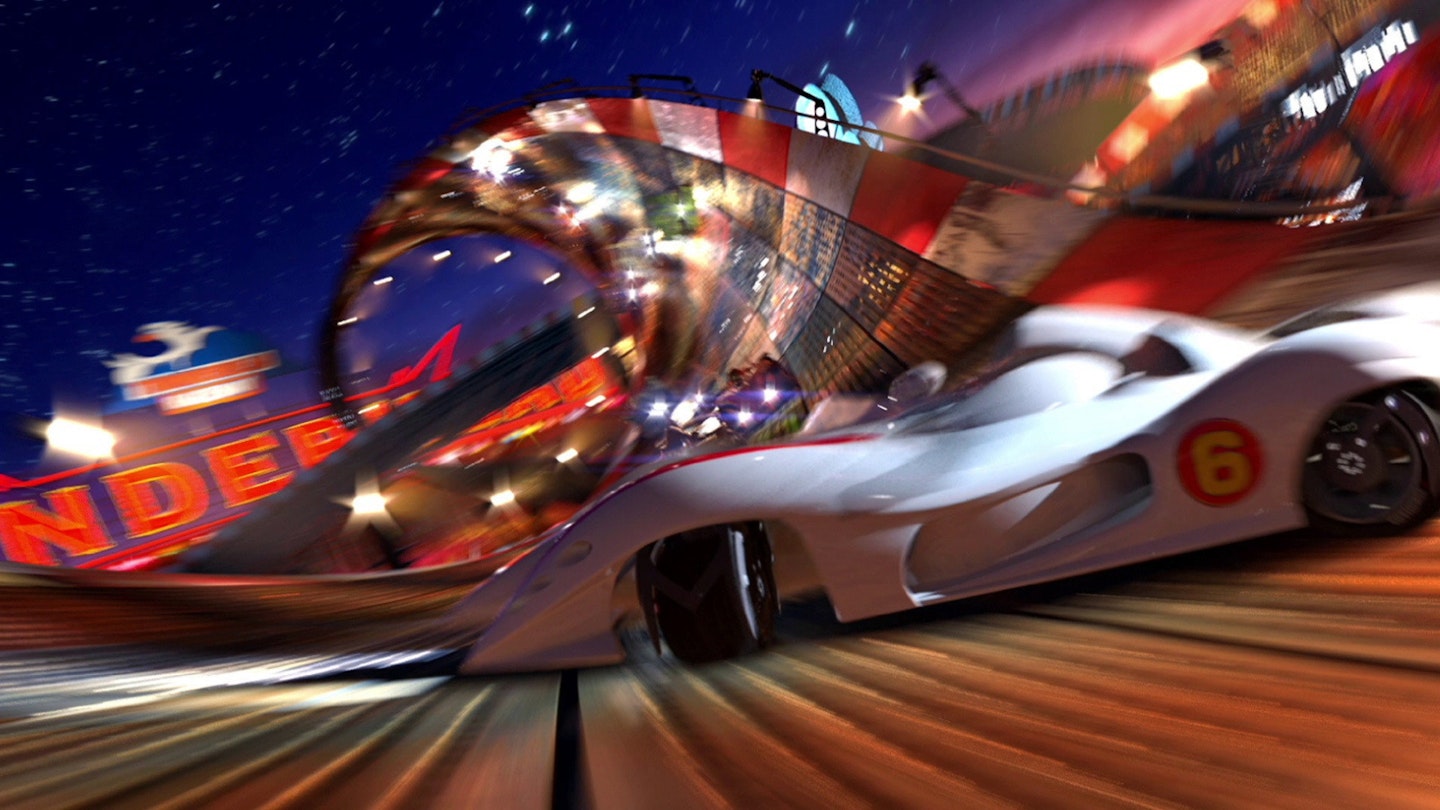
The tragedy is, on release in 2008, barely anyone saw it. Grossing less than $100 million worldwide, it was a colossal flop. This was the summer of Iron Man and The Dark Knight – films whose impact on the cinematic landscape became immediately apparent. But the legacy of Speed Racer is bolder and stranger. Nearly 20 years later – and now available in 4K, a perfect format for its vibrant delights – it still feels lightyears ahead of the competition.
Was it a work of pure pop-art genius? Or 135-minutes of migraine-fuel?
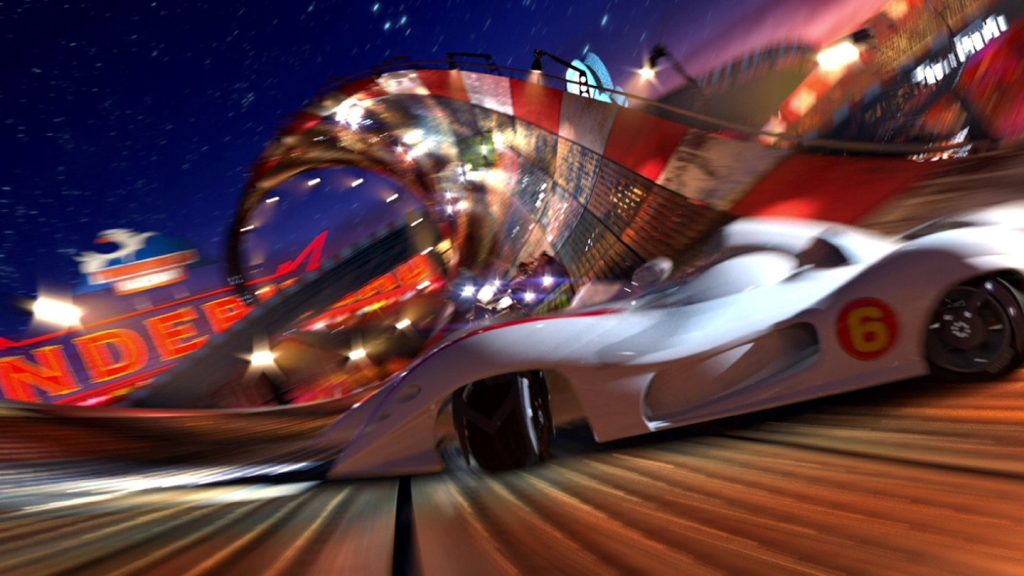
Nobody quite knew what to make of Speed Racer when it first landed, seemingly from another cinematic dimension altogether. Was it a work of pure pop-art genius? Or 135-minutes of migraine-fuel? Its labyrinthine plot – about corruption in the film’s fictional racing world – was deemed too complex for kids. Its unashamed kiddie-ness was a tough sell for adults. And it simply didn’t look like anything else, the Wachowskis rendering its world in self-consciously garish CGI – a hyperreality of over-cranked hues, perspective-warped compositions and a shiny-plastic aesthetic more akin to LazyTown than The Matrix.
It was a shock to the system for existing Wachowski fans, too. For all the playful goofiness (complimentary) of the back-to-back Matrix sequels, audiences still associated the sisters with the sheer cool-factor of The Matrix and Bound – deeply stylish works that captured the zeitgeist of late-90s cyber aesthetics with a tactile adult sexuality. But with Speed Racer, they were going against the grain; contemporary visual effects spectacles were accelerating faster towards realism, while they hairpin-turned into surreality. Even though Speed Racer adapts an anime – a medium that heavy influenced The Matrix too – it presented as a total pivot from their previous work.
Or was it? Look at it now; Speed Racer is about a man (Emile Hirsch, as Speed Racer himself) existing in a clearly computer-generated environment, battling the corruption that rules his world. With a ragtag group of outsiders, he exposes the lies of the system he’s trapped within, and gains transcendence; a radical self-actualisation. These themes recur throughout the Wachowskis’ work – into Cloud Atlas and Jupiter Ascending too – where the only limit is their own imagination.
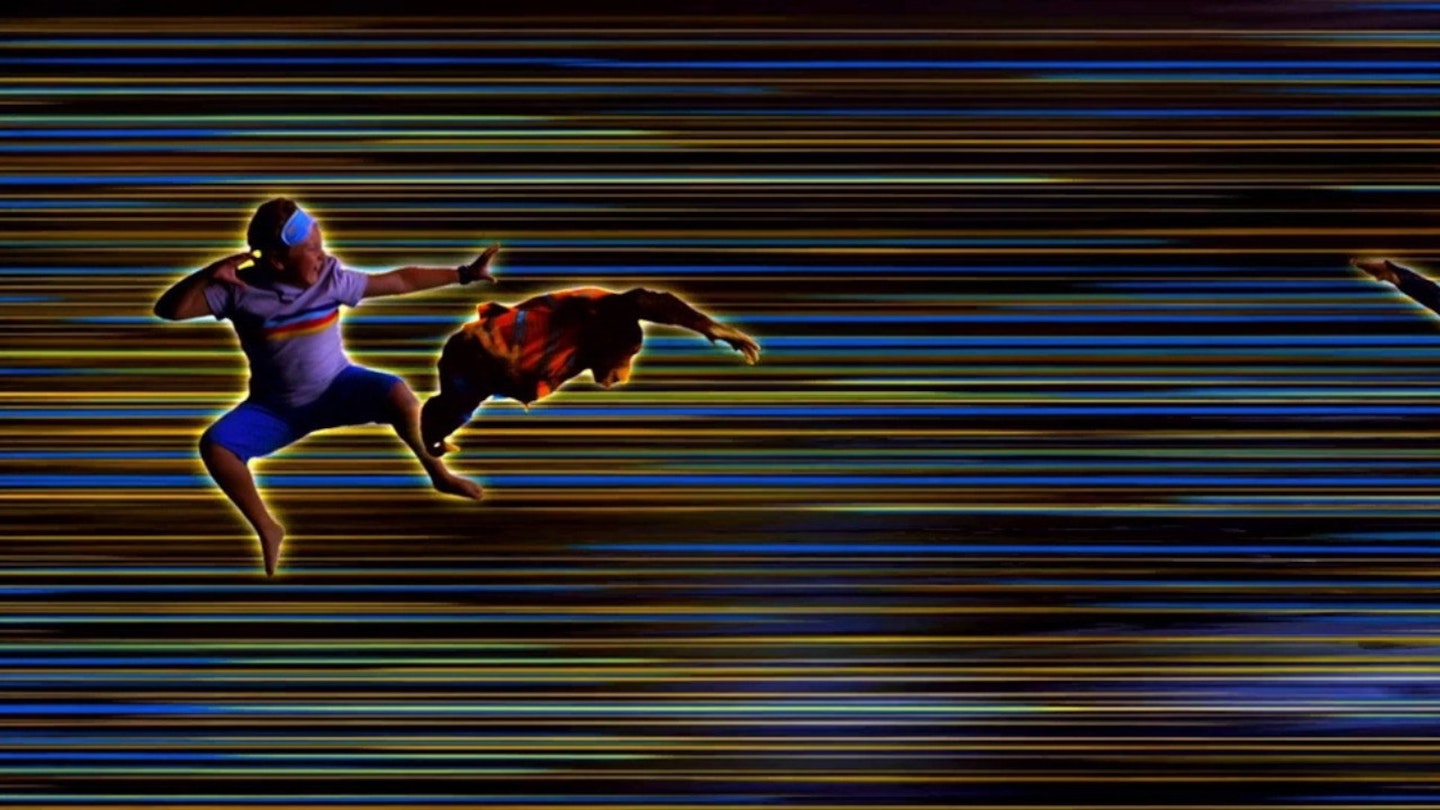
It’s clear today why Speed Racer has received a significant reappraisal. It is breathtakingly constructed, dazzling in its compositions and revolutionary in its editing. The Wachowskis put the digital production processes that George Lucas pioneered on Attack Of The Clones and Revenge Of The Sith in hyperdrive, capturing human performances as digital assets to assemble in primarily pixel-driven frames. The film plays as an act of collage, a seamless montage using human performances as roving transition wipes, or reality-warping on-screen elements. It is incredibly expressive, almost a form unto itself; when the directors talked about pursuing the Warholian, or creating Cubist cinema, this is what they meant. A motion picture has simply never had so many pictures in motion.
This is the Speed Racer paradox – that its stylistic innovations go hand-in-hand with such silliness.
Just see the film’s opening 17-minute sequence – a bravura mini-masterwork in its own right, establishing the characters’ past and present in one fell swoop. It unfolds across a series of races, intercut and in dialogue with one another: young Speed (obsessed with all things vehicular) being driven around the track by his older brother, Rex Racer; Rex driving his personal-best time in competition, before his career ended in death and disgrace; and present-day Speed careening round the same track, racing the memory of his fallen brother like a haunted Mario Kart time trial. Something so complex becomes seamless and simplistic in execution, all delivered via a thrilling race setpiece. It also crams in a letter bomb explosion, a chimp using binoculars, and several kids punching each other.
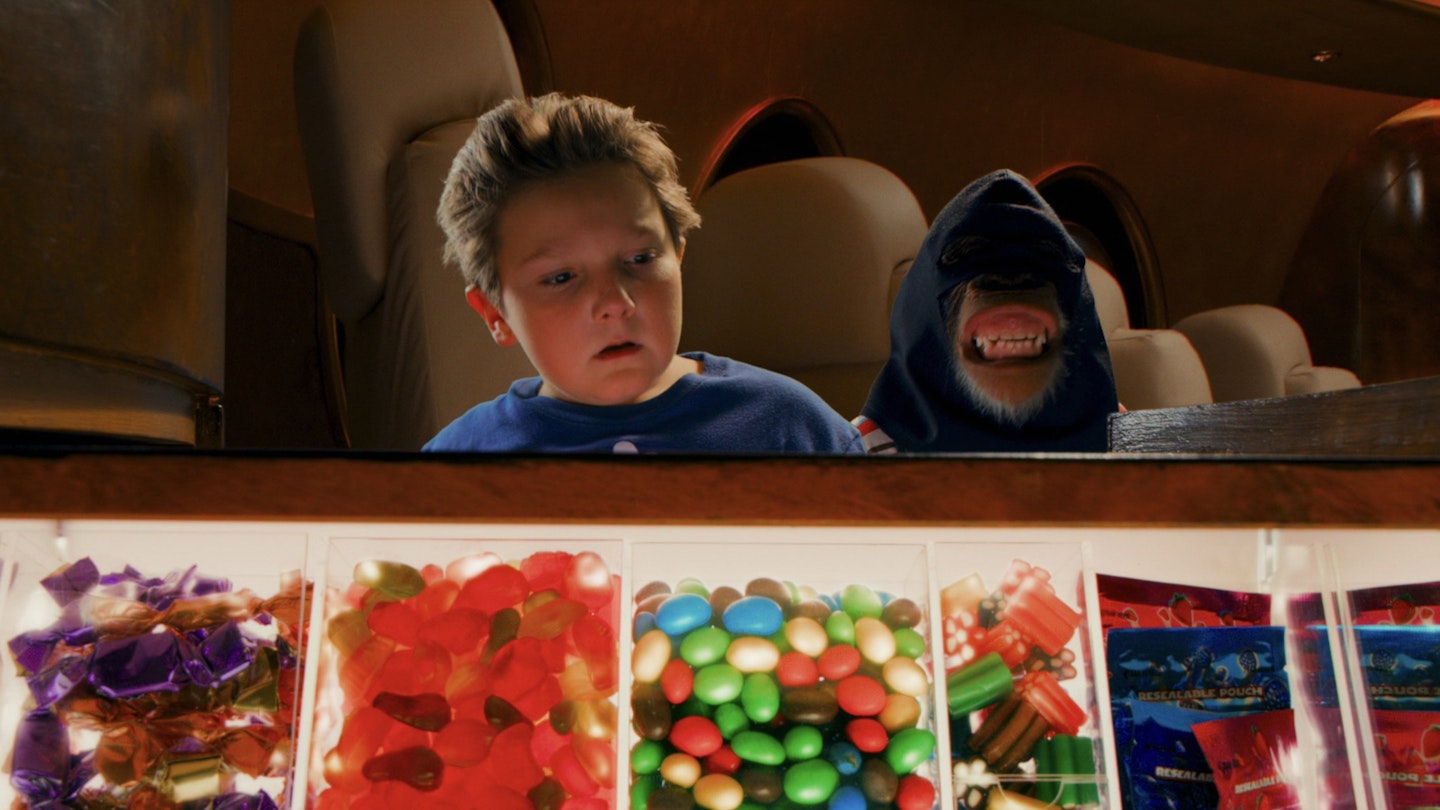
This is the Speed Racer paradox – that its stylistic innovations go hand-in-hand with such silliness. If you come for the eye-sizzling races, you also have to surrender to Christina Ricci saying “Cool beans”. Roger Allam’s gloriously unhinged performance as the venomous Royalton (his full anime-villain rant as the camera swirls around his head is masterful) comes in tandem with kid Spritle (Paulie Litt) and chimp Chim Chim going on a raucous candy bender. You have to be down for all of the ride. But in that perfect match of form and function, it stands as a precursor to everything from Scott Pilgrim Vs. The World – which also translated anime visuals into live-action – the Spider-Verse movies, and Everything Everywhere All At Once.
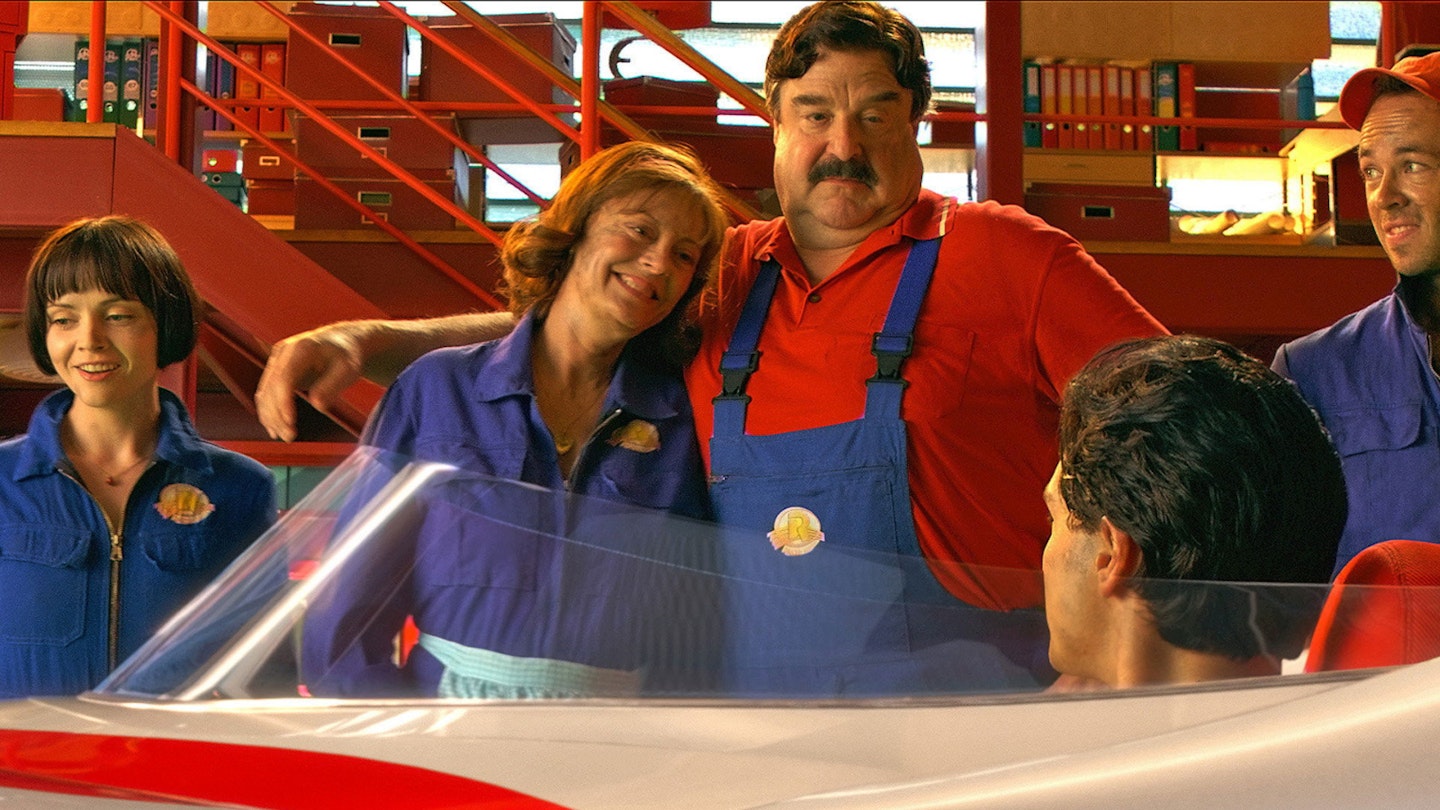
At the time, even those who liked Speed Racer labelled it a visual feast lacking in emotion. But they couldn’t be more wrong – there’s a scene here that never fails to make me cry, tucked amid all the madness: a heart-to-heart between Speed Racer – leaving home, crushed by learning his beloved racing world has forever been a fix – and his dad Pops Racer (a perfectly-cast John Goodman). When Rex left home in similar circumstances years previously, Pops told him never to return; he cut his son off, and lost him for good. With Speed, he breaks the cycle, opens up about his worries, his failures, his loss. Tells his son there’ll always be a place for him at home. That he’s proud of him. That he loves him. It’s so tender and touching; more than any scene between characters called ‘Speed Racer’ and ‘Pops Racer’ should be.
At its core, it’s a film about the profundity of pure unabashed imagination.
That sincerity – a key component of all the Wachowskis’ work, particularly from this point onward – is in every frame of Speed Racer. At its core, it’s a film about the profundity of pure unabashed imagination, about the power that comes from liberating creativity from commerce. When any character in Speed Racer talks about racing, they’re really talking about making art – about doing so while being free, and real, and driven by heart and courage and gut instinct. Every time the film puts pedal to the metal visually, it’s fulfilling its own philosophy about what it means to drive (or, create) with full conviction.
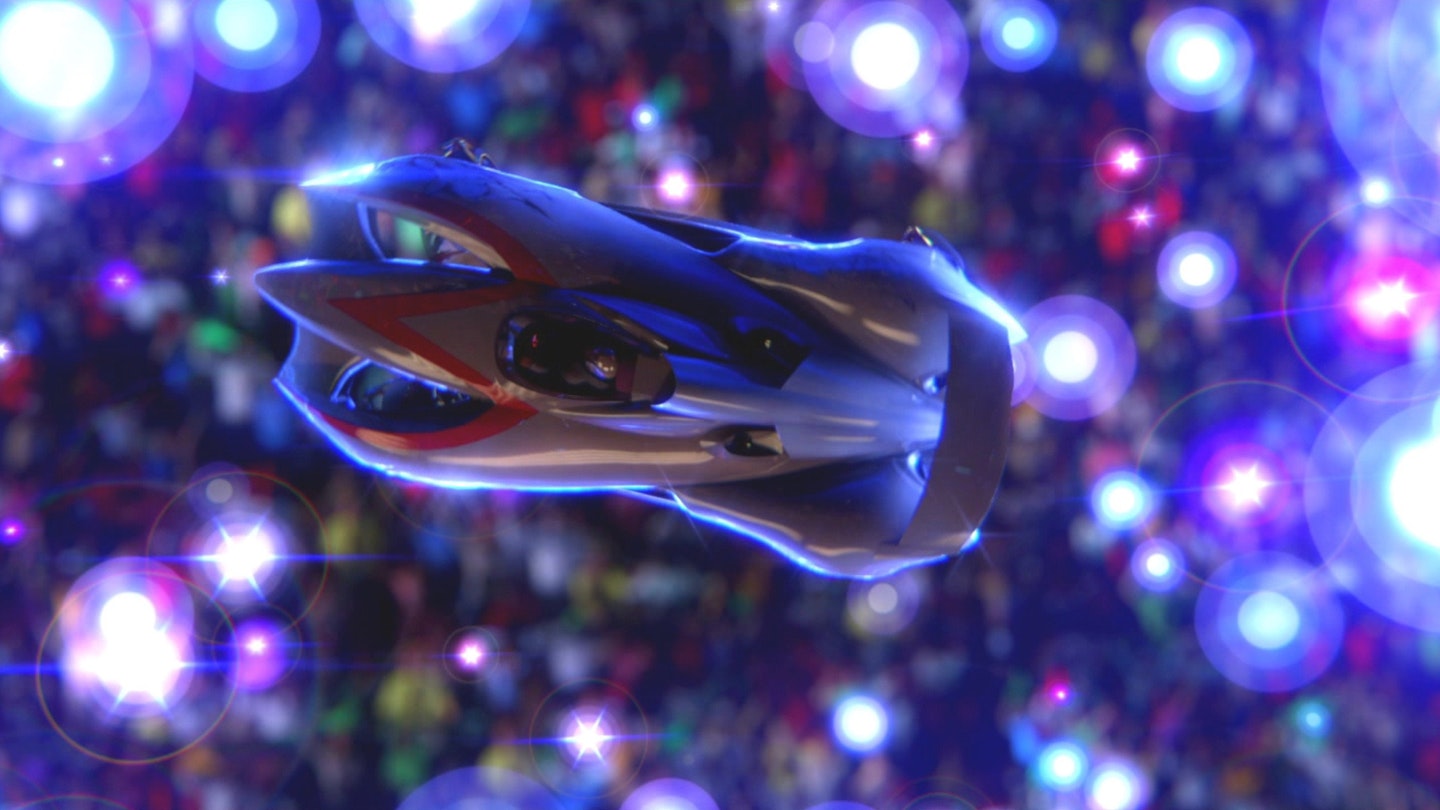
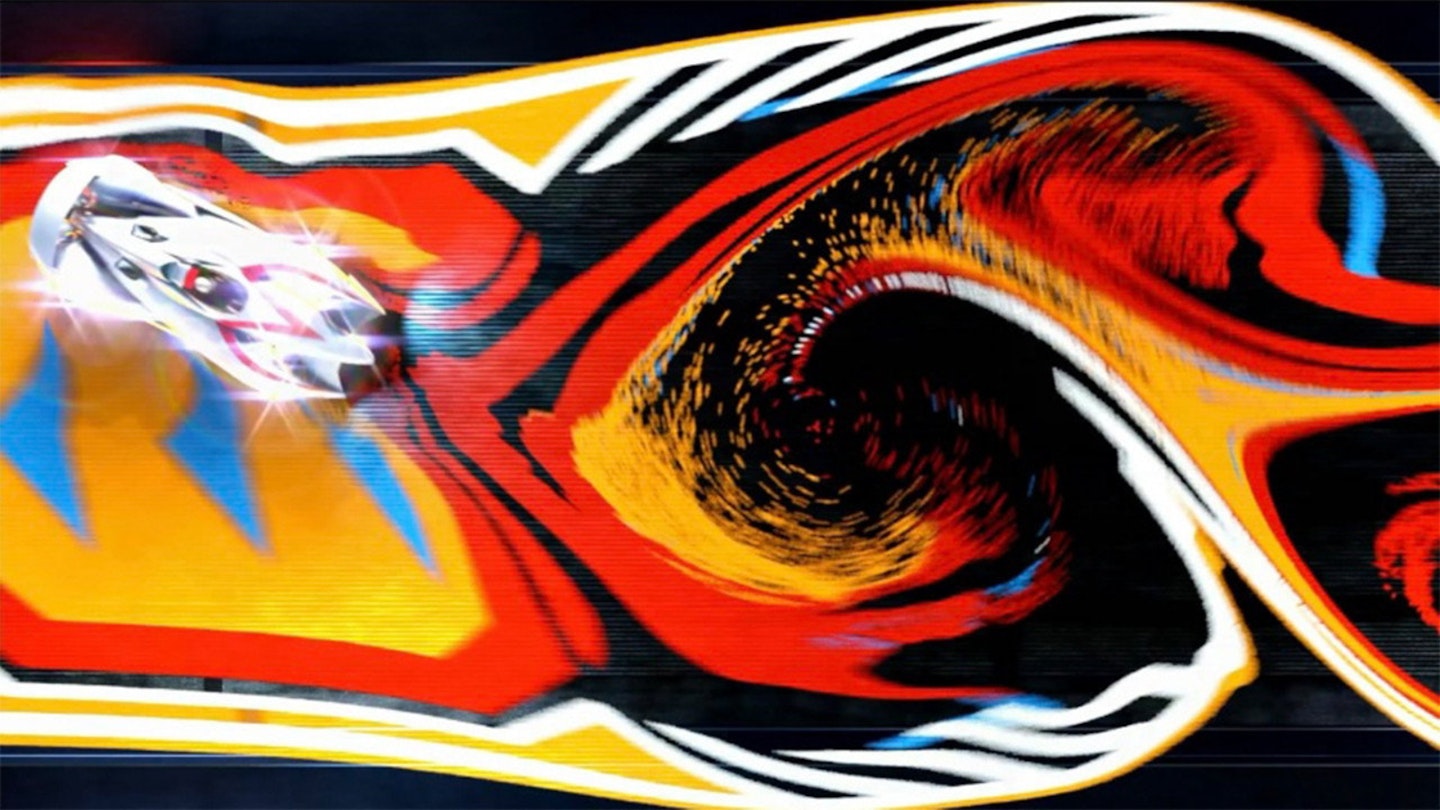
And so Speed Racer reaches its final race, our hero out to prove that real track magic can shatter any corporate tyranny. A mid-race crash-out seems to spell disaster for his chances. But he sits. He listens to the car. He trusts his gut. He kickstarts into gear and drives. All the voices in his head – his brother Rex, his nemesis Royalton, his mother, his own conscience – swirl. The colours of the racetrack streak across his helmet like the 2001 Stargate, the scenery blurs, the track dissolves into whirls of liquid pigment. He’s a man, driving for his life. He’s a child, dreaming in a classroom. Faster, and faster, and faster. Spectators scream, pistons pump, commentators yell, a total cacophony – until Speed thunders over the finish line in pure white light. It’s a singularity of cinema, The Wachowskis dismantling the entire medium to its most basic elements: sound and vision. How does it make you feel?
Speed Racer is available now in 4K Ultra-HD