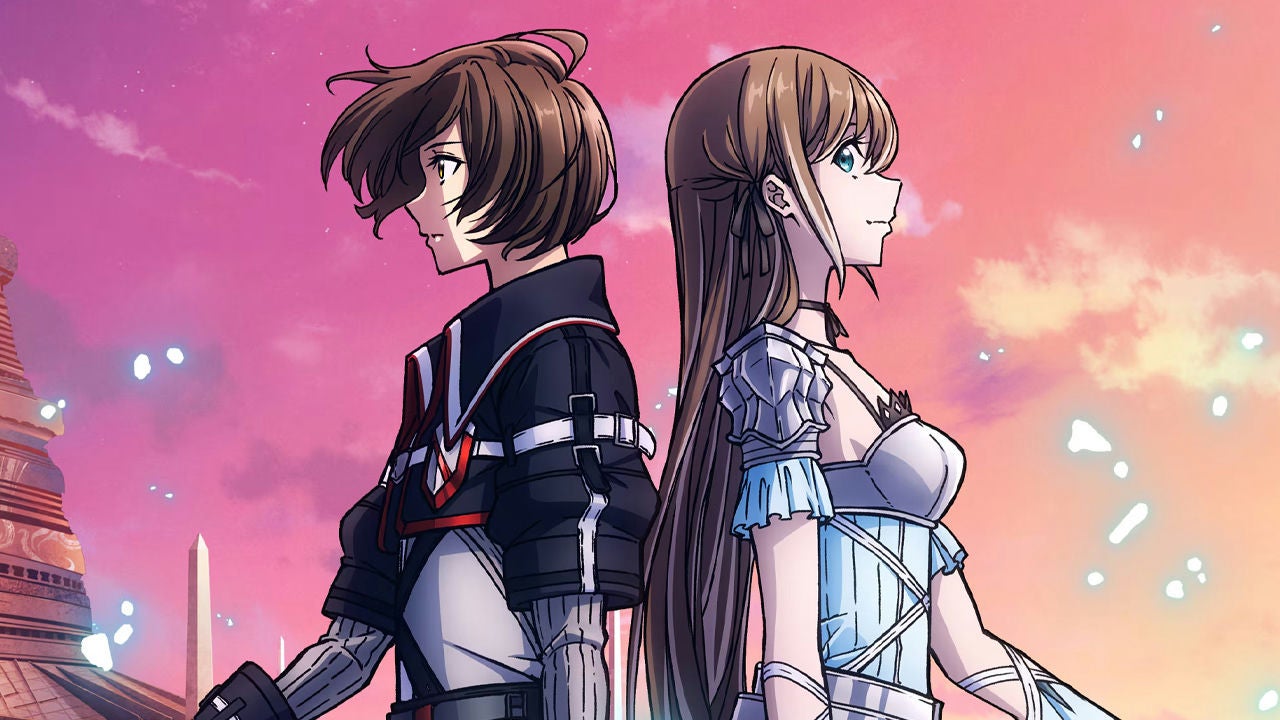


On paper, Echoes of Aincrad is the Sword Art Online game you’ve been waiting for if you loved the anime. It takes place during the Aincrad arc, the very first one in the series, which is easily the most memorable and iconic. As your own created character, you get to experience Aincrad without having to retread the path of series protagonist Kirito. He also doesn’t have a huge role in the story, allowing Echoes of Aincrad to carve out its own identity with a brand new cast of characters in a single-player action-RPG.
But even when being mostly free from the confines of Kirito’s presence, it still feels constrained by the anime’s established lore. And unfortunately, the semi-open world structure is too bare and slows down the story’s pacing to an unbearable crawl, although its saving grace is the frenetic combat that’s a great mix of fun and methodical. In the Aincrad arc, players are unable to log out, and if they die in Sword Art Online, they die in real life – at certain points, I wanted to log out, and luckily for me, I could still put it down without sending myself to an early grave.
Echoes of Aincrad’s story starts off with a warming welcome. As a new player, you meet up with a few other newbies including the friendly and dependable Iori, as well as the bubbly Saayu and quickly party up. The prologue is cleverly disguised as Sword Art Online’s beta, providing you tutorials on how to play, like a real video game would. It makes for imaginative immersion, and by the end of the prologue, you and your friends make a promise to meet up again once Sword Art Online officially launches.
From that point on, the story runs parallel to the first arc of the anime where game master Kayaba has forced all of Sword Art Online’s 10,000 participants into a death game. In order to escape, they must fight their way through all 100 floors of the floating castle, Aincrad. However, Echoes of Aincrad mostly sidelines this to tell its own story. Your MC and a few of the other key characters find themselves equipped with mysterious brooches that periodically show them visions of an apocalyptic future, subsequently giving them a special quest in their log to prevent it, all whilst trying to reach floor 100 and escaping. It’s like a subplot to the anime, but it’s well implemented. The permadeath threat is still ever present, but it’s given new context because if this doomsday event occurs, then everyone is dead anyway. It doesn’t take away anything from the anime and actually supplements it.
The story, however, is stalled by the barebones open regions. It’s not exactly an open world as you instead load into large zones that are only accessible via story or side missions, and even then you’re only allowed to explore portions of it at any given time. Each mission has a designated in-bounds area, and you can’t just go off and see what you like. If you go out of bounds, you’re simply turned around. This railroaded approach kills any sense of wonder and encourages you to just go straight for the critical path objective.
You activate Safe Zones along the way, uncovering more of the map, and there’s usually only one or two correct ways to reach new safe zones. You simply run along the path laid out, no climbing or gliding, and there’s not much in the way of secrets or spectacle outside of treasure chests and landmarks to liven up the limited exploration. I’m not asking for every game to be completely open-ended like The Legend of Zelda: Breath of the Wild or Tears of the Kingdom, but with so few options, it highlights how one-dimensional and limited Aincrad feels. Granted, you can find magical arks around the area and fight a miniboss to break nearby seals to unlock shortcuts, but that’s hardly a remedy given how drawn out everything is. Minibosses are also mostly bigger and reskinned versions of normal enemies too, and on top of that, many are recycled in different areas.
Since you only really explore two floors of Aincrad, there’s not much environmental variety. The first floor is entirely woodlands and forest, with some swamplands scattered in between, while all of the second floor is a barren desert, but there’s also a complete lack of liveliness outside of towns. This would make sense lore wise – if players die in real life when they die in Sword Art Online, why would they take the unnecessary risk of potentially getting mauled by a monster outside? I’d stay home too. The issue is that it doesn’t translate well into an actual playable game world, resulting in empty open zones with indistinguishable vistas as far as the eye can see. There are some dungeons that mix things up visually, like the one between the two floors of Aincrad where stars and crystallized stalagmite fill the foreground. The story-related dungeons that are covered in glyphs are mainly there for story exposition and help break the repetitiveness, but those are few and far between.
Now, I don’t mind long stretches of open segments if done well, as you may see in a Xenoblade Chronicles, as an excellent example. Unfortunately, Echoes of Aincrad doesn’t have the sense of discovery or rich diversity of monsters to support an expansive world. Bosses and monsters are often palette swaps of the same wolves, bears, and trolls, and I grew tired of literally fighting the same kind of boar over and over again. Monsters can also somehow see you from light years away, forcing you to engage in battle when all I wanted to do was find the next Safe Zone.
Thankfully, Echoes of Aincrad’s combat is one of its better parts. It’s an action-RPG with your typical light and heavy attacks, but there’s an extra layer of depth with its specific approach to parrying and dodging. By timing your evasive maneuvers perfectly, you can launch stylized counterattacks with your battle partner to deal huge damage. Enemies can sometimes be resistant to stagger, so these counterattacks ensure that you can break their stances and gain the upper hand. It also encourages you to avoid mashing the attack button all the time and pay closer attention to incoming attacks.
Similar to Bandai Namco’s action-RPG from earlier this year, Code Vein 2, you can pick one character to accompany you on missions (some main story ones allow for multiple). It’s a bit all over the place, and a bit of a let down considering past Sword Art Online games were more consistent with allowing three or four to fight alongside you. It’s kind of odd considering Echoes of Aincrad gives the impression of a party-based RPG in-lore due to its emphasis on an original cast banding together to save the world. Depending on who you choose, the proper partner can make some fights easier depending on your own personal approach to combat. A more defensive player, for example, could pick Iori’s healing field over Zash’s more offensive capabilities like granting an attack buffing barrier which gets stronger the lower the target’s HP.
Each of the six weapon types (including swords, daggers, and axes) have different speed and damage properties, and heavy weapons like maces and two-handed axes can perform crushing attacks normally without needing to charge up like swords, which can be helpful in downing enemies, leaving them vulnerable to a further onslaught. It’s hardly revolutionary, but I like how you’re able to experiment to find your preferred playstyle, and switch it up without penalty.
You can also learn Sword Skills, which are flashy attacks that consume SP. These skills add the kind of visual flair you’d expect from an action-RPG, and have special properties that tack on unique status effects. For example, the rapier’s Oblique Lunge sends you downward and emits a shockwave for extra damage, while the two-handed sword’s Cascade skill inflicts severing damage that can potentially dismember enemies and change their attack behavior, giving the combat a Monster Hunter-lite edge. Since you can only equip three Sword Skills per weapon, you’ll have to be wise about which ones you pick, adding another layer of strategy to the combat.
I also like how straightforward other systems are in Echoes of Aincrad. Every time you level up, you’re given a certain number of growth points to allocate to your attributes and the menu makes it clear how each attribute impacts your capabilities. There are certain buffs like faster attack speed and bonus EXP gains earned by reaching certain attribute levels, providing more incentives to invest in some stats over others depending on what you want to emphasize.
The customization and weapon modification systems are highlights as well. You’ll get a ton of weapons and items through enemy drops, which gets overwhelming, but a town’s blacksmith can turn any unwanted weapons into materials to level up your favorite ones and declutter your inventory. You can also transfer weapons’ passive abilities by sacrificing the weapon that has the ability you want to extract, making it so easy to create your ideal weapon. For example, I added the +24% sprint speed modifier to any new weapon I wanted to use, becoming noticeably faster running out in the open field to make it a bit more tolerable.
What’s an RPG without a bit of post-game grind? After you’re done with the main story, you get access to Warped Dungeons; randomly generated roguelite-style dungeons where you earn Key Stones. These give you buffs that can increase your base stats that should prepare you for the most challenging content that Echoes of Aincrad has to offer. Warped Dungeons are no joke either, as I quickly discovered. Come underleveled or unprepared without the proper equipment, and you’ll soon find yourself getting decimated against bosses from even the first level. Clearing harder levels (which goes up to 10) will subsequently power up your Key Stones too, making Warped Dungeons worth doing since you’ll also earn EXP for killing the monsters anyway, and becoming strong enough to face the true final threat.
Each Sword Art Online game feels grindier than the last, and you’d wish they were more substantive or just drew lessons from other RPGs. Having more interesting ways of earning XP instead of side missions mostly consisting of fetch quests and “kill this monster here” objectives for little XP, that’d be a start. The bulk of the EXP is earned from the monsters you’re expected to slay along the way, and at the very least, monster levels scale with you, so you’re earning enough to stay afloat. But it gets repetitive when that’s its main crux, and I guess that’s what we’ve come to expect from an RPG that’s modeled after an anime about being in an MMO.