

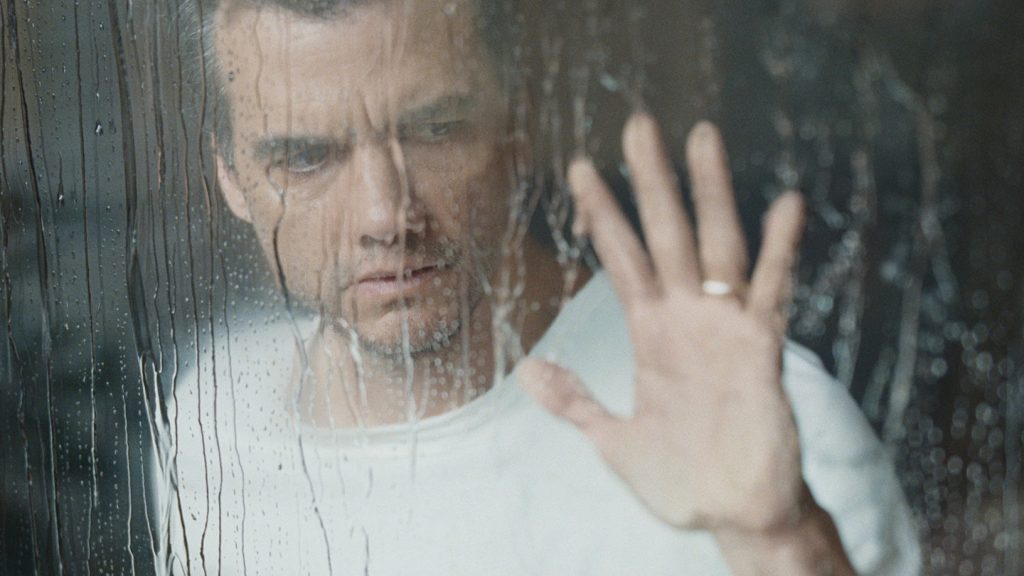
When their house is mysteriously sealed in by unnatural-looking rain, the Delgado family are forced to survive with their diminishing resources — and face an unseen threat outside.
The Last House begins with a quote from Arthur C. Clarke, one of the great forefathers of modern science-fiction: “How inappropriate to call this planet Earth when it is clearly Ocean.” It’s a bold name to invoke. It goes without saying that this particular science-fiction does not, in fact, come near to scraping the giddy heights of the Clarke adaptation 2001: A Space Odyssey. Instead, it’s a relatively cheap-and-cheerful straight-to-streaming affair, largely inoffensive if ultimately unmemorable.
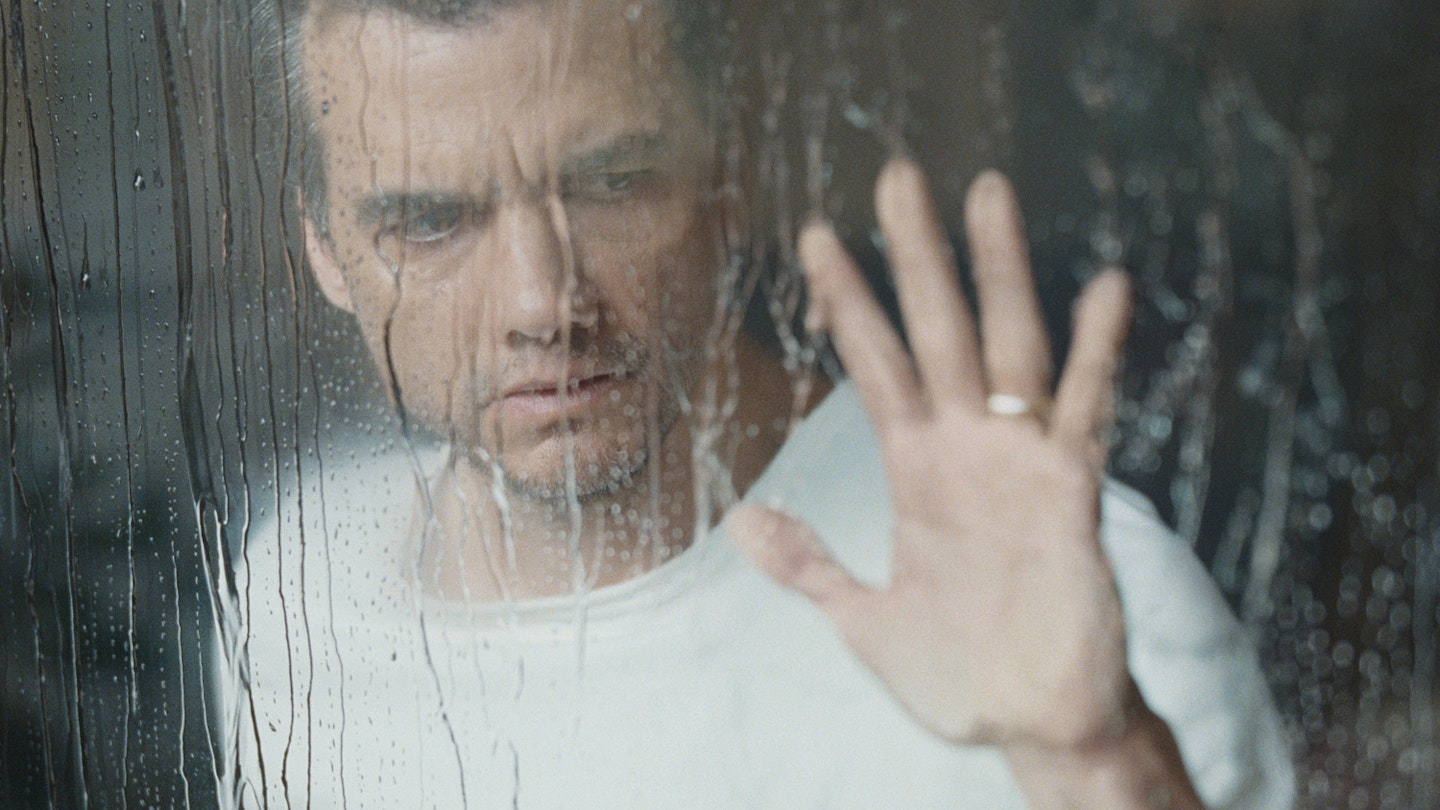
If you can look past the slightly stodgy voiceover which introduces things — “The day the rain came, we learned we were not alone…” — there is a decent-enough premise to wrestle with here. After an unnatural spell of precipitation, the Delgado family — mum Ann (Greta Lee), dad Jason (Wagner Moura), daughter Ruth (Riley Chung) and son Graham (Noah Alexander Sosnowski) — find themselves trapped in their suburban house. The doors and windows are sealed shut, with no chance of escape. And it seems like the baffling phenomenon is happening to everyone, their neighbours in a similar predicament.
At first, they try not to panic, try to make the best of a bad situation, and there is a nice pandemic-tinged narrative thread, in seeking pockets of joy amid a confusing misery. Like the recent Julia Roberts film Leave The World Behind, it’s an apocalyptic streaming film that slightly ironically acts as an ode to physical media: the family watch DVDs, listen to music on vinyl and play board games, finding — as with the first Covid lockdown — something wholesome about enforced confinement in the shadow of horror.
Moura and Lee are perhaps best known for their work in films aching with nuance (The Secret Agent and Past Lives, respectively). This film, with the greatest will in the world, lacks that quality. But they do good, committed work in spite of an occasionally ropey script and clichéd dialogue (“What the hell is going on?”). It is about what you might expect from French director Louis Leterrier, a filmmaker best known for Jason Statham’s Transporter series, whose last movie (Fast X) saw a car destroy two helicopters at once in mid-air.
This is certainly a more contained film than those silly actioners, being limited entirely to the walls of the family home, and there is some fun and ingenuity to be had in the problem-solving that arises when forced to live off only what is inside your gaff. Where it slightly goes off the boil is in the third act, when the human-level drama gives way to computer-generated tentacle monsters and more outlandish silliness besides. Arthur C. Clarke this ain’t, but as a modestly diverting couple of hours it’s a perfectly good time: some solid showers, rather than a perfect storm.
Netflix’s latest attempt at the next Bird Box — a mysterious apocalyptic sci-fi to generate some watercooler buzz — doesn’t fully utilise its acting talents, but the premise is fun enough to justify itself.